珠宝首饰

Search documents
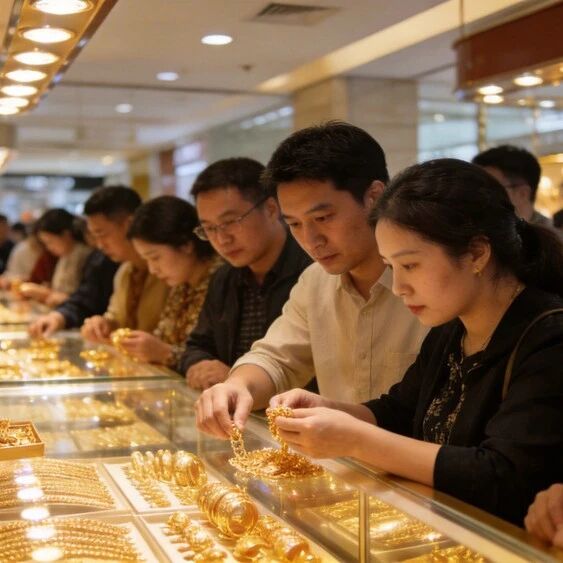
金价真是变天了,2月15日节假日全国金价竟然差这么多?
Sou Hu Cai Jing· 2026-02-15 09:50
Core Viewpoint - The article highlights the significant price discrepancies in gold jewelry across different regions and retail formats in China, illustrating how branding, location, and market strategies contribute to these variations. Group 1: Price Discrepancies - A gold bracelet priced at 1560 CNY per gram in a Beijing store is significantly higher than the same item priced at 1538 CNY per gram in a store in Baoding, showing a nearly 50 CNY difference per gram [2] - Major brand stores in first-tier cities like Beijing have gold prices ranging from 1550 CNY to 1560 CNY per gram, while regional chain stores in lower-tier cities offer prices between 1420 CNY and 1480 CNY per gram [4][6] - The wholesale market in Shenzhen, known as the largest gold jewelry distribution center in Asia, lists gold at around 1300 CNY per gram, which is over 250 CNY lower than major brand retail prices [8] Group 2: Cost Structure and Value Addition - The price of gold bars from banks is around 1114 CNY per gram, reflecting minimal additional costs for manufacturing and logistics compared to retail prices [10][11] - The price differences are attributed to brand and craftsmanship premiums, with major brands charging an additional 30 to 80 CNY per gram for their reputation and service offerings [13] - The operational costs in first-tier cities, including high labor costs and marketing expenses, contribute to higher retail prices compared to lower-tier cities where costs are more manageable [15] Group 3: Marketing Strategies - Major brands like Chow Tai Fook and Chow Sang Sang maintain high prices during peak seasons like the Spring Festival due to their strong brand presence and customer loyalty [17] - Smaller brands and local stores often resort to aggressive pricing strategies, such as discounts and promotions, to attract customers during high-demand periods, leading to noticeable price differences in the market [17]

金价跌了价!2月15日最新黄金价格!各大金店、黄金回收价格
Sou Hu Cai Jing· 2026-02-15 05:17
Core Viewpoint - The jewelry market is experiencing a shift towards fixed-price sales, with companies like Chow Tai Fook and Lao Feng Xiang capitalizing on consumer preferences for simplicity and perceived value in pricing, despite significant markups over the base gold price [1][6]. Pricing Strategies - Chow Tai Fook's new ancient-style bangles are priced at 12,800 yuan each, with no weight indicated, reflecting a trend towards fixed pricing rather than per gram pricing [1]. - Lao Feng Xiang's gold price is set at 1,548 yuan per gram, while their platinum jewelry is priced at 960 yuan per gram, indicating a competitive pricing strategy [2]. - The average gold price in Suizhou is 1,519 yuan per gram, while platinum is at 850 yuan per gram, showing regional variations in pricing [3]. Market Trends - The international gold price has dropped to 5,042 USD per ounce, while domestic base gold prices are at 1,108.5 yuan per gram, leading to a retail price of 1,529 yuan per gram at Chow Tai Fook, which is nearly 40% higher than the base price [1]. - Chow Tai Fook reported a 50% increase in sales of fixed-price products, reaching 3.4 billion HKD in the first half of the year, accounting for over 30% of total sales [6]. Consumer Behavior - Consumers are increasingly purchasing gold jewelry as a hedge against rising prices, with many opting for fixed-price items for clarity and ease of understanding [6]. - The trend of buying gold jewelry is driven by emotional factors, such as the desire for unique designs and the perceived value of craftsmanship, rather than just the gold price [6][9]. Company Strategies - Chow Tai Fook has closed 611 stores, averaging three closures per day, to transition from small street shops to flagship stores in tourist areas, investing savings into IP collaborations and craftsmanship certifications [7]. - Lao Feng Xiang remains a market leader with a slightly higher pricing strategy, emphasizing customer service by offering free engraving [7]. Consumer Preferences - The popularity of fixed-price items is evident, with long queues at stores and a shift away from per gram pricing, which is now often relegated to special promotions [6][9]. - Consumers are more focused on the aesthetic and emotional value of jewelry rather than the intrinsic gold value, as evidenced by their purchasing decisions [9].
今日金价:大家要有心理准备了,2月15日,金价或将重现15年历史
Sou Hu Cai Jing· 2026-02-15 05:06
Group 1 - The current gold price is experiencing high volatility, with the London gold price at $5038.52 per ounce, up $117.71 from the previous day, indicating a "rise followed by consolidation" trend [1] - The Shanghai gold price (AU9999) is at 1108.5 yuan per gram, down 15.1 yuan, showing a "same high level, different rhythm" phenomenon compared to the international market, reflecting intense short-term capital speculation [1] - The price of gold jewelry in stores ranges from 1300 to 1548 yuan per gram, with significant brand premium differences [2] Group 2 - The highest price for 999 pure gold from Lao Feng Xiang is 1548 yuan per gram, while other brands like Chow Sang Sang and Xie Rui Lin are priced at 1534 yuan and 1529 yuan per gram respectively [2] - The more affordable options from Cai Bai and China Gold are priced at 1528 yuan per gram, with price differences of 10 to 20 yuan per gram for 99.9% pure gold being common [3] Group 3 - Bank gold bars are priced between 1130 to 1145 yuan per gram, with various banks like ICBC, ABC, CCB, and BOC offering products within this range [5][6] - Craft gold bars from brands like Chow Tai Fook and Lao Feng Xiang have more noticeable premiums and lower buyback prices [7] Group 4 - The average buyback price for national 999 gold is 1067 yuan per gram, with recent fluctuations between 1030 to 1090 yuan per gram [8] - Buyback prices can vary by region, with brand store official buyback prices typically 15 to 40 yuan lower than market averages [9] Group 5 - Online platforms generally offer buyback prices between 1050 to 1073 yuan per gram, with actual received prices subject to deductions for testing [12] - Price differences exist between cities, with first-tier cities having faster updates and more transparent buyback processes compared to third and fourth-tier cities, which may be lower by 10 to 25 yuan per gram [14] Group 6 - Recommendations for consumers include comparing prices at multiple stores for jewelry purchases, prioritizing bank investment gold bars for investment, and comparing prices across different platforms for selling gold to maximize returns [15]
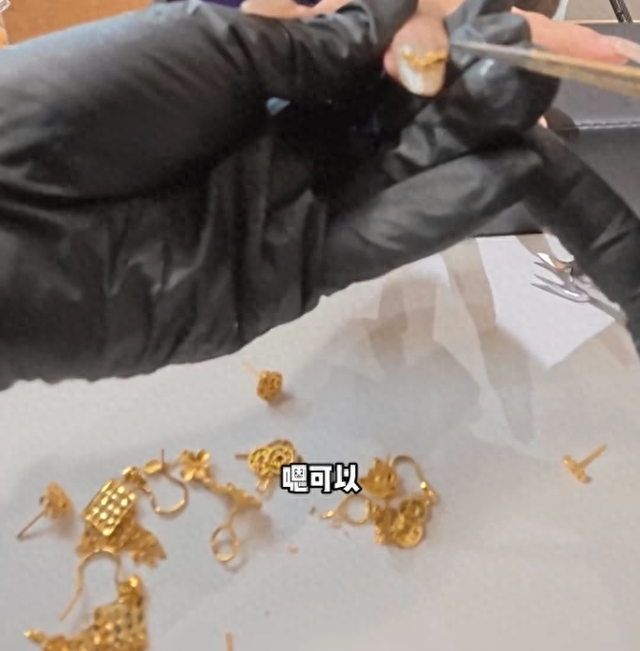
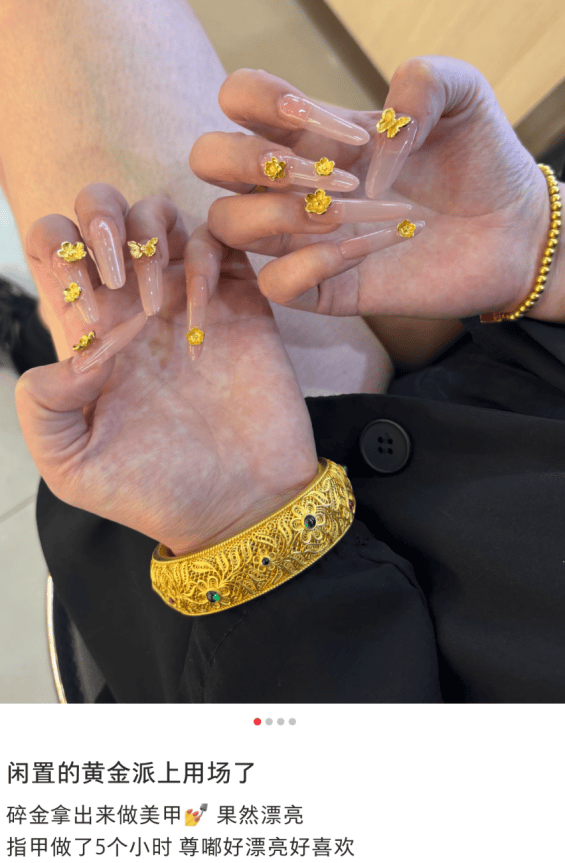
突然火了!“把价值4万元黄金剪碎贴手上……”,网友:掉了算谁的?
Xin Lang Cai Jing· 2026-02-15 04:15
Core Viewpoint - The rising trend of gold consumption is evident as the Chinese New Year approaches, with "golden nails" becoming a popular choice among young consumers, showcasing a shift in how gold is utilized in personal adornment [1][9]. Group 1: Market Trends - The demand for small gold items, such as gold nail art, has surged, with consumers willing to spend thousands on "golden nails" [3][10]. - High-end brands like Chow Tai Fook and Lao Pu are now providing gold as a material for nail art, indicating a crossover between jewelry and beauty industries [3][10]. - The trend includes the revival of old jewelry, with consumers repurposing unused gold items into nail art, enhancing the perceived value and personal significance of the adornments [9][13]. Group 2: Consumer Behavior - Many consumers are opting to bring their own gold items to nail salons for customization, reflecting a shift towards personalized luxury experiences [13][22]. - The price range for gold nail art services varies from 600 to 1500 yuan, depending on the complexity of the design and the amount of gold used [13][10]. - There is a growing interest in social media marketing for gold nail art, with brands and salons showcasing their work to attract customers [17][19]. Group 3: Legal and Ethical Considerations - Concerns have been raised regarding the potential legal implications of nail salons recycling gold scraps, as this may violate regulations on gold trading in China [22]. - Legal experts emphasize that nail salons should avoid engaging in gold recovery or trading activities to remain compliant with national regulations [22].
豫园股份上市首亏:预计2025年净亏损48亿,加速资产瘦身
Xin Lang Cai Jing· 2026-02-15 03:51
Core Viewpoint - Yuyuan Group, a member of the Fosun system, is expected to report a net loss of approximately 4.8 billion yuan for the fiscal year 2025, marking its first annual loss since its listing in 1992, primarily due to asset impairment, declining real estate margins, and pressures in the consumer sector [1][2][3] Financial Performance - The company anticipates a net profit loss of about 4.8 billion yuan for 2025, with a net profit loss of around 4.7 billion yuan after excluding non-recurring items [1] - In 2024, Yuyuan Group reported a profit of 125 million yuan, indicating a significant decline from previous years [1] - The net profit has been decreasing for three consecutive years, dropping from a peak of 3.644 billion yuan in 2021 to 125 million yuan in 2024 [3] Business Segments - The jewelry and fashion segment contributed 18.447 billion yuan in revenue for the first three quarters of 2025, a year-on-year decline of 31.86%, primarily due to structural adjustments in the consumer industry and fluctuations in international gold prices [4] - The property development and sales segment achieved revenue of 5.641 billion yuan in the first three quarters of 2025, a year-on-year increase of 55.05%, but with a low gross margin of 3.22% [5] Strategic Initiatives - The company is undergoing a strategic transformation focused on "lightening the load and optimizing health," which includes accelerating the disposal of real estate projects and enhancing cash flow [6][7] - Yuyuan Group has been actively selling assets to improve its financial structure, with significant transactions including the sale of shares in various companies and properties, totaling over 10 billion yuan in recent years [7][10] Regulatory and Market Reactions - The company received a regulatory letter from the Shanghai Stock Exchange regarding the sale of Ningbo Xingjian Asset Management Co., questioning the necessity and rationale behind the asset sale [1][8] - Analysts suggest that the company's first loss has a more profound impact on investor confidence than the numbers alone, highlighting the vulnerabilities of its dual-driven model of real estate and consumer sectors during economic downturns [3][10]

突然火了!有人戴上4万元的“黄金甲”,已成新年顶流,多个品牌已上架,网友:掉了算谁的?
Sou Hu Cai Jing· 2026-02-15 03:49
Core Viewpoint - The rising trend of gold consumption among young consumers is highlighted, particularly through innovative uses such as gold nail art, which has become a popular choice for the upcoming Chinese New Year [1][3]. Group 1: Market Trends - The demand for "small weight" gold items has surged, with gold nail art emerging as a trendy new consumption choice for the New Year [1]. - Major brands like Chow Tai Fook and Lao Pu are supplying small gold items for nail art, with consumers willing to spend thousands of yuan to create "golden nails" [3]. Group 2: Consumer Behavior - Consumers are repurposing old gold jewelry for nail art, with one individual showcasing a gold nail design that used over 6 grams of gold worth nearly 10,000 yuan, emphasizing the personal and ceremonial value of this trend [8]. - Many consumers are bringing in their own gold items for nail art, with prices for the service ranging from 600 to 1,500 yuan depending on the complexity of the design [11]. Group 3: Industry Practices - Most nail salons require customers to provide their own gold for processing due to high gold prices, and they charge fees based on the difficulty of the design [11]. - Some nail technicians are capable of cutting and preparing gold jewelry for nail art, while others may need to send items to a gold shop for proper dismantling [12]. Group 4: Social Media and Marketing - Brands like Sixi Jewelry and Chow Tai Fook are leveraging social media to promote gold nail art, showcasing customer creations to attract more clients [16]. - The trend has sparked significant online discussion, with some consumers expressing concerns about the high cost and potential loss of gold pieces during everyday activities [22][24]. Group 5: Legal and Ethical Considerations - There are concerns regarding the legality of nail salons recycling leftover gold, as this could violate regulations on gold trading without proper licenses [26]. - Legal experts emphasize that nail salons should avoid engaging in gold recovery or trading, focusing solely on providing nail art services [26].
春节抢黄金,谁赚到钱了?
虎嗅APP· 2026-02-15 02:32
Core Viewpoint - The article discusses the dynamics of the gold jewelry market, highlighting the increasing interest from young consumers, the impact of rising gold prices on different brands, and the shift towards high-end positioning in the industry [5][6][13]. Group 1: Young Consumers and Market Trends - Young consumers are increasingly purchasing gold jewelry as a form of self-expression and asset allocation, with a preference for smaller weight pieces that are both decorative and seen as a new form of savings [11][12]. - The trend of buying gold during the Spring Festival is reinforced by promotional activities from brands, with significant discounts being offered to attract younger buyers [9][11]. - The rising gold prices have led to a shift in consumer behavior, where young buyers are more focused on value retention and are setting budgets for their purchases [12]. Group 2: Brand Performance and Market Dynamics - Not all gold brands benefit equally from rising gold prices; some experience significant growth while others face profit pressures and store closures [13][14]. - The gold market can be divided into two main categories: scale-driven brands like Chow Tai Fook, which rely on extensive store networks, and premium brands like Lao Pu Gold, which focus on high-end craftsmanship and brand value [14][16]. - Chow Tai Fook leads in revenue with 347 billion RMB, followed by China Gold at 310.98 billion RMB, while Lao Pu Gold, despite having only 41 stores, achieves a notable revenue of 123.5 billion RMB [15][16]. Group 3: Profitability and Business Models - Profitability varies significantly among brands, with Lao Pu Gold achieving a high net profit margin of 38.10%, compared to China Gold's low margin of 4.50% [18][19]. - The difference in profitability is attributed to brand premium capabilities, with Lao Pu Gold's pricing strategy allowing for higher margins compared to traditional pricing models [19][20]. - Market capitalization reflects these differences, with Chow Tai Fook valued at 1427.46 billion RMB and Lao Pu Gold at 1359.17 billion RMB, indicating that brand positioning and profitability are more critical than sheer scale [20][21]. Group 4: Industry Shift Towards High-End Positioning - Traditional brands are responding to market pressures by increasing prices and shifting towards high-end product offerings, although this strategy may not be sustainable in the long term [24][26]. - The high cost of gold as a raw material limits the potential for brand premium, creating a tension between maintaining high prices and consumer price sensitivity [26][27]. - The industry faces challenges in establishing a complete value chain that allows for brand premium realization, as the market is still in its early stages of accepting the concept of "gold brands" [27][30].




这届年轻人把上万元黄金剪碎贴在指尖!“黄金甲”成新年顶流“社交货币”,专家解读
Sou Hu Cai Jing· 2026-02-15 02:04
Core Viewpoint - The rise of "golden manicure" reflects a shift in consumer behavior, particularly among younger demographics, as they seek new forms of self-expression and social currency through gold, despite traditional gold jewelry facing declining sales and store closures [4][12][18]. Industry Trends - The gold jewelry industry is experiencing a dichotomy, with international gold prices rising since 2025, yet major companies like Chow Tai Fook and Chow Sang Sang reporting declining revenues and store closures [4][18]. - Chow Tai Fook's revenue for the 2026 fiscal year showed a 1.1% year-on-year decline, marking a five-year low, while Chow Sang Sang's revenue dropped by 37.35% in the first three quarters of 2025 [4][18]. - The global nail product market is projected to grow from $25.76 billion in 2025 to $36.26 billion by 2032, with a compound annual growth rate of 5.01% [9]. Consumer Behavior - Younger consumers are increasingly viewing gold as a means of self-expression rather than a traditional investment, with a focus on "self-pleasure consumption" rather than the old mindset of accumulating gold for financial security [11][12]. - The trend of using gold in manicures is seen as a way to transform gold from a low-frequency, high-ticket item to a high-frequency, low-ticket item, potentially revitalizing the gold jewelry market [4][18]. Market Dynamics - The "golden manicure" trend has led to increased demand for gold as a beauty material, with consumers willing to spend thousands on gold nail art, indicating a shift in how gold is perceived and utilized [4][6][12]. - The average cost for a golden manicure ranges from 600 to 1500 yuan, with some customers bringing in their own gold jewelry for customization [8][9]. Challenges and Opportunities - Despite the popularity of golden manicures, there are concerns regarding the cost-effectiveness and durability of gold as a nail material, with some consumers questioning its value [5][12]. - The potential for gold to become a "social currency" is evident, as consumers are more focused on the aesthetic and emotional value of gold rather than its market price [12][13]. - The beauty industry is exploring the integration of gold into nail services, but there are operational challenges, including the need for clear boundaries regarding the handling and recycling of gold materials [20][24].
老铺金条变“金甲” 万元黄金上指端 记者调查:“微金”消费能撬动多大市场
Sou Hu Cai Jing· 2026-02-15 00:50
Core Viewpoint - The rise of "golden manicure" reflects a shift in consumer behavior, particularly among younger demographics, as they seek new ways to express themselves and find value in gold beyond traditional investment or adornment [1][5][8]. Industry Trends - The gold jewelry industry is experiencing a dichotomy, with international gold prices rising since 2025, yet major jewelry companies like Chow Tai Fook and Chow Sang Sang reporting declining revenues and store closures [1][10]. - Chow Tai Fook's revenue for the fiscal year 2026 showed a 1.1% year-on-year decline, marking a five-year low, while Chow Sang Sang's revenue dropped by 37.35% in the first three quarters of 2025 [10]. Consumer Behavior - The trend of using gold in manicures has gained popularity, with consumers willing to spend thousands on "golden nails," indicating a shift towards high-frequency, low-cost luxury consumption [1][6]. - The global nail product market is projected to grow from $25.76 billion in 2025 to $36.26 billion by 2032, with a compound annual growth rate of 5.01% [6]. Market Dynamics - The "golden manicure" trend is seen as a potential solution to the jewelry industry's challenges, transforming gold from a low-frequency, high-ticket item to a high-frequency, lower-cost accessory [1][8]. - The demand for gold in manicures is driven by social media influence, with consumers focusing more on aesthetics and social expression rather than the intrinsic value of gold [7][8]. Challenges and Risks - Despite the popularity of golden manicures, there are concerns regarding the cost-effectiveness and the potential for damage to the gold used, as well as legal implications surrounding the recycling of gold materials [2][12]. - The traditional jewelry industry faces challenges in adapting to this new trend, with many companies still struggling to recover from declining sales and store closures [9][10].
老铺黄金,如何赢得了奢侈品之战?
吴晓波频道· 2026-02-15 00:29
Core Viewpoint - The article emphasizes that Laopu Gold's success is not solely due to rising gold prices but is deeply rooted in its unique cultural narrative and product value, which resonate with consumers in a way that traditional luxury brands cannot replicate [4][5][6]. Group 1: Market Performance - Laopu Gold has seen a significant increase in consumer interest, with long queues at stores across major cities like Beijing, Shanghai, and Guangzhou, indicating its status as a central consumer hub [3][9]. - In October of the previous year, Laopu Gold raised its prices by 25%, yet contrary to expectations, the demand surged, highlighting its strong market position [4]. - The international gold price recently surpassed $5,000 per ounce, contributing to the brand's visibility and sales performance [4]. Group 2: Cultural and Aesthetic Value - Laopu Gold differentiates itself from traditional luxury brands through its deep cultural roots and unique storytelling, which cannot be easily imitated [6][7]. - The brand integrates both Chinese and global classic cultures into its product themes, creating a strong cultural identity that resonates with high-net-worth individuals [8][11]. - Laopu Gold's commitment to original design and traditional craftsmanship enhances its product value, making it a leader in the luxury market [12][15]. Group 3: Competitive Positioning - Laopu Gold's consumer overlap with top international luxury brands is as high as 80%, indicating a significant shift in high-end consumer preferences towards the brand [17]. - The founder's direct involvement in product development and quality control ensures high standards and market validation for each product [22]. - The brand's unique combination of classic culture and the monetary value of gold breaks traditional luxury market ceilings, establishing a new value consumption era [24]. Group 4: Customer Experience and Brand Strategy - Laopu Gold has implemented a "big store" strategy to enhance its retail presence and customer experience, focusing on creating a pleasant shopping environment [27]. - The brand's customer service philosophy, which positions sales staff as cultural and aesthetic interpreters rather than traditional salespeople, enhances the overall consumer experience [27]. - Laopu Gold aims to balance social and commercial values, positioning itself as a leading global brand in the gold jewelry sector [28].