
私募股权投资

Search documents
中文天地出版传媒集团股份有限公司 关于全资子公司认购私募股权基金份额的公告
Zhong Guo Zheng Quan Bao - Zhong Zheng Wang· 2025-08-21 01:48
Core Viewpoint - The company plans to invest in the "Qindao Ganshan Jiaying Equity Investment Fund Center (Limited Partnership)" initiated by Qindao Capital, specifically to subscribe to the initial public offering of Shenzhen Guanghetong Wireless Co., Ltd. on the Hong Kong Stock Exchange, with a total subscription amount of 30 million RMB [1][3][34]. Group 1: Investment Overview - The target fund, Qindao Jiaying Fund, has a target fundraising scale of 510 million RMB, with the company's subsidiary, Blue Ocean Investment, planning to contribute 30 million RMB, accounting for 5.88% of the total [1][3][10]. - The investment decision was approved by the company's board, allowing Blue Ocean Investment to use up to 1 billion RMB for equity and securities investments, with the current subscription amount being 30 million RMB, which is 0.17% of the company's latest audited net assets [2][4][5]. Group 2: Fund and Investment Details - The fund is structured as a limited partnership and was established on June 19, 2025, with a lifespan of 5 years, including a 1-year investment period and a 4-year exit period [6][7][26]. - The fund's management is handled by Qindao Capital, which is responsible for investment decisions and management [10][11][29]. - The investment will specifically target the initial public offering of Shenzhen Guanghetong Wireless Co., Ltd., which has submitted its application for listing on the Hong Kong Stock Exchange [34][36]. Group 3: Financial and Operational Impact - The investment is expected to enhance the efficiency of the company's capital utilization and broaden its investment strategy, leveraging Qindao Capital's expertise and resources [37]. - The company emphasizes that this investment will not adversely affect its main business operations or financial performance [37].


20个月,一笔Buyout赚走30亿
3 6 Ke· 2025-08-20 08:34
Group 1 - KKR plans to acquire South Korean cosmetics packaging company Samhwa for 800 billion KRW (approximately 4.16 billion RMB), marking a significant merger in the Asian market this year [1][6] - TPG, the seller, is set to make a substantial profit, having purchased Samhwa for about 1.5 billion RMB in 2023 and now selling it for a much higher valuation [1][5] - TPG's investment strategy involved significant operational improvements, leading to a nearly threefold increase in Samhwa's valuation within 20 months [2][7] Group 2 - Samhwa, originally a small plastic bottle cap workshop founded in 1977, evolved into a leading manufacturer of precision pumps for cosmetics, capturing a significant market share in South Korea [3][4] - The company has established long-term partnerships with major beauty brands, with nearly 60% of its sales coming from companies like L'Oréal, Estée Lauder, and LVMH [4] - TPG's acquisition strategy included streamlining product lines and enhancing production efficiency, resulting in a 38% reduction in labor costs and improved EBITDA margins [8][9] Group 3 - The buyout market is experiencing a resurgence, with private equity firms like KKR and Blackstone actively competing for high-potential assets, even amid global economic challenges [9][10] - Recent notable buyout transactions in China indicate a growing trend, with significant deals being completed by firms such as Sequoia China and Dehong Capital [11][12] - The complexity and high stakes of buyouts require not only successful acquisitions but also effective post-acquisition management to realize returns [12]
KKR率先行动!
Zhong Guo Ji Jin Bao· 2025-08-20 06:56
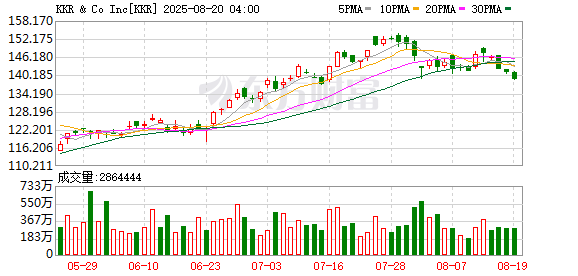
Group 1 - KKR's first onshore RMB fund has been established, with a scale of approximately 400 million RMB, indicating a significant move by top global investment institutions to expand their presence in China [2] - The fund's partners include Ping An Capital's parent fund, Singapore's TPC, and international asset management giant Schroders [2] - KKR's recent acquisition of 85% of the shares in Envision International through a newly established special purpose company highlights its strategic investments in the beverage sector in China [2][3] Group 2 - Envision International holds a market share of 5% to 10% in China's carbonated beverage market as of 2024 [3] - The founder and chairman of Dayao Soda, Wang Qingdong, is the actual controller of Inner Mongolia Dayao Beverage Co., Ltd., which is linked to Envision International [3] - Other top foreign institutions, such as Hines and Fanda, have also completed their private fund manager registrations, reflecting a broader trend of foreign investment in China [3]


KKR率先行动!
中国基金报· 2025-08-20 06:54
Core Viewpoint - KKR's first onshore RMB fund has been established, indicating a significant trend of global top investment institutions expanding their operations in China [1][3]. Group 1: KKR's Onshore RMB Fund - KKR's onshore RMB fund, managed by KKR's domestic private equity entity, has a scale of approximately 400 million RMB [1]. - The fund's partners include diverse entities such as Ping An Capital's parent fund, Singapore's TPC, and Schroders [1]. - The fund was registered with the Asset Management Association of China in March 2024, focusing on private equity investment and venture capital [1]. Group 2: Acquisition of Far East International - KKR has indirectly acquired 85% of Far East International through a newly established special purpose company [1]. - Far East International holds a market share of 5% to 10% in China's carbonated beverage market as of 2024 [2]. - The founder and chairman of Dayao Soda, Wang Qingdong, has a name that matches the director of Far East International, indicating a potential connection [2]. Group 3: Other Global Institutions in China - Other global investment institutions, such as Hines and Fanda, have also registered private fund management companies in China this year [3]. - The trend of foreign top institutions establishing a presence in China is becoming increasingly evident [3].

2025VC/PE真实感受:回暖还是出清
母基金研究中心· 2025-08-19 09:07
Core Viewpoint - The VC/PE market in 2025 is experiencing a superficial recovery, primarily benefiting top-tier institutions, while the overall market activity remains stagnant, leading to a survival-of-the-fittest scenario for smaller GPs [1][5][10]. Group 1: Market Conditions - The first half of 2025 shows an increase in LP contributions, new fund establishments, and investment numbers, but this is misleading as it mainly reflects the activities of leading institutions [1]. - The concentration of resources among top-tier institutions has intensified, exacerbating the challenges faced by smaller GPs [1][5]. - Many smaller GPs are adopting cost-saving measures, such as shared office spaces, to survive in a challenging environment [2][3]. Group 2: Employment and Cost Management - Cost-cutting has reached a point where some firms can no longer afford to hire interns, indicating a severe reduction in operational capacity [4][5]. - A significant number of firms have implemented salary reductions and layoffs, with many employees facing pay cuts and job losses [5][6][7]. - The overall salary levels in the industry have continued to decline, with a notable drop in the median annual salary for front-line investment managers to 300,000 yuan [6][7]. Group 3: Organizational Changes - Many firms are undergoing significant personnel changes, with a focus on replacing traditional business backgrounds with industry-specific expertise to enhance operational efficiency [10]. - The trend of "survival of the fittest" is leading to a restructuring of teams, with younger investment professionals facing the highest risk of layoffs [10]. - The implementation of performance-based layoffs and salary reductions has become common, even in state-owned enterprises, challenging the perception of job security in these institutions [8][9].

九鼎投资拟2.13亿元“豪赌”机器人 收上交所问询函
Xi Niu Cai Jing· 2025-08-19 08:34
Core Viewpoint - Jiuding Investment announced a significant acquisition of a 53.29% stake in Nanjing Shenyuan Intelligent Technology Co., Ltd. for 213 million yuan, raising concerns over the valuation and financial health of both companies [2] Group 1: Acquisition Details - The acquisition involves Jiuding Investment spending 213 million yuan to gain control of Nanjing Shenyuan, which will become a subsidiary post-transaction [2] - Nanjing Shenyuan specializes in core components for robots, such as six-dimensional force sensors, but reported only 2.088 million yuan in revenue and a net loss of 5.73 million yuan in 2024 [2] - The valuation of Nanjing Shenyuan surged from 200 million yuan in December 2023 to 300 million yuan, reflecting a 50% premium [2] Group 2: Financial Implications - As of the end of Q1 2025, Jiuding Investment had cash reserves of only 249 million yuan, meaning this acquisition would consume 85% of its cash [2] - The company's traditional sectors, private equity investment and real estate development, are experiencing losses, with a combined loss of 26.5 million yuan in 2024 and an expected loss of 4.4 to 5.5 million yuan in the first half of 2025 [2] Group 3: Regulatory Concerns - The Shanghai Stock Exchange raised three critical questions regarding the acquisition: the fairness of the transaction valuation, the necessity of acquiring a loss-making asset at a high premium, and whether this could be seen as a means to siphon off company resources [2]


KKR首只人民币基金,落地上海!
Sou Hu Cai Jing· 2025-08-18 12:08
Group 1 - KKR has successfully launched its first onshore RMB fund in Shanghai, with a scale of approximately 400 million RMB, marking a significant milestone in its investment strategy in China [1] - The fund's limited partners include major domestic institutions and international asset management firms, indicating a strong collaboration between domestic and foreign capital [1] - KKR's brand strength and the current attractiveness of Chinese asset prices are key factors in the successful fundraising, despite short-term market challenges [1] Group 2 - KKR is a leading global investment firm with a total asset management scale of approximately 686 billion USD as of June 30, 2025, and has been active in the Chinese market since 2007 [2] - The firm has invested in various industry leaders in China, including Nanfang Battery and Mengniu Dairy, showcasing its diverse investment portfolio [2] - KKR's Shanghai office is led by experienced professionals who have a strong background in private equity and investment management [3] Group 3 - The establishment of the RMB fund in the Lingang New Area highlights the area's role as a key hub for foreign investment and financial innovation in China [4] - KKR's involvement in the RMB fund is expected to facilitate global capital's alignment with China's economic and industrial upgrading needs [4] Group 4 - KKR has also been active in acquisitions, recently completing the purchase of an 85% stake in Yuanjing International, which is associated with the beverage brand "Dayao" [5] - This acquisition allows KKR to gain control over Yuanjing International, which holds a market share of 5%-10% in China's carbonated beverage market [5] - KKR has participated in 174 investment events in China, with a cumulative investment amount nearing 700 billion RMB across various sectors, including food and beverage [6]
KKR来上海募集人民币了
3 6 Ke· 2025-08-18 08:53
Group 1 - KKR has successfully launched its first onshore RMB fund in Shanghai, marking a significant milestone in its investment strategy in China [1][2][4] - The new fund, named Kaide Shipu (Shanghai) Private Investment Fund Partnership, was registered with the Asset Management Association of China and is managed by Kaide Private Fund Management (Shanghai) Co., Ltd [2][3] - The fund has attracted notable limited partners, including Ping An Capital and the Singapore-based TPC, indicating strong interest from both domestic and international investors [3][4] Group 2 - KKR's Shanghai office, which has been operational since 2017, has recently expanded, reflecting the firm's commitment to deepening its presence in the Chinese market [4][5] - The firm has a history of significant investments in China, totaling over $7 billion since entering the market in 2007, with notable investments in leading companies such as Nanfang Battery and Mengniu Dairy [5][6] - KKR's investment strategy focuses on mature industries with stable competitive landscapes, aiming for companies with strong pricing power and operational efficiency [6] Group 3 - The recent surge in foreign investment in China is highlighted by the A-share market reaching a historic milestone, with a total market capitalization exceeding 100 trillion yuan for the first time [9] - There is a growing recognition among global investors that the best assets are in China, with increased interest in Chinese technology companies and innovative sectors [9][10] - The trend of foreign capital entering the Chinese market is expected to continue, driven by the country's position as a major global supply chain and consumer market [10][11]

从幕后走到台前 私募股权并购寻求新出路
Zhong Guo Zheng Quan Bao· 2025-08-17 20:07
Core Viewpoint - A wave of industry mergers and acquisitions led by private equity (PE/VC) funds is emerging, with firms transitioning from "capital hunters" to "industry operators" as they seek new growth avenues through strategic acquisitions [1][2]. Group 1: Recent Mergers and Acquisitions - JD Capital announced plans to acquire a 53.2897% stake in Nanjing Shenyuan Intelligent Technology Co., Ltd. for 213 million yuan, marking its entry into the humanoid robot industry [1]. - Other notable transactions include Qiming Venture Partners' acquisition of Tianmai Technology and Meihua Venture's investments in ST Luton and Mengjie Co., indicating a trend of PE/VC firms actively participating in industry mergers [2][3]. Group 2: Policy Background - The trend is supported by the "Six Merger Policies" issued by the China Securities Regulatory Commission, which encourages listed companies to pursue cross-industry mergers for transformation and growth [2]. - The policies aim to facilitate private equity funds in acquiring listed companies to promote industry integration [2]. Group 3: Market Dynamics - The increasing activity of investment institutions reflects a growing demand for new development paths among companies in changing market conditions, as well as a positive outlook on the potential value of certain industries [3][5]. - The current environment presents challenges in various investment stages, prompting PE/VC firms to explore merger opportunities as a new avenue for growth [3]. Group 4: Challenges and Considerations - JD Capital's acquisition has drawn scrutiny due to both companies experiencing losses and the cross-industry nature of the deal, raising questions about the rationale and fairness of the transaction [4]. - Concerns exist regarding the integration of PE/VC firms into operational roles, particularly regarding management philosophy differences and industry understanding [4]. Group 5: Future Trends - The ongoing optimization of the policy environment is expected to provide greater certainty for PE/VC firms in achieving exits and participating in industry integration [5]. - The future will likely see deeper integration of capital and industry, with PE/VC firms taking on more active roles in strategic planning, market expansion, and technology acquisitions [5].


从存量博弈到新增量时代:中国PE的协同式并购与价值坐标
2 1 Shi Ji Jing Ji Bao Dao· 2025-08-15 10:25
Core Insights - The Chinese M&A market is transitioning from a "stock game" to a "new growth era" due to favorable policies and a low interest rate environment, with a significant increase in market scale and diversity in participants and transaction models [1] - In the first half of 2025, Chinese enterprises completed 1,397 M&A transactions, a year-on-year increase of 10.09%, with disclosed transaction amounts totaling $88.87 billion, up 31.07% year-on-year [1] Group 1: Industry Trends - The current trend shows that many General Partners (GPs) in the primary market are not traditional M&A funds but rather collaborative M&A funds, focusing on assisting industrial players in their acquisitions [1] - Private Equity (PE) firms are forming a new "value coordinate" based on industry depth, collaborative breadth, and capital resilience, playing a unique role in market expansion and upgrades [1][6] Group 2: Collaborative Strategies - PE firms are increasingly engaging in "chain supplementation and strengthening" by collaborating with listed companies, establishing M&A funds, or executing acquisitions outside the listed company framework to later inject targets into the listed platform [2] - This strategy not only helps companies fill gaps in their industrial chains but also provides clearer exit paths for equity investment funds [2] Group 3: Cross-Border M&A - Cross-border M&A transactions are opening up greater opportunities for PE firms to introduce technology and channel resources to enterprises [3] - The strategy involves deep collaboration with listed companies to identify acquisition targets and scenarios, with PE teams managing project selection and execution [3] Group 4: Local State-Owned Capital - Local state-owned capital M&A funds are accelerating industrial upgrades and collaborative implementations, with a noticeable increase in demand for M&A to enhance regional industrial upgrades [5] - These funds aim to introduce quality enterprises to accelerate project implementation and create industrial chain synergies [5] Group 5: Future Outlook - The complexity of M&A investments requires collaboration among various stakeholders, and the future market development will depend on enhancing project execution and effectiveness [6] - The new era for PE institutions is characterized by an expansion in transaction volume and size, with a focus on industry integration depth, cross-border collaboration breadth, and regional cooperation tightness as key metrics for success [6]