
信用评级

Search documents
美国主权信用评级被下调!比特币,突然跳水!
Sou Hu Cai Jing· 2025-05-17 06:34
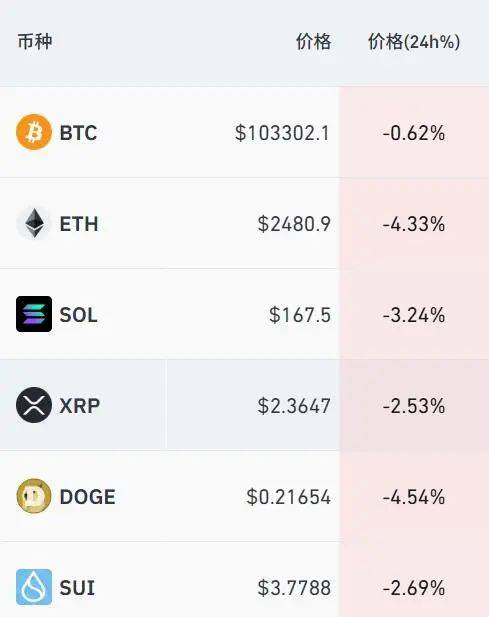
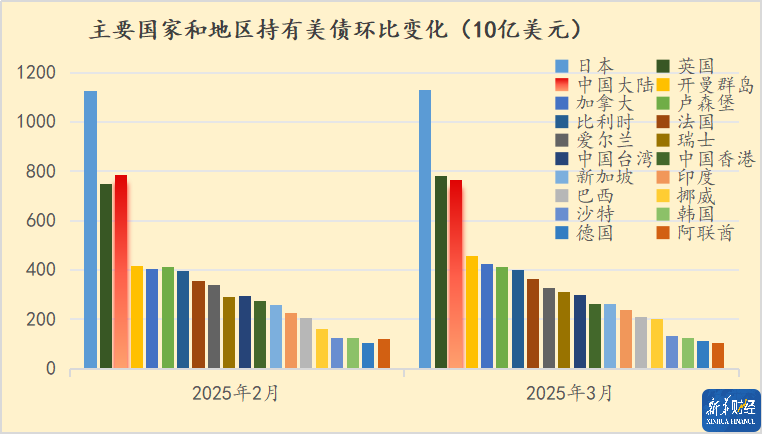
据央视新闻,美国白宫当地时间5月16日批评国际信用评级机构穆迪当天下调美国主权信用评级的决 定,称其为"政治决定"。 另据智通财经消息,美国财政部5月16日公布的数据显示,2025年3月,美债前三大海外债主中,日本、 英国增持美国国债,中国减持。中国由美国第二大债主变为第三大债主,英国变为第二大债主。 加密货币跳水 当地时间周五(5月16日),美股盘后,穆迪将美国主权信用评级从Aaa下调至Aa1,原因是美国政府债 务和利率支付比例增加。此前,惠誉和标普全球已将美国评级调至Aaa以下,穆迪的最新决定意味着, 美国这个全球最大经济体已被国际三大信用评级机构全部降级。 受上述消息影响,追踪标普500指数的ETF基金在盘后交易中下跌1%,纳斯达克100ETF-Invesco(QQQ) 跌1.3%。美国10年期国债收益率短线从4.44%拉升至4.48%上方;两年期美债收益率涨4.5个基点,刷新 日高至4.0037%。加密货币等投机性较强的风险资产也出现跳水,以太坊从2600美元跌至2500美元以 下,比特币也一度从10.4万美元跌至10.26万美元,艾达币、BNB、XRP等纷纷跟跌。 | 而种 | 价格 | 价格(24 ...

突发!美国,暴雷!
Sou Hu Cai Jing· 2025-05-17 06:18
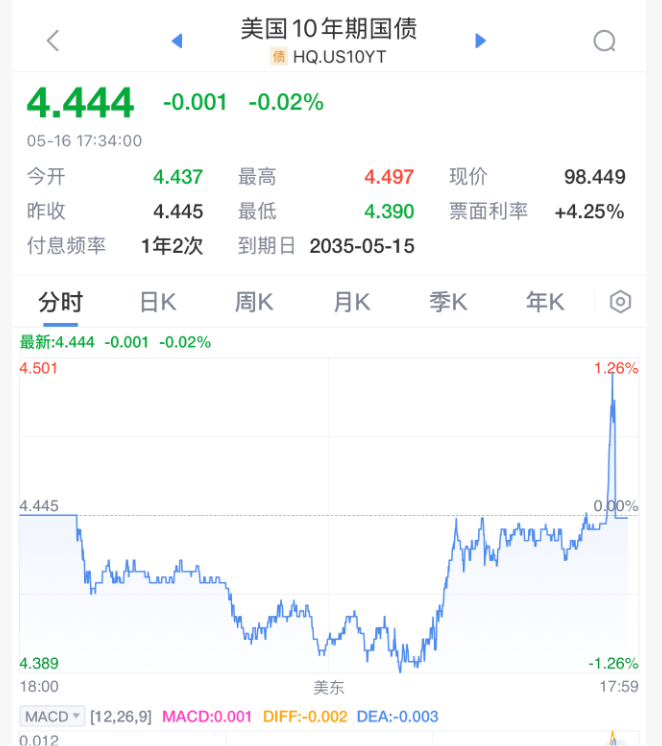
穆迪宣布下调评级 5月17日,穆迪评级公司将美国主权信用评级从最高级别Aaa下调一级至Aa1,理由是联邦政府预算赤字 融资压力加剧,以及在高利率环境下续发债务的成本上升。反映出人们对不断膨胀的债务和赤字可能损 害美国作为全球资本首选地位、并推高政府借款成本的担忧日益加深。 【导读】穆迪下调美国信用评级,理由是政府债务增长 中国基金报记者 泰勒 穆迪下调美国主权信用评级! 美国失去最后一个最高信用评级 穆迪此举与惠誉和标普全球评级看齐,三大评级机构均已不再将世界最大经济体评为顶级"三A"评级。 这次下调一级的决定是在穆迪于一年多前将美国评级展望调整为"负面"之后作出的。该机构目前给予美 国"稳定"展望。 穆迪在声明中写道:"虽然我们认可美国在经济和金融方面的显著优势,但我们认为这些优势已不足以 完全抵消财政指标的恶化。" 穆迪将问题归咎于历届政府和国会,指出预算赤字不断扩大,几乎没有减缓的迹象。周五,华盛顿的立 法者仍在推进一项规模庞大的税收与支出法案,预计未来几年将使联邦债务增加数万亿美元。 穆迪的评级决定在主要金融市场引发迅速反应,10年期美国国债收益率一度升至4.49%。 Brandywine Globa ...
利空突袭!刚刚,跳水!
券商中国· 2025-05-17 05:10
美国信用评级被下调! 当地时间周五,美股盘后,穆迪将美国主权信用评级从Aaa下调至Aa1,原因是美国政府债务和利率支付比例 增加。此前,惠誉和标普全球已将美国评级调至Aaa以下,穆迪的最新决定意味着,美国这个全球最大经济体 已被国际三大信用评级机构全部降级。 受上述消息影响,追踪标普500指数的ETF基金在盘后交易中下跌1%,纳斯达克100ETF-Invesco(QQQ)跌 1.3%。美国10年期国债收益率短线从4.44%拉升至4.48%上方;两年期美债收益率涨4.5个基点,刷新日高至 4.0037%。加密货币等投机性较强的风险资产也出现跳水,以太坊从2600美元跌至2500美元以下,比特币也一 度从10.4万美元跌至10.26万美元,艾达币、BNB、XRP等纷纷跟跌。 同日,美国白宫批评国际信用评级机构穆迪当天下调美国主权信用评级的决定,称其为"政治决定"。 另据澎湃新闻消息,美国财政部周五公布的数据显示,2025年3月,美债前三大海外债主中,日本、英国增持 美国国债,中国减持。中国由美国第二大债主变为第三大债主,英国变为第二大债主。 穆迪下调美国评级 国际三大信用评级机构之一的穆迪于当地时间周五宣布,将美 ...
穆迪下调美国AAA评级,但这次和2011年大不相同了
Hua Er Jie Jian Wen· 2025-05-17 04:25
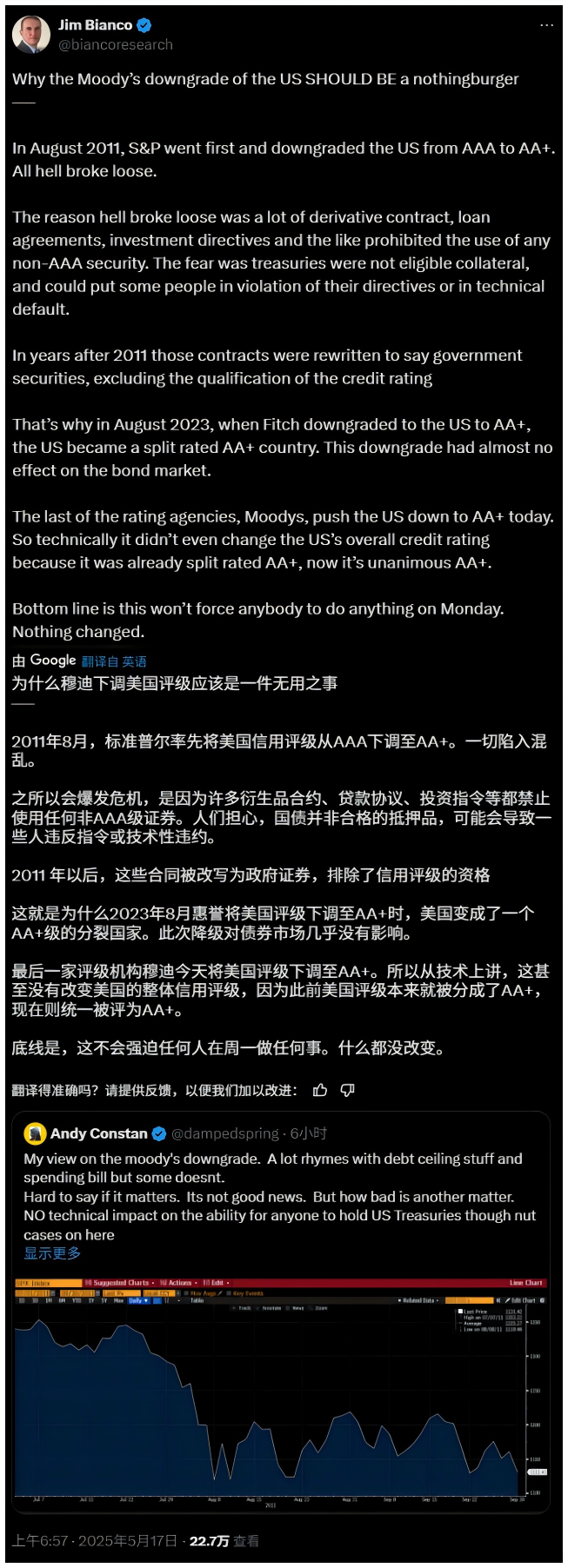
Core Viewpoint - The recent downgrade of the US credit rating by Moody's is expected to have minimal impact on the bond market, similar to the situation in 2011 when S&P downgraded the US rating, which led to significant market turmoil at that time [1][3][9]. Group 1: Historical Context - In August 2011, S&P downgraded the US from AAA to AA+, causing panic in the market, particularly in the bond market, where the 10-year Treasury yield rose by 16 basis points on the downgrade day [2][4]. - The panic in 2011 was driven by concerns that US Treasuries might no longer qualify as eligible collateral due to the downgrade, forcing many institutions to sell off their holdings [2][4]. Group 2: Changes in Market Dynamics - After 2011, contracts were rewritten to classify securities as "government securities," removing specific credit rating requirements, which means that rating changes no longer trigger forced selling or other drastic measures [1][9]. - The downgrade by Fitch in August 2023 to AA+ had almost no effect on the bond market, as the US was already considered a split-rated AA+ country prior to Moody's downgrade [3][4]. Group 3: Market Reactions - Following the 2011 downgrade, despite initial sell-offs, the 10-year Treasury yield fell significantly by 56 basis points within a month, driven by safe-haven demand and expectations of further monetary easing by the Federal Reserve [7]. - The current market environment is different, as the systemic issues that caused turmoil in 2011 are no longer present, leading to a lack of significant impact from the recent downgrade [8][9].
刚刚,美国丢掉了最后一个AAA主权信用评级
Di Yi Cai Jing· 2025-05-17 03:21
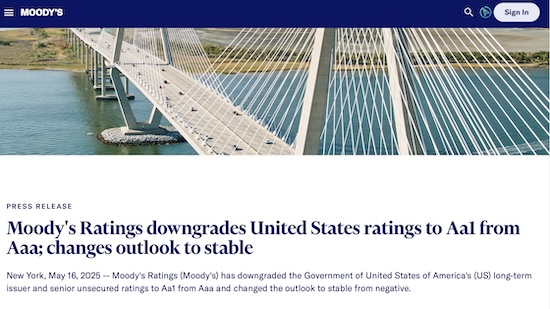
穆迪将美国主权信用评级从Aaa下调至Aa1,并将其评级展望从负面调整为稳定。 当地时间5月16日,国际信用评级机构穆迪(Moody's Ratings)宣布将美国主权信用评级从Aaa下调至 Aa1,同时将美国主权信用评级展望从负面调整为稳定。 这家拥有116年历史的评级机构解释称,评级下调"反映了十多年来美国政府债务和利息支付率的上升, 且该比率显著高于评级类似的主权国家。" "虽然我们承认美国拥有强大的经济和金融实力,但我们认为这些实力已无法完全抵消财政指标的下 滑。"穆迪在新闻稿中写道。 至此,全球三大评级机构对美国的主权信用评级保持一致,均给予美国第二高评级。此前,标准普尔于 2011年8月将美国评级从AAA下调至AA+,惠誉评级也于2023年8月将美国评级从AAA下调至AA+。 诚然,一些投资者认为,此次穆迪降级恐加剧近期贸易战对美元和美债特殊地位的损害,甚至推高基准 10年期美债收益率突破4.5%,并拖累美国经济增长和市场情绪。 巨额赤字 穆迪认为,历届美国政府和国会却都未能扭转美国巨额财政赤字和利息成本上升的趋势。 该机构预计,未来十年,鉴于福利支出增加而政府收入基本持平,美国的财政赤字将进一步扩 ...
美国失去“最后一个AAA评级”,穆迪下手的时点很“微妙”,华尔街:这给了美股回调理由
Hua Er Jie Jian Wen· 2025-05-17 02:28
Core Viewpoint - Moody's downgraded the U.S. credit rating from Aaa to Aa1, marking the first time all three major rating agencies have rated the U.S. below AAA, coinciding with Republican efforts to pass Trump's tax reform plan [1][2][4] Group 1: Credit Rating Downgrade - Moody's announced the downgrade on May 16, following a failed vote in the House Budget Committee on Trump's tax reform proposal, known as the "Beautiful Bill" [1][3] - The downgrade reflects concerns over increasing structural deficits, with Moody's warning that the proposed tax reform could add approximately $4 trillion to the deficit over the next decade [4][5] Group 2: Market Reactions - Following the downgrade, U.S. stock index futures fell, and Treasury yields rose, indicating a negative market reaction [2][5] - Analysts believe the downgrade could lead to a market pullback, as it adds to existing uncertainties regarding fiscal policy and economic conditions [5][7] Group 3: Political Context - The timing of the downgrade is seen as significant, occurring just hours after hardline Republicans blocked the tax reform proposal, highlighting the political tensions within the party [3][4] - The failed proposal aimed to extend tax cuts from the 2017 Trump administration, but faced opposition from within the Republican ranks, particularly regarding cuts to Medicaid and green energy tax credits [4]

突发!美国主权信用评级遭下调
Zheng Quan Shi Bao· 2025-05-17 02:13
此前,惠誉评级(Fitch Ratings)和标普全球评级(S&P Global Ratings)已将美国评级调至AAA以下,穆迪的这一决定这意味着美国已被三大评级机构全部降 级。 穆迪下调美国主权信用评级 穆迪下调美国主权信用评级。 国际信用评级机构穆迪16日宣布,由于美国政府债务和利率支付比例增加,该机构决定将美国主权信用评级从Aaa下调至Aa1,同时将美国主权信用评级 展望从"负面"调整为"稳定"。 当地时间5月16日盘后,国际信用评级机构穆迪宣布,将美国主权信用评级从Aaa下调至Aa1,同时将美国主权信用评级展望从"负面"调整为"稳定"。 今年4月,标普曾在一份报告中暗示,如果未来发生任何使美国财政状况恶化的事情,它可能会将美国信用评级从目前的AA+再下调一级。 在标普之后,2023年8月,惠誉评级也将美国评级从AAA下调至AA+,这是惠誉1994年发布该评级以来首次下调美国信用评级。 惠誉认为,评级下调的主要驱动因素在于,他们预计美国在未来三年内的财政状况会持续恶化,政府的债务负担居高不下,而且还在持续加重;此外,在 过去的20年里,美国政府的治理水平"持续恶化",反复出现债务上限的政治僵局,而且常 ...

突发!美国主权信用评级遭下调
证券时报· 2025-05-17 02:00
穆迪下调美国主权信用评级。 国际信用评级机构穆迪16日宣布,由于美国政府债务和利率支付比例增加,该机构决定将美国主权信用评级从 Aaa下调至Aa1,同时将美国主权信用评级展望从"负面"调整为"稳定"。 此前,惠誉评级(Fitch Ratings)和标普全球评级(S&P Global Ratings)已将美国评级调至AAA以下,穆迪的 这一决定这意味着美国已被三大评级机构全部降级。 穆迪下调美国主权信用评级 当地时间5月16日盘后,国际信用评级机构穆迪宣布,将美国主权信用评级从Aaa下调至Aa1,同时将美国主权 信用评级展望从"负面"调整为"稳定"。 穆迪认为,此次下调反映了十多年来美国政府债务和利率支付比例的上升,这一水平显著高于同等评级的主权 国家。穆迪分析师在声明中称:"美国历届政府和国会未能就扭转年度巨额财政赤字和利息成本上升趋势的措 施达成一致。我们认为,当前正在考虑的财政提案不会带来强制性支出和赤字的多年实质性削减。" 穆迪预计,美国联邦政府赤字将扩大,到2035年达到GDP的近9%,高于2024年的6.4%,主要受债务利息支付 增加、福利支出上升和收入相对较低的推动。预计美国联邦债务负担到2035 ...


美国财政部公布3月份国际资本流动报告 英国成为海外第二大债主
Xin Hua Cai Jing· 2025-05-17 01:55
Group 1 - The U.S. Treasury reported that foreign holdings of U.S. debt increased by $233.1 billion in March, totaling $9.0495 trillion, with Japan remaining the largest foreign holder [1] - Moody's downgraded the U.S. sovereign credit rating from Aaa to Aa1, citing increasing financing burdens from the federal budget deficit and rising costs of extending existing debt under high interest rates [1][3] - The downgrade by Moody's aligns with previous actions by other major rating agencies, reflecting concerns over the growing deficit and political gridlock [3] Group 2 - The 10-year U.S. Treasury yield rose by 3 basis points to 4.48% following the downgrade, while the iShares 20+ Year Treasury Bond ETF fell approximately 1% in after-hours trading [3] - Moody's indicated that the decision to downgrade was influenced by the rising ratio of government debt and interest payments compared to similarly rated sovereign nations [6] - The total federal debt reached $36.21 trillion as of May 15, 2023, with an increase of $0.852 billion since the beginning of the month [6] Group 3 - The U.S. Treasury Secretary urged Congress to raise or suspend the debt ceiling by mid-July to avoid potential default, which could have catastrophic economic consequences [7] - Since 1960, Congress has acted 78 times to raise, temporarily extend, or modify the debt ceiling, with significant actions occurring under both Republican and Democratic administrations [7][8] - The fiscal deficit for the current fiscal year has reached $1.05 trillion, a 13% increase from the previous year, with expectations that the federal deficit will expand to nearly 9% of GDP by 2035 [8]
济南市举办金融支持稳市场稳预期一揽子政策培训会
Zheng Quan Shi Bao Wang· 2025-05-15 07:35
Group 1 - The core viewpoint of the article is the organization of a training session in Jinan to promote the implementation of a comprehensive financial policy aimed at stabilizing the market and expectations [1][2] - The training session was attended by over 200 participants, including officials from various financial institutions, local government departments, and technology innovation enterprises [1][2] - The training focused on interpreting new financial policies and emphasized the reform of technology innovation bonds [1][2] Group 2 - Jinan is accelerating the construction of a financial reform pilot zone for technological innovation, aiming to optimize the financial business environment and promote a virtuous cycle among technology, finance, and industry [2] - The Jinan Municipal Financial Office plans to collaborate with central financial regulatory departments and various financial institutions to implement measures that support local enterprises, particularly in issuing technology innovation corporate bonds and facilitating listings on the Sci-Tech Innovation Board [2] - The initiative aims to attract medium- and long-term financial support for sectors such as technology, consumption, foreign trade, and small and micro enterprises, contributing to the city's key project enhancement efforts [2]