
工业软件

Search documents
地缘经济论 | 第九章 应对卡脖子:从重供给到供需并重
中金点睛· 2025-09-25 23:57
Core Viewpoint - The article discusses the implications of geopolitical economic power, particularly how developed countries' strategies to restrict emerging economies can backfire, especially when the latter are large nations. It emphasizes the importance of supply and demand dynamics in innovation and the potential for emerging economies to leverage their scale advantages to overcome technological constraints imposed by developed nations [2][9]. Group 1: Geopolitical Economic Strategies - The U.S. has expanded its restrictions on China's semiconductor industry, moving from targeting specific products to a broader range of advanced technologies, reflecting a competitive geopolitical strategy [4][30]. - The Biden administration has continued the Trump-era strategy of restricting advanced AI chip exports to China, indicating a persistent focus on maintaining U.S. dominance in high-tech sectors [4][30]. - Recent changes in U.S. export policies, including the lifting of restrictions on EDA software and commercial aircraft engines, suggest a fluctuating approach to geopolitical economic power, influenced by broader economic considerations [7][30]. Group 2: Supply-Side and Demand-Side Dynamics - The article highlights the importance of a "large enterprise + large bank + large government" model for innovation in emerging economies, which can effectively address technological constraints imposed by developed nations [14][15]. - China's semiconductor industry has seen significant advancements in R&D spending and patent filings, indicating a shift towards self-sufficiency and innovation in response to external pressures [43][45]. - The demand-side advantages of large emerging economies can stimulate domestic innovation by providing substantial market feedback and incentives for local enterprises to develop competitive products [15][22]. Group 3: Case Studies and Historical Context - The article cites China's rapid advancement in mobile communication technology as a successful example of leveraging domestic market size and government support to overcome technological gaps with developed nations [16][17]. - Historical instances of geopolitical economic strategies show that the effectiveness of export restrictions often depends on the relative economic size of the countries involved, with larger economies being less susceptible to such measures [30][32]. - The U.S. semiconductor industry faces potential declines in market share and revenue due to its restrictive policies against China, which could undermine its own innovation capabilities [39][40].


华为、比亚迪押注,上海跑出一家工业软件IPO,微软前员工任董事长
3 6 Ke· 2025-09-25 10:59
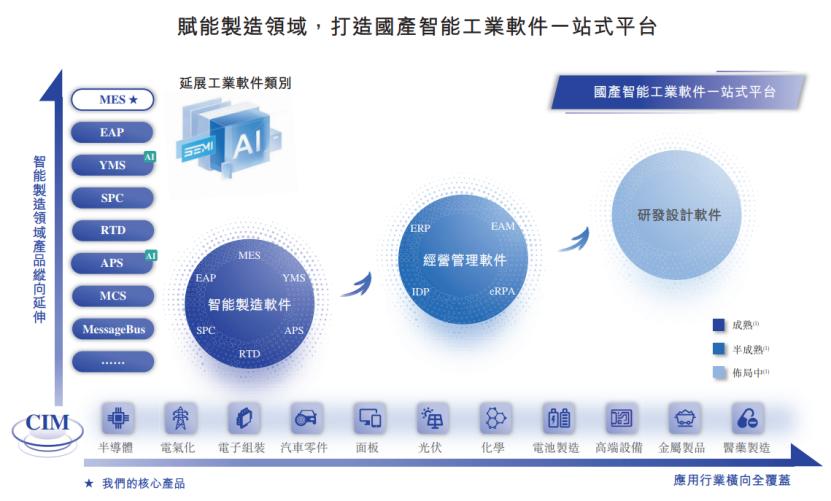
Core Viewpoint - China's manufacturing industry remains the largest globally for 14 consecutive years, providing a robust foundation for the industrial software market, which is projected to reach CNY 2,940 billion in 2024 and CNY 4,670 billion by 2029, with a CAGR of 9.7% [1] Company Overview - Semitron Information Group Co., Ltd. (referred to as "Semitron") is a leading provider of intelligent industrial software solutions in China, headquartered in Shanghai, and has recently submitted an IPO application to the Hong Kong Stock Exchange [1][2] - The company was established in 2017 and has since expanded its product offerings, including automation software for various industries [2] - Semitron has received multiple rounds of financing, with a post-investment valuation of approximately CNY 6.383 billion as of December 2023 [2] Financial Performance - Semitron's revenue from intelligent manufacturing software solutions has decreased slightly but remains above 70%, while revenue from management software solutions has increased from 0.5% to 28.6% during the reporting period [7] - The company recorded revenues of approximately CNY 1.81 billion in 2022, CNY 2.87 billion in 2023, and projected CNY 5 billion in 2024, with a net profit of CNY 2.4565 million in 2023 [9][11] - Operating cash flow has been negative, with net outflows of approximately CNY 71 million in 2022 and CNY 88.3 million in 2023, which may limit the company's operational funding [8] Market Position - The advanced industrial intelligent manufacturing software market in China is projected to grow from CNY 171 billion in 2020 to CNY 310 billion in 2024, with a CAGR of 16.1% [13] - Semitron holds a 1.5% market share in the advanced industrial intelligent manufacturing software sector, ranking first among domestic companies, but faces competition from major players like Siemens and GE [16] Product Offerings - Semitron provides a wide range of intelligent manufacturing software solutions, including MES, EAP, YMS, SPC, and more, primarily targeting large state-owned enterprises [4][7] - The company plans to develop its own ERP software to enhance market share and meet domestic innovation trends [4] Leadership - The chairman and CEO, Li Gangjiang, has over 20 years of experience in the software industry, having previously worked for major tech companies like Microsoft and Google [3][2]

华为、比亚迪押注!上海跑出一家工业软件IPO,微软前员工任董事长
Ge Long Hui A P P· 2025-09-25 10:42
Core Viewpoint - The article discusses the emergence of an industrial software company in Shanghai that is set to go public, with significant backing from major players like Huawei and BYD, and highlights the appointment of a former Microsoft employee as the chairman [2] Group 1: Company Overview - The industrial software company is preparing for an IPO, indicating a growing trend in the tech sector within China [2] - The involvement of Huawei and BYD suggests strong confidence in the company's potential and the industrial software market [2] Group 2: Leadership and Management - A former Microsoft employee has been appointed as the chairman, which may bring valuable experience and insights from a leading global tech company [2]

赛美特港股IPO,华为、比亚迪入股,经营活动现金流承压
Ge Long Hui· 2025-09-25 10:33
Core Viewpoint - The Chinese industrial software market is projected to grow significantly, reaching CNY 2,940 billion in 2024 and CNY 4,670 billion by 2029, with a compound annual growth rate (CAGR) of 9.7% [1] Company Overview - Semitron Information Group Co., Ltd. (referred to as "Semitron") is a leading provider of intelligent industrial software solutions in China, headquartered in Shanghai [2] - The company was established in 2017 and became the first domestic vendor to sign a contract with a 12-inch wafer fab in 2019 [2] - Semitron has received multiple rounds of financing, with a post-investment valuation of approximately CNY 6.383 billion as of December 2023 [2] - The chairman and CEO, Li Gangjiang, has over 20 years of experience in the software industry, having previously worked for major tech companies like Microsoft and Google [3] Revenue and Financial Performance - Over 70% of Semitron's revenue comes from intelligent manufacturing software solutions, while the revenue from management software solutions has increased from 0.5% to 28.6% during the reporting period [4][7] - The company recorded revenues of approximately CNY 1.81 billion in 2022, CNY 2.87 billion in 2023, and is projected to reach CNY 5 billion in 2024 [9] - Semitron turned a profit in 2023, with a net profit of CNY 24.57 million, after previously reporting a loss of CNY 80.91 million in 2022 [9] - The gross margin has fluctuated, with rates of 42.4% in 2022, 44% in 2023, and 39.6% in 2024, reflecting competitive pricing pressures and increased operational costs [9][10] Market Position and Competition - The advanced industrial intelligent manufacturing software market in China is expected to grow from CNY 171 billion in 2020 to CNY 310 billion by 2024, with a CAGR of 16.1% [13] - Semitron holds a 1.5% market share in the advanced industrial intelligent manufacturing software sector, ranking first among domestic companies [16] - The market is currently dominated by foreign giants, but domestic companies are rapidly emerging due to increasing demand for localized and controllable software solutions [16] - Semitron faces competition from established players such as Siemens, GE, and Hikvision, as well as risks related to accounts receivable [16]
【IPO前哨】获华为入股,半导体领域独角兽赛美特冲刺港股
Sou Hu Cai Jing· 2025-09-23 08:37
Core Viewpoint - The semiconductor sector in Hong Kong is experiencing significant growth, with companies like Saimate Information Group (赛美特) entering the market and aiming for an IPO to enhance R&D and strategic investments [1][2][3]. Company Overview - Saimate is not a traditional chip manufacturer but a provider of intelligent manufacturing software solutions for the semiconductor industry, having developed the first and only full-stack smart manufacturing and management software solution in the industry [2][5]. - The company has successfully integrated the entire semiconductor manufacturing process and is the first domestic supplier to have a fully automated Computer Integrated Manufacturing (CIM) solution validated and put into mass production by several 12-inch wafer fabs [2][5]. Market Context - The semiconductor sector is heating up due to the domestic substitution trend, with multiple companies in the semiconductor supply chain pursuing listings on the Hong Kong Stock Exchange [1][3]. - Saimate is positioned as the largest provider of advanced industrial intelligent manufacturing software in China, with its revenue primarily derived from the semiconductor sector [5]. Financial Performance - Saimate's revenue is projected to grow from 181 million RMB in 2022 to 499 million RMB in 2024, with a net profit of 73.83 million RMB expected in 2024 [10][11]. - The company has seen a rapid increase in its customer base, growing from 223 clients at the end of 2022 to an expected 758 by mid-2025, with a compound annual growth rate of 38.1% for its intelligent manufacturing software solutions [8][10]. Investment and Valuation - Since 2021, Saimate has raised nearly 1 billion RMB across five funding rounds, with notable investors including Huawei and BYD [6][7]. - Following its C+ round financing at the end of 2023, Saimate's implied valuation reached 6.383 billion RMB [7]. Challenges and Future Outlook - Despite the overall growth in the semiconductor industry, Saimate's revenue growth has slowed, with a 9.7% increase in the first half of 2025 compared to a 74.2% increase the previous year [10][12]. - The company faces intense competition from both international giants and domestic peers, which may pressure project bidding prices and impact revenue growth [12]. - Saimate has increased its R&D investment by 32% to nearly 38.17 million RMB, indicating a commitment to technological innovation and the development of a self-developed ERP system for domestic substitution [12][13].
上海半导体软件龙头冲刺港交所,华为比亚迪参投
3 6 Ke· 2025-09-23 04:12
芯东西9月23日报道,9月19日,上海先进工业智能制造软件开发商赛美特正式递表港交所。 该公司打造了行业首个也是唯一的全栈式半导体CIM(计算机集成制造)解决方案。 截至2025年6月30日,赛美特客户数量已达758家,覆盖全国前八大晶圆厂中的六家、前三大半导体硅片厂以及前三大封测厂。 华为旗下哈勃投资、比亚迪、立昂微等均是赛美特的股东。 招股书显示,该公司已克服生态系统封闭相关的技术壁垒与挑战,并实现了对半导体制造全流程的集成,成为国内首家且唯一一家全自动 CIM解决方案已通过多家12英寸晶圆厂验证并投入量产的供应商,已帮助客户建成国内首座全面使用国产CIM系统的晶圆厂。 | 市場領導力 | ਜ | 排名第一(1) 中國先進工業智能製造軟件 | 中國增速最快(2) ਛ 先進工業智能製造軟件公司 | 行業少數 80 實現規模化盈利(3) | | --- | --- | --- | --- | --- | | | | 公司中的中國公司 | | | | 技術與解決方案 實力 | 9 | 中國首家目唯一 應用12英寸晶圓全自動量產 解决方案的計算機集成製造 | 行業首個、唯一且場景 覆蓋最多(5) 产 | 人才密度 ...
两部门:推进5G、移动物联网等工业园区网络基础设施部署
Zhong Zheng Wang· 2025-09-22 12:33
Core Viewpoint - The Ministry of Industry and Information Technology and the National Development and Reform Commission have issued guidelines for the high-quality development of industrial parks, emphasizing the digital transformation of enterprises and the enhancement of new information infrastructure [1] Group 1: Digital Transformation - The guidelines encourage enterprises in industrial parks to undertake digital upgrades of outdated equipment and promote the application of smart manufacturing equipment and systems [1] - There is a focus on exploring "chain transformation" for the overall digital transformation of the industrial and supply chains, guiding leading enterprises to develop universal digital transformation tools and solutions [1] - Support is provided for small and medium-sized enterprises to accelerate the application of "small, fast, light, and precise" digital solutions, fostering the creation of new digital products, applications, and services in the manufacturing sector [1] Group 2: Infrastructure Development - The guidelines advocate for the advancement of new information infrastructure, including the deployment of 5G, gigabit optical networks, IPv6, and mobile IoT within industrial parks [1] - There is a push for the industrial internet to be integrated into parks, along with the support for the construction or effective utilization of data storage and computing infrastructure [1] - Encouragement is given to parks with conditions to develop facilities for new technologies such as artificial intelligence and cloud computing, enhancing the application level of open-source operating systems [1]
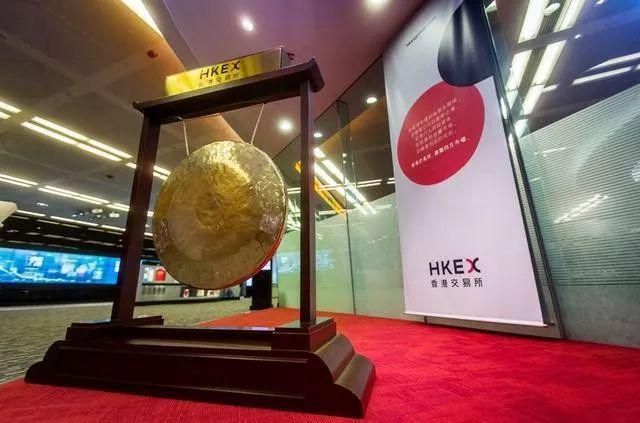
本周3家上市、11家递表,今年香港上市累计募资1465亿 | 香港IPO周报(截至20250919)
Xin Lang Cai Jing· 2025-09-22 05:37
Group 1 - The core viewpoint of the news highlights the recent IPO activities in Hong Kong, with a total of 293 companies having submitted applications this year, resulting in 64 listings, including 61 IPOs that raised a total of HKD 1,464.98 billion [2] - This week, three companies are set to be listed: He Meng (02525.HK) with a market capitalization of HKD 41.60 billion and a decline of 7.24%, Health 160 (02656.HK) raising HKD 4.00 billion with a significant increase of 138.69%, and Jingfang Pharmaceutical-B (02595.HK) with HKD 18.20 billion and a rise of 106.47% [1] - The companies that submitted applications this week include Xianweida Biotechnology-B, Shiyoupai, Ruoyuchen, Shimeite, Huqin Technology, Nuandong Insight, Aikemu Fa-B, Beijing Junzheng, Zhongrun Solar Energy, and New Element-B, all scheduled for submission on September 15-19 [3] Group 2 - The total amount raised through IPOs this year in Hong Kong is HKD 1,464.98 billion, indicating a robust market despite fluctuations in individual stock performances [2] - The significant percentage increases in the stock prices of Health 160 and Jingfang Pharmaceutical-B suggest strong investor interest and market confidence in these sectors [1] - The diverse range of industries represented in the recent applications, including biotechnology, consumer electronics, and insurance technology, reflects the dynamic nature of the Hong Kong IPO market [3]
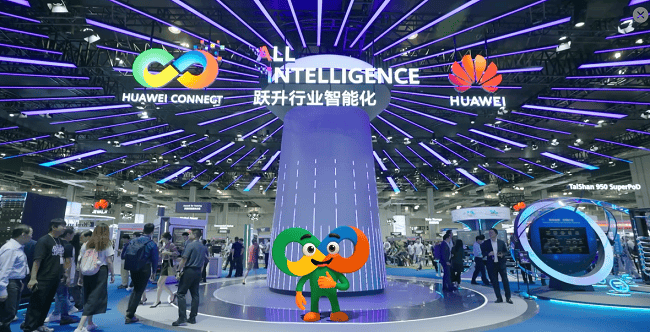
泊松软件亮相华为全联接大会2025:以AI重构工业软件边界,共启智造跃升新纪元
Sou Hu Cai Jing· 2025-09-19 14:14
Core Insights - The 10th Huawei Connect Conference 2025 was held in Shanghai, focusing on "Elevating Industry Intelligence" and showcasing Huawei's new generation of digital infrastructure, development tools, and industry solutions [1] - Poisson Software, a key partner in the industrial software sector, presented its high-end manufacturing solutions in collaboration with Huawei Cloud, highlighting its R&D capabilities and achievements [3] Group 1: Event Highlights - The conference featured a high-end roundtable forum on "AI in R&D Design Industrial Software," attracting industry leaders and experts to discuss the integration of AI and industrial software [4] - Poisson Software's PLM product line president introduced the new IntePLM product lifecycle management system based on Huawei Cloud iDME, aimed at standardizing R&D data processes across various industries [6] Group 2: Product and Solutions - Poisson Software's exhibition showcased its integrated high-end manufacturing solutions across 12 major industries, addressing pain points in industrial software through interactive displays and expert discussions [8] - The exhibition attracted significant attention from industry leaders and participants, facilitating discussions on core needs in simulation within the industrial software sector [10] Group 3: Future Directions - Poisson Software aims to continue its collaboration with Huawei Cloud to accelerate the arrival of a new industrial cognitive revolution through more open architectures and intelligent engines [10]
维宏股份(300508) - 300508维宏股份投资者关系管理信息20250919
2025-09-19 09:42
Group 1: Company Strategy and Growth - The company is pursuing a dual-driven strategy of internal growth and external mergers and acquisitions to enhance its development [1][2] - The establishment of the Jiaxing Hongpu Fund is progressing steadily, with plans for future disclosures based on regulatory requirements [1][5] - The company aims to identify suitable acquisition targets and management teams to inject new momentum into its technological innovation and business expansion [5][6] Group 2: Market Performance and Stock Liquidity - Concerns regarding stock liquidity were acknowledged, with the company emphasizing its normal operations and commitment to creating shareholder value [2][7] - The company is focused on enhancing its market presence and product innovation to improve stock performance [7][8] Group 3: Product Development and Technological Advancements - There has been a significant increase in demand for digital, informational, and intelligent solutions in manufacturing, particularly in the IoT cloud platform and CNC control areas [3][4] - New lightweight features have been added to the CNC system to improve ease of use and adaptability for small and medium-sized manufacturing enterprises [4][6] Group 4: Financial Health and Investment Plans - As of mid-2025, the company's operating cash flow remains stable, supporting daily operations and strategic planning [5][6] - The company plans to accelerate the leasing of idle properties and strengthen external investments and acquisitions [6][7]
