核聚变能源

Search documents
核聚变赛道再吸8.63亿美元!英伟达、谷歌联合出手
Zheng Quan Shi Bao Wang· 2025-08-29 12:16
Core Insights - Major investments are being made in nuclear fusion technology, with Commonwealth Fusion Systems (CFS) securing $863 million in new funding, including participation from Nvidia and other prominent investors [2][3] - CFS aims to advance its fusion energy demonstration system and accelerate the development of its first commercial fusion power plant, targeting a key technology milestone by 2027 [3] - The global nuclear fusion industry has attracted significant investment, with CFS alone accounting for approximately one-third of the total funding in the sector, amounting to around $3 billion since its inception [2][3] Funding and Investment - CFS's recent funding round included investors such as Nvidia's NVentures, Khosla Ventures, Alphabet, and several sovereign wealth funds and investment banks [2] - In China, Nova Fusion Energy Technology recently completed a 500 million yuan angel round, marking a record for private nuclear fusion companies in the country [7] - The Chinese nuclear fusion sector is seeing a dual approach with both state-owned and private companies, highlighted by the establishment of China Fusion Energy Co., which raised approximately 11.49 billion yuan in capital [8] Technological Development - CFS's demonstration system is currently 65% complete, with plans to provide 200 megawatts of power to Google from its Arc power plant, expected to be operational in the early 2030s [3] - Nova Fusion is focusing on developing small, modular, and economically viable nuclear fusion power plants, aiming to commercialize fusion technology within a few years [7] - The nuclear fusion process is distinct from traditional nuclear energy, as it does not produce radioactive waste but instead generates helium, positioning it as a promising clean energy source [5] Market Trends - The global nuclear fusion industry attracted $7.1 billion in investments last year, reflecting a nearly $1 billion increase from 2023 [9] - The trend of increasing capital and policy support for controllable fusion commercialization is expected to continue, particularly in China [9]


24小时环球政经要闻全览 | 8月29日
Sou Hu Cai Jing· 2025-08-29 00:03
Group 1: Market Performance - Major global stock indices showed mixed performance, with the Dow Jones Industrial Average at 45636.9, up 71.67 points or 0.16% [1] - The Nasdaq increased by 115.02 points, reaching 21705.16, a rise of 0.53% [1] - The S&P 500 rose by 20.46 points to 6501.86, reflecting a 0.32% increase [1] - The Shanghai Composite Index gained 43.25 points, closing at 3843.6, an increase of 1.14% [1] - The Shenzhen Component Index surged by 276.3 points, reaching 12571.37, a rise of 2.25% [1] - The Hang Seng Index fell by 202.94 points to 24998.82, a decrease of 0.81% [1] Group 2: Federal Reserve Insights - Federal Reserve Governor Waller supports a 25 basis point rate cut in September, anticipating further cuts in the next 3-6 months unless the August employment report indicates significant economic weakness [2] - Waller noted that the underlying inflation rate is close to 2%, with the policy rate expected to be 1.25 to 1.50 percentage points above the neutral rate [2] Group 3: Company Financials - Dell reported Q2 revenue of $29.8 billion, a 19% year-over-year increase, exceeding market expectations of $29.17 billion [4] - Dell's AI solutions shipments reached a value of $10 billion in the first half of the fiscal year 2026, surpassing the total for the entire fiscal year 2025 [4] - Dell expects full-year revenue for fiscal 2026 to be between $105 billion and $109 billion, with Q3 revenue guidance between $26.5 billion and $27.5 billion [4] Group 4: Investment and Financing - Commonwealth Fusion Systems (CFS) secured $863 million in funding, with investors including Nvidia and Alphabet, to advance its fusion energy demonstration system and develop its first commercial fusion power plant [5] Group 5: Target Price Adjustments - Multiple institutions raised Nvidia's target price, with Bank of America increasing it from $220 to $235, and Morgan Stanley from $206 to $210 [7] - Other notable adjustments include Citigroup raising its target from $190 to $210, and Bernstein from $185 to $225 [7] - Argus Research significantly raised Nvidia's target price from $150 to $220 [8]


城市24小时 | “逐日之战” 安徽的新机会?
Mei Ri Jing Ji Xin Wen· 2025-08-26 16:12
Group 1: Core Insights - The Anhui provincial government is focusing on fusion energy as a key future industry, emphasizing technological innovation and commercialization [1][2] - The global fusion industry has seen significant investment growth, reaching $9.766 billion in 2023, a 414% increase since 2021 [2] - Anhui, particularly Hefei, is positioned as a leader in fusion energy research and development, housing major scientific facilities like EAST and BEST [2][3] Group 2: Industry Development - The Anhui government aims to create a fusion energy industry cluster, integrating various sectors from technology development to operational services [1][3] - The province has over 70 companies involved in the fusion energy supply chain, covering all aspects from production to engineering [3] - National policies are increasingly supportive of fusion energy, with recent directives highlighting its importance in achieving carbon neutrality goals [2][3] Group 3: Future Prospects - The government is looking to stimulate market activity through reforms and attract more private investment in fusion energy [1] - The push for fusion energy is part of a broader strategy to enhance China's position in the global energy landscape [2][4]

阿里,投出一个天使轮
3 6 Ke· 2025-08-18 08:55
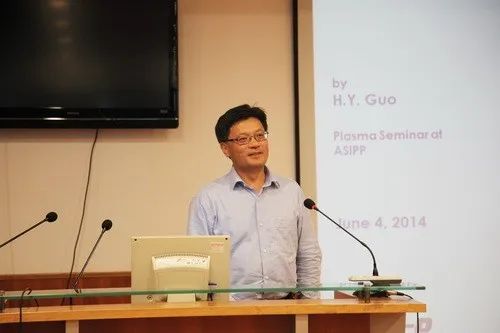
Group 1 - Nova Fusion recently completed a 500 million yuan angel round financing, with notable investors including the Social Security Fund, Legend Capital, and several other prominent institutions [1] - The company was founded in April this year in Shanghai by Guo Houyang, a seasoned scientist in the nuclear fusion field, who has held significant positions in various research institutions [2][4] - Nova Fusion aims to develop small modular nuclear fusion reactors, focusing on a strategy that combines nuclear fusion with artificial intelligence to provide safe, zero-carbon, and cost-effective distributed energy solutions [4][5] Group 2 - The company is pursuing a Field-Reversed Configuration (FRC) technology route, which is more compact and cost-effective compared to mainstream Tokamak devices [5] - Nova Fusion has set three technical goals: achieving ion temperatures of 100 million degrees, obtaining a fusion energy gain (Q) greater than 1, and ultimately producing 50 megawatts (MW) of fusion power by 2035 [5] - The global nuclear fusion industry has seen explosive growth, with total investments rising from $1.9 billion in 2021 to $9.7 billion, and the number of fusion companies increasing from 23 to 53 [6][7] Group 3 - The strategic significance of nuclear fusion is underscored by the projected doubling of global data center electricity demand by 2030, which will exceed 945 terawatt-hours (TWh) [7] - The commercial viability of nuclear fusion is approaching, with over 35 companies expected to establish commercial fusion demonstration plants by 2030-2035 [8] - Recent advancements include the construction of a commercial fusion power plant by Helion in Washington, which plans to supply power to Microsoft data centers starting in 2028 [8] Group 4 - China has made significant strides in nuclear fusion research, achieving world records in plasma operation and initiating the construction of a compact fusion energy experimental device expected to be completed by 2027 [9] - The potential of nuclear fusion is likened to the significance of fire for early humans, with the promise of providing nearly limitless clean energy [6]

手把手教你点亮“人造太阳”,先从电源说起……
市值风云· 2025-08-13 10:15
Core Viewpoint - The article discusses the critical role of nuclear fusion power systems in achieving stable and controlled nuclear fusion, likening it to a "heart" and "brain" of a fusion reactor, essential for maintaining the high-temperature plasma necessary for fusion reactions [4][5][6]. Summary by Sections Nuclear Fusion Power System - The nuclear fusion power system is a specialized high-performance power source that precisely controls the plasma in fusion reactions, which can reach temperatures exceeding 100 million degrees Celsius [5][6]. - Successful ignition of nuclear fusion requires three key conditions: high temperature, high density, and long energy confinement time, collectively referred to as the "fusion triple product" [6]. Types of Power Sources - There are two main types of nuclear fusion power sources: magnetic power sources and heating power sources [7]. - Magnetic power sources generate strong magnetic fields to suspend the high-temperature plasma, while heating power sources raise the plasma temperature to the required levels [7][10]. Performance Requirements - The power systems must meet stringent performance criteria, including voltage fluctuation control within 3%, response times under 0.3 milliseconds, and strong interference resistance [8]. Market Potential - The market for nuclear fusion power systems is projected to exceed 5 billion, based on current investment in fusion projects, with costs for fusion reactors ranging from 3 to 10 billion for a 1000MW scale [12][16]. - The domestic market is expected to grow further with the development of various fusion projects, including BEST, STAR, and others, with significant investments planned [13][14]. Industry Challenges and Opportunities - The nuclear fusion power sector faces challenges such as high operational demands on heating power sources and the need for advanced electronic components [16]. - The industry is still in its early stages, with a focus on technological advancements and the establishment of supply chains for specialized power systems [17]. Key Companies - The article identifies several key companies involved in the nuclear fusion power sector, highlighting their roles in the development and supply of necessary technologies and components [18].

上海核聚变民企再创单笔融资新高 与“国家队”协同发展 填补小型分布式电站产业空白
Jie Fang Ri Bao· 2025-08-13 00:43
近日,诺瓦聚变能源科技(上海)有限公司完成5亿元天使轮融资,创下国内民营核聚变企业单笔融资 新高。在投资机构中,既有社保基金中关村自主创新专项基金、临港科创投等国有资本,也有君联资 本、光速光合等社会资本。这些机构都看好诺瓦聚变的"场反位形+磁压缩"技术路线,支持公司研发小 型化、模块化、可分布式部署的核聚变电站。 "我们研发的FRC(场反位形)装置,功率不是很高。"周健坦言,所以诺瓦聚变的目标是打造小型分布 式聚变电站,在2030—2034年实现50兆瓦示范发电,为人工智能算力中心、园区、小岛等场所提供清洁 能源。 核聚变创业团队为何选择上海 此前国内民营核聚变企业单笔融资的最高纪录,也是由上海企业创造——2022年,能量奇点完成近4亿 元天使轮融资,沿着磁约束技术路线,研发高温超导托卡马克装置。 市科委介绍,上海正在建设具有全球影响力的聚变能源创新高地,已形成创业团队多、技术路线全、融 资氛围浓、人才密度高的产业生态。 用场反位形打造小型聚变电站 聚变能源俗称"人造太阳",已成为全球竞相布局的新赛道。目前,实现可控核聚变的技术路线可分为磁 约束、惯性约束、磁-惯性约束。磁约束技术的主流装置是一种名为"托卡 ...
上海核聚变民企再创单笔融资新高
Xin Lang Cai Jing· 2025-08-13 00:42
近日,诺瓦聚变能源科技(上海)有限公司完成5亿元天使轮融资,创下国内民营核聚变企业单笔融资 新高。在投资机构中,既有社保基金中关村自主创新专项基金、临港科创投等国有资本,也有君联资 本、光速光合等社会资本。这些机构都看好诺瓦聚变的"场反位形+磁压缩"技术路线,支持公司研发小 型化、模块化、可分布式部署的核聚变电站。(解放日报) ...
可控核聚变专题:磁体材料更迭驱动托卡马克性能提升
2025-08-11 14:06
Summary of Key Points from the Conference Call Industry Overview - The nuclear fusion sector is experiencing rapid advancements, with both state-owned and private enterprises exceeding expectations in project progress. The Helen project plans to sell electricity to Microsoft by 2030, indicating a rising phase for industry catalysts [1][2]. Core Insights and Arguments - Various technical routes for nuclear fusion exist, with magnetic confinement technology showing greater scalability potential. The Tokamak device is the mainstream choice, with projects like ITER and BEST adopting this technology, while smaller FRC designs are more suitable for distributed power generation [1][6]. - Superconducting materials are critical to Tokamak devices, with high-temperature superconductors expected to account for nearly 50% of materials used in the future. Companies to watch include Shanghai Superconductor, Yongding, and Jinda, as well as magnet companies like Lianchuang Optoelectronics [1][7]. - The magnetic confinement scheme is preferred due to its strong engineering feasibility and long energy confinement time, achieved through strong magnetic fields that confine charged particles for controlled nuclear fusion [1][8]. Market Trends and Projections - The market demand for high-temperature superconducting materials in nuclear fusion magnets is projected to grow from 300 million yuan in 2024 to 4.9 billion yuan by 2030, with a compound annual growth rate (CAGR) of approximately 60% [3][15]. - The current focus in the nuclear fusion sector includes domestic project planning and bidding, as well as ignition progress in international projects. Key upcoming events include the Chengdu advanced skills unveiling and various bidding activities from companies like Shanghai China Fusion Energy and Nova Fusion [2][5]. Technical Insights - The Tokamak discharge process involves three stages: gas injection into the vacuum chamber, rapid current induction to accelerate free electrons, and further gas injection to increase reactant density and temperature [10][11]. - Superconducting materials significantly enhance nuclear fusion performance, with early materials achieving magnetic field strengths of 3-5 Tesla, while future trends indicate potential peaks of 12 Tesla with high-temperature superconductors [12][14]. Competitive Landscape - In the superconducting cable sector, notable companies include ASD, FFG, and Furukawa Electric internationally, with domestic players like West Superconducting Cable and Shanghai Superconducting Cable leading the market. Shanghai Superconducting Cable is expanding rapidly and supplying to major projects [16][17]. Additional Important Points - The distinction between magnetic mirror, stellarator, and Tokamak devices lies in their magnetic field structures and plasma confinement methods, with Tokamak being the most researched and developed [9]. - High-temperature superconductors are more advantageous than low-temperature ones due to their operational efficiency in liquid nitrogen environments and lower production costs, despite the initial high costs associated with first-generation materials [13]. This summary encapsulates the essential insights and developments within the nuclear fusion industry as discussed in the conference call, highlighting both current trends and future projections.
江西“星火一号”核聚变项目:2030年演示发电,力争全球首发电
Sou Hu Cai Jing· 2025-08-10 16:00
Core Insights - Jiangxi Fusion New Energy Company announced a significant energy project progress with the "Spark One" Phase I project officially located in Yao Lake Science Island, Nanchang City, aiming for demonstration power generation by 2030 and the first global nuclear fusion electricity from Jiangxi [1][3] Project Overview - The "Spark One" project utilizes advanced "fusion-fission" hybrid reactor technology based on high-temperature superconducting compact tokamak devices, with an equivalent fusion power exceeding 40MW and a total power of 300MW, targeting grid-connected power generation at the 100MW level [1][3] Technological Implications - High-temperature superconducting hybrid reactor technology not only has the capability to handle nuclear waste but also to produce isotopic medicines and nuclear elements, showcasing its broad potential applications across energy, medical, and technological fields [3] Economic Impact - The implementation of the "Spark One" project is expected to significantly promote the development of related industries, forming a technological industrial cluster and providing new growth points for national and local economies [3] International Positioning - The successful execution of this project will enhance China's position and influence in the international energy sector, contributing Chinese wisdom and solutions to global energy supply [3] Future Prospects - The project signifies important progress in China's nuclear fusion field, providing strong support for global energy transition and sustainable development, with expectations for more innovative technologies to emerge, paving broader paths for humanity's energy future [3]

全球聚变行业爆发式增长,多家A股公司宣布入局
2 1 Shi Ji Jing Ji Bao Dao· 2025-08-09 09:20
Core Insights - The establishment of China Fusion Energy Company marks a significant milestone in China's efforts to commercialize nuclear fusion energy, with over 10 billion yuan in investments from major energy firms and capital institutions [2][11] - The global fusion industry has seen explosive growth, with total investments reaching $9.766 billion, a 414% increase since 2021, indicating strong investor confidence and technological advancements [4] - The competition in the fusion energy sector is intensifying, with significant breakthroughs in China's fusion projects and international collaborations accelerating the path to commercialization [5][7] Investment and Market Dynamics - China Fusion Energy Company is positioned as a national strategic player, with investments from key state-owned enterprises and private capital, reflecting a robust investment structure [11][12] - The supply chain for nuclear fusion is maturing, with several A-share listed companies entering the supply chain, indicating a growing interest in the fusion energy sector [14][15] - The fusion industry is expected to enter a critical decade, with many companies planning to operate commercial demonstration plants by 2035 [8][10] Technological Advancements - Major advancements in China's fusion devices have been reported, including record plasma confinement times and temperature achievements, positioning the country as a leader in plasma technology [5][6] - Internationally, significant projects like ITER and commercial agreements for fusion energy procurement are paving the way for the practical application of fusion technology [7][8] Future Outlook - The timeline for commercial fusion energy is becoming clearer, with expectations that the first fusion power plant could be operational by 2030 [7][8] - The integration of AI and high-temperature superconductors is expected to further accelerate the development of fusion technology, enhancing feasibility and cost-effectiveness [16]