
核聚变能源

Search documents
打响“逐日之战”,“人造太阳”商业化提速
2 1 Shi Ji Jing Ji Bao Dao· 2025-08-08 12:50
Core Viewpoint - The establishment of China Fusion Energy Company marks a significant milestone in China's efforts to commercialize nuclear fusion energy, supported by major state-owned and private enterprises, indicating a shift from speculative interest to long-term industrial investment in fusion energy [1][7]. Investment and Market Growth - The global fusion industry has seen explosive growth over the past five years, with total investments reaching $9.766 billion, a 414% increase since 2021, reflecting heightened investor confidence and technological advancements [2]. - The report indicates that the fusion industry is attractive due to its potential for energy security and clean energy, despite historical challenges in technology investment [2]. Technological Advancements - Significant breakthroughs in China's nuclear fusion technology have been achieved, with major devices like EAST and the Chinese Circulation No. 3 reaching record operational parameters, positioning China as a leader in plasma confinement technology [3]. - The first compact fusion energy experimental device, BEST, is set to complete construction by 2027, aiming to demonstrate fusion power generation [3]. Private Sector Involvement - Private enterprises in China, such as New Hope, have made notable advancements in fusion technology, achieving high-density plasma discharge, marking a step towards commercializing hydrogen-boron fusion [4]. - Internationally, projects like ITER and agreements between tech giants and fusion startups indicate a global acceleration in fusion commercialization [5]. Future Projections - The period from 2030 to 2035 is recognized as critical for the commercialization of fusion energy, with many companies planning to operate demonstration power plants during this timeframe [5][6]. - Industry experts predict that the first fusion power generation could occur in China by 2030, highlighting the urgency and potential of fusion energy [5]. Capital and Structural Support - The fusion industry in China is supported by a combination of national strategic capital, local industrial capital, and private innovation capital, with significant investments made by major state-owned enterprises [7][8]. - Local investments in projects like BEST have increased the capital scale significantly, indicating strong regional support for fusion energy initiatives [8]. Supply Chain Development - The maturation of the fusion supply chain is seen as a crucial factor in advancing fusion energy projects, with several companies entering the supply chain and contributing to the development of essential components [10]. - The focus on upstream materials and equipment is expected to drive demand across the industry as fusion technology progresses from validation to engineering implementation [11]. Synergistic Technologies - The convergence of AI and high-temperature superconductors with fusion technology is anticipated to accelerate the development of fusion energy, enhancing both feasibility and economic viability [11].
中银国际:可控核聚变商业化加速实现 超导磁体未来应用前景广阔
智通财经网· 2025-08-05 02:46
Core Insights - Nuclear fusion is regarded as the ultimate energy source for humanity, with the Tokamak device showing the most commercial potential [1] - The commercialization of controlled nuclear fusion is approaching due to continuous technological breakthroughs, particularly the large-scale application of high-temperature superconducting materials [1][2] - Superconducting magnets, as the core component of magnetic confinement fusion devices, are expected to benefit significantly from this trend, and companies capable of manufacturing superconducting magnets should be closely monitored [1] Industry Overview - Nuclear fusion involves the combination of lighter atomic nuclei into a heavier nucleus, converting mass into energy, and is seen as a clean, abundant, and safe energy source [1] - As of mid-2024, there are 159 nuclear fusion projects globally, with 79 being Tokamak devices, accounting for nearly 50% of the total [1] Technological Developments - The magnet system in magnetic confinement fusion devices plays a crucial role, with its magnetic field strength and uniformity significantly impacting performance and efficiency [2] - The cost of the magnet system in the ITER project represents 28% of the total project cost [2] - The introduction of superconductors, especially high-temperature superconductors, has improved the efficiency and cost-effectiveness of fusion energy systems [2] Material and Production Challenges - The development of high-temperature superconducting materials is still in its early stages, with complex preparation technologies and high production barriers [3] - The process of fabricating superconducting magnets involves intricate procedures such as welding and winding, particularly for high-temperature superconductors [3] Market Potential - If nuclear fusion is fully commercialized, the controlled fusion industry could become a market worth at least $1 trillion by 2050, with superconducting magnets potentially exceeding $100 billion in market space [4] - Beyond nuclear fusion, superconducting magnets have applications in MRI, NMR, induction heating devices, and silicon growth furnaces, indicating a broad application outlook [4]
中国聚变公司成立,“人造太阳”要来了
3 6 Ke· 2025-08-04 23:16
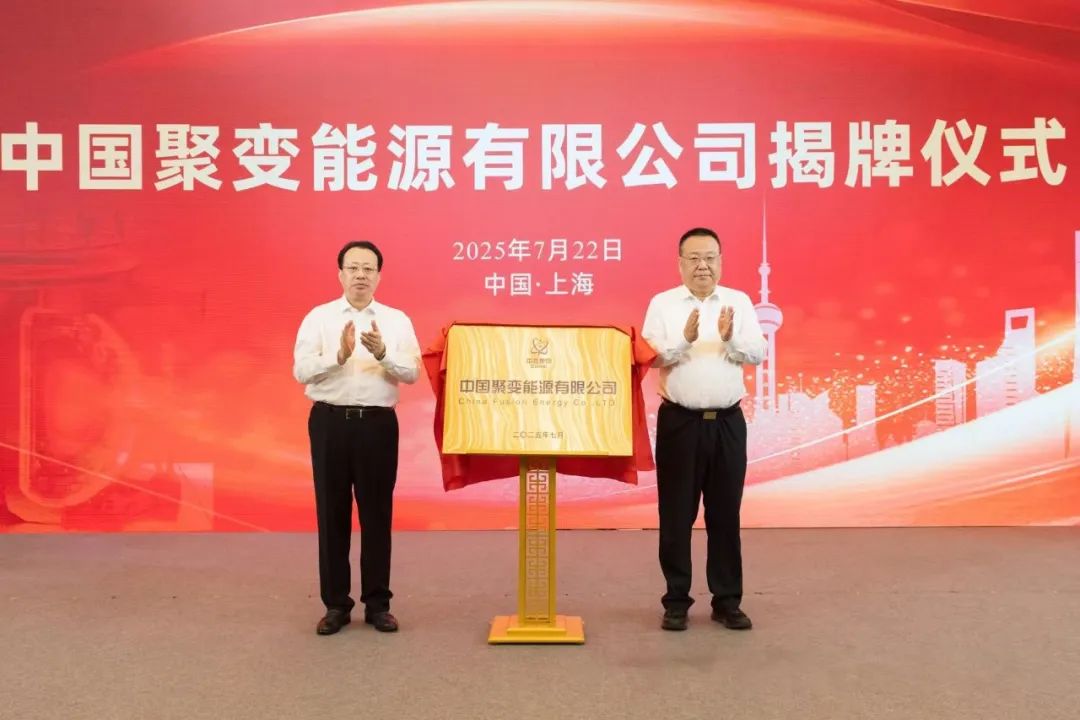
Group 1 - The establishment of China Fusion Energy Co., Ltd. in Shanghai marks a significant step in the commercialization of China's "artificial sun" project, with a total investment of 11.492 billion yuan from seven state-owned enterprises [1] - The global competition in the controllable nuclear fusion industry is accelerating, with countries like Germany, Japan, and the UK making substantial investments in fusion energy research [3][4] - Nuclear fusion is considered a potential ultimate energy source, with the energy released from fusion of deuterium in seawater being equivalent to the total energy of all oil on Earth [4][6] Group 2 - The fuel for fusion energy, such as deuterium from seawater, is abundant and poses minimal radioactive hazards, making it a promising energy source for the future [7] - The potential of fusion energy could reshape various sectors, including industry, agriculture, and even address freshwater scarcity through cost-effective desalination [9][11] - The global race for fusion energy has seen significant advancements, with countries like the US and China making notable progress in their respective fusion projects [17][20] Group 3 - The formation of China Fusion Energy Co. is a strategic move in the national energy strategy, transitioning from a laboratory-based approach to a market-oriented model [23] - The company has a registered capital of 15 billion yuan, with investments from major state-owned enterprises, indicating a comprehensive support system for the commercialization of fusion energy [23][29] - Shanghai's role as a financial and trade center, along with its existing industrial ecosystem, positions it as a crucial hub for the development of fusion energy technologies [25][26]

注资150亿!又一新能源巨头成立
DT新材料· 2025-08-03 16:04
Group 1 - The establishment of China Fusion Energy Co., Ltd. marks a significant step in China's nuclear fusion research and development, with a registered capital exceeding 15 billion yuan [2][5] - The company aims to commercialize fusion energy through a phased approach involving pilot experimental reactors, demonstration reactors, and commercial reactors [2][5] - A total investment of approximately 11.49 billion yuan has been made by several stakeholders, including China National Nuclear Corporation and China Nuclear Power [3][5] Group 2 - Nuclear fusion is considered a potential ultimate solution to global energy challenges, with significant advancements in investment and entrepreneurship since 2020 [4][6] - The Chinese government has emphasized the need for nuclear power development, aiming for nuclear energy to account for 10% of total electricity generation by 2035, doubling from 2022 levels [5] - The competitive landscape for nuclear power in China is limited, with only a few companies holding operational licenses, while advancements in third and fourth-generation nuclear technologies are accelerating [5] Group 3 - The rapid development of artificial intelligence is driving a substantial demand for green energy, positioning it as a critical factor in future technological competition [6] - As of mid-2025, the U.S. and China lead in fusion equity financing, with U.S. companies attracting approximately $6.28 billion and Chinese companies about $2.79 billion [6]
核聚变:照亮人类未来的能源之光
Sou Hu Cai Jing· 2025-08-02 14:55
Core Viewpoint - The establishment of China Fusion Energy Company in Shanghai marks a significant step towards the commercialization and engineering of nuclear fusion energy, with expectations of witnessing the first light powered by nuclear fusion within the next five years [1][4]. Company Summary - China Fusion Energy Company is a subsidiary of China National Nuclear Corporation, focusing on overall design, technology validation, and digital research and development to build a platform for technological innovation and capital operation [1]. - The company aims to facilitate the industrialization of fusion energy, which is seen as a potential solution to the impending energy crisis due to the depletion of fossil fuels and limitations of renewable energy sources [1]. Industry Summary - Nuclear fusion is recognized as a highly efficient, clean, and virtually limitless energy source, with the potential to provide energy for hundreds of billions of years from the deuterium found in seawater [1]. - Despite the theoretical foundation laid 99 years ago, achieving controlled nuclear fusion has proven to be extremely challenging, requiring the confinement of high-temperature plasma to sustain fusion reactions [2]. - Global investment and research efforts are intensifying, with various methods such as electromagnetic and inertial confinement being explored, indicating that breakthroughs in controlled nuclear fusion technology may be imminent [4].
商道创投网·会员动态|诺瓦聚变·完成5亿元天使轮融资
Sou Hu Cai Jing· 2025-08-01 16:30
Core Insights - Nova Fusion Energy Technology (Shanghai) Co., Ltd. has completed a 500 million RMB angel round financing led by the Social Security Fund Zhongguancun Independent Innovation Special Fund, with participation from several venture capital firms [2][4] Company Overview - Founded in April 2025 in Shanghai, Nova Fusion is the first domestic company focused on the commercialization of small modular nuclear fusion technology, leveraging "nuclear fusion + artificial intelligence" to develop a safe, zero-carbon, and distributable energy system [3] Financing Purpose - The funds from this round will be used for three main purposes: 1. To enhance the R&D of core technologies for small modular fusion reactors, aiming for engineering validation by 2027 2. To expand the Shanghai Lingang experimental base and the supply chain capacity in the Yangtze River Delta, achieving over 90% localization of key components 3. To strategically enter overseas distributed energy markets and collaborate with countries along the "Belt and Road" initiative to build demonstration power plants [4] Investment Rationale - The investment is driven by Nova Fusion's unique interdisciplinary team specializing in high-temperature plasma, superconducting magnets, and AI control, which positions the company closer to commercial viability compared to traditional Tokamak designs. Additionally, supportive policies from the National Energy Administration and the Shanghai municipal government provide a favorable environment for the project's development [5] Investment Ecosystem Insights - There is a strong push from various government levels to encourage the commercialization of fusion energy, with local governments offering incentives such as land, electricity pricing, and research subsidies. The management emphasizes the importance of maintaining a focus on technology validation, supply chain security, and the pace of commercialization. Nova Fusion's innovative approach to integrating AI into extreme condition control reflects the spirit of Chinese hard-tech entrepreneurs [6]
核聚变大消息!5亿元融资 知名机构扎堆
Shang Hai Zheng Quan Bao· 2025-08-01 11:18
Core Insights - Nova Fusion has completed a 500 million yuan angel round financing to establish China's first commercial fusion power plant [1] - The company aims to leverage field reversed configuration (FRC) and small modular reactor (SMR) technologies for its fusion reactor [1][2] - The commercial fusion energy sector is gaining momentum with significant investments and advancements in technology [5][6] Company Overview - Nova Fusion was founded on April 3, 2025, and is led by Houyang Guo, who has extensive experience in fusion research [2] - The company has positioned itself at the intersection of fusion energy and artificial intelligence, viewing AI as a catalyst for commercialization [2] Technological Goals - Nova Fusion has set a three-phase plan: short-term goal of achieving 100 million degrees ion temperature, mid-term goal of Q > 1 for fusion energy gain, and long-term goal of 50 MW fusion power output [4] - The company aims to significantly reduce construction costs and development timelines for fusion power plants through innovative technology [4] Industry Trends - The global fusion energy sector is witnessing increased investment, with companies like Helion Energy and Hanhai Fusion also pursuing similar technologies [6][7] - The establishment of the China Fusion Energy Company, backed by major state-owned enterprises, indicates strong governmental support for fusion energy commercialization [7] - The potential of high-temperature superconductors is highlighted as a key component in the development of fusion technology [7]

新奥聚变科学家石跃江:10年内验证氢硼聚变商业化可行性|对话能源大咖
Hua Xia Shi Bao· 2025-08-01 10:51
Core Viewpoint - Controlled nuclear fusion is transitioning from concept to reality, with significant advancements in technology and increased investment in the capital market, particularly in China [1][2]. Technological Breakthroughs - The EAST device in China achieved a stable long-pulse plasma operation at 1 million degrees Celsius for 1066 seconds, marking a significant milestone in controlled nuclear fusion [1]. - The Xuanlong-50U device has successfully generated high-temperature, high-density plasma currents of 1 million amperes, a first globally [3]. - The highest electron temperature reached during experiments was 3.5 keV, equivalent to 40 million degrees Celsius, validating the potential of hydrogen-boron fusion [3]. Commercialization Prospects - The feasibility of commercializing hydrogen-boron fusion is targeted for validation by 2035, with a series of devices planned sequentially: Xuanlong-50, Xuanlong-50U, Helion-2, and Helion-3 [6]. - The Helion-2 device aims to achieve temperatures between 300 million to 500 million degrees Celsius, significantly enhancing the performance compared to previous models [6]. Challenges and Future Directions - Key challenges include achieving the necessary high temperatures of 1 billion to 2 billion degrees Celsius and maintaining stable current control [7]. - The development of the Helion-3 device will address the commercial viability of hydrogen-boron fusion, focusing on overcoming existing technical hurdles [7]. Collaborative Efforts - The company emphasizes a collaborative research environment, fostering communication across departments and seeking international partnerships to enhance experimental capabilities [8].

诺瓦聚变:完成5亿元天使轮融资,刷新国内民营聚变公司单笔融资记录
Xin Lang Cai Jing· 2025-08-01 01:38
Core Insights - NovaFusionX, a private nuclear fusion company in China, has completed a 500 million yuan angel round financing, setting a record for the largest single financing in the domestic private nuclear fusion sector [1] - This financing aims to further promote the commercialization of nuclear fusion energy and lays the foundation for the construction of China's first commercial fusion power plant [1] Financing Details - The financing round was backed by top industry capital, leading social capital, and strong state-owned funds [1] - Notable investors include the Social Security Fund's Zhongguancun Independent Innovation Special Fund (managed by Junlian Capital), Junlian Capital, Lightspeed China Partners, Gao Rong Capital, Huakong Fund, Mingshi Venture Capital, and Lingang Science and Technology Investment [1]
诺瓦聚变完成5亿元天使轮融资 刷新国内民营聚变公司单笔融资记录
Zheng Quan Shi Bao Wang· 2025-08-01 01:20
人民财讯8月1日电,8月1日,诺瓦聚变能源科技(上海)有限公司(简称"诺瓦聚变")宣布完成5亿元天使轮 融资,创下国内民营核聚变公司单笔融资新高,旨在进一步推动核聚变能源商业化进程,为中国第一座 商业聚变电站的构建奠定基础。 据悉,诺瓦聚变本轮融资由产业资本、社会资本及国有基金联手投资,包括社保基金中关村自主创新专 项基金(君联资本担任管理人)、君联资本、光速光合、高榕创投、华控基金、明势创投及临港科创投等 机构。 ...