新能源发电

Search documents
生态焕新 景美业兴
Xin Lang Cai Jing· 2026-01-03 19:18
Group 1 - The core idea of the articles emphasizes the integration of ecological improvement with economic development, showcasing how desert areas can be transformed into sustainable economic resources through innovative practices [1][2] - The "green bank" concept is illustrated by the successful cultivation of desert plants like meat ephedra, which not only enhances ecological conditions but also provides economic benefits to local communities [1] - The "Aral model" is highlighted as a successful case of combining unconventional water use with ecological restoration, demonstrating the potential for sustainable agricultural practices in arid regions [1] Group 2 - The achievements in ecological civilization construction during the "14th Five-Year Plan" period are noted, with goals related to ecological protection, pollution control, and green development being fully met [2] - Looking ahead to the "15th Five-Year Plan," the focus will be on promoting green low-carbon technology innovations and enhancing collaborative governance between military and civilian sectors [2] - The commitment to making green development a defining characteristic of high-quality growth is reinforced, aiming for a harmonious coexistence between humans and nature [2]
【盘点2025】敦煌首次实现全年全域用绿电
Xin Lang Cai Jing· 2026-01-02 02:01
敦煌市能够全年用绿电,关键是当地清洁能源发展提速。位于河西走廊戈壁深处的敦煌市,风、光资源 丰富,风电可开发量达2800万千瓦,光电可开发量达8600万千瓦。新时代,在"双碳"目标引领下,当地 不断追风逐光、向"新"向"绿",能源绿色低碳转型步伐持续加快。近年来,先后获批国家首个百万千瓦 太阳能光伏发电示范基地、国家首批新能源示范城市、国家低碳城市试点。目前,敦煌市电源总装机容 量达到434万千瓦,全部为风、光、水等可再生能源,没有火电。 【强信心 看发展】 【盘点2025】 敦煌首次实现全年全域用绿电 每日甘肃网敦煌1月1日讯(新甘肃·甘肃日报记者王占东)记者从国家电网敦煌市供电公司获悉,2025 年1月1日至12月31日,敦煌市首次实现全年全域用绿电。 绿电,是指在生产过程中二氧化碳排放量为零或趋近于零的电力,其主要来源为太阳能、风力等可再生 能源。 敦煌市居民企业能够用上稳定的绿电,也得益于当地领先甘肃的电网建设水平。2025年,国家电网敦煌 市供电公司结合全域绿色清洁用能特征,打造安全高效、柔性灵活、智慧融合的"全域零碳"现代智慧配 电网。在电网迎峰度夏、迎峰度冬等特殊时期,全新的电网灵活调度,让各类 ...
我国首个水风光一体化基地两座百万千瓦光伏电站同步投产
Xin Lang Cai Jing· 2026-01-01 11:33
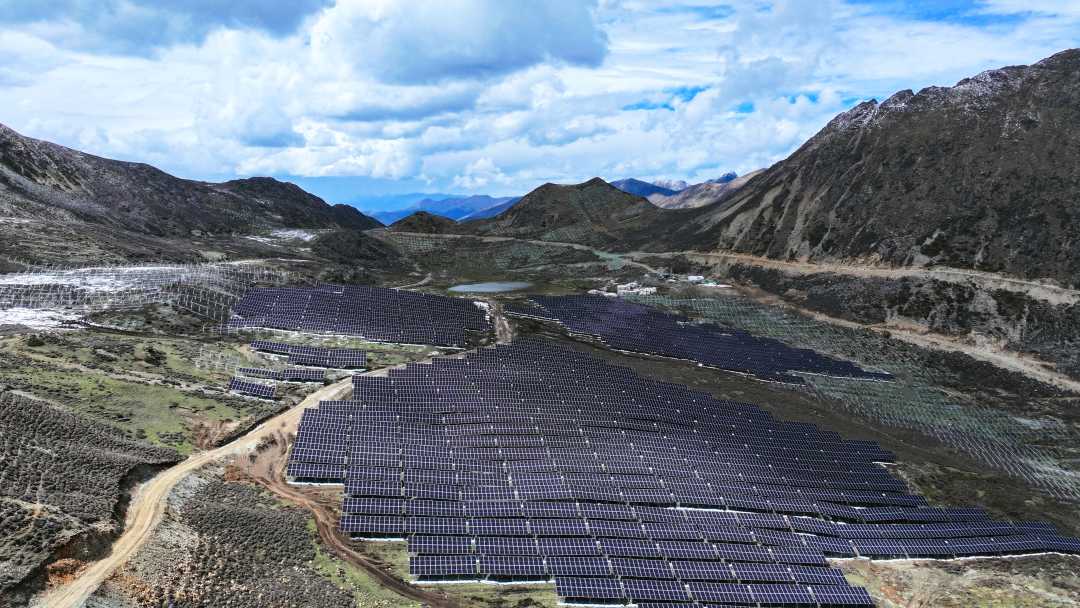
Core Insights - The Yalong River Basin has accelerated the construction of the first integrated water, wind, and solar energy base in China, with two solar power stations, Yalongjiang Suolong and Chaburang, set to start operations on December 31, 2025, contributing significantly to the new energy system and national energy security [1][2] Group 1: Project Details - The Suolong Solar Power Station, located in Ganzi Prefecture, Sichuan, has a capacity of 1 million kilowatts, while the Chaburang Solar Power Station, located in Muli County, Liangshan Prefecture, also has a capacity of 1 million kilowatts, making it the largest ultra-high-altitude mountain solar project in China [1] - Together with the Kela Phase I and II solar power stations and the Lianghekou Hydropower Station, these projects form the world's largest water-solar complementary project with a total capacity of 3 million kilowatts for hydropower and 3 million kilowatts for solar power [1] Group 2: Environmental Impact - The two solar power stations are expected to generate approximately 3.9 billion kilowatt-hours of clean electricity annually, saving about 1.2 million tons of standard coal and reducing carbon dioxide emissions by approximately 3.1 million tons each year [1] - The Yalong River Basin has established the three largest reservoirs in Sichuan Province, with a total storage capacity of 24.9 billion cubic meters and a regulation capacity of 14.8 billion cubic meters, accounting for 51% of the total regulation capacity of large reservoirs in the province [2]

两座百万千瓦光伏电站同步投产!
中国能源报· 2026-01-01 09:59
Core Viewpoint - The simultaneous commissioning of two 1 million kilowatt photovoltaic power stations in the Yalong River Basin marks a significant advancement in the integrated development of water, wind, and solar energy in the region [1][3]. Group 1: Project Details - The Yalong River Suorong Photovoltaic Power Station and the Chaburang Photovoltaic Power Station, each with an installed capacity of 1 million kilowatts, are set to begin operations by December 31, 2025 [3]. - The Suorong Photovoltaic Power Station is located in Litang County, Garze Tibetan Autonomous Prefecture, Sichuan Province, while the Chaburang Photovoltaic Power Station is situated in Muli County, Liangshan Yi Autonomous Prefecture, Sichuan Province [5]. Group 2: Environmental Impact - The two photovoltaic power stations are expected to generate approximately 3.9 billion kilowatt-hours of clean electricity annually, which will save about 1.2 million tons of standard coal and reduce carbon dioxide emissions by approximately 3.1 million tons each year [7]. - With the commissioning of these two power stations, the Yalong River Basin's integrated water and solar energy base has nearly 23 million kilowatts of clean energy capacity in operation and about 12 million kilowatts under construction [7].

我国海拔最高百万千瓦级光伏电站投产 参与构建全球最大水光互补项目群
Xin Lang Cai Jing· 2026-01-01 08:30
Core Viewpoint - The successful grid connection of the Suorong photovoltaic project marks a significant advancement in the world's ultra-high altitude clean energy projects, contributing to the construction of China's first integrated water, wind, and solar energy base in the Yarlung Tsangpo River basin [1][3]. Group 1: Project Overview - The Suorong photovoltaic power station, located in Ganzi Tibetan Autonomous Prefecture, Sichuan Province, has a total installed capacity of 1 million kilowatts and an average annual power generation of approximately 1.98 billion kilowatt-hours [3][5]. - The project is expected to save 600,000 tons of standard coal annually and reduce carbon dioxide emissions by 1.64 million tons, thus enhancing the new energy system and ensuring national energy security [3][5]. Group 2: Environmental and Economic Impact - The project employs an ecological model of "pasture-solar complementarity" and "grass-solar complementarity," which allows for the unobstructed movement of yaks under the elevated solar panels, while also benefiting local grass growth through reduced soil moisture evaporation [3][5]. - As a key energy project in the national "14th Five-Year Plan" and the largest single investment in renewable energy in Sichuan during the same period, the Suorong photovoltaic station will optimize the regional energy structure and improve local infrastructure [5]. Group 3: Technical and Operational Challenges - The project faced severe challenges due to extreme natural conditions such as cold temperatures, low oxygen levels, strong winds, frozen soil, and significant temperature fluctuations, which were overcome through the technical and management experience accumulated from previous high-altitude renewable energy projects [5]. - The Suorong photovoltaic station will operate in conjunction with the nearby Kola photovoltaic station and the Yarlung Tsangpo River hydropower station, forming a world-class water-solar complementary project cluster with a total scale of 3 million kilowatts for both hydropower and solar energy [7].
四川新能源装机容量突破3200万千瓦
Zheng Quan Shi Bao Wang· 2026-01-01 00:33
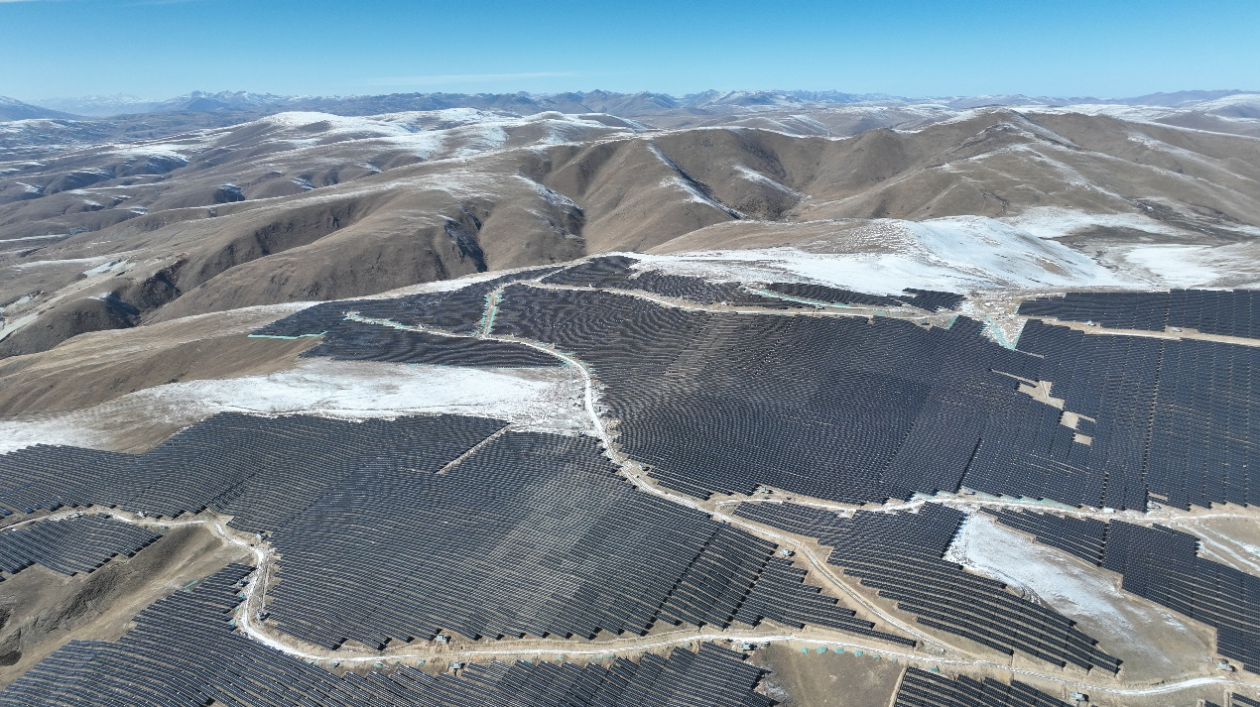
Core Insights - By December 31, 2025, Sichuan's renewable energy installed capacity is expected to exceed 32 million kilowatts, marking a fivefold increase since the beginning of the 14th Five-Year Plan [1] - The total installed power capacity in Sichuan will surpass 150 million kilowatts, equivalent to 6.7 Three Gorges power stations, indicating significant progress in energy structure transformation [1] - The share of renewable energy in Sichuan's power generation is projected to rise to approximately 20%, while hydropower will account for about 60% and thermal power (including gas power) will also represent around 20% [1] Industry Developments - The simultaneous commissioning of the Yalong River Suorong and Chaburang photovoltaic power stations, each with a capacity of one million kilowatts, is a key milestone for Sichuan's clean energy development [1] - The annual electricity generation in Sichuan is anticipated to exceed 500 billion kilowatt-hours by 2025, which could meet the annual electricity needs of approximately 200 million households [1]
雅砻江流域水风光一体化基地计划2035年建成
Yang Shi Xin Wen· 2025-12-31 21:11
Core Insights - The Yarlung Tsangpo River Basin Integrated Water and Wind Power Base is the first of its kind in the country, with a planned installed capacity of 78 million kilowatts, aiming for full completion by 2035 [1] - Currently, the base has nearly 23 million kilowatts of installed capacity in operation and about 12 million kilowatts under construction [1] - The base includes three major reservoirs with a total regulation capacity of 14.8 billion cubic meters, facilitating large-scale and intensive development of wind and solar energy [1] Group 1 - The Yarlung Tsangpo base will effectively coordinate the construction and operation of 30 large hydropower stations, pumped storage power stations, and 40 million-kilowatt-level wind and solar power stations [3] - Once completed, the base is expected to contribute approximately 200 billion kilowatt-hours of clean electricity annually, sufficient to meet the annual electricity needs of 110 million households [3]

回购计划丨这家公司拟10亿元-20亿元回购股份
Di Yi Cai Jing· 2025-12-31 16:00
Group 1 - Lixun Precision plans to repurchase shares worth between 1 billion to 2 billion yuan [1] - Jiazhe New Energy intends to buy back shares valued at 220 million to 440 million yuan [1] - Dagang Holdings proposes a share repurchase of 20 million to 40 million yuan [1]



国家能源局:5041个!
中国能源报· 2025-12-31 10:23
Core Viewpoint - The announcement from the National Energy Administration highlights the addition of 5,041 new renewable energy projects (excluding household photovoltaics) in November 2025, indicating a continued expansion in the renewable energy sector in China [1][3]. Summary by Category Wind Power - A total of 26 new wind power projects were added in November 2025, contributing to the overall growth in renewable energy capacity [3][4]. Photovoltaic Power - The photovoltaic sector saw the addition of 511 new projects, which includes 64 centralized photovoltaic projects and 447 commercial and industrial distributed photovoltaic projects [3][4]. Biomass Power - Four new biomass power projects were reported, further diversifying the renewable energy portfolio [3][13]. Regional Distribution - The distribution of new projects across various regions includes: - **Beijing**: 3 projects (all distributed photovoltaic) - **Tianjin**: 57 projects (1 wind, 1 centralized photovoltaic, and 55 distributed photovoltaic) - **Hebei**: 110 projects (2 centralized photovoltaic and 108 distributed photovoltaic) - **Shandong**: 330 projects (3 centralized photovoltaic and 326 distributed photovoltaic) - **Guangdong**: 493 distributed photovoltaic projects [4][6]. Project Details - Specific projects include: - Shandong Development Investment's 200 MW wind power project in Gansu Province [7]. - Guangxi's 50 MW wind farm project in Hezhou [7]. - Jiangsu's 80 MW biomass project in Suzhou [14]. Overall Capacity - The total installed capacity from these new projects is significant, with various projects contributing to the overall renewable energy goals set by the government [3][4].

十大“吸金巨兽”!搅动A股全年资金面 | 刻度2025
Sou Hu Cai Jing· 2025-12-31 04:58
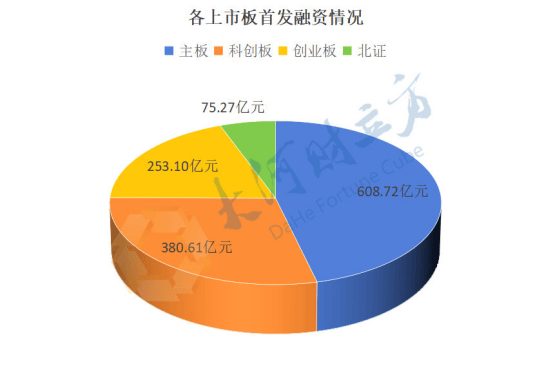
Summary of Key Points Core Viewpoint - In 2025, 116 companies entered the A-share capital market, raising a total of 131.77 billion yuan, marking a significant increase of 96% compared to the previous year, where 100 companies raised 67.35 billion yuan [1]. Group 1: IPO Financing Overview - The main board accounted for nearly half of the total financing, raising 60.87 billion yuan, while the Sci-Tech Innovation Board raised 38.06 billion yuan, surpassing the Growth Enterprise Market, which raised 25.31 billion yuan. The Beijing Stock Exchange raised 7.53 billion yuan [1]. - A total of 38 companies listed on the main board, 33 on the Growth Enterprise Market, 26 on the Beijing Stock Exchange, and 19 on the Sci-Tech Innovation Board [3]. Group 2: Top IPOs of 2025 - The largest IPO was Huadian New Energy, which raised 18.17 billion yuan, accounting for 13.79% of the total IPO financing for the year. The company is a platform for integrating renewable energy projects [5]. - Other notable IPOs included Moer Thread-U, raising 8 billion yuan, and Xi'an Yicai-U, raising 4.64 billion yuan, both listed on the Sci-Tech Innovation Board [4][5]. Group 3: Market Performance and Trends - Over 70% of companies (85) had IPO financing below 1 billion yuan, while 30 companies raised between 1 billion and 10 billion yuan. Only one company exceeded 10 billion yuan [5]. - The threshold for the top 10 IPO financing in 2025 was 2.71 billion yuan, compared to 1.39 billion yuan in the previous year [6]. - Among the 114 companies that went public, 102 saw their stock prices double on the first day, with five companies experiencing price increases exceeding 500% [6]. Group 4: Notable Stock Price Movements - Dapeng Industrial's stock price surged from an issue price of 9 yuan to a closing price of 118 yuan, with an intraday peak increase of 1666.67% [7]. - Nuxi Co., Ltd. achieved a first-day increase of 692.95%, closing at 829.9 yuan, with a total market value of 332.04 billion yuan [7].