
轨道交通

Search documents
“2025超级枢纽博览会”在港开幕 展现物流运输先进技术
Zhong Guo Xin Wen Wang· 2025-11-04 12:01
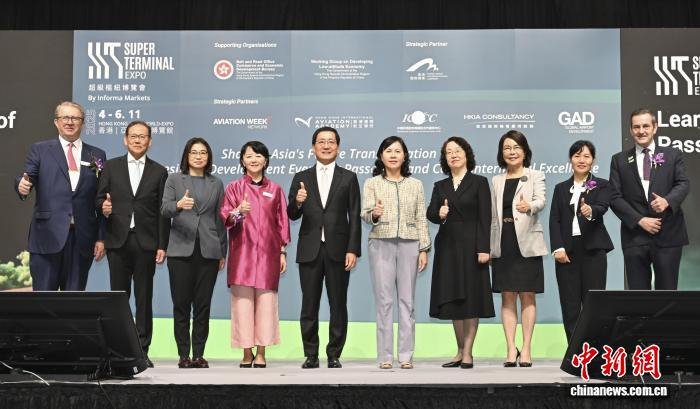
中新社香港11月4日电 (华净雯)"2025超级枢纽博览会"4日在香港亚洲国际博览馆开幕。一连3天的博览 会集中展示运输物流界的顶尖服务与先进技术,涵盖绿色运输创新技术、数字化枢纽解决方案、智慧物 流系统等内容,全方位呈现联运交通领域的最新发展趋势。 11月4日,"2025超级枢纽博览会"在香港亚洲国际博览馆开幕。图为香港特区政府运输及物流局局长陈 美宝(右五)等嘉宾合照。 (香港机场管理局供图) 另一参展商航景科技有限公司展示"卫星导航干扰预警系统"。该系统可为无人机飞行侦察空域,提供专 属预测。该公司业务发展主任颜伟华对记者表示,随着无人机应用增加,安全问题非常关键,"希望通 过此次参展展现无人机应用的安全性,从而增强大家的信心。" 香港特区政府运输及物流局局长陈美宝在开幕典礼致辞表示,香港地理位置优越,是作为中国内地的客 货运门户,因此香港绝对是探讨"塑造亚洲未来交通枢纽"议题的最佳地点。随着香港国际机场三跑道系 统于去年投入服务,特区政府及香港机场管理局不仅积极扩展运力,更致力增强与全球合作联系,以迎 接出现空前增长的时代。 此外,本届博览会特设主题研讨环节,内容涵盖可持续发展运输、数字化转型、智慧物 ...

天津前三季度固定资产投资同比增长3%
Zhong Guo Fa Zhan Wang· 2025-11-03 08:45
Core Viewpoint - Tianjin's investment growth in the first three quarters reached 3% year-on-year, ranking 10th nationwide, indicating a consistent performance above the national average amid a slowdown in overall investment growth [1] Group 1: Project Construction Support - The city is implementing a project-driven strategy, focusing on major industrial projects as a foundation for high-quality development, with significant media coverage highlighting the effectiveness of these initiatives [2] - A total of 668 ongoing projects with an investment of 1.32 trillion yuan have resumed work, and 248 new projects with an investment of 241.6 billion yuan have commenced [2] - The city aims to ensure that key projects contribute to over 80% of the total investment in construction projects [2] Group 2: Financial Support Measures - Tianjin is actively seeking national policy opportunities and establishing a top-down planning mechanism to secure funding from various sources, including central budget investments and local government bonds [3] - The city is managing a dynamic list of issues related to central policy funding projects to promote project acceleration [3] Group 3: Service and Guarantee Mechanisms - A three-dimensional service mechanism has been established to enhance support for key enterprises and projects, improving investment confidence [3] - The city is focusing on providing essential resources such as land and energy to ensure project success [3] Group 4: Investment Quality and Structure - The city is expanding industrial investments, with a 6.5% growth in industrial investment, slightly above the national average [4] - Infrastructure investment has increased by 12.8%, maintaining double-digit growth for two consecutive years [4] - Strategic emerging industries saw a 15.2% increase in investment, accounting for 37.9% of total investments [5] Group 5: Social Investment and Public Welfare - Social sector investments grew by 22.6%, enhancing the well-being of the population through various projects [5] Group 6: Collaborative Efforts - The city is fostering a collaborative environment among various districts and departments to ensure project accountability and accelerate investment growth [7] - Fourteen out of sixteen districts achieved positive growth, with twelve districts outpacing the city's overall growth rate [7] - Key enterprises are playing a crucial role in supporting major projects and driving investment [8]
西安·土耳其经贸合作交流会在伊斯坦布尔举行
Xi An Ri Bao· 2025-11-03 03:33
Core Points - The Xi'an-Turkey Economic and Trade Cooperation Exchange Conference was held in Istanbul on October 31, promoting collaboration in transportation, trade, manufacturing, technology, and finance [1] - The conference aimed to accelerate the development of the southbound route of the China-Europe Railway Express and facilitate the integration of the Belt and Road Initiative with the Middle Corridor plan [1] - Over 120 representatives from Xi'an and Turkey attended the conference, with various companies engaging in investment promotion and discussions on cooperation [1] Group 1 - The conference featured speeches from Xi'an Mayor Ye Niuping and Turkish officials, emphasizing the importance of the China-Europe Railway Express and the "Air Silk Road" as part of a larger network and opportunity [1] - Xi'an is committed to building a multi-level and multi-field cooperation platform to effectively integrate quality resources and promote both "hard construction" and "soft connectivity" [1] - The city aims to enhance its cross-border logistics service system, supporting the cultivation of multimodal transport super carriers and constructing an efficient, diverse, and beneficial international logistics corridor [1]
上交所:科创板592家公司合计首发募集资金总额9345.64亿元
Zheng Quan Ri Bao Wang· 2025-10-31 13:04
Core Insights - As of October 2025, there are a total of 592 companies listed on the Sci-Tech Innovation Board, with significant representation from the integrated circuit sector, which comprises 121 companies, accounting for a substantial portion of A-share listed companies in the same category [1] - The biotechnology sector has 115 listed companies focusing on treatments for diseases such as cancer, AIDS, hepatitis B, and hepatitis C, establishing itself as a major listing venue globally outside of the US and Hong Kong [1] - The renewable energy sector includes 17 photovoltaic companies and 20 companies in the power battery supply chain, indicating a strong momentum in green economic development [1] - Other industries such as industrial robotics and rail transit have also begun to take shape on the board [1] Financial Highlights - The total amount of funds raised by the 592 companies on the Sci-Tech Innovation Board is 934.564 billion yuan, with an average fundraising amount of 1.581 billion yuan per company [1] - The largest fundraising amount recorded is 53.23 billion yuan by SMIC, while the median fundraising amount is 999.5 million yuan [1] Special Listings - The board includes 57 companies that were unprofitable at the time of listing, 8 companies with special equity structures, 7 red-chip companies, 22 companies listed under the fifth set of standards, and 1 company that transitioned from another board [1] - Among the 57 unprofitable companies, 22 have achieved "U-list removal," and 35 have entered the Sci-Tech Growth tier [1]
中泰合作推动打造区域科技与人才培养中心
人民网-国际频道 原创稿· 2025-10-31 05:41
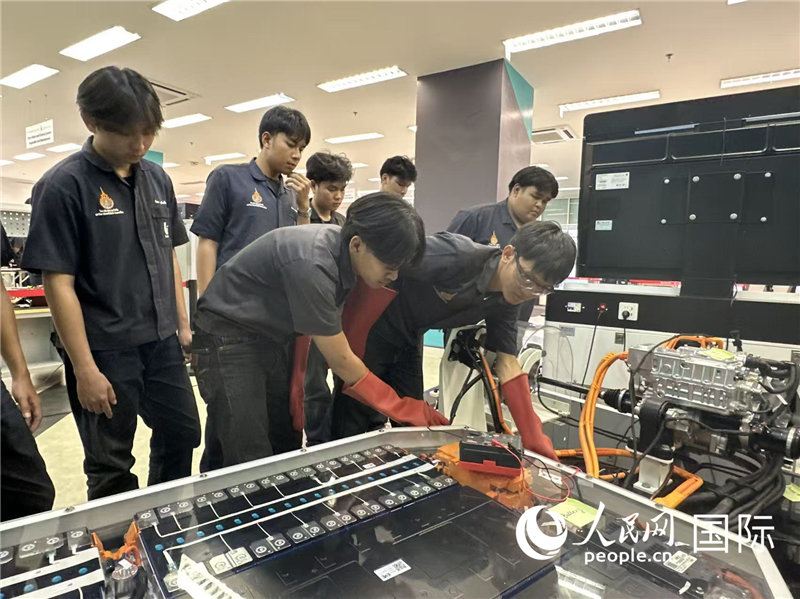
Core Insights - Thailand is advancing its "Thailand 4.0" strategy and "3030" goal, aiming for electric vehicles to constitute 30% of total car production by 2030, positioning the electric vehicle industry as a key area for green transformation [2][4] Group 1: Electric Vehicle Training Center - The Electric Vehicle Training Center at Northeast Royal University is Thailand's first dedicated facility for electric vehicle education, having trained over 300 students since its establishment [2] - The training center collaborates with the Thai Ministry of Education and the Ministry of Transport to train technical personnel for the national transportation system, promoting Chinese electric vehicle technology in Thailand [2][3] Group 2: Curriculum and Industry Collaboration - The curriculum includes nine modules covering essential topics such as basic electrical and electronic technology, battery technology, and diagnostic maintenance of electric vehicles [2] - Students benefit from internship opportunities with Chinese automotive companies, gaining exposure to international technology and workflows, which enhances their employability [3] Group 3: Infrastructure and Research Development - The university has recently completed a new campus for the Rail Transit College, featuring standard tracks and simulation systems for future Sino-Thai high-speed rail [4] - The establishment of a "Rail Transit and Aviation Building" aims to serve as a joint research base for Sino-Thai collaboration in high-end technology and education, enhancing economic opportunities and talent development [4] Group 4: Language and International Education - The university plans to offer Chinese international courses across its five campuses, allowing Thai students to earn high school diplomas through a curriculum taught entirely in Chinese [4] - This initiative aims to cultivate outstanding international talent and prepare students for further studies in Chinese universities [4]
滚动更新丨A股三大指数集体低开,存储芯片、培育钻石等板块走弱
Di Yi Cai Jing· 2025-10-31 01:45
Market Overview - The A-share market opened lower with the Shanghai Composite Index down 0.05%, Shenzhen Component down 0.11%, and ChiNext down 0.08% [2][3] - The Hang Seng Index also opened lower, down 0.07%, with the Hang Seng Tech Index falling 0.65% [4] Sector Performance - Weak performance observed in sectors such as memory chips, cultivated diamonds, photovoltaics, and new energy vehicles [3] - Strong performance noted in sectors including duty-free shops, lithium batteries, and gold-related stocks [1][3] Company Specifics - Wuliangye (五粮液) opened down 2.59%, reporting a third-quarter net profit of 2.019 billion yuan, a year-on-year decline of 65.62% [1] - Hunan Gold (湖南黄金) opened up 7%, with other gold stocks like Hunan Silver (湖南白银), Zhongjin Gold (中金黄金), and Chifeng Gold (赤峰黄金) also rising [1]

时代新材:10月30日召开董事会会议
Mei Ri Jing Ji Xin Wen· 2025-10-30 15:02
Group 1 - The core point of the article is that Times New Material (SH 600458) announced a board meeting to discuss the transfer of equity in its subsidiary Honghui Technology, reflecting ongoing strategic adjustments within the company [1] - For the first half of 2025, Times New Material's revenue composition is as follows: wind power accounts for 42.25%, automotive for 37.16%, rail transit for 11.92%, industrial engineering products for 9.14%, and unallocated projects for 3.62% [1] - As of the report, Times New Material has a market capitalization of 13.4 billion yuan [1]

重磅部署!未来五年这么干→
Jin Rong Shi Bao· 2025-10-30 03:54
Group 1: Economic Development Goals - The "15th Five-Year Plan" outlines key economic and social development goals, emphasizing high-quality growth, technological self-reliance, and the expansion of the middle-income group [2][3] - The plan aims for economic growth to remain within a reasonable range, with a focus on improving total factor productivity and synchronizing income growth with economic growth [2][4] Group 2: Modern Industrial System - The plan emphasizes the construction of a modern industrial system centered on advanced manufacturing, highlighting the importance of maintaining a reasonable proportion of manufacturing in the economy [4][5] - It aims to enhance the resilience and competitiveness of the industrial system in response to global technological and trade challenges [4][6] Group 3: Technological Innovation - The plan calls for accelerating high-level technological self-reliance, focusing on original innovation and key core technology breakthroughs [6][7] - It promotes the integration of technological and industrial innovation, advocating for a collaborative mechanism among government, industry, academia, and finance [6][7] Group 4: Domestic Market Expansion - The plan stresses the importance of building a strong domestic market and enhancing the interaction between supply and demand [8][9] - It aims to increase residents' disposable income and stimulate consumption while optimizing government investment structures [8][9] Group 5: Open Economy - The plan outlines a strategy for gradually expanding institutional openness and maintaining a multilateral trade system [9][10] - It emphasizes optimizing trade development pillars, including goods, services, and digital trade, to enhance competitiveness [9][10] Group 6: Employment and Housing - The plan focuses on promoting high-quality and sufficient employment, addressing structural employment issues while ensuring income stability [11][12] - It aims to establish a new model for real estate development, emphasizing high-quality housing supply and meeting diverse housing needs [12]
擘画新蓝图 开启新征程 “十五五”规划建议系统部署未来五年高质量发展路径
Jin Rong Shi Bao· 2025-10-30 00:44
Core Viewpoint - The "15th Five-Year Plan" emphasizes high-quality development, technological self-reliance, green transformation, and institutional openness, indicating a shift in China's development logic from "responding to uncertainty" to "shaping new certainties" [1][2]. Group 1: Future Development Goals - The plan identifies that China's development is characterized by both strategic opportunities and risks, with a focus on maintaining economic growth within a reasonable range and synchronizing income growth with economic growth [2][3]. - Key goals include steady economic growth, improvement in total factor productivity, and expansion of the middle-income group [2]. Group 2: Modern Industrial System - The plan stresses the importance of a modern industrial system centered on advanced manufacturing, highlighting the need for a resilient and competitive industrial framework amid global competition [4]. - Emphasis is placed on the role of the real economy, with advanced manufacturing and smart infrastructure being pivotal for future growth [4]. Group 3: Technological Self-Reliance - The plan calls for accelerating high-level technological self-reliance, enhancing the national innovation system, and fostering a robust environment for independent innovation [5][6]. - It advocates for deep integration of technological and industrial innovation, promoting efficient conversion of research outcomes into productive forces [6]. Group 4: Domestic Market and Investment - The plan aims to build a strong domestic market, emphasizing the need to increase disposable income and stimulate consumer confidence [7]. - It highlights the importance of optimizing government investment structures and activating private investment to align with national strategic directions [7]. Group 5: Institutional Openness - The plan outlines a strategy for gradually expanding institutional openness, maintaining a multilateral trade system, and enhancing international cooperation [8]. - It focuses on optimizing trade structures, particularly in goods, services, and digital trade, while creating a favorable environment for foreign investment [8].
数字化赋能!上海轨道交通“智慧维保”贡献“上海经验”
Di Yi Cai Jing· 2025-10-29 05:21
Core Insights - The "Smart Maintenance" project of Shanghai Metro significantly enhances the operational reliability of the rail transit system and improves passenger travel experience [1][6] - The 2025 version of the "Shanghai Manual" emphasizes the importance of smart cities and includes case studies from various cities, highlighting Shanghai Metro's smart maintenance as a key example [2][6] Group 1: Smart Maintenance Implementation - The smart maintenance system integrates all equipment information into a unified platform, enabling comprehensive monitoring of operations [4] - The system reduces passenger disruption from equipment failures through intelligent early warning and rapid response mechanisms, enhancing operational efficiency [4] - The frequency of inspections has increased by 300 times compared to traditional methods, significantly improving response and resolution efficiency by over twenty times [4] Group 2: Technological Integration - The project leverages technologies such as industrial internet, AI, big data, and cloud computing to transition from passive maintenance to proactive monitoring and decision-making [3][6] - The initiative represents a pioneering digital transformation in the maintenance of facilities and equipment within the industry, setting a benchmark for smart city infrastructure management [6] Group 3: Future Prospects - With ongoing technological advancements and policy support, smart maintenance is expected to evolve from preventive to autonomous maintenance, providing essential support for the safe and efficient operation of large-scale networks [6]