酒业

Search documents
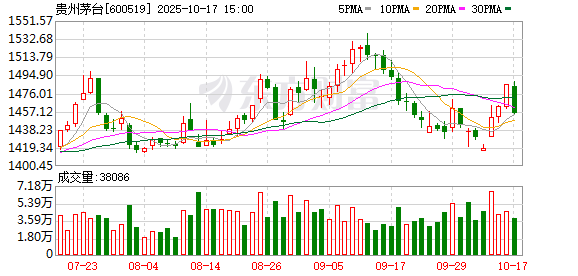
皇台酒业红酒产能利用率仅1% 控股股东6000万增持股价反降逾7%
Chang Jiang Shang Bao· 2025-10-21 23:42
Core Viewpoint - The major shareholder of Huangtai Liquor Industry has significantly increased its stake, yet the company's stock price has declined by 7.33% since the initial purchase [2][4]. Shareholder Activity - Huangtai Liquor's controlling shareholder, Gansu Shengda Group, has acquired a total of 4.0849 million shares, amounting to RMB 60 million, through the Shenzhen Stock Exchange [2][4]. - The shareholding of Gansu Shengda and its concerted parties increased from 22.71% to 25.02% of the total voting shares [4]. Financial Performance - For the first half of 2025, Huangtai Liquor reported a revenue of RMB 57.74 million, a year-on-year decrease of 11.85%, and a net loss of RMB 5.27 million, down 32.59% [12][14]. - The company's white liquor business generated RMB 53.83 million, a decline of 14.60%, while the wine business saw a significant increase of 105.70%, contributing only 5.81% to total revenue [12][13]. Production Capacity Utilization - The designed production capacity for both white and red wine is 10,000 tons, but actual production was only 1,233.86 tons for white liquor (25% utilization) and 48.25 tons for red wine (1% utilization) in the first half of 2025 [13][10]. Market Performance - Revenue from the domestic market in Gansu province fell by 25.61%, while revenue from outside the province increased by 161.68% [13]. Management Changes - The position of the board secretary has been vacant for eight months following the resignation of the previous secretary, with interim responsibilities taken on by the general manager [5][9].


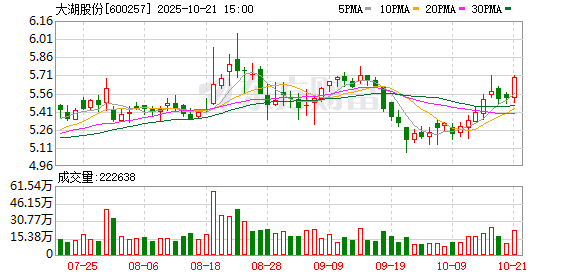
大湖股份:子公司冠名湘超联赛常德赛区
Mei Ri Jing Ji Xin Wen· 2025-10-21 13:12
Group 1 - The company Dahu Co., Ltd. announced its sponsorship as the title sponsor for the Changde division of the "Xiangchao" league through its subsidiary Hunan Deshan Wine Industry Co., Ltd. [2] - Stakeholders are encouraged to follow the performance and ranking information released by the organizing body of the Xiangchao league [2]

甘肃皇台酒业股份有限公司 关于控股股东增持公司股份计划实施完成的公告
Zhong Guo Zheng Quan Bao - Zhong Zheng Wang· 2025-10-21 10:39
Core Points - The controlling shareholder, Gansu Shengda Group, plans to increase its stake in Gansu Huangtai Liquor Co., Ltd. to enhance investor confidence and recognize the company's long-term investment value [1][2] - The total amount for the share buyback plan is set between RMB 60 million and RMB 120 million, with no fixed price range for the shares [3][4] - As of October 20, 2025, Gansu Shengda has completed the buyback, acquiring 4,084,900 shares, which represents 2.3% of the total share capital, increasing its voting rights from 22.71% to 25.02% [5][6] Summary by Sections Shareholder Information - Gansu Shengda held 7,126,500 shares (4.02% ownership) before the buyback, while its concerted party, Gansu Western Asset Management Co., Ltd., held 8,501,583 shares (4.79% ownership) [2] - The total shares controlled by Gansu Shengda and its concerted parties before the buyback was 40,295,991 shares, accounting for 22.71% of the total share capital [2] Buyback Plan Details - The buyback plan aims to promote the company's sustainable and healthy development and boost investor confidence [2] - The buyback will be executed through secondary market bidding transactions [3] - The funding for the buyback will come from the company's own funds [4] Implementation Status - The buyback plan was announced on April 8, 2025, and was completed by October 20, 2025, with a total investment of RMB 60,001,153 (excluding transaction fees) [5][6] - Gansu Shengda did not reduce its shareholding during the buyback period and committed to not selling shares for a specified period after the buyback completion [7]
中国酒业如何跨越“冰与火”?这场“武汉会议”,回答时代之问!
Sou Hu Cai Jing· 2025-10-20 16:32
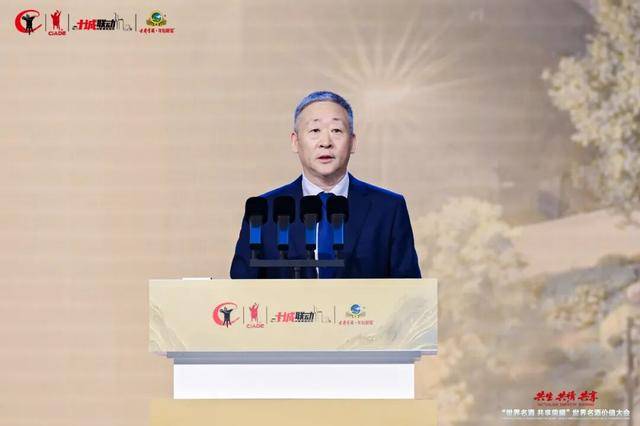
Core Insights - The Chinese liquor industry is at a historical crossroads, facing both challenges and opportunities due to rational consumption trends and the impact of artificial intelligence on industry logic [1] - The "World Famous Wine Value Conference" held in Wuhan addressed key industry questions regarding the redefinition of liquor value, the shift from scale expansion to value creation, and the globalization of Chinese liquor [1] Industry Trends - The global liquor industry is undergoing structural changes, with the high-end and luxury segments leading growth at a compound annual growth rate (CAGR) of 10.3%, particularly driven by the Asia-Pacific region [2] - The Chinese baijiu market is expanding steadily, with a CAGR of 2.3%, showcasing strong industry resilience and cultural roots [2] - Traditional business banquet markets are contracting, while personalized and emotionally connected consumption scenarios are rapidly emerging, emphasizing the need for liquor brands to adopt innovative strategies for differentiation [2] Consumer Behavior - The concept of rational consumption has gained consensus, with consumers prioritizing products that offer a balance of cost-effectiveness, quality, and emotional value [4] - The long-term development of world-famous liquors should focus on the values of "coexistence, empathy, and sharing," integrating industry with nature and society [4][5] Internationalization Challenges - China's baijiu currently holds only a 2.3% share in the international market, highlighting the need for the industry to overcome misconceptions and adopt successful strategies from international wine markets [7] - Recommendations for internationalization include aligning with international standards, innovating products and marketing strategies, and fostering collaboration among industry players [7] Innovation and Strategy - Leading companies are responding to industry changes through innovative practices, such as digital empowerment, cross-industry collaborations, and enhancing consumer experiences [10] - Anhui Gujing Group is leveraging digitalization to enhance traditional brewing processes and is actively promoting baijiu internationally [12] - Luzhou Laojiao is focusing on brand innovation through product diversification and cultural collaborations to connect with younger consumers [14] - Qingdao Beer is enhancing consumer engagement through innovative product offerings and efficient delivery systems [19] Future Directions - The conference outlined a clear roadmap for the future of Chinese liquor, emphasizing the importance of gratitude towards nature, commitment to quality, and deep emotional resonance with consumers [30] - The industry is encouraged to embrace the philosophy of "coexistence, empathy, and sharing" to navigate the challenges ahead and achieve sustainable growth [30]




RIO老板刘晓东卖股套现14.7亿 百润股份称其不会再减持公司股份
经济观察报· 2025-10-20 10:16
Core Viewpoint - Liu Xiaodong, the actual controller of Bairun Co., Ltd., transferred 6.01% of his shares, cashing out approximately 1.47 billion RMB, while maintaining control with a 34.58% stake in the company [2][5]. Group 1: Share Transfer Details - Liu Xiaodong transferred 63 million shares at a price of 23.337 RMB per share, totaling 1.47 billion RMB [4][5]. - The share transfer has been completed, and Liu Xiaodong's stake in Bairun has decreased to 34.58% [5]. - The closing stock price of Bairun on October 20, 2025, was 26.24 RMB, indicating that the transfer price represented a nearly 10% discount from the current market price [7]. Group 2: Business Performance - Bairun's pre-mixed cocktail brand, RIO, generated revenue of 2.884 billion RMB in 2023, showing a slight increase from 2.3 billion RMB in 2015, but did not exceed 3 billion RMB [5]. - In the first half of 2025, Bairun's revenue from alcoholic products, primarily RIO, was 1.297 billion RMB, with a volume of 15.03 million boxes, reflecting a year-on-year decline of 12.68% [5]. Group 3: New Shareholder Profile - The buyer, Liu Jianguo, is a businessman from Wenzhou and the chairman of Benjian Golf Co., Ltd., holding approximately 38.67% of its shares [8][9]. - Liu Jianguo has a background in the small appliance industry and has previously sold a significant business to Philips for over 2 billion RMB [9]. - He has committed to a 12-month lock-up period for the shares acquired in this transaction [10].


RIO老板刘晓东卖股套现14.7亿 百润股份称其不会再减持公司股份
Jing Ji Guan Cha Wang· 2025-10-20 09:37
Core Viewpoint - Liu Xiaodong, the actual controller and chairman of Bairun Co., Ltd., transferred 6.01% of his shares, cashing out approximately 1.47 billion RMB, with the transfer completed on October 19, 2025 [1] Group 1: Share Transfer Details - Liu Xiaodong transferred 63 million shares, representing 6.01% of the total share capital, at a price of 23.337 RMB per share, totaling 1.47 billion RMB [1] - Following the transfer, Liu Xiaodong's shareholding in Bairun Co. decreased to 34.58%, maintaining his status as the controlling shareholder [1] Group 2: Financial Performance of RIO - RIO, a pre-mixed cocktail brand under Bairun Co., generated revenue of 2.884 billion RMB in 2023, falling short of the 3 billion RMB mark [2] - In the first half of 2025, Bairun Co.'s revenue from alcoholic products, primarily RIO, was 1.297 billion RMB, with a sales volume of 15.03 million boxes, reflecting a year-on-year decline of 12.68% [2] Group 3: New Shareholder Profile - The buyer, Liu Jianguo, is a businessman from Wenzhou and the chairman of Benjian Golf Co., Ltd., holding approximately 38.67% of its shares [4] - Liu Jianguo has a background in the small appliance industry and has previously built the "POVOS" brand, selling a significant portion of his kitchen appliance business to Philips for over 2 billion RMB [5] Group 4: Investment Implications - The share transfer price of 23.337 RMB represents a nearly 10% discount compared to Bairun Co.'s closing price of 26.24 RMB on October 20, 2025, providing Liu Jianguo with an immediate investment gain of approximately 12% [3][4] - Liu Jianguo is committed to a 12-month lock-up period, during which he cannot sell the acquired shares [6]
第五届“问酒”论坛顺利举办
Zheng Quan Ri Bao Wang· 2025-10-20 06:13
Core Insights - The fifth "Ask Wine" forum was successfully held during the 23rd China International Wine Expo, focusing on disseminating wine knowledge and addressing common misconceptions about wine culture [1][2] - The forum aimed to clarify recent industry controversies regarding wine degrees and aromas, promoting accurate wine knowledge and culture [1] - The event featured a panel of eight authoritative experts who engaged in detailed discussions and answered questions from consumers and industry figures, enhancing public understanding of wine [2] Group 1 - The "Ask Wine" forum is a large-scale science popularization initiative by the China Alcoholic Drinks Association, designed to transform wine from a mysterious subject to a familiar one through continuous engagement [1] - The forum adopted a new format characterized by openness, deep interaction, and high authority, aiming to connect the industry, products, and consumers more effectively [1][2] - The discussions addressed various common wine-related questions, such as the misconceptions about blending and the health implications of drinking early in the day, thereby building trust through professional knowledge [2] Group 2 - The China Alcoholic Drinks Association plans to continue developing the "Ask Wine" initiative with a more open approach and professional content, contributing to the high-quality development of the Chinese wine industry [2] - The shift in consumer understanding from vague rumors to scientific recognition is essential for the wine industry to transition from scale growth to value enhancement [2]
全国糖酒会特别设立“南京市对口支援协作合作展示专区”
Nan Jing Ri Bao· 2025-10-20 02:25
Core Insights - The 113th National Sugar and Wine Fair was held in Nanjing from October 16 to 18, showcasing local products and promoting economic development in collaboration with supported regions [1][2] - The fair, recognized as a barometer for China's liquor and food industry, attracted over 4,000 exhibitors and 300,000 visitors, covering an exhibition area of 180,000 square meters [1] - The event featured a dedicated 5,000 square meter area for Jiangsu Province's investment promotion, providing a platform for regional specialty industries [1] Group 1 - The fair serves as an important opportunity for companies to access the national market, as highlighted by an exhibitor from Nanjing [1] - Qinghai Province had the highest number of exhibitors, with 20 companies showcasing unique products such as organic goji berries and Tibetan yak beef [1] - The fair included participation from various regions, including Xinjiang, Hunan, Shaanxi, and Liaoning, emphasizing the collaborative support efforts [2] Group 2 - Nanjing has undertaken support and cooperation tasks for eight regions, enhancing consumer assistance and promoting high-quality agricultural products [2] - Local agricultural products are now available for purchase through online platforms and physical exhibition halls in Nanjing, facilitating access for consumers [2] - The initiative aims to elevate the quality and efficiency of local industry development by bringing premium products from remote areas to national markets [2]
中国酒业以年轻化数智化国际化破局前行
Zheng Quan Ri Bao· 2025-10-19 17:43
Core Insights - The 23rd China International Wine Expo showcased a comprehensive approach to the wine industry, integrating the entire supply chain from raw materials to digital marketing solutions, emphasizing the importance of cultural experience and technology in consumer engagement [1] Group 1: Youthfulness - The wine industry is innovating to attract younger consumers through lighter and more engaging products, such as low-alcohol and fruit wines, reflecting a shift in marketing strategies [2][3] - Companies like Guyue Longshan are introducing unique products like "no high or low" Huangjiu, targeting health-conscious young consumers with low sugar and high alcohol content [2] - Innovative marketing strategies include collaborations with lifestyle products and events, such as liquor-infused chocolates and pop-up stores, to connect with younger audiences [2][3] Group 2: Digital Transformation - The wine industry is undergoing a digital transformation, with companies viewing digitalization as a core strategy rather than a supplementary tool, impacting all aspects from procurement to consumer service [4] - Smart manufacturing is becoming foundational, with companies like Jinshiyuan and Wuliangye implementing automated processes in production, while blockchain technology is enhancing product traceability [4][5] - Despite advancements, smaller enterprises face challenges in digital transformation due to resource constraints, potentially leading to increased industry concentration [5] Group 3: Internationalization - China's wine exports are experiencing robust growth, with a total export value of $1.06 billion, up 21.5%, and a volume increase of 34% to 480 million liters in the first half of the year [6] - The internationalization of Chinese liquor, particularly Baijiu, is gaining attention, with a focus on meeting international quality standards and adapting products for overseas markets [6][7] - The cultural exchange facilitated by the global expansion of Chinese liquor is seen as a significant trend, with companies encouraged to share the story of Chinese Baijiu and consider establishing overseas production and tasting facilities [6][7]
勾兑的酒就是劣质酒?中国酿酒大师、茅台集团原董事长季克良给出答案!
Mei Ri Jing Ji Xin Wen· 2025-10-19 14:33
Core Viewpoint - The forum addressed common misconceptions about drinking, including the effects of mixed drinks, the health implications of morning drinking, and the perception of blended alcohol as inferior quality [2][10][20]. Group 1: Mixed Drinks and Their Effects - Mixing different types of alcohol can lead to quicker intoxication due to chemical reactions between the components, such as carbon dioxide in beer enhancing alcohol absorption [6][8]. - The consumption of high-sugar mixers with alcohol can increase caloric intake and accelerate alcohol absorption [8][9]. - Experts recommend that young drinkers should choose the right type of alcohol, pair it appropriately, and control their intake [9]. Group 2: Morning Drinking - Morning drinking, or "early alcohol consumption," has cultural significance in some regions and is gaining popularity among younger people [10][11]. - Under certain conditions, moderate morning drinking can have benefits, as alcohol is considered a fermented food [12][14]. - However, opinions vary, with some experts advocating for evening drinking as more beneficial for health [16]. Group 3: Misconceptions About Blended Alcohol - The term "blending" is often mistakenly associated with inferior quality, but it is a necessary process for maintaining consistent quality in products like Maotai [18][20]. - Blending involves combining different batches of alcohol to stabilize flavor and quality, which is a recognized practice in the industry [18][20]. - The industry is working to clarify the distinction between legitimate blending and inferior practices, aiming to educate consumers on the quality of blended products [20].