酒心巧克力

Search documents
当心!这些食品或药品可能“吃”出“酒驾”
Xin Lang Cai Jing· 2026-02-07 00:06
Group 1 - The article discusses the issue of "invisible alcohol" in food and medicine that can lead to false positives in alcohol testing for drivers [1][4] - Certain foods and medications, such as herbal medicines containing high concentrations of alcohol, can result in detectable blood alcohol levels without consuming alcoholic beverages [1][2] - Examples of food items that may contain or produce alcohol include fermented foods, high-sugar fruits, and certain processed foods like tiramisu and chocolate with alcohol [2][3] Group 2 - The legal definitions and penalties for driving under the influence are outlined, with specific blood alcohol concentration thresholds for drinking and driving (≥20mg/100ml and <80mg/100ml) and for drunk driving (≥80mg/100ml) [3][4] - Penalties for drinking and driving include a temporary suspension of the driver's license for 6 months, fines ranging from 1,000 to 2,000 yuan, and 12 points on the driving record [3] - For drunk driving, penalties include revocation of the driver's license, a 5-year ban on reapplying for a license, and potential criminal charges [4]

当心 食用这些食品或药品可能测出“酒驾”
Yang Shi Xin Wen· 2026-02-06 10:40
Core Viewpoint - A man in Zhejiang was sentenced for dangerous driving after consuming 20 bottles of Huoxiang Zhengqi Shui, which contains a high concentration of ethanol, leading to a positive alcohol test despite not consuming alcoholic beverages [2]. Group 1: Alcohol Content in Products - Huoxiang Zhengqi Shui contains approximately 40%-50% ethanol, with the solvent being 60% ethanol [2]. - Other products like "Shuijing" contain about 60%-70% ethanol, which can also lead to positive alcohol tests [2]. - Certain cough syrups and mouthwashes may contain ethanol, potentially affecting alcohol detection results [4]. Group 2: Foods and Alcohol - Fermented or alcohol-containing foods such as marinated dishes, "drunken crab," and fermented rice can produce alcohol during preparation, leading to residual alcohol in the mouth [5]. - High-sugar fruits like durian, jackfruit, and lychee can ferment in the mouth, producing trace amounts of alcohol [7]. - Processed foods like tiramisu, egg yolk pie, and chocolate with alcohol can also contain alcohol or alcohol-soaked ingredients [7]. Group 3: Alcohol Detection and Penalties - Driving under the influence is categorized based on blood alcohol content: - Drinking and driving: 20mg/100ml to <80mg/100ml - Drunk driving: ≥80mg/100ml [9]. - Penalties for drinking and driving include a 6-month license suspension, fines between 1,000-2,000 yuan, and 12 points on the driving record. Repeat offenders may face detention and additional fines [11]. - Drunk driving results in license revocation, a 5-year ban on reapplying for a license, and potential criminal charges [11]. Group 4: Precautions for Drivers - Drivers should avoid consuming alcohol-containing foods or high-alcohol medications like Huoxiang Zhengqi Shui before driving [14]. - If a driver accidentally consumes alcohol-containing products, it is advisable to wait 30 minutes before driving [14]. - In case of a positive alcohol test due to accidental consumption, drivers can explain the situation to law enforcement and request a retest after 15 minutes or a blood test for clarification [16].
黄牛慌了!茅台跌破1499元,库存堆成山,年轻人不买账咋翻身?
Sou Hu Cai Jing· 2025-12-18 10:11
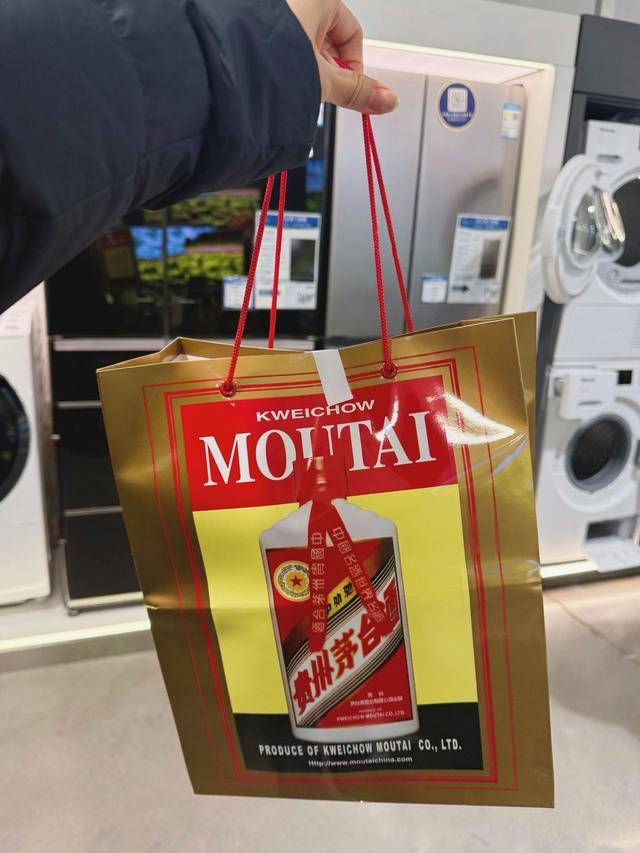
Core Viewpoint - The fluctuating prices of Moutai have become more volatile than stock trading, with significant price drops and rebounds observed within a short period, indicating a severe imbalance in supply and demand in the market [1][3]. Group 1: Price Fluctuations - On December 12, the wholesale price of Moutai fell below the official guidance price of 1499 yuan, reaching 1485 yuan, with original boxes dropping to 1495 yuan, marking a recent low [1]. - Following Moutai's decision to halt shipments to distributors, prices surged on December 13 and 14, with a daily increase of 90 yuan for scattered bottles and 95 yuan for original boxes, but by December 15, prices fell again to 1560 yuan and 1570 yuan respectively [3]. - The price difference exceeded 100 yuan within four days, leaving both consumers and distributors confused [3]. Group 2: Supply and Demand Issues - The core issue for Moutai is not merely the reduction in shipments but a fundamental shift in supply and demand dynamics, with three main problems identified: excessive inventory, reduced consumer interest, and the collapse of its financial appeal [5][11]. - The average inventory turnover days for the entire liquor industry reached 1424 days by Q3 2025, indicating that products remain unsold for over three years, which is 65% longer than the previous year [5]. - Moutai's production capacity increased by 8% this year, while demand decreased by 12%, leading to a significant oversupply situation [7]. Group 3: Changing Consumer Behavior - Traditional consumption scenarios for Moutai have diminished, particularly among younger consumers who prefer alternatives like red wine and low-alcohol beverages for social occasions [9]. - Moutai's attempts to appeal to younger demographics through products like ice cream and chocolate have not resulted in sustained interest [9]. - The cultural shift away from high-end banquets and reduced corporate spending has further impacted Moutai's sales [9]. Group 4: Financial Viability and Future Outlook - Moutai's financial model has deteriorated, with many investors now selling off their stock due to declining prices, which were once as high as 3000 yuan per bottle [11][14]. - The current cost line for distributors is approximately 1600 yuan, and prices below 1500 yuan result in losses, prompting distributors to sell off inventory [12]. - Moutai's strategy to control supply may provide temporary relief but is unlikely to resolve the underlying issues of excessive inventory and changing consumer preferences [14][15]. Group 5: Long-term Strategies - Moutai must focus on returning to its core identity as a consumable product rather than an investment vehicle, with new product launches aimed at younger consumers [17]. - Stabilizing distributor relationships is crucial, as the total contract liabilities of 20 listed liquor companies amount to 39 billion yuan, indicating ongoing hope among distributors [18]. - The broader economic environment poses significant challenges, with macroeconomic pressures and a decline in high-end dining culture affecting Moutai's recovery prospects [18][19].

“让更多消费者品尝到好滋味”
Ren Min Ri Bao· 2025-11-05 22:11
Core Viewpoint - The article highlights the increasing demand for high-quality and healthier food products in the Chinese market, as demonstrated by various international companies showcasing their offerings at the expo [1]. Group 1: Company Insights - Colombian chocolate companies are adapting their products to meet the health-conscious preferences of Chinese consumers by developing higher purity and healthier chocolate options [1]. - A small family-owned Spanish company, with over 40 years of experience in traditional pastries, aims to find suitable distributors in China to introduce their products to local consumers [1]. - Hong Kong-based cross-border e-commerce company expresses confidence in the market potential for high-quality foreign goods in mainland China, noting a shift in consumer demand from basic to premium products [1].
稳实并举 蓄力攻坚 泸州老窖2025年三季报继续提交高质量发展答卷
Xin Hua Cai Jing· 2025-10-31 09:21
Core Viewpoint - Luzhou Laojiao Co., Ltd. demonstrates resilience in a challenging macroeconomic environment and a deeply adjusted liquor industry, guided by a clear "stability and practicality" strategy [3][4][11] Financial Performance - In the first three quarters of 2025, Luzhou Laojiao achieved operating revenue of 23.127 billion yuan and a net profit attributable to shareholders of 10.762 billion yuan [1] - In Q3 2025, the company reported revenue of 6.674 billion yuan and a net profit of 3.099 billion yuan [1] Strategic Focus - The company emphasizes a "stable" approach to maintain its current positive development trend and a "practical" approach to ensure effective measures [3][4] - Luzhou Laojiao is positioned to leverage the strategic opportunities presented by the industry's cyclical challenges to achieve high-quality development [4][11] Innovation and Digitalization - R&D expenses for the first three quarters amounted to 127 million yuan, with significant investments in digitalization, increasing by 67.55% to 545 million yuan [6] - The integration of digital technology into management has led to an 11.05% reduction in management expenses, enhancing operational quality [6] Brand Value and Market Position - Luzhou Laojiao ranks third in the Brand Finance's 2025 Global Alcoholic Beverage Brand Value List with a brand value of 6.347 billion USD [6] - The company improved its ranking by 27 places in the 2025 Fortune China 500 list, with a net profit margin ranking second [6] Consumer Engagement and Product Innovation - The company focuses on brand innovation to meet consumer demands, launching cross-border products like liquor-infused chocolates and skincare items to attract younger demographics [7][10] - Cultural initiatives, such as partnerships with international sports events, aim to enhance emotional connections with consumers [10] Future Outlook - Luzhou Laojiao aims for steady revenue growth while preparing for future challenges, with confidence in the long-term health of the Chinese liquor industry [11] - The company has established a dual-brand strategy with its high-end product, Guojiao 1573, contributing to over 88% of its mid-to-high-end liquor revenue [13][16]

任职不足18个月 茅台人事动荡下的转机在哪?
Bei Jing Shang Bao· 2025-10-27 15:25
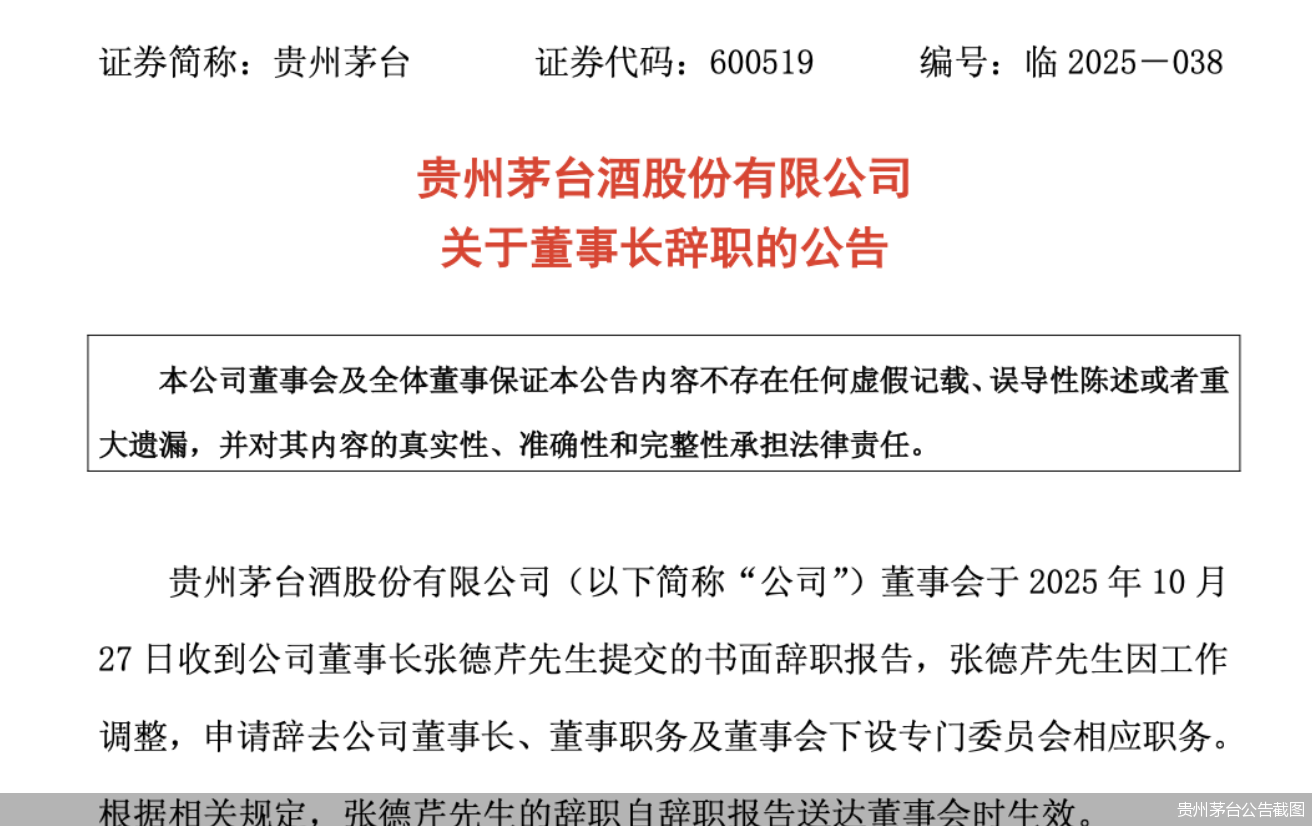
Core Viewpoint - The recent resignation of Guizhou Moutai's chairman, Zhang Deqin, marks the fourth leadership change in five years, reflecting the company's ongoing challenges and the need for strategic adjustments during a period of industry downturn [1][3][8]. Group 1: Leadership Changes - Zhang Deqin served as chairman for less than 18 months before resigning due to work adjustments, with Chen Hua recommended as his successor [2][3]. - The frequent changes in leadership, with four different chairpersons in five years, indicate a struggle to stabilize the company amid market pressures and strategic shifts [6][9]. Group 2: Strategic Initiatives - During Zhang Deqin's tenure, several measures were implemented to stabilize the market, including increasing direct sales channels to 45% and abolishing the controversial "拆箱令" policy [3][4]. - The company has shifted its focus from a "channel-first" approach to a "consumer-first" strategy, aiming to adapt to the industry's challenges [3][8]. Group 3: Market Performance - Guizhou Moutai's financial performance has shown signs of slowing, with revenue and net profit growth rates dropping to 7.28% and 5.25% year-on-year, respectively [3][4]. - The price of Moutai's flagship product, Feitian Moutai, has also seen fluctuations, with recent prices indicating a slight decline [4][5]. Group 4: Industry Implications - The leadership changes at Guizhou Moutai may influence the broader industry, potentially leading to a lack of long-term planning among smaller competitors and altering competitive dynamics within the sector [9]. - The new chairman will face significant challenges, including achieving growth targets during an industry downturn and balancing various stakeholder interests [9][10].
酒香也怕巷子深?酿新篇:中国酒业的三味“新曲”
Sou Hu Cai Jing· 2025-10-26 03:03
Core Insights - The 23rd China International Wine Expo showcased a comprehensive display of the entire industry chain, moving beyond just finished products to include raw materials, smart equipment, and digital marketing [4][10] - The industry is undergoing significant transformations characterized by three main themes: youthfulness, digitalization, and internationalization, which are essential for the industry's evolution [2][12] Youthfulness - Wine companies are actively adapting to attract younger consumers, with products like "no high-low" yellow wine targeting health-conscious youth, and innovative offerings such as wine-infused chocolates and face masks [6][7] - The shift towards youthfulness is driven by the emergence of Generation Z as a new consumer force, emphasizing personalized experiences and health-conscious choices [7][9] Digitalization - The digital transformation in the wine industry is evident through automation in production processes and the integration of technologies like blockchain for transparency and AR/VR for immersive experiences [9][10] - However, the digitalization efforts are primarily benefiting larger enterprises, raising concerns about the potential widening gap between large and small companies in the industry [9][12] Internationalization - Chinese wine companies are increasingly engaging with global markets, supported by China's growing international influence and proactive industry reforms [10][12] - The internationalization of Chinese wine faces challenges, including the need to meet international quality standards and cultural recognition in foreign markets [12][13] Conclusion - The wine expo reflects a broader trend of transformation in traditional industries, where youthfulness, digitalization, and internationalization are interconnected and mutually reinforcing [13][15] - The industry must embrace change with an open mindset and innovative spirit to navigate the complexities of modern market dynamics [15]





中国酒业如何跨越“冰与火”?这场“武汉会议”,回答时代之问!
Sou Hu Cai Jing· 2025-10-20 16:32
Core Insights - The Chinese liquor industry is at a historical crossroads, facing both challenges and opportunities due to rational consumption trends and the impact of artificial intelligence on industry logic [1] - The "World Famous Wine Value Conference" held in Wuhan addressed key industry questions regarding the redefinition of liquor value, the shift from scale expansion to value creation, and the globalization of Chinese liquor [1] Industry Trends - The global liquor industry is undergoing structural changes, with the high-end and luxury segments leading growth at a compound annual growth rate (CAGR) of 10.3%, particularly driven by the Asia-Pacific region [2] - The Chinese baijiu market is expanding steadily, with a CAGR of 2.3%, showcasing strong industry resilience and cultural roots [2] - Traditional business banquet markets are contracting, while personalized and emotionally connected consumption scenarios are rapidly emerging, emphasizing the need for liquor brands to adopt innovative strategies for differentiation [2] Consumer Behavior - The concept of rational consumption has gained consensus, with consumers prioritizing products that offer a balance of cost-effectiveness, quality, and emotional value [4] - The long-term development of world-famous liquors should focus on the values of "coexistence, empathy, and sharing," integrating industry with nature and society [4][5] Internationalization Challenges - China's baijiu currently holds only a 2.3% share in the international market, highlighting the need for the industry to overcome misconceptions and adopt successful strategies from international wine markets [7] - Recommendations for internationalization include aligning with international standards, innovating products and marketing strategies, and fostering collaboration among industry players [7] Innovation and Strategy - Leading companies are responding to industry changes through innovative practices, such as digital empowerment, cross-industry collaborations, and enhancing consumer experiences [10] - Anhui Gujing Group is leveraging digitalization to enhance traditional brewing processes and is actively promoting baijiu internationally [12] - Luzhou Laojiao is focusing on brand innovation through product diversification and cultural collaborations to connect with younger consumers [14] - Qingdao Beer is enhancing consumer engagement through innovative product offerings and efficient delivery systems [19] Future Directions - The conference outlined a clear roadmap for the future of Chinese liquor, emphasizing the importance of gratitude towards nature, commitment to quality, and deep emotional resonance with consumers [30] - The industry is encouraged to embrace the philosophy of "coexistence, empathy, and sharing" to navigate the challenges ahead and achieve sustainable growth [30]



中国酒业以年轻化数智化国际化破局前行
Zheng Quan Ri Bao· 2025-10-19 17:43
Core Insights - The 23rd China International Wine Expo showcased a comprehensive approach to the wine industry, integrating the entire supply chain from raw materials to digital marketing solutions, emphasizing the importance of cultural experience and technology in consumer engagement [1] Group 1: Youthfulness - The wine industry is innovating to attract younger consumers through lighter and more engaging products, such as low-alcohol and fruit wines, reflecting a shift in marketing strategies [2][3] - Companies like Guyue Longshan are introducing unique products like "no high or low" Huangjiu, targeting health-conscious young consumers with low sugar and high alcohol content [2] - Innovative marketing strategies include collaborations with lifestyle products and events, such as liquor-infused chocolates and pop-up stores, to connect with younger audiences [2][3] Group 2: Digital Transformation - The wine industry is undergoing a digital transformation, with companies viewing digitalization as a core strategy rather than a supplementary tool, impacting all aspects from procurement to consumer service [4] - Smart manufacturing is becoming foundational, with companies like Jinshiyuan and Wuliangye implementing automated processes in production, while blockchain technology is enhancing product traceability [4][5] - Despite advancements, smaller enterprises face challenges in digital transformation due to resource constraints, potentially leading to increased industry concentration [5] Group 3: Internationalization - China's wine exports are experiencing robust growth, with a total export value of $1.06 billion, up 21.5%, and a volume increase of 34% to 480 million liters in the first half of the year [6] - The internationalization of Chinese liquor, particularly Baijiu, is gaining attention, with a focus on meeting international quality standards and adapting products for overseas markets [6][7] - The cultural exchange facilitated by the global expansion of Chinese liquor is seen as a significant trend, with companies encouraged to share the story of Chinese Baijiu and consider establishing overseas production and tasting facilities [6][7]
白酒的黄金时代,结束了
Sou Hu Cai Jing· 2025-10-13 02:29
Core Insights - The price of Feitian Moutai has dropped below 2000 yuan, halving from its peak in 2021, indicating a significant revaluation of the brand previously regarded as "China's gold" [2] - A large number of liquor distributors are exiting the market, with some reporting near-zero sales, highlighting a critical turning point for the industry [2][4] - The current inventory of Feitian Moutai in circulation exceeds the total of the past three years, exacerbated by low-price dumping on e-commerce platforms [2][4] Industry Transformation - The introduction of the revised "Regulations on Strict Economy and Opposition to Waste" in May 2025, which restricts alcohol at official receptions, is seen as a significant blow to the industry [3] - Despite the policy's limited impact on Moutai's overall consumption, the market sentiment has shifted dramatically, leading to a sustained decline in stock prices across major liquor brands [4] - The average inventory turnover days in the industry have reached 900 days, a 10% increase year-on-year, with inventory levels rising by 25% [6] Consumer Behavior Changes - Consumers are becoming more rational, moving away from the blind pursuit of high-end liquor as an investment [5] - The traditional consumer base of business and management professionals, which once accounted for 85.1% of liquor consumption, is being replaced by younger demographics [8] - The share of white liquor in business banquets has dropped below 50% for the first time, with lighter social beverages like coffee and tea gaining popularity [11] Market Dynamics - The market for mid-range liquor priced between 300-800 yuan is growing rapidly, now accounting for 35% of the market [4] - The low-end liquor market is projected to exceed 200 billion yuan by 2025, with high-line low-alcohol products experiencing growth rates over 40% [6] - The competition in the low-alcohol segment is intensifying, with established brands and new entrants vying for market share [16] Strategic Shifts - Liquor companies are actively seeking new directions, focusing on low-alcohol and bottled liquor as key growth areas [15] - A significant portion of companies (64.9%) are concentrating resources on core products, while 33.3% are developing new products [18] - The industry is entering a new phase characterized by policy adjustments, structural transformations, and intensified competition [19]