
智能穿戴设备

Search documents
Rokid Glasses全渠道开卖,9月15日起现货发售
Xin Lang Ke Ji· 2025-08-28 10:20
Core Viewpoint - Rokid announced the pre-sale and official sale dates for Rokid Glasses, indicating a strategic move to enhance market presence and consumer engagement [1] Group 1: Product Launch Details - Rokid Glasses will be available for pre-sale on September 1, 2025, at 10:00 AM across all channels [1] - The official sale will commence on September 15, 2025 [1] - Customers who pay in full by September 10, 2025, at 24:00 will receive a complimentary charging case valued at 399 yuan [1] Group 2: Sales and Distribution Strategy - E-commerce platform users who make payments by September 10 will receive priority shipping, while other orders will be shipped based on payment time [1] - The charging cases for Rokid Glasses are expected to be shipped by October 31, 2025 [1]
传理想汽车或最快于下月发布首款AI眼镜
Ju Chao Zi Xun· 2025-08-28 09:15
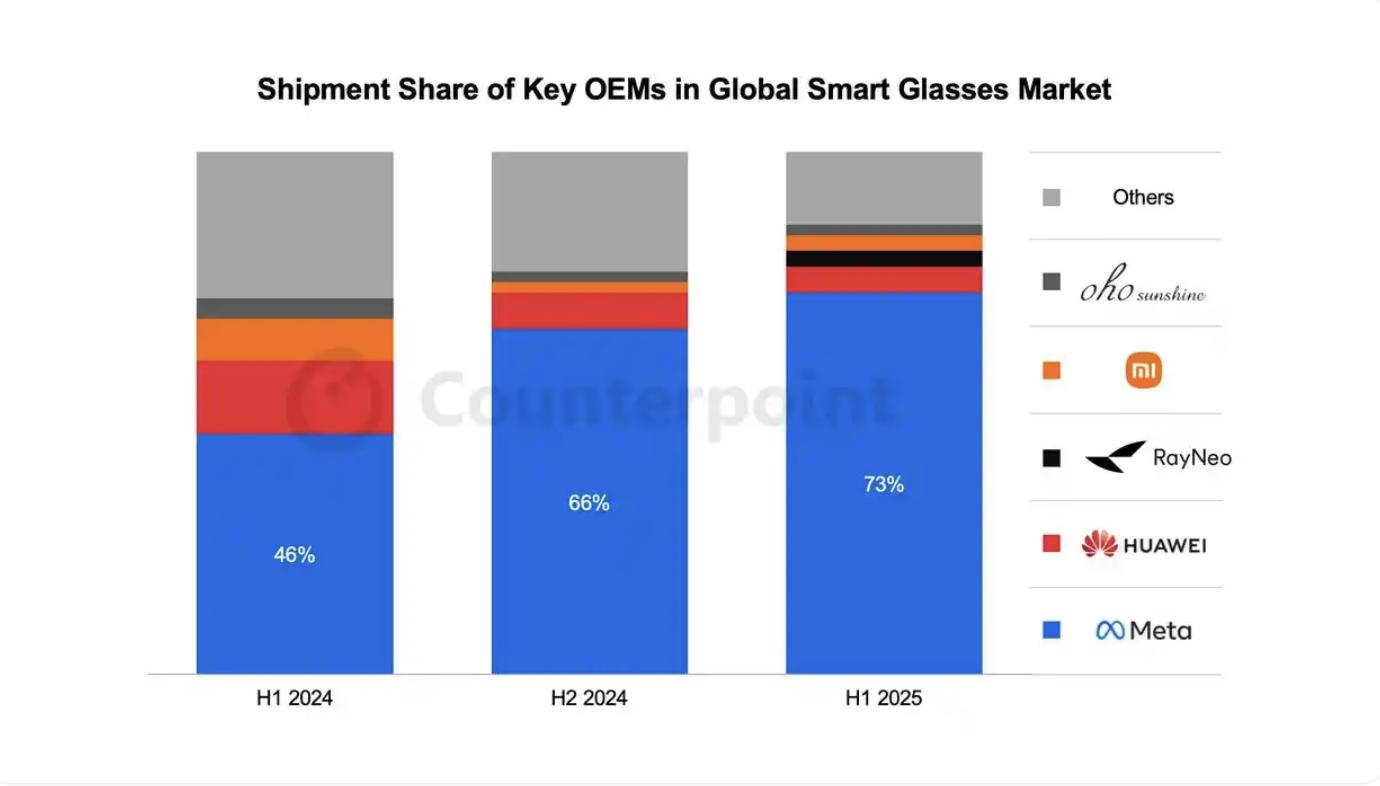
Core Insights - Li Auto is expected to launch its first AI glasses as early as next month, coinciding with the release of its new vehicle [2] - The company has been planning its AI glasses for a while, having established two new secondary departments focused on "space robots" and "wearable robots" [2] - The AI glasses will emphasize AI voice interaction and may leverage the Li Xiang Classmate App, which was launched in December last year [2] Company Developments - The "wearable robots" department, which oversees the AI glasses project, is led by Senior Vice President Fan Haoyu [2] - The Li Xiang Classmate App is a multimodal AI application that allows users to identify objects and obtain information through voice queries [2] Industry Trends - The global smart glasses market is on the verge of a significant increase, with Counterpoint Research reporting a projected 110% year-on-year growth in shipments by the first half of 2025 [2] - Major tech companies, including Meta and Alibaba, are expected to release new AI smart glasses starting in the second half of 2025 [2]



港股概念追踪|Meta Connect大会将发布新AI眼镜 机构普遍看好产业链成长空间(附概念股)
Zhi Tong Cai Jing· 2025-08-28 00:56
Group 1: Meta's AI Glasses Development - Meta Connect conference is scheduled for September 17-18, where Meta is expected to unveil new smart glasses including Celeste and third-generation Ray-Ban-Meta glasses, along with a new "metaverse software" [1] - Analyst Ming-Chi Kuo predicts that Meta's upcoming AI glasses, Hypernova, will begin mass production in Q3 2025, with an estimated shipment of 150,000 to 200,000 units over two years [1] - The integration of AI with AR applications is still in its early stages, and the high price point of approximately $800 for Hypernova may lead to conservative shipment expectations from Meta [1] Group 2: Market Trends and Competitors - The AI glasses industry is experiencing robust growth, with Ray-Ban Meta glasses seeing over 100% growth in the first half of the year, and Xiaomi targeting a shipment of 500,000 AI glasses [2] - Major companies like Google, Samsung, Apple, and Amazon are clarifying their hardware and software plans for AI/AR glasses, indicating a competitive landscape [1][2] Group 3: Key Players in the AI Glasses Market - Konka Optical is positioned to benefit from the AI glasses industry upgrade, focusing on high-performance integrated solutions and has secured projects with leading tech companies [3] - Lens Technology is reportedly the exclusive supplier of three core components for the next-generation Ray-Ban AI glasses, which will feature AR display capabilities [3] - TCL Electronics is set to launch its AI shooting glasses, priced at 1,799 yuan, under its Thunder brand in January 2025 [3] - Sunny Optical Technology has developed a comprehensive XR visual solution for AI glasses, covering various technological needs in the industry [3] Group 4: New Product Launches - Xiaomi recently launched its first AI glasses, positioning them as a next-generation personal smart device with features like first-person perspective shooting and video calls [4] - Baidu introduced the "first native AI glasses with a Chinese large model" at the 2024 Baidu World Conference [4] - Alibaba announced its self-developed AI glasses, "Quark Glasses," at the 2025 World Artificial Intelligence Conference, emphasizing their integration with Alibaba's ecosystem [4]


Meta Connect大会将发布新AI眼镜 机构普遍看好产业链成长空间(附概念股)
Zhi Tong Cai Jing· 2025-08-28 00:54
Group 1: Meta's Developments - Meta Connect conference is scheduled for September 17-18, where Meta is expected to unveil new smart glasses including Celeste and third-generation Ray-Ban-Meta glasses, as well as a new "metaverse software" [1] - Analyst Ming-Chi Kuo predicts that Meta's upcoming AI glasses, Hypernova, will begin mass production in Q3 2025, with an estimated shipment of 150,000 to 200,000 units over two years [1] - The integration of AI with AR applications is still in its early stages, and the high price of approximately $800 for Hypernova may lead to conservative shipment forecasts from Meta [1] Group 2: Industry Growth and Competitors - CMB International expresses optimism about the AI glasses industry, noting significant growth in Ray-Ban Meta glasses and Xiaomi's target of 500,000 units for its AI glasses, alongside a rich product pipeline from various brands [2] - Companies like Xiaomi, Rokid, and others have launched AI/AR glasses, while major international firms such as Google, Samsung, Apple, and Amazon are also clarifying their plans for AI/AR glasses [1][2] Group 3: Hong Kong Stock Market and Key Players - Conant Optical (02276) is expected to benefit from the AI glasses industry upgrade, with a focus on high-performance integrated solutions [3] - Lens Technology (300433) is reportedly the exclusive supplier of three core components for the next-generation Ray-Ban AI glasses, which will feature AR display capabilities [3] - TCL Electronics (01070) plans to release its AI shooting glasses, Thunder V3, priced at 1,799 yuan in January 2025 [3] Group 4: Technological Innovations - Sunny Optical Technology (02382) has developed a comprehensive XR visual solution for AI glasses, focusing on scene interaction and image processing [4] - Xiaomi has launched its AI glasses, positioning them as a next-generation personal smart device with features like first-person perspective shooting and video calls [4] - Baidu has introduced the "first native AI glasses with a Chinese large model" at the 2024 Baidu World Conference [4][5] - Alibaba announced its self-developed AI glasses, Quark Glasses, at the 2025 World Artificial Intelligence Conference, emphasizing their role as an all-weather assistant [5]
华泰证券:看好AI+AR眼镜产业链
Xin Lang Cai Jing· 2025-08-28 00:03
Core Viewpoint - The upcoming Meta Connect conference, scheduled for September 17-18, is expected to showcase new AI glasses and software, highlighting the potential of augmented reality (AR) and artificial intelligence (AI) in the eyewear market [1] Group 1: Product Launches - Meta is anticipated to unveil the Celeste smart glasses, the third-generation RayBan-Meta glasses, and the Oakley sports glasses at the conference [1] - The event may also feature a new "metaverse software" that aims to redefine AI glasses from hardware, interaction, and software perspectives [1] Group 2: Industry Trends - Since the beginning of the year, domestic companies such as Xiaomi, Rokid, Thunderbird, and Xreal have launched AI/AR glasses, indicating a growing interest in this technology [1] - Major international companies like Google, Samsung, Apple, and Amazon are also clarifying their hardware and software plans for AI/AR glasses [1] Group 3: Market Outlook - The industry is viewed positively due to the enhancement of AI model capabilities, with glasses being seen as a long-term potential entry point for always-on interaction [1] - There is a recommendation to pay attention to the short-term catalysts that new product launches from leading companies may bring to the supply chain [1]

华泰证券:头部企业重磅新品发布在即,看好AI+AR眼镜产业链
Xin Lang Cai Jing· 2025-08-28 00:03
Core Viewpoint - The upcoming Meta Connect conference, scheduled for September 17-18, is expected to showcase new AI/AR glasses and software, highlighting the growing interest and competition in the AI/AR eyewear market [1] Group 1: Product Launches - Meta is anticipated to unveil the Celeste smart glasses, the third-generation RayBan-Meta glasses, and the Oakley sports glasses at the conference [1] - Other companies such as Xiaomi, Rokid, Thunder, and Xreal have already launched AI/AR glasses this year, indicating a trend in the market [1] Group 2: Industry Trends - Major international companies like Google, Samsung, Apple, and Amazon are also clarifying their hardware and software plans for AI/AR glasses, suggesting a competitive landscape [1] - The potential of glasses as an "Always-on" interaction interface is viewed positively, especially with advancements in AI model capabilities [1] Group 3: Market Catalysts - The recent product launches from leading companies are expected to act as short-term catalysts for the industry chain [1]
小米和苹果,被“偷袭”
Di Yi Cai Jing Zi Xun· 2025-08-27 07:08
Core Viewpoint - The article discusses the rising popularity of smart rings among young consumers as a new trend in health management, highlighting their rapid market growth and unique advantages over traditional smartwatches [2][3][13]. Market Overview - Smart rings are a relatively new category of wearable devices, currently holding a small market share but experiencing rapid growth, with a projected global shipment growth rate of 88.4% in 2024 [3][4]. - In the domestic market, smart rings accounted for only 0.1% of the wearable device market share in early 2025, yet their sales revenue saw a staggering year-on-year increase of 6401.7% [3][4]. Key Players - Oura Ring, launched in 2015, is the leading player in the smart ring market, holding an 80% share of global sales in 2023 [4]. - Other notable brands include Ultrahuman, which holds a 12% market share, and emerging domestic brands like RingConn, which has gained significant traction in China [4][7]. Competitive Landscape - The entry of major brands like Samsung with the Galaxy Ring has significantly increased consumer awareness and interest in smart rings in China [6][7]. - The number of smart ring brands available on major e-commerce platforms in China grew from 3 in May 2024 to 34 by June 2025, with monthly sales exceeding 394 million yuan [7]. Product Features and Innovations - Health monitoring is the core selling point of smart rings, with features like blood oxygen, heart rate, and sleep tracking becoming standard [11]. - Brands are differentiating themselves by enhancing the accuracy and range of health monitoring capabilities, with some models offering advanced features like non-invasive blood glucose monitoring and ECG [11][12]. Consumer Experience - Smart rings offer a "no-feel" wearing experience, making them more comfortable for continuous use compared to smartwatches, which can be bulkier [14][15]. - The accuracy of health monitoring is enhanced due to the thinner skin and richer capillary network in the fingers, allowing for better physiological signal detection [15][16]. Battery Life and Longevity - Smart rings generally have a longer battery life than smartwatches, with many models lasting 3-5 days or more on a single charge [18]. - However, concerns about their longevity arise due to the lack of replaceable batteries, leading some consumers to view them as "disposable devices" [19]. Conclusion - Smart rings are carving out a niche in the wearable market by addressing specific needs that smartwatches do not fully meet, such as comfort, precision in health monitoring, and extended battery life [20].
小米和苹果,被一个“电子新贵”偷袭
Hu Xiu· 2025-08-27 05:36
Core Insights - The article discusses the rising popularity of smart rings among young consumers as a new trend in health management [2][3][4] - Smart rings are gaining traction in the wearable device market, with significant growth rates projected for the coming years [5][6][7] Market Overview - Smart rings currently hold a small market share in the wearable device category, estimated at 0.3% globally in 2024, but are expected to grow at a rate of 88.4%, significantly outpacing the overall market growth of 6.1% [6] - In the domestic market, smart rings accounted for only 0.1% of the market share in early 2025, yet their sales revenue saw a staggering year-on-year increase of 6401.7% [7] Key Players - The first smart ring, Oura Ring, launched by Finnish company Oura in 2015, has become a leading player in the market, with 80% of global sales in 2023 [8][9] - Despite Oura's success, it has not entered the Chinese market, leaving a gap that local brands are beginning to fill [10] Recent Developments - The entry of Samsung with its Galaxy Ring in July 2024 has significantly increased awareness and interest in smart rings among Chinese consumers [15][16] - The number of smart ring brands in the domestic market surged from 3 in May 2024 to 34 by June 2025, with monthly sales exceeding 3.94 million yuan [18] Product Features and Innovations - Health monitoring is the core selling point of smart rings, with features like blood oxygen, heart rate, and sleep tracking becoming standard [26] - Brands are differentiating themselves by offering advanced functionalities such as sleep apnea monitoring and non-invasive blood glucose tracking [27] Competitive Advantages - Smart rings offer a "no-feel" wearing experience, making them more comfortable for continuous use compared to smartwatches [30][31] - The accuracy of health monitoring is enhanced due to the thinner skin and richer capillary network in the fingers, allowing for better biological signal detection [35][36] - Smart rings generally have longer battery life, with some models lasting up to 15 days on a single charge, compared to the typical 18 hours for smartwatches [42][43] Market Positioning - Smart rings are positioned as complementary devices to smartwatches, targeting specific use cases where smartwatches may not be suitable [29][47] - The trend towards "small and precise" health monitoring devices indicates a growing market niche that smart rings are well-suited to exploit [48]
上半年智能眼镜销量翻倍,小米们成幕后功臣,AR眼镜未来可期?
3 6 Ke· 2025-08-27 04:36
Core Insights - The global smart glasses market is projected to see a 110% year-on-year increase in shipment volume in the first half of 2025, according to Counterpoint [1] - IDC forecasts that China's smart glasses shipments will reach 2.907 million units in 2025, marking a 121.1% year-on-year growth [1] Industry Overview - Smart glasses, once considered niche products, are emerging as a new force in the smart terminal market [4] - The current domestic market for smart glasses is primarily divided into audio recording glasses and AR glasses, with audio recording glasses being the main sales driver due to their lower entry barriers and more affordable pricing [5] Company Contributions - Xiaomi is identified as a significant contributor to the growth in smart glasses sales, with its AI glasses achieving over 30,000 user activations shortly after launch, setting a new sales record in China [7] - Other major brands like Huawei and 雷鸟 are also performing well in sales across major e-commerce platforms, showcasing the brand power of established companies [9] Technological Advancements - AI glasses are evolving to include features such as voice interaction, simple touch controls, and multi-modal technologies, enhancing user experience [5][12] - AR glasses are advancing with unique functionalities, such as real-time translation and navigation, as seen in products like Rokid Glasses [13] Market Dynamics - The decline in prices of smart glasses is a key factor driving their adoption, with basic models now available for a few hundred to a couple of thousand yuan, making them more accessible to consumers [19] - The market is expected to continue its rapid growth, particularly in China, as local manufacturers enhance product offerings and consumer awareness increases [21] Future Outlook - The smart glasses market is anticipated to diversify, with AI glasses excelling in various applications, AR glasses shining in consumer entertainment, and XR glasses showing significant potential [21] - Despite the growth, challenges remain in areas such as battery life, comfort, and market awareness, which need to be addressed for broader acceptance [22][23]
郭明錤:预计Meta(META.US)AI眼镜Hypernova今年三季度量产 售价约800美元
Zhi Tong Cai Jing· 2025-08-27 02:56
Core Viewpoint - Meta's upcoming AI glasses, Hypernova, are expected to begin mass production in Q3 2025, with an estimated shipment of 150,000 to 200,000 units over a two-year product lifecycle [1] Company Summary - Analyst Ming-Chi Kuo predicts that global smart glasses shipments will reach 13 to 15 million units by 2026, indicating that Hypernova's market share will be negligible and positioning it more as an experimental product for Meta [1] - The primary selling point of Hypernova will be its AI integration, although the exploration of AI and AR applications is still in its early stages [1] - The high price point of approximately $800 may contribute to Meta's conservative outlook on Hypernova's shipment volume [1] Industry Summary - Hypernova utilizes LCOS technology to achieve mass production, but this choice presents challenges in hardware design, including appearance, brightness, response time, and battery life [1] - Meta's strategic objectives for launching Hypernova include: 1) preempting Apple's release to enhance brand image, 2) accumulating ecosystem experience early, and 3) understanding user behavior [1]