Smartphones

Search documents
智能体上场,手机厂商猛攻AI
2 1 Shi Ji Jing Ji Bao Dao· 2025-10-28 06:53
Core Insights - The smartphone industry is transitioning from "hardware competition" to "intelligent evolution" by 2025 [1] - AI and form innovation are the two core competitive directions for smartphone manufacturers, representing both technological innovation and brand differentiation [2] AI Development and Strategy - Domestic smartphone manufacturers are accelerating their AI strategies, with Honor being particularly aggressive, launching the Magic 8 and the first Honor AI Terminal Ecological Conference [4] - Honor's Magic 8 emphasizes "self-evolving AI native phone" with the upgraded MagicOS 10, featuring various AI agents supported by the MagicGUI model, which integrates multimodal data for task execution [6] - Honor's AI strategy includes the HONOR AI Connect platform and eight AI solutions, aiming to lower the entry barrier for ecosystem partners and promote collaboration across various industries [6][7] Competitive Landscape - Other major domestic manufacturers are also enhancing their AI capabilities, with Huawei launching HarmonyOS 6 and over 80 AI applications, OPPO introducing intelligent computing frameworks, and vivo integrating multimodal reasoning models [7] - The evolution of AI in smartphones is shifting from isolated features like voice assistants to system-level intelligent collaboration, with AI capabilities moving from cloud to edge computing [7] Consumer Insights and Market Trends - According to Omdia, Chinese consumers frequently use AI features such as AI tools, smart voice assistants, photo editing, enhanced search engines, and real-time translation [8] - There is a noted disconnect between the AI capabilities highlighted by manufacturers and the features most used by consumers, although significant improvements have been made in functionality and user experience over the past year [8][9] Future Directions - Manufacturers need to effectively communicate their AI development roadmap to consumers and partners, focusing on user pain points to enhance understanding and retention of AI features [9] - Form innovation is evolving alongside AI, with new designs like foldable and robotic phones being explored, indicating a shift towards embodied intelligence [9][10] - Honor views the AI Phone era as the next stage in smartphone evolution, following the feature phone and smartphone eras, with ongoing exploration into new hardware directions [10]

对话荣耀MagicOS 10核心高管:当手机系统学会思考,AI正重塑人机关系
Feng Huang Wang· 2025-10-28 04:57
Core Viewpoint - The release of Honor's MagicOS 10 signifies a major shift in the operating system landscape, moving from hardware specifications to AI-driven user experience and interaction [7] Group 1: AI and User Experience - Honor emphasizes that the future competition in smart operating systems will focus on functional experience rather than just performance metrics [2] - The goal of MagicOS 10 is to transform devices from "cold tools" into "partners" that actively perceive and simplify user interactions with the digital and physical worlds [2][3] Group 2: YOYO Intelligent Agent - The YOYO intelligent agent is designed to cover various aspects of daily life, supported by advanced technologies including visual models and multi-modal models [3] - YOYO features capabilities such as "YOYO sees," which allows it to recognize and automatically execute tasks based on user context, enhancing its utility [3] - The agent is being developed to create a personalized knowledge base for users, enabling it to provide tailored responses based on past interactions [3] Group 3: System Architecture and Aesthetics - MagicOS 10 incorporates a new "Hummingbird" architecture that enhances system fluidity through a comprehensive redesign at the motion, scheduling, and kernel levels [4] - The introduction of "AI trajectory real-time calculation technology" allows for personalized motion trajectories based on user interactions [4] - The "zero-gravity transparent UX design" aims to maintain consistent visual clarity across various backgrounds, addressing challenges in content visibility [4][5] Group 4: Strategic Direction and Market Positioning - Honor is breaking down barriers by enabling cross-brand connectivity, allowing users to share information seamlessly across different device brands [6] - The company is responding to user feedback by modernizing its design approach, aiming to attract younger demographics who previously found its designs outdated [6] - The strategic shift towards a more youthful and refined aesthetic is a direct response to the loss of users to competitors, particularly among younger and female demographics [6]
2025vivo手机观察:来自Counterpoint研究的10篇报告数据
Counterpoint Research· 2025-10-28 04:26
Core Insights - The article discusses the performance and market trends of vivo smartphones based on 10 research reports from Counterpoint Research, highlighting the brand's growth in various regions and its transition to 5G technology [4]. Group 1: Market Performance - In Q2 2025, global smartphone revenue surpassed $100 billion for the first time, marking a historical high for the period, with vivo's revenue growing by 4% year-on-year and shipment volume increasing by 5% [10]. - The Indian smartphone market saw an 8% year-on-year increase in shipments in Q2 2025, with vivo achieving a 23% year-on-year growth driven by strong demand for its Y and T series in the ₹10,000-15,000 price range (approximately $110-170) [14]. - In Q1 2025, vivo maintained its leading position in the Indian smartphone market with a 9% year-on-year growth, particularly benefiting from strong sales of its Y29 5G and T4x models priced below ₹15,000 [22]. Group 2: Regional Insights - In Vietnam, the share of 5G smartphones in total shipments exceeded 50% for the first time in Q2 2025, with vivo completing its transition from the 4G Y29 to the 5G Y39 model [5]. - The Chinese smartphone market experienced a 2% year-on-year decline in shipments in Q2 2025, but vivo ranked second in shipments, supported by strong performance in lower-tier cities and successful promotions for its S30 series [17]. - In Indonesia, vivo's shipments grew by 12% year-on-year in 2024, focusing on the entry-level market (under $200), with its Model Y series being the most popular in that price segment [31]. Group 3: Competitive Landscape - The competitive landscape in the Indian smartphone market is evolving, with local manufacturers gaining ground. Dixon has partnered with vivo to establish a joint venture, indicating a strategic move to enhance local production capabilities [7]. - The overall smartphone market is recovering after two years of decline, with vivo ranking fifth globally, particularly excelling in the Indian and Chinese markets [36].

一加Ace 6发布:将165Hz超高帧游戏体验带入中端市场,2599元起
Feng Huang Wang· 2025-10-27 15:29
Core Viewpoint - OnePlus has launched the OnePlus Ace 6, targeting the mid-range market with a starting price of 2599 yuan, offering a "fully equipped" experience for users [1] Group 1: Product Features - The OnePlus Ace 6 features a compact metal camera module designed to avoid hand obstruction during landscape gaming [1] - It is available in three colors: near black, scattered white, and fast silver, with the fast silver variant utilizing a new "micro-gradient silk glass" technology for a unique metallic feel and fingerprint resistance [1] - The device is powered by the Snapdragon 8 Gen 2 mobile platform and includes the new "Wind Chasing Game Kernel" for performance optimization [1] - It offers a 165Hz ultra-high refresh rate gaming experience, making it the only Snapdragon 8 Gen 2 phone in its price range to provide this feature [1] Group 2: Performance and Battery - The OnePlus Ace 6 is equipped with a 7800mAh battery and supports 120W Super Flash Charge, claiming to charge 50% in just 16 minutes [2] - The device features a flagship-level eye-care screen with 165Hz high refresh rate and "sun display technology" for clear visibility in bright outdoor conditions [2] - It includes high-end configurations such as ultrasonic fingerprint recognition, a flagship metal frame, and IP66/68/69/69K dust and water resistance ratings, enhancing durability and usability in complex environments [2] Group 3: Additional Specifications - The OnePlus Ace 6 comes pre-installed with ColorOS 16 and features a 50MP main camera from Sony, an X-axis linear motor, and stereo speakers for a comprehensive user experience [2]
一加15发布:携第五代骁龙8至尊版与165Hz游戏生态登场,3999元起
Feng Huang Wang· 2025-10-27 14:02
Core Points - OnePlus has officially launched its new flagship smartphone, OnePlus 15, targeting young gaming enthusiasts with a starting price of 3999 yuan for the 12GB+256GB version [1] - The device features the world's first mobile screen supporting a 165Hz refresh rate, aimed at enhancing mobile gaming experiences [1][2] - OnePlus 15 incorporates advanced design elements, including a 1.15mm narrow bezel and a unique "nano base process" for the back cover, which is resistant to fingerprints [1] Performance and Gaming Features - The smartphone is powered by the fifth-generation Snapdragon 8 Gen 2 chip and OnePlus's self-developed "Wind Chaser Game Kernel" technology, optimizing power consumption and frame rate stability [1] - OnePlus claims that the device can maintain full-frame performance even during demanding 165Hz native gaming [1] - The new generation of the Ice River cooling system utilizes "ultra-thin hand-tear steel" VC heat spreaders and "aerospace-grade supercritical aerogel" for improved heat dissipation, reportedly doubling cooling efficiency [1] Gaming Experience Enhancements - The 165Hz refresh rate allows for faster frame display compared to 120Hz, enhancing players' ability to detect enemies and improve winning chances [2] - OnePlus has partnered with several game studios to launch native 165Hz modes for popular games like "Delta Force," "Call of Duty Mobile," and "League of Legends Mobile" [2] - The device features a 7300mAh Glacier battery and 120W Super Flash Charge, capable of fully charging in 39 minutes and supporting 6-7 hours of continuous 165Hz gaming [2] Imaging and Software Features - OnePlus 15 includes significant upgrades to its imaging system, featuring OPPO's LUMO imaging system with a 50MP OIS main camera and a 3.5x optical periscope lens [3] - The device runs on the new ColorOS 16, which enhances smooth animations, AI functionalities, and cross-ecosystem connectivity, including compatibility with Apple devices [3] - The third-generation Eastern screen not only supports 165Hz but also includes hardware-level low blue light and "true hardware 1nit night display" features for eye protection [3]
HMD Fusion 2续作来了,然而用户并不需要模块化手机
3 6 Ke· 2025-10-27 01:20
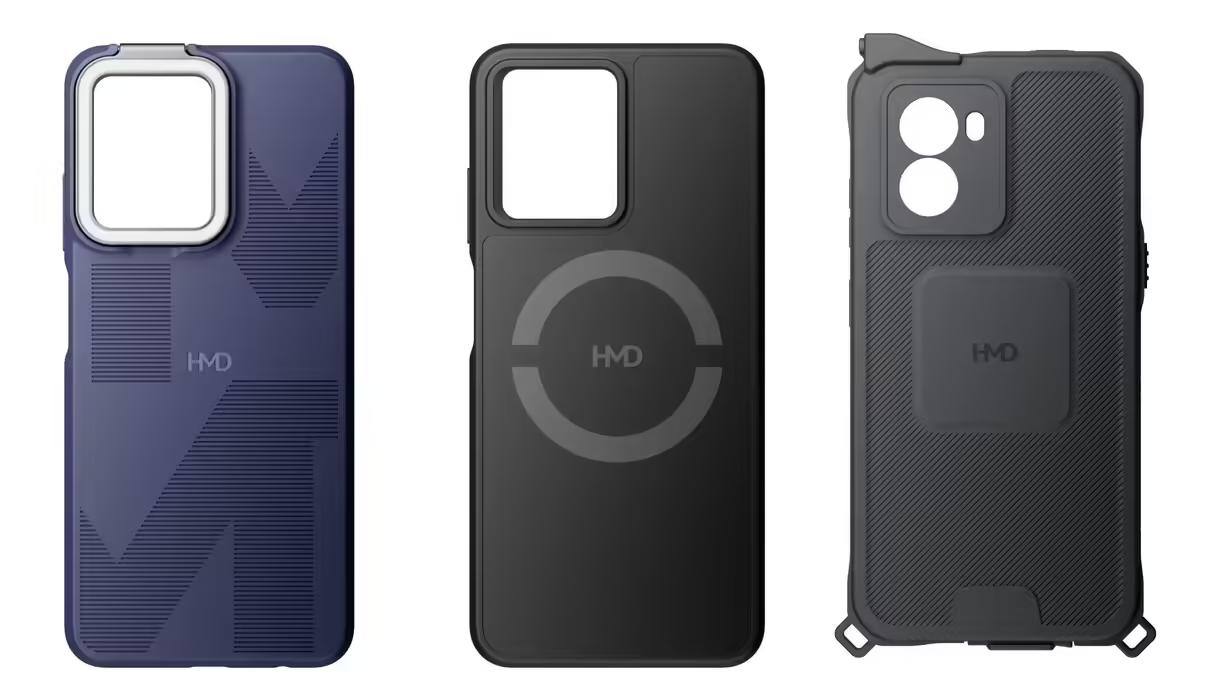
Core Viewpoint - HMD is launching its second modular smartphone, HMD Fusion 2, which continues the modular design concept of its predecessor, aiming to enhance device longevity and reduce electronic waste through user-replaceable components [1][3][11]. Group 1: Product Features - HMD Fusion 2 will allow users to easily replace camera modules, batteries, back covers, and some interface modules, promoting a more sustainable approach to smartphone usage [3][11]. - The modular design aims to address issues like battery aging and damaged components without requiring a full device replacement [11][13]. Group 2: Market Context - The concept of modular smartphones has been around for over 20 years, with early attempts like Google's Project Ara aiming to create customizable hardware ecosystems [3][5]. - Previous modular phones, such as LG G5 and Moto Z, faced poor sales and ultimately abandoned their modular features, indicating a lack of market acceptance [5][6][19]. Group 3: Challenges and Considerations - The high production and maintenance costs associated with modular designs, along with the complexity of smartphone internals, pose significant challenges for HMD Fusion 2 [6][13]. - The current market trend favors integrated designs that prioritize thinness, compactness, and durability, which conflict with the modular concept [17][19]. Group 4: Environmental and Consumer Trends - The rise of "repairability" and "sustainability" concepts in the tech industry, particularly in Europe and North America, has influenced HMD's approach to modularity [9][11]. - Despite the push for repairable devices, consumer habits lean towards convenience, with many preferring to replace rather than repair their smartphones [17][19].
iQOO罗锋:选择屏幕供应商,不是以国产或国际角度思考
Guan Cha Zhe Wang· 2025-10-24 14:16
Core Insights - iQOO has launched its new flagship iQOO 15 series, claiming it to be a generational leap in technology, with sales exceeding the previous generation's first-day total within just 30 minutes of release [1] Product Features - The iQOO 15 features the world's first 2K LEAD OLED screen and M14 luminescent materials, emphasizing advancements in clarity, brightness, color, eye protection, power consumption, lifespan, and touch response [2] - The product aims to enhance gaming experiences by improving graphical processing capabilities, addressing user demands for better visual quality in mobile gaming [3] - The device is equipped with the fifth-generation Snapdragon 8 Supreme processor, self-developed gaming chip Q3, 2K Samsung screen, and advanced camera technology, supporting features like full-scene ray tracing and 144FPS lossless frame rate [4] Market Positioning - iQOO's strategy focuses on long-term development rather than immediate results, aiming to serve users consistently despite competitive pressures [3] - The company has a strong partnership with the popular game "Honor of Kings," having been the official device for the game for several years, which has influenced its product development [3] Pricing and Availability - The iQOO 15 is priced starting at 4,199 yuan for the base model (12GB+256GB) and goes up to 5,499 yuan for the highest configuration (16GB+1TB), with a special edition also priced at 5,499 yuan [4]
Xiaomi Blames Rising Memory Chip Costs for Higher Smartphone Prices After Redmi K90 Letdown - Samsung Electronics Co (OTC:SSNLF), Apple (NASDAQ:AAPL)
Benzinga· 2025-10-24 09:11
Core Insights - Xiaomi is facing rising production costs for its smartphones due to increased memory chip prices, which has led to market disappointment regarding the pricing of the new Redmi K90 series [1][2]. Pricing and Product Strategy - The base model of the Redmi K90 starts at 2,599 yuan ($364), which is an increase from the previous K80 series priced at 2,499 yuan ($350) [3]. - To address consumer dissatisfaction, Xiaomi has temporarily reduced the price of the popular K90 model with 12 GB of memory and 512 GB of storage by 300 yuan ($42.10), bringing it to 2,899 yuan ($406.79) for the first month of sales [4]. Market Dynamics - The surge in demand for AI-focused chips has resulted in a shortage of traditional semiconductors, causing prices for conventional chips to rise sharply, benefiting memory manufacturers like Samsung and SK Hynix [5]. - Xiaomi is experiencing renewed competition from Apple in the Chinese market, with Apple's iPhone business reportedly recovering and expected to challenge Xiaomi with its upcoming 2026 iPhone lineup [6]. - In response to competition, Xiaomi launched its 17 Series in September, directly targeting Apple's iPhone 17 lineup with competitive features and pricing [7]. Investment and Development - Xiaomi's founder announced plans to invest at least 50 billion yuan ($6.93 billion) in chip design over a decade, with 13.5 billion yuan ($1.89 billion) already invested in developing its advanced XringO1 mobile chip [8]. - The chip design unit has grown to over 2,500 employees, indicating Xiaomi's commitment to achieving semiconductor self-sufficiency [8].


vivo发布全新X300系列旗舰手机 持续领跑中国智能手机市场
Zhong Guo Jing Ji Wang· 2025-10-24 05:44
Core Insights - Vivo recently launched the new X300 series flagship smartphones, achieving nearly 300,000 sales within three days, which is approximately 165% of the previous generation's sales [1] - The X300 series marks a milestone for Vivo's 30th anniversary, focusing on professional imaging and leveraging four major technological advancements to enhance performance, system, and design [1] - Vivo has maintained its leading position in the Chinese smartphone market for four consecutive years, holding over 17% market share as of September 28, 2025, and remains a top player in the competitive 4000-6000 yuan high-end smartphone segment [1] Product Features - The X300 Pro features a new 85mm Zeiss 200MP APO super telephoto lens, developed in collaboration with Samsung, showcasing advanced sensor technology with a large 1/1.4-inch sensor [2] - The X300 series is powered by the Dimensity 9500 flagship platform and Vivo's self-developed V3+ imaging chip, offering industry-leading 4K video creation capabilities [2] - The series runs on the new OriginOS 6, which includes innovations such as super core computing and photon storage, ensuring smooth long-term usage and connectivity with Apple's ecosystem [2] Pricing Information - The Vivo X300 is available in five versions with prices ranging from 4399 yuan to 5799 yuan, while the X300 Pro has four versions priced between 5299 yuan and 8299 yuan [3]
China's Xiaomi says surging memory chip prices push up smartphone costs
Reuters· 2025-10-24 05:19
Core Viewpoint - Xiaomi has reported that rising memory chip prices have increased the production costs of its smartphones, which has led to market disappointment regarding the pricing of its new Redmi K90 series [1] Group 1: Company Impact - The surge in memory chip prices is directly affecting Xiaomi's manufacturing costs [1] - The pricing strategy for the new Redmi K90 series has not met market expectations, indicating potential challenges in consumer acceptance [1] Group 2: Industry Context - The overall smartphone industry is facing increased production costs due to rising component prices, particularly memory chips [1] - Market reactions to new product pricing may reflect broader trends in consumer sentiment and purchasing power within the tech sector [1]