核聚变能源

Search documents
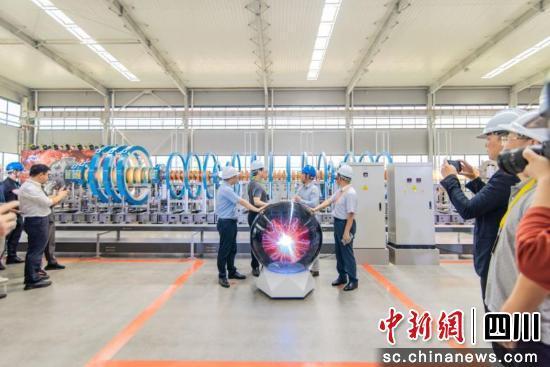
HHMAX-901主机建设完成暨等离子体点亮仪式在蓉举行
Zhong Guo Xin Wen Wang· 2025-07-21 04:30
Core Insights - The successful ignition of the HHMAX-901 device marks a significant breakthrough in China's commercial exploration of controllable nuclear fusion, particularly in the application of linear magnetic confinement technology [3][4] - The HHMAX-901 project began in June 2024, with physical design starting in August, and has undergone multiple design iterations before entering the construction phase [3][4] - The device's successful plasma ignition indicates readiness for subsequent experimental phases, with plans to advance controllable nuclear fusion technology and commercialize related products [3][4] Company Developments - Han Hai Ju Neng (Chengdu) Technology Co., Ltd. has completed the construction of the HHMAX-901 device and successfully achieved plasma ignition [3][4] - The company aims to leverage the HHMAX-901 as a platform to accelerate breakthroughs in core components and develop commercial products in the nuclear fusion sector [3][4] - Strategic cooperation agreements have been signed with Chengdu Guoguang Electric Co., Ltd., Chengdu Xuguang Electronics Co., Ltd., and Shenzhen Prince New Materials Co., Ltd. to enhance collaboration in vacuum systems, intelligent control, and power supply [5] Industry Outlook - The controllable nuclear fusion sector is gaining increasing attention, with various policies and initiatives supporting its development, including the recent inclusion of "controllable nuclear fusion" as a key future industry in Sichuan's development plan [6] - The linear magnetic confinement technology adopted by Han Hai Ju Neng is noted for its lower construction costs, faster engineering iterations, higher energy density, and smaller size, making it more flexible for applications [4][6] - The industry is expected to explore commercial value through the utilization of neutrons generated during fusion for applications in nuclear medicine, neutron imaging, and nuclear waste treatment [4]

“第一度电” 倒计时:可控核聚变击碎 50 年诅咒,万亿市场撕开裂缝
Tai Mei Ti A P P· 2025-07-20 10:01
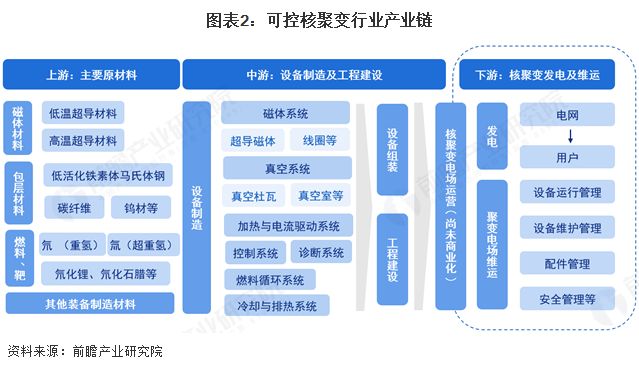
Core Insights - 2025 is a pivotal year for the commercialization of nuclear fusion, with the BEST project bidding intensifying, marking a transition from "scientific validation" to "engineering demonstration" [1] - The influx of investment in China's fusion energy sector indicates that the window for nuclear fusion commercialization has shifted from a distant vision to a tangible reality [1] - The significance of this process extends beyond the energy sector, potentially reshaping national competitiveness and global industrial value distribution [1] Industry Trends - The nuclear fusion technology is viewed as a key solution to the global energy crisis, serving as a core engine for energy innovation and aiding in achieving carbon neutrality [1] - A report indicates that 26 companies are targeting grid connection by 2035, reflecting a consensus in the industry regarding the diminishing technical uncertainties [2] - The International Atomic Energy Agency predicts that the global nuclear fusion market could reach $496.5 billion by 2030 and exceed $1 trillion by 2050 [5] Technological Developments - The recent breakthroughs in net energy gain at the LLNL laboratory have been misinterpreted as a historic moment, highlighting the gap between scientific breakthroughs and practical engineering applications [4] - China's advancements in plasma confinement and stability are crucial for the engineering phase of nuclear fusion [4] - The transition from experimental to commercial fusion reactors requires breakthroughs in cost control and core technology from upstream material and midstream equipment manufacturers [7] Key Players - Kuafu Superconducting Technology Co., Ltd. is one of the few companies capable of mass-producing low-temperature superconducting materials, contributing significantly to the BEST project [9] - Jinyi Energy Development Co., Ltd. has developed critical power supply systems for fusion reactors, showcasing its technological advancements and market competitiveness [10][12] - Both companies exemplify the importance of strategic positioning in the nuclear fusion industry, focusing on unique technological capabilities to secure their market positions [12][15] Investment and Valuation - The valuation of nuclear fusion companies should be based on a model that considers both technological maturity and market penetration, rather than traditional manufacturing metrics [15] - The energy revolution driven by nuclear fusion could lead to a complete restructuring of industrial systems, with significant implications for high-energy-consuming industries [15] - The ongoing exploration by various nuclear fusion companies is crucial for driving energy transformation and ensuring sustainable development [15]
核创纪元系列:详解可控核聚变场反位形(FRC) 技术路线与投资机会
Changjiang Securities· 2025-07-20 07:52
Investment Rating - The report maintains a "Positive" investment rating for the Field-Reversed Configuration (FRC) technology [4]. Core Insights - FRC technology is emerging as a promising alternative to traditional fusion methods like Tokamak, with advantages in cost, efficiency, and potential for commercialization [12][36]. - The report highlights significant advancements in both domestic and international FRC projects, indicating a growing interest and investment in this technology [47][84]. Summary by Sections What is Field-Reversed Configuration (FRC)? - FRC is a compact plasma configuration characterized by strong axial magnetic fields and minimal toroidal fields, making it structurally simpler and less costly to build compared to Tokamaks [12][13]. - The unique properties of FRC allow for high plasma beta values, effective confinement, and potential applications in various engineering scenarios [18][20]. Advantages of FRC over Tokamak - FRC's energy conversion efficiency is significantly higher, with Helion Energy achieving up to 95% efficiency through direct energy conversion methods [33][35]. - The construction costs and timelines for FRC are lower, with companies like Helion Energy aiming for commercial power generation by 2028, compared to the longer timelines for Tokamak-based projects [36][39]. - FRC's modular design facilitates easier maintenance and upgrades, enhancing operational efficiency [44][46]. International FRC Projects and Company Progress - Helion Energy, a leading company in FRC technology, has secured agreements to supply power to major corporations like Microsoft and Nucor, with plans for a 500MW fusion power plant by the 2030s [49][53]. - TAE Technologies is also advancing its FRC projects, with expectations to demonstrate net energy gain by the 2030s [58][64]. Domestic FRC Projects and Company Progress - The "Fluorescence-1" device represents early domestic efforts in FRC research, focusing on plasma target formation and stability [86][87]. - Huazhong University of Science and Technology's HFRC project aims to explore plasma collision fusion and magnetic compression [95]. - The establishment of companies like Hanhai Fusion, which focuses on low-cost FRC technology, indicates a growing commercial interest in China's fusion energy sector [101][107].
可控核聚变商业化进程加速,能源自由还有多远?
Hua Xia Shi Bao· 2025-07-19 13:18
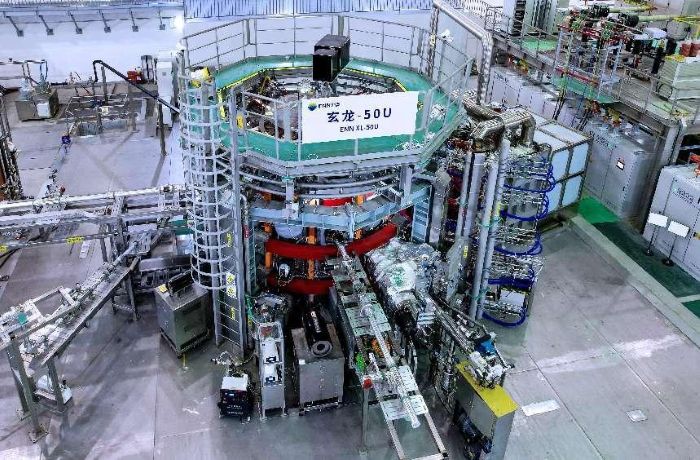
Group 1 - The exploration of commercializing controlled nuclear fusion is gaining momentum, with various enterprises participating in discussions and showcasing innovations in the field [1] - China is at the forefront of controlled nuclear fusion technology, with several A-share companies disclosing their involvement in this sector, including Lianchuang Optoelectronics, Yingjie Electric, and Hezhuo Intelligent [1] - Controlled nuclear fusion is expected to bring a qualitative change to human civilization, as stated by Liu Minsheng, the director of the New Energy Research Institute [1] Group 2 - There are multiple technical routes for controlled nuclear fusion, with hydrogen-boron fusion being highlighted as the most commercially viable due to its abundant fuel, low cost, and safety [2] - Compared to conventional energy sources, nuclear fusion has the potential to release energy at a significantly higher rate, with one nuclear reaction releasing energy over 1 million times that of a chemical reaction [3] - Nuclear fusion remains in the experimental stage, with most experiments proving scientific feasibility but not commercial viability [3] Group 3 - Hydrogen-boron fusion has shown commercial potential, with New Energy starting research on this technology in 2017 and setting a goal to verify its commercial feasibility by 2035 [4] - The "Xuanlong-50" device, built by New Energy, achieved a world record for electron cyclotron resonance heating (ECRH) with a current drive of 170 kA [5] - The upgraded "Xuanlong-50U" is expected to achieve significant advancements, including a plasma discharge of 40 million degrees Celsius and a strong magnetic field operation [6] Group 4 - Global collaboration is essential for advancing nuclear fusion technology, as emphasized by experts from various countries and organizations, including the ITER project [7] - Hydrogen-boron fusion faces challenges, such as achieving the ideal reaction temperature exceeding 1 billion degrees, but research into non-equilibrium states and fuel optimization shows promise [7][8] - The goal of entering the fusion reactor phase by 2035 is set by New Energy, aiming to contribute to the first electricity generated from fusion energy in China [9]
可控核聚变商业化来了吗?瀚海聚能点亮聚变装置,沪市已涌现一批产业链企业
Mei Ri Jing Ji Xin Wen· 2025-07-18 11:00
Group 1 - The successful plasma ignition of the HHMAX-901 fusion device marks a significant breakthrough in China's exploration of commercial nuclear fusion [1] - The "controlled nuclear fusion" industry is gaining traction in the capital market, with over 20 companies participating in discussions about the supply chain and technological collaboration [1][4] - Controlled nuclear fusion is considered the ultimate energy source due to its abundant fuel, safety, environmental cleanliness, high energy density, and economic advantages [2] Group 2 - China is leading in nuclear fusion research, with significant achievements in various national scientific devices and projects like CFETR [3] - The controlled nuclear fusion industry in China includes multiple segments such as materials, main engines, systems, and applications, benefiting from technological advancements and collaborative innovation [4] - Companies like China Nuclear Power and Xibu Superconductor are playing crucial roles in the development and supply of materials and components for nuclear fusion projects [4][5] Group 3 - The focus on commercializing nuclear fusion technology requires overcoming challenges related to material costs and technological breakthroughs [5] - There is a strong emphasis on the need for financial support from the capital market and local governments to facilitate the expansion of production capacity and technological validation [5]


聚焦可控核聚变!上交所新动作
天天基金网· 2025-07-18 06:17
Core Viewpoint - The article emphasizes the significant advancements and potential of China's controllable nuclear fusion industry, highlighting its strategic importance in the global energy landscape and the country's commitment to supporting this technology through various policies and initiatives [3][4]. Group 1: Industry Development - The Shanghai Stock Exchange hosted a salon on controllable nuclear fusion, with over 20 companies and nearly 30 financial institutions participating, focusing on the future of the industry and its technological breakthroughs [1]. - China's controllable nuclear fusion industry has gained a first-mover advantage, particularly in high-temperature superconducting materials and Tokamak devices, due to overall technological progress and collaboration among industry, academia, and research [3][4]. - The industry encompasses multiple segments, including materials, main engines, systems, and applications, with significant policy support from the government to promote research and international cooperation [3]. Group 2: Key Players and Innovations - Leading companies in the Shanghai main board include China National Nuclear Corporation, which is deeply involved in the CFETR project, and China Nuclear Engineering Corporation, which supports the ITER project [4]. - On the Sci-Tech Innovation Board, Guoguang Electric has developed the first heat helium leak detection device meeting nuclear industry standards, while Aikesaibo's power supply technologies have been applied in controllable nuclear fusion [4]. Group 3: Commercialization and Investment - The commercialization of controllable nuclear fusion is accelerating, with upstream companies experiencing steady growth in order and production capacity, indicating a potential earlier timeline for generating the "first degree of electricity" [7]. - Investment institutions are calling for government support to facilitate discussions on common technical issues and to create a collaborative ecosystem within the industry [6][7]. - Recent policies from the China Securities Regulatory Commission aim to enhance the Sci-Tech Innovation Board's support for high-quality tech companies with significant breakthroughs and commercial prospects [8].
海水有望点亮万家灯火
Ren Min Ri Bao Hai Wai Ban· 2025-07-18 01:52
Core Viewpoint - The development of controlled nuclear fusion technology, often referred to as "artificial sun," is seen as a potential ultimate energy source for humanity, with significant advancements being made in China over the past decades [1][2]. Group 1: Nuclear Fusion Technology - Controlled nuclear fusion mimics the sun's energy production by fusing hydrogen isotopes deuterium and tritium, which can be extracted from seawater [1]. - One liter of seawater can release energy equivalent to that of 300 liters of gasoline when used in nuclear fusion [1]. - Nuclear fusion is considered safer than nuclear fission, as the reaction stops immediately if conditions fail, eliminating risks of nuclear leakage or radiation [1]. Group 2: Recent Achievements - The Experimental Advanced Superconducting Tokamak (EAST) has achieved significant milestones, including a world record of 1 billion degrees Celsius for 1066 seconds in January [2]. - The upcoming compact fusion energy experimental device (BEST) focuses on energy output, aiming to exceed input energy, which is crucial for commercialization [2]. Group 3: Industry Development - The nuclear fusion industry is vast, with the BEST device representing a significant commercial application opportunity, potentially involving millions of components [2]. - Over 30 small to medium-sized tech companies related to nuclear fusion have been incubated in Hefei, with some already listed [4]. - The Comprehensive Research Facility for Fusion Technology (CRAFT) is under construction and will be a leading research and testing platform in the international fusion field, expected to be completed by the end of this year [4]. Group 4: Future Plans - The timeline for nuclear fusion commercialization includes the completion of the BEST device by 2027, the first demonstration of fusion energy generation by 2030, and the establishment of a fusion engineering demonstration plant by 2035, with a goal for commercial fusion energy by 2050 [4].
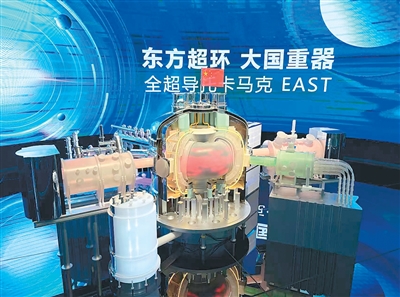
技术再获突破 核聚变逐步迈向应用端
Shang Hai Zheng Quan Bao· 2025-07-17 18:13
Group 1: Industry Overview - The controlled nuclear fusion, known as "artificial sun," is considered a key to achieving infinite, clean, and safe energy, and has become a strategic direction for many countries since the 20th century [3] - The nuclear fusion industry is experiencing rapid commercialization and industrialization, with significant interest in both primary and secondary markets [4] - The global market for nuclear fusion is expected to reach a scale of trillions, with various regions in China, including Shanghai, Guangdong, Zhejiang, and Sichuan, targeting nuclear fusion as a future industry [7][8] Group 2: Company Developments - Several A-share companies, including Yingjie Electric, Lianchuang Optoelectronics, Hezhong Intelligent, and Jingye Intelligent, are accelerating their layouts in the nuclear fusion field, with recent disclosures of progress [10] - Yingjie Electric provides comprehensive key power supply services for nuclear fusion projects, successfully applied in multiple national-level projects [10] - Lianchuang Optoelectronics is advancing its "3+N" product layout in high-temperature superconducting equipment, aiming for increased product and technology contract amounts [10] - Hezhong Intelligent focuses on the R&D and manufacturing of complex components for fusion reactors, participating in the preliminary research of core components [10] - Shanghai Electric Group has become one of the most comprehensive equipment manufacturers in the nuclear fusion field, achieving 36 breakthroughs in key manufacturing technologies over 20 years [9] Group 3: Recent Milestones - Hanhai Fusion announced the completion of its HHMAX-901 main unit construction, marking a transition from laboratory to application for controlled nuclear fusion technology in China [2] - The BEST project in Hefei has advanced its total assembly work two months ahead of schedule, achieving significant milestones in plasma current and ion temperature [5] - The International Fusion Association (FIA) indicates that most fusion companies expect to achieve the first power supply to the grid between 2031 and 2035 [5]



核聚变新路线,将迎商业化里程碑
财联社· 2025-07-17 02:44
Core Viewpoint - The article discusses the imminent operational launch of China's first commercial linear field-reversed configuration (FRC) fusion device, marking a significant step from laboratory research to practical application in controlled nuclear fusion technology [1][4]. Summary by Sections Overview of Fusion Technology - Nuclear fusion is the process of combining light atomic nuclei into heavier nuclei, releasing vast amounts of energy, and is considered the "ultimate energy" source due to its abundant raw materials and lack of pollution [1]. - The main technological routes for controlled nuclear fusion include gravitational confinement, inertial confinement, and magnetic confinement, with magnetic confinement currently being the mainstream approach [1]. Company Focus and Financing - Hanhai Fusion is the first company in China to adopt the FRC technology route, aiming to compete with U.S. startups like Helion, which plans to supply 50 MW to Microsoft by 2028 [4]. - The company has completed seed and angel financing rounds in March 2023 and April 2024, raising over 50 million yuan to support the construction of its first-generation fusion device [4]. Short-term and Long-term Goals - In the short term, Hanhai Fusion will focus on non-power generation applications such as nuclear medicine, neutron imaging, and nuclear waste treatment, with a goal of commercializing these technologies by the end of 2025 [4][5]. - The second-generation device is planned to begin construction in 2026, with the aim of generating power and collaborating with nuclear power owners to establish a fusion demonstration plant by the end of 2030 [5]. Advantages of FRC Technology - FRC devices have lower construction and operational costs, requiring 80% less magnetic material and reducing construction costs to 1/5 to 1/10 of that of Tokamak devices, with the first-generation device costing approximately 300 million yuan [6]. - The energy efficiency of FRC devices is significantly higher, with fusion power output potentially reaching 100 to 1000 times that of Tokamak devices, and a 30% increase in energy conversion efficiency [7]. - The commercialization timeline for FRC technology is faster, with a 50% reduction in the time from research to demonstration plant compared to Tokamak [8]. Market Potential and Component Demand - The demand for power systems in FRC devices is expected to increase significantly, with the power system potentially accounting for 50% of the total value due to the need for high-performance pulsed power supplies [11]. - Key components for FRC devices include vacuum switches, power supplies, capacitors, and other critical systems, with several companies identified as potential suppliers for these components [11][12].

全球氢硼聚变生态聚合 发力终极能源商业化应用
Zhong Guo Jing Ji Wang· 2025-07-15 06:40
Core Insights - Hydrogen-boron fusion is emerging as a promising future energy source due to its wide fuel availability, low cost, lack of radioactive waste, and high efficiency in direct electricity generation [1][4][5] - The recent breakthroughs by the company in hydrogen-boron fusion technology, particularly the "Xuanlong-50U" device achieving significant plasma discharge and magnetic field stability, position it as a leader in this field [1][4] Group 1: Industry Developments - The third Hydrogen-Boron Fusion Symposium hosted by the company gathered experts from 11 countries, focusing on cutting-edge exploration and application prospects in fusion technology [1][2] - The global controllable nuclear fusion market is projected to reach $331.49 billion by 2024, indicating significant growth potential for hydrogen-boron fusion technologies [3] Group 2: Company Initiatives - The company has invested over 4 billion yuan in fusion energy research over the past eight years, supporting key projects and building an international team of over 300 members [2][3] - The launch of a hydrogen-boron fusion research fund attracted 160 researchers from 19 institutions, resulting in 18 innovative projects receiving funding to accelerate technological breakthroughs [3] Group 3: Future Outlook - The company aims to establish the world's first hydrogen-boron fusion power plant by 2035, marking a critical window for the commercialization of fusion technology over the next 20 years [5] - The unique characteristics of hydrogen-boron fusion, including its virtually unlimited fuel supply and zero pollution, could significantly reduce electricity costs and unlock new possibilities in various fields [5]