
农业种植

Search documents
加速实现从“脱贫摘帽”到“富民强州”的转型 走进两个村庄 感受发展脉动
Si Chuan Ri Bao· 2025-11-06 03:10
Core Viewpoint - The transformation of Dashi Ban Ancient Village in Xichang City reflects the successful integration of poverty alleviation and rural revitalization efforts in Liangshan Prefecture, showcasing significant progress in rural development and cultural tourism integration during the 14th Five-Year Plan period [7][12]. Group 1: Rural Revitalization and Tourism Development - Dashi Ban Ancient Village, with a history of over 600 years, has evolved from an obscure village with minimal agricultural income to a vibrant tourist destination, thanks to the rural revitalization project initiated in 2019 [10][11]. - The village's revitalization project, which includes a total investment of approximately 5 billion yuan, aims to create a demonstration area that integrates ancient village charm, pastoral vacation, and sports education [11]. - The village has been recognized as one of the top ten cases of cultural and tourism empowerment for rural revitalization by the Ministry of Culture and Tourism, highlighting its successful transformation into a cultural tourism site [11]. Group 2: Agricultural Innovation and Economic Growth - In Yanyuan County, the introduction of drought-resistant rice cultivation under apple trees has shown promising results, with yields reaching up to 669 kg per mu, indicating successful agricultural innovation [14][15]. - The apple industry in Yanyuan County has become a cornerstone of the local economy, with a planting area of 430,000 mu and a production value of 3.3 billion yuan in 2024, contributing significantly to rural income [15][16]. - Liangshan Prefecture is implementing an "Agricultural Strong Prefecture" strategy, aiming to cultivate six agricultural industry clusters worth over 10 billion yuan each, further enhancing the region's agricultural productivity and economic resilience [16].


武汉发布乡村振兴典型案例
Chang Jiang Ri Bao· 2025-11-06 03:02
Core Viewpoint - The city of Wuhan is actively promoting rural revitalization through initiatives such as "State-owned Enterprises Linking Villages" and the "消薄攻坚" (Eliminating Weakness) campaign, which aims to enhance collective economic development in rural areas [1] Summary by Sections Rural Revitalization Initiatives - The "消薄攻坚" campaign has successfully eliminated weak collective economies in 372 villages, with a focus on increasing income and improving living standards [1] - The "国企联村" initiative has seen 16 state-owned enterprises and 58 secondary enterprises collaborate with rural communities, providing resources and support for economic development [1] Case Studies of Successful Villages - **Dongfang Village**: Transitioned from a weak village to a stronger one, with collective income projected to exceed 36 million in 2025, up from 11 million [3] - **Bailin Village**: Achieved a tenfold increase in collective income, from 3.56 million to an expected 34.7 million by year-end [2] - **Shiyuhu Village**: Focused on vegetable production, with projected collective income reaching 20 million by 2025 [2] - **Zhanghe Village**: Revitalized from a "hollow village" to a thriving community, with per capita income reaching 32,000 [4] State-Owned Enterprises Collaboration - **Wuhan Publishing Group**: Invested in a medicinal herb planting demonstration base, increasing village income from 1 million to over 3 million [6] - **Wuhan Jin控 Group**: Promoted "order agriculture," leading to collective revenue of 2.12 million [7] - **Wuhan Urban Construction Group**: Increased village income by 1.2 million through a cultural and tourism project [8] - **Wuhan Metro Group**: Developed a fruit orchard project, enhancing collective income and promoting rural tourism [9] Future Projections - Several villages are expected to see significant increases in collective income by 2025, with initiatives focusing on agricultural modernization, resource optimization, and community collaboration [2][3][4]
综合利用 盐碱地变丰产良田
Ren Min Ri Bao· 2025-11-06 00:24
Core Insights - The comprehensive utilization of saline-alkali land is crucial for ensuring national food security and stabilizing China's food supply [1] - The Chinese government emphasizes the importance of improving soil quality and expanding arable land through the development of saline-alkali areas [1] Group 1: Current Status and Importance - China has 1.5 billion acres of saline-alkali land, with 500 million acres having potential for development [1] - The third national land survey has identified the distribution and area of saline-alkali land, providing a foundation for targeted remediation efforts [2] Group 2: Technological Innovations and Practices - In Jilin Province, the average yield of rice on treated saline-alkali land has exceeded 600 kg per mu, approaching the levels of black soil [3] - Various remediation techniques, such as organic silicon agents and gypsum, are being explored to improve soil conditions [3] - The National Saline-Alkali Land Comprehensive Utilization Technology Innovation Center has developed 68 new salt-tolerant crop varieties, with 20 officially registered [4] Group 3: Agricultural Development and Future Prospects - The promotion of salt-tolerant crop varieties, such as 'Xiao Yan 60', has led to significant increases in yield, with some farmers reporting 1,000 jin per mu [6] - Saline-alkali land is being transformed into productive agricultural areas, contributing to the overall agricultural industry and enhancing food security [6] - The comprehensive utilization of saline-alkali land is supported by national pilot programs, indicating a promising future for agricultural development in these areas [6]
浙江岱山农文旅融合促进乡村振兴
Zhong Guo Jing Ji Wang· 2025-11-05 05:53
Core Insights - The "Island Village Gallery" roadshow competition in Zhoushan, Zhejiang Province successfully concluded, with three projects, including "Longtou Salt Selection" and "Daidong Common Prosperity," winning gold awards [1] - The development of the "Agricultural Rhythm" initiative in Gaoting Town is focused on land consolidation and modernization of agricultural practices, achieving a total of 1,246 acres of land transfer from March to July, with 806 acres managed by the county's agricultural development group [1] Group 1 - The integration of 1,246 acres of land into a modern agricultural economic belt in Gaoting Town has been completed, promoting both large-scale operations and increased income for local farmers [1] - The "Luhuan Qingsha" rural complex in Daidong Town is set to open in 2024 and has become a popular tourist destination, attracting over 50,000 visitors and generating more than 1.5 million yuan in revenue [2] - The establishment of a "Agricultural Enterprises + Village Collective + Farmers" benefit-sharing mechanism is being implemented to encourage villagers to invest in local development [2] Group 2 - The "Agricultural Rhythm" development axis spans approximately 17 kilometers, covering three towns and eleven villages, focusing on industrial revitalization, landscape enhancement, and high-standard farmland efficiency [3] - The introduction of rural managers has positively impacted village development, with a goal to attract more talented teams to Zhoushan through initiatives like the roadshow competition [3]
通讯丨守护“地球之肺” 中巴合作破解雨林保护与农业发展兼顾难题
Xin Hua Wang· 2025-11-05 05:41
Core Viewpoint - The collaboration between China and Brazil aims to balance economic development and ecological protection in the Amazon rainforest, addressing the challenges of deforestation and agricultural sustainability [1][5]. Group 1: Project Initiatives - The "China-Brazil Amazon Region Degraded Soil Restoration and Rainforest Protection International Cooperation" project has been launched, focusing on restoring degraded farmland and finding sustainable agricultural practices in rainforest areas [1][2]. - The project involves multiple Chinese and Brazilian institutions, including Hohai University and Amazon Federal University, to implement soil restoration experiments using local crops like cassava and Brazilian berries [2][3]. Group 2: Agricultural Practices and Innovations - Traditional farming methods, such as slash-and-burn, are causing ecological damage and soil degradation, leading to a cycle of deforestation and land abandonment [2]. - Soil restoration efforts have shown significant results, with crop yields increasing by 30% to 190% and soil nutrient loss reduced by 65% to 82% during the growing season [2]. Group 3: Local Production and Technology Transfer - A project to develop localized soil restoration products using organic waste fermentation technology is underway, aiming to create a production line for affordable and effective soil fertilizers in the Amazon region [3]. - Innovations in agricultural water management, including solar-powered irrigation systems, are being developed to enhance drought resistance and improve crop yields [3]. Group 4: Economic Opportunities and Market Access - The initiative also focuses on creating trade links for local farmers, enabling them to sell their products through Chinese e-commerce platforms, thus improving their income stability [4]. - The collaboration is expected to help local farmers maintain their agricultural practices without resorting to further deforestation, contributing to both economic and environmental sustainability [5].
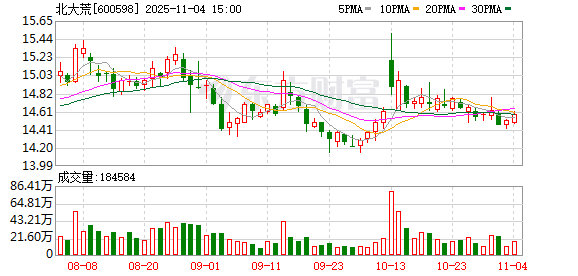
北大荒:持续关注AI农业技术前沿与实践结合,努力增强农业核心竞争力
Zheng Quan Ri Bao Wang· 2025-11-04 12:50
Core Viewpoint - The company is actively responding to the national initiative of "AI + Agriculture" and is focusing on the integration of AI agricultural technologies with practical applications to enhance its core competitiveness in agriculture [1] Company Summary - The company, Beidahuang (stock code: 600598), is engaging with investors through interactive platforms to communicate its strategic direction [1] - The company emphasizes its commitment to staying updated on the forefront of AI agricultural technology [1]

北大荒:公司加强与科研院所的合作,正积极对智能农业机械和智能装备的应用等方面进行研究探索
Zheng Quan Ri Bao· 2025-11-04 12:41
Core Viewpoint - The company is enhancing collaboration with research institutions to explore the application of smart agricultural machinery and equipment, aiming to improve production efficiency and achieve new breakthroughs [2] Group 1 - The company is actively researching and exploring smart agricultural machinery and equipment [2] - The focus is on improving production efficiency through technological advancements [2] - The company aims to achieve new breakthroughs in its operations [2]
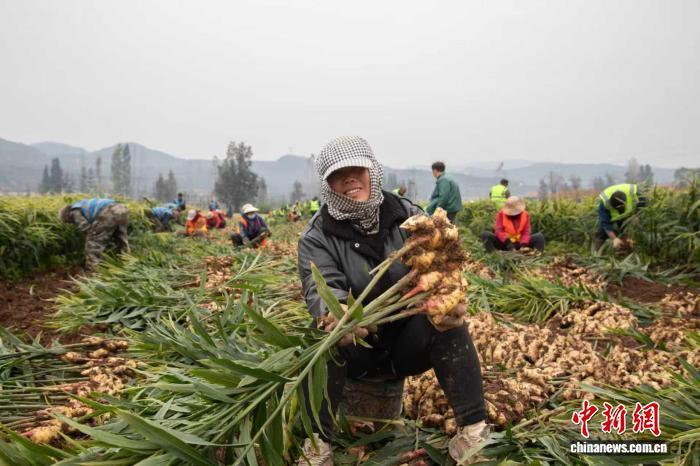
(乡村行·看振兴)金融活水润乡土:从姜田到谷场的生机
Zhong Guo Xin Wen Wang· 2025-11-04 09:35
Core Viewpoint - The article highlights the transformative impact of financial support on rural agricultural development, showcasing how innovative banking solutions have enabled local farmers to enhance production and profitability through improved infrastructure and technology [1][2]. Group 1: Financial Support and Agricultural Development - The Qingshui Rural Commercial Bank provided over 8 million yuan in loans to a ginger cooperative, facilitating the expansion of their operations and the introduction of advanced irrigation and organic farming techniques [1]. - The cumulative agricultural loans issued by Qingshui Rural Commercial Bank have exceeded 3.2 billion yuan, leading to the growth of various agricultural sectors, including vegetables, millet, walnuts, and medicinal herbs [2]. Group 2: Case Study of Millet Industry - In Yangqu County, the local rural commercial bank has developed specialized credit services for the millet industry, addressing funding shortages faced by individual farmers and cooperatives [2][4]. - The bank issued a 150,000 yuan credit loan within three days to a cooperative facing a funding crisis, enabling them to explore a full-chain model of "planting + processing + sales" [4]. - Currently, the bank has provided 2.86 million yuan in credit to 27 millet farmers, stabilizing millet cultivation at 80,000 acres and fostering the development of six agricultural enterprises and 80 cooperatives [4].
青海省海东市举办专利转化暨质押融资对接会 助力企业“破茧成金”
Zhong Guo Zhi Liang Xin Wen Wang· 2025-11-04 09:13
Group 1 - The event aimed to address the challenges faced by enterprises in converting intellectual property into assets and securing funding, with over 200 representatives from technology companies and financial institutions participating [1] - The conference featured specialized reports on the development of new production capabilities in the broad bean industry and the technological innovation in the plateau cool vegetable industry, providing precise technical references for local agricultural innovation [1][2] - A deep interpretation of policies related to intellectual property conversion and compliance management was provided, helping enterprises leverage policy benefits and enhance their intellectual property management capabilities [1] Group 2 - Qinghai Zhongtai Qingduan Equipment Manufacturing Co., Ltd. signed a cooperation agreement with Qinghai University of Science and Technology to deepen collaboration in technology research and development, achievement transformation, and talent cultivation [2] - China Bank's Haidong branch signed a strategic cooperation agreement with Qinghai Nenggao New Energy Co., Ltd. for pledge financing, injecting financial support for the monetization of intellectual property [2] - The event successfully established a cooperation bridge among enterprises, financial institutions, and research institutes, marking a new phase in the transformation and empowerment of intellectual property in Haidong [2]
金融护航打赢“三抢”攻坚战
Jin Rong Shi Bao· 2025-11-04 03:37
Core Viewpoint - The continuous rainy weather in Xinyang, Henan Province, has severely impacted the autumn harvest and planting, prompting the People's Bank of China Xinyang Branch to implement financial support measures to ensure timely collection, drying, and planting of crops [1] Group 1: Financial Support for Harvesting - The People's Bank of China Xinyang Branch established an "Autumn Harvest Financial Service Team" to actively assess credit needs and provide a green channel for grain purchasing enterprises and large-scale farmers, ensuring a "three priorities" mechanism for loan approval [2] - The Huixin Agricultural Cooperative faced an 800,000 yuan funding gap for expanding grain purchasing but received expedited loan approval, allowing them to acquire over 300 tons of rice from local farmers [2] Group 2: Support for Drying Operations - The continuous rain has increased the risk of grain spoilage, making drying essential for preserving the harvest [3] - The People's Bank of China Xinyang Branch guided financial institutions to provide targeted loans for the construction and operation of grain drying facilities, including a 500,000 yuan loan to enhance drying capacity from 150 tons to 300 tons, benefiting 120 local farmers [3] Group 3: Financial Assistance for Planting - To ensure timely planting, the People's Bank of China Xinyang Branch promoted online financial products like "Planting e-loan" and "Agricultural Loan," enabling farmers to quickly access funds for purchasing seeds and fertilizers [4] - A farmer successfully obtained a 700,000 yuan loan through an online platform, ensuring that there were no delays in purchasing necessary agricultural inputs [4]