
港口航运

Search documents
重庆港:目前江津港二期改扩建工程前期筹备工作进展顺利
Zheng Quan Ri Bao Wang· 2025-12-17 14:11
Core Viewpoint - Chongqing Port is making steady progress on the preliminary preparations for the second phase of the Jiangjin Port expansion project, with plans to secure land use rights by 2026 and commence construction in 2027, aiming for completion in 2030 [1] Group 1 - The Jiangjin District government has completed the recovery and adjustment of approximately 150 acres of project land [1] - Chongqing Port has finalized the internal decision-making process for project investment and is currently drafting the feasibility study report [1] - The company aims to control construction costs by optimizing project design, seeking subsidies, and increasing the proportion of self-funding to reduce financing costs [1] Group 2 - The company has conducted a risk assessment for the project and considers the overall risks to be manageable [1] - Continuous monitoring and prevention of potential risks related to budget, timeline, and market benefits will be ensured to maintain controlled and steady project investment [1]

重庆港:已制定系统性保障策略应对江津港二期改扩建项目的潜在风险
Zheng Quan Ri Bao Wang· 2025-12-17 13:44
证券日报网12月17日讯重庆港(600279)在12月9日回答调研者提问时表示,为应对江津港二期改扩建 项目长周期建设中的市场需求变化与原材料价格波动等潜在风险,确保达成预期投资效益,公司已制定 系统性保障策略:在市场端,将通过签署长期协议锁定核心客户基础货量,并积极对接国家物流枢纽、 多式联运示范工程等政策,依托政策红利获取稳定货源。在设计端,采用"核心先行、预留拓展"的弹性 模式进行规划,使码头与堆场具备可扩展性,并提升设备通用性以灵活适配未来货种变化。在成本与资 金端,将积极申报政策性资金以对冲投资风险,并通过优化融资结构、加强全过程预算管控来严控建设 成本。这些措施共同构成了覆盖项目全生命周期的动态风险管理框架,旨在保障项目投运后的市场竞争 力和预期经济效益。 ...
江阴港船载货运量提前突破5亿吨
Yang Zi Wan Bao Wang· 2025-12-17 12:12
Core Insights - Jiangyin Port has achieved a record high in cargo throughput, reaching 509 million tons in the first 11 months of the year, a year-on-year increase of 7.23%, and is expected to hit a new record of 560 million tons by year-end [1][3]. Group 1 - Jiangyin Port benefits from its strategic location along the Yangtze River, making it a preferred transshipment hub for sea vessels [3]. - The port has seen an increase in large vessels, with the recent docking of the "Guoyin Pearl River," a Cape-sized ship, marking the 45th such vessel to dock since 2025 [3]. - Jiangyin Maritime Bureau has initiated a pilot program to enhance the draft of incoming vessels, improving the port's competitiveness [3]. Group 2 - Jiangyin Port is focusing on high-quality development by expanding its transportation network and enhancing its port hub capabilities [5]. - New international trade routes have been established to countries such as Guyana, Portugal, Cambodia, Chile, and Saudi Arabia, alongside smooth operations of domestic routes [5]. - The port is implementing measures to facilitate cargo exports and improve regulatory efficiency through collaborative agreements with maritime departments [5].

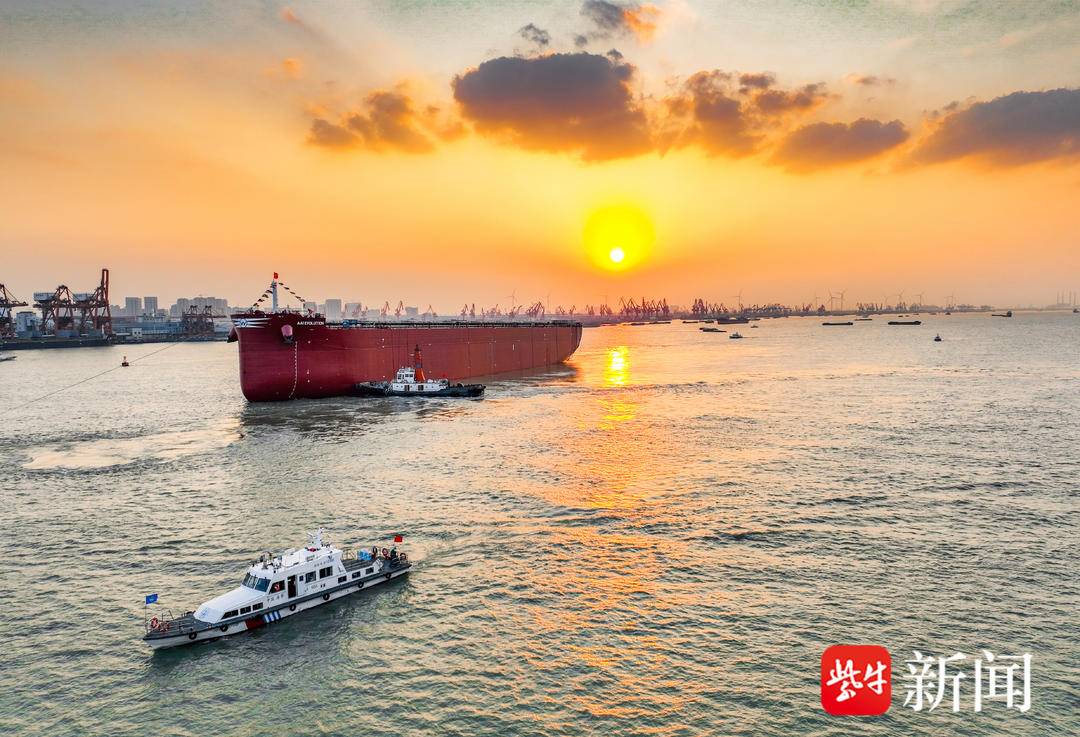
天津港:目前天津港有直航至德国、荷兰、比利时等欧盟国家的集装箱航线,开展集装箱进出口业务
Mei Ri Jing Ji Xin Wen· 2025-12-17 09:42
Group 1 - The company has established direct shipping routes to several EU countries, including Germany, the Netherlands, and Belgium [1] - The company is engaged in container import and export business through these direct shipping lines [1]

印尼货轮弃马六甲直奔中国,新加坡的“过路费”收不动了?真相→
商业洞察· 2025-12-17 08:49
Core Viewpoint - The article discusses the significant shift in Southeast Asian shipping patterns, particularly the emergence of Yangpu Port in Hainan, China, as a direct shipping alternative to the traditional route through the Strait of Malacca and Singapore, highlighting the cost and efficiency benefits of this change [3][4][5]. Group 1: Economic Benefits of Direct Shipping - The decision to change shipping routes is primarily driven by cost considerations, as the previous route involved high intermediary fees in Singapore, which could reach tens of thousands of dollars per large container ship [5]. - Direct shipping from Indonesia to Yangpu Port has drastically reduced transportation time from 20 days to just 6 days, significantly lowering logistics costs and reducing product loss during transit [10]. - For Indonesian businesses, direct shipping saves approximately $280 per ton for palm oil, along with a reduction in port fees and transit time [12]. Group 2: Yangpu Port's Competitive Advantages - As of November, Yangpu Port's registered shipping capacity reached 6.6939 million tons, making it the leading port in China's free trade zones [15]. - The port has implemented advanced technologies, including semi-automated operations and smart logistics systems, which have greatly enhanced operational efficiency and reduced costs [16]. - The port's rapid customs clearance process allows for a complete turnaround in just 3 hours and 45 minutes, compared to over 5 hours for similar vessels in 2024, showcasing a significant improvement in efficiency [19][20]. Group 3: Comparison with Singapore Port - Despite Yangpu Port's advancements, it still lags significantly behind Singapore Port in terms of shipping volume and infrastructure, with Singapore handling 41.12 million TEUs in 2024 compared to Yangpu's 2 million [28]. - Singapore's strategic location at the Strait of Malacca provides unparalleled access to global shipping routes, making it a preferred hub for international shipping [28]. - Singapore is also investing heavily in expanding its port capacity, with the new Tuas Port expected to handle 65 million TEUs annually by 2040, further solidifying its position as a global shipping leader [29]. Group 4: Future Collaboration - The rise of Yangpu Port is not intended to challenge Singapore but rather to diversify global shipping networks, with both ports collaborating to enhance regional supply chain resilience [32][33].

济宁港跻身亿吨大港行列
Da Zhong Ri Bao· 2025-12-17 02:11
Core Insights - Jining Port has achieved a cargo throughput of 106 million tons from January to November, marking it as the first inland port in northern China to surpass 100 million tons, with a year-on-year growth of 18.5% [1][2] - The port's development is attributed to strategic planning and infrastructure improvements, including the construction of a second-level waterway and a network of high-grade waterways [3] Group 1: Port Development and Capacity - Jining Port's cargo throughput has increased significantly from 41.8 million tons in 2020 to over 100 million tons, driven by the development of inland shipping along the Grand Canal [1][3] - Liangshan Port is set to enhance its capacity with the addition of 7 berths and 27.6 kilometers of dedicated railway lines, aiming to exceed an annual throughput of 80 million tons [2] - The region has established five multi-modal transport ports, effectively connecting the Grand Canal with major railways, facilitating efficient logistics [2][3] Group 2: Economic Impact and Industrial Integration - Jining is focusing on building a northern inland shipping center, promoting green, low-carbon, and high-quality development in inland shipping [1][3] - The port's development is not only about logistics but also about integrating industry and urban development, creating a "port-trade-ship-industry-finance" model [3] - The establishment of industrial parks, such as the Liangshan coal and steel logistics park, is aimed at fostering industrial clusters and enhancing local economic growth [3] Group 3: Technological Advancements and Innovation - The automation systems at Longgong Port have significantly improved operational efficiency, allowing a single operator to control multiple unmanned vehicles [4] - Jining has pioneered a "cloud ship inspection" model and developed an electronic navigation chart, enhancing operational capabilities [4] - The "Jigang Tong" platform has been created to streamline operations, with a trade network covering 152 cities and international routes reaching 19 countries [4]
济宁|济宁港跻身亿吨大港行列
Da Zhong Ri Bao· 2025-12-17 01:33
Core Insights - Jining Port has achieved a cargo throughput of 106 million tons from January to November, becoming the first inland port in northern China to surpass 100 million tons and entering the ranks of national major ports [2][3] Group 1: Cargo Throughput and Growth - The cargo throughput of Jining Port reached 106 million tons, marking an 18.5% year-on-year increase [2] - Since 2020, the throughput has increased from 41.8 million tons to over 100 million tons, showcasing the development of inland shipping along the Grand Canal [2][4] - Container throughput has also seen significant growth, with an average annual increase of 98% since the 14th Five-Year Plan, reaching 454,000 TEUs in the first 11 months of this year, a 16.4% increase year-on-year [3][4] Group 2: Infrastructure Development - Jining has constructed five multimodal transport ports, enhancing connectivity between the Grand Canal and major railways, thus forming an efficient "water + rail" transport network [3][4] - The construction of new berths and dedicated railway lines at Liangshan Port is expected to increase its capacity to over 80 million tons [3] - The overall planning for Jining Port includes a comprehensive development strategy aimed at establishing a northern inland shipping center [4] Group 3: Industrial Integration and Innovation - Jining is promoting a "port-trade-ship-industry-finance" integration model, transforming the Grand Canal from a transport route into an industrial belt [4] - The establishment of several industrial parks, including a coal and steel logistics park, is expected to drive economic growth and attract investment [4] - The new energy shipbuilding base is projected to produce 240 new energy vessels annually, generating an estimated annual revenue of 3.2 billion yuan [4][5] Group 4: Automation and Technological Advancements - The Dragon Gong Port has implemented an automated system for container loading, significantly improving operational efficiency [5] - Jining has pioneered a "cloud ship inspection" model and developed an electronic navigation chart, enhancing the overall efficiency of port operations [5] - The trade network has expanded to cover 152 cities nationwide and reach 19 countries internationally, with expected port and shipping revenue surpassing 100 billion yuan this year [5]
重点集装箱港口及关键枢纽监测20251216
Dong Zheng Qi Huo· 2025-12-16 09:42
Report Summary 1. Report Industry Investment Rating No investment rating information is provided in the report. 2. Core Viewpoints - Chinese ports are operating well, with recent improvements in export cargo volume and a slight increase in congestion at some ports [2]. - Port congestion in Southeast Asia has decreased compared to the previous period, but there is a risk of congestion recurring [2]. - The risk of strikes in European ports remains high, and congestion may worsen due to national strikes in Portugal and Italy, lower winter temperatures, and the arrival of peak - season cargo [2]. - North American ports are operating in good condition [2]. 3. Summary by Directory Data Review - **Asian Ports**: - Ocean - going container ships in Yangshan, Waigaoqiao, Ningbo, Qingdao, Singapore, and Port Klang have different average waiting times/berthing times and the latest number of container ships at anchor/berthed. For example, in Yangshan, the average waiting time/berthing time is 15.0 hours/27.8 hours, and the latest number of container ships at anchor/berthed is 10/29 [2]. - The average turnover time of Yangshan is about 1.9 days, Ningbo is about 2.1 days, and Yantian is about 1.1 days. The average time of ships in port in Singapore is 1.4 days, and in Port Klang is 1.6 days [2]. - The in - port duration of key ports shows different month - on - month and year - on - year changes. For example, the in - port duration of Yangshan is 44.5 hours, with a month - on - month increase of 11.2 hours and a year - on - year increase of 8.7 hours [6]. - **European Ports**: - Ocean - going container ships in Rotterdam, Antwerp, Hamburg, Bremen, and Valencia have different average waiting times/berthing times and the latest number of container ships at anchor/berthed. For example, in Rotterdam, the average waiting time/berthing time is 1.1 hours/43.2 hours, and the latest number of container ships at anchor/berthed is 4/33 [2]. - The average in - port duration of Antwerp is about 1.6 days, Rotterdam is 2.1 days, Hamburg is 3.1 days, and Bremen is 1.8 days [2]. - **North American Ports**: - Ocean - going container ships in Long Beach, Los Angeles, Tacoma, New York, Savannah, Norfolk, and Houston have different average waiting times/berthing times. North American ports are operating well [2]. Key Container Ports' In - Port Duration - The in - port duration of various ports shows different month - on - month and year - on - year changes. For example, the in - port duration of Yangshan is 44.5 hours, with a month - on - month increase of 11.2 hours and a year - on - year increase of 8.7 hours; the in - port duration of Rotterdam is 50.1 hours, with a month - on - month decrease of 13.8 hours and a year - on - year decrease of 15.6 hours [6]. Port Dynamic Tracking - **Asian Ports**: - The scale of container ships in port in China and Southeast Asia shows different trends over time, presented through data on the number of container ships at anchor/berthed in different ports [8][12][13]. - The average in - port time, average waiting time, and average berthing time of ocean - going container ships in Southeast Asian and Chinese container ports show different trends over time [17]. - **European Ports**: - The scale of container ships in port in Northwest Europe and the Mediterranean/Black Sea shows different trends over time, presented through data on the number of container ships at anchor/berthed in different ports [20][21]. - The average in - port time, average waiting time, and average berthing time of ocean - going container ships in Northwest European and Mediterranean container ports show different trends over time [24][28]. - **North American Ports**: - The number of container ships at anchor/berthed in North American ports shows different trends over time, and the average in - port time, average waiting time, and average berthing time of ocean - going container ships in US container ports show different trends over time [35][37]. Large - Ship Arrival and Key Hub Monitoring - The arrival situation of large - scale container ships in Yangshan, Ningbo, and Singapore ports shows different trends over time, divided by ship size (1.2 - 1.7w and 1.7w +) [42]. - The arrival situation of 1.2w + container ships of different alliances in Asia, Northwest Europe, and the Mediterranean shows different trends over time [42][45]. - The passage situation of container ships at the Cape of Good Hope, Suez Canal, and Panama Canal shows different trends over time, presented through data on the number of container ships arriving and passing through [47][48].
印尼货轮弃马六甲直奔中国,新加坡的“过路费”收不动了?
首席商业评论· 2025-12-16 04:17
Core Viewpoint - The article discusses the significant shift in Southeast Asian shipping patterns, particularly the emergence of Yangpu Port in Hainan, China, as a direct shipping route from Indonesia, challenging the traditional dominance of Singapore as a shipping hub [4][5]. Group 1: Economic Benefits of Direct Shipping - The decision to bypass the traditional route through the Strait of Malacca is driven by cost efficiency, allowing Indonesian goods to be shipped directly to Yangpu Port, thus reducing logistics costs and transit times [6]. - The direct shipping route has cut the transportation time for coconuts from Indonesia to Hainan from 20 days to just 6 days, significantly lowering spoilage rates and enhancing profit margins for businesses [6]. - For Indonesian exporters, direct shipping saves approximately $280 per ton for palm oil, along with a reduction in port fees and transit times [6]. Group 2: Yangpu Port's Competitive Advantages - Yangpu Port has seen a dramatic increase in shipping capacity, with total registered shipping capacity reaching 6.6939 million tons and a total tonnage of 3.8118 million tons, leading the domestic free trade zone rankings [7]. - The port employs advanced technologies, including semi-automated operations and rapid customs clearance processes, which have drastically improved operational efficiency [7][8]. - The implementation of policies such as zero tariffs on imported vessels and tax rebates for international shipping has further enhanced Yangpu Port's competitiveness, resulting in a 30.31% year-on-year increase in cargo throughput [8]. Group 3: Challenges Against Singapore Port - Despite Yangpu Port's growth, it still lags significantly behind Singapore Port in terms of shipping volume and infrastructure, with Singapore handling 41.12 million TEUs compared to Yangpu's 2 million TEUs [10]. - Singapore's strategic location at the Strait of Malacca provides it with a natural advantage, controlling a major global shipping route that is essential for international trade [10][11]. - Singapore is also investing heavily in expanding its port facilities, with the new Tuas Port expected to double its capacity to 65 million TEUs by 2040, further solidifying its position as a global shipping hub [11]. Group 4: Future Collaboration - The article highlights a partnership between Singapore Port Authority and Hainan Port and Shipping Holding Co., aiming to enhance direct shipping routes between Yangpu and Singapore, thereby increasing resilience in regional supply chains [12].
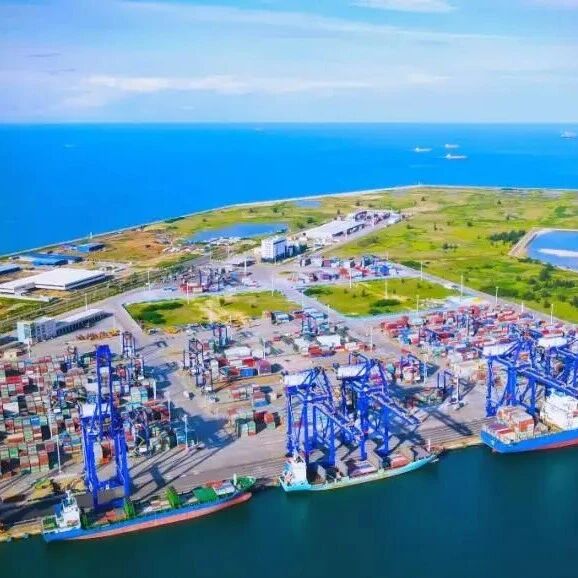
埃及最大的集装箱码头开始试运营
Xin Hua Cai Jing· 2025-12-16 00:15
Core Insights - The Red Sea Container Terminal at the southern entrance of the Suez Canal in Egypt commenced trial operations on the 15th [1] - The terminal is the largest container terminal in Egypt, featuring a 2,600-meter-long quay and a total area of 1.6 million square meters, capable of accommodating vessels up to 400 meters in length [1] Group 1: Operational Details - The trial operation was attended by several Egyptian officials, including the Deputy Prime Minister and Minister of Industry and Transport, Kamel Wazir [1] - The terminal's operation enhances the port's throughput capacity and promotes transit trade in Egypt [1] - Future plans include launching direct shipping services and integrated transport solutions related to the terminal, aimed at boosting Egyptian exports [1] Group 2: Technological and Investment Aspects - The terminal is notable for being the first in Egypt to employ fully automated technology [1] - Chinese enterprises participated in the investment and equipment support for the project [1]