
种植业

Search documents
【省农业农村厅】陕西发布二〇二六年农业主推技术
Shan Xi Ri Bao· 2026-01-16 00:13
Core Insights - The Shaanxi Provincial Department of Agriculture and Rural Affairs has released 39 key agricultural technologies for 2026, aimed at enhancing high-quality agricultural development and promoting rural revitalization through technological advancements [1][2] Group 1: Agricultural Technologies - The released technologies are categorized into four areas: grain and oil production, specialty industries, animal husbandry and veterinary medicine, and soil and environmental protection [1] - Grain and oil production includes 14 technologies such as the "ton-and-a-half field" integrated technology for annual wheat and corn production and precision water and fertilizer control for yield enhancement [1] - Specialty industries feature 7 technologies, including micro-mist frost prevention and green pest control in orchards, as well as the cultivation technology for edible fungi [1] - Animal husbandry and veterinary medicine comprises 8 technologies, such as efficient breeding techniques for high-yield dairy cows and genomic selection breeding for dairy sheep [1] - Soil and environmental protection includes 10 technologies, such as integrated rainwater harvesting and irrigation techniques for dryland farming and precision water and fertilizer control for wheat production [1] Group 2: Implementation and Promotion - Local authorities are urged to enhance the promotion and application of these key technologies, integrating them into local agricultural practices and demonstrating their effectiveness [2] - There is a focus on aligning the selected technologies with local industry development needs to support large-scale yield improvements in grain crops and diversify food supply [2]
更加注重在发展中保障和改善民生 在满足民生需求中不断拓展发展空间
Xin Lang Cai Jing· 2026-01-15 22:30
Group 1 - The core message emphasizes the importance of high-quality development while ensuring and improving people's livelihoods, particularly in the context of the "14th Five-Year Plan" and the upcoming "15th Five-Year Plan" [1] - The report highlights the unique advantages of Liangshan in sectors such as energy, modern agriculture, and cultural tourism, and the need to leverage these strengths for economic growth [1] - The focus is on integrating investment in infrastructure and human resources to ensure equitable distribution of development benefits among all ethnic groups [1] Group 2 - The report discusses the significant progress in rural development and poverty alleviation in Liangshan, with specific examples of successful agricultural initiatives and community engagement [2] - It emphasizes the importance of maintaining and expanding poverty alleviation results while promoting rural revitalization through industry development and income generation [2] - The need for tailored job training and employment services for the impoverished population is highlighted to ensure sustainable income growth [2] Group 3 - The role of various support teams in consolidating poverty alleviation achievements and promoting rural revitalization is acknowledged, with a call for more precise implementation of assistance policies [3] - The report stresses the importance of establishing a sustainable support mechanism that enhances the internal development capacity of impoverished areas and communities [3] - The ongoing efforts in drug prevention and AIDS control are recognized, with a focus on community involvement and long-term strategies to combat these issues [3] Group 4 - The report underscores the necessity of strict fire prevention measures during the forest and grassland fire season to protect public safety [4] - It highlights the operational stability of the Xiluodu Hydropower Station and its role in supporting national energy strategies and local economic development [4]
扎根乡土 “谁来种地”的时代答案正在书写——这群种粮的年轻人
Ren Min Ri Bao· 2026-01-15 22:12
Core Viewpoint - The new generation of farmers is embracing modern agricultural practices while still valuing traditional farming wisdom, leading to a transformation in rural agriculture and community dynamics [1][5]. Group 1: Modernization of Agriculture - Young farmers like Zhang Yangyang are utilizing advanced machinery and technology, significantly increasing their productivity, with service areas expanding from 70 acres to over 10,000 acres [2]. - The introduction of modern farming equipment, such as drones and seedling machines, has allowed farmers like Luo Sheng to scale their operations from 100 acres to over 1,000 acres [4]. - The application of smart agricultural systems has improved land efficiency, with Zhang Yi's cooperative achieving over 20% increase in per-acre profitability through comprehensive service offerings [7]. Group 2: Integration of Traditional Knowledge - Despite the shift towards modern techniques, the traditional farming philosophies of older generations remain relevant, as seen in the practices of Zhang Yi's grandfather, who relied on natural indicators for farming decisions [3]. - The combination of traditional knowledge and modern technology is fostering a new approach to farming, where younger farmers are learning from their predecessors while innovating [3][11]. Group 3: Community and Economic Impact - The establishment of cooperatives and service models is creating job opportunities and stable incomes for local residents, as demonstrated by the cooperative model in Longquan Village, which has generated over 50 jobs [10]. - New agricultural practices are not only enhancing productivity but also improving the economic conditions of rural communities, with farmers like Luo Sheng providing services that help others reduce costs and increase yields [8][11]. Group 4: Support Systems for New Farmers - Local governments are implementing supportive policies to encourage young farmers, providing resources and mentorship to help them thrive in rural entrepreneurship [13]. - The integration of educational initiatives, such as agricultural training and community engagement, is fostering a new generation of skilled farmers who are equipped to face modern agricultural challenges [12][13].
高端智力驱动农业向“绿”而行
Xin Lang Cai Jing· 2026-01-15 19:28
Core Viewpoint - The agricultural sector in Xinjiang and the Corps is undergoing a green and low-carbon transformation, driven by technological innovation to achieve sustainable development, despite historical reliance on high-input and high-consumption production models [1][2]. Group 1: Agricultural Achievements - Xinjiang's total grain production reached 24.32 million tons in 2025, an increase of 1.021 million tons from the previous year, marking a historical high [2]. - The Corps achieved a summer grain yield of 482.9 kg per mu, maintaining the highest yield in the country for three consecutive years [2]. Group 2: Challenges and Opportunities - The agricultural sector faces challenges such as salinization, water resource efficiency, and ecological safety, which hinder productivity [2][3]. - There is a belief that green agriculture presents significant opportunities, and technological innovation is essential to convert potential resources into economic benefits for workers [2]. Group 3: Technological Innovations - The establishment of the Xinjiang Green Agricultural High-Quality Development Research Institute aims to address key issues like salinization and improve agricultural technology [3][4]. - The research institute will focus on developing breakthrough green technologies and establishing benchmark demonstration bases to enhance resource utilization [3]. Group 4: Water Resource Management - Xinjiang has the largest area of saline-alkali land in China, with 34.28 million acres of saline-alkali farmland, which poses a significant challenge for agricultural development [4]. - The promotion of water and fertilizer integration technology has led to significant achievements in grain, cotton, and fruit industries despite water scarcity [4]. Group 5: Future Prospects - The region has developed a comprehensive governance technology system for saline-alkali land and has cultivated multiple salt-resistant and drought-resistant crop varieties, with a total area of sand economic crops reaching 10.83 million acres and a total output value of 28.9 billion yuan [6]. - The establishment of a collaborative innovation platform involving various universities aims to enhance agricultural production capacity and ensure food quality and ecological protection [6]. Group 6: Specific Crop Development - The chili pepper industry in Xinjiang is expected to grow significantly, with the planting area projected to reach 4.6 million acres by 2026, making it a key agricultural product next to cotton [7]. - The Xinjiang Green Agricultural High-Quality Development Research Institute will focus on the transformation and application of chili pepper research outcomes to improve ecological conditions and increase worker income [7].
采收莲藕供市场
Xin Lang Cai Jing· 2026-01-15 18:26
Core Viewpoint - The article highlights the successful development of ecological green lotus root cultivation at Huayanghe Farm in Susong County, Anhui Province, which not only meets local market demands but also expands sales to the Yangtze River Delta and Guangdong regions, contributing to rural revitalization and increasing villagers' income [1] Group 1 - Huayanghe Farm utilizes wasteland resources to promote ecological green lotus root cultivation [1] - The high-quality lotus roots satisfy local market needs and are exported to broader regions [1] - The initiative enhances the local food supply and provides additional income channels for villagers, supporting rural revitalization efforts [1]
(乡村行·看振兴)广东义容镇:农业强镇促蝶变
Xin Lang Cai Jing· 2026-01-15 14:19
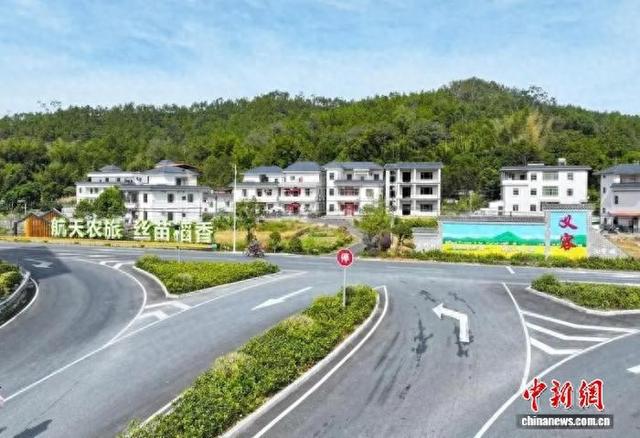
Group 1 - The core viewpoint of the article highlights the development of various industries in Yirong Town, including the establishment of a company to promote local entrepreneurship and the integration of agriculture with processing and sales [1][3] - Yirong Town has implemented the "Hundred Thousand Project" to cultivate specific industries, focusing on the full-chain development of leading industries such as silk rice planting and livestock breeding [3][4] - The town has introduced seven quality projects with a total investment exceeding 3.2 billion, including the China (Heyuan) Aerospace Agricultural Demonstration Park and the Seed Industry Expo Park, which are currently under construction [3][4] Group 2 - The agricultural initiatives include the goal of planting 43,490 acres of rice by 2025, with a total grain output expected to reach 17,509 tons [3] - The establishment of the "Rich Town Strong Village" company aims to foster local entrepreneurial teams and support the development of aquaculture and smart agricultural machinery [3] - Yirong Town is enhancing its infrastructure and aesthetics, with improved roads and vibrant murals depicting local agricultural elements, contributing to a more appealing living and working environment [4]

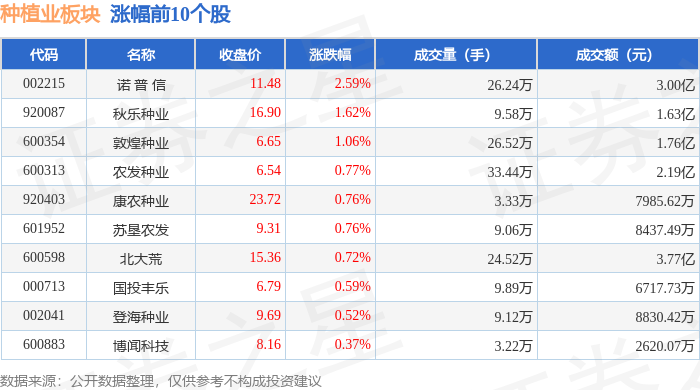
种植业板块1月15日跌0.16%,荃银高科领跌,主力资金净流出2.11亿元
Zheng Xing Xing Ye Ri Bao· 2026-01-15 08:53
Group 1 - The planting industry sector experienced a decline of 0.16% on January 15, with Zhuan Yin Gao Ke leading the drop [1] - The Shanghai Composite Index closed at 4112.6, down 0.33%, while the Shenzhen Component Index closed at 14306.73, up 0.41% [1] - Notable gainers in the planting sector included Nuo Pin Xin with a closing price of 11.48, up 2.59%, and Qiu Le Zhong Ye at 16.90, up 1.62% [1] Group 2 - The planting industry sector saw a net outflow of 211 million yuan from main funds, while retail investors contributed a net inflow of 178 million yuan [2] - Key stocks with significant fund flows included Nuo Pin Xin, which had a main fund net outflow of 52.99 million yuan, and Nong Fa Zhong Ye, which saw a net inflow of 25.92 million yuan from main funds [3] - The overall trading volume for the planting sector was highlighted, with Nuo Pin Xin achieving a transaction amount of 300 million yuan [1][2]

福州:敖江清流滋养“绿富共赢”新图景
Xin Hua Wang· 2026-01-15 05:04
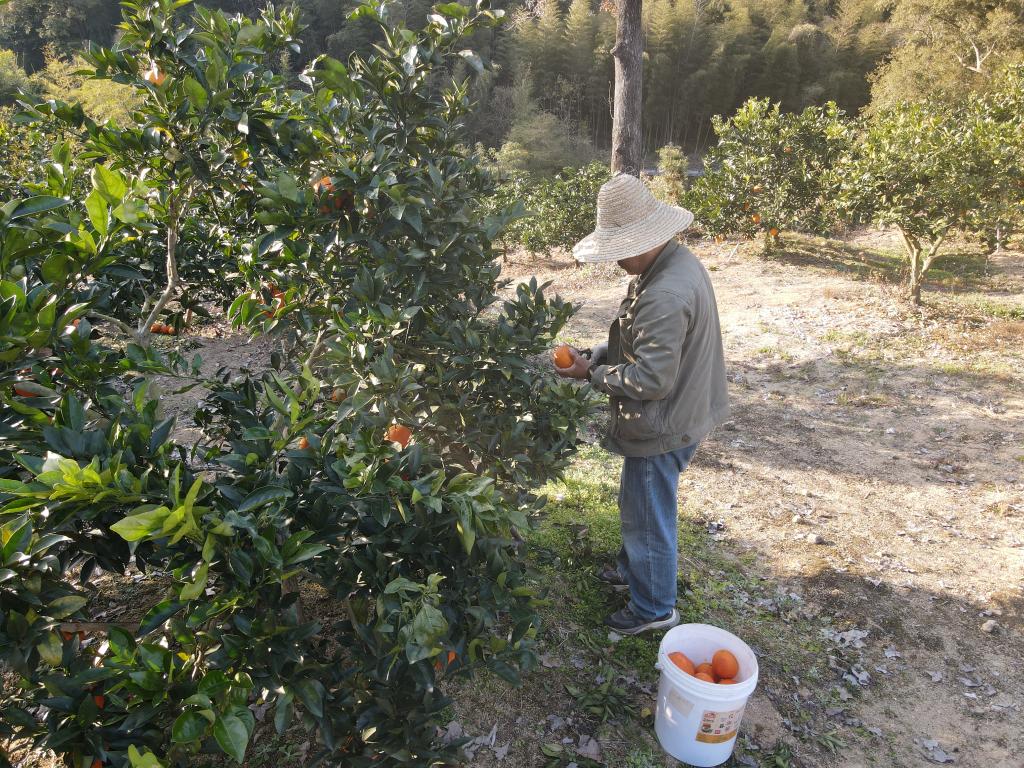
Core Viewpoint - The article highlights the transformation of the Aojiang River basin in Fuzhou, where ecological protection and economic development are harmoniously integrated, showcasing a model of "green and prosperous win-win" development [1][2]. Group 1: Ecological Protection Measures - The Aojiang River is crucial for the water supply of Fuzhou and the ecological safety of millions, prompting the Fujian provincial government to implement protective measures since 2000, including the closure of polluting industries and the construction of wastewater treatment facilities [1]. - The water quality in the Aojiang River has improved significantly, with stable water quality reaching Class III or above, and Class II water quality accounting for 64.3% [1]. Group 2: Economic Transformation in Villages - In the Jinan District's Rixi Village, the prohibition of pig farming led to a shift towards orange cultivation, specifically the "Navel Orange 52," which has become a profitable crop for the villagers [2][4]. - Rixi Village has over 1,000 acres of navel oranges, producing 1,200 tons annually with a revenue exceeding 6 million yuan, demonstrating the economic benefits of ecological conservation [4]. Group 3: Agricultural Innovations and Community Support - The establishment of a cooperative in Rixi Village has improved the efficiency of orange cultivation and sales, moving away from traditional low-price roadside selling [4]. - In Hoko Township, the ban on livestock farming has led to a boom in mushroom cultivation, with over 100 villagers engaged in this industry, significantly increasing their incomes [6]. Group 4: Ecotourism and Biodiversity - In Dongdai Town's Shantang Village, ecological restoration has fostered a "migratory bird economy," attracting over 250 species of wild birds and transforming the village into a birdwatching destination [8]. - The village plans to generate 443,600 yuan in collective income by 2025 through ecotourism initiatives, showcasing the economic potential of biodiversity [8].
学习贯彻党的二十届四中全会精神 | 青春宣讲传党音 理论润心暖八桂
Guang Xi Ri Bao· 2026-01-15 02:20
Core Viewpoint - The article highlights the ongoing efforts in Guangxi to promote and implement the spirit of the 20th National Congress of the Communist Party of China, focusing on grassroots engagement and the integration of theoretical knowledge with practical applications [1][6]. Group 1: Youth Engagement and Technological Development - The宣讲团 (propaganda team) emphasizes high-quality development, technological self-reliance, and the construction of a beautiful China, using youth perspectives to convey these themes [2]. - Students from various universities shared achievements in fields like Beidou, high-speed rail, new energy, and aerospace, illustrating the pulse of technological self-reliance [2]. - The宣讲团 also highlighted local innovations, such as the development of AI digital doctors and the integration of AI in education, showcasing the potential of technology in various sectors [2][3]. Group 2: Practical Applications and Community Focus - The宣讲团 connects macro policies to grassroots realities, transforming theoretical concepts into relatable stories that resonate with the public [4]. - Examples from local agricultural transformations and rural revitalization efforts were shared, demonstrating the practical implications of the 20th National Congress's strategies [4]. - The宣讲团 addressed community concerns, such as food security and education reform, linking these issues to broader national policies [5]. Group 3: Interactive Learning and Community Involvement - The宣讲团 utilized interactive methods, such as knowledge quizzes and discussions, to engage audiences and enhance understanding of the Congress's spirit [6][7]. - Events included performances and discussions that fostered a lively atmosphere, encouraging active participation from attendees [7]. - Feedback from participants indicated that the宣讲团's approach effectively connected with youth and helped deepen their understanding of national development goals [7]. Group 4: Future Plans - The宣讲团 plans to continue its outreach with 30 additional sessions across various regions, aiming to further embed the spirit of the 20th National Congress into local communities [7].
天水辣椒将有“智慧大脑” 天津天水协作启动AI病虫害防控项目
Xin Lang Cai Jing· 2026-01-15 00:53
市农科所相关负责人表示,该项目是落实东西部协作机制、借助天津科技资源服务天水地方产业需求的 重要实践,意义深远。市农科所作为项目合作单位,将以项目为纽带,持续推进津甘两地在人才、技 术、信息等领域的深层次协作,力争取得实质性成果;同时,切实聚焦产业实际需求,推动科研成果有 效转化,为天水市辣椒产业及蔬菜全产业链的转型升级与提质增效提供核心科技支撑。 天水辣椒将有"智慧大脑" 天津天水协作启动AI病虫害防控项目 每日甘肃网1月14日讯 据天水日报报道【天水融媒记者吴银霞 赵军霞】1月9日,由天津农学院与天水市 农业科学研究所联合承担的中央引导地方科技发展资金项目——"融合人工智能与大数据的辣椒病虫害 精准识别与智慧防控技术研究"开题会在市农科所召开。该项目旨在通过前沿科技推动特色农业提质增 效,为东西部科技协作提供示范。 会上,天津农学院霍相佐博士汇报了项目的立项背景、总体目标、研究内容及实施计划。天津市与天水 市参会负责同志均表示,将全力支持项目团队开展工作,加强协调与资源保障,充分发挥双方优势,协 同推进项目高质量完成,力求将本项目打造成为东西部科技协作的示范工程,为天水市现代农业发展注 入强劲的智能动力。 ...