低空经济

Search documents
武汉高端装备产业规模突破2500亿元
Chang Jiang Ri Bao· 2026-01-15 12:53
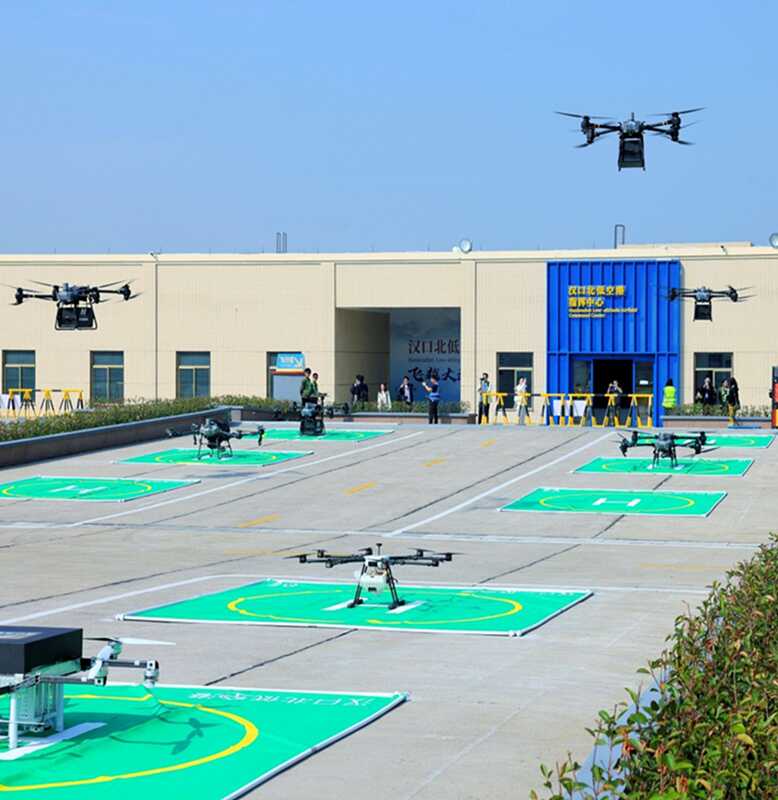
2025年,武汉高端装备产业规模突破2500亿元,同比增长19%,在商业航天、低空经 济、工业母机等关键领域多点突破,应用场景深度拓展,产业生态日趋完善,为城市高质量 发展筑牢硬核支撑。 场景牵引赋能,多元领域深度渗透。武汉坚持以应用场景带动产业发展,推动高端装备 在多领域落地生根。智能制造装备领域,华中数控中高档数控系统、华工激光三维五轴激光 切割装备市占率全国第一,高德红外、帝尔激光等企业产品保持全球或国内领先水平;绿色 智能船舶领域,50艘智能电动游艇在东湖等景区开展"绿色智能游船+文旅"示范;轨道交通 装备的智能运维、永磁牵引系统广泛应用于武汉多条地铁线路。商业航天领域,8个项目入 选省级卫星应用示范项目,覆盖地质勘探、灾害预警等多元场景;低空经济领域,电鹰科 技、旭日蓝天等企业开通11条商业试点航线,普宙科技"低空数据赋能城市治理"项目入选国 家级典型案例,建成全国首个低空共享无人机应用示范区;能源装备领域,中石化氢能机械 公司装备在鄂渝川氢能大走廊实现产业化应用。 武汉支持国家航天产业基地等商业航天集聚区建设,推动8个区建设省级低空经济综合 试验区,为产业集聚提供坚实空间。武汉落实工业母机企业研发 ...
广州宣布接受单项目100%亏损,把给科创企业的补贴变为投资
第一财经· 2026-01-15 11:45
Core Viewpoint - Guangzhou is fostering a more tolerant environment for failure in technology innovation, aiming to create a "Guangzhou model" for the transformation of scientific and technological achievements through the implementation of the "补改投" pilot program [2][4]. Group 1: Policy Framework - The "补改投" pilot program aims to address the challenges in the initial stages of technology achievement transformation, focusing on the most difficult and high-risk "first kilometer" [2]. - The program establishes a long-term governance system characterized by "incentives + tolerance for losses," allowing for a 100% loss on individual projects without accountability for responsible parties, as long as overall losses remain within 80% [2][6]. - The program encourages a principle of "tolerance for failure," ensuring that financial losses from the "补改投" funds do not serve as a basis for evaluating the performance of relevant departments and personnel [2][6]. Group 2: Investment Strategy - The "补改投" program will channel funds into sectors such as artificial intelligence, biomedicine, and low-altitude economy, transitioning from merely providing financial support to enabling companies to become self-sustaining [3]. - Investment methods include direct financial investment, government investment funds, and a "first invest, then take equity" approach, with the program's funds generally not exceeding 30% equity stake in projects [3][4]. - The program aims to leverage public funds to attract social capital, with a target of achieving a leverage effect of over three times the initial investment [3]. Group 3: Implementation and Impact - The Guangzhou Science and Technology Bureau plans to allocate at least 15% of the municipal science and technology innovation development fund annually for "补改投" initiatives over the next three years [4]. - The program is expected to stimulate innovation and attract high-quality resources and capital to Guangzhou, with a goal of creating a 20 billion yuan technology innovation fund to support early-stage technology companies [4][5]. - The "补改投" reform will convert 100 million yuan of previous competition subsidies into equity investments, facilitating initial financing for startups and enhancing the overall entrepreneurial environment [5].

六大部委释放2026关键信号,大湾区这些产业要飞
Xin Lang Cai Jing· 2026-01-15 10:11
Group 1: Economic Policy and Growth Signals - The National Development and Reform Commission, Ministry of Finance, Central Bank, Ministry of Commerce, Ministry of Industry and Information Technology, and Ministry of Housing and Urban-Rural Development have released four key policy signals aimed at stabilizing growth, expanding domestic demand, supporting technological innovation, and stabilizing the real estate and stock markets for 2026 [1] - The focus for 2026 includes enhancing industrial technological innovation capabilities, developing core technologies, and fostering high-level manufacturing platforms, with an emphasis on emerging industries such as integrated circuits, new materials, and biomedicine [1][2] Group 2: Investment and Funding Initiatives - The National Venture Capital Guidance Fund has been launched with an investment of 100 billion yuan, aiming to attract local and social capital to create an investment scale exceeding one trillion yuan, particularly in hard technology sectors [2] - The Guangdong province has introduced policies to promote the "use first, pay later" model for technology transfer, providing flexible cooperation paths for enterprises, especially small and medium-sized enterprises [3] Group 3: Low-altitude Economy Development - The low-altitude economy has been included in the 14th Five-Year Plan, with new opportunities for the development of three-dimensional low-altitude travel [4] - The first Guangdong-Hong Kong-Macao Greater Bay Area Low-altitude Economy High-quality Development Conference has been held, announcing policies for infrastructure, technological innovation, and financial support for the low-altitude economy [5] Group 4: Digital Economy Collaboration - The Guangdong-Hong Kong-Macao Greater Bay Area is enhancing digital economy cooperation, establishing a development pattern driven by the dual cores of Guangzhou and Shenzhen, with unique contributions from Hong Kong and Macau [7] - The policies released by six ministries focusing on supporting technological innovation provide strong guidance for the high-quality development of the digital economy in the Greater Bay Area [7]
总规模超3500亿,成都最大产业基金集群来了
FOFWEEKLY· 2026-01-15 10:01
Core Viewpoint - Sichuan is accelerating its venture capital landscape with a total fund size of 355.3 billion yuan, driven by policy innovation and capital aggregation [2][3]. Group 1: Fund Size and Investment Focus - As of January 14, 2026, Sichuan has signed 174 funds with a total scale of 355.3 billion yuan, focusing on key industries such as electronic information, healthcare, and artificial intelligence [5]. - The "Chengdu High-tech Zone Industry Fund Investment List" has been released, detailing the 355.3 billion yuan fund cluster and facilitating capital and project information disclosure [6]. Group 2: Policy Framework and Goals - In May 2025, Sichuan announced measures to promote high-quality development in venture capital, aiming for 500 private equity and venture capital management institutions and a fund management scale exceeding 400 billion yuan by 2030 [8]. - The measures include innovative mechanisms such as breaking the restrictions on fund registration and return ratios, and a loss tolerance mechanism for state-owned funds, allowing up to 60% loss tolerance [8]. Group 3: Ecosystem Development - The venture capital ecosystem in Sichuan is being activated, with a rapid increase in the number and scale of funds, including 50 provincial government-guided funds approved by the end of 2025, targeting a total scale of 99.26 billion yuan [9]. - Sichuan is building a comprehensive capital ecosystem covering various sectors, including hard technology and advanced manufacturing, supported by large-scale mother funds and targeted industry funds [11]. Group 4: Capital Deployment and Collaboration - The Sichuan Social Security Science and Technology Innovation Fund, with a total scale of 50 billion yuan, focuses on strategic emerging industries such as artificial intelligence and biomedicine [11]. - Various local funds have been established, such as a 20 billion yuan gas industry fund focusing on hydrogen energy and LNG, and funds for low-altitude economy, enhancing capital support for technology development [13]. Group 5: National Context and Future Outlook - The national venture capital guidance fund has completed strategic layouts in key regions, with a focus on early-stage investments, indicating a broader trend of capital gathering towards technology innovation and advanced manufacturing [14]. - The capital landscape in Sichuan reflects a national trend of recovery in the primary market, with a growing emphasis on patient capital supporting technological innovation [16].

广州宣布接受单项目100%亏损,把给科创企业的补贴变为投资
Di Yi Cai Jing· 2026-01-15 08:13
Core Viewpoint - Guangzhou is actively developing a "Guangzhou model" for the transformation of scientific and technological achievements, emphasizing a "tolerant of failure" approach to foster innovation and support for startups [1][2]. Group 1: Policy Framework - The "Work Method" released on January 15 aims to address the challenges in the initial stages of technology transfer, particularly the high risks involved [1]. - The framework establishes a long-term governance system that encourages a "tolerant of failure" principle, ensuring that financial losses do not impact the assessment of responsible departments and personnel [1][6]. - It allows for a 100% loss on individual projects without accountability, and overall investment losses of up to 80% are tolerated without repercussions for involved parties [1]. Group 2: Investment Strategy - The "补改投" initiative focuses on sectors such as artificial intelligence, biomedicine, and low-altitude economy, aiming to shift fiscal support from "blood transfusion" to enabling companies to "self-generate" [2]. - Investment methods include direct fiscal investment, government investment funds, and a "first invest, then equity" model, with the government holding no more than 30% equity in projects [2]. - The initiative is designed to leverage fiscal funds to attract social capital, with a goal of achieving a multiplier effect of over three times [2]. Group 3: Implementation and Impact - The Guangzhou Science and Technology Bureau plans to allocate at least 15% of its annual special funds for technology innovation to support the "补改投" initiative over the next three years [3]. - The 2025 Guangzhou Science and Technology Innovation and Entrepreneurship Competition will feature a total prize pool of 200 million yuan, with a focus on supporting startups that have not previously received equity financing [3][4]. - The "first invest, then equity" model is expected to enhance the entrepreneurial environment within universities, encouraging alumni to return and contribute to startup projects [4].
全球首个低空安全飞行大模型“安飞”在京发布,开启低空“立体高速公路”时代
Sou Hu Cai Jing· 2026-01-15 07:21
低空经济是国家"十五五"规划重点布局的战略性新兴产业集群,更是培育城市经济新质生产力的核心引 擎。2026年伊始,我国低空经济呈现爆发式增长态势,北京精准定位"低空安全"领域,将"低空安全"作 为低空经济的安全基座向全国推广。 近日,上海市发布《上海市关于链接长三角加快建设低空经济先进制造业集群的若干措施》,提出到 2028年,上海低空经济核心产业规模达到800亿元左右。2026年广州冲刺起飞,打造"万亿低空经济蓝 海",珠海-广州黄埔跨城低空物流航线已经探索"载人+载物"融合运营。 2026年1月14日,北京锐士装备科技有限公司携手中电达通数据技术股份有限公司在北京正式发布全球 首个服务于低空安全飞行的数据大模型——"安飞专业大模型"。发布会上,"安飞"成功获得北京国际大 数据交易所颁发的国内低空经济领域首批两张数据资产登记证书——《高质量飞行姿态数据》与《高质 量飞行气象数据》,标志着低空经济数据要素化迈出实质性一步。 (嘉宾:吴志强) 智能设定和个性化航路规划、时间规划、异常处置,无限接近于人脑的识别和规划精度,且根据不同城 市的区域特性,实现个性化管理。 综合这三大核心技术,基于安飞大模型,可以开发大 ...
这片边角地盘活了,洪山青菱湖畔建起低空经济新营地
Chang Jiang Ri Bao· 2026-01-15 07:20
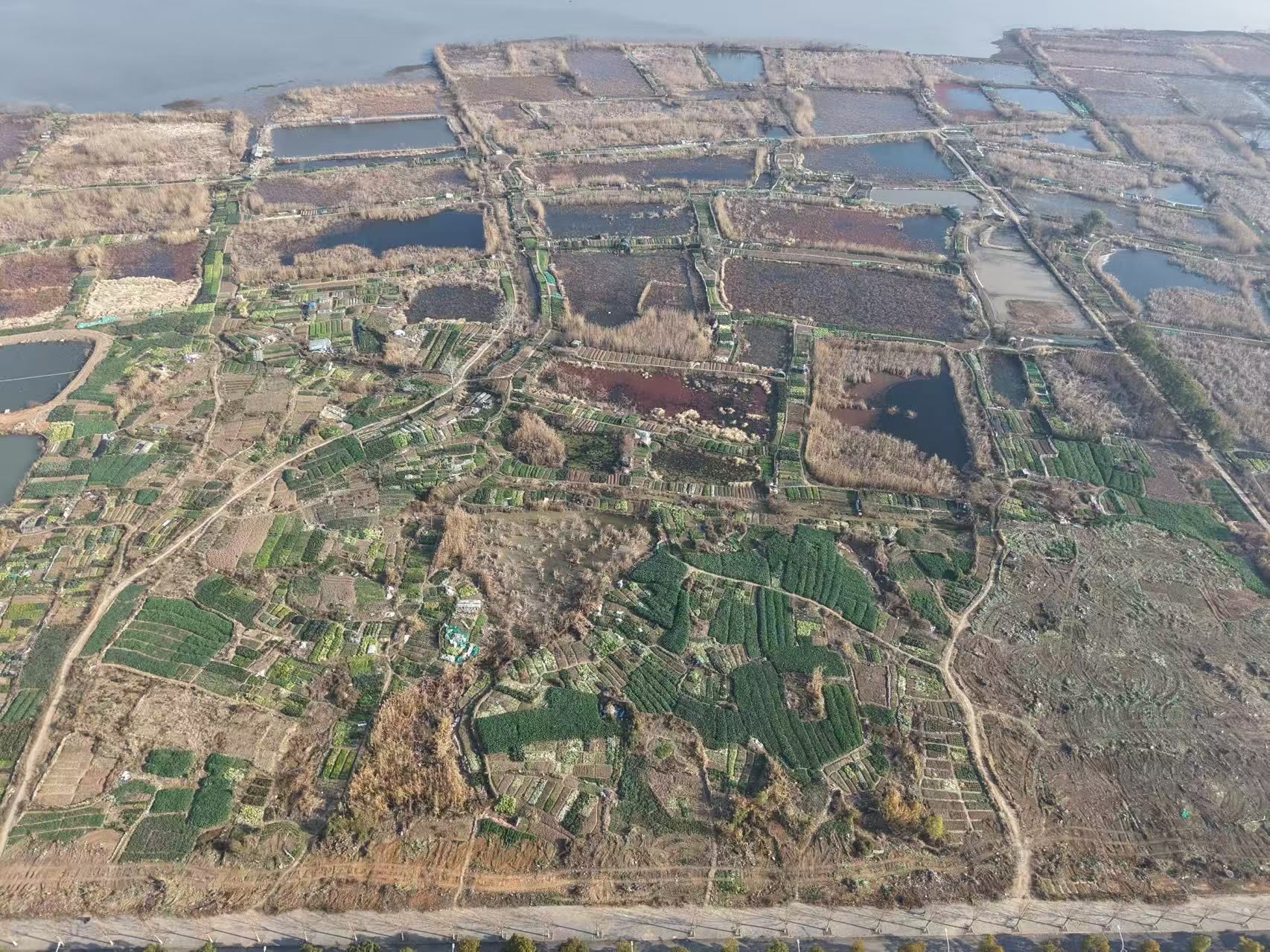
长江日报大武汉客户端1月14日讯 操控无人机掠过粼粼湖面,以独特的视角鸟瞰整片绿地与远方的城市天际线。这份低空飞行的乐趣,在武汉洪山青菱 湖畔即将成为现实,这里新建成一处低空经济营地。 营地配套设施。通讯员供图 an ( the l Bry Art . 21 J . 000 000 t 2017 an r 10 1 19 - 2011 4 2 .12 車站 N t in the later to the later the later the later the later the later the later the later the later the later the series and the later the m r teller Property. 9 0 and and H - 11 el Bell Broom Start Comments of the Broad on Mark of Street of States of Arman Comments of Arman Comments of Children Comment of Children Comm t 1 10 1 N ...
科技日报:《武汉市低空经济标准体系建设指南(V1.0)》发布
Ke Ji Ri Bao· 2026-01-15 02:02
《指南》立足武汉资源禀赋和产业基础,构建覆盖低空经济全产业链的标准体系,采用"纵向 三层+横向两翼"的立体化设计,包含六大子体系。 近日,武汉市发展和改革委员会、武汉市市场监督管理局联合发布《武汉市低空经济标准体 系建设指南(V1.0)》(以下简称《指南》)。《指南》为武汉市低空经济规范化、体系化、高 质量发展擘画蓝图,为产业融合创新注入强劲动能,为武汉都市圈低空经济融合发展提供方向引 领。 《指南》突出"体系化、协同化、动态化"特点,构建了覆盖低空经济产业链的标准体系,深 化产业链上中下游标准的协同合作,深度结合武汉特色应用场景,动态匹配产业发展阶段与实际 需求。通过梳理国家、行业、地方等多层级标准清单,明确近期重点标准制定方向,为低空经济 从"技术突破"到"场景落地"提供精准指引。 据悉,《指南》由湖北省标准化与质量研究院主导编制,武汉市计量标准质量研究院、武汉 市规划研究院参与编制,武汉市公安局、武汉大学、华中科技大学、武汉理工大学、普宙科技、 电鹰科技、旭日蓝天等多个部门、高校及企业积极参与研讨调研,确保标准体系兼具前瞻性与实 操性。下一步,武汉市将继续以标准为笔、创新为墨,书写好低空经济高质量发展的 ...
为什么要强调产业链高质量发展
Jing Ji Ri Bao· 2026-01-14 22:11
Core Viewpoint - The 2025 Central Economic Work Conference emphasizes the implementation of a new round of high-quality development actions for key industrial chains, building on previous initiatives to enhance manufacturing capabilities and address external challenges such as trade protectionism [1] Group 1: Key Industries - "Key industries" refer to a matrix that includes advanced manufacturing as the backbone, strategic emerging industries, and traditional industries undergoing transformation [1] - The focus is on advanced manufacturing sectors crucial for industrial chain security, such as high-end equipment manufacturing, integrated circuits, new displays, and biomedicine [1] - Strategic emerging industries and future industries like artificial intelligence, quantum technology, and low-altitude economy are also prioritized [1] Group 2: Chain Collaboration - The term "chain" emphasizes the need for coordinated efforts across the entire industrial chain rather than isolated breakthroughs [2] - It aims to break the "each for themselves" development model by centering around leading enterprises and promoting innovation among small and medium-sized enterprises [2] - The focus is on addressing weak links in the industrial chain to overcome technological bottlenecks and prevent risks of disconnection [2] Group 3: High-Quality Development - The new round of actions aims to enhance the overall competitiveness of industrial chains and cultivate new productive forces, shifting from merely addressing shortfalls to systematic upgrades [3] - High-quality development targets high-end, intelligent, and green directions, focusing on quality brand enhancement and fostering globally competitive high-end brands [3] - The initiative includes implementing "Artificial Intelligence+" in various sectors to optimize production processes and enhance collaboration across the industrial chain [3] Group 4: Modern Industrial System - The "14th Five-Year Plan" prioritizes building a modern industrial system and solidifying the foundation of the real economy, emphasizing the conversion of technological achievements into effective industrial outcomes [4] - The smooth transition from technology to mass production and market success is crucial, relying on the quality of the industrial chain [4] - Any shortcomings in the chain can increase costs and risks, hindering innovation from reaching the market [4] Group 5: Chain Strategies - Strategies for industrial chain development include "supplementing," "strengthening," "building," and "streamlining" the chain [5] - "Supplementing" addresses gaps caused by technological voids or external supply disruptions, ensuring continuous production [5] - "Strengthening" focuses on improving quality and competitiveness in existing segments, while "building" involves laying the groundwork for future technologies and products [5] - "Streamlining" aims to enhance the efficiency of the entire chain through digital platforms and integrated logistics [5] Group 6: Implementation Focus - The implementation of high-quality development actions should focus on key technological breakthroughs, innovation collaboration, and ecosystem optimization [6] - Identifying weak links and establishing a dynamic mechanism for technology breakthroughs are essential [6] - Regional innovation collaboration and optimizing support systems for key industries are also critical for successful implementation [7]
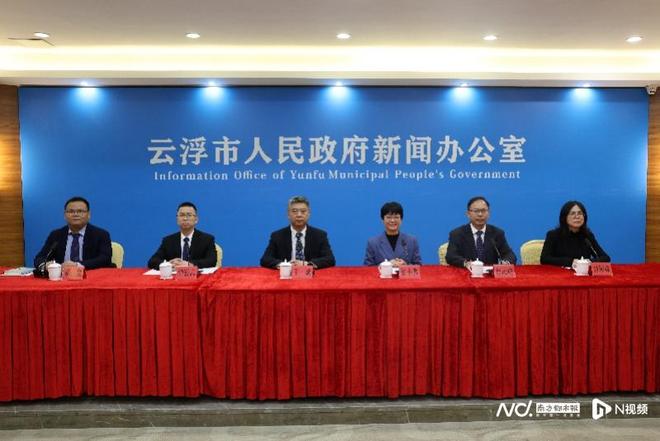
民生支出占七成,幸福城市拿两回!云浮经济民生“双开花”
Nan Fang Du Shi Bao· 2026-01-14 14:49
Economic Growth and Industrial Structure - During the "14th Five-Year Plan" period, Yunfu's economic growth has significantly accelerated, with the GDP surpassing three hundred billion levels, and per capita GDP rising from 18th to 16th in the province from 2021 to 2024 [4] - The city has added approximately 30% to its economic volume, 30% more industrial enterprises, 50% increase in industrial output value, 70% increase in business entities, and 80% increase in total electricity consumption [4] - The industrial structure is continuously optimizing, focusing on the real economy and manufacturing, with three major trillion-yuan industrial clusters being developed: metal manufacturing, green building materials, and modern agriculture [4] Industrial Upgrading and Innovation - Yunfu is promoting high-end, intelligent, and green transformation of industries, with significant developments in metal manufacturing, green building materials, and emerging strategic industries such as biomedicine and electronic information [7] - Over 60% of industrial enterprises have completed digital transformation, showcasing projects like the first fully automated production line for stainless steel products [7] - The city has established a green manufacturing system, creating several national and provincial-level green factories, maintaining high levels of industrial water reuse and solid waste utilization [7] Open Economy and Infrastructure Development - Yunfu is enhancing its high-level openness by implementing strategies to connect with the Greater Bay Area and RCEP, with major transportation projects completed [8] - The city has signed 177 new projects with a total investment of nearly 50 billion, actively attracting industries from the Pearl River Delta [8] - The establishment of a cross-border e-commerce clearance center marks a breakthrough in cross-border e-commerce [8] Urban-Rural Coordination and Ecological Development - The city is advancing urban-rural coordination through the "Hundred Million Project," achieving full coverage of provincial industrial parks in counties [9] - The forest coverage rate has increased to 68.78%, and the water quality of the Xijiang River remains excellent, reflecting the city's commitment to ecological development [9] - Yunfu has made significant progress in converting ecological resources into economic value, including innovative green finance initiatives [9] Social Welfare and Quality of Life - During the "14th Five-Year Plan," Yunfu's social welfare spending exceeded 100 billion, accounting for over 70% of fiscal expenditure [10] - The city has introduced quality educational resources, expanded healthcare coverage, and created 95,000 new urban jobs, with per capita disposable income growing at an annual rate of 6.48% [10] - These efforts have contributed to Yunfu being recognized as one of the "most livable cities," reflecting a people-centered development approach [10]