
无人机

Search documents
龙甫有个“万能客厅”:能谈生意、能招工,还是低空经济服务站?
Nan Fang Nong Cun Bao· 2026-01-11 04:04
Core Viewpoint - The article discusses the transformation of Longfu Town's government entrance into a multifunctional "town living room" that serves as a comprehensive service hub for industry, talent recruitment, and cultural exchange, enhancing local economic development and community engagement [10][14][70]. Group 1: Infrastructure and Functionality - The "town living room" was created from an underutilized space previously characterized by a 1990s architectural style, aiming to showcase the town's industrial strength and provide practical services for businesses [10][12]. - The renovated space includes distinct areas for industrial display and rural revitalization, with clear functional zones for historical displays and business negotiations [15][19]. - The facility allows for efficient communication between businesses and government, significantly improving the process of attracting investment and understanding local industry [21][22]. Group 2: Economic Impact and Data - Longfu Town has seen a significant rise in its national ranking, moving up 45 places to 945th among the top thousand towns, with 38 manufacturing projects attracting a total investment of 8.5 billion yuan [24][25]. - The local economy is bolstered by showcasing innovative products from local enterprises, including a notable achievement where a local aluminum company received national recognition as a "little giant" in specialized and innovative sectors [27][28]. Group 3: Community and Talent Development - The "town living room" serves as a platform for talent recruitment, addressing local employment challenges by organizing joint recruitment fairs with vocational schools [41][46]. - The space is designed to foster informal interactions and collaborations, with areas dedicated to business associations and training programs, enhancing community engagement and support for local enterprises [31][34]. - Plans are in place to introduce a local tea shop to serve visitors and support the local economy, particularly benefiting the large population of migrant workers [48][50]. Group 4: Cultural Integration and Future Plans - The facility also emphasizes cultural integration, featuring a section dedicated to local agricultural and cultural products, reflecting the town's rich heritage [54][56]. - Future initiatives include hosting seasonal music festivals to promote local culture and community involvement, leveraging the presence of a major guitar manufacturing enterprise [51][52]. - The "town living room" is envisioned as a continuous service platform that not only supports economic activities but also nurtures social and cultural connections within the community [65][70].


看世界 | 制造业掉队拖了美国设计后腿
Xin Lang Cai Jing· 2026-01-11 02:48
Core Insights - iRobot, once a leading consumer robotics company, filed for bankruptcy protection and agreed to be acquired by its Chinese supplier, highlighting its decline from a market leader to a marginalized entity [1] - The fall of iRobot and 3D Robotics illustrates a broader issue within the U.S. consumer hardware industry, where reliance on the "U.S. design + offshore manufacturing" model has become a structural problem [2][3] Company Overview - iRobot was founded in 1990 and launched the Roomba vacuum cleaner in 2002, achieving significant sales milestones, including 50,000 units in its first year and over 2 million by 2005 [1] - The company maintained a strong market presence and profitability for years, even attracting a $17 billion acquisition offer from Amazon four to five years ago [1] Industry Dynamics - The initial success of companies like iRobot and 3D Robotics was due to their ability to convert concepts into products during the early market exploration phase, where competition was based on product existence rather than refinement [3] - As the market matured, competition shifted towards supply chain efficiency and product reliability, requiring companies to innovate closely aligned with manufacturing and real-world usage [3][4] Competitive Landscape - New entrants in the market have adopted a rapid iteration model, allowing them to quickly improve their products based on user feedback and real-world data, leading to significant advancements in features and performance [4][5] - U.S. companies continue to rely on patent protection and brand premium, resulting in longer product iteration cycles and widening competitive gaps [5] Policy Implications - The U.S. government's protective measures, such as tariffs and export controls, may hinder the competitive drive of domestic companies, ultimately leading to a decline in innovation and market position [5][6] - A shift towards providing an open and fair competitive environment is necessary for U.S. consumer hardware companies to maintain their leading status in the global market [6]
三个视角,看教育科技人才一体发展(深聚焦)
Ren Min Ri Bao· 2026-01-11 00:05
Group 1: Education Technology Talent Development - The topic of "education technology talent" has become a focal point, with practical examples showing how education, technology, and talent can support and advance each other [1] - Shanghai Jiao Tong University has established a unique "Huawei Class" to cultivate software talent, connecting academic research with industry needs [2][3] - The "Huawei Class" features a three-stage training path for graduate students, emphasizing collaboration between academic and industry mentors [3] Group 2: Successful Case Studies - A professor at Nanjing Medical University successfully transitioned a new drug to commercialization, aided by the Jiangsu Regional Technology Transfer Center [5][6] - The Jiangsu center provides comprehensive support for technology transfer, including funding and risk management strategies [7] - The center has facilitated numerous collaborations between universities and companies, resulting in significant technology transfers and innovations [9] Group 3: University-Industry Collaboration - Shenzhen Polytechnic University emphasizes hands-on experience for students, integrating academic learning with real-world projects in collaboration with industry [11][12] - The university aligns its curriculum with Shenzhen's industrial needs, focusing on interdisciplinary programs that address core industry demands [12][13] - Shenzhen's rapid establishment of new universities aims to enhance local education resources and support technological innovation [13][14] Group 4: Government Support and Initiatives - The Shenzhen government has invested significantly in research funding and infrastructure to support higher education and innovation [14] - Initiatives include granting universities autonomy in talent recruitment and establishing research platforms to foster collaboration [14] - The city aims to create a virtuous cycle of talent development and technological innovation through comprehensive reforms in higher education [14]
制造业掉队拖了美国设计后腿
Jing Ji Ri Bao· 2026-01-10 21:52
Core Viewpoint - iRobot, once a leading consumer robotics company, has filed for bankruptcy protection and agreed to be acquired by its Chinese supplier, highlighting its decline from a market leader to a marginalized player in the industry [1] Group 1: Company Overview - iRobot was founded in 1990 and gained prominence with the launch of the Roomba vacuum cleaner in 2002, selling 50,000 units in its first year and over 2 million by 2005 [1] - The company was synonymous with robotic vacuum cleaners, defining the category and maintaining a strong profit margin through patent protection and brand premium [1] - Despite its past success, iRobot has faced increasing operational pressures, leading to continuous losses and mounting debt over the last two years [1] Group 2: Industry Dynamics - The decline of iRobot and 3D Robotics reflects a broader issue within the U.S. consumer hardware industry, which has relied on the "American design + offshore manufacturing" model [2][3] - Initially, this model was effective during the early stages of market development, where the focus was on product existence rather than optimization [3] - As the market matured, competition shifted from individual products to entire supply chain systems, necessitating closer alignment with manufacturing and real-world usage [3] Group 3: Competitive Landscape - New entrants in the market have adopted a rapid iteration approach, allowing them to quickly improve their products based on user feedback and real-world data [4][5] - This approach has led to significant advancements in features and performance for both robotic vacuums and drones, creating a competitive edge over traditional U.S. companies [4][5] - U.S. companies continue to rely on patent protection and brand premium, resulting in longer product iteration cycles and widening competitive gaps [5] Group 4: Policy Implications - U.S. government policies aimed at protecting domestic companies, such as tariffs and export controls, may hinder innovation and competitiveness by reducing market pressure [5] - For U.S. consumer hardware companies to maintain their leading positions, they must engage in real market competition rather than relying solely on protective measures [5]
央视《新闻联播》:大湾区低空经济开年“起飞”
Xin Lang Cai Jing· 2026-01-10 15:24
Core Viewpoint - The low-altitude economy in the Guangdong-Hong Kong-Macao Greater Bay Area is rapidly developing, with drone logistics becoming increasingly operational and a trillion-level market emerging [1][2]. Group 1: Market Development - The low-altitude economy in the Greater Bay Area is experiencing significant growth, with drone logistics operating intensively and cross-city routes being established [1]. - Shenzhen has become a hub for low-altitude logistics, with hundreds of drone routes running simultaneously during peak hours [2]. - The industry is supported by a robust supply chain, allowing for rapid deployment of new drone products with minimal delays from research and development to practical application [4]. Group 2: Operational Efficiency - The low-altitude channels in Shenzhen connect various cities, enabling quick delivery of goods, such as components reaching their destination in one hour and island supplies being delivered in 25 minutes [4]. - The construction of a comprehensive low-altitude transportation hub in Qianhai, Shenzhen, is underway, which will further enhance operational efficiency [4]. Group 3: Talent Attraction - The booming low-altitude economy is attracting talent from across the country, with over 15,000 related enterprises in Guangdong, accounting for more than 30% of the national total [4]. - Young professionals, such as drone route planners, are rapidly advancing in their careers, contributing to the industry's growth and innovation [4].
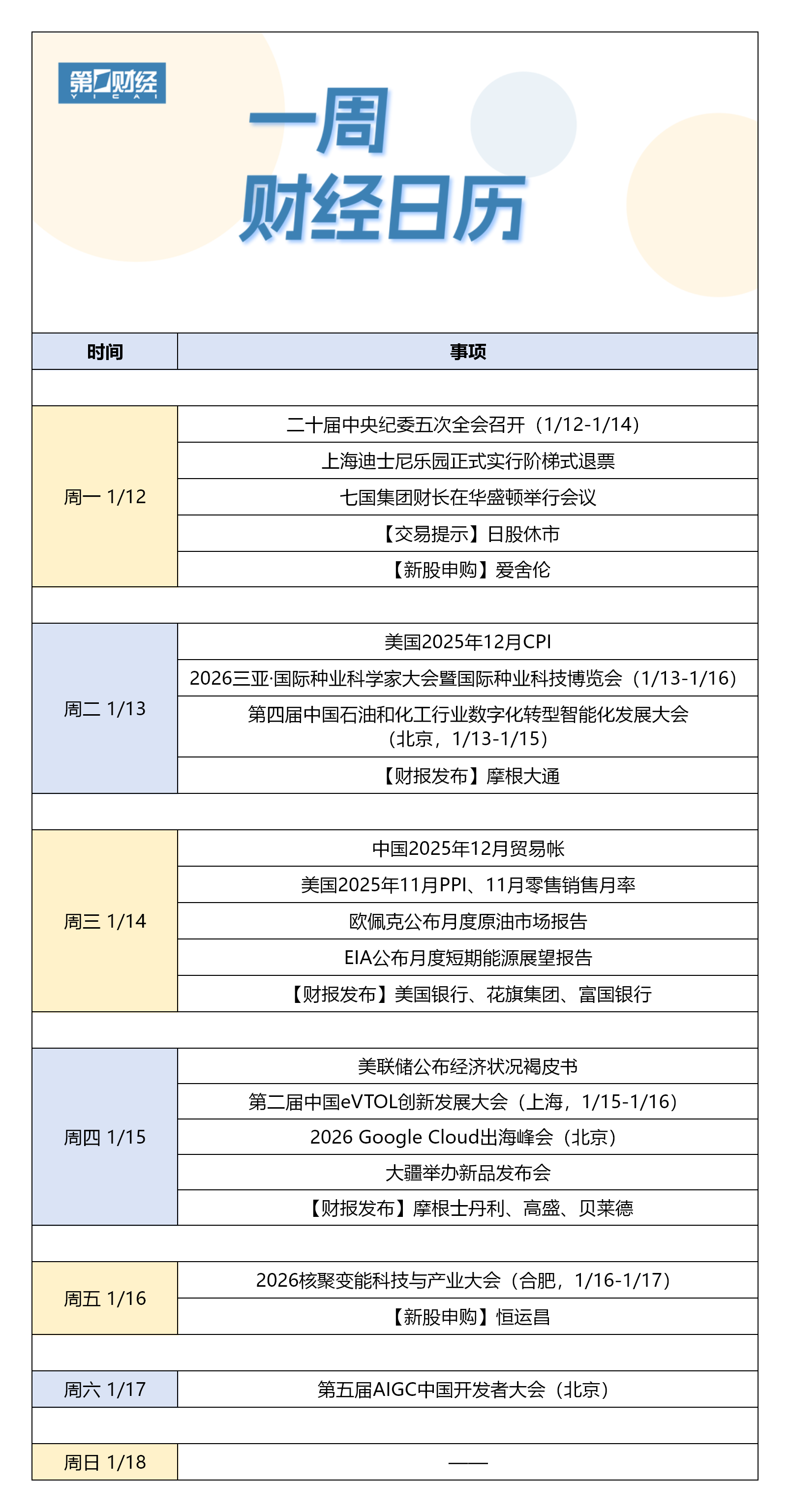
下周财经日历(1月12日-1月18日)
Di Yi Cai Jing· 2026-01-10 12:39
Group 1 - Morgan Stanley and Citigroup are set to release their financial reports on January 15, 2026 [2] - The second China eVTOL Innovation Development Conference is scheduled for January 15, 2026 [2] - The fifth AIGC China Developer Conference will take place on January 18, 2026 [2] Group 2 - The U.S. Federal Reserve will publish its Beige Book on January 14, 2026, providing insights into economic conditions [2] - The OPEC monthly oil market report is expected to be released on January 14, 2026 [2] - The EIA will publish its monthly short-term energy outlook on January 14, 2026 [2]



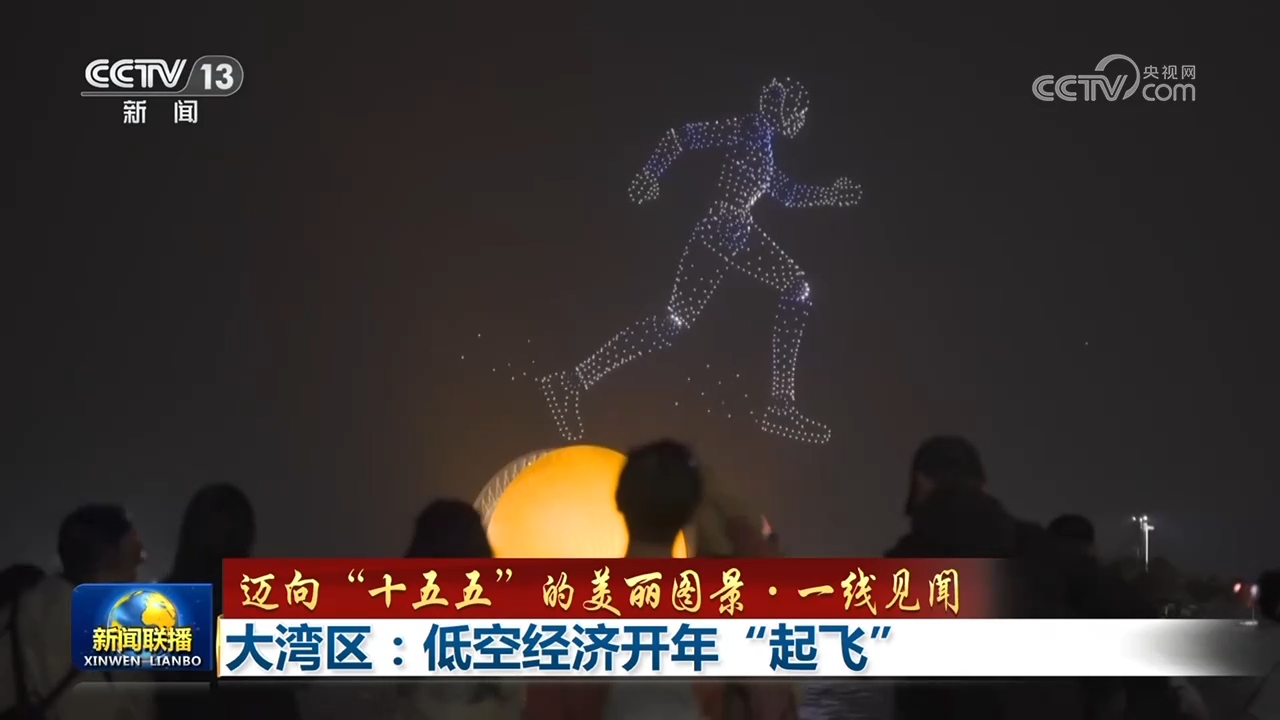
【迈向“十五五”的美丽图景·一线见闻】大湾区:低空经济开年“起飞”
Yang Shi Wang· 2026-01-10 12:13
Group 1 - The low-altitude economy in the Guangdong-Hong Kong-Macao Greater Bay Area is rapidly developing, with a market expected to reach trillions in value [1][11] - Hundreds of drone logistics routes are operational in Shenzhen, showcasing a highly efficient and interconnected industrial chain [5][7] - New drone products are quickly tested and deployed, demonstrating a near-zero delay from research and development to practical application [7] Group 2 - The low-altitude economy is attracting talent from across the country, with a notable increase in young professionals entering the field [9] - There are over 15,000 companies related to the low-altitude economy in Guangdong, accounting for more than 30% of the national total [11] - The construction of a comprehensive low-altitude transportation hub in Qianhai, Shenzhen, is underway, further enhancing the region's logistics capabilities [7]
中美,大消息!事关无人机!
Zheng Quan Shi Bao· 2026-01-10 06:32
Core Viewpoint - The U.S. Department of Commerce has withdrawn its plan to list Chinese-manufactured drones on a "regulated list" due to national security concerns, which was initially proposed to restrict imports of Chinese drones [1][2]. Group 1: U.S. Government Actions - The U.S. Department of Commerce announced the withdrawal of a proposal aimed at restricting Chinese drones, which was submitted for White House review in October 2022 and retracted on January 8, 2023 [1]. - The Federal Communications Commission (FCC) had previously placed all foreign-manufactured drones and components on a "regulated list" citing unacceptable national security risks [1][2]. Group 2: Chinese Response - The Chinese government has strongly opposed the U.S. actions, arguing that they distort the market and unfairly target Chinese companies under the guise of national security [2]. - Chinese officials have called for the U.S. to correct its actions and provide a fair and non-discriminatory environment for Chinese enterprises [2]. Group 3: Market Impact - Chinese drones, particularly from DJI, dominate the U.S. commercial drone market, with over half of the drones in use coming from this manufacturer [3]. - The proposed restrictions have led to significant backlash among U.S. drone operators, many of whom rely on DJI products for their businesses in various sectors such as agriculture and construction [3]. - Some drone operators have begun stockpiling DJI drones and components, expressing concerns that the ban could jeopardize their livelihoods, as there are no viable alternatives to Chinese-made drones in the Western market [3].
中美,大消息!事关无人机!
证券时报· 2026-01-10 06:04
Group 1 - The U.S. Department of Commerce has withdrawn its plan to list Chinese-manufactured drones on a so-called "restricted list" due to national security concerns [1] - The proposal was initially submitted for White House review on October 8, but was retracted on January 8 [1] - The Federal Communications Commission (FCC) had previously placed all foreign-manufactured drones and components on a "restricted list," citing unacceptable risks to national security, which sparked opposition from China and dissatisfaction among U.S. consumers [1][2] Group 2 - The Chinese drone market holds a dominant position in the U.S. commercial drone sector, with over half of the drones coming from DJI [3] - Following the announcement of the ban, there was significant backlash in the U.S., with many drone operators relying on DJI equipment for their small businesses [3] - Operators expressed concerns that the ban could jeopardize their livelihoods, stating that there are no viable alternatives to Chinese-manufactured drones in the West [3] Group 3 - The FCC has indicated that it will exclude certain "non-Chinese manufactured drones" from the restrictions imposed last month [4]

涉中国产无人机,美方:已撤销
Shang Hai Zheng Quan Bao· 2026-01-10 05:08
Group 1 - The U.S. Department of Commerce has withdrawn a plan to impose restrictions on Chinese-made drones, which was aimed at addressing "national security concerns" [1] - The Federal Communications Commission (FCC) had previously banned the import of new foreign-manufactured drones and components, listing Chinese companies DJI and Daotong as "untrusted suppliers" [1] - The U.S. government had planned to introduce new measures to limit or prohibit the import of Chinese drones to address issues in the information and communication technology supply chain [1] Group 2 - Chinese drones dominate the commercial drone market in the U.S., with over half of the drones coming from DJI [1] - The Chinese Ministry of Commerce has expressed strong opposition to the U.S. actions, stating that the U.S. is distorting the market and engaging in unilateral bullying by using national security as a pretext [1][2] - China urges the U.S. to stop its erroneous practices and to immediately revoke the related measures, warning that it will take necessary actions to protect the legitimate rights of Chinese companies if the U.S. continues its current approach [2]