
协同育人

Search documents
品读课本里的中国年
Ren Min Ri Bao· 2026-02-07 22:48
Group 1 - The article emphasizes the importance of traditional cultural education during the Spring Festival, highlighting how it serves as a living classroom for children to experience and understand cultural customs [1] - It discusses the integration of traditional customs into educational practices, where teachers use interactive methods to help students connect with cultural heritage [3][4] - The article illustrates specific examples of children engaging in traditional activities, such as making tofu and participating in family customs, which enhances their understanding of cultural significance [3][4] Group 2 - The article describes a community activity where children learn traditional paper-cutting techniques, transforming static textbook knowledge into hands-on cultural experiences [7][8] - It highlights the role of local cultural heritage in education, with schools collaborating with community centers to provide children with opportunities to engage with their cultural roots [7][8] - The article notes the positive impact of these activities on children's social interactions and family bonding, as they share their experiences and creations with others [8] Group 3 - The article covers the incorporation of traditional sports, such as dragon and lion dancing, into school curricula, promoting physical health and cultural appreciation among students [9][10] - It mentions the establishment of clubs and training programs that allow students to practice traditional sports, fostering teamwork and discipline [10][11] - The article concludes with observations on how participation in traditional sports contributes to students' physical fitness and personal development, enhancing their confidence and social skills [11]
协同育人模式下高校合唱教学优化路径
Xin Lang Cai Jing· 2026-02-03 19:46
Core Viewpoint - The article emphasizes the need for optimizing choral education in higher education through collaborative education models, integrating interdisciplinary curricula, and leveraging modern technology to enhance student development and artistic expression [5][6]. Group 1: Collaborative Education Model - The traditional choral teaching model is insufficient for cultivating innovative and versatile talents, necessitating the introduction of a "collaborative education" concept to create an open and shared teaching ecosystem [1]. - This model aims to merge knowledge transfer, skill development, and value guidance, fostering teamwork and moral character among students through choral arts [1]. Group 2: Interdisciplinary Curriculum Development - Establishing an interdisciplinary curriculum can effectively bridge the gap between arts and other subjects, enriching choral education and stimulating students' innovative potential [2]. - The curriculum should include thematic modules, such as "Choral and Literature" and "Choral and Historical Sociology," to deepen students' understanding of music and its societal context [2]. - Teaching methods like project-based learning and collaborative interdisciplinary choral projects can enhance students' performance abilities and promote knowledge and skill integration [2]. Group 3: Integration of Art Resources - Promoting the integration of internal and external artistic resources allows choral groups to connect with society, enhancing their cultural impact and providing practical opportunities for students [3]. - The "bring in" mechanism involves inviting renowned conductors and composers to campus for workshops and performances, while the "go out" approach encourages participation in competitions and community service [3]. - Initiatives like music camps for underprivileged children can help broaden the social value of choral education [3]. Group 4: Incorporation of Digital Technology - The advancement of digital technologies such as AI and VR can transform choral education by providing precise vocal training and personalized learning experiences [4]. - Tools like audio analysis software can help students improve their vocal skills through real-time feedback, while AI can assist in creating customized practice exercises [4]. - Virtual and augmented reality technologies can create immersive learning environments, enhancing students' engagement and understanding of music [4]. Group 5: Future Outlook - The exploration of optimized paths for choral education under a collaborative education model is a significant, long-term endeavor that requires systemic support [5][6]. - The integration of interdisciplinary curricula, resource collaboration, and modern technology will create a student-centered, open, and technology-supported choral education ecosystem [6].
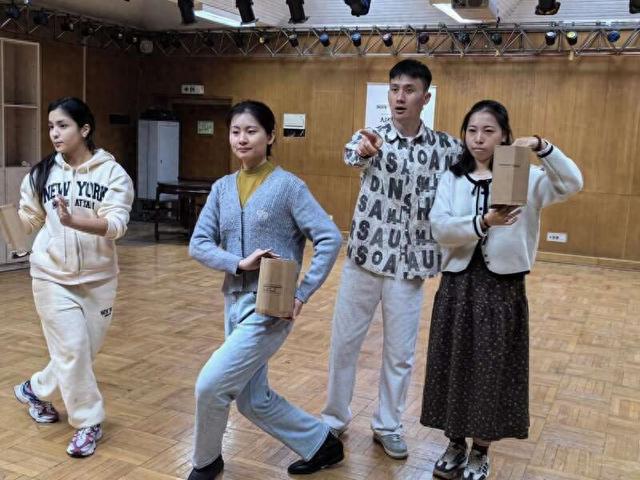
北京市曲剧团与6所高校社团结对共建
Zhong Guo Qing Nian Bao· 2026-01-20 07:49
Group 1 - The core initiative is the "Big Group and Small Group Hand in Hand" project, which aims to connect municipal art troupes with university art societies in Beijing, set to launch in 2025 [1][8] - The project involves collaboration between the Beijing Quju Troupe and six universities, including Beijing Technology and Business University and China Agricultural University, focusing on traditional cultural education [1][8] - Notable instructors include first-level actor Chen Hongjing and second-level actors Wang Yu and Du Xiaotao, who will provide specialized training to nearly 90 university students [1][8] Group 2 - Training sessions include performances from classic works such as "Longxu Gully" and "Teahouse," allowing students to experience the charm of Beijing Quju [3][6] - Students from Beijing Information Science and Technology University engaged in a deep exploration of "Yellow Leaves in the Red Mansion," enhancing their understanding of both performance skills and literary context [3][6] - The initiative is seen as a successful exploration of collaborative education between municipal art troupes and universities, contributing to the preservation of traditional culture [8]

校校携手聚合力 党建引领促育人
Xin Lang Cai Jing· 2026-01-19 17:08
Group 1 - The core idea of the article is the collaboration between Hefei Luyang Experimental Primary School and Anhui University of Arts to enhance education through party-building activities and resource sharing [1] - The two institutions aim to promote the integration of higher education artistic resources into primary education, particularly in moral and aesthetic education, using a "big hand holding a small hand" model [1] - Teachers from both schools exchanged insights on the spirit of the 20th National Congress of the Communist Party, emphasizing the integration of these principles into daily teaching practices [1] Group 2 - The collaboration includes activities such as guiding drama clubs and developing aesthetic education courses, indicating a commitment to exploring new paths for collaborative education [1] - Participants visited the Anhui Huangmei Opera Research Room and watched a red drama titled "Choice," which served as an artistic experience for party education [1] - The partnership is positioned as a new platform for school cooperation, with plans for ongoing collaboration in various educational aspects [1]
第22届新解放教育讲坛举行 汇聚合力共筑学生健康生态
Jie Fang Ri Bao· 2026-01-17 03:09
Group 1 - The core theme of the 22nd New Liberation Education Forum is "Building a Healthy Ecosystem for Students," focusing on collaborative education and prioritizing health for children's growth [1] - The forum gathered representatives from education, healthcare, and media sectors to discuss practical paths for ensuring the health and well-being of children and adolescents [1] - The event was guided by the Shanghai Municipal Education Commission and involved various educational institutions and media outlets, aiming to spread quality health education concepts to a broader audience [1] Group 2 - Educators from different educational stages shared practical examples of health education, emphasizing the integration of health knowledge into daily activities through play in kindergartens, family-school collaboration in primary schools, and innovative health education systems in secondary schools [2] - A keynote report highlighted current health issues faced by children and adolescents, such as myopia, obesity, and psychological adjustment, along with scientific intervention suggestions and the importance of integrating medical resources with education [2] - A cross-disciplinary dialogue addressed the responsibilities of schools and families in maintaining student health during holidays, advocating for proactive health guidance and the establishment of home-school collaboration mechanisms [3]
三个视角,看教育科技人才一体发展(深聚焦)
Ren Min Ri Bao· 2026-01-11 00:05
Group 1: Education Technology Talent Development - The topic of "education technology talent" has become a focal point, with practical examples showing how education, technology, and talent can support and advance each other [1] - Shanghai Jiao Tong University has established a unique "Huawei Class" to cultivate software talent, connecting academic research with industry needs [2][3] - The "Huawei Class" features a three-stage training path for graduate students, emphasizing collaboration between academic and industry mentors [3] Group 2: Successful Case Studies - A professor at Nanjing Medical University successfully transitioned a new drug to commercialization, aided by the Jiangsu Regional Technology Transfer Center [5][6] - The Jiangsu center provides comprehensive support for technology transfer, including funding and risk management strategies [7] - The center has facilitated numerous collaborations between universities and companies, resulting in significant technology transfers and innovations [9] Group 3: University-Industry Collaboration - Shenzhen Polytechnic University emphasizes hands-on experience for students, integrating academic learning with real-world projects in collaboration with industry [11][12] - The university aligns its curriculum with Shenzhen's industrial needs, focusing on interdisciplinary programs that address core industry demands [12][13] - Shenzhen's rapid establishment of new universities aims to enhance local education resources and support technological innovation [13][14] Group 4: Government Support and Initiatives - The Shenzhen government has invested significantly in research funding and infrastructure to support higher education and innovation [14] - Initiatives include granting universities autonomy in talent recruitment and establishing research platforms to foster collaboration [14] - The city aims to create a virtuous cycle of talent development and technological innovation through comprehensive reforms in higher education [14]
三个视角 看教育科技人才一体发展(深聚焦)
Ren Min Ri Bao· 2026-01-10 22:03
Group 1: Education Technology Talent Development - The topic of "education technology talent" has become a focal point, with practical examples showing how education, technology, and talent can support and advance each other [1] - Shanghai Jiao Tong University has established a unique "Huawei Class" to cultivate software talent, connecting academic research with industry needs [2][3] - The "Huawei Class" features a three-stage training path, emphasizing collaboration between academic and industry mentors [3] Group 2: Successful Case Studies - A professor at Nanjing Medical University successfully transitioned a new drug to commercialization, aided by the Jiangsu Regional Technology Transfer Center [5][6] - The Jiangsu center provides comprehensive support for technology transfer, including funding and risk management strategies [7][9] - The center has facilitated numerous collaborations between universities and companies, resulting in significant technology transfers and innovations [9] Group 3: Industry-Academic Collaboration in Shenzhen - Shenzhen Polytechnic University emphasizes practical experience, allowing students to engage in real-world projects from their first year [11][12] - The university aligns its curriculum with Shenzhen's industrial needs, fostering a sustainable innovation ecosystem [12][13] - Shenzhen's rapid establishment of new universities aims to address the gap in high-quality educational resources compared to other major cities [12][14] Group 4: Government Support and Future Plans - The Shenzhen government has invested significantly in research funding and infrastructure to support higher education and innovation [14] - Future plans include comprehensive reforms in educational methods and management to enhance collaboration between universities and industries [14]
融课融智融情!长沙大同二小送教龙山五小
Xin Lang Cai Jing· 2025-12-27 15:38
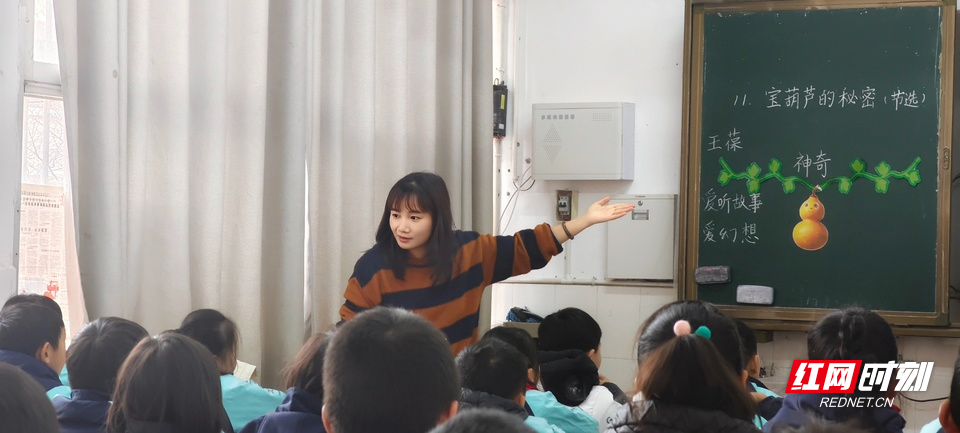
Core Viewpoint - The collaboration between Changsha Datong Second Primary School and Longshan County Fifth Primary School aims to deepen inter-school cooperation and promote shared educational resources through cross-disciplinary teaching and exchange activities [1][4]. Group 1: Event Overview - The exchange activity took place from December 25 to 26, where a team of key teachers from Datong Second Primary School visited Longshan County Fifth Primary School [1]. - Datong Second Primary School donated sports equipment worth over 3,000 yuan to support the development of physical education activities at Longshan County Fifth Primary School [1]. Group 2: Teaching Activities - The highlight of the exchange was the cross-disciplinary teaching demonstration, where a third-grade lesson on "The Secret of the Treasure Gourd" was taught, integrating drama education and creative writing to enhance students' language understanding and imagination [3]. - A unique physical education class titled "Nezha's Intelligent Awakening" was presented, combining physical training with cognitive challenges through situational games, emphasizing the integration of physical and mental development [4]. Group 3: Educational Philosophy and Future Collaboration - Teachers from both schools engaged in in-depth discussions on teaching design and implementation from a cross-disciplinary perspective, emphasizing student-centered teaching and the breaking down of subject boundaries [4]. - The principal of Longshan County Fifth Primary School expressed a desire for continued collaboration, focusing on cross-disciplinary teaching and joint teacher training, aiming to inject new vitality into urban-rural educational development [4].
“双高合作”新篇章!东大“未来科学教育行动计划”落地九中
Yang Zi Wan Bao Wang· 2025-12-27 00:30
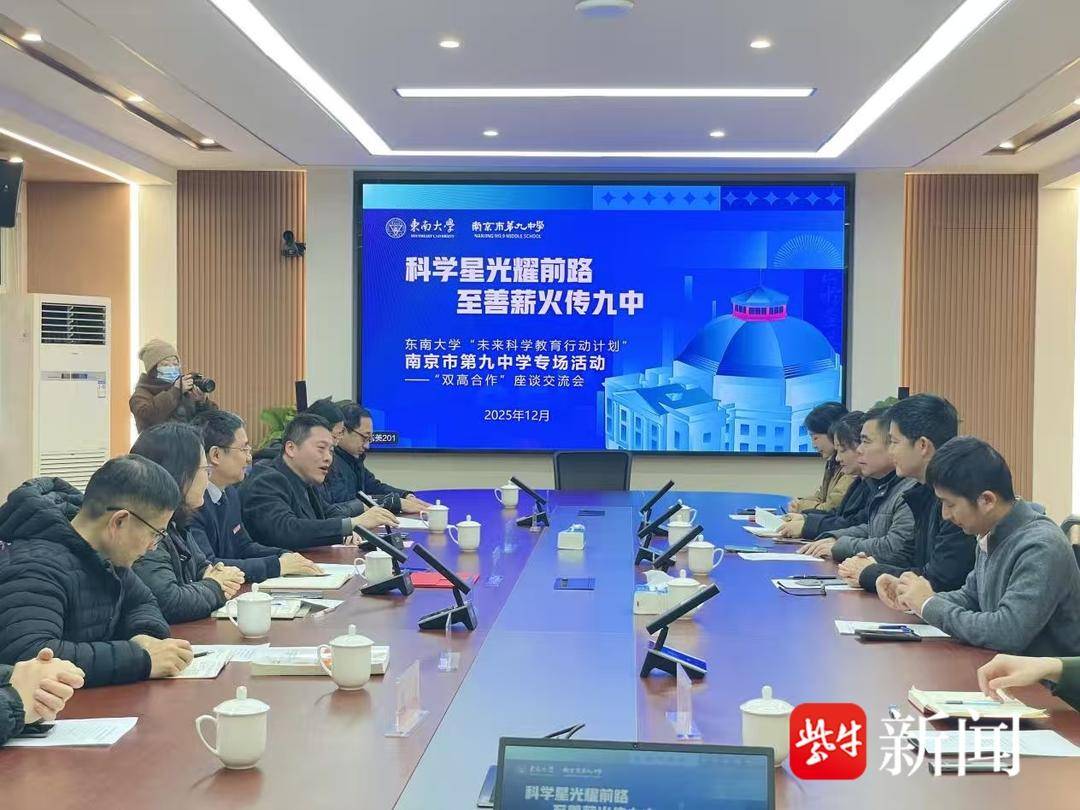
Group 1 - The core event was the successful launch of the "Future Science Education Action Plan" by Southeast University at Nanjing No. 9 Middle School, aimed at enhancing collaborative innovation in talent cultivation [1][6] - The plan includes tailored educational programs for students, such as access to laboratory resources, customized university preparatory courses, and pathways to research projects, designed to broaden students' scientific perspectives and enhance their innovative capabilities [6][12] - The appointment of Professor Pan Yufeng as the science vice principal of Nanjing No. 9 Middle School signifies a formal integration of Southeast University's resources into the educational process, promoting a seamless connection between higher education and basic education [8][12] Group 2 - The long-standing collaboration between the two institutions dates back to 1995 when Nanjing No. 9 Middle School became an affiliated school of Southeast University, with ongoing joint initiatives like the "Dream Pursuer" project [11] - Recent activities included high school students visiting Southeast University's key laboratories and engaging in research activities, which have fostered a strong connection between the two educational levels [11] - The event marks a new phase in their partnership, focusing on the co-construction and sharing of quality educational resources, and aims to establish an integrated training system to nurture innovative talents for future technological advancements [12]
构建医疗卫生强基工程全链条人才培养机制 推进健康中国建设
Jing Ji Guan Cha Wang· 2025-11-27 22:54
Core Viewpoint - The rural revitalization strategy emphasizes the importance of healthcare services as a core pillar for improving the quality of life in rural areas, addressing the challenges faced by rural healthcare systems, and enhancing the overall development process of rural revitalization [1][11]. Group 1: Talent Development Mechanisms - Targeted training is essential for building a healthcare workforce in rural areas, addressing issues of recruitment and retention by aligning training with actual job demands [2]. - A comprehensive training model should focus on practical skills relevant to rural healthcare needs, including common disease management, public health, and communication skills with local residents [2][3]. - Establishing a multi-faceted collaborative education ecosystem involving educational institutions, healthcare organizations, and government bodies is crucial for effective talent cultivation [3][4]. Group 2: Continuous Learning and Capacity Building - A full-cycle empowerment system is necessary to ensure the quality of rural healthcare services, encompassing pre-employment training, on-the-job training, and career advancement opportunities [5][6]. - On-the-job training should be tailored to local healthcare needs, combining general training with personalized modules to enhance professional skills [6]. Group 3: Retention Strategies - A multi-dimensional retention mechanism is vital for ensuring healthcare professionals remain in rural areas, focusing on salary, career development, work environment, and social recognition [7][8][9]. - Improving working conditions and providing adequate resources and support can enhance job satisfaction and retention rates among rural healthcare workers [8]. Group 4: Cultural and Community Engagement - Creating a supportive cultural environment is essential for fostering a sense of belonging and commitment among healthcare professionals in rural areas [10]. - Promoting a culture of service and excellence in rural healthcare can motivate professionals to engage in community health initiatives and volunteer services, enhancing their sense of purpose and recognition [10]. Group 5: Systematic Approach to Talent Management - The construction of a systematic talent cultivation mechanism is a comprehensive effort that requires precise supply through targeted training, collaborative empowerment, continuous capacity building, retention support, and cultural guidance [11].