
物流运输

Search documents
广东原尚物流股份有限公司关于公司银行账户资金解除冻结的公告
Shang Hai Zheng Quan Bao· 2025-12-02 19:12
登录新浪财经APP 搜索【信披】查看更多考评等级 今日,公司通过银行查询获悉上述被冻结的资金已经全部解除冻结,现将相关情况公告如下: 一、本次资金解除冻结的情况 因公司与广东华辉建设有限公司(以下简称"华辉建设")的建设工程纠纷案,公司在中国农业银行广州 东荟城支行开立的一般户被冻结3,000万元。近日,公司与华辉建设已就本案达成和解,广东省广州市 黄埔区人民法院作出了(2025)粤0112民初22349号《民事调解书》。双方正按照上述民事调解书内容 执行。 公司今日获悉上述被冻结的资金已经全部解除冻结,具体情况如下: ■ 证券代码:603813 证券简称:*ST原尚 公告编号:2025-088 广东原尚物流股份有限公司 关于公司银行账户资金解除冻结的公告 本公司董事会及全体董事保证本公告内容不存在任何虚假记载、误导性陈述或者重大遗漏,并对其内容 的真实性、准确性和完整性承担个别及连带责任。 广东原尚物流股份有限公司(以下简称"公司")前期部分银行账户存在被冻结的情况,具体内容详见公 司于2025年4月4日披露的《原尚股份关于部分银行账户资金被冻结的公告》(公告编号:2025-020)。 本次银行账户资金被冻 ...

德邦物流股份有限公司关于为控股子公司提供担保的进展公告
Shang Hai Zheng Quan Bao· 2025-12-02 18:13
Group 1 - The company has provided guarantees for its subsidiaries to support their operational needs, with a total guarantee amount of RMB 179,494.14 million as of November 30, 2025, which accounts for 21.21% of the company's latest audited net assets [11] - The guarantees include amounts for various subsidiaries, such as RMB 32.25 million for Changsha Depo Logistics, RMB 107.49 million for Hefei Depo Freight Forwarding, and RMB 205.22 million for Nanjing Depo Logistics, among others [2][7] - The board of directors has approved a guarantee limit of up to RMB 700 million for 2025, with specific allocations for subsidiaries based on their asset-liability ratios [3][10] Group 2 - The company has been authorized to approve specific guarantee matters within the set limit without needing to convene additional board or shareholder meetings [4] - All guaranteed subsidiaries are not listed as dishonest executors, indicating a stable credit status [6] - The guarantees are deemed necessary and reasonable for the subsidiaries' production and strategic development, with the company maintaining effective control over their operational risks [9]

持续推进估值提升计划落地 传化智联完成2393万股回购股份注销
Zheng Quan Shi Bao Wang· 2025-12-02 14:16
Group 1 - The core announcement from the company is the completion of the share repurchase and cancellation process, with 23.94 million shares canceled, representing 0.86% of the total shares before cancellation, reducing the total share capital from 2.788 billion shares to 2.764 billion shares [1] - The repurchased shares were initially intended for "equity incentive plans or employee stock ownership plans," but the purpose was changed to "cancellation and reduction of registered capital" during board meetings held on July 3 and October 10 [1] - The share repurchase and cancellation is part of the company's "Valuation Enhancement Plan," which emphasizes shareholder returns and includes various strategic measures such as deepening core business, innovation, and enhancing external communication [1] Group 2 - The company is a pioneer in the domestic highway port model, operating the largest highway port network in the country with 72 projects across 21 provinces, covering an area of 13.998 million square meters [2] - The company focuses on functional chemicals and new materials, achieving leading positions in several niche markets, including being the largest producer of textile chemicals in China and the second largest globally [2] - The company has implemented strategic transformations across three dimensions: strategy, operations, and management, with a focus on upgrading the logistics sector and enhancing cash flow [2] Group 3 - Financial results indicate significant progress in the company's high-quality operational development strategy, with Q3 2025 revenue reaching 6.614 billion yuan, a year-on-year increase of 2.55%, and net profit attributable to shareholders rising by 345.35% to 128 million yuan [3]

【省国资委】陕西国企中标合同金额超4000万元物流服务项目
Shan Xi Ri Bao· 2025-12-01 22:44
Core Viewpoint - Shaanxi Jiaokong Logistics Co., Ltd. has successfully won a bid for a transportation service project involving 120,000 tons of large alloy products, with a total contract value exceeding 40 million yuan, marking a significant breakthrough in market expansion [1] Group 1: Project Details - The project features a long service period, strict transportation standards, and service plans that closely align with production and sales dynamics, showcasing the company's comprehensive capabilities in resource integration, transportation assurance, and full-process services [1] - This project will lay a solid foundation for Shaanxi Jiaokong Logistics to expand into the logistics market of central enterprises and provincial state-owned enterprises [1] Group 2: Industry Impact - The project is expected to significantly promote the optimization of the regional logistics system and enhance the resilience and security of the industrial supply chain [1] - It supports the company's strategic transformation from "service logistics" to "empowering industries" [1] Group 3: Company Strategy - The company plans to further strengthen its operational foundation, innovate service models, and fully promote the high-quality implementation of the project [1] - There is an emphasis on actively expanding diversified market layouts and accelerating the transformation and upgrading of logistics business for state-owned enterprises [1]
宏观经济周报:服务业与制造业的共赢逻辑-20251129
Guoxin Securities· 2025-11-29 11:53
Group 1: Economic Structure and Trends - The service and manufacturing sectors are not in opposition but rather have a symbiotic relationship, as evidenced by the increase of over 7 percentage points in the service sector's share of global GDP from 1980 to 1996, while manufacturing remained stable[1] - From 2002 to 2019, both sectors exhibited a synchronized trend of rise and fall, indicating their interdependence rather than a zero-sum game[1] - Manufacturing acts as an incubator for service industries, with many productive services like logistics and R&D initially emerging from within manufacturing firms[1] Group 2: Support and Demand Dynamics - The large service sector constitutes the core consumer base for manufacturing products, creating significant demand for items ranging from medical equipment to educational materials[2] - Services play a crucial role in enhancing human capital, which is essential for the quality of manufacturing inputs, thereby supporting innovation and breakthroughs in the manufacturing sector[2] - The current economic transition in China highlights the need for high-quality development in manufacturing to create more opportunities for productive services like R&D and digital services[2] Group 3: Current Economic Indicators - Fixed asset investment has decreased by 1.70% year-on-year, indicating a contraction in investment activities[4] - Retail sales have shown a modest increase of 2.90% year-on-year, reflecting some resilience in consumer spending[4] - Exports have declined by 1.10% year-on-year, suggesting pressure on external demand[4] - The M2 money supply has grown by 8.21%, indicating a continued expansionary monetary policy[4]
怀化国际陆港铁路专用线正式接轨
Sou Hu Cai Jing· 2025-11-29 10:37
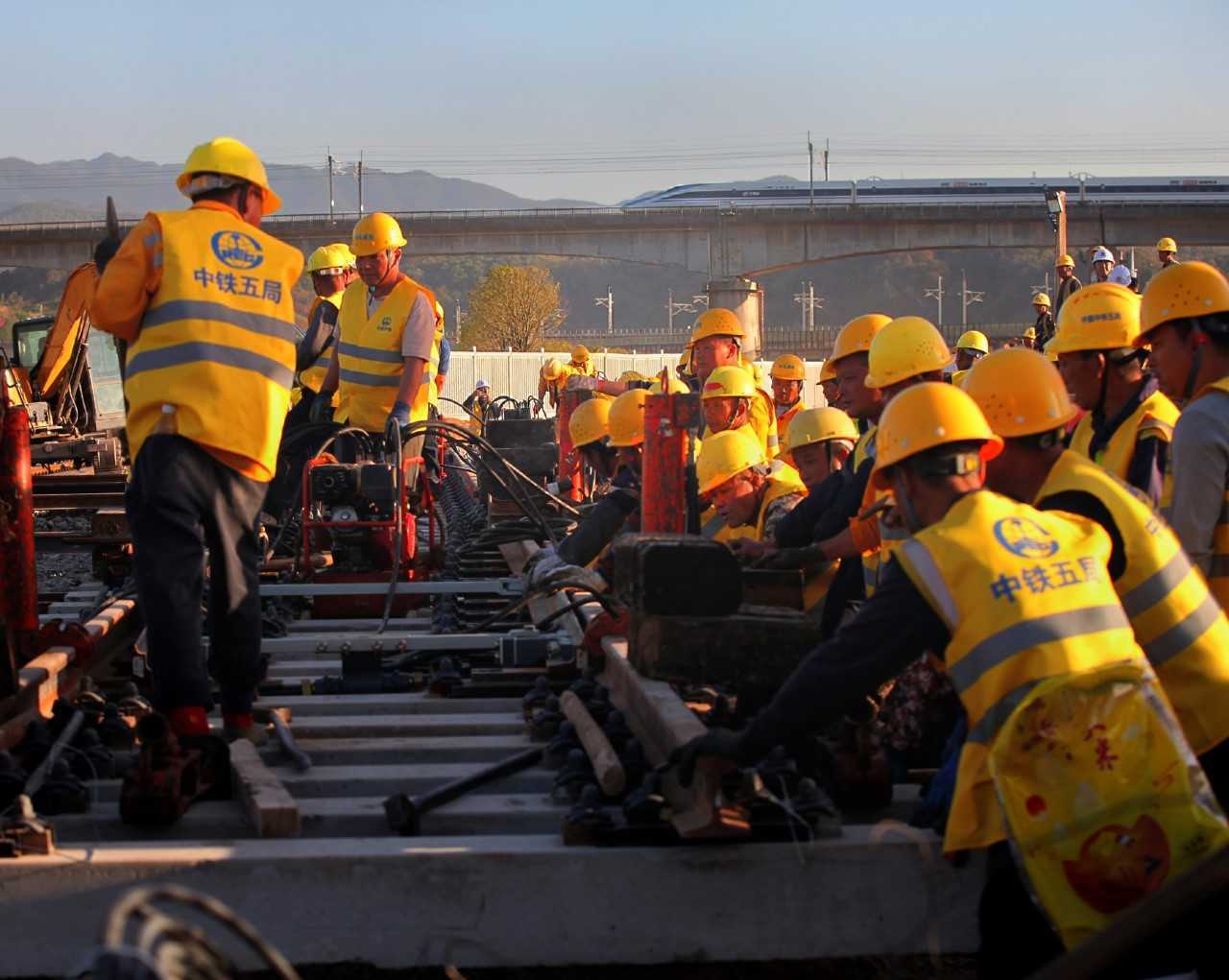
来源:怀化铁路公安处 通讯员:刘亚平 杨谢君 11月28日下午,怀化国际陆港铁路专用线在怀化西站正式接轨,标志着这条重要的国际运输线又迈出了新的一步。 怀化国际陆港发展有限公司起初是租用怀化铁路场地建成海关监管区,运用铁路西货场集装箱专用线开行跨境铁路班列,在运输交织上存在诸多不便。陆港 专用线的接轨开通,将进一步增强这条国际运输线的快捷高效。 怀化国际陆港是湖南省怀化市建设的国家级物流枢纽,2022年纳入西部陆海新通道"13+2"省际协作机制,初步形成湘鄂赣三省东盟货物集结中心。 这个陆港通过铁海联运对接北部湾港、广州港及中老铁路等国际通道,覆盖全球69个国家,每年平均开行国际班列1000多列,货值近60亿元。 ...

推动中越跨境物流发展
Shang Wu Bu Wang Zhan· 2025-11-29 04:47
越南《税务、海关在线》11月27日报道,11月26日,在越南建设部部长陈宏明和广西壮族自治区主 席韦韬的见证下,越南国家海事总公司(VIMC)和中国北部湾港集团签署了合作意向书。 (原标题:推动中越跨境物流发展) 双方将研究并开辟新的直航集装箱航线,增加越南海防、岘港、盖梅港与中国钦州、防城、北海港 之间的班次,并扩大服务范围。旨在优化供应链,促进双边贸易和货物转运至国际市场。 ...
亚洲速运公布中期业绩 净利62.7万港元 同比减少44.66%
Zhi Tong Cai Jing· 2025-11-28 14:41
亚洲速运(08620)公布截至2025年9月30日止六个月中期业绩,收益约1.64亿港元,同比减少6.81%;净利 62.7万港元,同比减少44.66%;每股盈利0.12港仙。 ...
炬申股份(001202) - 2025年11月27日投资者关系活动记录表
2025-11-27 12:38
Group 1: Investor Relations Activities - The company conducted an analyst meeting and a specific object survey on November 27, 2025 [2] - Participants included analysts from various securities firms and individual investors [2] - The analyst meeting was held online, while the specific object survey took place in the company meeting room [2] Group 2: Company Operations and Financials - The company is currently using some renewable energy transportation and handling equipment, including electric forklifts and electric traction vehicles [3] - The total amount intended to be raised from the convertible bond issuance is up to RMB 380 million, with RMB 266 million allocated for the "Guinea transshipment project" and RMB 114 million for "supplementing working capital and repaying bank loans" [3] - The company aims to enhance its intrinsic value through operational improvements and maintain good communication with investors to convey its investment value [3] Group 3: Financial Management and Risk Mitigation - The company's investment expenditures primarily focus on logistics and warehousing facility construction, including land acquisition and transportation equipment [3] - The purpose of foreign exchange hedging is to mitigate potential adverse impacts of exchange rate fluctuations on overall performance [3] - Currently, the company does not have plans for equity incentives, but will disclose any future plans in accordance with relevant laws and regulations [3]
深圳货运枢纽能级持续跃升 空港吞吐量双双增长
Ren Min Wang· 2025-11-27 09:56
Core Insights - Shenzhen aims to establish itself as an international comprehensive transportation hub, focusing on infrastructure upgrades, multi-modal transport innovation, and policy service optimization to support the real economy and high-quality foreign trade development [1] Infrastructure Enhancement - Shenzhen is accelerating major project construction at key nodes such as air, sea, and rail ports to strengthen logistics hardware and alleviate transportation bottlenecks [2] - The total area of logistics facilities at Shenzhen Airport has reached 1.2 million square meters, significantly improving cargo handling efficiency [2] - Shenzhen Airport has opened 43 international and regional routes, covering 5 continents and 27 countries, with a projected cargo throughput of 188.1 thousand tons in 2024 [2] - Shenzhen Port has established 75 berths for vessels over 10,000 tons and 47 dedicated container berths, with 275 international shipping routes covering 6 continents [2] Transportation Structure Optimization - The Pingyan Railway renovation project is crucial for optimizing the transportation structure, enhancing the connection between Yantian Port and the national railway network [3] - The Shenzhen International Comprehensive Logistics Hub is set to become Asia's largest "road-rail-sea" multi-modal transport center [3] - New breakthroughs in land transport include the launch of international rail-sea intermodal trains, saving 20 days compared to traditional sea transport [3] Innovation and Collaboration - Shenzhen is driving logistics development through multi-modal transport integration, smart logistics, and regional collaboration, enhancing logistics efficiency and trade facilitation [4] - The sea-rail intermodal system has been improved, with 27 inland ports opened, covering South China, Central China, and Southwest China [4] - The first international rail-road intermodal train from China to Kyrgyzstan has been successfully launched, improving efficiency by over 30% [5] Smart Logistics and Policy Optimization - The first smart international cargo station in China has been launched, utilizing a network of drones, ground stations, and underground vehicles to process over 30,000 packages daily [5] - The "Guangdong-Hong Kong-Macao Greater Bay Area Combined Port" reform has opened 49 routes, achieving a 30.57% year-on-year increase in container throughput [5] - A pilot tax refund policy at Yantian Port allows foreign trade companies to receive refunds 4 to 6 weeks in advance, boosting transshipment business by 15% [5] Future Outlook - Shenzhen will continue to enhance its global logistics resource allocation capabilities, supporting the integrated development of the Guangdong-Hong Kong-Macao Greater Bay Area and the Belt and Road Initiative [6]