高等教育

Search documents
江苏南京秦淮区市场监管局与高校联合构建特种设备安全治理新模式
Zhong Guo Zhi Liang Xin Wen Wang· 2025-12-29 04:57
转自:中国质量报 围绕"三多三难"痛点 探索校地联动新路径 江苏南京秦淮区市场监管局与高校联合构建特种设备安全治理新模式 □ 王 鹏 刘兼唐 今年以来,江苏省南京市秦淮区市场监管局联合南京航空航天大学(以下简称"南航"),针对高校特种 设备安全管理"三多三难"(设备种类多、使用主体多、动态变化多,底数摸清难、责任落实难、风险管 控难)痛点,创新构建校地一盘棋、上下一体化、创新一揽子"三个一"安全管理新模式,为高校特种设 备安全治理提供了可复制的实践经验。 "校地一盘棋"破解分散困局,从"九龙治水"到"攥指成拳"的协同共治。南航涵盖压力容器、电梯、起重 机械等五大类120台特种设备,服务于航空航天领域前沿探索等关键科研场景,涉及6个学院28个实验场 所,具有跨学科使用、设备变更频繁等特点,曾面临底数不清、责任难落、风险难控等困境。此次校地 双方深度联动,以党建引领聚合力,通过支部联建、机制联创、队伍联合,建立常态化沟通机制,打破 了行政监管和高校管理的条块分割,凝聚起覆盖特种设备安全管理全方面、全链条的不间断合力,切实 筑牢红色安全防线。 "上下一体化"压实责任链条,从"外部监管"到"内生驱动"的高校解法。高校 ...
北斗定位厘米级精准 哈尔滨工程大学千名师生铲雪造“舰”
Xin Lang Cai Jing· 2025-12-29 03:47
Core Viewpoint - The event at Harbin Engineering University involved over 1,200 students and faculty members creating a giant snow sculpture of the "Fujian" aircraft carrier and three carrier-based aircraft, showcasing teamwork and engineering skills [1][3]. Group 1: Event Details - The snow sculpture project took place on December 28, with participants working for about one and a half hours to complete the 230 meters long and 112 meters wide design [1][3]. - The project was characterized by a collaborative effort, with sounds of shovels and brooms creating a lively atmosphere during the construction [1][3]. Group 2: Design and Technology - The design process began in September and involved over 60 iterations, utilizing a top-down three-dimensional composition to enhance visual impact [3]. - The final design included more than 1,300 feature points, representing a significant advancement in both visual representation and engineering practice [3]. - The CAD drawing team played a crucial role in extracting key contours and setting positioning coordinates for the construction, ensuring precision in the final output [3][5]. Group 3: Precision and Technology Utilization - The project employed Beidou satellite positioning technology to achieve centimeter-level accuracy in placing over 1,300 feature points on the construction site [5]. - Teams were organized into ten groups, each led by a graduate student, to accurately mark the designated points using real-time differential positioning technology [5].


北京发布“十条措施”,支持高校马克思主义学院高质量发展
Xin Jing Bao· 2025-12-29 01:35
Core Insights - The Beijing Higher Education Marxism Academy is undergoing significant reforms aimed at enhancing the quality of ideological and political education in universities, with a focus on integrating various disciplines and resources [1][2][4] Group 1: Institutional Developments - The establishment of the "Beijing School Ideological and Political Course Multidisciplinary Collaborative Innovation Center" aims to leverage resources from political science, economics, and law to support Marxist theory education and talent cultivation [2][3] - The center has initiated six key actions to enhance the quality of Marxist education, including sharing theoretical resources and promoting interdisciplinary collaboration among educators [2][4] Group 2: Curriculum and Teaching Innovations - A series of public courses titled "China's Governance" will be launched, featuring prominent scholars to deepen the understanding of core governance concepts [3] - The development of integrated teaching resources, including teaching guides and student reading materials, is underway to support educators [3] Group 3: Faculty Development - The proportion of senior faculty members and those with doctoral degrees in the ideological and political education sector is notably high, with 56% holding senior titles and 80% possessing doctoral degrees [4] - Initiatives are being implemented to enhance the teaching and research capabilities of new and young faculty members, including cross-institutional exchanges and a structured mentorship system [5] Group 4: Student Development - Measures are being introduced to improve talent cultivation for students in Marxist theory programs, including the establishment of internship opportunities to apply theoretical knowledge in practice [6] - The city will enhance the integration of undergraduate and graduate education in Marxist theory, aiming for a more cohesive educational experience [6]
山东医学高等专科学校:以馆为媒 开拓美育浸润式教学新实践
Xin Lang Cai Jing· 2025-12-28 22:35
Core Viewpoint - Shandong Medical Higher Vocational School is actively exploring effective paths for aesthetic education, emphasizing the cultivation of humanistic qualities and aesthetic interests among medical students through collaboration with various cultural venues [1][5]. Group 1: Development of Aesthetic Education - The school collaborates with five cultural venues, including the Linyi Museum and the Yinque Mountain Han Tomb Bamboo Slip Museum, to provide diverse aesthetic education resources for medical students [1][5]. - Aesthetic education is integrated into the curriculum through courses such as "Aesthetic Codes in Cultural Relics" and "Military Science in Bamboo Slips," enhancing students' artistic appreciation and cultural identity [2][5]. Group 2: Practical Teaching and Student Experience - The school utilizes local cultural resources for practical teaching, allowing students to engage with history and traditional culture through museum visits, enhancing their aesthetic experiences [3][5]. - Students are encouraged to explore the historical stories and cultural values behind artifacts, integrating knowledge from various disciplines [3]. Group 3: Cultural Activities and Atmosphere - A series of cultural activities, including museum study practices and calligraphy competitions, are organized to enrich students' extracurricular lives and integrate aesthetic education into daily learning [4][5]. - Activities like "Han Culture Experience Day" allow students to immerse themselves in traditional culture, fostering a deeper appreciation for their heritage [4]. Group 4: Impact and Future Directions - The aesthetic education initiatives have led to significant improvements in students' aesthetic literacy and cultural confidence, with over 30 students winning awards in various competitions [5]. - The school aims to continue leveraging collaborations with cultural venues to innovate and deepen aesthetic education reforms, contributing to the sustainable development of aesthetic education in higher education [6].
傅诚刚:海南需重点打造能吸引全球投资和人才的“名片经济”
Cai Jing Wang· 2025-12-28 16:16
Core Viewpoint - The Sanya International Forum emphasizes the future positioning of Hainan Free Trade Port and new opportunities in Sanya, highlighting the need for offshore finance development to align with the real economy through institutional supply and ecological construction [1]. Group 1: Development Strategies - Hainan should leverage its proximity to the mainland economy while also looking globally to facilitate the smooth flow of capital and talent [3]. - The focus should be on creating a "brand economy" that attracts global investment and talent, including hosting top international events and developing education, healthcare, and offshore service trade [3]. - Utilizing free trade port policies to explore new fields such as bulk commodity spot trading is essential for Hainan's development [3]. Group 2: International Financial Centers - Global offshore centers can be categorized into virtual and physical types, with notable examples including Hong Kong and Singapore as established financial hubs [4]. - Middle Eastern financial centers, such as Dubai and Abu Dhabi, follow a phased development strategy, emphasizing the importance of a supportive economic environment [5][6]. - Key characteristics of successful financial centers include independent regulatory powers, common law application, full foreign ownership, and low tax rates [7][12]. Group 3: Economic Integration and Talent Attraction - Hainan's development must focus on integrating with the mainland economy while also appealing to international markets [13]. - The region should aim to create a high-quality living environment that matches the lifestyle of high-income international professionals [13]. - Attracting global talent requires a diverse economic landscape and high-end service industry development to enhance Hainan's global brand influence [15]. Group 4: Education and Infrastructure - Hainan should invest in international higher education and vocational training to support the needs of professionals in the free trade port [17]. - The development of financial and trade infrastructure is crucial for enhancing connectivity and influence on a global scale [18].
新时代高校“金融强国”育人共同体成立
Xin Lang Cai Jing· 2025-12-28 14:16
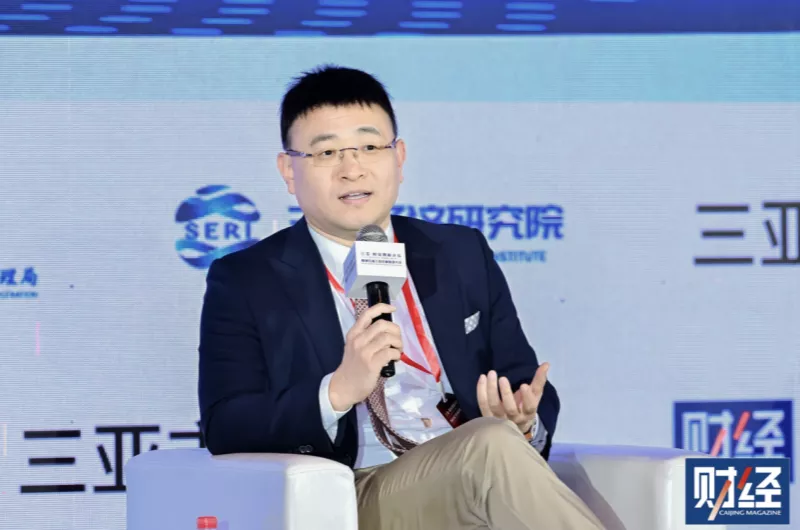
中国青年报客户端讯(中青报·中青网记者 张茜)12月27日,新时代高校"金融强国"育人共同体成立大 会暨"走好中国特色金融发展之路"论坛在京召开。据悉,中央财经大学联合140余所高校,60余家骨干 企业、行业组织、行业媒体联合成立了新时代高校"金融强国"育人共同体。 中央财经大学校长马海涛表示,共同体在教育部思想政治工作司、北京市委教育工委共同指导下,由中 央财经大学牵头,联合高校、研究机构、行业组织、用人单位、行业媒体共同发起成立。希望共同体单 位在前期充分沟通的基础上,秉持"思想引领、党建领航、强师铸魂、文化融汇、聚力赋能、智联融 合、专业建功"的综合育人理念,积极构建政、产、学、研、媒深度融合的综合性育人联盟,着力打造 新时代金融人才培养的新范式。 责任编辑:邱晨辉 梁国胜 流程编辑:郭艳丽 原标题:新时代高校"金融强国"育人共同体成立 来源:中国青年报客户端 ...
金融人工智能北京市重点实验室揭牌
Xin Lang Cai Jing· 2025-12-28 14:16
中国青年报客户端讯(中青报·中青网记者 张茜)近日,中央财经大学举办主题为"AI领航·智赋财 经"的"人工智能+"大会,会上举行了"金融人工智能北京市重点实验室"揭牌仪式。据悉,该实验室由中 央财经大学与北京航空航天大学联合共建,其成功获批将为深化"人工智能+财经"领域的学科建设、科 研创新与人才培养提供有力支撑。 责任编辑:邱晨辉 梁国胜 同时,大会发布了《中央财经大学"人工智能+"行动计划》,该计划将系统推动中央财经大学从数字教 育向"人工智能+"转型升级。 中央财经大学校长马海涛指出,当前人工智能已成为重塑高等教育生态、重构财经高等教育发展逻辑的 核心引擎,我们不仅要回答好"教育强国,高校何为",更要回答好人工智能时代"金融强国,财经何 为"这一重大命题。 流程编辑:郭艳丽 原标题:金融人工智能北京市重点实验室揭牌 来源:中国青年报客户端 ...
一名“全球前2%科学家”,栽在AI手里
虎嗅APP· 2025-12-28 11:07
Core Viewpoint - The article discusses the increasing infiltration of AI into the academic sphere, highlighting a recent incident at the University of Hong Kong where a professor resigned due to the use of AI-generated fake references in a published paper [4][5]. Group 1: Incident Overview - A paper on Hong Kong's fertility rate published in the journal "China Population and Development Studies" was found to have cited 24 AI-generated fictitious references out of a total of 61 [4]. - The University of Hong Kong conducted an investigation, confirming the use of AI-generated false references, leading to the paper's retraction and the resignation of the paper's corresponding author, Ye Zhaohui [4][5]. Group 2: Academic Pressure and AI Ethics - The incident reflects a broader issue of academic misconduct related to AI, with similar cases reported globally, including large-scale AI cheating incidents at top universities in South Korea and the U.S. [5][6]. - The pressure to publish and produce research quickly has led to unethical practices, as seen in the case of a student with an unusually high number of publications in a single year [6][12]. Group 3: Institutional Responses and Guidelines - Universities worldwide are developing guidelines for AI use in research, with nearly 100 institutions releasing related policies since 2023 [9]. - Tsinghua University issued principles to warn against AI "hallucinations" and the need for multi-source verification to prevent over-reliance on AI [9]. Group 4: Personal Experiences and Reflections - Students express shock at the incident, emphasizing the importance of academic integrity and the need for strict adherence to AI usage guidelines [8][10]. - The article highlights the struggle of researchers to balance the convenience of AI tools with the necessity of maintaining academic standards and integrity [15][16].

西藏藏医药大学入选国家级专业技术人员继续教育基地
Xin Lang Cai Jing· 2025-12-28 00:55
本网拉萨12月27日讯(记者 郑璐 晓勇)近日,记者从西藏藏医药大学获悉,2025年12月,人力资源和 社会保障部办公厅发布《关于设立第十四批专业技术人员继续教育基地有关事项的通知》,根据《通 知》精神,在太原科技大学等20个单位设立第十四批专业技术人员继续教育基地。其中,我区西藏藏医 药大学成功入选。 据悉,西藏藏医药大学是全国唯一单独设置的藏医药大学,也是世界上唯一一所体系完备的藏医药学高 等学府。学校拥有藏医学、藏药学2个一级学科,1个博士点、2个学术硕士学位点、1个专业硕士学位 点,1个中医学(藏医)博士后科研流动站,共有藏医学、藏药学、护理学、市场营销、中(藏)西医 结合、中(藏)药制药6个本科专业。其中,藏医学、藏药学为国家一流本科专业。 截至目前,我区国家级专业技术人员继续教育基地增至5家,其余4家为西藏大学、西藏民族大学、西藏 农牧大学和西藏职业技术学院。 责任编辑:唐朕 ...
2025教育“实干年”,锚定育人根本
Xin Lang Cai Jing· 2025-12-28 00:55
Core Viewpoint - The year 2025 is designated as a "practical year" for education, focusing on the integration of moral education and practical learning to adapt to societal changes and technological advancements [3][4]. Group 1: Education Reform and Development - The education system is actively seeking change, with interdisciplinary collaboration and integration of education and industry becoming the norm, as artificial intelligence reshapes the learning ecosystem [3][4]. - The Ministry of Education has initiated a plan to promote the integrated development of education, technology, and talent, with significant investments in high-level research universities and the establishment of specialized training bases [6][12]. - The establishment of new colleges, such as the Future Technology College and Future Ocean College, aims to create an innovative ecosystem that merges education, research, and industry [4][5]. Group 2: Teacher Education and Quality Improvement - Continuous optimization of teacher training programs is underway, focusing on nurturing high-quality teachers to enhance basic education and support the development of a distinctive Chinese teacher education system [5][21]. - The integration of artificial intelligence into higher education is being emphasized, with initiatives to develop new majors and improve teaching methodologies [5][22]. Group 3: Early Childhood Education - The gradual implementation of free preschool education is expected to alleviate financial burdens on families, with significant reductions in childcare costs reported [10][12]. - The introduction of new regulations, such as the Preschool Education Law, aims to ensure the quality and accessibility of early childhood education [12]. Group 4: Higher Education and Employment - The education system is prioritizing the employment of college graduates, with initiatives to enhance job placement services and create more job opportunities [16][18]. - The integration of practical experience in engineering education is being emphasized, with students participating in real-world projects to enhance their employability [17][19]. Group 5: Vocational Education and Industry Needs - Vocational education is increasingly aligning with industry demands, with initiatives to enhance practical training and collaboration with enterprises [20][22]. - The focus on cultivating high-skilled talent through organized research and practical applications is expected to address key industry challenges and improve workforce readiness [21][22].