
养老护理

Search documents
刺激服务消费19条落地,文旅、养老护理、体育等领域有望受益
Xin Lang Cai Jing· 2025-09-19 08:21
Group 1: Policy Measures and Economic Impact - The Chinese government has introduced 19 measures to stimulate service consumption, aiming to expand domestic demand and enhance economic growth [1][4] - The measures focus on various sectors including culture, sports, education, and healthcare, indicating a comprehensive approach to boost service consumption [4][5] - Analysts believe that these policies will enhance investor confidence in the consumer market and positively impact the A-share market [5][6] Group 2: Service Consumption Growth - In the first eight months of this year, the total retail sales of consumer goods in China grew by 4.6%, while service retail sales increased by 5.1%, indicating a robust growth in service consumption [1] - The People's Bank of China projects that the share of service consumption in per capita household expenditure will reach approximately 46.1% by 2024, suggesting significant growth potential [2] Group 3: Sector-Specific Opportunities - The policy measures emphasize the development of high-quality service supply, including support for the film and animation sectors, and extending operating hours for popular cultural venues [5][6] - The sports industry is highlighted as a key area for growth, with encouragement for hosting international sports events and promoting grassroots sports [7][8] - The aging population presents opportunities in the elder care sector, with a focus on establishing long-term care insurance and improving service quality [9]


河南零工市场首场招聘会明日启幕
Zheng Zhou Ri Bao· 2025-09-19 00:40
Group 1 - The Henan Gig Market officially opened on September 20, providing over 3,500 job positions for job seekers [1] - The first gig job fair, focusing on flexible employment, aims to connect job demand and supply, particularly for key groups like college graduates [1] - The market emphasizes non-full-time, seasonal, and temporary employment needs, offering "one-stop" services for gig workers and employers [1] Group 2 - The job fair will feature over 2,000 gig positions and 1,500 full-time positions across various popular industries, including food service, retail, logistics, and IT [1] - Participating companies include well-known firms such as Haoxiangni Group, Yutong Group, and JD.com, indicating strong corporate interest in the event [2]
月薪过万,今年最热门的行业却招不到人
Hu Xiu· 2025-09-18 10:02
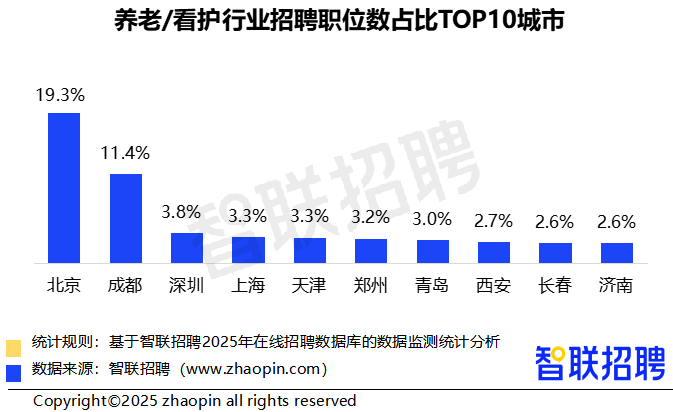
Core Insights - The aging population in China is creating a significant demand for elderly care services, with approximately 310 million people aged 60 and above, accounting for 22% of the total population [1] - The elderly care industry is experiencing a dual growth in job positions and salaries, with caregiver job postings increasing by 54% year-on-year and an average monthly salary of 5720 yuan, up 8% from the previous year [2] Group 1: Job Market and Salary Trends - The elderly care sector is seeing a rise in job vacancies and salaries, particularly in first-tier cities where high subsidy policies are being implemented to attract talent [2][4] - Cities like Guangzhou and Shenzhen are offering substantial one-time employment subsidies for caregivers, with amounts reaching up to 20,000 yuan for experienced workers [5][6] - The average salary for caregivers in first-tier cities can exceed 10,000 yuan, especially with career advancement opportunities [2] Group 2: Challenges Faced by Caregivers - Many young individuals are drawn to the elderly care industry due to high salary prospects but face harsh realities once employed, including physical and emotional stress [8][31] - Caregivers report high workloads, with many working 9 to 12 hours a day, and a significant portion earning less than 4,000 yuan monthly [37] - The job involves challenging tasks such as assisting with personal hygiene and dealing with difficult situations, including the death of residents [22][25][30] Group 3: Workforce Demographics and Retention Issues - The elderly care workforce is aging, with a significant portion of caregivers being over 50 years old, while only 3% are under 30 [50] - Despite the availability of training programs, many graduates choose not to pursue careers in elderly care, leading to a high turnover rate of 40% to 50% [54][56] - The industry faces a "youth gap," as younger workers are needed for their ability to engage with elderly residents and adapt to technological advancements in care [57][58] Group 4: Industry Structure and Profitability - The elderly care industry is characterized by high initial investments and low profit margins, with only 6.4% of institutions reporting profitability [65] - State-owned and insurance-backed enterprises are leading in profitability, often leveraging government resources to reduce operational costs [66][67] - New models, such as "intergenerational care," are emerging to address the challenges posed by a declining birth rate and to create sustainable care environments [69][70]
与上野千鹤子同行,探访日本棚户街的“理想照护”
Di Yi Cai Jing· 2025-09-17 11:42
Core Points - The aging population in Japan, particularly those aged 65 and above living alone, has reached 7 million, highlighting a pressing need for caregiving solutions [1] - The Tokyo valley area has emerged as a practical exploration site for ideal caregiving practices, with various stakeholders collaborating to create a unique care system [1][10] Group 1: Aging Population and Care Needs - Japan's elderly population living alone is projected to continue increasing, necessitating urgent attention to caregiving responsibilities [1] - The valley area in Tokyo has become a focal point for innovative caregiving practices, attracting attention from sociologists and journalists [1][10] Group 2: Caregiving Practices in the Valley - The valley is home to numerous medical and caregiving professionals and volunteer organizations that work together to support the elderly [10][22] - The establishment of home care services, such as the "Bokushiku" nursing station, has been pivotal in meeting the growing demand for in-home care [13][21] Group 3: Unique Care Systems - The valley's care system is characterized by a collaborative effort among various participants, including NPOs, volunteers, and local businesses, creating a supportive environment for the elderly [25][26] - The presence of simple lodgings, known as "shack hotels," provides affordable accommodation for those in need of care, with many residents requiring nursing support [18][21] Group 4: Community and Support - The valley has transformed from a "homeless street" to a "welfare street," showcasing the effectiveness of community collaboration in addressing the needs of vulnerable populations [25] - The integration of care services into daily life, such as medication reminders and financial management, reflects a shift in caregiving responsibilities traditionally held by family members [26]

上海交大昂立股份有限公司关于医养板块民非机构解除合同所涉诉讼事项的进展公告
Shang Hai Zheng Quan Bao· 2025-09-11 19:14
Core Viewpoint - The company is currently involved in a legal dispute regarding the termination of management consulting agreements with several non-profit institutions in the healthcare sector, which may significantly impact its future revenue from this segment [2][3][10]. Group 1: Litigation Background - The lawsuit is in the second instance, with the company’s wholly-owned subsidiary, Shanghai Renxing Health Management Co., Ltd., as the appellant [2]. - The total amount involved in the case is reported as 0 yuan, indicating no direct financial claim is being pursued [3]. - The company is unable to receive operational income from the healthcare segment due to the unilateral termination of agreements by the non-profit institutions [3][10]. Group 2: Details of the Agreements - The company acquired 100% of Shanghai Renxing for 600 million yuan in 2019, which included management rights over several healthcare institutions [4]. - In April 2020, management consulting rights were transferred to a subsidiary, Horqin Renheng Health Management Co., Ltd., which subsequently faced contract terminations from the non-profit institutions [5]. Group 3: Legal Proceedings - The company filed lawsuits to declare the management consulting agreements invalid after receiving termination notices from the non-profit institutions [5][6]. - The first-instance judgment rejected all of the company’s claims, leading to an appeal filed on April 11, 2025 [7][12]. - The second-instance ruling upheld the original judgment, confirming the termination of the agreements [8][9]. Group 4: Financial Impact - The company anticipates a loss of approximately 56.65 million yuan in consulting management fee income, which constituted 15.63% of its total revenue in 2021 [10]. - Following the termination of agreements, the company has improved operational efficiency in its self-operated nursing institutions to mitigate losses [10]. - The company has fully recognized impairment provisions for future income from these management consulting fees in its 2022 annual report [11]. Group 5: Future Actions - The company plans to appeal the court's decision and will actively seek a retrial [12].

粤港澳三地21人获养老护理“一试三证”
Guang Zhou Ri Bao· 2025-08-15 08:00
Core Points - The Guangdong Provincial Human Resources and Social Security Department has established the first vocational skill training and examination standards for the Greater Bay Area, focusing on elderly care [1] - A pilot program for the "One Test, Three Certificates" initiative has been launched, with 21 candidates from Guangdong, Hong Kong, and Macau successfully obtaining multiple certifications [1] - The developed standards include the "Guangdong Elderly Care Training Course Guide" and the "Evaluation Norms for Elderly Care Workers," which provide a framework for talent cultivation and assessment in the region [1] Group 1 - The evaluation system integrates advanced technologies and concepts from the elderly care sectors of Guangdong, Hong Kong, and Macau, allowing candidates to earn three certificates through a single examination [1] - The collaborative development of evaluation standards is expected to enhance talent mobility within the Greater Bay Area's elderly care industry and facilitate quicker employment opportunities for caregivers [1] Group 2 - The standards emphasize a human-centered approach, incorporating emotional management and privacy protection into training and evaluation, alongside physical health care for the elderly [2] - The terminology used in the standards refers to the elderly as "elders," and emphasizes effective communication techniques with those suffering from cognitive impairments [2] - The evaluation process requires obtaining consent from the elders before preparing any materials for the assessment, reflecting a commitment to care and respect for the elderly [2]
【西安】200余人参加西安养老护理员职业技能提升培训
Shan Xi Ri Bao· 2025-08-13 22:49
Core Insights - The training program for elderly care workers in Xi'an aims to enhance practical, precise, and intelligent skills in caregiving [1] - A total of 210 caregivers participated in the 12-day training, which included both offline classes and online live streaming, with a total viewership of 43,000 [1] Training Program Details - The curriculum covered essential skills such as daily care for the elderly, common disease management, and emergency rescue [1] - New AI courses were introduced to help caregivers learn to operate smart elderly care devices, analyze health data, and provide remote care [1] - Training methods included case studies, live demonstrations, and group practical exercises led by experienced experts and frontline caregivers [1] Future Plans - The Xi'an Civil Affairs Bureau plans to continuously improve the training system for elderly caregivers, updating course content based on industry needs [1] - The goal is to transform training outcomes into effective services, thereby strengthening the talent foundation for high-quality elderly care development [1]
呼和浩特“技能照亮前程”行动赋能农民工高质量就业
Nei Meng Gu Ri Bao· 2025-07-25 01:44
Core Viewpoint - Hohhot City has implemented the "Skills Illuminate the Future" initiative to enhance employment opportunities for migrant workers through various practical measures, resulting in a steady increase in employment quality and quantity for rural laborers [1]. Group 1: Employment Initiatives - The "Spring Breeze Action - New Year First Move" recruitment campaign has been launched, featuring both in-person job fairs and online live-streaming job opportunities, effectively connecting job seekers with employers [2]. - A total of 60 recruitment events and 225 live-streaming job sessions have been organized, recommending 8,400 employers and providing 123,600 job positions, leading to over 40,000 employment intentions [3]. Group 2: Skills Training - The city has focused on enhancing skills through the "Skills Illuminate the Future" training initiative, implementing a four-in-one training model that includes job demand, skills training, skills evaluation, and employment services [4]. - Over 8,000 individuals have participated in subsidized skills training this year, with 539 training needs identified in areas such as elderly care and e-commerce, ensuring precise alignment between training and job market demands [4]. Group 3: Labor Brand Development - The "Hohhot Shaomai Making" labor brand has been established, employing over 8,000 individuals, with more than 80% being migrant workers, and has created job opportunities for nearly 100,000 people through the entire Shaomai industry chain [5]. - The city has cultivated 10 distinctive labor brands across various sectors, directly and indirectly facilitating employment for over 170,000 individuals, showcasing the significant impact of labor brands on job creation [5]. Group 4: Future Employment Strategies - Hohhot City plans to continue improving employment support policies and optimizing employment platform construction to enhance job opportunities for migrant workers and other key employment groups, contributing to sustainable economic and social development [6].
美一护理中心火灾致多人死亡
news flash· 2025-07-14 09:02
Core Points - A fire occurred at Gabriel House, a nursing facility in Fall River, Massachusetts, on July 13, resulting in multiple fatalities and injuries [1] - Approximately 50 firefighters responded to the scene, with some individuals reported dead on-site and others transported to hospitals [1] - The specific cause of the fire is currently under investigation [1] - Gabriel House primarily provides assistance to elderly individuals, enabling them to live independently [1]
推进“一村一品” 培育“银发经济” 泰国多措并举提振消费
Ren Min Ri Bao· 2025-07-07 22:09
Group 1: Economic Initiatives - Thailand's "One Village, One Product" initiative has benefited over 30,000 SMEs and developed unique industries in more than 7,000 villages, becoming a key driver for consumption and rural economic growth [1] - The Thai government has introduced several measures to stimulate domestic demand, including a tax reduction plan for electronic invoices that can provide up to 50,000 THB in tax relief for individuals [1] - The Ministry of Finance announced a tax exemption for imported goods valued at no more than 1,500 THB, aimed at reducing costs for consumers [2] Group 2: Tourism Development - Thailand expects to welcome over 35 million foreign tourists in 2024, generating tourism revenue exceeding 1.67 trillion THB, with projections of over 40 million tourists by 2025 [2] - The government is optimizing visa policies and offering subsidies to enhance tourist spending [2] Group 3: Digital Economy Growth - Thailand's e-commerce market is projected to grow by 14% year-on-year, reaching 1.1 trillion THB in 2024, with expectations to rise to 1.6 trillion THB by 2027 [3] - The government prioritizes digital infrastructure development to support SMEs in transitioning online and to reduce last-mile delivery costs [3] Group 4: Aging Population and Consumer Trends - The government is launching a digital wallet program for 4 million seniors, providing each with a 10,000 THB subsidy, reflecting the growing economic potential of the elderly demographic [3] - The elderly population in Thailand is expected to reach 14 million by 2024, with related consumer spending projected to grow to 1.7 trillion THB, indicating a 3.8% increase [3]