康养产业

Search documents
环南昆山—罗浮山引领区(广州)总规出台 在从化增城划定两大先行区
Nan Fang Ri Bao Wang Luo Ban· 2025-12-22 07:45
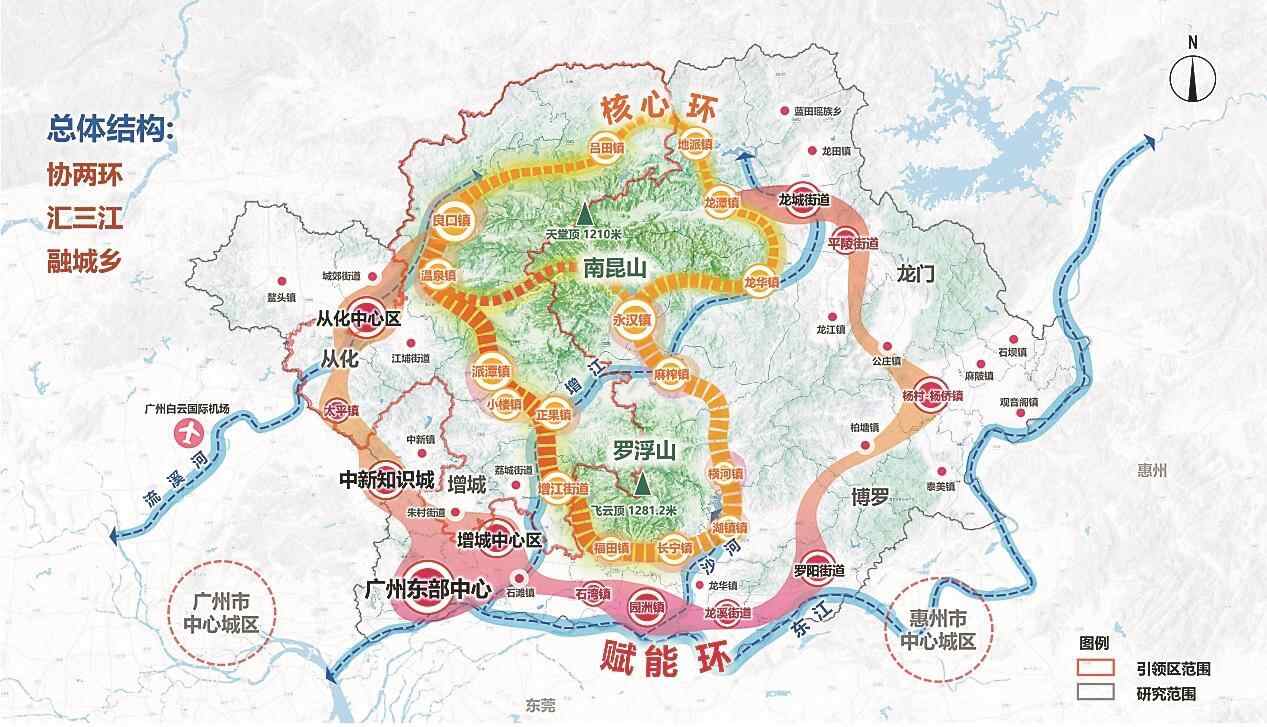
Core Viewpoint - The Guangzhou "Baiqianwan Project" aims to establish a high-quality development leading area in the Nankunshan-Luofushan region, focusing on ecological advantages and modern urbanization practices in China. Group 1: Planning and Structure - The planning emphasizes a comprehensive approach, proposing a spatial structure of "coordinating two rings, integrating three rivers, and merging urban and rural areas" to enhance the flow of various urban-rural elements and promote modernization and differentiation in towns and villages [1] - A transportation plan is outlined to connect domestic and international traffic, creating a 400-kilometer scenic tourism road to attract visitors and boost local economies [1] Group 2: Industry Layout - The plan focuses on four key industries: "Health +", "Cultural Tourism +", "Agriculture +", and "Innovation +". It aims to leverage local resources for developing wellness clusters, tourism brands, modern agriculture, and emerging industries [2] - Specific initiatives include creating 12 wellness zones, enhancing tourism attractions, modernizing 13 agricultural parks, and fostering strategic industries like low-altitude economy and biomedicine [2] Group 3: Implementation and Design - The plan designates two pilot areas covering approximately 278 square kilometers, with a focus on developing a 52-kilometer scenic tourism road by 2025 [3] - A design competition is initiated to engage local communities and design professionals in the planning process, ensuring that local needs align with design outcomes [3]
“十五五”红利点!构建康养生态,有这些着力点
券商中国· 2025-12-21 23:28
Core Viewpoint - The article emphasizes the importance of developing a high-quality elderly care system in response to population aging, highlighting the role of government and market collaboration in building a comprehensive elderly care ecosystem [2][3]. Group 1: Policy Guidance for Elderly Care Ecosystem - The current stage presents a significant opportunity in the elderly care industry, with a consensus on the need to establish a robust medical and elderly care ecosystem [3]. - The core of building an elderly care ecosystem involves integrating the elderly care industry with supply chains, services, and financial aspects to provide precise services for the elderly [3]. - Key stakeholders in the medical and elderly care sector include central enterprises, insurance companies, and small to medium enterprises, with insurance companies playing a pivotal role due to their financial strength and customer base [3][4]. Group 2: Development Strategies - The construction of a medical and elderly care ecosystem requires efforts in three areas: industrial ecosystem construction, government-enterprise ecosystem construction, and policy ecosystem construction [3][6]. - The industrial ecosystem should focus on market demand and align with government needs, with local governments playing a crucial role in providing inclusive elderly care services [3][4]. - The government can participate through state-owned assets and procurement services, emphasizing the importance of long-term care insurance and inclusive insurance [3][4]. Group 3: Role of Insurance Industry - The insurance industry is not just a payer but should act as a resource integrator, supervisor, and service provider within the elderly care ecosystem [5]. - Insurance companies can help clients plan for long-term health and elderly care expenses, leveraging their advantages in risk management and funding [5][6]. - The insurance sector's role includes promoting collaboration with medical institutions to enhance service efficiency and risk management [5]. Group 4: Policy Ecosystem Construction - The combination of financial and fiscal policies is crucial for developing the medical and elderly care ecosystem [6][7]. - Learning from the U.S. REITs model, there is potential for pension funds to invest in real estate that meets elderly care needs, contributing to stable returns [6]. - Local governments should take initiative by establishing guiding funds and collaborating with financial institutions to promote the development of the elderly care industry [7].


环南昆山—罗浮山县镇村高质量发展引领区(广州)总体规划正式发布
Xin Lang Cai Jing· 2025-12-20 00:32
Core Viewpoint - The release of the overall planning for the Huannan Kunshan - Luofu Mountain Town and Village High-Quality Development Leading Area (Guangzhou) marks the transition from blueprint to reality, aiming to enhance the region's development through various cultural and tourism activities [2] Group 1: Strategic Positioning - The planning covers an area of approximately 2415 square kilometers, involving 7 towns and 5 streets in Conghua District and Zengcheng District, with four strategic positions: a model for ecological advantages in metropolitan areas, a world-class rare hot spring health resort, a benchmark for modernized construction in Lingnan characteristic towns and villages, and a paradigm for coordinated urban-rural regional development [2][3] Group 2: Spatial and Transportation Planning - The spatial structure aims to create a framework of "coordinating two rings, integrating three rivers, and merging urban and rural areas," leveraging Guangzhou's role as a significant national center city to facilitate the flow of various urban-rural elements [3] - The transportation plan includes opening domestic and international access for tourists and constructing a 400-kilometer scenic tourism road to enhance economic activity and accessibility [3] Group 3: Industry Focus - The planning emphasizes "project supremacy" with a detailed layout for four key industries: "Health +," "Cultural Tourism +," "Agriculture +," and "Innovation +" [4] - In the "Health +" sector, the focus is on developing 12 health clusters based on rare hot spring resources and forest ecology, integrating high-quality medical resources to create a health ecosystem [4] - The "Cultural Tourism +" aspect aims to establish nine key tourism brands and upgrade tourist attractions, including five themed sports towns [4] - The "Agriculture +" initiative supports the modernization and digital transformation of 13 agricultural parks, promoting local agricultural brands [4] - The "Innovation +" sector seeks to cultivate emerging industries such as low-altitude economy, electronic information, biomedicine, and new materials [4] Group 4: Implementation and Future Plans - The planning designates approximately 278 square kilometers in Conghua and Zengcheng as two pilot areas, with a focus on developing a 52-kilometer scenic tourism road demonstration section [5] - By 2025, the city planning and natural resources bureau aims to implement key projects like the scenic tourism road and various landmark stations through a "planning, design, and implementation" approach [5] - A "Yue Beautiful Countryside" design competition will engage design units, universities, and individuals to align local needs with planning [5]
邹蕴涵:康养产业扩容提质正当时
Jing Ji Ri Bao· 2025-12-12 00:17
Group 1 - The core viewpoint of the article emphasizes the robust growth and sustainable development of the health and wellness industry in China, driven by demand upgrades and technological innovations, leading to a virtuous cycle between consumption and industry [1][2] - The health and wellness market in China is projected to reach nearly 15 trillion yuan by 2030, focusing on health maintenance, rehabilitation, and wellness, becoming a new growth point for consumption [1] - The rapid growth of health and wellness consumption is closely linked to demographic changes, particularly the aging population, which has led to increased health awareness and diversified consumer demands [1][2] Group 2 - The elderly population has become a significant consumer group in the health and wellness industry, characterized by a shift from survival-based consumption to quality-focused consumption [2] - Technological advancements, particularly in digital technology and artificial intelligence, are enhancing service quality and efficiency in the health and wellness sector, enabling better data management and personalized care plans [3] - The "health and wellness +" model is emerging, integrating various industries such as culture, tourism, and finance, which is driving the development of diverse consumer categories and creating a synergistic effect [3] Group 3 - The coverage of health and wellness services is expanding from major cities to smaller cities and rural areas, resulting in a more diverse and accessible supply system [4] - The article suggests that systematic policies should be implemented to enhance the quality and capacity of health and wellness consumption, addressing challenges such as supply homogenization and talent shortages [4] - Encouraging the convergence of quality resources into the health and wellness industry is essential for stimulating demand and releasing the vitality of industry development [4]
康养产业扩容提质正当时
Jing Ji Ri Bao· 2025-12-11 21:36
依托需求升级与技术创新,以及由此产生的新场景、新业态,康养产业发展呈现提质扩容态势,为康养 消费稳健可持续发展提供了坚实载体,有利于形成消费促进产业、产业带动消费的良性循环。 多业态跨界协同,融合化特征日益显现。"康养+"融合发展新模式日益壮大,以康养为核心,带动文 化、旅游、医疗、金融等相关产业发展,也能够推动住宿、餐饮、零售等不同消费品类业态融合升级, 呈现出"以点带面、连线成片"的特点,形成"一业兴、百业旺"的联动效应。在丰富康养产品供给、推动 产业边界拓展方面,已经开始形成新增长动力。 城市覆盖面扩大,普惠化特征日趋明显。康养消费、康养产业发展正在从一线城市、热门大城市逐步向 中小城市乃至县域地区拓展。在连锁机构开拓更广阔的市场、政策助力增强等因素带动下,康养产品和 服务的覆盖面持续扩大,形成多层次、多选择、多样性的供给体系,获取康养产品和服务的渠道日趋多 元化,有效满足市场需求的同时,普惠便利化程度也大大提升。 接下来,坚持系统施策,以康养消费扩容提质推动康养产业升级向好,巩固产业承载消费、消费助推产 业的良好局面。一方面,持续落实落细应对人口老龄化、促进银发经济发展的各项政策举措,进一步提 升老年 ...
青岛市“中国康湾”建设全面起势
Qi Lu Wan Bao· 2025-12-11 06:55
Core Viewpoint - Qingdao is advancing the "China Health Bay" construction strategy by leveraging its geographical advantages, resource endowments, and national strategic needs, focusing on innovative policies and multi-industry integration to promote health-related initiatives [1] Group 1: Policy and Organizational Structure - A leadership group led by the main leaders of Qingdao's government has been established to promote the "China Health Bay" construction, with six specialized working groups and 31 departments collaborating on key tasks [2] - A three-year action plan (2025-2027) has been issued to accelerate the "China Health Bay" construction, emphasizing project-based, checklist, and responsibility-driven approaches [2] - A comprehensive innovation policy system is being developed, including nine supporting policies related to urban community service facilities, health industry development, and elderly financial services [2] Group 2: Financial and Talent Support - Financial institutions, including the People's Bank of China and the National Development Bank, are providing support for various projects, including the first pension industry loan in the province [3] - A talent cultivation model has been established through partnerships with universities and enterprises, creating a "China Health Bay" industry-education alliance to integrate education, talent, innovation, and industry [3] - 22 vocational schools in the city are offering programs related to health care and management, with government subsidies for various health-related occupations [3] Group 3: Project Development and Industry Growth - Qingdao is focusing on 111 key projects in health real estate, health industry, and medical services, with several projects already under construction or completed [4] - The vitality of the life and health industry is being enhanced, with significant projects like the gait robot and new drug development entering clinical trials [4] - The Shandong Rehabilitation (Silver Economy) Industrial Park is being developed to create a comprehensive rehabilitation industry platform [4] Group 4: Service Integration and Community Development - The integration of community embedded service facilities with the "China Health Bay" initiative is being promoted through 15 demonstration projects [5] - Various community service centers are being established to provide health care and elderly services, creating convenient access for residents [5] - The integration of health and tourism is being explored, with new wellness routes being designed that incorporate traditional Chinese medicine and rehabilitation [5] Group 5: Brand Promotion and Recognition - The "China Health Bay" brand is being actively promoted through various events and media outreach, including a construction promotion meeting attended by over 200 representatives [7] - Qingdao's efforts in the silver economy have been recognized as a national model, with its comprehensive capabilities ranked at a leading level in a national index report [7] - Innovative projects, such as smart home care robots, are being highlighted as part of the city's push to establish itself as a leader in intelligent elderly care services [7]
2025腾冲科学家论坛|聚智汇力 共绘“健康云南”产业新图景
Xin Hua Wang· 2025-12-06 12:58
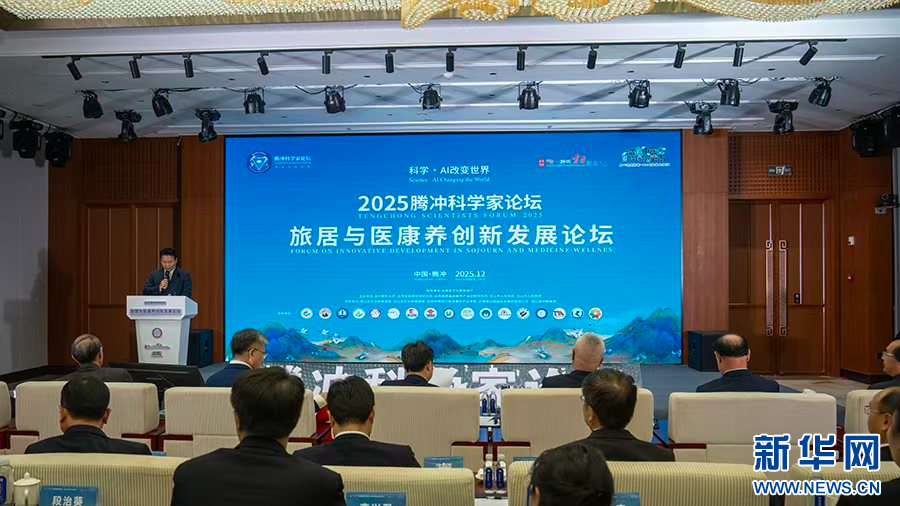
合作签约仪式(摄于12月6日)。新华网发(杨荣辉 摄) 资源"融合的实践路径。 据悉,论坛举办地腾冲恒益东湖温泉健康管理中心由云南保山恒益实业集团有限公司投资建设,中心已构建起"温泉+中西 医+运动+食疗+科技"的产品体系,获评省级职工疗休养基地。2022年,云南保山恒益实业集团有限公司联合6家单位成立了云南 高原温泉康养产业创新研究院,推进了11项课题,构建了"基础研究-临床验证-产品开发"全链条体系。(完)(刘馨蔚) 12月6日下午,2025腾冲科学家论坛分论坛之一的旅居与医康养创新发展论坛在云南腾冲恒益东湖温泉健康管理中心举行。 论坛上,专家学者围绕"旅居"与"医康养"的科学融合、山水与产业的价值转化、政策与市场的协同创新三大议题,共绘"健康云 南"产业新图景。 论坛上举行了系列"产学研"合作签约仪式,内容涉及温泉康养、中医药旅居等领域,通过战略合作深化"政产研学用"协同 创新机制。同时,"医康养旅居创新发展智联体"成立仪式在论坛上举行,平台旨在强化温泉与中医药协同创新,推进生物制 药、再生医学新成果在云南旅游、旅居场景的应用。 此外,论坛期间还举行了主旨演讲、商洽会、圆桌对话等活动。在主旨演讲环节,7 ...
居家服务破解养老痛点 康养产业热度攀升
Jing Ji Ri Bao· 2025-12-06 05:08
Group 1 - The core viewpoint of the articles highlights the rapid expansion of China's health and wellness market, driven by increasing health awareness and an aging population, with the market expected to reach 8 trillion yuan in 2023 and grow to 9.5 trillion yuan by 2025 and nearly 15 trillion yuan by 2030 [1] Group 2 - The aging population has led to a surge in demand for home care services, with significant growth in services such as rehabilitation and daily care, evidenced by a 120% increase in searches for "elderly bathing" and over 85% growth in group orders for related services [2] - The integration of various sectors such as health, wellness, and leisure is fostering the development of the health and wellness industry, transitioning from single-point services to a more platform-based and ecological approach [3] - The fusion-type health and wellness industry not only meets the essential needs of the elderly for health care and support but also stimulates new consumer demands by integrating with sectors like culture and tourism [4] Group 3 - The booming health and wellness economy is providing new opportunities for regional economic transformation, with the emergence of health tourism destinations leveraging ecological resources [5] - National policies such as the "Healthy China 2030" initiative are guiding the development of the health and wellness industry, with various provinces actively promoting health tourism as a development goal [6] - There are challenges in the health tourism sector, including a lack of product diversity and insufficient experiential offerings, indicating a need for tailored services that cater to different consumer demographics [6]
康养产业热度攀升
Jing Ji Ri Bao· 2025-12-05 22:53
Group 1 - The core viewpoint of the articles highlights the rapid expansion of China's health and wellness market, projected to reach 8 trillion yuan in 2023, with an annual consumer spending growth rate of 9%, and expected to grow to 9.5 trillion yuan by 2025 and nearly 15 trillion yuan by 2030, driven by both policy and demand [1] Group 2 - The aging population is driving the growth of the health and wellness industry, with home care services emerging as a rapidly developing sector. There is a significant demand for professional home care services, with a notable increase in orders for services such as rehabilitation and daily care, reflecting a 120% year-on-year increase in searches for "elderly bathing" and over 85% growth in group purchase orders [2] Group 3 - The health and wellness industry is characterized by strong integration with health, wellness, elderly care, leisure, entertainment, sports, culture, and medical services. This integration leads to a shift from "single-point services" to "platform-based, ecological, and one-stop" services, with traditional Chinese medicine, wellness tourism, and medical wellness being the top three market segments [3] Group 4 - The integrated health and wellness industry not only meets the rigid demands of the elderly for health care and support services but also creates new consumer demands by merging with cultural tourism, finance, and education sectors [4] Group 5 - The booming health and wellness economy provides new opportunities for regional economic transformation and upgrading, with various types of wellness tourism emerging, including medical, ecological, cultural, and sports wellness tourism [5] Group 6 - The development of the health and wellness economy is supported by top-level design, with national policies guiding the industry and local governments actively promoting wellness tourism destinations through supportive policies. However, there are challenges such as a lack of product diversity and insufficient consumer experience that need to be addressed for high-quality development [6]
GWI:全球康养经济到2029年将攀升至9.8万亿美元
Sou Hu Cai Jing· 2025-11-26 06:29
Core Insights - The Global Wellness Institute (GWI) reported that the global wellness economy has reached a record size of $6.8 trillion, marking a 35% growth since 2019 and a projected growth of 7.9% from 2023 to 2024, with expectations to reach $9.8 trillion by 2029 [1][3]. Industry Overview - The wellness industry is now larger than several major global industries, including tourism ($5 trillion), IT ($5.3 trillion), and sports ($2.7 trillion), and is nearly four times the size of the pharmaceutical industry, accounting for 60% of global health and medical spending [3][4]. - By 2029, the wellness industry is expected to represent 7.1% of global GDP [3]. Growth Drivers - The growth is attributed to long-term trends such as aging populations, chronic diseases, increasing mental health issues, and a rising consumer focus on prevention, longevity, and lifestyle optimization [3][4]. - The fastest-growing sector in the past five years has been wellness real estate, with an annual growth rate of 19.5%, driven by demand for homes and communities that support physical and mental health [3]. Sector Performance - Wellness tourism, spas, and thermal/mineral springs have shown strong growth, with health tourism increasing by 13.8%, spas by 14.6%, and thermal/mineral springs by 11.1% from 2023 to 2024, making wellness tourism one of the most dynamic travel categories [4]. - Workplace wellness is the only sector experiencing a decline at -1.5%, reflecting shifts in employer priorities due to the rise of remote work [5]. Regional Insights - North America has the highest per capita health spending at $6,029, followed by Europe at $1,876, indicating significant growth potential in other regions [5]. - Annual growth rates over the past five years were 7.9% in North America, 7.2% in the Middle East and North Africa, and 6.3% in Europe [5]. Future Projections - By 2029, several wellness industry categories are expected to see significant growth, including wellness real estate (15.2%), traditional and complementary medicine (10.8%), mental health (10.1%), spa tourism (10%), wellness tourism (9.1%), and personalized medicine (9.3%) [5]. - Six sectors, including healthy eating, physical exercise, personal care and beauty, wellness tourism, wellness real estate, and traditional and complementary medicine, are projected to exceed $1 trillion each by 2029 [5]. Implications for Investors - The findings suggest a sustained increase in health-oriented consumer demand, with growing investor activity and intensified competition to integrate wellness, nature, culture, and personalized wellness experiences into travel offerings [5].