
建筑涂料

Search documents
建筑涂料行业跟踪解读专家会议
2025-06-11 15:49
Summary of Conference Call on the Coating Industry Industry Overview - The conference focused on the **building coatings industry**, specifically the competitive dynamics between **Nippon Paint** and **Sankeshu** in 2024 and projections for 2025 [1][2][3]. Key Points and Arguments Price Competition and Market Dynamics - In 2024, a **price war** erupted between Nippon Paint and Sankeshu, particularly over products like "Moon White High Coverage Coating," leading to significant price reductions [1][2]. - Nippon Paint's sales volume increased by approximately **30%**, but revenue did not grow, indicating that profit sacrifices did not translate into market share gains [1][2]. - Sankeshu ceased the price war and adjusted its retail structure, increasing retail business share to over **40%**, which improved overall operating profit [1][3]. - Both companies are expected to engage in **price recovery** in 2025 due to the adverse effects of the price war on profitability [1][3]. Pricing Strategies - In 2024, Sankeshu maintained its factory price around **85 RMB** while Nippon Paint reduced prices for mid-to-low-end products to increase market share, with prices dropping to **65 RMB** for its Pro product [4]. - By 2025, Nippon Paint raised prices multiple times due to higher profits from deliveries to Singapore and increased market share for Sankeshu in rural areas [5]. Market Conditions and Challenges - The **ToC (Consumer-to-Business)** segment is shifting towards **ToB (Business-to-Business)** partnerships with large real estate companies, which are pressuring coating companies to lower costs, negatively impacting profit margins [10][14]. - The retail market is gradually recovering, particularly with improvements in second-hand housing sales and increased demand for high-quality residences [11]. Competitive Landscape - In the C-end market, Sankeshu focuses on lower-tier cities while Nippon Paint dominates first and second-tier cities, leading to a **differentiated competition strategy** [12][13]. - Both companies are exploring community store formats to reach consumers more effectively, although success rates remain uncertain [13]. Future Market Trends - The **water-based sand market** is expected to grow significantly, with rural housing renovation needs presenting substantial opportunities for coating companies [24][25]. - The overall market for rural self-built housing is projected to expand, with only Nippon Paint and Sankeshu currently possessing comprehensive competitive capabilities across all product categories [26]. Pricing Logic and Profitability - Nippon Paint's pricing is more transparent, typically at **2 to 2.5 times** the factory price, while Sankeshu's retail prices can reach **2.5 to 3 times** the factory price, indicating different pricing strategies [20][22]. - Both companies face challenges from the **full-package service model**, which requires maintaining high service quality to avoid negative customer feedback [22]. Long-term Outlook - Despite short-term challenges, the long-term outlook for the industry remains positive due to increasing demand for high-quality housing and supportive government policies [15]. - The combined market share of Nippon Paint and Sankeshu is expected to exceed **30%** in the next three years, driven by their scale advantages and cost control capabilities [32]. Additional Important Insights - The **current market for latex paint** is in a recovery phase, with demand still present across various price segments [8]. - The **price reduction trend** is primarily driven by Nippon Paint and Sankeshu's ability to lower costs through economies of scale [31]. - Future price increases are unlikely due to reduced raw material costs and already optimized profit margins [33].

中国仿石漆在国际上的影响力
Sou Hu Cai Jing· 2025-05-30 04:52
Group 1 - The core viewpoint is that China's imitation stone paint is leveraging environmental concepts and global trends to penetrate international markets, particularly in Europe, by meeting stringent green building standards [2] - The technology innovation has broken international competition barriers, with Chinese companies developing nano self-repair technology and ultra-weather-resistant resin systems, significantly enhancing product durability to over 2000 hours [4] - Emerging markets, especially in Southeast Asia and South Asia, are becoming crucial for the expansion of Chinese imitation stone paint, with companies extending their sales networks to 23 countries through the Belt and Road Initiative [6] Group 2 - Cultural empowerment adds unique charm to the products, as Chinese companies draw inspiration from traditional architecture and artifacts, integrating palace aesthetics into modern designs [10] - Service upgrades are creating new competitive advantages, with customized services and a standardized construction and delivery system achieving over 98% customer satisfaction and a 40% higher repurchase rate than the industry average [13] - Overall, from environmental practices to technological breakthroughs, and from market expansion to cultural dissemination, Chinese imitation stone paint is reshaping the international building decoration materials landscape with immense future potential [15]

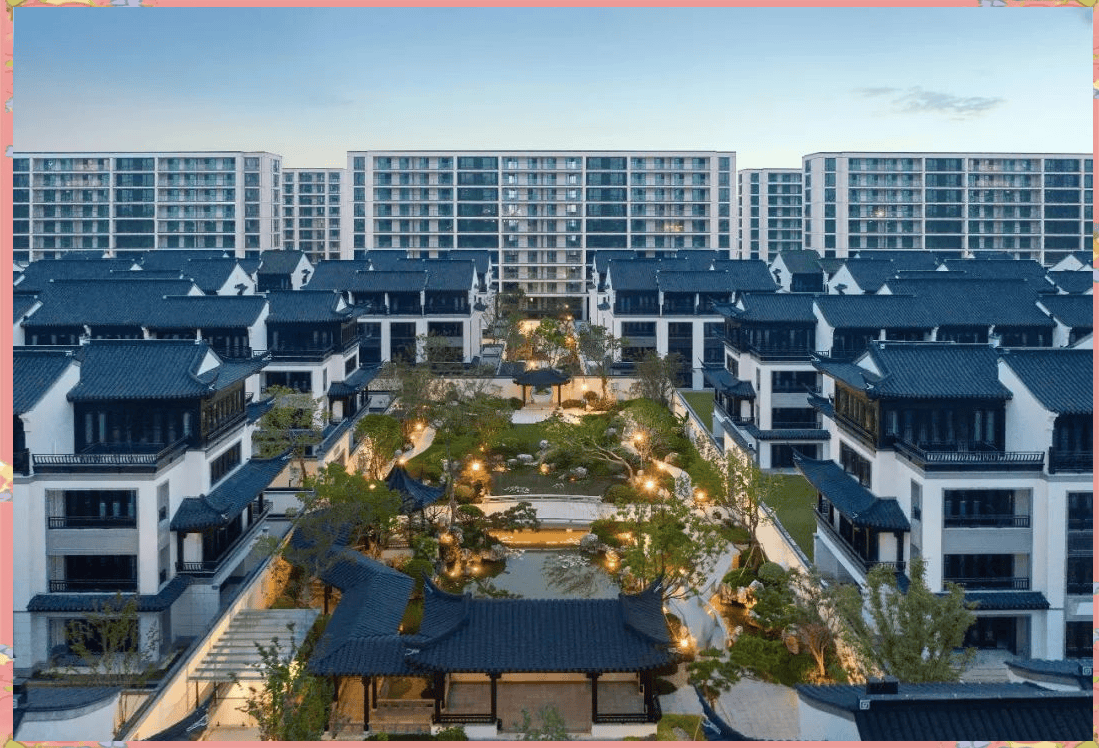
三棵树仿石漆何以连续5年市占率第一?
Ren Min Ri Bao· 2025-05-22 03:31
Core Viewpoint - The architectural coating industry is undergoing a significant transformation towards low-carbon and environmentally friendly solutions, driven by China's "dual carbon" strategy and green building standards. The company, Sankeshu, has established itself as a leader in the market, particularly in the imitation stone paint segment, reflecting the resilience of China's manufacturing sector and serving as a model for the new building materials industry [1][2]. Group 1: Market Position and Strategy - Sankeshu has maintained the top market share in imitation stone paint for five consecutive years, leveraging its early strategic positioning in this niche market [1][2]. - The company has developed a unique path by aligning its product offerings with government policies, particularly in the context of the "dual carbon" goals [1][2]. - In 2024, Sankeshu's imitation stone paint sales are projected to exceed 100,000 tons, capturing over 7% of the market share and expanding into Southeast Asian markets [2]. Group 2: Technological Innovations - The company has addressed traditional challenges in imitation stone paint, such as short lifespan and fading, by utilizing nano self-repair technology and a super weather-resistant resin system, significantly enhancing product durability [1][2]. - The new product formulations have achieved over 4,000 hours of UV aging resistance, surpassing the national standard of 2,000 hours, and have been included in the revised draft of the "Green Building Evaluation Standard" [1][2]. Group 3: Environmental and Cultural Impact - The shift towards green building practices is essential for achieving carbon neutrality in urban construction, with Sankeshu's products being used in low-energy urban buildings and renovations of old neighborhoods [2][3]. - The company has introduced a series of imitation stone paints inspired by traditional palace culture, merging cultural heritage with modern aesthetics, making its products popular in high-end villas and cultural tourism projects [3]. - Sankeshu's commitment to social responsibility is evident through initiatives like the "National Coating Competition," which aims to cultivate skilled craftsmen and promote the integration of traditional craftsmanship with modern needs [3][5].
亚士创能: 亚士创能2024年年度股东大会会议资料
Zheng Quan Zhi Xing· 2025-05-09 08:45
Core Viewpoint - The company is preparing for its 2024 Annual General Meeting (AGM) with specific guidelines to ensure order and efficiency, while also addressing its financial performance and strategic direction in a challenging market environment [1][2][3]. Meeting Guidelines - The AGM will only allow entry to shareholders, board members, and invited guests, with strict measures to maintain order [1]. - Shareholders must provide proof of shareholding and register 10 minutes before the meeting [1]. - Shareholders wishing to speak must register in writing, with speaking time limited to 5 minutes per shareholder [2]. - Voting will be conducted both on-site and online, with specific time slots for each [3]. Financial Performance - In 2024, the company reported a revenue of CNY 2,052.48 million, a decrease of 34.01% compared to 2023 [21]. - The net profit attributable to shareholders was -CNY 329.28 million, a decline of 647.21% year-on-year [21]. - The company’s total assets as of December 31, 2024, were CNY 6,341.14 million, with net assets of CNY 1,309.45 million [21]. Industry Overview - The construction materials industry, including coatings and insulation, is facing challenges due to a complex economic environment, with a significant decline in new housing starts and sales [7][8]. - The market for construction coatings is approximately CNY 900 billion, with the overall industry capacity reaching around CNY 4 trillion when including services [8]. - The company remains a key player in the industry, focusing on enhancing competitiveness and expanding its market share despite the downturn [10][11]. Strategic Initiatives - The company aims to strengthen operational efficiency and focus on quality revenue, while also addressing historical debts and enhancing its marketing strategies [14][19]. - Plans for 2025 include applying for a credit limit of up to CNY 650 million from financial institutions to support growth [26]. - The company is also proposing to cancel the supervisory board and establish an audit committee to streamline governance [30].

天风证券晨会集萃-20250428
Tianfeng Securities· 2025-04-28 00:12
Group 1 - The report emphasizes that market trends often experience multiple phases of decline before a significant upward trend, characterized by a W-shaped bottoming period with volume contraction followed by expansion [1] - It identifies that the market's main line is driven by both policy certainty and industry logic, suggesting that long-term logic is crucial for sustained growth in any sector [1] - Three scenarios are outlined where sectors may not develop into main lines post-bottoming: defensive sectors attracting short-term capital, sectors with weak short-term policy support, and sectors that do not optimize their structure post-bottoming [1] Group 2 - The April Politburo meeting highlighted the importance of stabilizing employment, enterprises, markets, and expectations, indicating a shift in policy focus to ensure internal stability before engaging in international economic struggles [2][8] - High-frequency indicators show a decline in China's EPMI index, suggesting a contraction in economic activity, with significant drops in product orders and imports [2] - The report suggests that the domestic economic recovery momentum needs to be strengthened, with recommendations for sector allocation focusing on internet and consumer sectors [2] Group 3 - The report indicates that the 30-day moving average of the All A Index is a pressure point, with the market entering a downtrend, and emphasizes the importance of monitoring the profitability effect [3] - It recommends focusing on sectors that are expected to benefit from a turnaround, such as healthcare and new energy, while also highlighting the technology sector under the domestic substitution trend [3] - The report suggests maintaining a neutral position until the pressure point is breached, given the current market conditions [3] Group 4 - The report discusses the need for timely implementation of incremental reserve policies based on changing circumstances, indicating that the absence of new policies is due to the incomplete rollout of existing ones [8][29] - It emphasizes the importance of accelerating the issuance and utilization of local government special bonds and ultra-long-term special bonds to support economic stability [8][29] - The report notes that the current policy approach mirrors strategies used during the early pandemic period, focusing on stabilizing key economic areas before further stimulus [29] Group 5 - The report highlights that the consumer electronics industry is expected to benefit from a recovery in export chains due to a more relaxed attitude from the U.S. regarding tariffs [12] - It notes that TSMC's 2nm process is progressing well, with expectations for increased demand driven by hardware upgrades [12] - The report also mentions Huawei's upcoming product launches, which are anticipated to make significant advancements in smart technology [12] Group 6 - The report indicates that the home appliance sector continues to show resilience, with a double-digit growth in exports despite tariff impacts, driven by strong demand in North America [17] - It suggests that the upcoming peak season for air conditioning and promotional events in May could further boost domestic retail sales [17] - The report recommends several key players in the home appliance sector, including Midea and Gree, as potential investment opportunities [17] Group 7 - The report on the pharmaceutical sector highlights the innovative transition of the company, focusing on differentiated PD-1 therapies that address unmet clinical needs [18] - It notes the company's established international experience and the potential for significant growth in global markets, particularly with its biosimilar products [18] - The report emphasizes the expected approval of innovative drugs in Europe, which could drive future revenue growth [18] Group 8 - The report discusses the energy sector, particularly the performance of satellite chemicals, which saw a significant increase in net profit driven by strong ethane cracking profits [21] - It highlights the expected doubling of ethylene production capacity due to new projects, which could enhance profitability [21] - The report also notes the favorable pricing environment for propionic acid, which is expected to contribute positively to the company's financial performance [21]