火箭制造

Search documents
广州:推动黄埔星河动力火箭总装基地尽快落地
Mei Ri Jing Ji Xin Wen· 2026-01-08 09:27
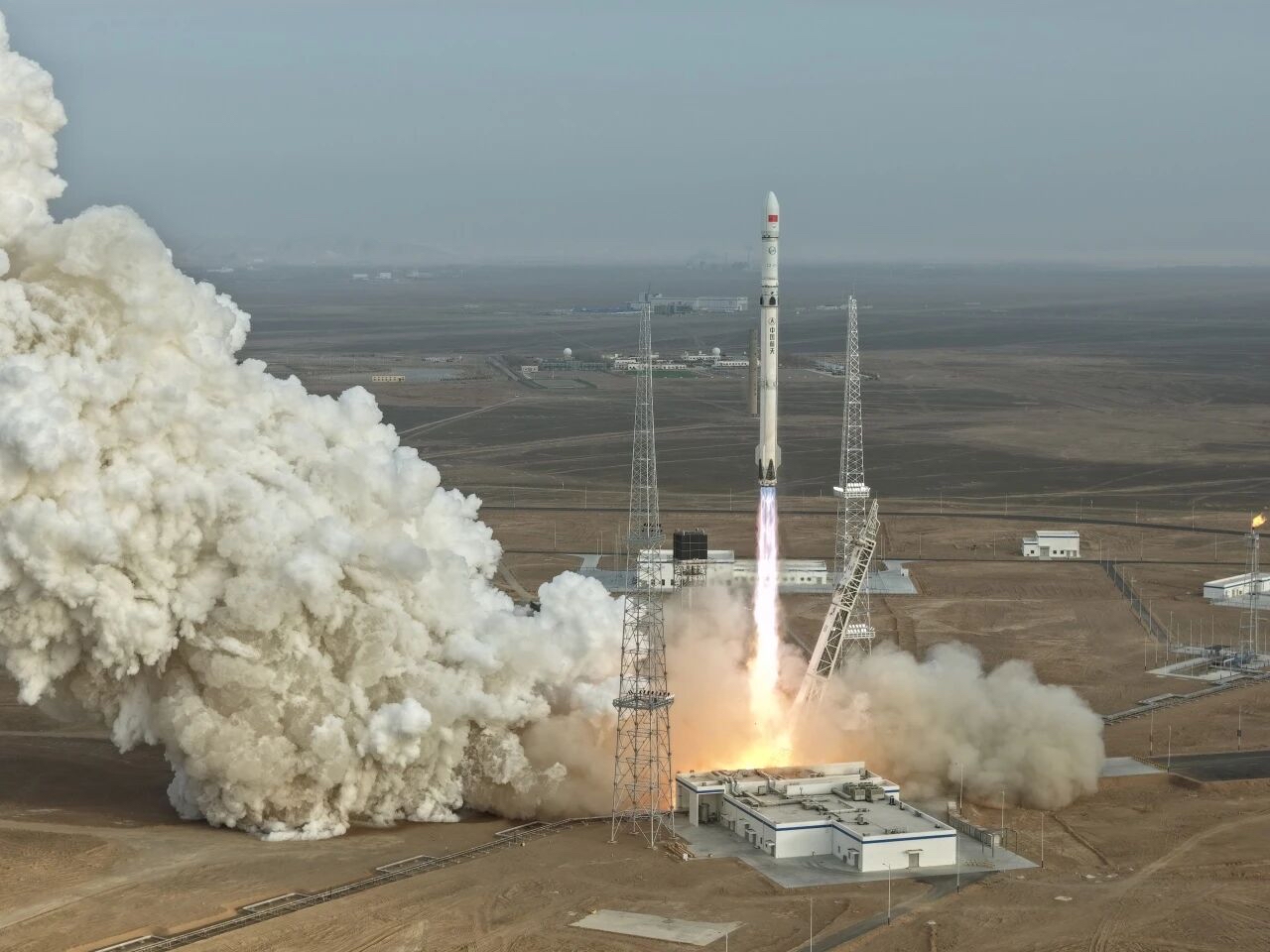
每经AI快讯,1月8日,广州市人民政府办公厅印发广州市加快建设先进制造业强市规划(2024—2035 年)。规划指出,聚焦攻关可重复使用火箭技术,依托从化商业火箭液体动力系统试验中心及总装测试 产业化基地,为中大型液体火箭研制提供坚实基础,未来将面向全国科研院所、企业和高校等开放共 享。推动南沙中科宇航液体火箭总装测试基地建设和黄埔星河动力火箭总装基地尽快落地,研发大推 力、可复用液体火箭,打造低成本、高密度的航天发射能力。 ...
“钱塘号”火箭来了 国内首个海上回收复用火箭基地在钱塘开工
Zheng Quan Shi Bao Wang· 2026-01-08 03:28
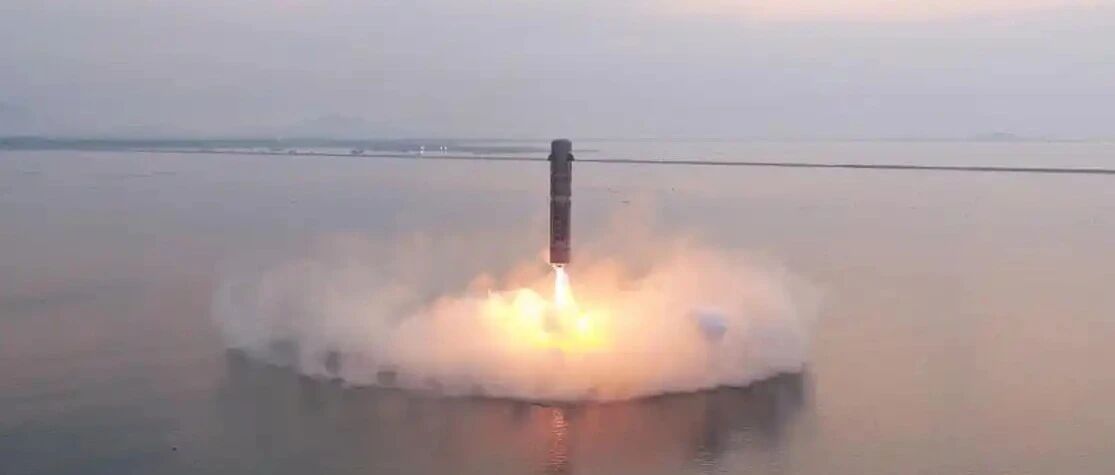
Core Viewpoint - The construction of China's first offshore reusable rocket production and recovery base by Arrow Yuan Technology marks a significant milestone in the commercial aerospace sector, with the unveiling of the "Qiantang" rocket signaling the start of a new chapter in this industry [1] Group 1: Project Overview - The Arrow Yuan Technology's medium and large liquid carrier rocket production, testing, and recovery base in Qiantang has commenced construction, featuring a recovery and reuse center, a testing and inspection center, and a manufacturing center [1] - The total investment for the project is 5.2 billion yuan, and upon completion, it will have the capacity to manufacture 25 rockets annually [1] Group 2: Upcoming Developments - The "Yuanxingzhe No. 1," the first domestically developed "liquid oxygen-methane + stainless steel + offshore recovery" rocket, is scheduled to begin assembly testing by the end of August this year [1] - The first flight and recovery mission of the "Qiantang" rocket is planned for the end of this year [1]
国内首个海上回收复用火箭基地在钱塘开工
Hang Zhou Ri Bao· 2026-01-08 02:57
Group 1 - The project marks the establishment of China's first large-scale liquid rocket assembly and recovery reuse base, specifically designed for offshore recovery, and the first stainless steel rocket super factory [1][2] - The total investment for the project is 5.2 billion yuan, which includes a recovery reuse center, testing and inspection center, and production manufacturing center, aiming for an annual production capacity of 25 rockets [2] - The "Qiantang" rocket has a height of 66 meters, a diameter of 4.2 meters, and a launch mass of 575 tons, with significant payload capabilities for near-Earth orbit and sun-synchronous orbit [2] Group 2 - The decision to establish the project in Hangzhou was based on geographical location, industrial environment, and application scenarios, with the Qiantang District having the only export port in Hangzhou for rocket recovery [3] - The project aligns with Hangzhou's strategic focus on advanced manufacturing, particularly in aerospace, as part of the "296X" advanced manufacturing cluster initiative [3] - The company aims to play a "chain master" role in building an ecosystem of "core self-research + open collaboration," attracting upstream and downstream partners for mutual growth [3]
国内首个,海上可复用火箭基地开工
财联社· 2026-01-08 01:54
Core Viewpoint - The article highlights the launch of the first domestic large-scale liquid rocket assembly and recovery reuse base project by Arrow Yuan Technology, marking a significant step in China's commercial space industry with a total investment of 5.2 billion yuan [1]. Group 1: Project Overview - The project includes a recovery reuse center, a testing and inspection center, and a manufacturing center, aiming for an annual production capacity of 25 rockets [1]. - The first rocket manufactured at this base is named "Qiantang," which is based on the core product "Yuanxingzhe No. 1," featuring a height of 66 meters, a diameter of 4.2 meters, and a launch mass of 575 tons [1]. - The rocket has a low-cost launch capability, with a per-kilogram launch cost expected to drop below 20,000 yuan, significantly reducing the cost of access to space [1][4]. Group 2: Company Background - Arrow Yuan Technology, founded in 2019 and headquartered in Beijing, specializes in reusable liquid rockets using a "stainless steel + liquid oxygen methane" approach [2]. - The founder, Wei Yi, has extensive experience in rocket propulsion technology and has previously held significant roles in China's new generation rocket development [4]. Group 3: Financial Aspects - The company has completed four rounds of financing, with the latest round ending in January 2025, attracting investments from notable venture capital firms and state-owned enterprises [5][6]. - The market price for a single rocket launch in China's commercial space sector is approximately 220 million yuan, with payload prices ranging from 80,000 to 100,000 yuan per kilogram [4].

商业航天研究-火箭行业专家交流
2026-01-04 15:35
Summary of Key Points from the Conference Call on Commercial Aerospace and Rocket Industry Industry Overview - The conference focused on the commercial aerospace sector, specifically the rocket industry, discussing cost structures, technological advancements, and market dynamics [2][12]. Cost Structure and Components - Companies are pursuing low-cost strategies in the rocket sector, with hardware costs for single launches ranging from 100 million to 120 million yuan for non-reusable and reusable rockets, respectively [2][3]. - The first stage of rockets accounts for 50% to 60% of total costs, while the second stage contributes around 30% [2][4]. - The cost of a single engine is approximately 5 to 6 million yuan, which includes R&D team salaries [7]. - Reusable rockets incur an initial cost increase of 10% to 20%, but successful recovery can reduce subsequent launch costs to about 50 million yuan [3][14]. Technological Advancements - Key components like engines and storage tanks are now manufactured domestically, mitigating risks of foreign dependency [8]. - 3D printing technology is widely used in rocket manufacturing, with 90% of components for certain engines produced this way, significantly reducing costs and production time [11]. - The goal is to reduce the cost of a single engine to 1.5 million yuan, representing a potential savings of 33% to 67% [11]. Market Dynamics and Competition - The commercial space sector is experiencing rapid growth, with companies like Tianbing and Blue Arrow planning to achieve 10 to 15 launches annually by 2027, and 30 by 2028 [12][15]. - The competition between private companies and state-owned enterprises is characterized by both collaboration and rivalry, with private firms needing to meet military standards for rocket production [12][16]. - The market is constrained by the limited capacity of existing rockets, which cannot meet the projected demand for satellite launches [12][13]. Future Outlook - The first successful recovery of reusable rockets is anticipated by 2026, with Blue Arrow likely to lead this achievement [14]. - By 2030, the frequency of commercial rocket launches could increase significantly, potentially reaching 100 launches per year, contingent on the stability of recovery technologies and government support [15]. - The commercial space sector is expected to become increasingly independent from state support, with a shift towards full privatization in the future [15]. Challenges and Risks - Domestic companies face challenges in funding and testing, which can lead to rushed development processes and increased risks of failure [21]. - The reliance on military standards and the need for extensive testing contribute to the high costs and complexities of rocket development [21]. Conclusion - The commercial aerospace industry is poised for significant growth, driven by advancements in technology and increasing demand for satellite launches. However, challenges related to cost, competition, and funding remain critical factors that will shape the industry's future trajectory [12][15].
重视火箭核心环节的投资机会
2025-12-29 01:04
Summary of Key Points from the Conference Call Industry Overview - The conference call focuses on the **rocket manufacturing industry**, detailing cost structures, key players, and investment opportunities in the sector. Cost Structure of Rocket Manufacturing - The total cost of a single rocket launch is approximately **$70 million** without considering reusability, with the breakdown as follows: - Rocket manufacturing cost: **$50-60 million** - First-stage booster cost: **$30-40 million** - Second-stage rocket cost: **$12-14 million** - Recovery and repair costs after launch: **$250,000 to $2 million** depending on damage severity - Assembly and transportation to launch site: **$1 million** - Fuel costs: **$350,000** - Personnel and equipment costs: **$2 million** [1][10][11] - The use of **reusable technology** can significantly reduce costs, bringing the total launch cost down to **over $20 million**, with a unit price of **6,000-7,000 RMB per kilogram** for payloads, which is substantially lower than traditional non-reusable options [1][12]. Key Components of Rocket Cost - The cost structure includes: - **Payload fairing**: Approximately **10%** of total cost - **Propellant storage tanks**: **15-25%** of total cost - **Liquid engines**: **40-60%** of total cost, representing a critical area for investment [2][3][6]. Major Players in the Industry - In China, significant companies include: - **Tianjin Yuefeng Aerospace**: Strong technical background linked to state-owned enterprises - **Jiu Tian Xing Ge** and **Huan Yu Technology**: Key suppliers for national large-scale rockets - **SpaceX**: Internationally recognized for its innovative use of materials and cost reduction strategies [4]. Types of Rocket Propellants - Rocket propellants are categorized into: - **Solid propellants**: Long storage life but non-reusable - **Liquid propellants**: High thrust and controllability, currently the only option for recovery [5]. Investment Opportunities - Key areas for investment include: - **Liquid engines**: Approximately **50%** of manufacturing costs - **Structural components**: About **25%** of costs, impacting manufacturing efficiency and economic benefits - **New materials**: Potential for performance enhancement and market value [6][14]. Current Production Capacity - China's current production capacity is insufficient to meet the projected demand of over **500 rockets annually**, with existing facilities unable to scale up quickly enough. The market is expected to grow at a rate of over **five times** [13]. Investment Segments in the Rocket Supply Chain - Investment opportunities exist in various segments, including: - **Engines**: Representing **50-60%** of costs - **Solid engines**: Although not reusable, they are still a market segment - **Core components**: Such as servos and 3D printing technologies - **Storage tank development**: Companies like Tianjin Yuefeng and Jiu Tian Xing Ge are involved [14][15]. This summary encapsulates the critical insights from the conference call, highlighting the cost structure, key players, and investment opportunities within the rocket manufacturing industry.
朱雀三号希望在2026年年中实现成功回收 已有三发生产好的火箭
Xin Lang Cai Jing· 2025-12-24 12:42
Core Viewpoint - The successful first flight of the Zhuque-3 rocket is just the beginning, with the team aiming for successful recovery by mid-2026 [1] Group 1: Development Plans - The Zhuque-3 team has produced three rockets and plans to rapidly iterate on them if recovery is successful by mid-next year, focusing on structural weight reduction, extending recovery sites, and upgrading to the 12B engine [1] - The goal is to evolve to a "complete" version of the rocket by around 2026, emphasizing the need to shorten launch cycles and increase launch frequency [1] Group 2: Future Launch Strategies - Following the successful recovery of the second rocket, the plan is to use a reused first stage for the fourth launch, aiming to achieve a technical closed loop [1] - The team aims to reduce the reuse cycle to approximately 7 days and expand more launch sites to accommodate different recovery directions, addressing future large-scale satellite constellation launch demands [1]
熊征宇调研黄陂区、新洲区:抓实项目建设做强产业支撑,统筹推进新型城镇化和乡村全面振兴
Chang Jiang Ri Bao· 2025-12-24 01:00
Group 1 - The core message emphasizes the importance of high-quality development and the integration of urban and rural areas, as well as the need to implement the directives from the Party's 20th Central Committee and the significant speeches by General Secretary Xi Jinping [1] - In Huangpi District, the focus is on advancing new industrialization, enhancing investment attraction, and developing advanced manufacturing industry clusters, while also addressing ecological and environmental issues [1] - The development of modern urban agriculture and the integration of cultural tourism are highlighted as essential for improving living standards and creating livable rural areas [1] Group 2 - In Xinzhou District, the emphasis is on seizing opportunities in the commercial aerospace industry and enhancing the "China Star Valley" initiative through targeted investment and technological advancements [2] - The district aims to improve urban infrastructure and public services to enhance urban capacity and attractiveness, while also promoting rural revitalization and the integration of agriculture with other industries [2] - The focus on increasing agricultural productivity and quality is aimed at boosting farmers' income and overall rural development [2]
长征十二号甲火箭首飞入轨成功,卫星产业ETF(159218)盘中获超亿元暴力加仓!
Sou Hu Cai Jing· 2025-12-23 07:18
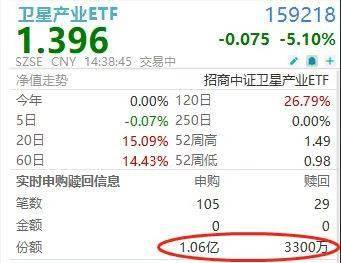
Group 1 - The satellite industry ETF (159218) experienced a significant decline of 5.17% on December 23, with trading volume reaching a historical high of over 1 billion CNY [1][3] - The ETF had previously achieved a rare "ten consecutive days of gains" and set 28 historical highs within the year, indicating its strong performance in the A-share market [3] - The successful launch of China's first liquid oxygen-methane reusable rocket, Long March 12A (CZ-12A), took place on the same day, marking a significant milestone for the national space program [2][3] Group 2 - The main mission of the CZ-12A launch was successfully completed, although there was an anomaly during the recovery phase, resulting in the rocket not being fully recovered [3] - Key recovery technologies such as re-entry, deceleration, and hovering were validated during the launch, which has been defined as an important practice with "partial objectives achieved" [3] - The capital market reacted quickly to the launch event, with the satellite industry ETF experiencing a large adjustment but also recording a single-day trading volume of nearly 400 million CNY, reflecting high market interest [3]
长征十二号甲可回收未果,业内称:不急,未来可回收或成标配
Di Yi Cai Jing· 2025-12-23 05:14
Core Insights - The development of reusable rocket technology is becoming a standard for new rocket designs, indicating a shift in the industry towards cost-effective and efficient launch solutions [2][1] - The recent launch of the Long March 12甲 rocket, despite not achieving its recovery goal, provided critical data for future missions and the optimization of recovery strategies [1][2] Group 1: Rocket Development - The Long March 12甲 rocket is China's first 4-meter class launch vehicle and has a near-Earth orbit capacity of at least 12 tons, making it the largest single-core launch vehicle in China [1] - The development team is committed to analyzing the recent test failures to improve recovery methods and advance reusable technology [1][2] Group 2: Market Implications - The ability to reuse rockets is seen as a key competitive factor in the commercial space market, as it can significantly reduce the cost per launch [2] - The increasing demand for satellite constellations and frequent launches is driving the need for high-capacity, reusable rockets [2]