
火箭可重复使用技术

Search documents
中国首款不锈钢火箭:朱雀三号将再次发射,马斯克:能超越猎鹰9
Sou Hu Cai Jing· 2026-02-27 03:10
Core Viewpoint - The Zhuque-3 rocket, developed independently by China, is set to make another launch, showcasing advancements in reusable rocket technology and marking a significant breakthrough in the country's aerospace capabilities [1][3]. Group 1: Launch and Performance - The first launch of the Zhuque-3 rocket took place on December 3, 2025, and while it did not achieve complete success, it demonstrated several breakthroughs, including a successful orbital insertion and a 1400-second glide phase for the second stage [3][4]. - The rocket's recovery process faced challenges, particularly during the re-entry and landing phases, but it landed approximately 40 meters from the intended target, indicating potential for successful soft landings in future attempts [4][6]. Group 2: Future Plans and Developments - The development team is optimizing the landing process and plans to conduct a second recovery test in the second quarter of 2026, aiming for the first recovery and reuse flight in the fourth quarter of this year [4][13]. - The Zhuque-3 rocket's design allows for multiple uses, which could significantly reduce production costs compared to traditional expendable rockets [9][10]. Group 3: Technical Specifications and Comparisons - The Zhuque-3 rocket features a length of 66.1 meters, a launch weight of 570 tons, and a thrust exceeding 750 tons, with a low Earth orbit payload capacity of 21.3 tons [11][14]. - It utilizes environmentally friendly and cost-effective liquid oxygen-methane fuel, which enhances engine cleanliness and reduces maintenance costs [14]. Group 4: Strategic Importance - The Zhuque-3 rocket is positioned as a critical component in China's future space endeavors, complementing existing Long March rockets and enhancing the country's capabilities in launching satellites and space missions [6][7].

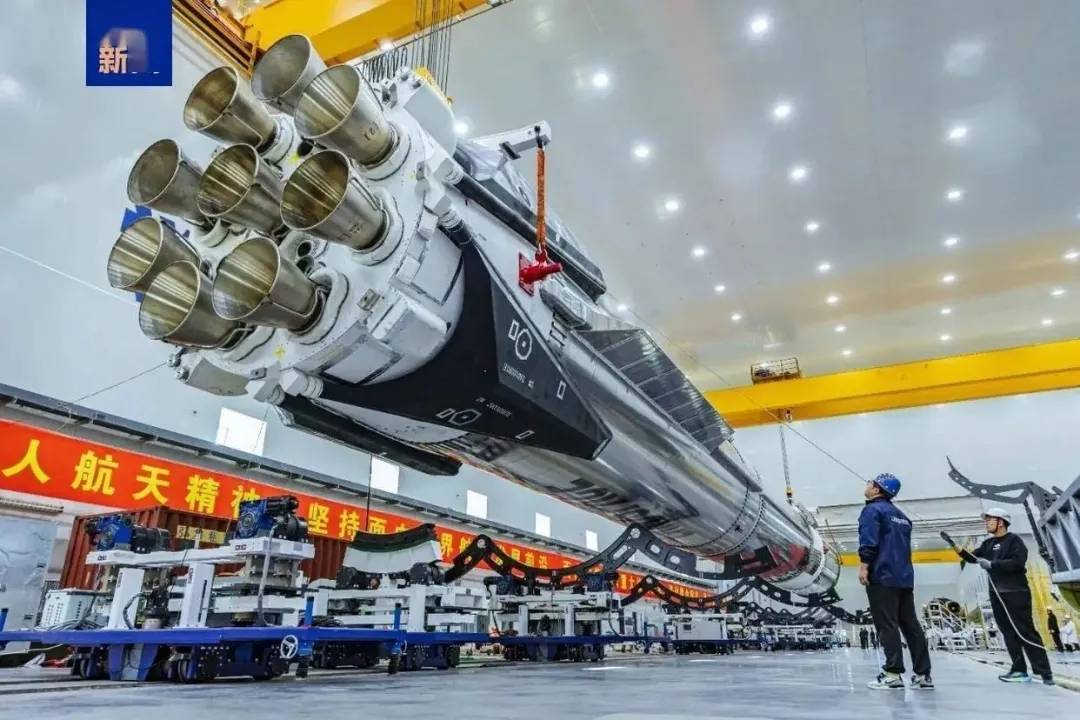
航天人以圆满成功给全国人民拜年
Xin Lang Cai Jing· 2026-02-15 11:37
Core Viewpoint - The successful test of the Long March 10 rocket, which carried the Dream Boat spacecraft, marks a significant milestone in China's manned lunar exploration program, demonstrating key technologies for rocket reusability after five years of preparation [1] Group 1: Mission Success - The Long March 10 rocket successfully completed its first low-altitude flight, maximum dynamic pressure escape, and sea recovery tasks [1] - The test validated critical technologies for the reusability of rockets, which is essential for future space missions [1] Group 2: Preparation and Execution - The test team prepared for five years, ensuring meticulous planning and execution of the mission [1] - During the launch, the coordination among the team was intense, with constant communication to address any uncertainties before ignition [1] Group 3: Recovery Operations - The search and rescue team provided location forecasts every 3-5 minutes, adjusting for faster ocean currents to ensure effective recovery [1] - Technical personnel on the sea recovery platform overcame adverse sea conditions, ready to implement emergency plans if necessary [1] Group 4: National Significance - The mission's success is presented as a New Year greeting to the people of the nation, symbolizing hope and achievement in space exploration [1]
新春走基层 | 万马奔腾开新局 中国航天再创辉煌
Yang Shi Wang· 2026-02-15 06:35
Core Viewpoint - The successful low-altitude flight test of the Long March 10 rocket, which carried the "Dream Boat" spacecraft, marks a significant milestone in China's manned lunar exploration program, validating key technologies for reusable rockets [1][16]. Group 1: Flight Test Details - The Long March 10 rocket, as China's fourth-generation rocket, features intelligent flight and reusability, with the low-altitude flight test serving as a critical technology validation for its reusable capabilities [3]. - The flight test was planned to last 470 seconds and included the first domestic maximum dynamic pressure escape and a world-first sea recovery system [3]. - The test team prepared for five years to ensure the success of this mission [3]. Group 2: Pre-Launch Preparations - Prior to the launch, three total checks and three full system rehearsals were conducted, involving coordination among various systems including the launch site, rocket, spacecraft, and recovery operations [4]. - Due to ongoing construction at the Long March 10's control building, a temporary control system was set up in a container to facilitate remote control and testing of the rocket [4]. Group 3: Recovery Operations - The recovery vessels set sail from late January to early February to reach the theoretical landing area of the rocket [5]. - The recovery team faced challenges due to the dynamic nature of ocean currents, requiring frequent updates on the landing coordinates every 3-5 minutes [9]. - The recovery platform, "Navigator," measures 144 meters in length and has a displacement of over 25,000 tons, presenting significant challenges in high seas [13]. Group 4: Technical Challenges - The recovery operation involved complex dynamics, including the need for high-speed movement to capture the rocket and manage energy absorption during recovery [13]. - The team utilized optical measurement systems and stabilization technologies to ensure clear tracking images despite rough sea conditions [9]. - The launch team faced logistical challenges, including temporary refueling methods due to incomplete facilities at the launch site [14].

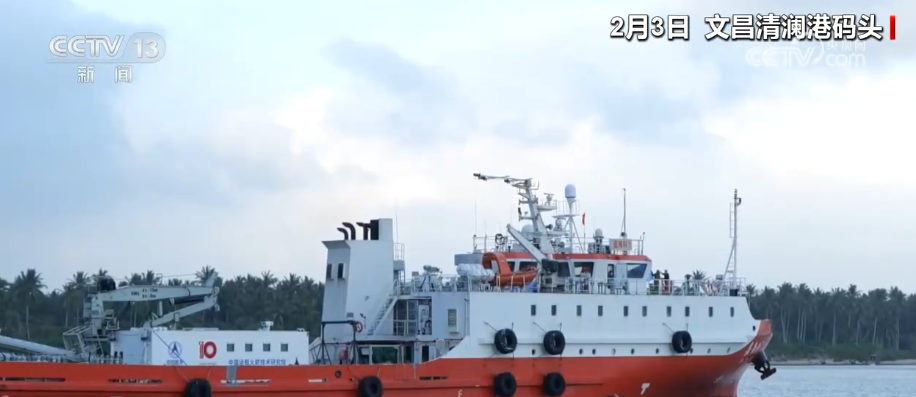
新春走基层丨离登月又近了一步!他们是梦舟飞船试验成功背后的逐梦人
Huan Qiu Wang Zi Xun· 2026-02-15 06:11
Core Viewpoint - The successful low-altitude flight test of the Long March 10 rocket, which carried the "Dream Chaser" spacecraft, marks a significant milestone in China's manned lunar exploration program, demonstrating key technologies for rocket reusability [1][34]. Group 1: Technical Achievements - The Long March 10 rocket, as China's fourth-generation rocket, features intelligent flight and reusability, with this test serving as a critical validation of its reusability capabilities [3]. - The maximum dynamic pressure escape test was conducted under atmospheric conditions of approximately 27 kPa, representing the highest domestic dynamic pressure conditions to date [5]. - The entire flight test was planned to last 470 seconds, with the test team preparing for five years [3]. Group 2: Operational Challenges - Due to the ongoing construction of the launch control building, the rocket's backend measurement and control system was temporarily set up in a container for remote control and testing [7]. - The recovery team faced challenges in tracking the spacecraft's position at sea, requiring updates every 3 to 5 minutes based on ocean current conditions [16][18]. - The recovery platform, "Navigator," is a large vessel measuring 144 meters in length and 50 meters in width, with a full displacement of over 25,000 tons, posing challenges due to its high center of gravity and adverse winter sea conditions [28]. Group 3: Team Coordination and Preparation - The test involved extensive pre-launch checks and system rehearsals, including three total inspections and three full-system drills to ensure all systems worked in coordination [5]. - The roles of command and coordination were enhanced with dual positions for better collaboration and redundancy during the testing process [12]. - The team has been working on the escape system technology for the "Dream Chaser" spacecraft for five years, ensuring that each member is fully familiar with their responsibilities [22].
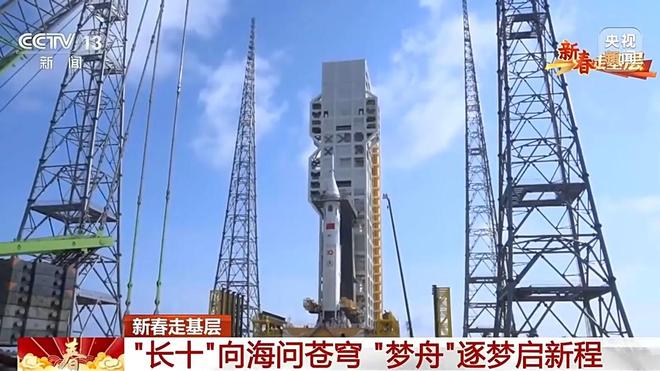
新春走基层丨“长十”向海问苍穹 “梦舟”逐梦启新程
Yang Shi Wang· 2026-02-15 02:55
Core Viewpoint - The successful low-altitude flight of the Long March 10 rocket, carrying the Dream Chaser spacecraft, marks a significant milestone in China's manned lunar exploration program, validating key technologies for rocket reusability [1] Group 1 - The Long March 10 rocket's first low-altitude flight successfully completed tasks such as maximum dynamic pressure escape and sea recovery [1] - This test is considered a major breakthrough in China's lunar exploration efforts [1] - The event was documented by multiple reporters from the state broadcaster, highlighting the significance of the achievement in space exploration [1]
商业航天:“高热度”下的“冷思考”
Ren Min Ri Bao· 2026-01-27 06:20
Core Viewpoint - The development of China's commercial space industry is at a critical juncture, with significant opportunities and challenges ahead, particularly in achieving reusable rocket technology and scaling up production efficiency [1][7]. Group 1: Technological Innovation - The demand for large-scale rocket launches is driven by the extensive satellite deployment plans, necessitating improvements in rocket cost-effectiveness and the development of reusable technologies [3]. - Blue Arrow Aerospace's Zhuque-2 rocket became the world's first liquid oxygen-methane rocket to reach orbit, marking a significant step towards reusable rocket technology [3]. - Companies like Tianbing Technology and Galaxy Aerospace are making strides in key technologies, such as multi-satellite launches and advanced satellite designs [3]. Group 2: Efficiency Enhancement - Experts estimate that over the next nine years, China needs to launch more than 25,000 satellites, with a total of over 120,000 satellites in the next twelve years [4]. - The industry consensus is to produce satellites in bulk, akin to automobile manufacturing, to meet the high demand efficiently [5]. - Innovations in production lines have significantly reduced the assembly time for satellites, with some companies achieving a turnaround of 20-25 days for satellite assembly [5]. Group 3: Ecological Support - The establishment of a comprehensive commercial space industry chain at the Dongfang Spaceport in Shandong enhances collaboration and reduces costs [6]. - Beijing is highlighted as a hub for commercial space enterprises, hosting a majority of the country's rocket companies and facilitating a closed-loop from rocket manufacturing to satellite utilization [6]. Group 4: Development Challenges - Many commercial space companies are struggling to achieve profitability, relying heavily on financing and facing challenges in market expansion [7]. - The high cost of rocket launches remains a significant barrier to the industry's growth, with the engine and rocket body costs comprising a large portion of total expenses [8]. - The need for a regulatory framework that supports frequent launches is emphasized, as current resources are limited, constraining launch opportunities [10]. Group 5: Market Demand and Application - The true demand for commercial space lies in the application of satellite services, such as satellite internet and remote sensing, which are essential for sustainable development [11]. - The government is actively promoting the expansion of satellite service applications to stimulate market demand and support the commercial space sector [11][12]. - Recent policy initiatives aim to enhance the commercial space industry's development, encouraging private sector participation and innovation [13].
人民日报:商业航天,“高热度”下的“冷思考”
Ren Min Ri Bao· 2026-01-27 00:47
Core Viewpoint - The development of China's commercial space industry is at a critical juncture, with significant opportunities and challenges ahead, particularly in achieving reusable rocket technology and enhancing launch frequency and cost-effectiveness [1][6]. Group 1: Industry Development and Opportunities - China has submitted plans for a satellite network comprising over 200,000 satellites, necessitating rapid advancements in rocket capacity, satellite production, and reusable technology [1]. - By 2025, China aims to conduct 25 commercial rocket launches and place 311 satellites into orbit, representing 84% of the total satellites launched that year [1]. - The industry is witnessing a surge in demand for rocket launches driven by extensive satellite deployment, with a need to launch over 25,000 satellites in the next nine years [3]. Group 2: Technological Innovations - Blue Arrow Aerospace's Zhuque-2 rocket became the world's first liquid oxygen-methane rocket to reach orbit, marking a significant step towards reusable rocket technology [2]. - Companies like Tianbing Technology and Galaxy Aerospace are pioneering various technologies, including "one rocket, 36 satellites" launch capabilities and lightweight engines [2]. - The development of stackable satellites is emerging as a trend to enhance launch efficiency, allowing multiple satellites to be launched simultaneously [5]. Group 3: Efficiency and Production - The industry consensus is to produce satellites in bulk, akin to automobile manufacturing, to improve efficiency [4]. - Galaxy Aerospace's recent satellite launch demonstrated a fully digitalized production process, significantly reducing assembly time from several months to as little as 20-25 days [4]. - The Chinese aerospace industry is advancing towards a model where 500 kg satellites can be ready for launch in just 20 days [4]. Group 4: Challenges and Constraints - The commercial space sector faces challenges in establishing a profitable business model, with many companies still reliant on external funding and struggling to generate revenue [6]. - Limited launch opportunities due to a shortage of launch sites and resources are constraining the frequency of commercial launches [9]. - The high cost of rocket launches, primarily driven by engine and airframe expenses, remains a significant barrier to industry growth [7][8]. Group 5: Policy and Support - The Chinese government is actively promoting the commercial space sector, with policies aimed at fostering innovation and reducing regulatory burdens [14]. - The State Council has issued guidelines to encourage the expansion of satellite service applications, aiming to bridge the gap between satellite capabilities and market demand [12]. - There is a call for a regulatory framework that supports frequent launches and efficient resource allocation, akin to aviation management practices [10].
商业航天:“高热度”下的“冷思考”(深度观察)
Ren Min Wang· 2026-01-26 22:38
Core Viewpoint - The development of China's commercial space industry is at a critical juncture, with significant opportunities and challenges ahead, particularly in achieving reusable rocket technology and scaling up production efficiency to meet the demand for satellite launches [1][8]. Group 1: Technological Innovation - Technological innovation is the foundation for development, with a focus on improving the cost-effectiveness of rocket launches and developing reusable rocket technology [3]. - The successful launch of the Zhuque-2 rocket by Blue Arrow Aerospace marked a significant milestone as the world's first liquid oxygen-methane rocket to reach orbit, showcasing advancements in key technologies [3]. - Companies like Tianbing Technology and Galaxy Aerospace are leading in various technological advancements, including multi-satellite launches and high-performance engines [3][6]. Group 2: Efficiency Improvement - Experts estimate that over the next nine years, China needs to launch more than 25,000 satellites, with a total of over 120,000 satellites in the next twelve years to meet the demand [4]. - The industry consensus is to produce satellites in bulk, akin to automobile manufacturing, to enhance efficiency [5]. - Innovations in production lines have significantly reduced the assembly time for satellites, with some companies achieving a turnaround of 20-25 days for satellite assembly [5]. Group 3: Ecological Support - The establishment of a comprehensive commercial space industry chain at the Dongfang Spaceport in Shandong is crucial, integrating satellite manufacturing, rocket launching, and control services [7]. - Beijing has emerged as a hub for commercial space enterprises, housing over 70% of the country's commercial rocket companies, facilitating a closed-loop from rocket manufacturing to satellite utilization [7]. Group 4: Development Challenges - The commercial space industry is facing challenges in profitability, with many companies relying heavily on financing and struggling to generate revenue from launch tasks [8]. - The high cost of rocket launches remains a core constraint, with the engine and rocket body costs accounting for over 70% of total expenses [9]. - Limited launch opportunities due to a shortage of launch sites and resources are hindering the frequency of commercial launches [11]. Group 5: Policy and Market Dynamics - The Chinese government is actively promoting the development of commercial space through supportive policies, including the encouragement of satellite service applications and the establishment of a market-driven procurement model [13][15]. - The upcoming launches of several commercial rockets in 2026 are expected to further bridge the technological gap with international counterparts [15].
商业火箭企业IPO迎利好 中大型复用火箭成“硬条件”
Zhong Guo Zheng Quan Bao· 2026-01-10 05:08
Core Viewpoint - The recent issuance of the Shanghai Stock Exchange's guidelines for commercial rocket companies marks a significant regulatory milestone, clarifying the path for these companies to go public and emphasizing the importance of reusable rocket technology in the industry [1][3]. Group 1: Regulatory Guidelines - The guidelines consist of 14 articles that detail the specific requirements for commercial rocket companies applying for the fifth set of listing standards on the Sci-Tech Innovation Board [1]. - A key requirement is that applicants must demonstrate successful orbital insertion of payloads using medium to large reusable rockets as a prerequisite for listing [3][7]. - The guidelines aim to signal a strong emphasis on technological innovation and the commercialization of space technology [1][3]. Group 2: Industry Trends - The global commercial space industry is transitioning from state-led initiatives to commercialization, focusing on high-frequency, low-cost launches [3]. - By 2025, private rocket companies in China are expected to execute 23 launch missions, successfully placing 324 satellites into orbit, highlighting the rapid growth of the sector [3]. - The establishment of clear listing standards is expected to accelerate the pace of IPOs among commercial rocket companies, with several firms already in the process [4][5]. Group 3: Company Developments - Blue Arrow Aerospace's IPO application was accepted by the Shanghai Stock Exchange, indicating a significant step in the commercialization of the industry [4]. - Other leading companies, such as Star Glory and Tianbing Technology, are also actively pursuing IPOs, with Star Glory having initiated its preparations as early as 2020 [5]. - The competitive landscape is characterized by diverse technological paths, with companies like Blue Arrow and Star Glory focusing on achieving full-chain breakthroughs from successful launches to reliable recovery [10][11]. Group 4: Technical Challenges - The guidelines do not mandate the completion of recovery technology validation before application, but they emphasize the importance of reusable technology as a competitive edge in the industry [7]. - Achieving reliable rocket recovery remains a significant technical challenge, with complexities in design and engineering that require a systematic approach [8][10]. - The successful implementation of reusable technology is crucial for meeting the increasing demand for high-frequency, large-capacity, and low-cost launches in the future [7][10]. Group 5: Future Outlook - The year 2026 is anticipated to be a pivotal year for commercial space launches in China, with several companies preparing for significant milestones in their launch capabilities [12]. - The guidelines are expected to direct capital and resources toward companies that have clear models and core technologies, fostering a competitive environment focused on engineering realization and reliability enhancement [12].
商业火箭企业IPO迎利好,中大型复用火箭成“硬条件”
Zhong Guo Zheng Quan Bao· 2026-01-10 04:35
Core Viewpoint - The recent issuance of the Shanghai Stock Exchange's guidelines for commercial rocket companies marks a significant step in clarifying the listing path for the industry, emphasizing the importance of reusable technology and successful orbital launches as prerequisites for IPOs [1][2]. Group 1: Listing Guidelines - The guidelines specify that companies must achieve "successful orbital launch of payloads using medium to large reusable rockets" as a hard requirement for listing on the Sci-Tech Innovation Board [2][6]. - The guidelines consist of 14 articles that detail the specific requirements for commercial rocket enterprises, providing a clear roadmap for those aiming for an IPO [1][2]. - The policy aims to signal the importance of technological innovation and directs resources towards companies that possess core technologies and engineering capabilities [2][6]. Group 2: Industry Trends - The commercial space industry is transitioning from state-led initiatives to a market-driven model, focusing on high-frequency, low-cost launches [2][10]. - By 2025, private rocket companies in China are expected to execute 23 launch missions, successfully sending 324 satellites into space, highlighting the rapid growth of the sector [2][10]. - The establishment of clear listing standards is expected to accelerate the capital market entry of commercial rocket companies, injecting strong momentum into the industry for the next decade [4][10]. Group 3: Technological Challenges - While the guidelines do not mandate the completion of rocket recovery technology validation prior to application, they emphasize the adoption of reusable technology as a key competitive factor in the future [6][7]. - The complexity of achieving reliable rocket recovery poses significant challenges, with multiple technical constraints that must be met during the return phase [6][7]. - Successful recovery is seen as critical for meeting the high-frequency, large-capacity, and low-cost launch demands of future satellite internet applications [6][7]. Group 4: Company Developments - Blue Arrow Aerospace and iSpace are leading the charge in developing medium to large liquid rockets, focusing on achieving both successful orbital launches and reliable recovery [8][9]. - iSpace's SQX-3 rocket aims for an integrated goal of achieving orbital launch and sea recovery, marking a significant step in the industry [8][9]. - The upcoming year of 2026 is anticipated to be a pivotal year for commercial space launches in China, with multiple companies preparing for significant milestones [10].