
红色旅游

Search documents
铭记历史 缅怀先烈 | 红色底蕴与新兴产业融合 解码革命老区的振兴路
Yang Shi Wang· 2025-08-06 09:23
Core Viewpoint - The article highlights the historical significance and modern development of Xiaogan City in Hubei Province, emphasizing its role during the Anti-Japanese War and its current economic transformation through agriculture and the sensor industry. Historical Context - During the Anti-Japanese War, Xiaogan served as a crucial command center for the New Fourth Army and a logistics base for the Anti-Japanese Democratic Base in the Eyu-Wan border area, becoming a key force in central China [1][5] - The New Fourth Army's Fifth Division conducted over 1,260 major battles and successfully resisted 150,000 Japanese troops, establishing a significant Anti-Japanese Democratic Base [5] Tourism Development - The Zhao Qian Red Tourism Highway, completed in 2021, connects eight previously remote towns, attracting over 10 million tourists and generating more than 6 billion yuan in tourism revenue [3] Agricultural Advancements - Xiaogan has developed five major agricultural industry chains, including rice, poultry, and vegetables, with the establishment of Hubei's largest agricultural product trading hub in 2023 [11] - The integration of modern agricultural technologies has led to the establishment of one of the largest blueberry planting bases in central China, with over 8,000 acres dedicated to blueberry cultivation [9] Economic Growth - The sensor industry in Xiaogan has become a significant part of the trillion-yuan optical electronic information industry cluster in Hubei, with the city emerging as the largest multifunctional sensor production base in China [11] - In 2024, the sensor industry is projected to generate over 5 billion yuan in revenue, with the optical electronic information sector's enterprises reaching 115 and total output value exceeding 40 billion yuan [13] Infrastructure and Community Development - Investments exceeding 100 million yuan since 2021 have improved local infrastructure, enhancing the quality of life for residents and transforming rural areas [9]

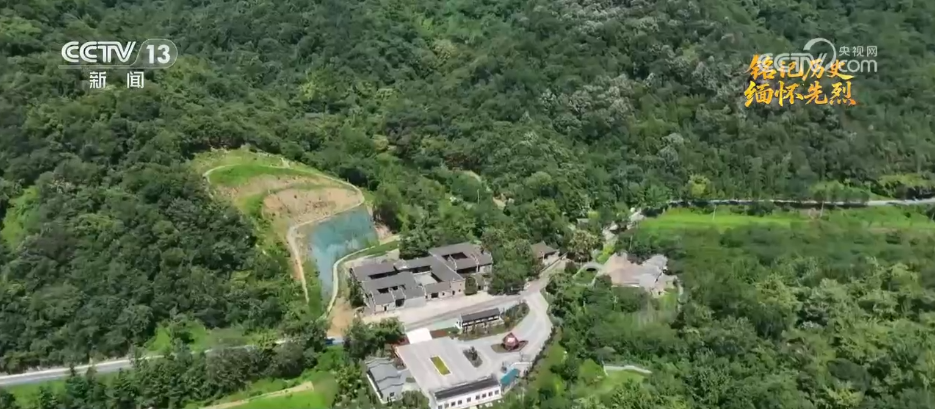
铭记历史 缅怀先烈|红底色 绿生态 新动能——陕甘宁革命老区旧貌换新颜
Xin Hua She· 2025-08-05 08:11
Core Viewpoint - The article highlights the transformation and development of the Shaanxi-Gansu-Ningxia revolutionary base area, showcasing its historical significance and current advancements in ecological restoration, tourism, and digital economy. Group 1: Historical Significance - The Shaanxi-Gansu-Ningxia revolutionary base area is a crucial site in the history of the Communist Party, serving as a revolutionary base during the land reform war and a starting point for the anti-Japanese war and the establishment of New China [1][2]. Group 2: Ecological Restoration - The ecological transformation in the region is exemplified by the "cliff afforestation team," which has successfully created over 10,000 acres of forest on previously barren cliffs [3]. - The implementation of "four lines of defense" has effectively reduced soil erosion in villages, making the area a model for ecological restoration [3]. - The honey production industry has thrived due to improved ecological conditions, with beekeepers reporting annual incomes in the tens of thousands of yuan [3]. Group 3: Tourism Development - The red tourism sector in Yan'an has seen a significant increase, with 47.315 million visitors expected in 2024, marking a 12.7% year-on-year growth [2]. - Innovative expressions of historical narratives and immersive experiences have enhanced visitor engagement in red tourism [2]. Group 4: Digital Economy and New Industries - The "East Data West Calculation" industrial park in Qingyang has become a hub for digital economy, with 31,000 standard racks operating at a computing power scale of 6.6 million PFlops [5]. - The local sheep industry has developed a complete industrial chain, contributing to stable income for farmers [5]. - The apple industry in Luochuan has adopted advanced sorting technology and online marketing strategies, significantly enhancing its market reach [5].
铭记历史 缅怀先烈丨红底色 绿生态 新动能——陕甘宁革命老区旧貌换新颜
Xin Hua Wang· 2025-08-05 08:03
Core Viewpoint - The article highlights the transformation of the Shaanxi-Gansu-Ningxia revolutionary base area, showcasing its historical significance and current developments in ecological restoration, tourism, and digital economy. Group 1: Historical Significance - The Shaanxi-Gansu-Ningxia revolutionary base area is a crucial site in the history of the Communist Party, serving as a revolutionary base during the land reform war and a starting point for the Long March [1] - The region embodies the spirit of resistance and the legacy of the Anti-Japanese War, contributing to the formation of the great Anti-Japanese spirit and Yan'an spirit [1] Group 2: Ecological Restoration - The "cliff afforestation team" in Yichuan has successfully transformed over 10,000 acres of barren cliffs into green landscapes through innovative methods like "rope planting" [5] - In Huachi County, the implementation of "four lines of defense" has effectively controlled soil erosion, making the area a model for ecological restoration [6] - The honey production in Wayaogou Village has significantly increased due to improved environmental conditions, with beekeepers reporting annual incomes in the tens of thousands of yuan [7] Group 3: Tourism Development - The red tourism in Yan'an is thriving, with a projected 47.315 million visitors in 2024, marking a 12.7% increase year-on-year, as tourists seek inspiration from revolutionary sites [2] Group 4: Digital Economy and New Industries - The "East Data West Calculation" industrial park in Qingyang features 31,000 standard racks operating at a computing power of 6.6 million PFlops, positioning the area as a hub for the digital economy [8] - The sheep farming industry in Ningxia has developed a complete industrial chain, enhancing income stability for local farmers through higher-than-market prices for sheep [8] - The apple industry in Luochuan has adopted advanced sorting technology, achieving a sorting efficiency of 15 tons per hour, and expanding its market reach through online sales [10]

铭记历史 缅怀先烈丨陕西延安:昔日抗战后方 今朝发展动能澎湃
Xin Hua She· 2025-08-01 11:47
Group 1: Historical Significance - The region of Yan'an, particularly the South Muddy Bay, played a crucial role as a political and military center during the Chinese resistance against Japanese invasion from 1935 to 1948 [1][2] - The spirit of self-reliance and hard work, exemplified by the soldiers of the 359th Brigade who transformed the area, continues to influence the local culture and development [2][3] Group 2: Economic Development - The South Muddy Bay has seen significant economic transformation, with the average per capita income of Ma Fang Village exceeding 23,000 yuan last year, showcasing a shift from poverty to prosperity [2] - The local economy is diversifying with the establishment of a pre-prepared food industry, organic vegetable greenhouses, and a booming tourism sector, including 140 million visitors expected in 2024 [2][4] - The apple industry in the region has become a pillar of rural revitalization, with a projected comprehensive output value of 55.1 billion yuan in 2024, contributing significantly to local farmers' income [5][6] Group 3: Tourism and Cultural Heritage - Yan'an has developed into a red tourism hub, attracting millions of visitors annually, with cumulative tourist numbers reaching 150 million over the past five years and generating over 100 billion yuan in revenue [4] - Cultural performances, such as the immersive show "Thirteen Years in Yan'an," have become popular, drawing nearly 150,000 visitors since its launch in 2023 [3][4]
红色旅游目的地火热 遵义门票预订量大增
Zheng Quan Shi Bao· 2025-07-31 21:32
Core Insights - Traditional red tourism destinations are experiencing a surge in visitor numbers during the summer, driven by factors such as pleasant weather, quality accommodations, and engaging content [1][2] - The shift from static visits to interactive experiences is evident, with immersive performances and military-themed exhibitions enhancing visitor engagement [1][2] Group 1: Hotel and Ticket Booking Trends - Jinggangshan's hotel bookings increased by nearly 40% year-on-year, outperforming the overall growth in Jiangxi province by 12 percentage points [1] - Ticket bookings for Jinggangshan scenic area rose by 22% during the summer [1] - Other red tourism sites also saw significant growth, with hotel bookings in Yan'an up nearly 20% and in Shaoshan up 12% [1] Group 2: Performance of Immersive Experiences - The immersive performance "Great Turning Point" in Zunyi saw ticket bookings triple compared to the previous year [2] - The "Battle of Laoshan Pass" performance in Zunyi led to a 41% increase in ticket bookings for the performance site and a 62% increase for the entire Laoshan scenic area [2] - The large-scale immersive performance "Jinggangshan" in Jiangxi also experienced a 28% increase in ticket sales during the summer [2] Group 3: Impact of Aerospace Exhibitions - Major aerospace exhibitions in cities like Changchun, Xiamen, and Shijiazhuang attracted significant interest, with hotel bookings in these cities showing year-on-year growth [2] - The 2025 China Aerospace Science and Technology Exhibition in Changchun resulted in a 67% increase in hotel bookings during the event, which is 1.4 times the average growth rate for the summer [2] - The popularity of military museums also rose, with the China People's Revolutionary Military Museum seeing a nearly 30% increase in visitor interest, ranking among the top 10 most popular scenic spots nationwide [2]
让红色旅游持续焕发生命力
Jing Ji Ri Bao· 2025-07-29 22:11
在发展过程中,红色旅游仍存在融合发展水平较低、品牌营销意识薄弱、数字化建设不深入、专业人才 素养有待提高等现实问题。因此,要多措并举,让红色旅游持续焕发生命力。 前不久,"中央红色交通线主题游径"在上海发布,这条横贯沪、粤、闽、赣的"红色旅游长廊"串联起沿 线城市24处核心革命旧址与革命场馆,将丰富的红色旅游资源以全新形式向社会公众呈现。红色旅游是 以革命纪念地、纪念物及其所承载的革命精神为载体,组织接待旅游者开展革命历史知识学习、接受革 命传统教育的主题性旅游活动,是红色文化资源与旅游消费场景深度融合形成的新型产业形态,以文塑 旅、以旅彰文,实现了红色文化以文化人的教育功能,推动了现代文化产业体系的优化升级。 一方面,拓展红色旅游业态格局。依托红色文化场景和地方红色资源,提炼出具有代表性和感染力的红 色文化元素,打造让游客"看得见""记得住"的红色旅游品牌,并将其延展到文创产品、实体经济、文化 活动中,将红色基因转化为文旅融合的强劲动力,构建兼具历史厚度与体验深度的红色旅游体系。强化 业态协同与区域合作,积极探索"红色+N"融合发展模式,将红色文化与教育研学、乡村旅游、生态旅 游等有机融合,加强各地在红色旅 ...
铭记历史 缅怀先烈丨红绿生“金” 大别山老区“焕”新景
Xin Hua She· 2025-07-28 09:03
Core Insights - The article highlights the transformation of Luohan Mountain Village in Anhui Province into a red tourism destination, leveraging its rich revolutionary history and natural scenery to attract visitors [1][2][3] Group 1: Red Tourism Development - Red tourism has become the leading industry in Luohan Mountain Village, with expectations to attract over 300,000 tourists in 2024, generating direct income of over 200,000 yuan for the village collective [2] - The establishment of the "Sai Ying Ge" farmhouse by local resident Wu Wenyi has contributed to the local economy, with annual income from the farmhouse and local specialty sales reaching around 100,000 yuan [2] - The area has seen the development of over 10 farmhouses and guesthouses, enhancing the local tourism infrastructure [2] Group 2: Historical Significance and Attractions - The village is located near significant historical sites, including the meeting point of the New Fourth Army in 1941, which adds to its appeal as a tourist destination [2] - Chen Hanxiang Valley, located in Chen Han Township, has become a popular tourist spot, receiving over 300,000 visitors since its opening in early 2024, contributing an additional 300,000 yuan to the village economy [3] - Plans for further development include expanding existing facilities and introducing new tourism projects such as forest health care and leisure camping [3]
铭记历史 缅怀先烈丨大别山下薪火传——鄂豫皖根据地绘就振兴新图景
Xin Hua She· 2025-07-28 07:24
Group 1: Historical Significance and Tourism Development - The historical significance of the Dabie Mountains is highlighted, where the New Fourth Army played a crucial role in resisting Japanese invaders during the war [1] - The New Fourth Army's former command post in Baiguoshu Bay Village has been upgraded to a national 4A tourist attraction, reflecting the area's rich historical heritage and increasing tourist interest [2] - In 2024, Dawu County is expected to receive 7.9 million tourists, generating a total revenue of 4.5 billion yuan, benefiting over 100,000 villagers through tourism-related activities [3] Group 2: Local Industry and Economic Growth - The violin industry in Quxian County has developed significantly, with 144 violin manufacturing enterprises contributing to a complete industrial chain, accounting for over 40% of the national output [4] - The tea industry in Chenhan Township is thriving, with a projected total tea production of 35,000 jin (17.5 tons) in 2024, generating over 10 million yuan in revenue [6] - The agricultural sector in Xiangtou Township is focusing on rice-shrimp rotation farming, with 21 large-scale bases established, achieving a comprehensive output value of 236 million yuan in 2024 [7]
42个红手印立下“生死合同”:宁死不当汉奸!
Yang Shi Xin Wen Ke Hu Duan· 2025-07-27 06:50
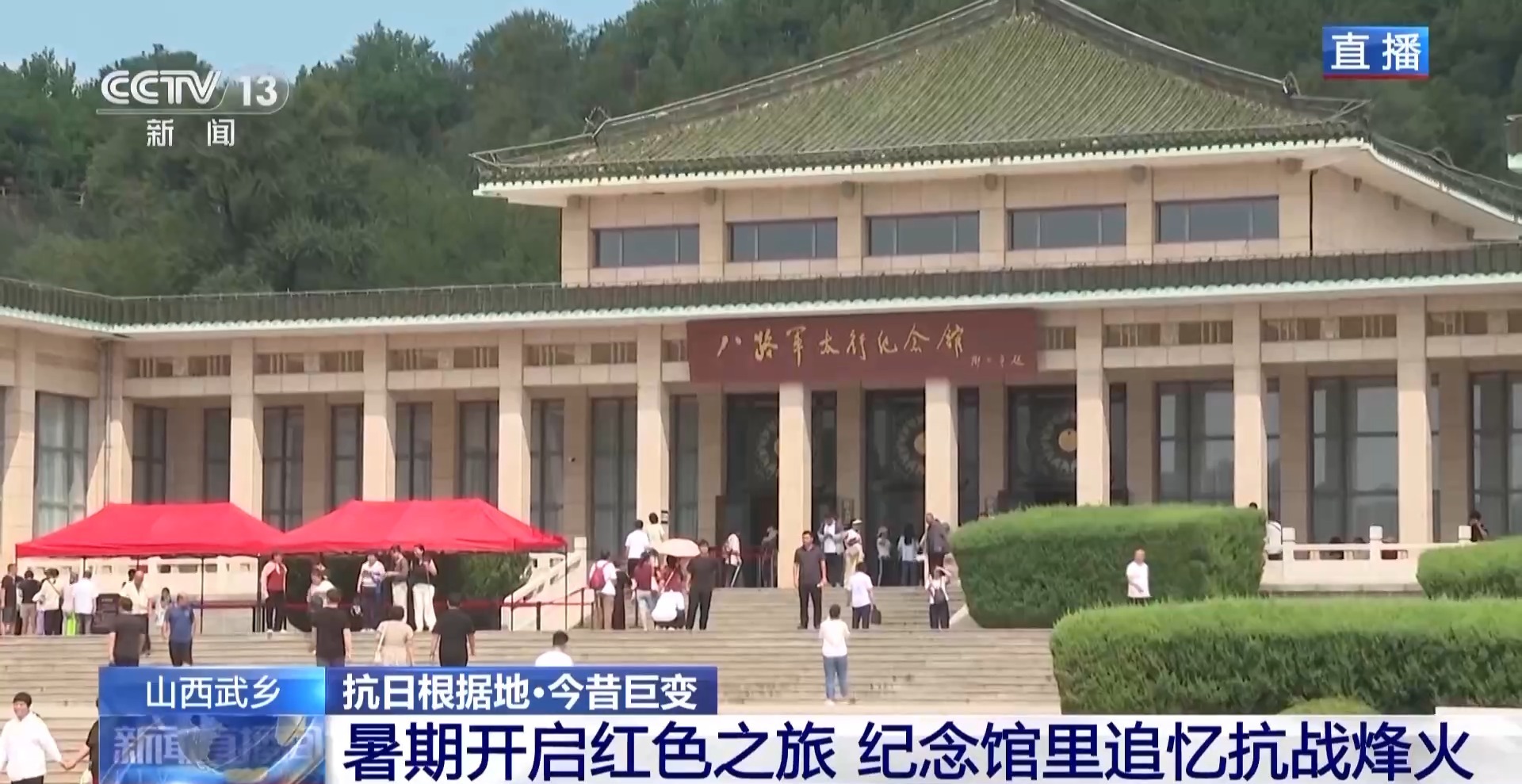
Core Viewpoint - The article highlights the significance of the Eighth Route Army Taihang Memorial Hall in Wuxiang County, Shanxi Province, as a key site for commemorating the history of the Anti-Japanese War, especially during the 80th anniversary of the victory in the war, attracting numerous visitors and educational groups [1][15]. Group 1: Historical Significance - Wuxiang County served as a long-term base for the Eighth Route Army during the Anti-Japanese War and is a core area of the Taihang Mountain revolutionary base [1]. - The Taihang Memorial Hall reflects the comprehensive history of the Eighth Route Army's efforts during the war, with many visitors coming to learn about the revolutionary stories [3][5]. Group 2: Visitor Experience - Visitors can engage in immersive experiences at the Hundred Regiments Offensive Experience Hall, utilizing sound and light effects to recreate intense battle scenes [5]. - The memorial houses over 6,500 cultural relics that connect the history of the Eighth Route Army in the Taihang Mountains, showcasing poignant stories of sacrifice and resistance [7][9]. Group 3: Red Tourism Development - Wuxiang County is described as a "wall-less museum" of revolutionary history, with numerous red landmarks from the Anti-Japanese War era [9][11]. - The newly opened Taihang No. 1 Tourist Road connects various red landmarks, and activities like "Retracing the Heroic Path of Taihang" are organized to enhance red tourism [11][13]. - In July, the number of visitors to red tourism sites in Wuxiang County reached 270,000, indicating a growing interest in red tourism [15].
红旗渠精神发祥地如何从贫困山区变成幸福家园?
Zhong Guo Huan Jing Bao· 2025-07-24 00:25
Core Viewpoint - Linzhou City has transformed from a poverty-stricken mountainous area to a tourism destination by prioritizing ecological development and implementing the concept of "lucid waters and lush mountains are invaluable assets" [1][8]. Environmental Governance - Linzhou has initiated systematic restoration and enhancement of its natural environment, achieving over 95% effective rural waste management through a market-oriented cleaning model combined with community participation [2]. - The city has engaged 1.56 million people in a "Clean Home" campaign, clearing 865,000 tons of waste and planting 480,000 trees, while also completing toilet renovations for 92% of rural households [2]. - The "All-region Greening" plan has increased forest coverage to 47%, with 1.71 million acres of forest land, including 300,000 acres of economic forest [2]. Resource Recycling - Linzhou has creatively repurposed traditional stone structures from demolished buildings into park landscapes, preserving cultural memory while reducing construction costs [3]. - The city has transformed 1,100 hectares of abandoned homesteads into gardens and orchards [3]. Ecological Industry Development - Linzhou has strategically developed unique ecological industries, facilitating the conversion of "green mountains and clear waters" into economic benefits [4]. - The chrysanthemum industry has been established in Tea Shop Town, generating an annual output of approximately 10 million kilograms and contributing over 35 million yuan to local farmers [4]. - The under-forest economy has been developed by utilizing forest resources for medicinal herbs, generating over 1 million yuan in annual income from 300 acres of medicinal plants [4]. Slope Economy - Linzhou has introduced favorable policies for slope land development, leading to the transformation of 1,500 acres of wasteland into terraced fields for walnut and apple cultivation, providing over 80 jobs [5]. Cultural and Tourism Integration - Linzhou has built a comprehensive tourism system leveraging the Red Flag Canal spirit and the natural resources of the Taihang Mountains, establishing a 5A-level tourist area [6][7]. - The city has developed over 470 boutique homestays, transforming traditional villages into popular tourist destinations [8]. - The integration of tourism and industry aims to achieve a modern industrial system, focusing on high-end, intelligent, and green development [8].