
文化产业

Search documents
第四届长沙市旅游发展大会今日在宁乡开幕
Chang Sha Wan Bao· 2025-09-26 03:38
Core Insights - Changsha has emerged as a top tourist destination, receiving 238,200 inbound visitors in the first half of the year, with total spending reaching $140 million, marking year-on-year growth of 54.19% and 49.25% respectively [1] - The annual Changsha Tourism Development Conference has become a significant platform for enhancing the cultural tourism industry and improving the city's image, with the fourth conference scheduled for September 26 [1] - Changsha is actively promoting its cultural tourism through various initiatives, including the implementation of ten cultural tourism projects and the recognition as one of the "Top Ten Cities for Beautiful Living in China" [1] Group 1: Tourism Development Initiatives - The renovation of the Dafu Di Chuyuan Hot Spring Inn during the tourism conference showcases traditional culture and aims to provide an immersive experience [2] - Changsha's cultural and tourism sectors are being integrated to create a comprehensive industry chain, enhancing attractions like the Changsha Fantawild Oriental Heritage and the Tanheli Bronze Museum [2] - The successful hosting of the tourism development conferences has led to significant advancements in local tourism, with Wocheng and Liuyang achieving notable rankings in national tourism strength [4][5] Group 2: International Promotion and Visitor Engagement - Global influencers have visited Changsha, promoting the city as a vibrant destination, with a significant increase in inbound tourists, particularly from regions benefiting from the 240-hour visa-free transit policy [6][7][8] - Changsha is leveraging its cultural and historical assets to attract international visitors, aiming to establish itself as a key entry point for inbound tourism in China [7][8] Group 3: Cultural and Community Engagement - The city is enhancing its cultural offerings through events like the Red Storytelling Competition, which aims to instill revolutionary spirit and engage the community [9] - Efforts to improve public cultural services and facilities are ongoing, with initiatives to increase access to literature, exhibitions, and performances, thereby enhancing the overall cultural experience for residents [10] - The local government emphasizes the importance of cultural tourism integration to drive high-quality industry development, aiming to make Changsha a beloved destination [11]
陕西以“万企兴万村”推动乡村振兴
Shan Xi Ri Bao· 2025-09-26 00:32
Group 1 - The core viewpoint emphasizes the transformation from mere assistance to mutual development in rural revitalization, showcasing the role of private enterprises in driving economic growth and community engagement [1][2][5] - The "Ten Thousand Enterprises Revitalize Ten Thousand Villages" initiative has shifted from a one-way aid model to a sustainable development approach, integrating market mechanisms and fostering partnerships between businesses and rural communities [2][5] - The establishment of a special guarantee fund by leading enterprises in Meixian has facilitated financing of 2.47 billion yuan, significantly enhancing farmers' income through innovative agricultural practices [2] Group 2 - The collaboration between agricultural enterprises and research institutions has led to increased productivity and income for farmers, with average annual earnings rising by 48,000 yuan per household in mushroom cultivation [3][4] - Cultural elements have been integrated into industry development, creating job opportunities for over 200 local residents and increasing per capita income by more than 5,000 yuan [4] - The formation of the Rural Revitalization Working Committee by the Shaanxi Provincial Federation of Industry and Commerce marks a new phase of organized and systematic participation of private enterprises in rural revitalization efforts [5] Group 3 - The initiative has resulted in 10,466 private enterprises participating by early 2025, with 14,177 projects implemented and 7,785 villages revitalized, positioning the action among the top in the nation [5] - The collaboration with financial institutions has provided essential support for private enterprises, ensuring that projects are not just donations but involve technology, market resources, and investment [5]
2025北京文化论坛圆满落幕,用中国经验回答时代之问
Bei Jing Ri Bao Ke Hu Duan· 2025-09-25 11:52
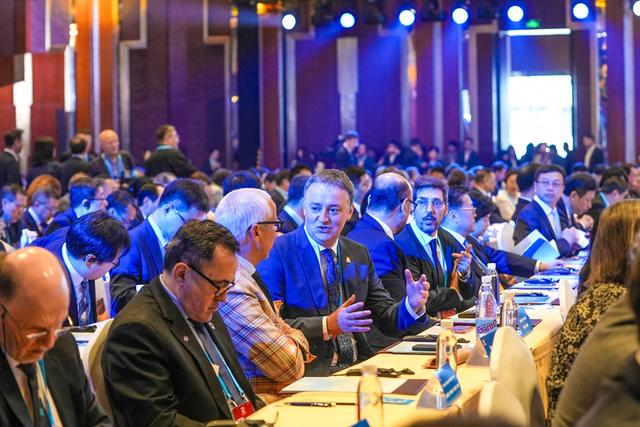
Core Insights - The 2025 Beijing Cultural Forum successfully convened nearly 800 guests, featuring six parallel forums and over 20 professional salons, focusing on the integration of culture and technology [1][3] Group 1: Cultural and Technological Integration - The forum emphasized the opportunities and challenges presented by the integration of culture and technology, with notable discussions on the impact of disruptive technologies like artificial intelligence on cultural transformation [5][6] - Former French Prime Minister Jean-Pierre Raffarin highlighted the necessity of promoting culture within a multilateral framework, asserting that both France and China recognize the profound changes AI could bring to the cultural sector [5][6] Group 2: Digital Technology in Cultural Heritage - The importance of digital technology in preserving and sharing cultural heritage was underscored, with examples such as the Palace Museum's AI knowledge graph and the Dunhuang Research Academy's digital resources reaching over 20 million global visitors [6][8] - The National Library of China has digitized over 120,000 ancient texts, supporting academic research and public learning, while the "Cloud Central Axis" project has engaged over 1.09 million participants in heritage protection [6][8] Group 3: Cultural Industry Growth - The forum showcased the potential of cultural industries, with popular cultural products like the National Museum's refrigerator magnets achieving sales exceeding 1 million units, and the game "Black Myth: Wukong" generating over 10 billion yuan in sales [8][10] - The cultural industry is seen as a vital source of happiness and social cohesion, with favorable conditions for development highlighted during the Cultural Industry Investors Conference [10] Group 4: Challenges in the Digital Age - The rapid advancement of AI technology poses challenges for copyright management in creative industries, necessitating new frameworks for data usage and content creation [12] - Experts emphasized the need for a new ecosystem to adapt to the evolving landscape of AI-generated content, focusing on the balance between technology and cultural originality [12][13]


产业投融资回暖提速 四大趋势驱动文化产业成支柱
Zhong Guo Jing Ji Wang· 2025-09-25 04:53
Core Insights - The report highlights the continuous growth of China's cultural industry revenue, driven by favorable policies, technological innovation, and the deep integration of culture, tourism, and commerce [1][2] - The cultural investment and financing market in China is recovering rapidly, with active bond financing and a rebound in private equity and M&A markets [1][2] Group 1: Industry Trends - The cultural industry is expected to exhibit four trends: collaboration between supply and demand, linkage between institutional reforms and market construction, empowerment of urban renewal through cultural tourism, and deepening of cultural export strategies [2] - The report emphasizes the need for a supportive policy framework to enhance investment and facilitate exit strategies during the 14th Five-Year Plan period [2] Group 2: Challenges in Investment and Financing - Current A-share listed cultural enterprises do not effectively reflect the positive development of new business models such as cultural technology and cultural tourism integration, impacting market valuation efficiency [2] - There are issues with the nurturing mechanisms for cultural technology enterprises, including insufficient policy and financial support [2] - The market requires clearer institutional guidance for diverse exit mechanisms, as seen with the incomplete S fund details and the lack of progress on the first REITs [2]
从数字展陈到AI创作 科技重塑文化新生态
Xin Hua She· 2025-09-25 03:08
Core Insights - The 2025 Beijing Cultural Forum focuses on the theme of "Integration of Culture and Technology," highlighting discussions among industry experts and scholars [2] - The integration of technology is reshaping cultural content and experiences, with digital exhibitions bringing artifacts to life and artificial intelligence inspiring new forms of art [2] - Technology is expected to open new avenues for cultural heritage and development, creating diverse value and revitalizing culture in the new era [2]
勇担新时代文化使命——从北京文化论坛看全国文化中心建设新进展
Xin Hua She· 2025-09-25 00:33
Core Points - The 2025 Beijing Cultural Forum, themed "Integration of Culture and Technology," gathered over 800 guests from 58 countries to promote cultural prosperity and civilizational exchange [1] - President Xi Jinping emphasized Beijing's historical significance and its role as a witness to the continuity, innovation, unity, inclusiveness, and peacefulness of Chinese civilization in his congratulatory letter [1] - Beijing has been actively implementing Xi Jinping's cultural thoughts, focusing on becoming a national cultural center through various initiatives, including heritage protection and the development of cultural industries [1][8] Group 1: Cultural Development Initiatives - Beijing's cultural initiatives include the successful application for World Heritage status for the central axis, leading to over 100 cultural heritage protection projects [8] - The city is promoting the preservation and revitalization of historical areas through "micro-renovation" instead of large-scale demolition, restoring the spatial layout of the old city [6] - The "Beijing Central Axis Protection and Inheritance Three-Year Action Plan (2025-2027)" aims to enhance the restoration of historical sites along the central axis [8] Group 2: Cultural and Technological Integration - The integration of culture and technology is seen as a driving force for the creative transformation and innovative development of traditional Chinese culture [11] - Digital technologies are being utilized to enhance cultural experiences, such as interactive exhibitions that bring historical artifacts to life [13] - The cultural industry in Beijing showed strong growth, with cultural new economy enterprises achieving revenues of 880.88 billion yuan, a year-on-year increase of 15.9% [13] Group 3: International Cultural Exchange - The forum featured various events, including parallel forums and professional salons, aimed at fostering international cultural exchange [14] - Beijing serves as a cultural bridge, facilitating dialogue and interaction between different cultures, as evidenced by the participation of poets from Latin America and China [16] - The city is enhancing its global cultural presence through initiatives like the "Beijing Gifts" exhibition and the promotion of Chinese creative IPs abroad [18][20]

景俊美:文化科技融合赋能城市发展
Jing Ji Ri Bao· 2025-09-25 00:07
Group 1 - The 2025 Beijing Cultural Forum emphasizes the integration of culture and technology, marking a new phase in Beijing's cultural development and exploring deeper connections between culture and urban growth [1][3] - The forum introduces innovative formats, including the establishment of a permanent "Beijing Cultural Forum Salon" at 17 historical cultural sites, transforming them into ongoing cultural exchange spaces [1][2] - The forum's theme reflects a strong focus on cultural and technological integration, highlighting Beijing's dual role as a cultural and technological innovation center [3][4] Group 2 - The cultural industry is becoming a significant pillar of Beijing's economic development, with a reported revenue of 20,951.5 billion yuan in 2024, representing a 7.6% year-on-year growth [4] - The forum's activities, such as the Cultural Industry Investors Conference, aim to promote resource integration and innovative collaboration in the cultural and technological sectors [4] - The successful hosting of the forum signifies a new step in the integration of cultural construction and urban development in Beijing, fostering a new urban development ecology that blends tradition with modernity and technology with humanity [4]

大力发展文化产业,促进区域经济增长
Xin Hua Ri Bao· 2025-09-24 23:50
Group 1 - The cultural industry is experiencing new opportunities for development due to the increasing demand for cultural consumption as living standards improve, aligning with the pursuit of a better life and promoting high-quality economic development [1] - The government should optimize top-level design and create a favorable policy environment to enhance regional cultural influence through planning, platform building, and rule formulation [2] - A comprehensive policy and support system should be established, including financial support, tax incentives, and the development of cultural financial products to lower operational costs for cultural enterprises [2] Group 2 - Adjusting the spatial layout of the cultural industry involves evaluating regional cultural resources and infrastructure to identify potential development areas and establish functional zones with core industries [3] - Cultural cooperation mechanisms between regions can enhance market competitiveness through resource sharing and collaborative project development [3] Group 3 - Deeply exploring and refining core cultural resources is essential for regional cultural industry development, with a focus on creating original cultural IP and developing related products to attract younger demographics [4] - Utilizing advanced technologies like holography and virtual reality can create immersive cultural experiences, expanding economic growth opportunities [4] Group 4 - Cultivating professional talent is crucial for the innovative development of the cultural industry, with educational institutions needing to adapt curricula to meet industry demands [5] - Collaboration between universities and enterprises can enhance talent training, ensuring graduates are prepared for relevant roles in the cultural sector [5] Group 5 - Improving talent incentive mechanisms is necessary to attract high-level and scarce talents, addressing issues such as housing and education to foster a sense of belonging [6] - Encouraging enterprises to use equity and profit-sharing incentives can promote active participation in cultural innovation, driving regional economic growth [6]
文化产业迎融资热潮:”AI+文化“成新引擎,三大瓶颈待突破
2 1 Shi Ji Jing Ji Bao Dao· 2025-09-24 23:45
Core Insights - The cultural industry in China is entering a strategic development opportunity period driven by policy environment, new technology, and market demand [1] - The overall revenue scale of the cultural industry has surpassed 19.1 trillion yuan, with significant recovery in the investment and financing market expected from the second half of 2024 [1][2] Group 1: Industry Growth and Performance - In 2024, the cultural industry revenue is projected to exceed 19.1 trillion yuan, marking a historical high, with a year-on-year growth of 6.0% for large-scale cultural enterprises [2] - The growth rate is expected to increase to 7.4% in the first half of 2025, with new cultural business formats showing remarkable performance, achieving a revenue growth rate of 13.6% in the first half of 2025 [2] - The investment and financing market is accelerating recovery, with financing occurrences and amounts in the first half of 2025 increasing by 63.2% and 88.9% year-on-year, respectively [2] Group 2: Investment Trends - Cultural technology integration projects are becoming a focal point for investment, with "AI + culture" financing accounting for over 40% in the first half of 2025 [2] - Other innovative projects such as "VR + culture" and "embodied intelligence + culture" collectively represent over 30% of the investment landscape [2] - The IP economy is also attracting capital, as evidenced by the successful listing of the toy leader Blokus in Hong Kong, raising over 1.7 billion yuan [2] Group 3: Challenges and Recommendations - The cultural industry investment and financing ecosystem faces three main challenges: inadequate valuation of cultural enterprises in the A-share market, insufficient support for cultural technology enterprises, and incomplete multi-channel exit mechanisms [3] - Recommendations include establishing a comprehensive investment and financing policy system, enhancing the resource pool for cultural enterprise listings, and promoting the development of private equity, mergers and acquisitions, S funds, and REITs markets [3] - The ability to address structural challenges and achieve a virtuous cycle between industry and finance will determine whether the cultural industry can become a pillar of high-quality economic development [3]
文化科技融合赋能城市发展
Jing Ji Ri Bao· 2025-09-24 23:34
Group 1 - The 2025 Beijing Cultural Forum emphasizes the integration of culture and technology, marking a new phase in Beijing's cultural development and exploring new paths for the deep integration of culture and urban development [1][3] - The forum introduces innovative formats, including the establishment of a permanent "Beijing Cultural Forum Salon" at 17 historical cultural sites, transforming them into regular cultural exchange spaces [1][2] - The forum's theme reflects a strong focus on the fusion of culture and technology, highlighting Beijing's dual positioning as a national cultural center and a technology innovation hub [3][4] Group 2 - The cultural industry has become a significant pillar of Beijing's economic development, with the core cultural sector achieving revenues of 20,951.5 billion yuan in 2024, a year-on-year increase of 7.6% [4] - The forum's activities, such as the Cultural Industry Investors Conference, aim to promote resource integration and innovative cooperation in the cultural and technology sectors [4] - The successful hosting of the 2025 Beijing Cultural Forum signifies a new step in the integration of cultural construction and urban development, showcasing the city's commitment to building a new ecological model of development that blends tradition with modernity and technology with humanity [4]