
智能家电

Search documents
山东好品闪耀济南 共绘品牌发展新蓝图
Zhong Guo Chan Ye Jing Ji Xin Xi Wang· 2025-08-04 23:35
Group 1: Core Insights - The press conference focused on showcasing the achievements and innovations of high-quality products from Shandong, aiming to enhance the brand's presence nationally and globally [1] - The Shandong government emphasizes brand development through the "Good Products Shandong" strategy, which aims to cultivate competitive brands to increase product value and market share [1] Group 2: Company Highlights - Furuida (600223) has developed a comprehensive supply chain in the cosmetics industry, achieving multiple industry firsts and holding over 170 patents, with its flagship product, the Yilian spray, selling over 50 million bottles annually [2] - Hisense Group has transformed from a small local factory to a multinational corporation, ranking second globally in TV shipments for three consecutive years and leading in several countries, while also expanding into high-tech industries [3] - Huaguang National Porcelain Technology Co., Ltd. has pioneered advanced ceramic materials and technologies, achieving international standards that surpass British bone china, and has been involved in significant national diplomatic events [4] - Lubao Group has innovated in the edible oil sector with its patented 5S physical pressing technology, enhancing peanut oil quality and developing high oleic peanut varieties, contributing to a green circular economy [5] Group 3: Brand Development Strategies - The conference served as a platform for discussing new paths and trends in brand development, emphasizing the need for continuous technological innovation and quality enhancement to maintain competitiveness [6] - Experts agreed on the importance of brand promotion and international cooperation to elevate the global presence of Shandong products [6] - The Shandong government plans to enhance the brand cultivation system and provide policy support to create a favorable environment for brand development [7]
新兴产业用电量激增44.6%!数据中心、新能源车成用电增长新引擎
Sou Hu Cai Jing· 2025-08-04 00:22
Group 1 - The core viewpoint of the articles highlights the significant contribution of emerging industries to the growth of electricity consumption in China, driven by new economic dynamics and structural optimization [1][3][4] - Emerging industries such as artificial intelligence and new energy are experiencing rapid expansion, with electricity consumption in internet data services increasing by 44.6% year-on-year in June, and software and information technology services up by 17.4% [3][4] - The growth in electricity demand from emerging industries is reshaping the electricity consumption landscape, moving away from traditional heavy industries to more diversified regional consumption patterns [4][5] Group 2 - The rapid growth of the new energy vehicle industry is supported by policies, technological advancements, and market demand, leading to increased electricity consumption across the entire supply chain, including battery production and charging infrastructure [3][4] - High-tech and equipment manufacturing sectors are showing strong electricity consumption growth, exceeding the average growth rate of the manufacturing sector by 1.7 percentage points in the first half of the year [3] - The shift towards new energy and digital economy sectors is driving significant increases in electricity consumption in various regions, such as Inner Mongolia and Guangdong, where data centers are experiencing substantial growth [4][5] Group 3 - The demand for electricity from emerging industries is accelerating the adjustment of the energy structure, with a greater emphasis on clean energy generation to meet this demand [5] - The development of emerging industries is also promoting advancements in smart grid technology, enhancing energy efficiency and stability of the power system [5] - As electricity consumption patterns continue to evolve, China's economy is expected to accelerate its transition towards an "innovation-driven" model [5]


石头科技7月31日融资动态:净买入负340万,两融余额下滑至7.33亿
Sou Hu Cai Jing· 2025-08-01 23:57
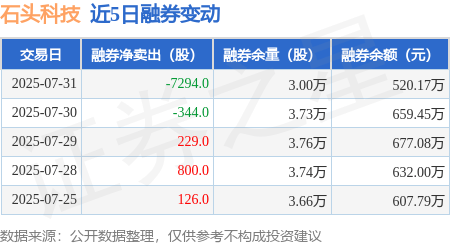
融资融券余额作为衡量市场活跃度和投资者信心的重要指标之一,石头科技在该日的融资融券余额为 7.33亿元,与前一交易日相比下滑了0.65%。这一变化可能反映了部分投资者对于市场短期走势的看 法。 对于个人投资者而言,参与融资融券交易需要满足一定的条件。目前,投资者需要在证券市场中至少交 易满6个月,并且其账户资产在前20个交易日内的日均水平需达到50万元。这一门槛的设置旨在保护投 资者利益,确保他们具备足够的风险承受能力和投资经验。 石头科技(股票代码:688169)在7月31日的融资交易数据中显示出一定的市场动态。据证券之星提供 的信息,该公司当天通过融资方式购入了3795.77万元的股票,但同时也有4136.73万元的融资被偿还, 导致融资净卖出额为340.96万元。截至该日,石头科技的融资余额达到7.28亿元。 | 交易日 - | 融券净卖出(股) | | 副券会重(股) | 融券余额(元) | | --- | --- | --- | --- | --- | | 2025-07-31 | | -7294.0 | 3.00万 | 520.17万 | | 2025-07-30 | | -344.0 | 3.7 ...

盘活存量,让有限的资源产出更大的效益
Ren Min Ri Bao· 2025-07-31 01:57
Group 1 - The article discusses the revitalization of idle land in Ningxiang, Hunan, through administrative, legal, and economic measures, particularly focusing on the land swap to facilitate the construction of Hisense's new manufacturing base [1][3][6] - Hisense's new manufacturing base project in Ningxiang Economic and Technological Development Zone covers 486 acres and aims to produce 2 million units annually, with a planned production start in January 2026 [1][3] - The article highlights the challenges faced due to a nearby real estate company's land being under litigation, which has left multiple plots idle for years, complicating the expansion plans for Hisense [2][4] Group 2 - The Ningxiang government has proposed a land swap solution to resolve the land issue for Hisense, involving negotiations with the courts and creditors of the real estate company [3][5] - The bankruptcy restructuring of the real estate company was initiated to streamline the land swap process, allowing for a more efficient resolution of the land disputes [5][6] - Since the beginning of 2023, Ningxiang has successfully revitalized 22 plots of low-efficiency land, totaling 1,764.9 acres, leading to an increase in fixed asset investment of 12.087 billion yuan and an expected annual output value increase of nearly 20 billion yuan [7] Group 3 - The article also covers the efforts in Tianjin's Jinghai District to support the transformation and upgrading of enterprises, specifically focusing on the case of Yuanda Health Technology, which is expanding its operations [8][10] - Yuanda Health Technology has purchased over 100 acres of previously idle land to consolidate its operations and enhance production capacity, addressing logistical challenges faced in its current facilities [9][11] - The local government has actively facilitated the adjustment of land use regulations to meet the company's needs, increasing the plot's floor area ratio from 1.2 to 2.0 to accommodate the new manufacturing project [10][11]
AI HOME照进现实:业内首个家居AI智能体落地,COLMO加速驶向具身智能时代
3 6 Ke· 2025-07-30 09:51
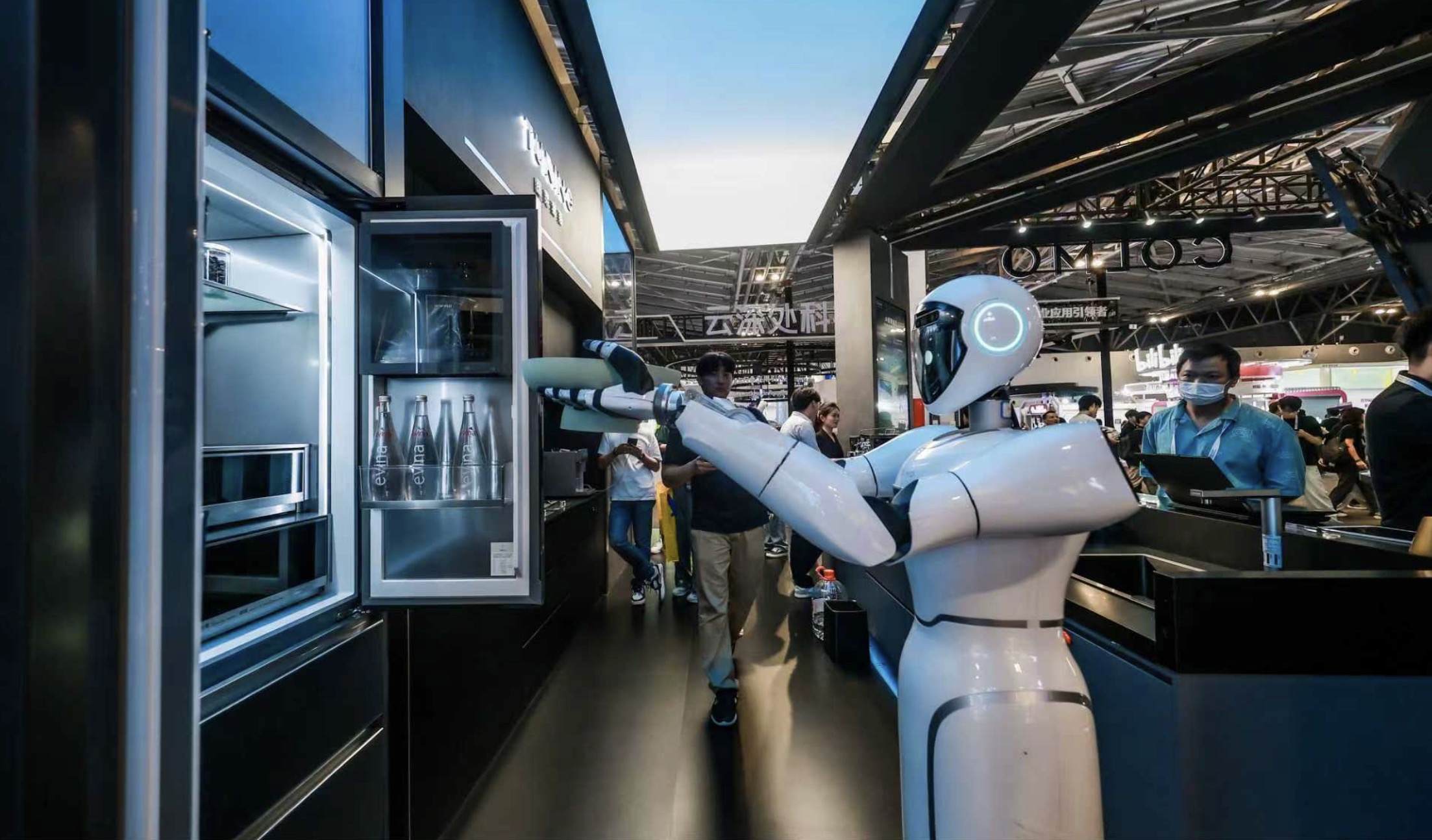
Core Insights - The article discusses the increasing importance of air quality management in home environments as consumer demands for comfort rise [1] - COLMO has introduced the "COLMO AI Home" solution and the AI agent "COLMO AI Butler" at the WAIC 2025, showcasing advancements in smart home technology [5][9] Group 1: Product Features - The COLMO AI Butler integrates with various smart home devices to monitor and adjust indoor air quality, temperature, and humidity based on user preferences [2][5] - The system can autonomously manage indoor climate, ensuring optimal conditions during different scenarios, such as maintaining a stable temperature of 20°C and humidity at 40% during the rainy season [2] - The AI solution utilizes self-developed and external advanced models to achieve multi-dimensional perception and natural interaction capabilities [5][9] Group 2: Technological Challenges - Implementing a functional AI agent in diverse home environments requires overcoming technical barriers related to device compatibility and user habits [7] - The complexity of home environments increases exponentially compared to single devices, necessitating the integration of large model capabilities to enable seamless operation [9] Group 3: Future Developments - COLMO aims to evolve from single-device intelligence to comprehensive scene intelligence, creating a closed-loop system for smart home management [9] - The company is exploring the introduction of humanoid robots into home settings to enhance user interaction and service capabilities [11]
5家鲁企上榜《财富》世界500强,青岛占一席,是谁?
Quan Jing Wang· 2025-07-30 09:08
Group 1 - The 2025 Fortune Global 500 list was released, with Walmart ranked as the largest company for the twelfth consecutive year, followed by Amazon and China's State Grid Corporation [1] - The revenue threshold for this year's list was $32.2 billion, an increase of approximately $100 million from last year [2] - A total of 130 Chinese companies made the list, with five from Shandong province, including Shandong Energy Group (ranked 82), Shandong Weiqiao Pioneering Group (ranked 166), Haier Smart Home (ranked 390), Shandong High-Speed Group (ranked 401), and Shandong Gold Group (ranked 465) [2] Group 2 - The ranking of Shandong companies reflects the province's economic structure and characteristics [3] - The Fortune Global 500 list is recognized for its rigorous selection process, requiring companies to disclose financial data and rank based on revenue, which is less influenced by financing activities and tax policies [4] - Among the Shandong companies, Haier Smart Home had the highest profit, with overseas revenue accounting for over 50% in 2024, indicating its global expansion strategy [5] Group 3 - Haier Smart Home has made significant investments globally, including a $490 million washing machine factory in the U.S. and new production facilities in Egypt and Thailand [5] - The smart home appliance industry, led by Haier Smart Home, is a key competitive sector in Qingdao, with plans to reach a scale of 420 billion yuan by 2027 [7] - Shandong has potential companies like Weichai Power, which is close to the revenue threshold for the Fortune Global 500, indicating further growth opportunities [8]


石头科技赴港IPO路漫漫,创始人套现与业务困境引市场质疑
Sou Hu Cai Jing· 2025-07-30 05:53
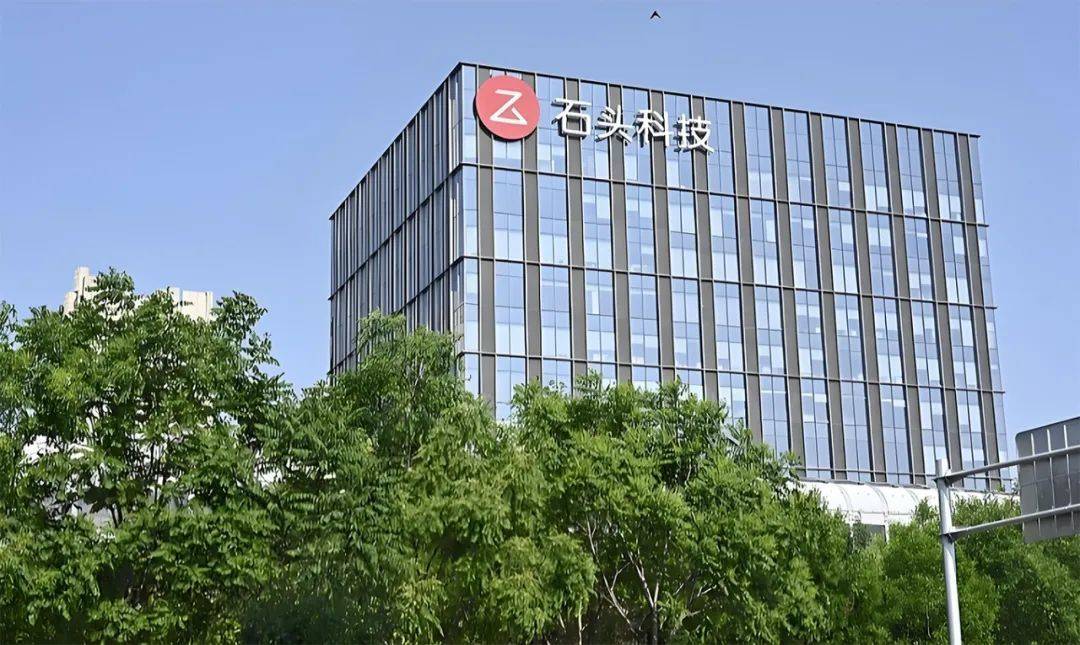
Core Viewpoint - Stone Technology, once hailed as a leading tech company in A-shares, is now at a critical juncture, facing significant challenges including a sharp decline in market value and controversies surrounding its founder's actions [1][4]. Group 1: Company Background and Market Position - Stone Technology was founded in 2014 by Chang Jing, leveraging a deep partnership with Xiaomi, which helped it launch the successful "Mijia Robot Vacuum" [2]. - The company went public on the STAR Market in 2020, reaching a historical peak in stock price, but has since seen its market value shrink by nearly 60% [2][4]. Group 2: Financial Performance - Despite a continuous increase in revenue, the company is experiencing a decline in profitability, with a 3.64% drop in net profit and an 11.26% decrease in net profit excluding non-recurring items in 2024 [2]. - In Q1 2025, revenue grew by 86% year-on-year, but net profit fell sharply by 32.92%, highlighting the pressure on profitability due to rising marketing costs and fluctuating gross margins [2]. Group 3: Challenges and Controversies - The company is facing intense competition in the vacuum cleaner market, alongside losses and layoffs in its washing machine business and poor sales in its electric vehicle project [1][5]. - Chang Jing's controversial stock sell-off, totaling nearly 900 million yuan, has sparked public outrage and damaged both his personal reputation and the company's image [4]. - The diversification into electric vehicles and washing machines has not met expectations, leading to further scrutiny of the company's strategic focus [4][5]. Group 4: Future Prospects - Stone Technology has submitted an application for an IPO on the Hong Kong Stock Exchange, aiming to seek new funding avenues for its global strategy and potential value re-evaluation [1][4]. - The success of this IPO remains uncertain, given the current market sentiment and the company's ongoing challenges [5].
小米取得可保证多个叶片转动调整幅度一致性的扫风总成和空调设备专利
Jin Rong Jie· 2025-07-29 09:38
Group 1 - Xiaomi Technology (Wuhan) Co., Ltd., Xiaomi Smart Home Appliances (Wuhan) Co., Ltd., and Beijing Xiaomi Mobile Software Co., Ltd. have obtained a patent for "airflow assembly and air conditioning equipment" with the authorization announcement number CN223165705U, applied on September 2024 [1] - The patent describes a new design for an airflow assembly that includes multiple blades, a connecting rod, and a second swing rod, allowing for consistent rotation adjustments of the blades during use [1] - The design ensures that multiple blades can be completely closed and flattened, enhancing the uniformity of the blades' rotational adjustment range [1] Group 2 - Xiaomi Technology (Wuhan) Co., Ltd. was established in 2017 with a registered capital of 21 million RMB and has invested in 5 companies, holding 1005 patents [2] - Xiaomi Smart Home Appliances (Wuhan) Co., Ltd. was founded in 2023 with a registered capital of 2 million RMB and has participated in 7 bidding projects, holding 207 patents [2] - Beijing Xiaomi Mobile Software Co., Ltd. was established in 2012 with a registered capital of 148.8 million RMB, has invested in 4 companies, participated in 137 bidding projects, and holds 5000 patents [2]

横河精密(300539) - 300539横河精密投资者关系管理信息20250725
2025-07-28 13:31
Group 1: Company Overview - The company was founded in 2001 and successfully listed on the Growth Enterprise Market in 2016, with over 20 years of steady development [2] - Currently, the company has three major manufacturing bases located in Ningbo, Jiaxing, and Dongguan [2] - The smart home appliance business accounted for over 58% of revenue in 2024, with a strategic focus on binding top clients and optimizing product structure [2] Group 2: Automotive Parts Business - The automotive parts segment is the main growth driver for the company, with a strategy of synchronously advancing Tier 1 and Tier 2 business models [3] - In Tier 1, the company promotes CCB steel-plastic integrated beams and all-plastic front-end modules, establishing stable partnerships with major automakers like SAIC Volkswagen and BYD [3] - In Tier 2, the focus is on precision injection molding, collaborating with leading clients such as Yanfeng and Huawei [3] Group 3: Market Position and Growth - The company has successfully developed and mass-produced a steel-plastic integrated CCB beam, enhancing market penetration [5] - The rapid growth in the automotive lightweight sector is driven by new client acquisitions and the expansion of product categories [5] - The automotive parts segment has become the primary source of business growth, focusing on lightweight and intelligent cockpit components [5] Group 4: Product and Material Information - The company's PEEK material products are primarily used in smart home appliances and automotive parts, including 3D fan blades and gears [5] - The company currently does not engage in drone OEM business, focusing instead on core areas such as precision injection parts and intelligent cockpit components [5]

中山“工改”,给乡村产业不止“亿”点动力 | 众说百千万⑧
Nan Fang Nong Cun Bao· 2025-07-28 06:36
Core Viewpoint - The article discusses the transformation of the industrial landscape in Zhongshan, particularly through the "industrial upgrade" initiative, which has revitalized local industries and improved the living conditions of residents in Daceng Village, leading to significant economic benefits and enhanced infrastructure [15][71]. Group 1: Industrial Upgrade Impact - The "industrial upgrade" initiative has allowed companies like Haofan Electronics to expand their production facilities from 8,000 square meters to 40,000 square meters, aiming for an annual output value of over 300 million yuan [20][22]. - ChunKai Electric Co., a leading fan manufacturer, increased its factory area from 10,000 square meters to nearly 100,000 square meters, enhancing production efficiency and allowing for better layout planning [25][31]. - The Daceng area has seen the establishment of multiple billion-yuan projects, including major companies like XueLe Electric and HaoSen Thermal Energy, contributing to the local economy [37][72]. Group 2: Financial Strategies for Upgrades - The financial model for the upgrade involved a combination of cash returns and property compensation, addressing concerns from local residents about losing stable rental income [42][41]. - The first phase of funding included 30 million yuan in turnover funds and 90 million yuan in loans from the Agricultural Development Bank, totaling 120 million yuan, effectively quadrupling the financial resources available for the project [50][51]. - For the second phase, a new financial strategy was implemented, securing 310 million yuan in loans, significantly alleviating funding pressures for land preparation [56]. Group 3: Community Benefits - The upgrade has led to increased rental income for villagers, with rates rising to 15 yuan per square meter, significantly higher than before [62][63]. - The overall income for the village is expected to increase by approximately 5 million yuan annually, with a 4-5 times increase in net rental income for village groups [64][63]. - The transformation has also improved the village's appearance, creating new recreational spaces and enhancing the quality of life for residents [66][70].
