
乳制品

Search documents
召回潮中重申中国市场清白,达能危局中能否守稳中国信任牌?
Xi Niu Cai Jing· 2026-01-30 08:55
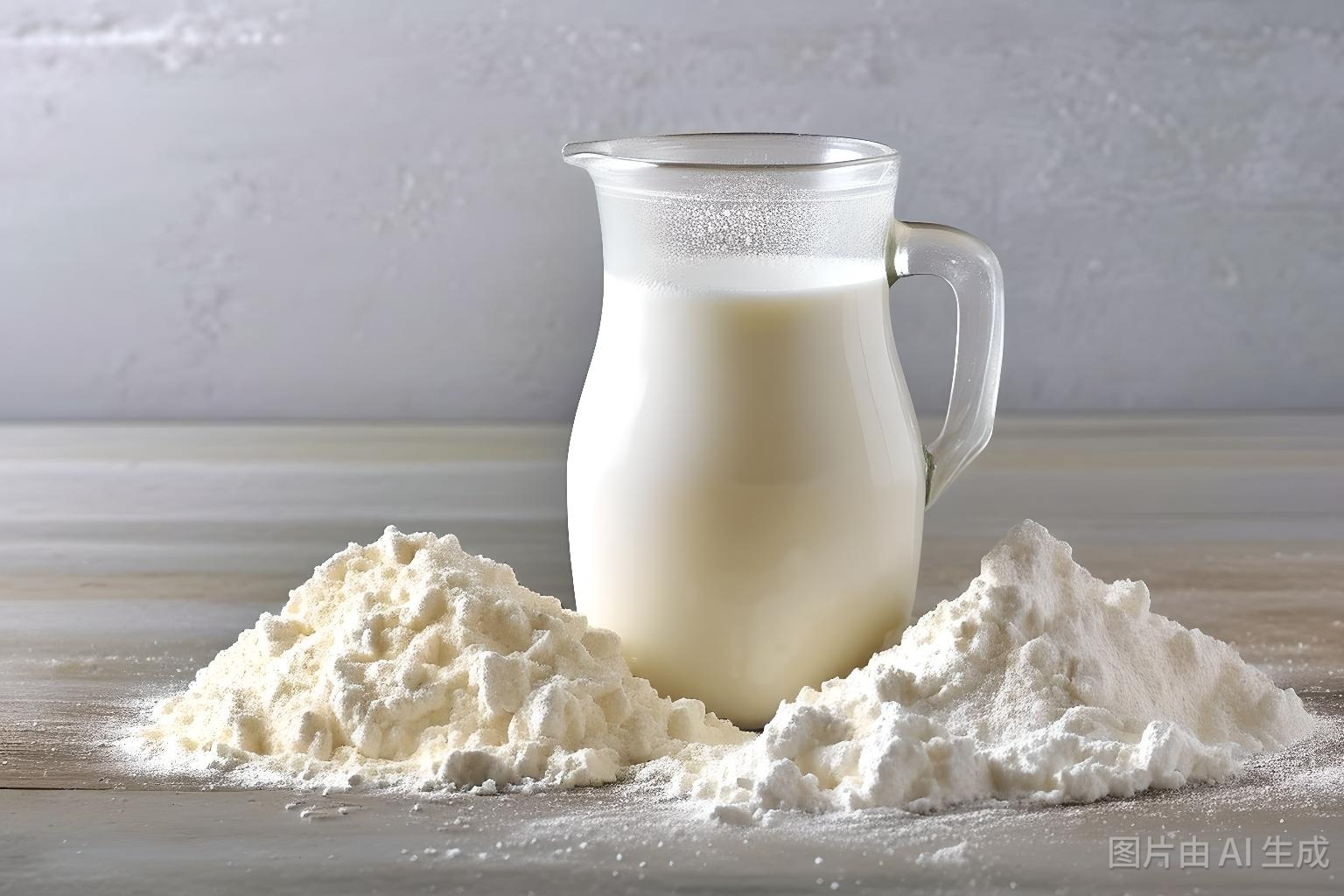
Core Viewpoint - The global food giant Danone announced a "preventive recall" of certain batches of infant formula in response to new regulatory guidelines from European authorities, emphasizing that their products are safe and comply with regulations [2] Group 1: Danone's Response and Market Impact - Danone's official statement highlighted that the recall is a precautionary measure to comply with the latest regulatory advice, despite confirming the safety of their products through routine and additional testing [2] - In China, Danone quickly clarified that the recalled batches had never entered the market through official channels, with no sales records found on major e-commerce platforms [2] - The recall comes amid a broader safety crisis in the infant formula market, with Nestlé and Lactalis also initiating recalls due to potential issues with suppliers [2] Group 2: Strategic Considerations for Danone - China represents Danone's second-largest market, accounting for approximately 10% of its global sales revenue, making the management of brand trust crucial in this competitive landscape [3] - Danone has been increasing its investment in China, including establishing research centers and new factories, indicating a strong commitment to the market [3] - The ability to communicate effectively and transparently with Chinese consumers during global safety incidents is vital for maintaining brand trust and market position [3] Group 3: Industry Practices and Responsibilities - Legal experts emphasize that brands hold primary safety responsibilities, regardless of issues stemming from upstream suppliers, highlighting the importance of timely communication and transparency during recalls [3] - Proactive preventive recalls are seen as a responsible practice among multinational companies, potentially enhancing food safety transparency [3] - Establishing clear global communication mechanisms is essential for companies to manage risks effectively and maintain consumer trust [3]

“什么值得买”发布2026年货消费趋势:生活有热爱,年货更对味
Zhong Guo Zhi Liang Xin Wen Wang· 2026-01-30 08:15
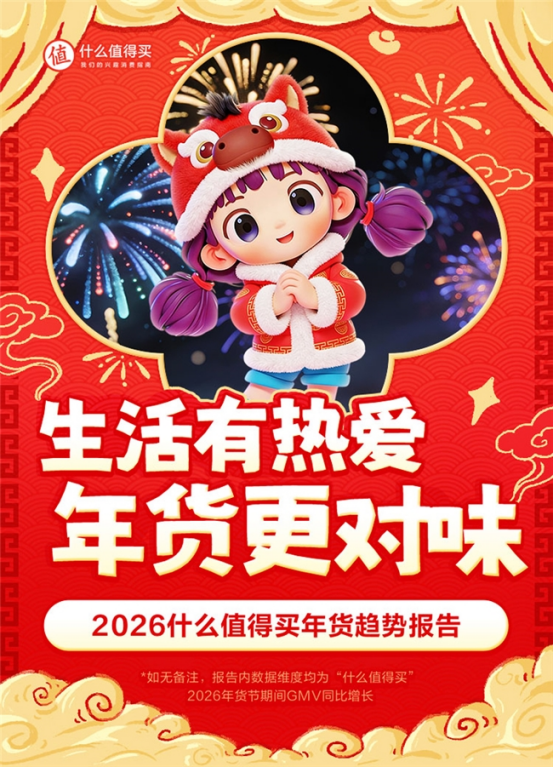
Core Insights - The 2026 "What Worth Buying" New Year Trend Report highlights a shift in consumer behavior towards interest-driven purchasing during the New Year festival, reflecting a more personalized and diverse approach to holiday shopping [1][3][4] Consumer Trends - Consumers are increasingly defining their New Year purchases based on personal interests, leading to a departure from traditional gift choices to more individualized selections such as vacations, pet gifts, and high-end food items [3][5] - The report indicates a significant rise in interest-driven consumption, with categories like digital devices, travel experiences, and health appliances gaining popularity [3][4] Product Performance - High-end products like the iPhone 17 Pro Max and Huawei Mate 80 Pro Max are leading sales, while traditional gifts like liquor remain popular due to their established gifting status [7] - The demand for pet-related products has surged, with pet apparel and grooming items seeing substantial year-over-year growth [8] Travel and Experience - There is a notable increase in travel-related purchases, with significant growth in the sales of ski equipment and vacation packages, indicating a trend towards experiential gifts for the New Year [9] - The report highlights that families are opting for travel as a way to celebrate the New Year, moving away from traditional homebound celebrations [9] Food and Beverage Trends - The New Year dinner is evolving, with consumers showing a preference for quality and diverse food options, including both traditional and global cuisines [10][12] - There is a growing focus on health-conscious food and beverage choices, with products emphasizing low sugar, high protein, and functional benefits becoming popular [13] Home and Lifestyle Products - The demand for home improvement and lifestyle products is rising, with consumers investing in smart appliances and personal care items to enhance their living environments [14][15] - The report notes a shift towards health-oriented gifts, with items like dietary supplements and home health devices becoming common choices for New Year gifting [15] Conclusion - The 2026 New Year market is characterized by a transformation towards interest-driven consumption, where consumers are curating personalized holiday experiences and products that reflect their values and lifestyles [15]
欧洲消费者组织就婴幼儿配方奶粉污染事件提起诉讼
Zhong Guo Xin Wen Wang· 2026-01-30 02:52
据法国媒体报道,此次控告涉及雀巢、拉克塔利斯等多家跨国乳制品企业,同时也包括部分中小品牌。 法国卫生部门表示,蜡样芽孢杆菌毒素可能引发呕吐和腹泻,目前尚未确认涉事配方奶粉与个别婴儿出 现的症状之间存在直接因果关系。 欧洲食品安全局日前宣布,已应欧盟委员会要求,着手制定婴幼儿食品中相关毒素的安全标准,评估意 见预计于2月初公布。 (文章来源:中国新闻网) 中新网巴黎1月30日电欧洲消费者组织Foodwatch当地时间29日联合8个受影响家庭,就多款婴幼儿配方 奶粉污染事件向巴黎司法机关提起诉讼,指控涉事企业和监管部门未及时采取有效措施,危害婴幼儿健 康。 Foodwatch指出,相关配方奶粉疑似受到蜡样芽孢杆菌毒素污染。该类产品多面向6个月以下婴儿,部分 甚至供早产儿食用,安全风险"尤为突出"。该组织表示,涉事产品曾在多国销售,但部分生产商在收到 风险预警后未能第一时间启动召回程序,相关信息披露亦不充分,导致家长获知情况较晚。 ...
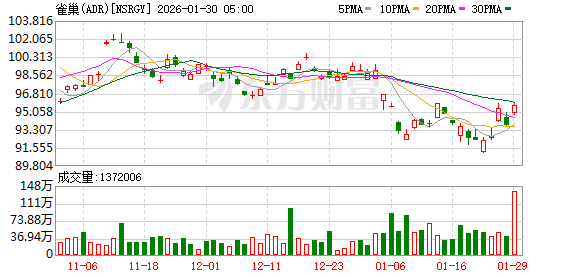
澳优:国内奶粉业务仍然承压-20260130
Guosen International· 2026-01-30 02:45
Investment Rating - The investment rating for the company is downgraded to "Buy" with a target price of HKD 2.3, representing a potential upside of 9% from the current stock price of HKD 2.08 [1][6]. Core Insights - The domestic milk powder business continues to face pressure due to a significant decline in the birth rate, with the 2025 birth population projected at 79.2 million, a 17% year-on-year decrease [1][2]. - The company reported a revenue of RMB 3.89 billion for the first half of 2025, a 5.6% increase year-on-year, and a net profit of RMB 181 million, up 21.4% year-on-year, driven by overseas goat milk powder sales [2][3]. - The gross margin for the first half of 2025 was 41.9%, down 1.5 percentage points year-on-year, with goat milk powder and cow milk powder margins also declining [3]. Financial Summary - Revenue projections for 2025, 2026, and 2027 are adjusted to RMB 2.5 billion, RMB 2.6 billion, and RMB 2.9 billion respectively, with corresponding EPS estimates of HKD 0.16, HKD 0.16, and HKD 0.18 [1][4]. - The company’s financial performance shows a decline in domestic goat milk powder revenue by 8.9% and cow milk powder revenue by 14.9% in the first half of 2025 [2][3]. - The average P/E ratio for comparable companies is estimated at 11.7x, with the company assigned a P/E of 13x due to its overseas business development [12]. Valuation Analysis - The DCF valuation method estimates a reasonable market value of HKD 2.4 based on a WACC of 7.2% and a short-term growth rate of 4% [12]. - The target price of HKD 2.3 is derived from a combination of comparable company analysis and DCF valuation, indicating a potential upside from the current market price [12].
网红品牌,被申请破产清算
Nan Fang Du Shi Bao· 2026-01-30 01:29
Core Viewpoint - The company 麦趣尔 is facing a bankruptcy liquidation application from its creditor, 广州市铭慧机械股份有限公司, which may lead to a delisting risk for its stock if accepted by the court [1][4]. Group 1: Bankruptcy and Financial Status - 麦趣尔 has received a bankruptcy liquidation application from its creditor, which is a supplier of machinery, due to unpaid debts totaling 595.49 million yuan [4]. - The company claims it does not meet the legal conditions for bankruptcy, asserting that its operations are normal and it does not have insufficient assets to pay debts [4]. - As of January 28, 2026, 麦趣尔 has been involved in 84 legal cases, with 27 instances of being listed as a defendant since 2022, involving a total amount of 2.21 billion yuan [10]. Group 2: Historical Performance and Market Position - 麦趣尔, once a popular brand due to its online marketing, has faced significant challenges since the "丙二醇" incident in 2022, leading to continuous losses exceeding 7 billion yuan from 2022 to the third quarter of 2025 [3][10]. - The company had previously experienced a turnaround in 2020 and 2021, but the trust crisis from the contamination incident severely impacted its sales and brand image [9][10]. - 麦趣尔's financial performance has shown a net profit of approximately -3.51 billion yuan in 2022, -970 million yuan in 2023, and -230 million yuan in 2024, with a further loss of about -330 million yuan in the first three quarters of 2025 [10]. Group 3: Business Operations and Product Line - 麦趣尔, established in 2002, specializes in dairy product manufacturing and bakery food chain operations, offering over 20 types of products including sterilized milk and flavored milk [6]. - The company initially struggled with brand recognition outside of Xinjiang but gained popularity through collaborations with influencers and effective online marketing strategies [8][9].

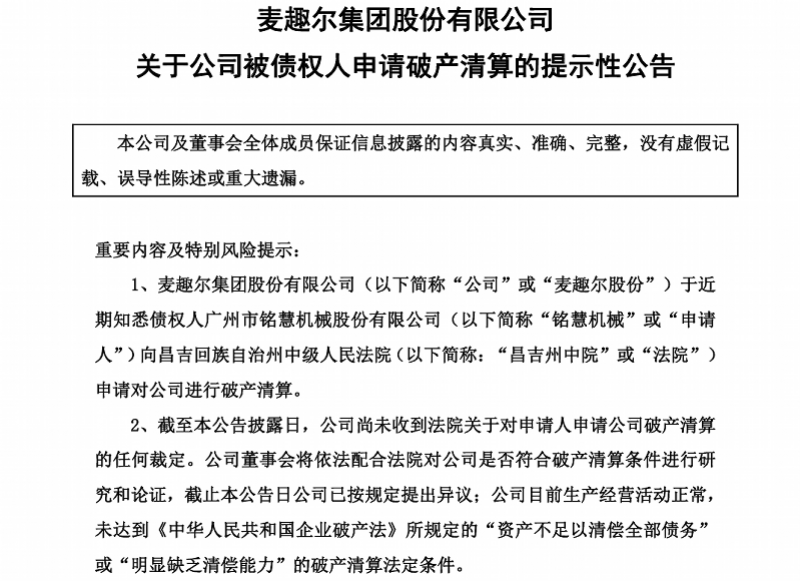
麦趣尔因600万货款被申请破产清算,网红奶品牌陷债务危机
Sou Hu Cai Jing· 2026-01-30 01:22
Core Viewpoint - The company 麦趣尔 is facing a severe financial crisis, highlighted by a bankruptcy petition from a supplier over an unpaid amount of less than 6 million yuan, revealing its struggles with debt and ongoing losses exceeding 700 million yuan [1][3][10]. Financial Situation - 麦趣尔 has accumulated losses of over 700 million yuan over the past four years, with no signs of recovery [1][10]. - As of September last year, the company had cash reserves of 18.81 million yuan, which seems sufficient to cover the outstanding payment, but multiple debt disputes indicate greater financial pressure [3]. - The company has faced multiple legal actions, with a total of 42.70 million yuan executed against it and 14.04 million yuan involved in cases of dishonesty [3]. Business Performance - 麦趣尔's revenue from dairy products peaked at 733 million yuan in 2021, a 57.75% increase year-on-year, but has since declined significantly due to a food safety scandal [9][12]. - The company's revenue from dairy products dropped from 5.49 billion yuan in 2022 to 2.11 billion yuan in 2024, reflecting a severe loss of consumer trust [12]. - Overall revenue from 2022 to 2024 showed a downward trend, with figures of approximately 989 million yuan, 709 million yuan, and 635 million yuan, representing year-on-year declines of 13.71%, 28.32%, and 10.40% respectively [13]. Market Position and Challenges - 麦趣尔 initially gained popularity through its unique products and marketing strategies, but the "丙二醇" incident severely damaged its brand reputation [10][11]. - The company is attempting to pivot towards its baking business to mitigate losses, with revenues from this segment increasing from 3.02 billion yuan in 2024 to 1.55 billion yuan in the first half of 2025, but the impact remains limited [14]. - The competitive landscape in the dairy market is intensifying, with industry leaders innovating and expanding their reach, posing further challenges for 麦趣尔 [15].
8点1氪:国铁回应“抢票神器诱导加价”:12306是唯一官方售票渠道;iPhone 16成去年全球最畅销智能手机;UC浏览器开发商被罚没126万元
36氪· 2026-01-30 00:10
Group 1 - The core viewpoint of the article emphasizes that the China Railway Group has declared the 12306 platform as the only official ticket sales channel, stating that it has not partnered with any third-party platforms and will enhance its system to combat ticket scalping [2][3] - The China Railway Group's passenger department director, Zhu Wenzhong, highlighted the negative impact of third-party platforms on the stability of the 12306 system and announced plans to optimize the risk control system for effective identification [3] - The railway authority is focusing on four key areas for ticket sales organization: addressing the needs of students, workers, and the elderly; introducing a limited-time free refund policy for erroneous purchases; continuously improving ticket sales strategies; and ensuring the stable operation of the 12306 system [5] Group 2 - The article mentions that the 2026 Spring Festival travel period is expected to see a record 9.5 billion person-times of cross-regional movement, with self-driving travel being the main mode of transport, accounting for about 80% [6] - The article also notes that the total passenger volume for railways and civil aviation is projected to reach 540 million and 95 million respectively during the Spring Festival travel period, with both figures expected to exceed historical peaks [6]




董事长专访 | 天润乳业刘让:重构“长期能力” 穿越奶业低谷期
Sou Hu Cai Jing· 2026-01-30 00:03
Core Insights - Tianrun Dairy, the largest liquid milk producer in Xinjiang, is innovating with products like original milk beer and Aikelin series low-temperature yogurt, expanding from regional focus to national presence, successfully exploring "Xinjiang milk going out" [1][3][4] Industry Context - The domestic dairy industry is currently facing a downturn characterized by low milk prices, supply-demand imbalance, and intense competition, making it urgent to find ways to recover from this low point [1][4] Company Strategy - Tianrun Dairy operates a complete industry chain from dairy farming to processing and sales, with an annual processing capacity of 600,000 tons and a focus on utilizing Xinjiang's unique resources to penetrate national markets [5][6] - The company has 24 large-scale farms with a herd size of 70,000, adhering to a strategy of "using Xinjiang resources for the national market" and continuously seeking new growth points [5][6] Product Innovation - Tianrun Dairy has successfully launched several popular products, including the Aikelin low-temperature concentrated yogurt, and has introduced over ten variations of this product line over the past decade [7][8] - The company plans to launch over 60 new products by 2025, including zero-additive yogurt and kefir yogurt, while also developing ready-to-drink products to diversify its offerings [7][8] Cultural Branding - The company is integrating its products with the cultural narrative of Xinjiang, enhancing consumer emotional connection and promoting a brand evolution from merely selling products to providing a cultural experience [8][10] Long-term Capability Building - In response to the industry downturn, Tianrun Dairy is optimizing its herd structure and investing significantly in long-term capabilities, including an intelligent factory with an investment of 852.5 million yuan, set to produce 200,000 tons of dairy products annually [10][11] - The company emphasizes differentiation as a vital strategy, expanding its product lines to include pasteurized milk, milk powder, and cheese, while also exploring new consumer demands in niche markets [10][11]


天润乳业刘让:重构“长期能力” 穿越奶业低谷期
Shang Hai Zheng Quan Bao· 2026-01-29 18:42
Core Viewpoint - Tianrun Dairy, the largest liquid milk producer in Xinjiang, is innovating with new products and expanding its market presence beyond the region, aiming to overcome the current industry downturn characterized by low milk prices and intense competition [1][2]. Group 1: Company Overview - Tianrun Dairy engages in dairy farming, processing, and sales, establishing a complete industry chain from "farming to processing to market" [2]. - The company operates five dairy production enterprises and has a processing capacity of 600,000 tons per year [2]. - Tianrun Dairy's milk source is from the "golden milk source belt" in Xinjiang, benefiting from high-quality feed and unique climatic conditions [2]. Group 2: Market Strategy - The company is implementing a strategy of "key breakthroughs to drive overall growth," focusing on core markets in East, South, and North China while building a multi-channel network [3]. - Tianrun Dairy aims to expand its market presence by leveraging differentiated, scientific, and functional products, including solid dairy foods [2][3]. Group 3: Product Innovation - The launch of the Aikelin low-temperature concentrated yogurt has become a hit product, with the company continuously introducing new flavors and packaging to maintain market interest [4]. - By 2025, Tianrun Dairy plans to launch over 60 new products, including zero-additive yogurt and fresh milk tea, enhancing its product variety [4]. Group 4: Long-term Development Strategy - The company is optimizing its herd structure and investing in long-term capabilities, including an intelligent factory with an investment of 852.5 million yuan, set to produce 200,000 tons of dairy products annually [6]. - Tianrun Dairy emphasizes the importance of differentiation as a lifeline for dairy enterprises, expanding its product line to include pasteurized milk, milk powder, and cheese [6]. Group 5: Industry Outlook - As the supply-demand relationship in the dairy industry improves, the profitability of dairy companies is expected to recover, with Tianrun Dairy focusing on building a high-quality dairy ecosystem [7].
湾财晚报 | 有银行积存金业务活期利率降至0;谁将是美联储下一任“掌柜”;特斯拉将推出第三代人形机器人
Nan Fang Du Shi Bao· 2026-01-29 15:09
Group 1: Banking Sector - Some banks have adjusted their deposit rates for accumulated gold business, with one bank's current interest rate dropping to 0% [2] - Ningbo Bank announced changes to its fixed deposit rates effective January 28, 2026, with rates set at 0% for current accounts, 0.3% for 1-month and 3-month deposits, 0.4% for 6-month deposits, and 0.5% for 12-month deposits [2] - Certain banks have increased the minimum purchase threshold for accumulated gold, and state-owned banks now require personal customers to undergo risk assessment for accumulated gold business [2] Group 2: Automotive Sector - Tesla reported better-than-expected Q4 earnings, leading to a 3% increase in its stock price post-announcement [4] - Despite the positive quarterly results, Tesla's annual revenue declined by 3%, marking the first annual revenue drop in the company's history [4] - Tesla plans to launch the third-generation Optimus robot, aimed at mass production and capable of performing various tasks, including factory work and childcare [4][7] - CEO Elon Musk indicated that production of Model S and Model X will gradually cease as the Fremont factory transitions to producing the Optimus humanoid robot [4] Group 3: Federal Reserve - The Federal Open Market Committee (FOMC) decided to maintain the federal funds rate target range at 3.5% to 3.75%, marking the first pause after three consecutive rate cuts [6] - The market is more focused on the selection of the next Federal Reserve Chair, as current Chair Jerome Powell's term ends in May 2026, although he can remain on the board until 2028 [6] - Powell emphasized the importance of the Fed's independence and suggested that his successor should remain politically detached [6] Group 4: Aviation Sector - The China Air Transport Association released a draft regulation aiming to standardize seat selection services for public air transport, ensuring passenger rights [6] - The draft proposes that at least 70% of economy class seats on domestic flights must be available for free selection, while international flights must have at least 65% [6] - Paid seat selection will only be permitted for international and regional flights, with domestic flights prohibited from offering this service [6] Group 5: Dairy Industry - The Xinjiang dairy company Maichuer is facing a significant operational crisis, with creditors applying for bankruptcy liquidation [9] - The company announced that a creditor has filed for bankruptcy proceedings, which could lead to a risk warning for its stock if accepted by the court [9] - Maichuer's stock price fell by 1.48% to 8.65 yuan per share, following its announcement of substantial losses exceeding 700 million yuan from 2022 to the first three quarters of 2025 [9]



