
氟化工

Search documents
A股收评:三大指数小幅收跌,有机硅、氟化工板块逆市走高
Ge Long Hui· 2025-11-07 07:50
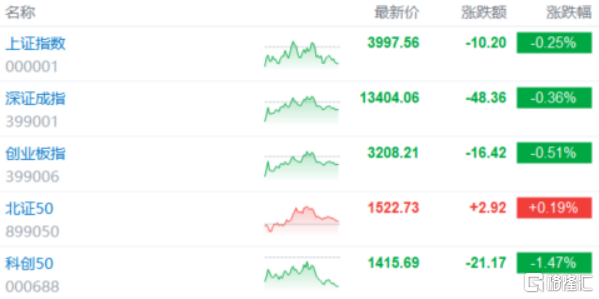
Market Overview - On November 7, A-shares experienced a slight decline, with the Shanghai Composite Index down 0.25% to 3997 points, the Shenzhen Component Index down 0.36%, and the ChiNext Index down 0.51% [1] - The total market turnover was 2.02 trillion yuan, a decrease of 557 billion yuan compared to the previous trading day, with over 3100 stocks declining [1] Sector Performance - The organic silicon sector saw significant gains, with companies like Dongyue Silicon Material and Hesheng Silicon Industry hitting the daily limit [3][5] - The fluorochemical sector also surged, with stocks such as Yongtai Technology and Duofluorite reaching the daily limit [3][5] - The lithium mining sector strengthened, with Shengxin Lithium Energy hitting the daily limit [3] - Conversely, the robotics actuator and reducer sectors declined, with Top Group leading the losses [3] Key Stocks - Notable gainers included: - Dongyue Silicon Material: +20.04% [6] - Huasheng Lithium Battery: +19.16% [6] - Fuxiang Pharmaceutical: +14.01% [6] - The fluorochemical sector saw stocks like Qichuan Chemical and Yongtai Technology also reaching the daily limit [8] Price Trends - The price of lithium hexafluorophosphate continued to rise, nearing 120,000 yuan per ton, driven by supply-demand imbalances [7] - The report from Longzhong Information indicated that the market price for lithium hexafluorophosphate fluctuated between 113,800 and 119,800 yuan per ton [7] Industry Insights - The organic silicon industry is undergoing consolidation, with leading polysilicon companies planning to form a consortium to eliminate excess capacity and settle industry debts [5] - The implementation of new energy consumption standards is expected to increase industry concentration by phasing out non-compliant production capacities [5] Future Outlook - According to Shenwan Hongyuan, the spring of 2026 may mark a phase peak, but it is unlikely to be the peak for the entire year [19] - The report suggests that as supply clears, the effective return of "policy bottom, market bottom, and economic bottom" will likely occur, potentially signaling the start of a new market cycle [19]


A股三大股指小幅收跌,沪指失守4000点
Sou Hu Cai Jing· 2025-11-07 07:34
Market Overview - The A-share market experienced a collective decline on November 7, with the Shanghai Composite Index falling below the 4000-point mark, closing at 3997.56 points, down 0.25% [2] - The total trading volume in the Shanghai and Shenzhen markets was 19,991 billion yuan, a decrease of 562 billion yuan from the previous trading day [2] Sector Performance - The basic chemical sector showed strong performance, with nearly 20 stocks, including Dongyue Silicon Material and Zhuoyue Performance, hitting the daily limit or rising over 10% due to improved supply-demand dynamics in the fluorochemical sector [3] - The oil and petrochemical sectors also performed well, with stocks like Unified Holdings rising over 7% [3] - Conversely, the AI hardware and software sector led the declines, with stocks such as Jiahua Technology dropping over 10% [4] Investment Sentiment - Financial analysts suggest that the A-share market still has the potential for further strength, supported by factors such as global tech investment enthusiasm and policies aimed at reducing competition [5][6] - The market is expected to maintain a structural oscillation pattern, with recommendations to focus on low-volatility assets and sectors like technology, healthcare, and consumer goods [7]

超3100只个股下跌
第一财经· 2025-11-07 07:34
Market Overview - The A-share market experienced fluctuations, with the Shanghai Composite Index down by 0.25%, the Shenzhen Component Index down by 0.36%, and the ChiNext Index down by 0.51% as of the close [3][4]. - The total trading volume in the Shanghai and Shenzhen markets was 2 trillion yuan, a decrease of 56.2 billion yuan compared to the previous trading day, with over 3,100 stocks declining [7]. Sector Performance - The computing hardware and software sectors led the decline, with significant drops in server, DeepSeek, and fintech indices. Conversely, chemical stocks surged, particularly in fluorine and phosphorus chemical sectors, while solid-state battery themes gained strength [6]. - Major capital inflows were observed in basic chemicals, photovoltaic equipment, and energy metals, while there were notable outflows from computing, electronics, and power grid equipment sectors [9]. Individual Stock Movements - Specific stocks that saw net inflows included Tianfu Communication (22.32 billion yuan), Tianci Materials (9.66 billion yuan), and Duofluor (8.65 billion yuan) [10]. - Stocks that faced significant net outflows included Industrial Fulian (21.42 billion yuan), Sanhua Intelligent Control (15.36 billion yuan), and Silis (8.87 billion yuan) [11]. Institutional Insights - Longcheng Securities noted that the market has entered a quiet period in November, lacking major policy or event-driven catalysts, suggesting that market movements will rely more on technical and fundamental support [12]. - Huaxi Securities indicated that following the release of Q3 reports, the A-share market is entering a performance vacuum period of about three months, shifting focus towards next year's performance expectations and industry trends, with trading likely returning to active themes [12].

创业板指冲高回落跌0.51% 化工、锂电概念股逆势走强
Mei Ri Jing Ji Xin Wen· 2025-11-07 07:30
每经AI快讯,11月7日,市场震荡调整,三大指数均冲高回落。沪深京三市超3100股飘绿,成交2.02万 亿元。截至收盘沪指跌0.25%,深成指跌0.36%,创业板指跌0.51%。盘面上,全市场超3100只个股下 跌。热点延续快速轮动,锂电板块午后爆发,孚日股份2连板,天际股份等多股涨停。化工板块持续走 高,澄星股份、清水源等双双2连板。福建板块反复活跃,漳州发展下午快速涨停,走出4天3板。有机 硅板块集体走强,东岳硅材20%涨停。下跌方面,机器人板块下挫,力星股份、浙江荣泰等多股大跌。 板块方面,有机硅、氟化工、磷化工、电池等板块涨幅居前,AI模型、软件开发等板块跌幅居前。 (文章来源:每日经济新闻) ...

收评:主要股指震荡整理 有机硅概念和磷化工概念涨幅靠前
Xin Hua Cai Jing· 2025-11-07 07:29
Market Performance - The Shanghai and Shenzhen stock indices opened lower on November 7, with the Shanghai Composite Index down 0.25%, the Shenzhen Component down 0.36%, and the ChiNext Index down 0.51% [1] - The Shanghai Composite Index closed at 3997.56 points with a trading volume of approximately 875.5 billion yuan, while the Shenzhen Component closed at 13404.06 points with a trading volume of about 1123.6 billion yuan [1] - The market showed a mixed performance with significant gains in sectors such as organic silicon and phosphorus chemicals, while sectors like AI and new energy showed declines [1] Sector Insights - The organic silicon and phosphorus chemical sectors experienced notable gains, indicating strong market interest [1] - The semiconductor, consumer electronics, artificial intelligence, and robotics sectors are recommended for investment due to their high growth potential [2] - The market is expected to see a recovery in the A-share market, driven by policy support and a potential upward turning point in the economy [2] Trade Data - China's goods trade maintained steady growth in the first ten months of 2023, with total import and export value reaching 37.31 trillion yuan, a year-on-year increase of 3.6% [3] - Exports amounted to 22.12 trillion yuan, up 6.2%, while imports were 15.19 trillion yuan, remaining stable compared to the previous year [3] Regulatory Developments - The State Administration for Market Regulation approved a series of important national standards, including those for new materials and semiconductor equipment, aimed at promoting industry standardization and healthy development [4] Military Advancements - China's first electromagnetic aircraft carrier, the Fujian, was officially commissioned, showcasing advanced technology in military capabilities [5]
化工、锂电概念股逆势走强
财联社· 2025-11-07 07:29
Market Overview - The A-share market experienced fluctuations with all three major indices retreating after an initial rise. The total trading volume in the Shanghai and Shenzhen markets was 2 trillion, a decrease of 56.2 billion compared to the previous trading day [1][3]. Sector Performance - The market showed a mixed performance with over 3,100 stocks declining. However, the lithium battery sector saw a surge in the afternoon, with stocks like Furi Technology and Tianji Technology hitting the daily limit [1]. - The chemical sector continued to rise, with companies such as Chengxing and Qingshuiyuan achieving consecutive gains [1]. - The Fujian sector was notably active, with Zhangzhou Development achieving a rapid limit-up, marking its fourth rise in three days [1]. - The organic silicon sector collectively strengthened, with Dongyue Silicon Material hitting a 20% limit-up [1]. - Conversely, the robotics sector faced declines, with companies like Lixing and Zhejiang Rongtai experiencing significant drops [1][2]. Index Performance - As of the market close, the Shanghai Composite Index fell by 0.25%, the Shenzhen Component Index decreased by 0.36%, and the ChiNext Index dropped by 0.51% [3][4].

A股收评 | 沪指跌0.25% 锂电股午后大爆发
智通财经网· 2025-11-07 07:21
Market Overview - The market experienced weak fluctuations today, with the photovoltaic, organic silicon, and chemical sectors leading in gains. The total market turnover was nearly 2 trillion, slightly down from the previous trading day, with over 3,000 stocks declining [1][2] - The Shanghai Composite Index fell by 0.25% to 3,997.56 points, while the Shenzhen Component Index decreased by 0.36% to 13,404.06 points. The ChiNext Index dropped by 0.51% to 3,208.21 points [2] Sector Performance - The renewable energy sector saw significant gains, particularly in photovoltaic concepts, with companies like Dongyue Silicon Material hitting a 20% limit up. The organic silicon sector also performed well, with multiple stocks experiencing substantial increases [1] - The lithium battery sector surged in the afternoon, led by upstream materials, with companies like Multi-Fluor and Zhongxin Fluorine Material reaching their daily limit [1] - The commercial aerospace sector also rose, with stocks like Qianzhao Optoelectronics and Shanghai Huguang hitting their daily limit due to the increasing demand for AI data centers in space [2] Key Developments - A major restructuring platform for polysilicon is being planned, which is expected to stabilize market conditions and promote a rational return of prices for polysilicon and silicon wafer products [1] - The price of lithium hexafluorophosphate, a key component in lithium-ion battery electrolytes, has been rising due to increased market demand and reduced inventory levels [1] Fund Flow - Main funds are actively investing in battery, chemical products, and photovoltaic equipment sectors, with notable net inflows into stocks like Tianfu Communication, Tianci Materials, and Tongwei Co [3] Policy and Regulatory Updates - The Dutch government announced that it expects ASML China to soon resume chip supplies, indicating constructive discussions with China regarding supply facilitation [4] - The Chinese government is discussing methods to combat false advertising in the automotive industry, aiming to enhance consumer protection and market integrity [6] Future Market Outlook - Analysts suggest that November is a critical time for style switching in the market, recommending a balanced allocation to navigate potential volatility [8][9] - The market is expected to maintain a structurally volatile trend, with a focus on technology stocks and potential adjustments in allocation based on market conditions [10]
收盘丨A股三大指数全天震荡调整,市场超3100只个股下跌
Di Yi Cai Jing Zi Xun· 2025-11-07 07:13
Market Overview - The A-share market experienced a day of fluctuation and adjustment, with the Shanghai Composite Index down by 0.25%, the Shenzhen Component Index down by 0.36%, and the ChiNext Index down by 0.51% [5] - The total trading volume in the Shanghai and Shenzhen markets reached 2 trillion yuan, a decrease of 56.2 billion yuan compared to the previous trading day, with over 3,100 stocks declining across the market [2] Sector Performance - The computing hardware and software sector led the declines, with significant drops in server, DeepSeek, and fintech indices; meanwhile, chemical stocks surged, particularly in fluorine and phosphorus chemical sectors, and solid-state battery themes strengthened [1] - Main capital inflows were observed in basic chemicals, photovoltaic equipment, and energy metals, while there were outflows from computing, electronics, and power grid equipment sectors [4] Individual Stock Movements - Notable net inflows were recorded for Tianfu Communication (22.32 million yuan), Tianci Materials (9.66 million yuan), and Duofu Du (8.65 million yuan) [4] - Conversely, significant net outflows were seen in Industrial Fulian (21.42 million yuan), Sanhua Intelligent Control (15.36 million yuan), and Silis (8.87 million yuan) [4] Institutional Insights - According to Changcheng Securities, the market is entering a quiet period in November, lacking major policy or event-driven catalysts, which may lead to a reliance on technical and fundamental support for market movements [4] - Huaxi Securities noted that following the release of Q3 reports, the A-share market is entering a performance vacuum period of approximately three months, shifting focus towards next year's performance expectations and industry trends, with trading likely returning to active themes [6]

A股收评:三大指数小幅下跌,有机硅、氟化工板块逆市走高
Ge Long Hui· 2025-11-07 07:08
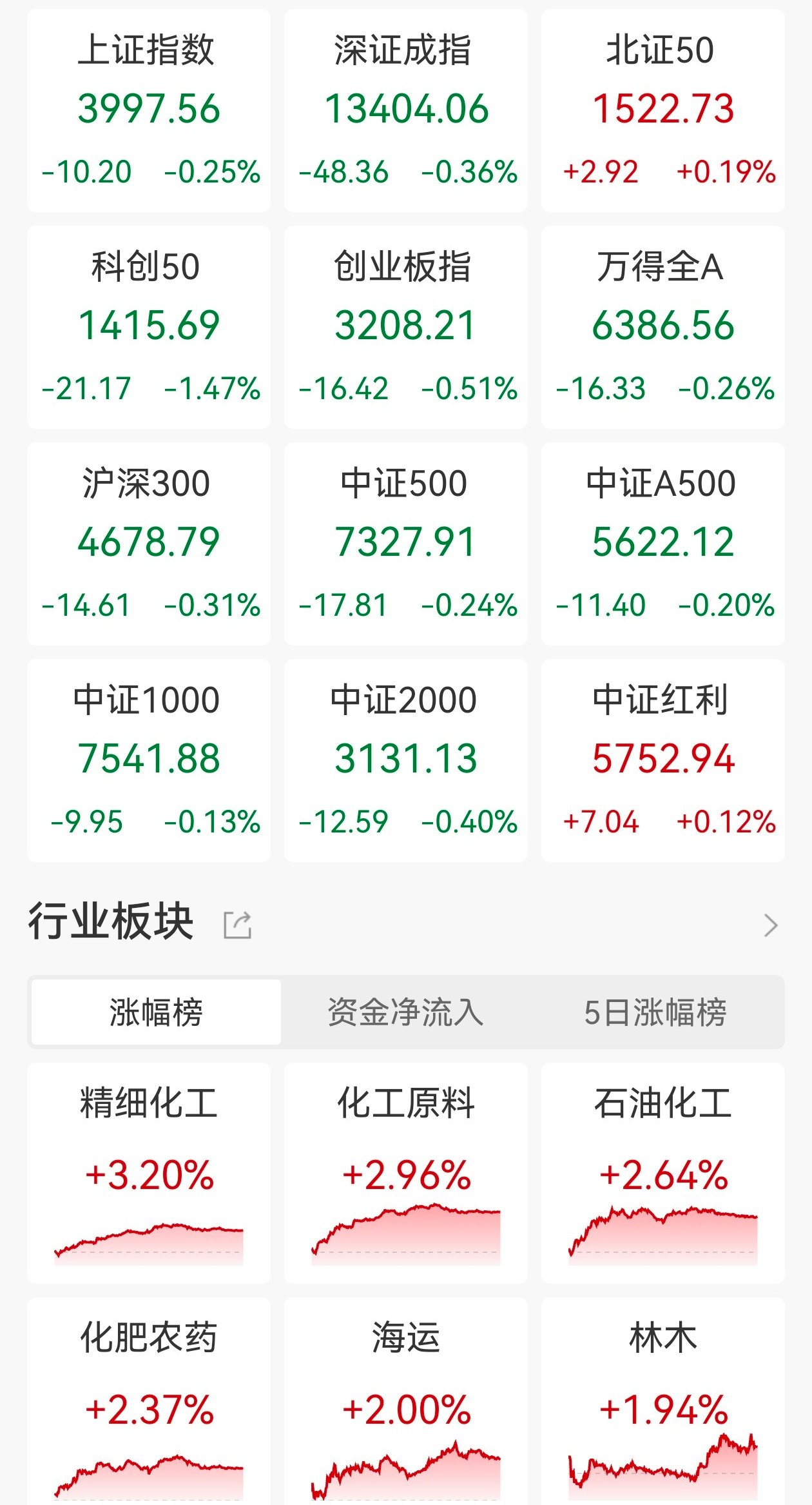
Market Overview - The three major A-share indices experienced slight declines, with the Shanghai Composite Index down 0.25% to 3997 points, the Shenzhen Component Index down 0.36%, and the ChiNext Index down 0.51% [1] - The total market turnover was 2.02 trillion yuan, a decrease of 55.7 billion yuan compared to the previous trading day, with over 3100 stocks declining [1] Sector Performance - The polysilicon sector saw a rise as leading companies planned to form a consortium, leading to a surge in the organic silicon sector, with Dongyue Silicon Material and Hesheng Silicon Material hitting the daily limit [1] - Lithium hexafluorophosphate prices soared, causing a breakout in the fluorochemical sector, with stocks like Yongtai Technology and Mofang gaining the daily limit [1] - The phosphate chemical and fertilizer sectors remained active, with Tianji shares and others hitting the daily limit [1] - The lithium mining sector strengthened, with Shengxin Lithium Energy also hitting the daily limit [1] - Other sectors that performed well included titanium dioxide, battery, and chemical raw materials [1] - Conversely, the robotics actuator and reducer sectors declined, with Top Group leading the losses [1] - The financial and tax digitalization sector weakened, with Shenzhou Information dropping over 8% [1] - Sectors such as ChatGPT, Xinchuang, digital currency, and auto parts saw significant declines [1] Performance Rankings - The fine chemicals sector led with a gain of 3.20%, followed by chemical raw materials at 2.96%, and fertilizers and pesticides at 2.37% [2] - The shipping and forestry sectors also showed positive net capital inflows, with respective increases of 2.00% and 1.949% [2]
化工50ETF(516120)早盘大涨近4%,实现三连阳!
Mei Ri Jing Ji Xin Wen· 2025-11-07 06:57
Group 1 - A-shares maintained volatility in early trading, with the chemical sector showing strong performance, particularly in chemical raw materials and fine chemicals [1] - The Chemical 50 ETF (516120) opened high and rose by 3.93% at one point, with a current increase of 3.68%, achieving three consecutive days of gains and a cumulative increase of 6.65% over three days [1] - Over 90% of the constituent stocks in the index were in the green, with notable performers including Multi-Fluor (涨停), Enjie Co., and Tianci Materials, which rose over 8% [1] Group 2 - The yellow phosphorus index increased by 4% on November 4, with a cumulative increase of over 7% in the past two weeks [1] - The average market price of thionyl chloride surged by 8.61% to 1552 yuan/ton, with a total increase of 19.38% since August [1] - The phosphate chemical industry is expected to maintain its favorable outlook due to the non-renewable nature of phosphate rock resources and increasing environmental requirements during mining [1]