
电动自行车

Search documents
9月1日电动自行车新国标将实施
Jing Ji Guan Cha Bao· 2025-08-18 08:12
Core Viewpoint - The implementation of the new national standard for electric bicycles aims to enhance safety and quality in the market, with a focus on compliance and regulation enforcement [1][2][3] Group 1: New Standards and Regulations - The new mandatory national standard, "Safety Technical Specifications for Electric Bicycles" (GB 17761—2024), will be enforced to address safety hazards in electric bicycles [1] - Products manufactured or imported before August 31, 2025, that comply with the old standards but not the new ones can be sold until November 30, 2025 [2] - Strict supervision will be conducted by local market regulatory authorities to prevent the sale of non-compliant electric bicycles and illegal modifications [2] Group 2: Registration and Compliance - Local public security agencies are required to standardize the registration process for electric bicycles, ensuring thorough checks of invoices, product quality certificates, and mandatory product certification [3] - Electric bicycles that do not meet the new standards or the old standards will not be registered, while those that comply with the old standards and are produced or imported before the deadline can be registered after verification [3] - Electric bicycles that meet the new standards will be registered in accordance with regulations [3]
多地织密电动自行车安全“防护网”
Zhong Guo Xin Wen Wang· 2025-08-15 10:12
中新网北京8月15日电 (记者王梦瑶)如何让电动自行车跑得安全,用得放心,各地正在织密安全"防护 网"。 江西省也正加强电动自行车的安全监管工作。去年以来,江西开展了包括电动自行车安全隐患全链条在 内的"四个专项整治",以旧换新电动自行车11.31万辆,新建集中充电端口80万余个,新增电动自行车 停放车位超180万个。 位于江西赣州的江西驴充充物联网科技有限公司依托物联网基础,在赣州市搭建了智能化安全监管平 台。该平台可以在充电设施发生高温、烟雾、漏电、水浸、过流、过压等异常情况时提前预警,把精准 的小区位置、设备号、端口号传输到监管大屏,并通过短信、APP推送、电话等方式通知相关管理人员 和用户。 天津是全国最大的电动自行车生产基地,有雅迪、爱玛、小刀等知名企业,电动自行车总产量占全国的 39%,这里的电动自行车生产企业正在新国标背景下全面提升安全标准。 新版强制性国家标准《电动自行车安全技术规范》将于9月1日起实施。爱玛科技集团电动车事业部总裁 高辉介绍,新国标相比原标准取消了脚踏骑行功能,在材料阻燃、塑料占比、防篡改、动态安全监测、 企业质量保证能力和产品一致性方面提出了更高要求。 "我们的研发平台已经 ...
7月中国工业生产较快增长 工业机器人产量同比增逾两成
Zhong Guo Xin Wen Wang· 2025-08-15 08:00
Core Insights - In July, China's industrial added value for large-scale enterprises grew by 5.7% year-on-year, indicating sustained rapid growth [1] - The manufacturing sector's added value increased by 6.2% year-on-year, outpacing the overall industrial growth [1] - High-tech manufacturing added value rose by 9.3% year-on-year, with significant growth in integrated circuits and electronic materials, which increased by 26.9% and 21.7% respectively [1] - The production of green and low-carbon products saw substantial growth, with new energy vehicles, lithium-ion batteries, and wind turbine generators increasing by 17.1%, 29.4%, and 19.3% year-on-year [1] - The digital and intelligent product manufacturing sector experienced an 8.4% year-on-year increase, driven by advancements in artificial intelligence and robotics [1] - The shipbuilding and related equipment manufacturing sector saw a remarkable 29.7% increase in added value, while electric motor manufacturing grew by 15.9% [2] - The consumption upgrade policy led to a 45.3% increase in electric bicycle production and an 8.1% increase in 5G smartphone production [2]

电动自行车:中国式制霸
3 6 Ke· 2025-08-14 14:14
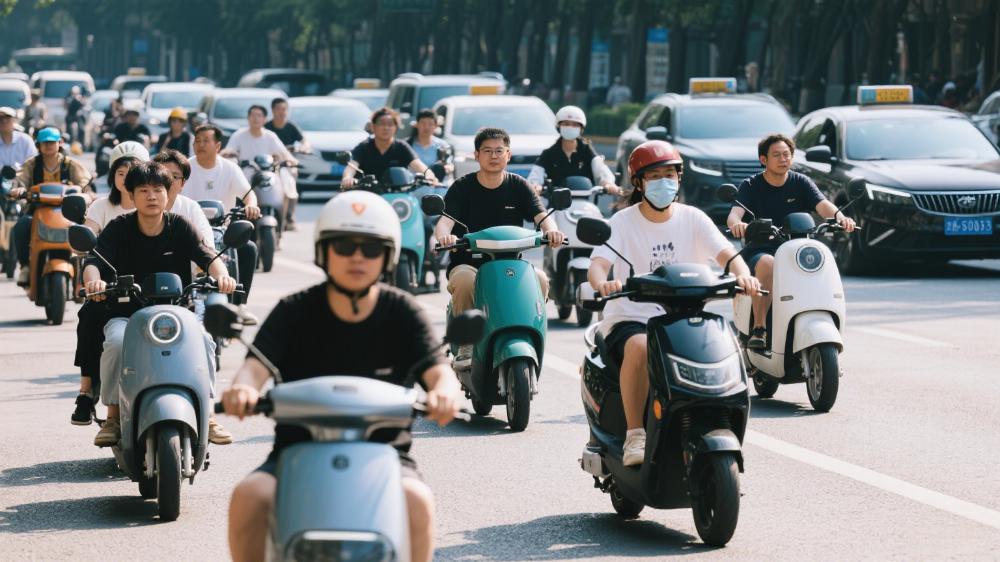
Core Viewpoint - The article discusses the decline of the motorcycle industry in China due to the implementation of motorcycle bans, which has led to the rise of electric bicycles as the dominant mode of personal transportation in the country. Group 1: Motorcycle Industry Overview - In Southeast Asian countries like India, Indonesia, and Vietnam, motorcycles are prevalent, with ownership numbers reaching 221 million, 112 million, and 45 million respectively. In contrast, China has 123 million motorcycles but 350 million electric bicycles, indicating a shift in transportation preferences [2][4]. - The motorcycle industry in China was once thriving, with annual production exceeding 20 million units from the 1990s to 2005, accounting for 60% of global output [2][4]. Group 2: Impact of Motorcycle Bans - The motorcycle ban in China began in 1985 and expanded to cover 185 cities by 2019, primarily due to high accident rates, pollution, and security issues associated with motorcycles [9][7]. - In 2024, motorcycle-related traffic accidents resulted in 16,532 deaths, making up 28.7% of total motor vehicle fatalities, highlighting the safety concerns that prompted the bans [9]. Group 3: Rise of Electric Bicycles - The electric bicycle market in China saw explosive growth, with sales jumping from 29,000 units in 2000 to 4 million in 2003, driven by the motorcycle bans and changing consumer preferences [10][9]. - By 2010, electric bicycle sales approached 30 million units, peaking at 36.95 million in 2013, indicating a strong market demand for this mode of transportation [17]. Group 4: Key Players in the Electric Bicycle Market - Major players in the electric bicycle market include Yadea, Aima, and Ninebot, with Yadea leading in sales, reaching 282.36 billion yuan in revenue in 2024 [29][30]. - Ninebot has shown significant growth, with revenue increasing from 4.32 billion yuan in 2020 to an estimated 72.11 billion yuan in 2024, driven by an expanding sales network [25][26]. Group 5: Future Opportunities - The introduction of new national standards for electric bicycles in 2018 and 2024 is expected to phase out non-compliant products, creating opportunities for compliant brands like Ninebot and Xiaomi to capture market share [21][31]. - The recent policy changes allowing motorcycles to operate in urban areas and the push for electric motorcycles present new growth avenues for companies in the electric two-wheeler market [31][32].

电动自行车:中国称霸全球
Hu Xiu· 2025-08-14 11:39
Core Insights - The article discusses the significant shift in the transportation landscape in China, where electric bicycles have overtaken motorcycles in popularity due to regulatory changes and market dynamics [1][4][10]. Group 1: Market Overview - In Southeast Asia, countries like India, Indonesia, and Vietnam have high motorcycle ownership, with Vietnam having 2.21 million motorcycles for a population of less than 100 million [1][2]. - In contrast, China has 3.5 billion electric bicycles and 1.23 billion motorcycles, indicating a preference for electric vehicles [1][3]. - The motorcycle industry in China peaked in the early 2000s, producing over 20 million units annually, but has since declined due to the implementation of motorcycle bans in major cities [2][8]. Group 2: Regulatory Impact - The motorcycle ban, which began in Beijing in 1985 and expanded nationwide, was driven by high accident rates, pollution concerns, and security issues [9][10][12]. - The ban has led to a rapid increase in the electric bicycle market, which saw sales jump from 29,000 units in 2000 to 400,000 units in 2003 [13][18]. Group 3: Company Developments - Companies like Yadea and Aima have emerged as leaders in the electric bicycle market, with Yadea selling 430,000 electric motorcycles in countries like Cambodia and Pakistan in 2024 [3][37]. - The article highlights the rise of new players like Ninebot, which has focused on high-end electric bicycles and has seen significant revenue growth, reaching 72.11 billion yuan in 2024 [32][37]. Group 4: Future Opportunities - The introduction of new national standards for electric bicycles in 2018 has created opportunities for companies to innovate and improve safety and performance [27][39]. - The recent policy changes allowing motorcycles in urban areas and the push for electric motorcycles present new market opportunities for companies like Ninebot and Niu Technologies [40][41].
青岛市市场监督管理局公布电动自行车产品抽查结果
Zhong Guo Zhi Liang Xin Wen Wang· 2025-08-14 08:48
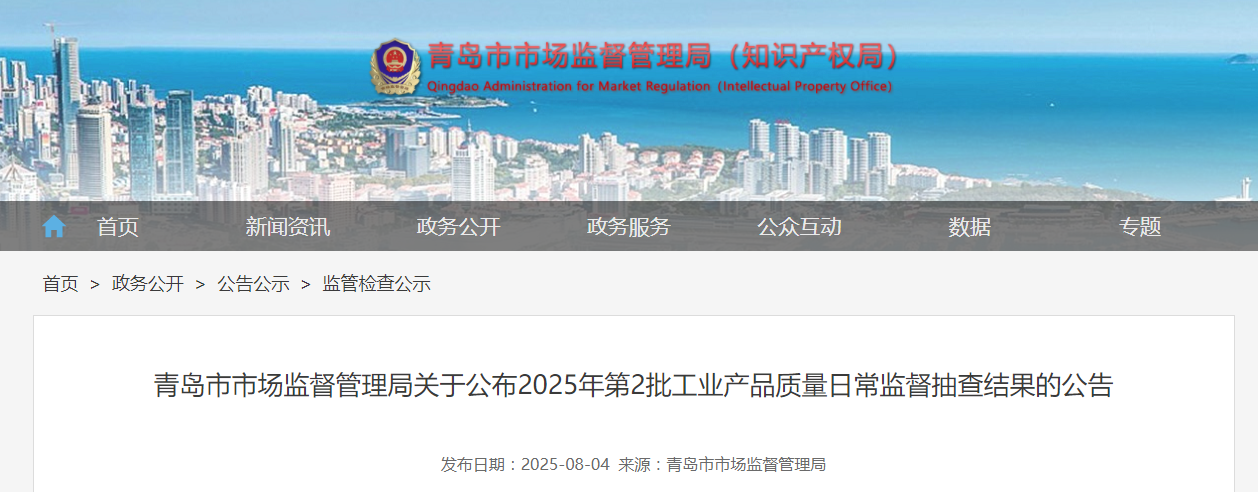
中国质量新闻网讯 近日,青岛市市场监督管理局网站公布2025年第2批工业产品质量日常监督抽查结果。其中,电动自行车产品抽查25批次,全部合格。 | 附件 | 2025年电动自行车产品质量市级监督抽查结果汇总表 | | | | | | | | | | | | | | | | | | | | | | | --- | --- | --- | --- | --- | --- | --- | --- | --- | --- | --- | --- | --- | --- | --- | --- | --- | --- | --- | --- | --- | --- | --- | | 生产日 | 不合 | 序 | 抽样 | 产品 | 商 | 抽查结 | 抽样 | 行政 | 受检单位名称 | 统一社会信用代码 | 标称生产者名称 | 期或批 | 规格型号 | 格项 | 承检单位 | 号 | 领域 | 名称 | 标 | 果 | 日期 | 区划 | | 号 | 目 | 斯 | | | | | | | | | | | | | | | | | | | | | | 电动 | 所检项 | 青岛市产品 | 2024- | 1 流通 | ...
公布一批案例 北京严查电动自行车“五改五售”违法行为
Zhong Guo Zhi Liang Xin Wen Wang· 2025-08-14 04:43
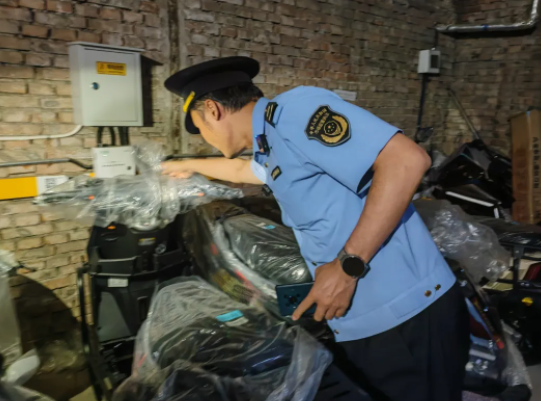
Core Viewpoint - Beijing's market regulatory authorities have initiated a concentrated special governance campaign targeting illegal modifications and sales of electric bicycles since late July 2025, focusing on the "Five Modifications and Five Sales" violations [1] Group 1: Governance Actions - The campaign has led to the investigation of 30 cases of "Five Modifications and Five Sales" violations, resulting in fines totaling 156,300 yuan and the seizure of 173 illegal vehicles [4] - Authorities have dismantled two professional modification "black spots" to disrupt the circulation chain of illegally modified vehicles [4] - A total of 258 "over-standard vehicles" have been reported for removal, eliminating spaces for the sale of illegal vehicles [4] Group 2: Regulatory Measures - 216 electric bicycle certification certificates have been suspended, canceled, or revoked to prevent problematic models from being produced and sold nationwide [4] - Continuous monitoring of online sales platforms has led to the removal of 357 links related to illegal sales of electric bicycle modification parts and tutorials [4] Group 3: Case Examples - Case 1: Beijing Mengyu Haoke Trading Co., Ltd. was fined 50,000 yuan for replacing batteries inconsistent with product certificates and adding seats, violating local regulations [6] - Case 2: Beijing Hongshun Xinye Technology Co., Ltd. was fined 30,000 yuan for adding safety guards to electric bicycles, which compromised traffic safety [6] - Case 3: Beijing Haoyunfulai Electric Bicycle Sales Store was penalized for selling a model that failed to meet safety standards, violating product quality laws [7] Group 4: Consumer Warnings - The market regulatory authority has issued warnings to consumers about the dangers of illegally modified electric bicycles, highlighting risks such as electrical overloads, loss of control, and increased accident potential due to excessive brightness of modified headlights [7]
李迅雷专栏 | 以旧换新:换什么乘数效应更大
中泰证券资管· 2025-08-13 11:32
Core Viewpoint - The article discusses the implementation of a "trade-in" policy for consumer goods starting in 2024, supported by a special long-term bond fund of 150 billion yuan, increasing to 300 billion yuan in 2025, aimed at boosting sales in various sectors including automobiles, home appliances, and home renovations [1][5]. Summary by Sections Policy Implementation - The "trade-in" policy will support a range of consumer goods, with a focus on automobiles, home appliances, home renovations, and electric bicycles, projected to drive sales exceeding 1.3 trillion yuan in 2024 [1][3]. - In the first half of 2023, 162 billion yuan in central funding led to over 1.6 trillion yuan in sales across various consumer categories [5][10]. Subsidy Details - The subsidy standards for 2025 include significant support for automobiles, home appliances, and digital products, with specific amounts allocated per category [4][6]. - For example, the subsidy for purchasing new energy vehicles can reach up to 20,000 yuan, while home appliances can receive up to 20% of the sales price as a subsidy [4][8]. Sales Impact - The trade-in policy is expected to have a multiplier effect on consumption, with retail sales of consumer goods growing by 5% in the first half of the year, contributing significantly to economic growth [10][11]. - The contribution of the trade-in policy to total retail sales is estimated to be between 0.74% and 0.96%, indicating a modest but positive impact [11][13]. Consumer Behavior - The article notes that lower-priced items tend to have a more significant impact on sales, with the trade-in program leading to increased sales in categories like home appliances and electric bicycles [18][19]. - Approximately 280 million individuals benefited from the trade-in subsidies, suggesting a broad reach, although the actual number of unique beneficiaries may be lower due to multiple claims by individuals [19][20]. Recommendations for Optimization - Suggestions include expanding the scope of the trade-in subsidies to include essential goods and services, which could benefit a wider demographic, particularly lower-income groups [23][24]. - The article emphasizes the need for a systematic approach to the trade-in policy, highlighting its potential indirect benefits on overall consumption beyond the initially targeted goods [24].

已查处30起,北京严查电动自行车“五改五售”违法行为
Xin Jing Bao· 2025-08-13 05:18
新京报讯(记者陈琳)8月13日,记者从北京市市场监管局获悉,今年7月下旬以来,北京市市场监管部 门针对电动自行车经营性拼改装等违法行为开展集中专项治理,严查销售主体"五改五售"违法行为。专 项治理以来,已立案查处"五改五售"违法行为30起,罚没款15.63万元,查扣违规车辆173辆。 案例二:北京宏顺兴业科技有限公司从事经营性加装改装电动自行车案 北京市海淀区市场监督管理局执法人员对北京宏顺兴业科技(002674)有限公司进行现场检查,发现该 公司正在为电动自行车加装护杠。该公司上述行为违反了《北京市非机动车管理条例》第十八条第一款 第四项的规定,属于实施其他影响电动自行车通行安全的拼装、改装行为。海淀区市场监管局责令该公 司改正上述违法行为,并作出罚款30000元的行政处罚。 案例三:北京好运福来电动自行车销售店销售不符合保障人体健康和人身、财产安全的电动自行车案 北京市昌平区市场监督管理局对北京好运福来电动自行车销售店销售的一款电动自行车开展监督抽查。 经检测,该款电动自行车阻燃性能项目不符合GB 17761-2018《电动自行车安全技术规范》。该公司上 述行为违反了《中华人民共和国产品质量法》第十三条第 ...
北京严打电动自行车“五改五售” 已查处违法行为30起
Bei Jing Shang Bao· 2025-08-13 03:29
Group 1 - The Beijing Municipal Market Supervision Administration has initiated a special campaign against illegal modifications of electric bicycles, focusing on five types of modifications and five types of illegal sales [1] - Since the campaign began in late July, 30 cases have been filed, resulting in fines totaling 156,300 yuan and the seizure of 173 illegal vehicles [1] - The campaign targets modifications such as controllers, high beams, batteries, motors, and canopies, as well as sales of non-compliant products and accessories [1] Group 2 - Law enforcement has dismantled two illegal modification workshops and removed 258 over-standard vehicles from hidden roadside sales [1] - The administration has urged certification bodies to suspend or revoke 216 electric bicycle certification certificates to prevent problematic models from being produced and sold nationwide [1] - Online monitoring has been implemented to oversee sales platforms, leading to the removal of 357 items including illegal modification accessories and tutorials [1][2]