自动驾驶

Search documents
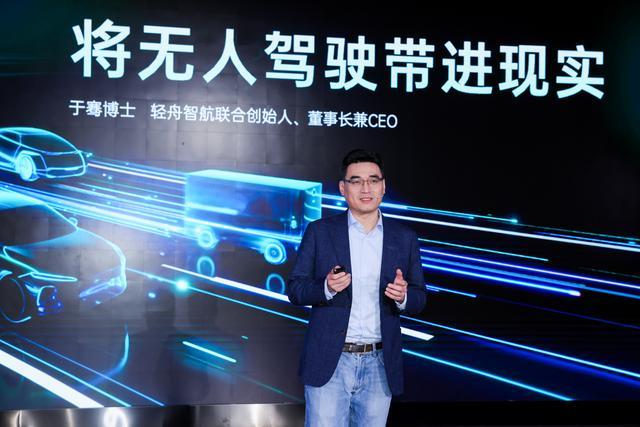
轻舟智航:L2与L4本质上技术同源
Jing Ji Guan Cha Wang· 2026-01-25 08:22
Core Insights - QCraftDAY2026 event showcased QCraft's next-generation autonomous driving technology and future development plans, marking the mass production of the first city NOA solution based on Horizon's 6M chip [2] - The company aims to expand its partnerships, targeting over 50 new vehicle models equipped with city NOA by 2026 and plans to achieve 3 million units of intelligent driving systems by 2027 [2] Technology Developments - QCraft introduced the "VLA+ World Model" unified architecture, which enhances decision-making, remote takeover, and human-machine interaction through language capabilities [2] - The company emphasized that L2, L3, and L4 technologies share the same AI model foundation, with a focus on safety, comfort, and predictability [3][4] Product Offerings - QCraft launched the "QCraft Chengfeng 2.0" driver assistance solution, creating a three-tier product matrix: Chengfeng AIR for highway NOA, Chengfeng PRO for urban NOA, and Chengfeng MAX integrating VLA and world model technologies [2] - The "Robo-X" autonomous driving open platform was unveiled, aiming to become the "Android of the autonomous driving field," providing comprehensive tools for Robobus, Robovan, and Robotaxi [4] Market Strategy - The company is expanding its business from passenger vehicles to more L4 commercial scenarios, establishing a dual-line layout of passenger vehicle intelligent driving and commercial vehicle automation [4] - QCraft plans to initiate small-scale operations of Robotaxi in 2026, with a broader deployment expected in 2027, while acknowledging potential delays in China compared to the U.S. due to various factors [5]

中国公司全球化周报|荣耀、倍思、努比亚等50+品牌签约速卖通品牌出海/《明日方舟:终末地》全球公测,阿里云提供技术支撑
3 6 Ke· 2026-01-25 07:20
Group 1: Events and Forums - The "Dubai Business Forum - China" will take place in Shenzhen on May 14, 2026, focusing on the theme "Working Together for New Economic Growth" to introduce Dubai's economic agenda (D33) and explore new paths for cooperation and strategic investment between Chinese and Dubai businesses [2] Group 2: Company Developments - Over 50 brands, including Honor, Baseus, and Nubia, have signed with AliExpress for the "Super Brand Going Global Plan" to accelerate overseas market expansion, particularly in high-value categories like consumer electronics and smart hardware [3] - Eagle Network's new game "Arknights: Endfield" has launched globally, supported by Alibaba Cloud to handle high concurrency demands during the launch, ensuring smooth operation and real-time player interaction [3] - TikTok Shop in Southeast Asia is projected to double its GMV by 2025, with daily GMV increasing by 90% year-on-year, indicating a significant consumption upgrade in the region [4] - Ninebot has initiated Malaysia's first autonomous vehicle testing project in collaboration with local postal and logistics companies, with over 16,000 autonomous vehicles already operating globally [4] - Jiutian Chuangzhi signed a multi-million dollar order in Oman for autonomous cleaning vehicles, expanding its market reach to Malaysia, Turkey, and Palestine [5] - Cao Cao Mobility plans to deploy 100,000 customized Robotaxis globally by 2030, transitioning towards unmanned operations [5] - Baidu's "Luobo Kuaipao" has launched a fully autonomous driving service in Abu Dhabi, marking its first overseas public service [6] - Cainiao's global overseas warehouse order volume is expected to grow by 32% year-on-year by 2025, with plans for expansion and automation upgrades in key markets [6] - JD Logistics and Honor are collaborating to build overseas warehouses in the Middle East, aiming to support Honor's mobile phone sales in Saudi Arabia [6] - Ant International's Alipay+ has connected with Italy's Tinaba digital wallet, enabling seamless payment solutions for Chinese merchants [7] - UBTECH has partnered with Airbus to deploy humanoid robots in manufacturing processes, with significant order growth expected in the coming years [7] - Longi Green Energy is collaborating with NeoVolta to build an 8GWh battery storage manufacturing plant in Georgia, USA, to meet growing energy storage demands [7] Group 3: Investment and Financing - Zhongke Kelan has completed a multi-million angel round financing to accelerate product development and international expansion of its biodegradable plastics [8] - Yanhua Technology has secured nearly 100 million yuan in A1 round financing to enhance production capacity and global market reach for its perovskite solar cells [8] - Muxin Intelligent has completed a B round financing exceeding 100 million yuan, focusing on product development and global market channel expansion [9] Group 4: Market Trends - The overseas micro-short drama market is expected to exceed $5 billion by 2026, with Chinese apps capturing 90% of the market share [10] - Despite high tariffs, Chinese electric vehicle sales in Europe surged by 127% year-on-year in December 2025, with market share doubling to 9.5% [10]




单芯片城市NOA方案量产,轻舟智航公布L4无人物流战略
Xin Lang Cai Jing· 2026-01-25 04:52
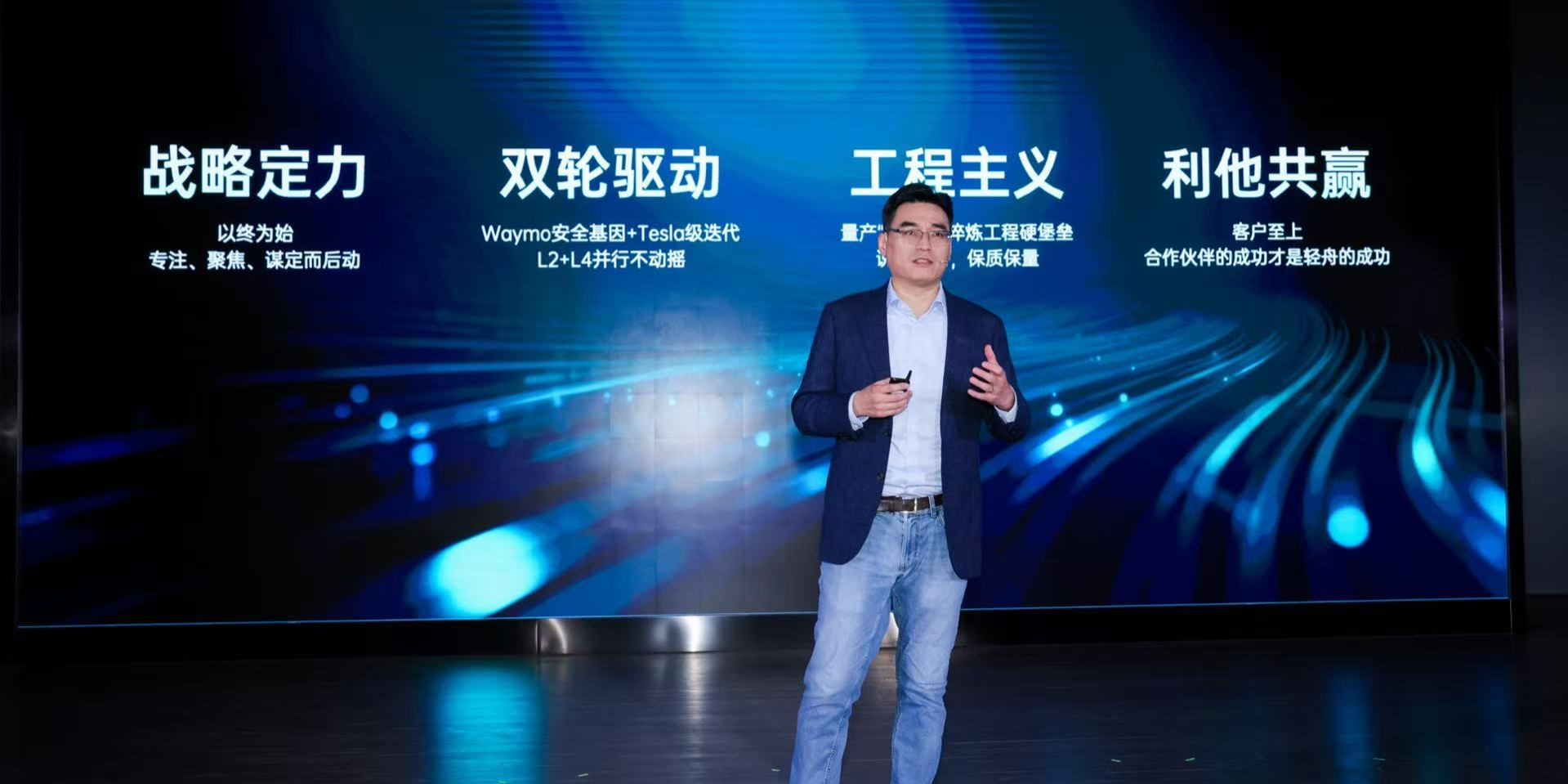
Core Insights - Lightyear Zhihang announced that as of January, over 1 million passenger cars equipped with its assisted driving system have been produced [2] - The company introduced its NOA (Navigation Assisted Driving) solution based on the Horizon Journey 6M chip, which has a computing power of 128 TOPS, marking it as the first city NOA solution to be mass-produced using this chip [2] - The CEO predicts that 2026 will mark the beginning of a "golden decade" for autonomous driving, with city NOA features expected to become standard in mainstream vehicles within five years [2] Technology Strategy - Lightyear Zhihang emphasizes a dual strategy of L2 and L4 driving, asserting that both levels share foundational technology [2] - The company introduced its "VLA + World Model" unified technical architecture, aimed at enhancing the understanding of complex environments and human behavior logic, which is essential for advancing to higher levels of autonomous driving [2] Business Expansion - Lightyear Zhihang has officially entered the L4-level unmanned logistics sector and formed a strategic partnership with Chery Commercial Vehicles [3] - The company plans to leverage its technical and engineering experience from passenger vehicle production to develop unmanned logistics products for mass production, with pilot operations already underway in Zhejiang and Anhui [3] - Industry analysts note that Lightyear Zhihang's trajectory reflects current market competition, highlighting the rapid adoption of advanced driving features and the exploration of new commercial avenues such as Robotaxi and unmanned logistics [3]
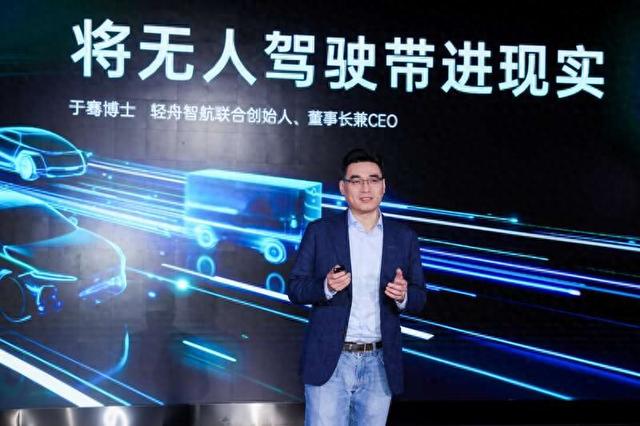
轻舟智航董事长于骞:公司辅助驾驶系统搭载量突破100万台 正式进入L4无人物流领域
Zhong Zheng Wang· 2026-01-25 03:27
Core Insights - The company Lightyear has officially entered the L4 unmanned logistics sector and has begun deployment operations in multiple locations, marking a new phase of large-scale implementation for its passenger vehicle assistance systems, which have surpassed 1 million units in deployment [1][2]. Group 1: Industry Trends - The evolution of autonomous driving technology is undergoing profound changes, transitioning from a "machine intelligence" phase to a "human-like intelligence" phase, with 2026 identified as a critical turning point for the industry [2]. - The introduction of end-to-end architecture and models like VLA and world models will drive a comprehensive understanding of the real world, allowing autonomous systems to surpass human driving capabilities [2]. - The next decade is expected to be a golden era for autonomous driving, with significant advancements in technology and market penetration anticipated [2]. Group 2: Product Development - Lightyear plans to launch its first end-to-end urban NOA solution based on a single journey 6M platform by April 2025, with the official vehicle integration occurring in January 2026 [3]. - The new generation "Lightyear Sailing 2.0" assistance solution will focus on safety and explainability, achieving a driving experience equivalent to 256 TOPS with only 128 TOPS of computing power [3]. - The company aims to promote high-level assistance driving solutions to the 100,000 yuan market by 2026, expanding its coverage from 80,000 to 400,000 yuan models [3]. Group 3: Future Deployment Plans - Lightyear has outlined a product evolution roadmap that includes the large-scale deployment of Robotaxi by 2027, supported by the Robo-X autonomous driving open platform [5]. - The Robo-X platform aims to become the "Android of the autonomous driving field," providing a universal technology base and comprehensive tools for various autonomous driving scenarios [5]. - Strategic partnerships, such as with Chery Commercial Vehicles, are being formed to create benchmark L4 logistics products and services [5].
每周股票复盘:经纬恒润(688326)L3级自动驾驶准入推动高阶智驾产品量产
Sou Hu Cai Jing· 2026-01-24 19:01
Core Viewpoint - The company, Jingwei Hirain (688326), has seen a significant increase in stock price and market capitalization, driven by advancements in L3-level autonomous driving and developments in commercial aerospace and low-altitude economy sectors [1][4]. Group 1: L3-Level Autonomous Driving - The approval of L3-level autonomous driving models is expected to drive the production of high-level intelligent driving products, enhancing the value of domain controllers and perception products [4]. - The company has been continuously laying out its products around the requirements for high-level intelligent driving, including domain controllers, perception, sensors, and safety compliance [1][4]. - The contribution to the company's performance from high-level intelligent driving will depend on the progress of customer model approvals, pilot promotion scope, and mass production ramp-up [1]. Group 2: Commercial Aerospace - The subsidiary, Runke General, has made progress in commercial aerospace by providing rocket control system components and establishing cooperative development opportunities for satellite payloads [2][4]. - Runke General leverages its expertise in electronics, radar, communication, control, and electromechanical systems to offer a complete technical system and comprehensive solutions for the entire lifecycle of commercial aerospace [2]. Group 3: Low-Altitude Economy - The company has already established a business layout in the low-altitude economy, expanding its service capabilities from aircraft and automobiles to this emerging sector [2]. - The main advantages in the low-altitude economy include a team with backgrounds in automotive and high-end equipment, facilitating smooth communication and cooperation with long-term clients [2]. - The low-altitude economy business capabilities cover avionics, control, power, and energy systems, supporting the entire R&D process and including electronic product offerings [2].

Robotaxi驶入“千辆时代”,广东智驾提速规模商业化
2 1 Shi Ji Jing Ji Bao Dao· 2026-01-24 13:17
Core Insights - The autonomous driving industry in China has reached a significant milestone with the Robotaxi fleets of WeRide and Pony.ai surpassing 1,000 vehicles, marking the entry into the "thousand-vehicle era" [1][4][8] Industry Overview - Guangdong province has emerged as a key player in the autonomous driving sector, with 3.618 million new energy vehicles produced in 2022, accounting for 25% of the national total [2] - The province aims to produce 1.1829 million new energy vehicles by 2025, laying a solid foundation for the development of the intelligent driving industry [2] Company Developments - WeRide's Robotaxi has commenced commercial operations in over 10 major cities globally, including Guangzhou, Beijing, and Abu Dhabi, with a focus on fully autonomous operations [2][6] - WeRide reported a revenue of 171 million yuan in Q3 2025, a year-on-year increase of 144.3%, with a gross profit of 56.3 million yuan, reflecting a gross margin of 32.9% [4][5] - The company has achieved a significant reduction in net losses, narrowing by 70.5% year-on-year, indicating a transition towards scale expansion and profitability improvement [4] Technological Advancements - WeRide launched the HPC 3.0 high-performance computing platform, which provides 2,000 TOPS of AI computing power, reducing the cost of its autonomous driving suite by 50% [5] - The WeRide One platform enables efficient mass deployment of autonomous driving across various urban scenarios, enhancing operational capabilities [5][6] Market Expansion - WeRide has accelerated its international expansion, partnering with Uber to establish the largest commercial Robotaxi fleet in Abu Dhabi, with plans to expand to 15 additional international cities over the next five years [6][8] - The company is positioned to benefit from favorable policies, including the recent approval for L4 autonomous vehicles to operate commercially in several cities [7][8] Competitive Landscape - Guangdong's robust industrial foundation, including a well-developed supply chain for chips and electronic components, supports the growth of the autonomous driving sector [7] - The province's supportive government policies and funding initiatives have created a conducive environment for the development of autonomous driving technologies [7][8]
“木头姐”年度重磅:ARK 2026 Big Idea
华尔街见闻· 2026-01-24 12:15
Core Insights - The article discusses Cathie Wood and ARK Invest's focus on long-term technological transformations, emphasizing the report "ARK Big Ideas 2026" which highlights the concept of "The Great Acceleration" driven by AI and other technologies [2][3][6]. Group 1: Major Innovations and Economic Impact - The report identifies 13 significant innovation areas, asserting that five key platforms centered around AI are accelerating and will lead to a substantial increase in global economic growth, with a projected GDP growth rate of 7.3% by 2030, significantly higher than the IMF's forecast of 3.1% [8][12]. - ARK predicts that the market share of innovative assets will rise from approximately 20% in 2025 to about 50% by 2030, with a market value expansion from around $5 trillion to approximately $28 trillion [13]. - Investment in data center systems is expected to grow from about $500 billion in 2025 to approximately $1.4 trillion by 2030, reflecting a compound annual growth rate of 30% [14][26]. Group 2: AI and Technological Convergence - The report emphasizes that AI acts as a "Central Dynamo," driving multiple technological curves simultaneously, leading to a convergence of technologies that enhances their interdependencies [8][10]. - The "Convergence Network Strength" metric is projected to increase by 35% by 2025, indicating a significant acceleration in the mutual catalysis of different technologies [10]. - AI's demand is driving a surge in investment, with the annualized growth rate of data center investments increasing from 5% to 29% since the launch of ChatGPT [24][29]. Group 3: Market Opportunities and Consumer Behavior - AI agents are expected to transform online consumer spending, with ARK forecasting that their contribution to global online sales will grow from about 2% in 2025 to approximately 25% by 2030, potentially exceeding $8 trillion [35]. - The share of AI-related search traffic is anticipated to rise from 10% in 2025 to 65% by 2030, with search advertising spending growing at an annual rate of about 50% [38]. - By 2030, AI agents could generate around $900 billion in business and advertising revenue, primarily driven by lead generation and advertising [40]. Group 4: Robotics and Automation - Robotics is highlighted as a critical GDP engine, with the global robotics market opportunity estimated at $26 trillion, split between manufacturing and household services [42][44]. - The report suggests that the adoption of humanoid robots could significantly convert non-market activities into market activities, potentially increasing GDP growth rates from 2-3% to 5-6% if 80% of U.S. households adopt such technology [49]. - Autonomous driving is projected to create approximately $34 trillion in enterprise value by 2030, with significant implications for the ride-hailing market [53]. Group 5: Biotechnology and Healthcare - The integration of multiomics and AI is expected to revolutionize biology, with the cost of whole genome sequencing projected to drop to $10 by 2030, driving demand for molecular diagnostics [59][61]. - AI-driven drug development could reduce the time to market by 40% and lower total drug costs from $2.4 billion to $700 million, indicating a substantial shift in the pharmaceutical landscape [64]. - The potential market opportunity for extending healthy lifespan is estimated at $1.2 quadrillion, highlighting the vast economic implications of advancements in biotechnology [65]. Group 6: Space Economy and Energy Efficiency - SpaceX's reusable rocket technology is set to propel the economy into the space age, with launch costs decreasing significantly, potentially below $100 per kilogram [68][70]. - The report indicates that energy efficiency is improving, with a projected doubling of capital expenditure in the global power sector to meet rising electricity demands by 2030 [75]. - The anticipated growth in energy storage and distributed energy systems is crucial for the next generation of cloud infrastructure [12].
AI应用的“妖风”还能吹多久?
投中网· 2026-01-24 07:36
Core Viewpoint - The article discusses the volatility and potential of AI application stocks, highlighting the recent surge and subsequent decline in their prices, emphasizing the need for logical investment rather than speculative trading [4][5][7]. Group 1: AI Application Market Dynamics - The AI application market experienced a significant surge starting January 9, driven by the IPO of MiniMax, which saw a price increase of over 90%, boosting market confidence in AI commercialization [5]. - Following the initial excitement, many AI application companies issued announcements clarifying their limited revenue from AI, leading to a sharp price correction in the sector [7]. - The article suggests that while the AI application sector is currently volatile, it has the potential to create long-term value if investors can identify companies with genuine business models and revenue streams [9]. Group 2: GEO Model in Advertising - The article introduces the GEO (Generative Engine Optimization) model, which allows users to input specific demands and receive optimized product recommendations directly from AI, streamlining the purchasing process [11]. - The GEO market is projected to grow significantly, with estimates of $2.9 billion in China and $11.2 billion globally by 2025, and reaching $24 billion and $100.7 billion by 2030 respectively [13]. - GEO is seen as a transformative force in marketing, shifting the power dynamics towards platforms that can leverage AI models effectively, similar to how Google and Baidu dominated the SEO era [16][17]. Group 3: AI in Healthcare - The AI healthcare sector has shown strong performance, with companies like Hongbo Medicine and Dian Diagnostics seeing stock increases of over 50% year-to-date [28]. - Government policies are increasingly supportive of AI in healthcare, with initiatives aimed at integrating AI into high-end medical equipment and remote healthcare applications [30]. - The article notes that AI healthcare applications are moving from concept to clinical use, with companies like Tempus AI reporting an 83% revenue growth, indicating a positive trend for domestic firms in the sector [31]. Group 4: AI in Financial Technology - The financial technology sector has also seen a rise, with the Financial Technology ETF increasing by over 14% since the beginning of 2026 [46]. - AI is expected to enhance the capabilities of internet financial companies by improving customer engagement and operational efficiency through advanced tools [48]. - However, the article cautions that while AI can improve operational efficiency, it may not fundamentally change the poor business models of many financial IT companies, which face challenges such as high customization costs and fragmented market share [49].

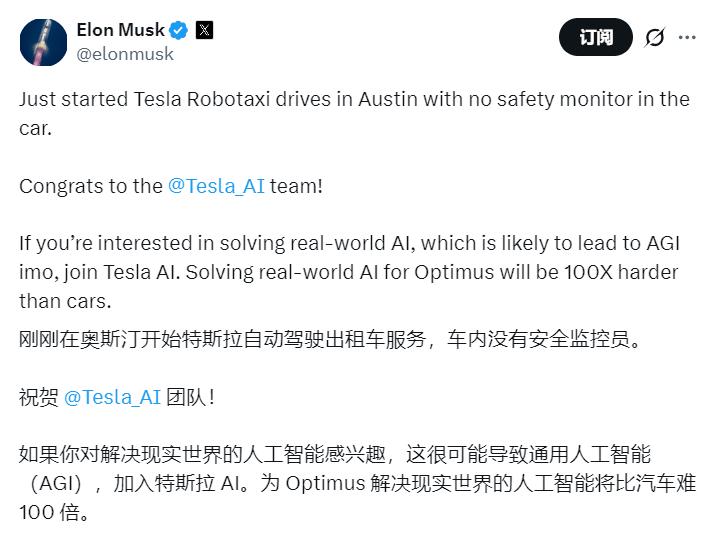
特斯拉Robotaxi启动全无人运营,但被网友吐槽是“障眼法”
3 6 Ke· 2026-01-24 04:14
Core Insights - Tesla has announced the launch of its Robotaxi service without a safety driver, marking a significant milestone in autonomous driving technology [2][3][5] - The announcement led to a 4.15% increase in Tesla's stock price, adding approximately $59.6 billion to its market capitalization [9] - The current deployment of fully autonomous Robotaxis is limited to Austin, Texas, with a mix of vehicles still operating with safety drivers in other locations [5][8] Group 1: Robotaxi Launch and Operations - Tesla's Robotaxi service began in Austin, Texas, and has rapidly progressed from initial limited access to full public operation within eight months [3][9] - The company is the first to offer a fully autonomous service using only cameras, without the use of lidar or radar [5] - Currently, only a small number of Robotaxis in Austin are operating without safety drivers, while the majority remain supervised in the Bay Area [5][8] Group 2: Cost and Market Position - Tesla's Robotaxi fleet has reached a total of 200 vehicles across the U.S., with 158 in the Bay Area and 42 in Austin [27] - The upcoming Cybercab is expected to have significantly lower production and operational costs, with estimates suggesting a cost below $30,000 and an operational cost of approximately $0.20 per mile [29][31] - Comparatively, traditional ride-hailing services like Uber and Lyft charge between $1 to $4 per mile, indicating a potential competitive advantage for Tesla's Robotaxi [31] Group 3: User Experience and Feedback - Early users of the Robotaxi service have reported low fares, with one user paying $2.71 for a 1.36-mile ride, highlighting the affordability of the service [35] - There are mixed reactions regarding the true nature of the "fully autonomous" experience, with some users questioning whether safety measures are still in place through external monitoring vehicles [26][12] Group 4: Industry Context - On the same day as Tesla's announcement, Waymo, a major competitor, launched its Robotaxi service in Miami, expanding its operational footprint to six major U.S. cities [36] - The rapid advancements in autonomous vehicle technology by both Tesla and its competitors indicate a highly competitive landscape in the autonomous driving sector [36]

轻舟已过万重山!轻舟智航驶入量产达100万台,轻舟智航于骞:自动驾驶要干20年
Huan Qiu Wang Zi Xun· 2026-01-24 04:11
Core Insights - The era of transitioning from assisted driving to autonomous driving has begun, with 2026 marking the start of a new golden decade for autonomous driving and the "super intelligent" era [1][3] - QCraft, co-founded by Dr. Yu Qian, has successfully crossed the production milestone of 1 million units for its assisted driving systems, indicating a new phase of large-scale implementation [3][5] Group 1: Company Developments - QCraft has achieved a significant milestone with over 1 million units of its assisted driving system deployed, marking a new starting point for the company [5] - The company has established partnerships with nearly 10 automotive manufacturers, aiding in the mass production of 23 vehicle models, with expectations to exceed 50 new models in 2026, all featuring urban NOA capabilities [7] - QCraft's user base has accumulated over 2.5 billion kilometers of assisted driving mileage, with nearly 100 million uses of smart parking assistance [7] Group 2: Technological Innovations - QCraft has introduced the industry's first "safety explainable" end-to-end large model, addressing safety concerns associated with the "black box" nature of end-to-end systems [11] - The company has developed a unified architecture called "VLA+ World Model," which enhances the ability of assisted driving systems to handle complex real-world scenarios [13] - QCraft's technology allows for the use of a single journey 6M chip to achieve urban NOA, demonstrating a commitment to providing affordable and effective intelligent driving solutions [8] Group 3: Future Plans - QCraft has outlined a product evolution roadmap from advanced assisted driving to large-scale operations of autonomous driving from 2025 to 2027 [14] - The company aims to enter the L4 unmanned logistics market, collaborating with automotive manufacturers to create a new paradigm of "production equals operation" [16] - QCraft is accelerating its international expansion, establishing offices in cities like Beijing, Suzhou, and Munich, and targeting markets in Europe, East Asia, the Middle East, and Singapore [19]