
传感器

Search documents
奥迪威(832491):公司半年报业绩稳健增长,新产品逐渐导入下游应用
Jianghai Securities· 2025-09-17 10:28
Investment Rating - The investment rating for the company is "Accumulate (Maintain)" [4] Core Views - The company reported steady growth in its semi-annual performance, with new products gradually being introduced into downstream applications [1][6] - In the first half of 2025, the company's revenue reached 330 million yuan, representing a year-on-year increase of 16.26%, while net profit was 50.47 million yuan, up 7.81% year-on-year [6][4] - The growth in performance is attributed to product and technology upgrades, enhancing core competitiveness and increasing order demand from downstream markets [6] - The sensor business saw significant growth, with revenue of 276 million yuan, a year-on-year increase of 28.77%, driven by continuous R&D investment and product upgrades [6] - The actuator business experienced a decline in revenue, down 33.16% to 43.76 million yuan, primarily due to reduced sales in the electroacoustic device segment [6] Financial Forecast - The company’s projected total revenue for 2025 is 738 million yuan, with a growth rate of 19.50%, and net profit is expected to be 102.84 million yuan, growing by 17.32% [3][6] - The forecast for 2026 and 2027 shows continued revenue growth, with estimates of 924 million yuan and 1.23 billion yuan respectively, reflecting growth rates of 25.22% and 33.34% [3][6] - The return on equity (ROE) is projected to increase from 9.62% in 2025 to 12.72% by 2027 [3] Product Development - The company has introduced a specialized flow sensor for liquid cooling in smart servers, utilizing a dual-technology architecture for comprehensive thermal management [6] - The product is currently in the testing phase with downstream customers, aiming for accelerated mass application [6] - Growth in the robotics sector is notable, with increased orders driven by the rise in sensor integration in service and industrial robots [6]
安培龙(301413.SZ):用于机器人力传感器产品收入占主营业务收入比例极低
Ge Long Hui A P P· 2025-09-17 09:34
Core Viewpoint - Anpei Long (301413.SZ) has noted increased market attention on humanoid robots, but its related sensor products are still in the testing phase and have not yet generated significant revenue [1] Group 1: Company Product Development - The company has developed several force sensor products for humanoid and collaborative robots, including pressure sensors, tension sensors, torque sensors, and six-dimensional force sensors [1] - Pressure sensors, tension sensors, and torque sensors have completed development but are currently undergoing customer sample testing and validation [1] - The six-dimensional force sensor based on MEMS silicon strain gauge and glass micro-fusion technology is still in the research and development stage and has not yet been delivered as a product [1] Group 2: Revenue Impact and Market Outlook - Revenue from the company's robot force sensor products constitutes a very low proportion of its main business income, thus having a minimal impact on overall performance [1] - There is uncertainty regarding the market potential for humanoid robots and whether the company will achieve customer sample delivery or secure bulk orders in the future [1]

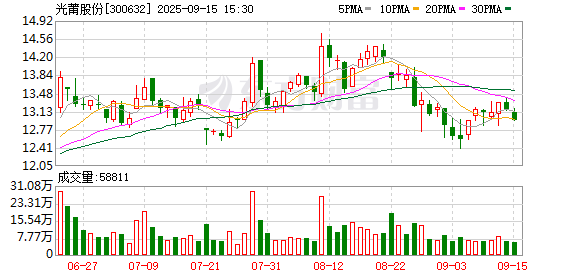
光莆股份:目前,公司已布局光电编码及柔性材料在机器人关节控制上应用
Mei Ri Jing Ji Xin Wen· 2025-09-17 08:52
Group 1 - The core viewpoint of the article highlights the advancements in flexible sensor technology, specifically the second-generation flexible tactile sensor developed by Fulei New Materials, which achieves full coverage and three-dimensional force perception capabilities [1] - Fulei New Materials is recognized as a leading company in the domestic flexible sensor (electronic skin) research and development sector [1] - The company has successfully created a sensor that mimics "smart skin" for robots, enabling comprehensive sensory perception across various parts of the hand [1] Group 2 - Guangpu Co., Ltd. (300632.SZ) has actively engaged in forward-looking technology research and development, focusing on optical encoding and flexible materials for robotic joint control applications [1] - The company is exploring the application of flexible sensors in core tactile components of robots, such as dexterous hands [1]

传感器概念持续走强,*ST威尔、奥普光电、均胜电子、科博达涨停
Mei Ri Jing Ji Xin Wen· 2025-09-17 06:56
Group 1 - The sensor concept continues to strengthen, with multiple companies experiencing significant stock price increases [1] - Companies such as *ST Weir, Op Light, Junsheng Electronics, and Kebo Da have reached their daily price limit [1] - Other companies including Sifang Optoelectronics, Hanwei Technology, Anpeilong, Saiwei Electronics, Senba Sensor, and Huagong Technology also saw price increases [1]


两月连融两轮!「模量科技」领跑触觉传感赛道!
机器人大讲堂· 2025-09-17 04:15
Core Viewpoint - The article highlights the advancements in tactile sensing technology by Modulus Technology, emphasizing its successful completion of a multi-million Pre-A funding round to enhance production capacity and deepen market penetration across various sectors such as robotics, smart vehicles, and healthcare [1][2]. Group 1: Company Overview - Modulus Technology, founded in 2024, is one of the few companies globally capable of mass-producing industrial-grade multimodal tactile sensing technology, aiming to integrate this technology into both industrial and consumer applications [2]. - The founding team consists of elite talents from Xiamen University and Hong Kong University, along with experienced executives from well-known hard-tech companies, all with over ten years of experience in tactile sensor research and engineering [2]. Group 2: Market Potential - According to VMR's latest report, the global tactile sensor market is expected to exceed $26 billion by 2028, with the electronic skin market for humanoid robots in China projected to reach 9 billion yuan by 2030, reflecting a compound annual growth rate of 64.3% [3]. - Mastery of tactile perception is seen as crucial for the next generation of smart devices across various sectors, including industrial inspection, embodied intelligence, smart vehicles, and wearable technology [3]. Group 3: Technological Advancements - Modulus Technology focuses on material innovation and algorithm integration to create a comprehensive product matrix for tactile sensing, ensuring both sensitivity and manufacturability [3]. - The company has developed various tactile sensing products, including flexible electronic skin, industrial pressure distribution detection systems, high-sensitivity temperature and pressure sensors, and fabric-based flexible sensors for smart automotive interiors [5][7][9]. Group 4: Commercialization and Applications - Modulus Technology has successfully transitioned from laboratory research to commercial production, providing innovative solutions across multiple industries, including consumer electronics, healthcare, and smart home applications [11][12]. - The company collaborates with leading manufacturers in the intelligent manufacturing sector and has established partnerships in the humanoid robotics and smart automotive industries to enhance operational precision and user experience [14][15].


柯力传感(603662):传感器业务新增并表贡献业绩,深度参与人形机器人产业布局
Changjiang Securities· 2025-09-16 14:20
Investment Rating - The investment rating for the company is "Buy" and is maintained [9]. Core Insights - The company's main operations are stable, benefiting from the contribution of newly consolidated subsidiaries, with a year-on-year revenue growth of 23.40% and a net profit growth of 47.93% in the first half of 2025 [2][6]. - The company is focusing on the humanoid robot sector and has made strategic investments in several companies, including Kepler, Tashan Technology, and Wuxi Beimi Sensor, to enhance its capabilities in the robotics field [2][6]. - The company has achieved significant progress in its "sensor forest" strategy, consolidating its leading position in high-end sensor technology and industrial applications [12]. - The company has sent samples to over 50 domestic humanoid and collaborative robot enterprises, receiving market recognition and entering small batch order phases with some clients [12]. Financial Performance - In the first half of 2025, the company achieved a revenue of 685 million, a year-on-year increase of 23.40%, and a net profit of 173 million, up 47.93% [6]. - The gross profit margin for the first half of 2025 was 44.04%, an increase of 0.61 percentage points year-on-year, while the net profit margin reached 28.48%, up 4.93 percentage points year-on-year [12]. - The company expects to achieve a net profit of 360 million and 420 million in 2025 and 2026, respectively, corresponding to PE ratios of 58x and 50x [12].

高端制造行业ETF双周报:军工行业基本面回暖,关注军工指数调整带来的机会-20250916
金融街证券· 2025-09-16 12:16
Investment Rating - The report maintains an "Outperform" rating for the military industry [1] Core Views - The military industry is experiencing a revenue rebound, with significant increases in inventory and contract liabilities. In the first half of 2025, 141 listed companies in the military sector achieved a total revenue of 254.549 billion yuan, a year-on-year increase of 9.3%. However, the net profit attributable to shareholders decreased by 1.1% to 15.526 billion yuan [7][11][13] - The overall inventory of these companies reached 310.839 billion yuan, up 19.8%, while contract liabilities totaled 152.030 billion yuan, increasing by 14.9% [11][13] - The report suggests focusing on specific sub-sectors for investment opportunities, including the aircraft and aero-engine supply chain, missile and unmanned combat equipment, and military trade-related enterprises [17] Summary by Sections Industry Overview - The military industry is showing signs of recovery, with a notable increase in revenue and contract liabilities. The overall gross margin for the industry is 18.7%, which is a slight increase from the previous year [13][16] - The report indicates a shift in industry dynamics, with upstream electronic components benefiting first, followed by downstream core components and equipment [16] Market Performance - In the first two weeks of September 2025, the military sector indices experienced significant adjustments, with the defense and military industry index dropping by 7.90%, underperforming compared to the broader market [18][24] - The report highlights that the military sector's performance was negatively impacted after the "September 3" military parade, leading to a sell-off in military stocks [18][20] Company Dynamics - Notable companies in the sector include: - **博实股份**: Signed a major contract worth approximately 235.1132 million yuan [43] - **埃斯顿**: Became the first domestic robot brand to lead the Chinese industrial robot market with a market share of 10.5% [44] - **融发核电**: Reported a sufficient backlog of orders and is progressing according to production plans [46] - **中航西飞**: Expanding strategic cooperation with Airbus to meet production needs for the A320 series [47] - **晶盛机电**: Achieved domestic production of semiconductor equipment and is advancing global customer validation for silicon carbide substrates [48] Investment Recommendations - The report recommends focusing on ETFs related to the military sector, such as 富国中证军工龙头 ETF and 国泰中证军工 ETF, as potential investment vehicles [2]






光莆股份:公司光集成传感器封测产品已在多领域得到应用
Zheng Quan Ri Bao Wang· 2025-09-15 13:41
Core Viewpoint - The company Guangpu Co., Ltd. (300632) has confirmed that its optical integrated sensor packaging products are currently utilized in well-known brand products across various fields, including robotics, drones, intelligent driving, smart wearables, smartphones, and consumer electronics [1] Group 1 - The company's optical integrated sensor packaging products are applied in multiple sectors [1] - Potential applications of the products include brain-machine interfaces, low-altitude economy, and AI data centers [1]
光莆股份:公司光集成传感器封测产品目前已在机器人、无人机、智能驾驶等领域的知名品牌产品中得应用
Mei Ri Jing Ji Xin Wen· 2025-09-15 08:58
Group 1 - The company, Guangpu Co., Ltd. (光莆股份), has provided insights into its optical sensor products and their applications in various industries [2] - The optical integrated sensor packaging products are currently utilized in well-known brand products across fields such as robotics, drones, intelligent driving, smart wearables, smartphones, and consumer electronics [2] - Additionally, these sensors can be applied in emerging areas such as brain-computer interfaces, low-altitude economy, and AI data centers [2]
凯尔达(688255.SH):控股子公司获得发明专利
Ge Long Hui A P P· 2025-09-15 08:04
Core Viewpoint - The company Kailda (688255.SH) has recently received an invention patent certificate from the National Intellectual Property Administration, which reflects and extends its sensor technology [1] Group 1: Patent Acquisition - The invention patent obtained is a significant representation of the company's sensor technology [1] - This patent acquisition will not have a major impact on the company's recent operations but is beneficial for enhancing the company's intellectual property protection system [1] Group 2: Competitive Advantage - The patent will help the company leverage its proprietary technology advantages, promote technological innovation, and enhance its core competitiveness [1]
