软件

Search documents
从高盛到黑石,华尔街巨头都来站台:软件不会垮
美股IPO· 2026-02-12 00:54
Core Viewpoint - Concerns about AI leading to the demise of the software industry are significantly exaggerated, according to executives from Goldman Sachs, Blackstone, Apollo, and KKR. They acknowledge that while AI will bring about a "dramatic technological cycle" and disruption, established software companies are likely to be protected and may even benefit from these changes [1][3][10]. Group 1: Market Reaction and Software Industry Outlook - The recent sell-off in the software sector was triggered by fears that AI could replace traditional software functions, leading to significant declines in stock prices for major companies like Salesforce and Adobe, resulting in the evaporation of hundreds of billions in market value [3][6][8]. - Executives from major financial institutions argue that the market's reaction is an "indiscriminate" sell-off, and the belief that all software companies will become obsolete is overly broad and unfounded [3][9][10]. - Apollo's John Zito stated that while the software industry will not disappear, its business logic will change, emphasizing that the usage of software is expected to increase significantly [4][5]. Group 2: Investment Risks and Diversification - KKR's CFO Robert Lewin indicated that approximately 15% of their private equity investments are exposed to software companies, which represents about 7% of their total assets, suggesting a manageable risk exposure [11]. - Goldman Sachs' CEO David Solomon downplayed the risk exposure in software investments, stating it is "insignificant" relative to the overall scale of their platform [13]. - The executives emphasized the importance of diversification in their investment portfolios to mitigate the impact of potential disruptions in the software sector [11][12].



非农新增创逾一年新高难救市!AI恐慌交易主导美股 标普500错失历史新高
Zhi Tong Cai Jing· 2026-02-12 00:43
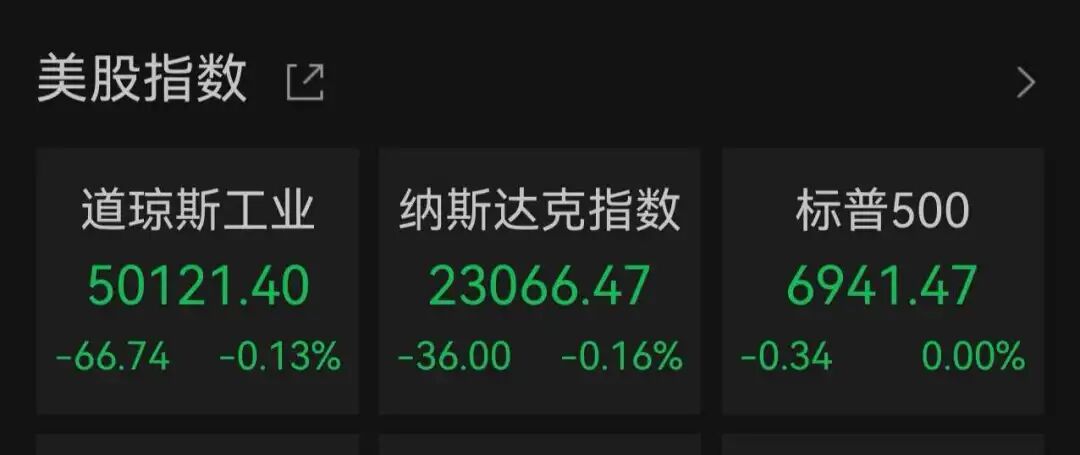
Market Overview - The U.S. stock market retraced early gains and closed lower despite strong employment data, with concerns over AI's disruptive impact on multiple industries suppressing the rebound [1] - The S&P 500 index slightly declined, while the tech-heavy Nasdaq 100 index rose by 0.3%, reaching a peak increase of 1% during the session [1] - The Chicago Board Options Exchange Volatility Index (VIX) hovered around 18 [1] Employment Data Impact - The employment report showed an unexpected increase of 130,000 non-farm jobs in January, marking the largest gain in over a year, with the unemployment rate unexpectedly dropping to 4.3% [6] - Following the employment report, traders anticipated the first interest rate cut of the year to occur in July, shifting from previous expectations of June [6] - Analysts suggest that the Federal Reserve is likely to maintain current interest rates, despite pressures from the Trump administration for rate cuts [6] Sector Performance - The technology sector faced significant selling pressure, continuing a trend observed over the past few months, with international and value stocks leading the market [1] - An index tracking the "seven giants" of the U.S. stock market fell by 0.6%, and an ETF focused on software stocks dropped by 2.6% [1] - Real estate service stocks also declined, with CBRE Group falling by 12%, and both Jones Lang LaSalle and Cushman & Wakefield experiencing declines [1] AI Concerns - The software sector has been particularly affected by what analysts are calling "AI panic trading," leading to sell-offs in software, private credit, wealth management, and insurance brokerage stocks [2] - Investors are increasingly favoring companies whose business models are less likely to be disrupted by AI technology [1][2] Market Sentiment - The market is currently focused on the upcoming Consumer Price Index (CPI) report, with expectations that if the core CPI is close to or below forecasts, there is a 70% probability that the S&P 500 will rise [2] - Growth and momentum stocks are under the most pressure due to market expectations that interest rates will remain high for an extended period [5]
23万亿资管巨头“去美元化”!美股画风突变:纳指跳水、软件股重挫,比特币暴大4%
Sou Hu Cai Jing· 2026-02-12 00:21
Market Overview - The U.S. stock market experienced a sudden shift, with major indices closing lower after an initial rise, particularly impacting the software sector, which saw the iShares Expanded Tech-Software Sector ETF (IGV) drop by 2.55% [1] - Concerns over the impact of artificial intelligence (AI) on the real economy are growing, especially regarding the potential disruption to the software industry, leading to a decline in valuation multiples [1] Cryptocurrency Market - The cryptocurrency market faced significant sell-offs, with Bitcoin briefly falling below $66,000, experiencing a drop of over 4%, while Ethereum and SOL also saw declines exceeding 3% [1] - Data from CoinGlass indicated that in the last 24 hours, 144,691 traders were liquidated, with total liquidation amounts reaching $458 million [1] Federal Reserve and Interest Rates - U.S. non-farm payroll data exceeded expectations, leading traders to reduce bets on interest rate cuts by the Federal Reserve this year [2] - Kansas City Fed President Jeff Schmieding expressed concerns about persistent inflation, suggesting that rates should remain at a "slightly restrictive" level, while Fed Governor Milan held a contrasting view advocating for rate cuts [2] Asset Management Trends - Amundi, Europe's largest asset management firm with €2.8 trillion in assets, announced plans to reduce exposure to U.S. dollar assets and shift towards European and emerging markets due to concerns over U.S. economic policy [3] - The shift in strategy is echoed by other major institutions, such as the Swedish pension fund Alecta, which has sold off a significant portion of U.S. Treasuries due to concerns over U.S. government unpredictability and rising debt [3] Structural Reasons for Dollar Asset Bearishness - Amundi outlined three structural reasons for its bearish stance on dollar assets: 1. Diminishing private demand due to high interest rates and inflation eroding purchasing power [4] 2. Ineffectiveness of fiscal stimulus as large deficits contribute to inflationary pressures and debt burdens [4] 3. Policy uncertainty, particularly regarding tariffs, suppressing capital expenditure outside of AI [4] - A fundamental shift in the correlation between the dollar and U.S. equities and bonds is noted, with the dollar no longer acting as a stabilizer but rather as a volatility amplifier [4]
财经早报:超六成私募倾向于满仓过节 锂价“第三次超级周期”要来了?丨2026年2月12日
Xin Lang Zheng Quan· 2026-02-12 00:15
Group 1 - The Chinese government is advancing artificial intelligence (AI) technology innovation and application across various industries, highlighting its potential to transform production and lifestyle [2][3] - The government aims to establish a comprehensive AI ecosystem, focusing on algorithm innovation, high-quality data supply, and commercial applications to enhance AI's market presence [3] - The initiative includes promoting international cooperation and developing a robust governance framework for AI applications to ensure safety and compliance [3] Group 2 - The State Council of China has set a goal to establish a unified national electricity market by 2030, with market-based transactions accounting for approximately 70% of total electricity consumption [4] - The implementation plan includes 19 key tasks aimed at breaking down market barriers and encouraging participation from various stakeholders, including private enterprises [4] - This initiative is expected to enhance the efficiency of the energy sector and stabilize energy costs, thereby improving the global competitiveness of Chinese companies [4] Group 3 - The private equity sector shows optimism for the market, with over 62% of surveyed firms preferring to hold significant positions during the upcoming holiday, indicating confidence in structural opportunities despite market volatility [11] - The ETF market has seen a significant outflow of funds, with a 38.11% decrease in trading volume, while the total number of ETF shares increased by 1.68% [13] - The consumer sector in Hong Kong is experiencing a resurgence in IPO activity, with over 10 companies filing for H-shares in early 2026, indicating a growing interest in the market [14] Group 4 - The U.S. labor market showed unexpected growth in January, which may influence the Federal Reserve's interest rate decisions, suggesting a potential pause in rate hikes [15] - The technology sector is facing challenges, particularly in software stocks, as concerns about AI's impact on job functions and valuations continue to rise [6] - The cryptocurrency market experienced significant sell-offs, with Bitcoin dropping below $66,000, reflecting broader market volatility [6] Group 5 - Tianji Co. is under investigation by the China Securities Regulatory Commission for information disclosure violations, which may impact its operations [16] - The company has recently corrected financial reporting errors and is undergoing scrutiny for its governance practices [16] - The divorce settlement involving a major shareholder of a public company highlights the financial implications of personal matters on corporate governance [17] Group 6 - Wenta Technology announced that its control over Anshi Semiconductor remains limited due to ongoing investigations, affecting its operational strategy [19] - The company is facing challenges in its governance structure as it navigates legal and regulatory hurdles [19] - The semiconductor industry is under scrutiny, with companies like Wenta needing to adapt to changing regulatory environments [19]

从高盛到黑石,华尔街巨头都来站台:软件不会垮
Hua Er Jie Jian Wen· 2026-02-12 00:02
Core Viewpoint - The recent sell-off in the software sector due to AI threat narratives is exaggerated, according to executives from major financial institutions on Wall Street [1]. Group 1: Market Reaction and Sentiment - The stock prices of major software companies like Salesforce and Adobe plummeted, resulting in the evaporation of hundreds of billions in market value, driven by fears that AI will replace traditional software functions [1]. - Executives from firms such as Goldman Sachs, Blackstone, Apollo Global Management, and KKR have stated that the current market reaction is an "indiscriminate" sell-off, arguing that the belief that all software companies will become obsolete is overly broad and unfounded [1][8]. Group 2: Industry Transformation - Apollo's co-president John Zito emphasized that while the software industry will not disappear, its business logic will change, and the market will experience a "very severe technology cycle" with clear winners and losers [2]. - Zito warned investors against judging software companies solely based on current revenue figures, using the analogy of BlackBerry's decline after the iPhone's release [2]. Group 3: AI's Impact on Subscription Models - The immediate cause of market panic was Anthropic's announcement of a new legal tool for its Cowork assistant, which raised concerns about the fate of various software providers [2][7]. - Software companies are seen as particularly vulnerable due to their reliance on subscription and licensing fees for revenue [7]. Group 4: Differentiation in Market Response - Blackstone's CFO Michael Chae noted that the market's response lacks rationality, predicting that larger, well-established companies will be better protected and may even benefit from AI advancements [8]. - Goldman Sachs CEO David Solomon echoed this sentiment, suggesting that the narrative surrounding the software sector has been overly generalized [8]. Group 5: Risk Exposure of Financial Institutions - KKR's CFO Robert Lewin indicated that approximately 15% of KKR's private equity investments are exposed to software companies, representing about 7% of their total assets, but emphasized the diversity of their investments as a protective measure [9]. - Goldman Sachs' David Solomon downplayed the risk exposure in software investments, stating it is "insignificant" relative to the overall scale of their platform [9].
凌晨,全线大跌!超14万人爆仓!23万亿巨头突然抛售,发生了什么?
Sou Hu Cai Jing· 2026-02-11 23:36
Market Overview - The US stock market experienced a significant downturn, with major indices, including the Nasdaq and Russell 2000, dropping over 1% [1] - Software stocks faced substantial declines, with the iShares Expanded Tech-Software Sector ETF (IGV) falling by 2.55%, and notable companies like ServiceNow and Salesforce dropping over 5% and 4% respectively [1] - Concerns regarding the impact of AI on the software industry are growing, potentially affecting valuation multiples [1] Cryptocurrency Market - The cryptocurrency market also faced heavy selling, with Bitcoin briefly dropping below $66,000, a decline of over 4%, and Ethereum and SOL falling more than 3% [1] - In the last 24 hours, 144,691 individuals were liquidated, totaling $458 million in liquidations [1] Economic Indicators - US non-farm payroll data exceeded expectations, leading traders to reduce bets on interest rate cuts by the Federal Reserve [1] - Kansas City Fed President Jeff Schmieding indicated that the Fed should maintain rates at a "slightly restrictive" level due to ongoing inflation concerns [1] Asset Management Trends - Amundi, Europe's largest asset management firm with €2.8 trillion (approximately ¥23 trillion) in assets, plans to reduce exposure to US dollar assets and shift towards European and emerging markets [2][3] - CEO Valerie Baudson warned that without changes in US economic policy, the dollar is likely to weaken [3] Investment Diversification - Amundi has been advocating for investment diversification over the past 12 to 15 months, suggesting clients reduce their dollar asset holdings [3] - The firm reported a record net inflow of €88 billion and announced a €5 billion stock buyback plan [3] Capital Flow Trends - International investors are increasingly moving funds to international markets, with a net inflow of $51.6 billion into international stock ETFs in January [5] - This shift is attributed to high valuations in the US stock market, a weakening dollar, and new opportunities in overseas markets [5] Economic Growth Projections - Amundi forecasts a significant slowdown in US real GDP growth to 1.6% by 2026, down from nearly 3% in 2023-2024 [5] - The slowdown is driven by structural factors, including diminished private demand, decreasing marginal utility of fiscal stimulus, and policy uncertainty [6] Dollar Asset Dynamics - The dual advantages of dollar assets—growth and yield—are diminishing, with the correlation between the dollar and US equities/bonds reversing [6] - The dollar is no longer acting as a stabilizer in investment portfolios but is instead amplifying volatility [7] Industry Responses - Other large asset management firms, including PIMCO and Wellington Management, are echoing Amundi's call to reduce US asset exposure [7] - Investment strategies are shifting towards currencies like the euro and Australian dollar, with increased positions in emerging markets [7]
凌晨,全线大跌!超14万人爆仓!23万亿巨头,突然抛售,发生了什么?
券商中国· 2026-02-11 23:35
Market Overview - The U.S. stock market experienced a significant downturn, with major indices collectively closing lower after an initial rise. The Nasdaq index saw a drop of nearly 1%, while the Russell 2000 index fell over 1%. Software stocks were particularly affected, with the iShares Expanded Tech-Software Sector ETF (IGV) declining by 2.55%, ServiceNow dropping over 5%, and Salesforce falling more than 4%. Analysts on Wall Street have raised concerns about the impact of AI on the software industry, suggesting that AI-driven workflows may erode the industry's valuation multiples [1] Cryptocurrency Market - The cryptocurrency market faced a severe sell-off, with Bitcoin briefly falling below $66,000, experiencing a drop of over 4% before narrowing its losses to 1.74%. Ethereum and SOL also saw declines exceeding 3%. In the last 24 hours, 144,691 individuals were liquidated, with a total liquidation amount of $458 million. The U.S. non-farm payroll data exceeded expectations, leading traders to reduce bets on interest rate cuts by the Federal Reserve [2] Asset Management Trends - Amundi, Europe's largest asset management firm with €2.8 trillion (approximately ¥23 trillion) in assets, announced plans to reduce exposure to U.S. dollar assets and shift focus towards European and emerging markets. CEO Valerie Baudson indicated that if U.S. economic policies do not change, the dollar is likely to weaken further. The firm has been advocating for investment diversification over the past 12 to 15 months [3][4] Investment Shifts - Recent data shows that Wall Street investors are accelerating their shift towards international markets, with a net inflow of $51.6 billion (approximately ¥356.7 billion) into international stock ETFs in January. This trend is attributed to high valuations in the U.S. stock market, a weakening dollar, and new opportunities in overseas markets. Amundi predicts that U.S. real GDP growth will slow significantly to 1.6% by 2026, driven by structural factors rather than cyclical adjustments [6] Dollar Asset Concerns - The dual advantages of U.S. dollar assets—growth and yield—are diminishing. Concerns about U.S. fiscal sustainability have led to a fundamental reversal in the correlation between the dollar and U.S. equities and bonds. Historically, when U.S. stocks declined, the dollar would typically strengthen due to its safe-haven status. However, current trends show that the dollar is moving in tandem with risk assets, indicating it is no longer a stabilizer but rather a volatility amplifier [7]

凌晨,全线大跌!超14万人爆仓!23万亿巨头,突然抛售,发生了什么?
Xin Lang Cai Jing· 2026-02-11 23:32
Group 1 - The U.S. stock market experienced a significant downturn, with major indices, including the Nasdaq and Russell 2000, seeing declines of nearly 1% and over 1% respectively, driven by concerns over AI's impact on the software industry [1] - The software sector faced substantial losses, with the iShares Expanded Tech-Software Sector ETF (IGV) dropping by 2.55%, and individual stocks like ServiceNow and Salesforce falling over 5% and 4% respectively [1] - The cryptocurrency market also faced a sell-off, with Bitcoin briefly falling below $66,000 and Ethereum and SOL dropping over 3%, leading to a total liquidation amount of $458 million affecting 144,691 traders [1] Group 2 - Amundi, Europe's largest asset management firm with €2.8 trillion (approximately ¥23 trillion) in assets, announced plans to reduce exposure to U.S. dollar assets and shift focus towards European and emerging markets [2][3] - CEO Valerie Baudson indicated that if U.S. economic policies do not change, the dollar is expected to weaken further, prompting a recommendation for clients to diversify their investments [3] - The firm has seen record net inflows of €88 billion over the past year and has initiated a €5 billion stock buyback program [3] Group 3 - International investors are increasingly turning to gold as a hedge against dollar depreciation, contributing to a significant rise in gold prices over the past year [4] - There has been a notable capital shift towards European and emerging market assets, with emerging markets experiencing their best performance since 2017 [4] - In January, U.S. investors shifted $51.6 billion (approximately ¥356.7 billion) into international stock ETFs, indicating a growing trend of reallocating funds away from the U.S. market due to high valuations and a weakening dollar [5] Group 4 - Amundi forecasts a slowdown in U.S. real GDP growth to 1.6% by 2026, driven by structural factors such as exhausted private demand and diminishing marginal utility of fiscal stimulus [6] - Concerns over U.S. fiscal sustainability have led to a fundamental shift in the correlation between the dollar and U.S. equities, with the dollar no longer acting as a stabilizer but rather amplifying volatility [6][7] - Major asset management firms, including PIMCO and Wellington Management, are echoing Amundi's call to reduce U.S. asset exposure, with strategies focusing on diversifying into other currencies and emerging markets [7]
美股下跌,黄金、白银上涨
Zhong Guo Zheng Quan Bao· 2026-02-11 23:23
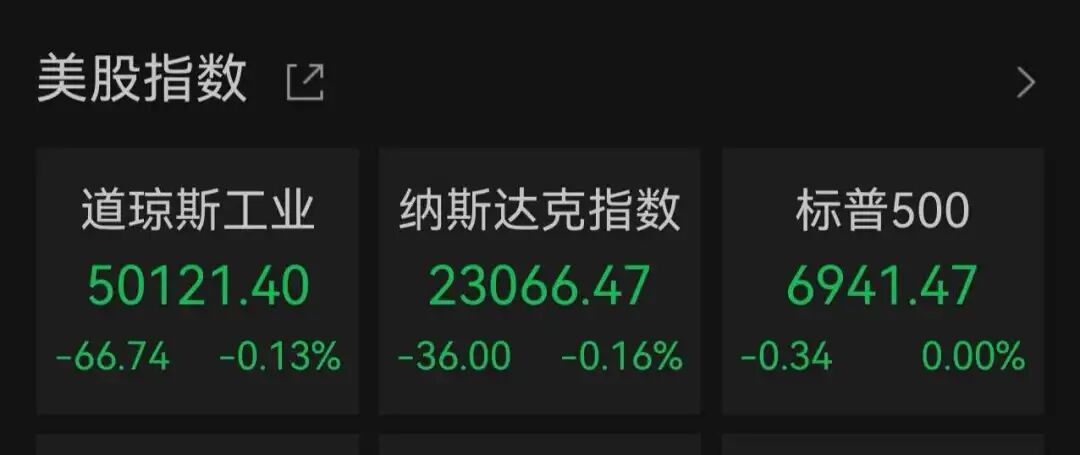
Market Overview - The US stock market indices experienced slight declines, with the Dow Jones down 0.13% at 50,121.4 points, the S&P 500 down marginally at 6,941.47 points, and the Nasdaq down 0.16% at 23,066.47 points [2][4] - The US Technology Seven Index fell by 0.57%, with notable declines in individual stocks such as Alphabet-C and Microsoft, both dropping over 2% [4] Employment Data - The US Labor Department reported that non-farm payrolls increased by 130,000 in January, significantly exceeding market expectations, while the previous month's figure was revised down to 48,000 [1] Technology Sector Analysis - The technology sector is facing a "dual pressure" phase, characterized by concerns over AI impacting capital expenditures (Capex), shifting from a growth driver to a profitability constraint [4] - Recent volatility in US tech stocks is attributed to valuation pressures, with software stocks experiencing significant declines due to market fears regarding the disruption caused by non-public large model companies [4] Commodity Prices - International gold and silver prices saw increases, with COMEX gold futures rising by 1.53% to $5,107.80 per ounce and COMEX silver futures up by 4.6% to $84.085 per ounce [5] - Oil prices also rose, with NYMEX WTI and ICE Brent crude both increasing by over 1% [5] Venezuela Energy Discussions - The interim president of Venezuela met with the US Secretary of Energy to discuss energy-related agendas, including oil, gas, mining, and electricity projects [6] - This meeting marks a significant diplomatic engagement, as it involves the highest-level US official visiting Venezuela since military actions were taken against the Maduro government [6]
美股下跌 黄金、白银上涨
Zhong Guo Zheng Quan Bao· 2026-02-11 23:23
Market Overview - The US stock market experienced slight declines, with the Dow Jones down 0.13% at 50,121.4 points, the S&P 500 down marginally at 6,941.47 points, and the Nasdaq down 0.16% at 23,066.47 points [1][3] - The Wind US Technology Seven Giants Index fell by 0.57%, with notable declines in Alphabet-C and Microsoft, both dropping over 2% [1][3] Employment Data - The US Labor Department reported that non-farm payrolls increased by 130,000 in January, significantly exceeding market expectations, while the previous month's figure was revised down to 48,000 [1] Technology Sector Analysis - The technology sector is experiencing a shift from "unilateral growth" to a "painful transition," facing dual pressures: AI-related anxieties and tightening liquidity [3] - Concerns over the valuation of software stocks have intensified, particularly due to fears that non-public large model companies may disrupt the software ecosystem, leading to a reevaluation of software stock valuations [3] Commodity Prices - International gold and silver prices saw increases, with COMEX gold futures rising by 1.53% to $5,107.80 per ounce and COMEX silver futures up 4.6% to $84.085 per ounce [4] - NYMEX WTI crude oil and ICE Brent crude oil both rose by over 1% [4] Venezuela-US Energy Discussions - The interim president of Venezuela met with the US Secretary of Energy to discuss energy-related agendas, including oil, natural gas, mining, and electricity projects [5] - This meeting marks a significant diplomatic engagement following recent military actions by the US in Venezuela, with discussions aimed at establishing a "new relationship" [6]