
铁路建设

Search documents
交通强国:人享其行 物畅其流
Jing Ji Ri Bao· 2025-10-15 22:03
Core Insights - The construction of a comprehensive transportation system in China has made significant progress, with the main framework of the national comprehensive transportation network exceeding 90% completion, enhancing transportation capacity, service quality, and operational efficiency [1][3][4] Group 1: Infrastructure Development - The "6 axes, 7 corridors, and 8 channels" framework has been largely completed, connecting over 80% of county-level administrative regions and serving approximately 90% of the country's economic and population totals [3] - By the end of 2024, the railway operating mileage is expected to reach 162,000 kilometers, an increase of about 16,000 kilometers from the end of the 13th Five-Year Plan, with high-speed rail increasing by 10,000 kilometers [3] - The total length of highways is projected to reach 5.49 million kilometers, with an increase of approximately 290,000 kilometers, including an increase of 30,000 kilometers in expressways [3][4] Group 2: Technological Advancements - The application of intelligent technologies is accelerating, with the introduction of advanced construction methods such as "double-layer paving + 3D intelligent paving" to enhance road construction efficiency and quality [5][7] - The use of automation in logistics, including drones and autonomous vehicles, is being promoted to improve efficiency in warehousing, transportation, and delivery [5][7] - The introduction of robots for tasks such as tile laying in subway construction demonstrates the ongoing innovation in construction technology, achieving high precision and quality [7] Group 3: Service Improvement - The transportation sector is focusing on enhancing service quality to meet public expectations, with initiatives aimed at providing more travel options and convenience [8][9] - The integration of smart travel solutions, such as online ticketing and electronic payments, is being widely adopted, facilitating seamless travel experiences [9] - The average daily passenger volume for high-speed trains is projected to reach 3.272 billion by 2024, accounting for 75.9% of total railway passenger volume [9]

打好“十四五”收官战,四川成都领跑西部城市
Zhong Guo Fa Zhan Wang· 2025-10-15 08:32
Group 1 - The core point of the news highlights the rapid development and investment activities in Chengdu, particularly focusing on the automotive and pharmaceutical sectors, as well as infrastructure projects [1][12] - The Jetta brand of FAW-Volkswagen is a key player in Chengdu's automotive industry, investing heavily in upgrading production lines to enhance automation, intelligence, and flexibility [3][5] - The production line updates at FAW-Volkswagen Jetta are strategic moves to transition from a "national brand" to a "high-quality national car," aiming to improve production efficiency and product quality [7] Group 2 - The Chengdu North Railway Station expansion project is a significant infrastructure initiative, with a total building area of approximately 80,000 square meters and a scale of 10 platforms and 18 tracks, expected to be completed by 2027 [9] - Chengdu Kanghong Pharmaceutical Group is planning to build a plasmid production facility and related laboratories, with a design capacity of 10,000 doses per year for a gene therapy drug, showcasing the city's focus on high-tech industries [10] - The Chengdu Bailian Outlets project, with an investment of over 3 billion yuan, is set to become a flagship outlet in Southwest China, integrating leisure and dining experiences with a focus on panda-themed attractions [11] Group 3 - Chengdu has seen a significant increase in major industrial projects, with 573 projects introduced in the first eight months of 2025, representing a year-on-year growth of 93.58% and a total investment of 511.58 billion yuan [12] - The city has attracted foreign direct investment (FDI) of 1.024 billion USD, leading the central and western regions of China, with a notable increase in manufacturing sector investments [12]


成渝中线高铁建设全面加速 成都段天然气输气管道工程迁改完工
Zhong Guo Xin Wen Wang· 2025-10-15 06:35
Core Viewpoint - The successful completion of the gas pipeline relocation project marks a significant milestone in the construction of the Chengyu Middle Line High-Speed Railway, facilitating the acceleration of the overall project [1][4]. Group 1: Project Details - The gas pipeline relocation project spans approximately 4.6 kilometers and involves complex intersections with various transportation facilities, including roads, railways, and greenways, with a total of 48 crossings [3]. - The project took 18 months from planning to completion, highlighting the technical challenges and the importance of energy security in conjunction with transportation infrastructure development [3][4]. Group 2: Strategic Importance - The D720 and D630 gas pipelines are critical for Sichuan Province, supplying about one-third of the natural gas for residential and commercial use in Chengdu, underscoring their strategic energy role [3]. - The relocation is considered a key task in the construction of the Chengyu Middle Line High-Speed Railway, recognized as one of the most challenging gas pipeline relocations in the region [4]. Group 3: Future Implications - The Chengyu Middle Line High-Speed Railway is a core component of the national high-speed rail network, designed for a speed of 350 km/h, and is expected to be completed by the end of 2027, significantly enhancing connectivity between Chengdu and Chongqing [7].

欧盟启动史上最大规模基础设施建设项目
Shang Wu Bu Wang Zhan· 2025-10-14 03:45
Core Points - The European Union has announced the planning of a high-speed railway network that will connect all member capitals and major urban areas, marking the largest infrastructure project in EU history with a total investment of €546 billion [2] - The project, driven by the Community of European Railways and Infrastructure Companies (CER), aims to create a faster, more environmentally friendly, and resilient transportation system, positioning rail as the primary mode of transport in Europe [2] - The plan includes the construction and renovation of over 49,400 kilometers of railway, with train speeds reaching 250 to 350 kilometers per hour, covering major cities and urban areas with populations over 250,000 [2] - The high-speed railway project aligns closely with the goals of the European Green Deal, which aims to reduce greenhouse gas emissions in the transport sector by 90% by 2050 [2] - Upon implementation, travel times will significantly decrease, such as the journey from Athens to Istanbul being reduced to 4 hours and from Madrid to Milan to less than 6 hours, making high-speed rail a strong competitor to the aviation industry while greatly reducing carbon emissions [2]
西十高铁接入汉十高铁,通车后西安到武汉2.5小时
Chang Jiang Ri Bao· 2025-10-14 00:44
Core Points - The construction of the Xi-Shi High-Speed Railway (HSR) in Hubei has officially begun, marking the start of the connection project with the Han-Shi HSR [1] - The Xi-Shi HSR will significantly reduce travel distance and time between Xi'an and Wuhan, enhancing connectivity in the region [4][8] - The project includes critical engineering works such as communication signal connections, track, and power supply integration, ensuring seamless operation with the existing Han-Shi HSR [10][11] Summary by Sections Project Overview - The Xi-Shi HSR will span 255.76 kilometers with a design speed of 350 km/h, featuring a bridge-tunnel ratio of 95.3% and seven stations along the route [3] - The Han-Shi HSR connects multiple cities over approximately 460 kilometers, also designed for a speed of 350 km/h, with 20 stations [3] Travel Time Reduction - The new route will shorten the distance from Xi'an to Wuhan from 1,059 kilometers to 716 kilometers, reducing travel time significantly [4] - Once operational in October 2026, the travel time from Xi'an to Shiyan will be under one hour, and to Wuhan will be approximately 2.5 hours [8] Engineering Challenges - The connection project involves complex engineering tasks, particularly in communication systems, which must maintain normal operations of the existing Han-Shi HSR during construction [10] - The construction units are employing advanced techniques and optimizing plans to ensure effective integration of the two HSR systems [11] Economic and Regional Impact - The seamless connection between Xi-Shi and Han-Shi HSRs is expected to enhance economic development, facilitate personnel movement, and promote cultural exchange in the region [11] - This project will contribute to the integration of the Central Yangtze River urban agglomeration and the Guanzhong Plain urban agglomeration, fostering cooperation between central and western regions and the eastern coastal areas [11]
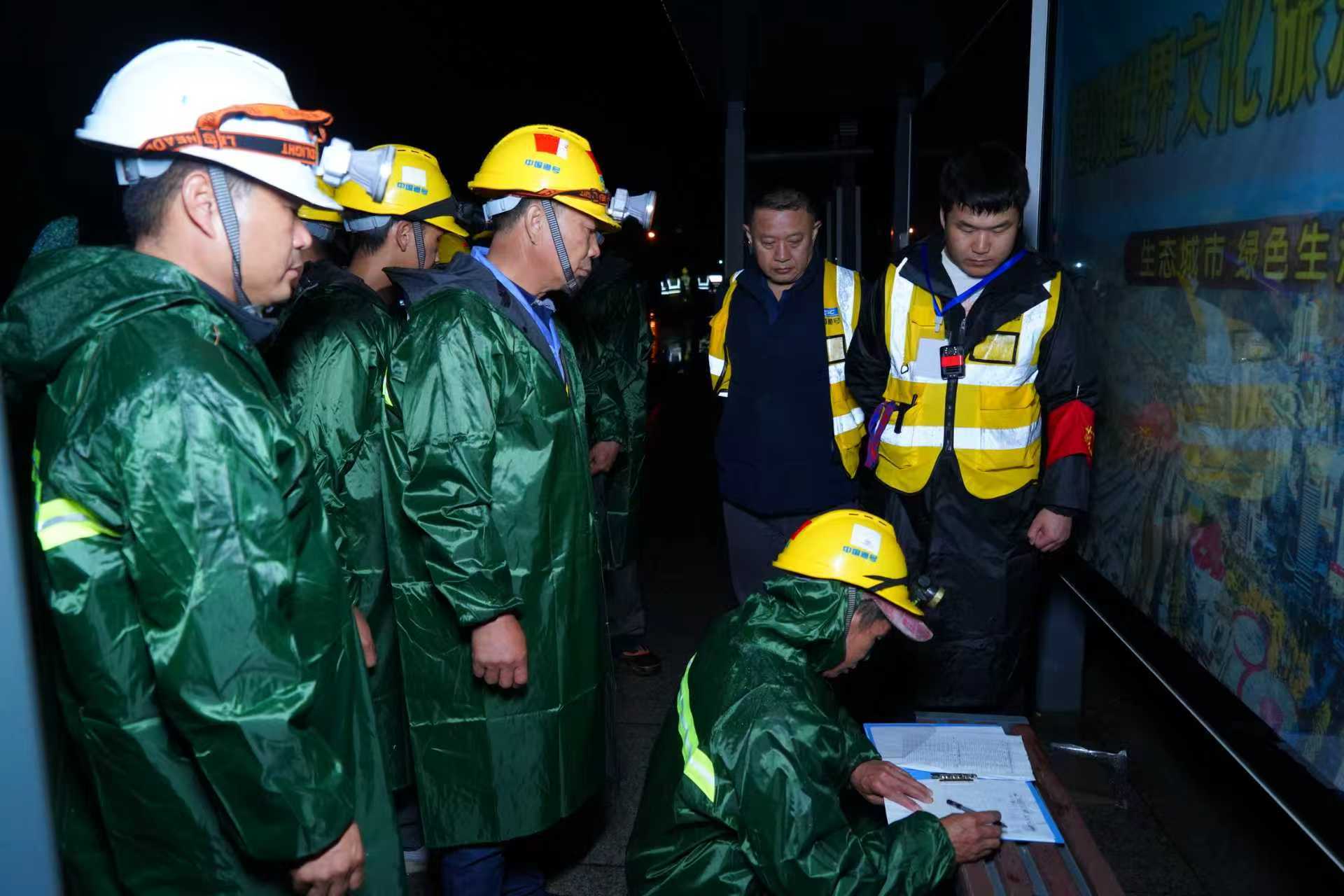
宁淮城际铁路跨淮河入江水道段连续梁全部合龙
Xin Hua She· 2025-10-13 07:14
Core Points - The successful completion of the continuous beams for the Hongze to Jinhu double-line bridge marks a significant breakthrough in the construction of the Ninghuai Intercity Railway, which is crucial for the project's timely operation [1] - The Ninghuai Intercity Railway spans approximately 179 kilometers with a design speed of 350 kilometers per hour, connecting key cities in Jiangsu and Anhui provinces [1] - The bridge, measuring about 31.7 kilometers in length, is a critical control project for the railway, featuring the largest water area crossing and the longest span of continuous beam bridges along the route [1] - Once completed, the railway will enhance connectivity within the Yangtze River Delta intercity rail transit network, enabling a one-hour direct travel time between Huai'an and Nanjing, thus promoting regional integration and high-quality development [1]
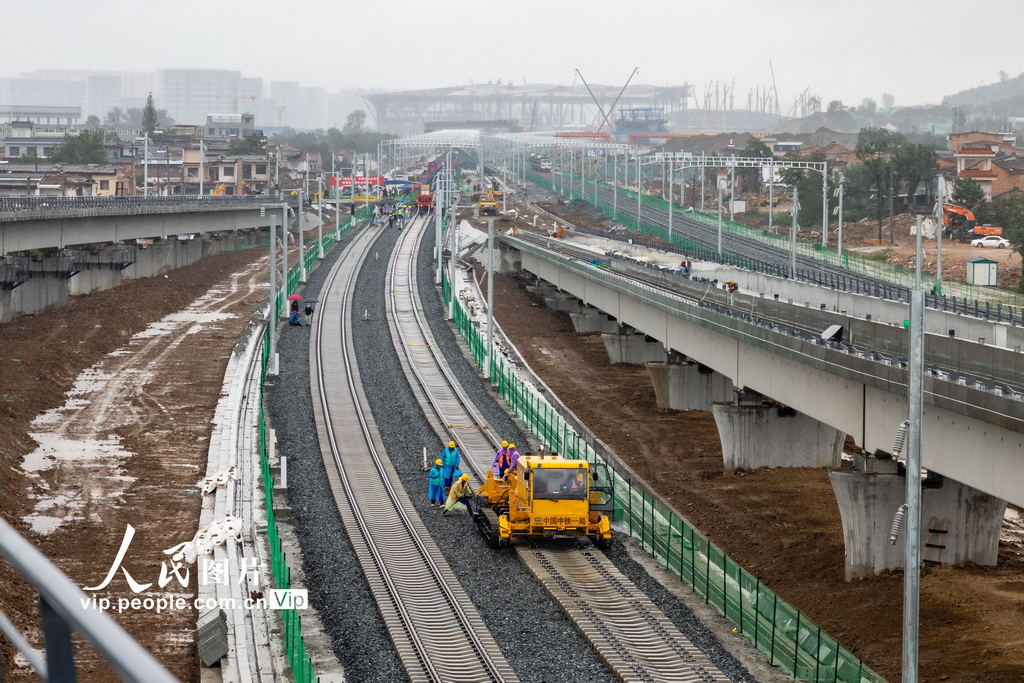
陕西西安:西康高铁全线铺轨正式启动
Ren Min Wang· 2025-10-12 03:11
Core Points - The Xi-Kang High-Speed Railway has officially commenced track laying across its entire line [1][2][3] Group 1 - The Xi-Kang High-Speed Railway is a significant infrastructure project aimed at enhancing transportation connectivity in the region [1][2] - This project is expected to boost local economies and improve travel efficiency between key cities [1][3] - The commencement of track laying marks a critical milestone in the railway's construction timeline [2][3]
深汕高铁再迎新进展!两大站点全面开工
Nan Fang Du Shi Bao· 2025-10-11 09:41
Core Insights - The construction of the Shenzhen-Shanwei High-Speed Railway (深汕高铁) is progressing with two major stations, including Shenzhen's largest high-speed station and the Luohu North Station, now under construction [1][2] - The Xili Comprehensive Transportation Hub is a key project for enhancing Shenzhen's role as a national railway hub and improving the connectivity within the Guangdong-Hong Kong-Macao Greater Bay Area [1][2] Group 1: Project Progress - The Xili Comprehensive Transportation Hub has entered the main structure construction phase, with significant progress made during the recent National Day and Mid-Autumn Festival holidays [1] - Key milestones include the completion of 100% of the protective structure and engineering piles for the North Square, and 72.15% of the earthwork excavation, setting the stage for underground structure construction [1] - The project aims to complete most of the underground structure by the end of December this year, with the main structure expected to be finished by August 2027 [1] Group 2: Infrastructure Details - The Xili Comprehensive Transportation Hub will feature a total of 13 platforms and 25 lines, surpassing the existing Shenzhen North Station's 11 platforms and 20 lines [2] - The hub will integrate four high-speed rail lines, two intercity rail lines, and four metro lines, creating a multi-level rail transport network [2] - The Luohu North Station, which began construction on September 30, has an estimated investment of approximately 2.343 billion yuan and is expected to be completed by November 30, 2027 [2] Group 3: Connectivity and Impact - The Shenzhen-Shanwei High-Speed Railway will span 125.5 kilometers, significantly reducing travel time from Shenzhen to the Shanwei Special Cooperation Zone from 47 minutes to 30 minutes [3] - This railway will enhance connectivity between Shenzhen's urban center and the Shanwei Special Cooperation Zone, playing a crucial role in developing coastal high-speed railways and optimizing external railway access for Shenzhen [3]
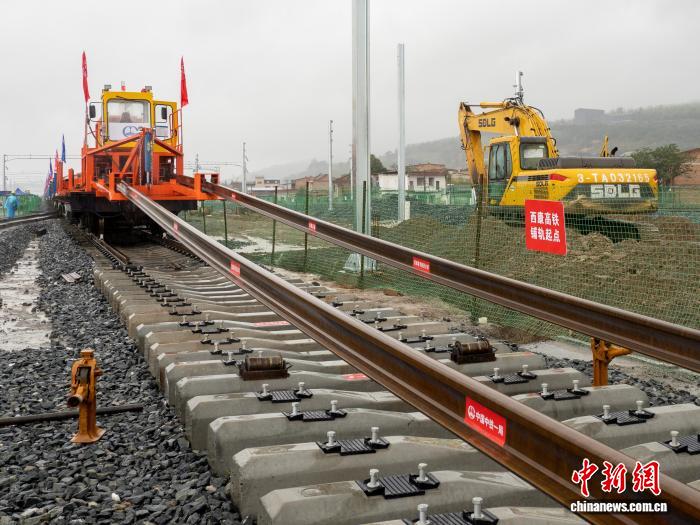
西康高铁全线铺轨正式启动
Zhong Guo Xin Wen Wang· 2025-10-11 09:20
Core Points - The official launch of track laying for the Xikang High-Speed Railway marks a significant milestone in its construction, entering a comprehensive offensive phase [1][2] - The railway will traverse the Qinling Mountains with a high bridge-tunnel ratio of 94%, involving complex geological structures [2] - The total length of the main line track is 341.49 kilometers, with 19.62 kilometers of station track and 78 sets of switches being installed [2] Construction Progress - All 20 tunnels have been completed, 26 bridge main bodies are finished, and 406 box girders have been erected [2] - The design completion for the new station buildings is at 70%, while the overall completion of the four-electrical integration project exceeds 72% [2] - The ballastless track has achieved 97% of its design completion, indicating a rapid advancement in construction [2] Technological Advancements - The construction unit has optimized long rail transport plans, utilizing 32 intelligent cranes for efficient unloading, transfer, and storage of long steel rails [3] - The use of intelligent cranes has improved efficiency by over 40% compared to traditional manual operations, enhancing safety significantly [3] Project Management - The project employs advanced management techniques, including grid management and penetration management, to eliminate safety hazards and ensure intelligent, information-based, and green construction [5] - The Xikang High-Speed Railway is a crucial part of the national medium- and long-term railway network, significantly reducing travel time from Xi'an to Ankang from approximately 3 hours to under 1 hour [5]
京津冀城际铁路投资公司搬进雄安办公
Bei Jing Wan Bao· 2025-10-11 06:43
Core Points - The relocation of the Beijing-Tianjin-Hebei Intercity Railway Investment Company to Xiong'an New Area aims to alleviate non-capital functions of Beijing and promote high-quality development in Xiong'an [1][2] - The company, established in March 2015 with a registered capital of 80 billion yuan, is responsible for planning, construction, operation, financing, and comprehensive development of intercity railway projects in the Beijing-Tianjin-Hebei region [1] - During the 14th Five-Year Plan period, the company is tasked with constructing 11 railway projects with a total length of approximately 1,220 kilometers and a total investment of about 295 billion yuan [1] Project Details - Completed projects include the Beijing-Tangshan Railway (Yanjiao to Tangshan section), Beijing-Tianjin Binhai New Area Railway (Baodi to Beichen section), Tianjin to Beijing Daxing International Airport Railway, and Beijing Huairou to Beijing Daxing International Airport Railway [1] - Ongoing projects include the Beijing Urban Sub-center section of the Beijing-Tangshan Intercity Railway, Shijiazhuang to Huanghua Port Intercity Railway, and the Tianjin to Chengde Railway, among others [1] Economic Impact - The relocation is expected to enhance resource aggregation and drive related industry development, effectively leveraging railway construction investment to stimulate regional economic growth [2] - The company plans to improve the layout of the high-speed railway network in the Beijing-Tianjin-Hebei region, promoting regional connectivity and aiming to create a "railway-based Beijing-Tianjin-Hebei" [2]