酒店业

Search documents
这些指标不仅事关美国消费者,更关系美国假日经济是否放缓
第一财经· 2025-11-13 13:34
Core Insights - The upcoming holiday consumer outlook in the U.S. is negatively impacted by inflation, labor market slowdown, and tariff factors, with only consumers aged 65 and above planning to increase spending compared to last year [2][3]. Consumer Spending Trends - Consumers aged 35 and below are primarily responsible for the decline in gift spending, while those aged 35-45 and 55-64 are tightening their budgets in non-gift areas [3]. - The average holiday-related spending per consumer is projected to be $990 in 2025, a 6.9% decrease from $1,063 in 2024, and close to the 2023 estimate of $985, but lower than the 2022 ($1,006) and 2021 ($1,022) levels [7]. - Planned spending on gifts is expected to drop to $650, down 3.9% from last year's $677, marking the lowest level since 2022 [7]. - Non-gift spending, including food and decorations, is anticipated to decrease by 12% to $340 [7]. Employment and Retail Dynamics - Retailers and hotel groups are hiring the fewest seasonal employees in over a decade, with a reported 8.4% decrease in holiday job postings and a 12% drop in temporary hotel staff recruitment [3][12]. - The cautious hiring reflects a pessimistic outlook for the holiday shopping season, with consumer confidence at its lowest since June 2022 [14]. - Major retailers like Target and Amazon are planning to hire fewer seasonal workers compared to previous years, indicating a trend of reduced labor demand in the retail sector [15]. Consumer Behavior Changes - Consumers are becoming more pragmatic, favoring essential items over luxury gifts, with only about 5% citing AI and social media recommendations as key factors in their purchasing decisions [7]. - There is an increased interest in purchasing toys, games, and gift cards in 2025, with toys and games expected to become the top category for purchases [7]. - The proportion of consumers planning to buy gifts online remains steady at 43%, with higher income consumers showing a greater inclination towards online shopping [9]. Economic Outlook - Experts indicate that U.S. domestic demand is declining due to inflation and tariff impacts, with a notable shift towards a "K-shaped" economic recovery [11]. - Predictions suggest that holiday sales will grow by only 3.7% to 4.2% this year, lower than the previous year's growth rate of 4.3% [14].


凯联国际酒店(00105.HK)拟11月27日举行董事会会议审批中期业绩
Ge Long Hui· 2025-11-13 08:45
格隆汇11月13日丨凯联国际酒店(00105.HK)宣布,本公司将于2025年11月27日(星期四)举行董事会会 议,以商议关于批准本公司及其附属公司截至2025年9月30日止六个月的中期业绩及其公布,以及考虑 派付中期股息等事项。 ...
(粤港澳全运会)小球“转动”大湾区
Zhong Guo Xin Wen Wang· 2025-11-13 05:46
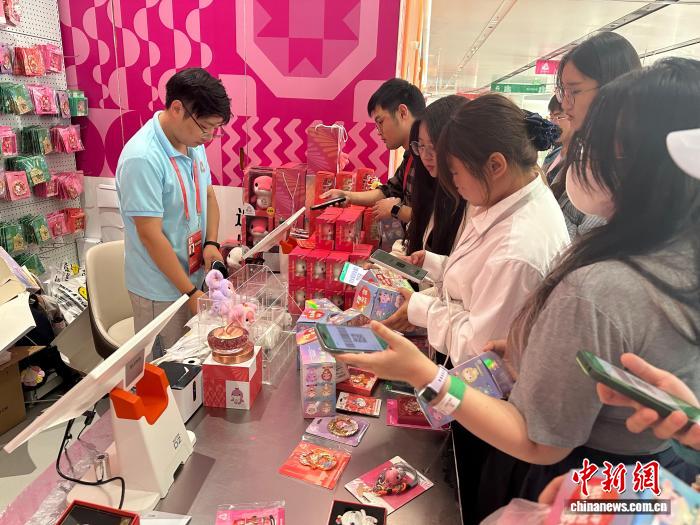
Core Insights - The article highlights the impact of the 15th National Games on the Greater Bay Area, showcasing how small ball sports are fostering cross-border tourism and economic activity [1][4]. Group 1: Event and Audience Engagement - The event has attracted audiences from various regions, with attendees like Huang Jiayi from Macau actively participating in the games and exploring the Greater Bay Area [1]. - The convenience of travel between cities has encouraged spectators to plan detailed itineraries, such as watching badminton in Shenzhen and then traveling to Macau for table tennis [1][4]. Group 2: Economic Impact - The "green channel" for ticket holders has transformed cross-border attendance from a concept into a regular occurrence, promoting the idea of "one ticket, explore the Bay Area" [4]. - The event is expected to draw over 100,000 visitors to Hong Kong, significantly boosting the local economy, particularly in the dining, retail, and hotel sectors [4]. - The integration of sports and tourism has created new consumption scenarios, with merchandise related to the games experiencing high demand, such as plush toys and collectible items [4].
“伪亲子酒店”大揭秘!
3 6 Ke· 2025-11-12 03:39
Core Viewpoint - The article discusses the disillusionment with "family-friendly hotels" in China, highlighting that many marketed as such do not meet the expectations of parents, leading to a growing skepticism about their value [1][3]. Group 1: Customer Experiences - A mother named Lingling had a disappointing experience at a family-friendly hotel, citing safety hazards and inadequate services, which led her to prefer regular hotels instead [2][3]. - Common complaints include the lack of essential safety features like bed rails and proper child-friendly amenities, which are expected in family-oriented accommodations [2][4]. Group 2: Characteristics of "Pseudo Family-Friendly Hotels" - "Pseudo family-friendly hotels" often misrepresent themselves by offering minimal changes, such as cartoon-themed decor, without providing necessary safety measures or child-friendly services [5][6]. - Some hotels charge significantly more for rooms that only have superficial changes, such as cartoon bedding, while lacking in actual child safety and comfort features [5][6]. - Many hotels focus excessively on children's entertainment while neglecting the needs of parents, failing to provide a relaxing environment for adults [7][10]. Group 3: Market Trends and Consumer Expectations - The family vacation market is projected to reach 300 billion by 2025, indicating a strong demand for genuine family-friendly experiences that prioritize both children's enjoyment and parents' relaxation [7][10]. - Successful family-friendly hotels should focus on providing tangible value, such as safe environments and engaging activities for both children and parents, rather than relying on superficial marketing [12]. Group 4: Ideal Characteristics of Genuine Family-Friendly Hotels - Genuine family-friendly hotels should prioritize safety features, such as rounded furniture edges and child-proof electrical outlets, to ensure a secure environment for children [8][9]. - The focus should shift from merely providing child-centric amenities to creating a holistic experience that allows parents to relax while their children are entertained [10][11]. - Successful hotels will offer a range of activities that cater to both children and adults, ensuring that families can enjoy quality time together while also having opportunities for individual relaxation [10][12].
城市文旅热度攀升,主题酒店“旧酒”难寻“新瓶”
3 6 Ke· 2025-11-12 02:58
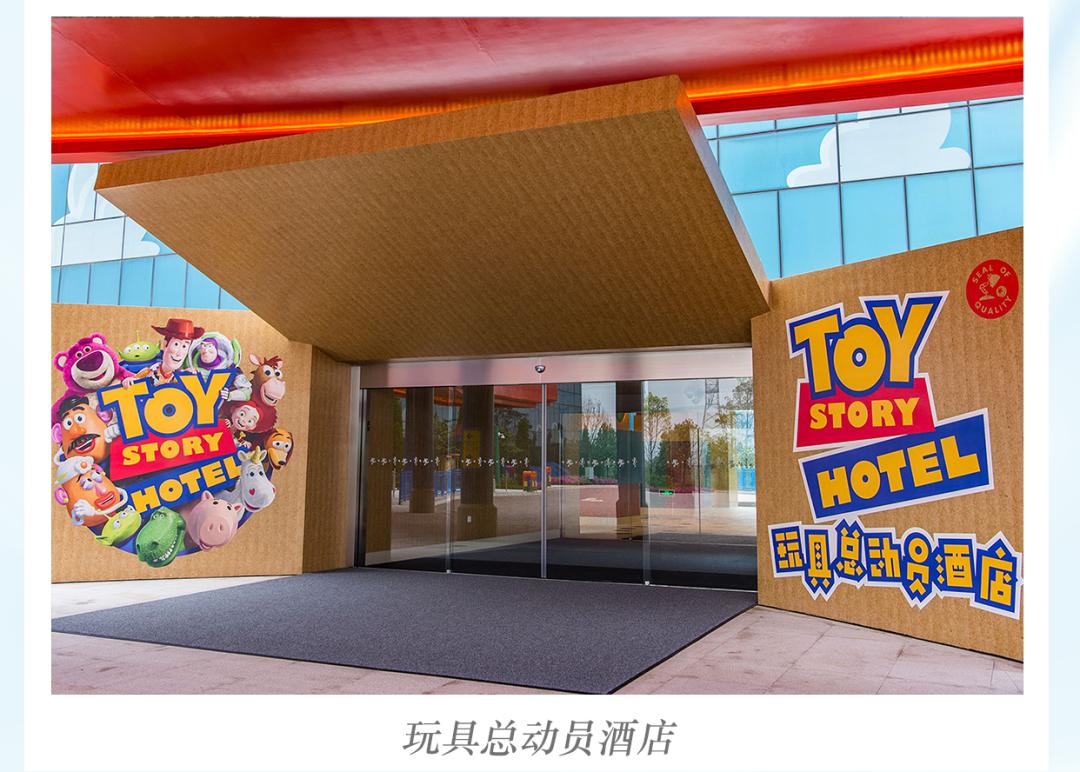
Core Insights - The article discusses the challenges and opportunities facing the themed hotel industry in China, highlighting the need for innovation and adaptation to meet changing consumer demands [1][10][25] Group 1: Current Market Dynamics - Over 2.433 billion people traveled across regions during the National Day holiday, boosting the hotel market [1] - Themed hotels, particularly in first and second-tier cities, are facing homogenization and operational challenges, leading to high vacancy rates and compressed profits [9][11] - Major hotel chains are entering the themed hotel space, leveraging their scale and service advantages, which further pressures smaller players [1][17] Group 2: Emerging Trends and Innovations - New entrants like Disney and other cross-industry players are redefining the hotel experience by integrating entertainment and dining into their offerings [6][8] - The themed hotel market in China has surpassed 120 billion RMB and is projected to exceed 200 billion RMB by 2028, with a compound annual growth rate of 12%-15% [13] - The rise of niche themed hotels is evident, with significant growth in unique hotel concepts, as indicated by a 290% increase in related hotel numbers and a 172% increase in transaction volume [13][16] Group 3: Consumer Behavior and Market Opportunities - Younger consumers are increasingly seeking unique and culturally rich experiences, favoring lesser-known destinations over traditional tourist spots [18][20] - Themed hotels must adapt to local cultures and preferences to succeed in emerging markets, moving away from a one-size-fits-all approach [21][24] - Successful themed hotels will need to focus on strong IP management, content creation, and precise market positioning to meet diverse consumer needs [25][26]

全季大观把酒店这个词废了
半佛仙人· 2025-11-11 10:13
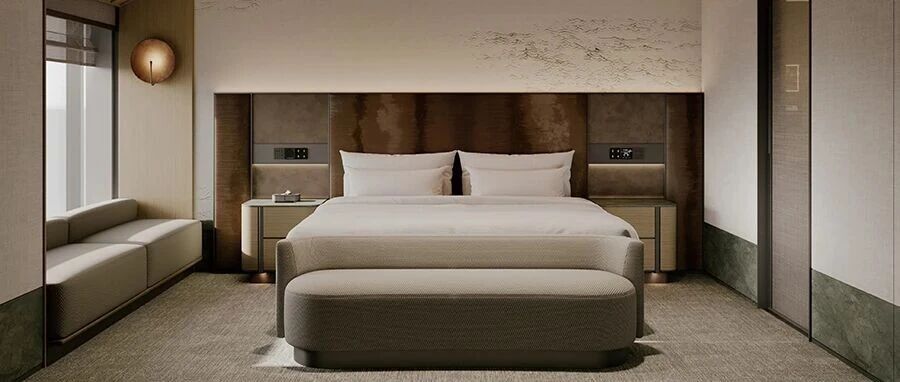
Core Viewpoint - Huazhu Group is launching a new brand called "Quanjing Daguan," aiming to redefine the hotel industry by focusing on cultural and aesthetic experiences rather than traditional luxury standards [2][3][4]. Group 1: Brand Concept and Market Positioning - The new brand "Quanjing Daguan" is not merely a hotel but a redefined concept that transcends traditional hotel frameworks, promising a unique experience that emphasizes cultural depth and aesthetic appreciation [3][4]. - The hotel industry is currently saturated, with consumers seeking distinctive experiences rather than just basic accommodations, indicating a shift in consumer expectations [5][9]. - Huazhu's strategy is to provide a space that fosters a sense of belonging and satisfaction, moving beyond the conventional hotel experience [5][10]. Group 2: Cultural and Aesthetic Focus - "Quanjing Daguan" aims to showcase authentic Eastern aesthetics, integrating elements like water, clouds, pine, and tea into its design to create a calming and immersive environment [12][13]. - The brand seeks to elevate the cultural experience of guests, moving from a generalized appreciation of Eastern culture to a deeper, more nuanced understanding [10][12]. - The design philosophy emphasizes subtlety and restraint, allowing guests to engage with the space in a meaningful way without overt displays of cultural symbols [13][15]. Group 3: Competitive Advantage - Huazhu Group's success is attributed to its strong local roots, brand confidence, systematic operational capabilities, and effective execution of aesthetic concepts [17][18][19][20]. - The brand's ability to deliver a consistent and high-quality experience is crucial for its cultural positioning, allowing it to stand out in a crowded market [20][21]. - "Quanjing Daguan" represents a new lifestyle choice for modern travelers, emphasizing inner peace and cultural richness rather than just accommodation [21][22].
美豪丽致武汉旗舰店盛大开业,启幕江城品质住宿新篇章
Cai Fu Zai Xian· 2025-11-11 08:59
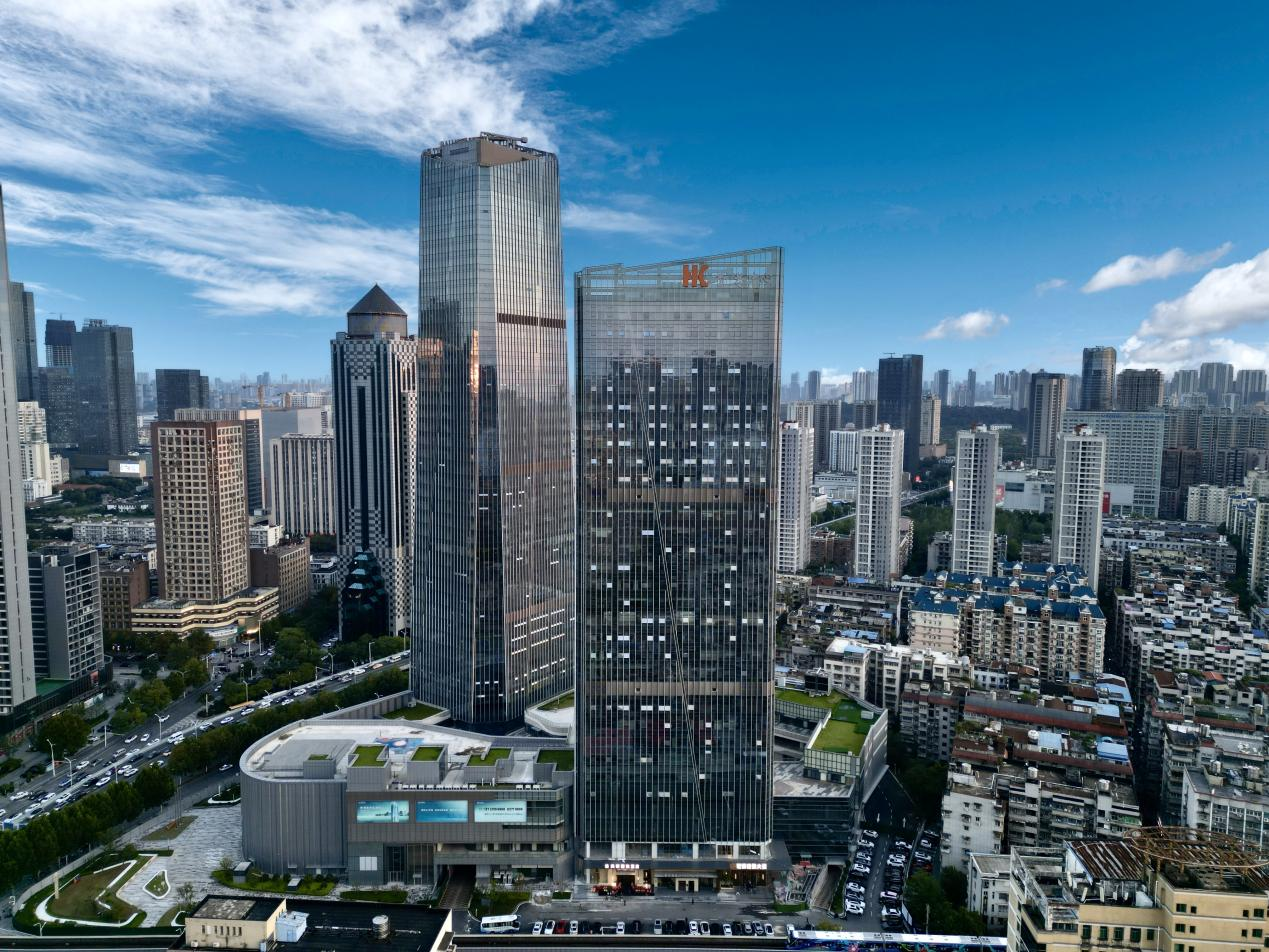
Core Viewpoint - The recent opening of the Mehood Lestie Hotel in Wuhan marks a significant expansion of the brand's presence in Central China, enhancing the hotel market with new quality offerings [1] Group 1: Hotel Features and Services - The hotel features 149 panoramic guest rooms and various facilities including a lobby, restaurant, conference rooms, gym, and self-service laundry, catering to diverse customer needs such as business, family, and leisure [3] - The hotel implements the Mehood Lestie 3.0 service system, focusing on three service modules: "ceremony, worry-free business travel, and lifestyle," integrating standardized services with local cultural experiences [3] Group 2: Market Reception and Performance - Since its opening, the hotel has achieved significant visibility and sales, with a unique design and quality service attracting attention and resulting in full occupancy for two consecutive days [5] - The hotel's successful performance has notably increased brand recognition and influence in Wuhan [5] Group 3: Operational Support and Future Outlook - The hotel benefits from a mature "one store, one strategy" operational support system, ensuring efficient project execution and smooth operations [10] - With the support of the digital platform from eLong, the hotel has optimized guest flow management, service response, and supply chain collaboration, laying a solid foundation for sustainable profitability [10] - Looking ahead, the operational management system and digital solutions will be continuously enhanced to improve guest experience and operational efficiency, facilitating further expansion of the Mehood Lestie brand in key cities across China [12][15]
五星级酒店开始卖剩菜
3 6 Ke· 2025-11-11 08:45
先看一个新闻。 简单来说就是,杭州国寿君澜大饭店这家五星级酒店,发现每天自助晚餐都会剩东西。 于是想了个点子,你没有在酒店购买自助晚餐,没关系。你只要在自助晚餐闭餐前15分钟来,就可以自己打包一份剩菜盲盒,这个盲盒只要40元。 我看了一下,这盲盒还挺丰盛的。 正常情况下,这家酒店的自助晚餐需要298元一份,菜品有30来种。有烤鸭、叉烧、脆皮烤肉、蒜蓉生蚝和清蒸大闸蟹,还有核桃塔、荔枝慕斯蛋糕和一 些精致的小甜点。 而且他是让客人自己打包。 你付了钱,给你一个餐盒,能装多少都是你自己的本事。如果有大闸蟹,装上两个差不多就能回本。然后还送你一份饮品,可以选择罐装苏打水、椰子汁 或果汁。 售价40元可以说挺良心了。 除了自助晚餐,这家酒店还推出了20元的自助早餐盲盒。 其实这个事不是杭州国寿君澜大饭店最先玩的。 在他之前,上海虹桥雅高美爵酒店的自助餐厅就推出过28元的午餐盲盒。团购详情中显示,午餐盲盒仅限外带,每日六道热菜轮换。 也是消费者自行拿取。 有网友晒过,当天去的时候,炸物、蔬菜、水果、甜品应有尽有。荤菜有小酥肉、香菇鸡、狮子头、黑椒牛柳等,特色菜还有冰镇小龙虾。 深圳龙华希尔顿逸林酒店也推出过"剩菜盲盒" ...
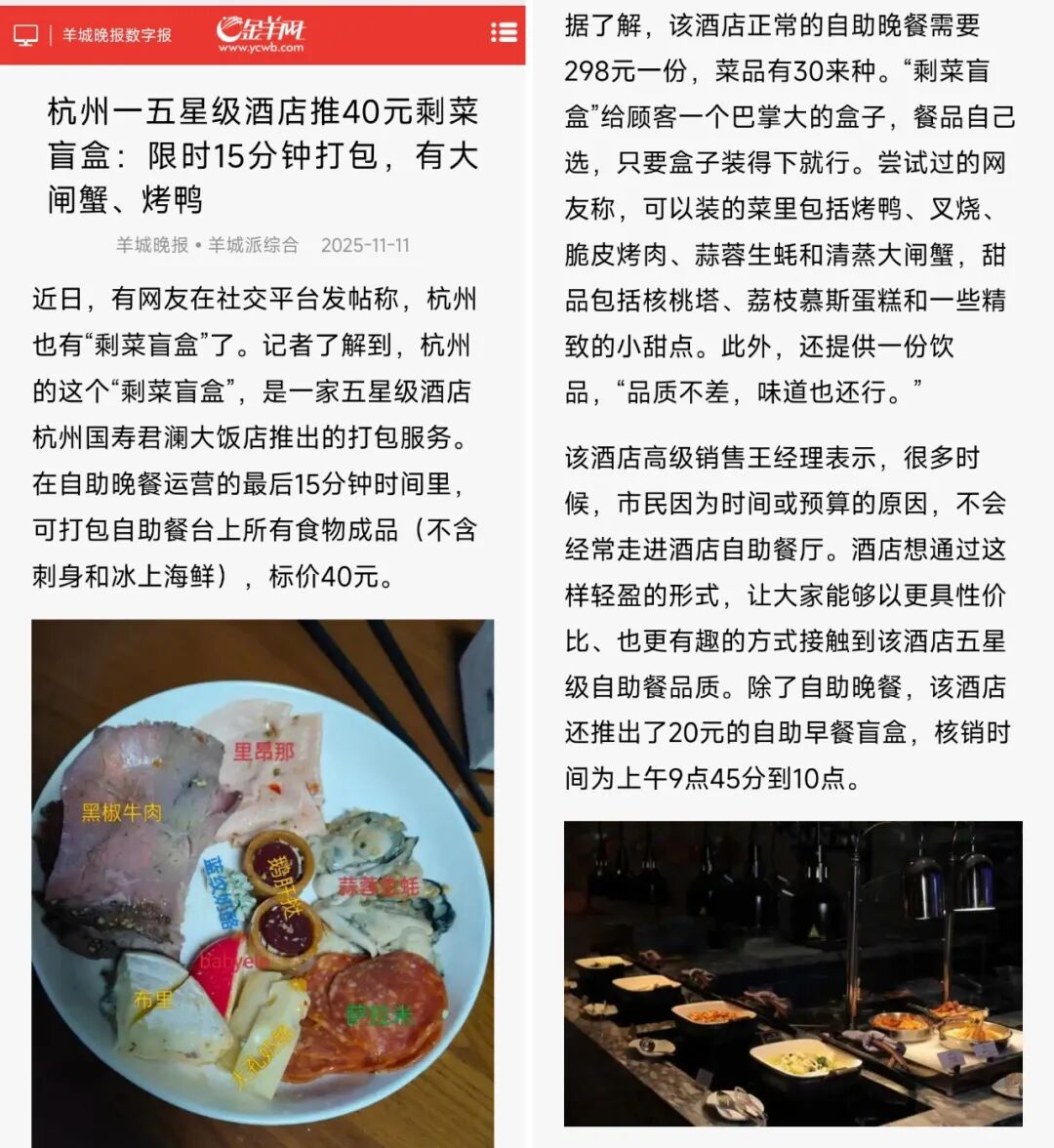
杭州一家五星级酒店推出“剩菜盲盒”:售价40元,包含大闸蟹等菜品
Bei Jing Shang Bao· 2025-11-11 08:07
Group 1 - A five-star hotel in Hangzhou has launched a dinner blind box priced at 40 yuan, allowing customers to pack self-service meal items during specific hours [1] - The blind box includes options such as filet mignon, lamb chops, and hairy crabs, with a daily capacity of 650 milliliters [1] - The regular price for the hotel's self-service dinner is 298 yuan per person, indicating a significant discount for the blind box offering [1] Group 2 - The hotel has sold over 200 units of the dinner blind box and over 100 units of the breakfast blind box in the past six months, reflecting a positive consumer response [1]
Marriott International宣布终止与Sonder的协议
Huan Qiu Wang Zi Xun· 2025-11-11 07:17
Core Viewpoint - Marriott International has terminated its licensing agreement with Sonder Holdings due to Sonder's default, resulting in Sonder no longer being part of the Marriott Bonvoy program and its hotels being unavailable for new bookings through Marriott channels [1] Group 1: Company Actions - Marriott's immediate priority is to support guests currently staying at Sonder hotels and those with upcoming reservations [1] - The company will reach out to guests who booked directly through Marriott's official channels to assist with their reservation needs [1] - Guests who made reservations through third-party online travel agencies are advised to contact those agencies directly [1] Group 2: Company Overview - Marriott International, Inc. is headquartered in Bethesda, Maryland, and as of September 30, 2025, operates over 9,700 hotels across more than 143 countries and regions [2] - The company manages hotels, residential properties, timeshare properties, and other lodging assets through owned, franchised, and licensed models [2] - Marriott offers the award-winning Marriott Bonvoy travel platform [2]