新能源车

Search documents
民生证券-电力设备及新能源行业周报:储能需求高增,六氟磷酸锂价格持续上涨-251109
Xin Lang Cai Jing· 2025-11-09 09:36
Group 1: Market Performance - The electric equipment and new energy sector increased by 4.98% this week, outperforming the Shanghai Composite Index [1] - The nuclear power index rose by 10.94%, while the solar energy index increased by 7.70% [1] - Other indices such as energy storage, wind power generation, and lithium battery also showed positive growth [1] Group 2: New Energy Vehicle Developments - Tianqi Materials signed multiple long-term contracts, including a procurement agreement with Guoxuan High-Tech for 870,000 tons of electrolyte from 2026 to 2028 [2] - The total amount of electrolyte locked in with core customers has exceeded 3 million tons this year [2] Group 3: New Energy Generation Insights - The domestic polysilicon production in October is expected to be around 134,000 tons, with a projected decline of over 10% in November due to excess supply [3] - The domestic component production in November is anticipated to be less than 44.5 GW, with potential for price rebound and profit recovery [3] - The energy storage market is experiencing significant growth, with 10 GW/29.4 GWh of systems and equipment completed in October 2025 [3] Group 4: Power Equipment and Automation - The State Grid announced a total bid amount of 10.559 billion yuan for five batches of power transmission and transformation equipment in 2025 [4] - The average bid per package is approximately 21.16 million yuan, with the largest package reaching 178.3 million yuan [4] - Key companies to watch include CATL, Keda Li, and others in the power equipment sector [4]


从“卷价格”走向“优价值” 新能源车市场迎来年底消费高峰
Yang Shi Wang· 2025-11-09 06:39
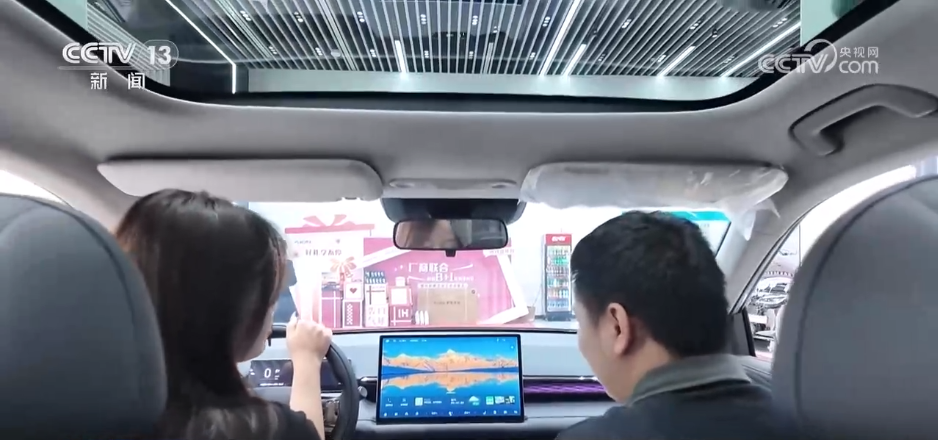
Core Viewpoint - From January 1, 2024, China's new energy vehicle (NEV) purchase tax will be adjusted from full exemption to a 50% reduction, leading to a new consumption peak in the NEV market due to the combination of this policy change and the traditional year-end sales season [1] Group 1: Market Response - NEV showrooms in Haikou are experiencing a significant increase in customer traffic and order volume, with a reported rise of nearly 60% compared to usual [3] - Dealers in Nanjing are enhancing service guarantees by providing clear policy explanations and helping consumers plan their vehicle purchases effectively [5] Group 2: Industry Transformation - The policy adjustment is seen as a critical step in shifting the NEV industry from a "price war" to a "value war," encouraging high-quality development through the establishment of technical thresholds [7] - Industry insiders indicate that stricter technical standards will compel automakers to invest more in core technology research and development, focusing on product quality and energy efficiency rather than relying solely on policy benefits for low-cost competition [10] - The quality and technology of NEVs are gradually improving, with national standards evolving to encourage the application of more advanced technologies in the sector [11]


明年起新能源车购置税减半征收,市场迎消费高峰
Xin Lang Ke Ji· 2025-11-09 05:11
Core Viewpoint - From January 1st next year, China's new energy vehicle (NEV) purchase tax will shift from full exemption to a 50% reduction, impacting the market dynamics significantly [1] Group 1: Market Impact - The adjustment of the purchase tax, combined with the traditional year-end sales peak, has led to a new wave of consumer demand in the NEV market [1] - In Haikou, a local car showroom has reported a significant increase in customer traffic and order volume due to the policy change and seasonal demand [1] Group 2: Industry Development - Industry insiders indicate that stricter technical thresholds will compel automakers to increase investment in core technology research and development [1] - The focus will shift towards enhancing product quality, optimizing energy consumption, and improving battery life, rather than relying solely on policy incentives for low-cost competition [1] - This transition is expected to help the NEV industry move away from internal competition and towards a path of high-quality development driven by technological innovation, promoting sustainable and healthy growth in the sector [1]
视频丨新能源车迎消费高峰 购置税明年起将从全免调为减半
Yang Shi Xin Wen Ke Hu Duan· 2025-11-09 01:46
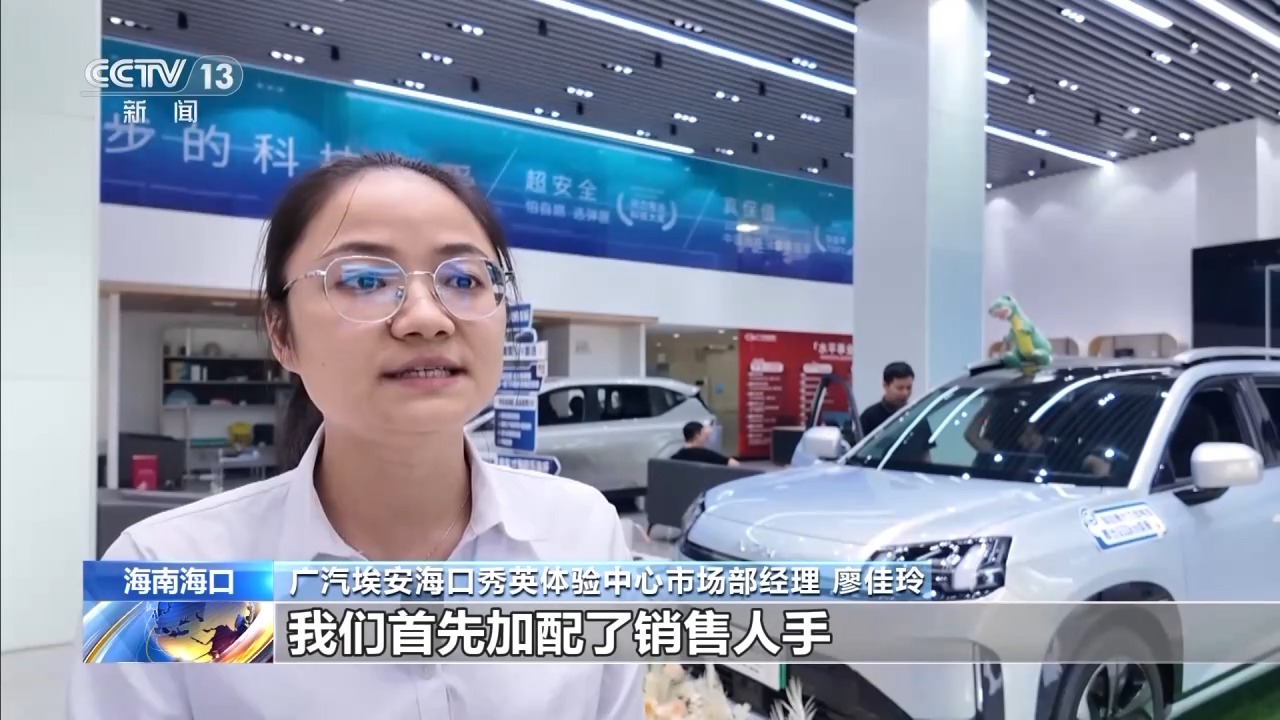
Core Viewpoint - From January 1, 2024, China's new energy vehicle (NEV) purchase tax will shift from full exemption to a 50% reduction, leading to a new consumption peak in the NEV market due to this policy change and the traditional year-end sales season [1] Group 1: Market Response - In Haikou, the GAC Aion experience center reported a nearly 60% increase in customer traffic and order volume due to the policy adjustment and year-end sales peak [3][4] - In Nanjing, local dealers enhanced service guarantees by providing clear policy explanations and showcasing available vehicles to help consumers take advantage of the full exemption period [5] Group 2: Industry Implications - The policy adjustment is seen as a shift from a "price war" to a "value war" in the NEV industry, encouraging high-quality development through the establishment of technical thresholds [6] - Industry insiders indicate that stricter technical standards will compel automakers to invest more in core technology research and development, focusing on product quality and efficiency rather than relying solely on policy benefits for low-cost competition [8]
多重因素影响 新能源车市场迎来消费高峰
Yang Shi Wang· 2025-11-09 01:04
Core Viewpoint - Starting from January 1, 2024, China's new energy vehicle (NEV) purchase tax will be adjusted from full exemption to a 50% reduction, impacting the NEV market dynamics [1] Group 1 - The adjustment in purchase tax is expected to create a new consumption peak in the NEV market due to the traditional sales season at the end of the year [1]
新能源车市“银十”旺季成色足,多家新势力车企月交付突破4万辆
Zhong Guo Zheng Quan Bao· 2025-11-08 04:07
Group 1 - Multiple automakers reported strong sales performance in October, driven by the peak season of "Golden September and Silver October" [1] - New energy vehicle (NEV) sales are expected to exceed 16 million units in 2025, with the used car replacement policy significantly boosting the market [1][7] - New force brands like Leap Motor, Xpeng Motors, and NIO achieved record monthly deliveries, with Leap Motor delivering 70,289 units, a year-on-year increase of over 84% [2] Group 2 - Xpeng Motors delivered 42,013 units in October, marking a 76% year-on-year increase and entering several international markets [2] - NIO's deliveries reached 40,397 units, a 92.6% year-on-year increase, with significant contributions from its various brands [2] - Xiaomi Motors also surpassed 40,000 units in deliveries, while Li Auto's deliveries decreased slightly [3] Group 3 - Traditional automakers showed strong performance in the NEV sector, with BYD reporting 441,706 NEV sales in October, a 12% year-on-year decline [4] - SAIC Group's sales reached 453,978 units, with NEV sales growing by 31.6% year-on-year [4] - Chery Group's NEV sales exceeded 110,000 units for the first time, reflecting a 54.7% year-on-year increase [4] Group 4 - Industry experts noted that traditional automakers are leveraging their manufacturing scale and brand reputation to excel in the NEV market [5] - The market is expected to remain strong post the peak season, with various automakers launching new promotional activities [6] - The automotive market is anticipated to exceed initial production and sales forecasts, with a projected total of 32.9 million vehicles for the year [7]




新能源车均价创6年新低,价格战「寒气」侵蚀供应链
3 6 Ke· 2025-11-08 01:02
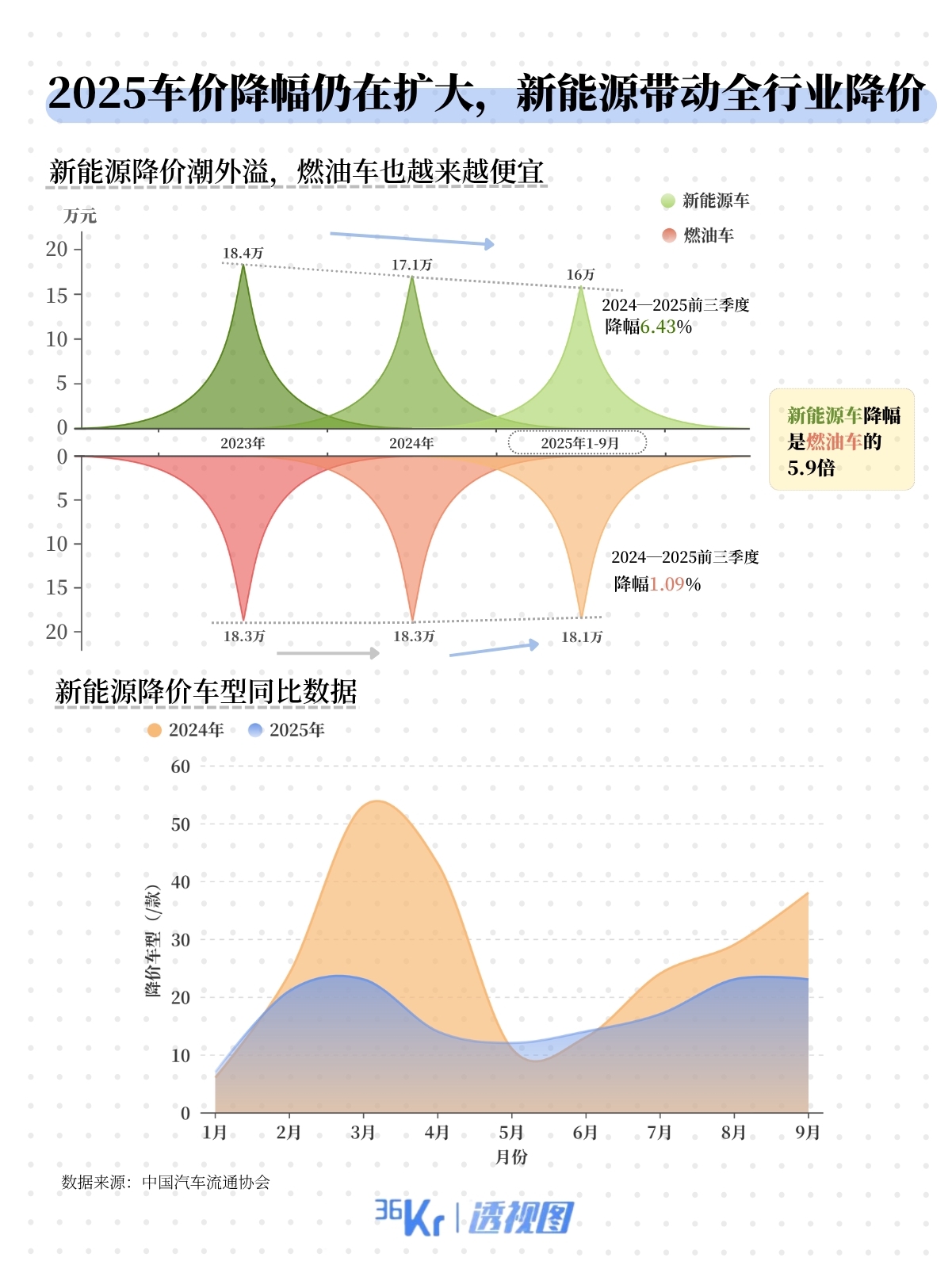
Core Insights - The Chinese automotive industry is experiencing an intensified price war, leading to significant challenges for various companies in the sector [1]. Industry Overview - In September 2025, the average sales price of new energy vehicles dropped to 158,000 yuan, marking the first time it fell below the 160,000 yuan threshold since 2019. This price decline is attributed to fierce competition, resulting in increased sales for brands like Li Auto and Xpeng, but with stagnant profit growth [3]. - Major automakers such as BYD, Toyota, and Volkswagen are caught in a cycle where revenue increases do not translate into profit growth, indicating a long-term adverse effect of continuous price reductions [3]. Supply Chain Dynamics - To manage costs, automakers are pressuring suppliers to lower prices and are extending payment cycles significantly. This price war is affecting the entire automotive supply chain, with varying impacts across different players [7]. - Raw material manufacturers like Baosteel and Chalco are experiencing steady growth and have ample funds, while core battery manufacturers like CATL show significant growth. However, manufacturers of key materials such as cathodes and separators are still facing losses [9]. Strategic Shifts - As the price war evolves from a short-term strategy to a norm, the survival of automakers and their supply chains hinges on technological-driven cost optimization rather than mere price cuts. There is a need to shift from a focus on "price competition" to "value competition" [12].
港股开盘丨恒生指数跌0.51% 华虹半导体跌3.87%
Xin Lang Cai Jing· 2025-11-07 15:10
Core Viewpoint - The Hang Seng Index declined by 0.51%, while the Hang Seng Tech Index fell by 0.83%, indicating a general downturn in the market, particularly in the semiconductor and new energy vehicle sectors [1] Group 1: Market Performance - The Hang Seng Index experienced a decrease of 0.51% [1] - The Hang Seng Tech Index saw a decline of 0.83% [1] Group 2: Sector Performance - Semiconductor stocks faced a pullback, with Hua Hong Semiconductor dropping by 3.87% [1] - New energy vehicle stocks also retreated, exemplified by NIO's decline of over 2% [1]
[11月7日]指数估值数据(普通家庭如何分享经济增长;港股指数估值表更新;抽奖福利)
银行螺丝钉· 2025-11-07 14:01
Core Viewpoint - The article discusses the current state of the stock market, highlighting the divergence between economic conditions and stock performance, particularly in A-shares and H-shares, and emphasizes the importance of index funds for broader participation in economic growth [14][15][31]. Market Performance - The overall market experienced slight declines, with large, medium, and small-cap stocks showing minimal fluctuations [1][2]. - Value stocks remained relatively strong, while growth stocks saw a slight decline [3][5]. - The Hong Kong stock market faced more significant declines compared to A-shares, which remained resilient and showed overall growth [6][11][12]. Economic Drivers - The article notes a shift in economic growth drivers from low-end manufacturing and real estate to mid-to-high-end manufacturing in recent years [17][21]. - The export share of mid-to-high-end manufacturing has been gradually increasing, indicating a structural change in the economy [22]. Market Dynamics - The article highlights that leading companies in mid-to-high-end manufacturing often dominate profits, leading to a "dual oligopoly" or "triple oligopoly" market structure [23][24]. - This contrasts with the real estate sector, which historically employed a larger workforce during its boom periods [27]. Investment Strategies - The article advocates for the use of index funds as a means for households to participate in economic transformation without directly engaging in high-end manufacturing [31][37]. - It references successful examples from the U.S. and Japan, where index funds have allowed broader participation in stock market gains [33][34]. Valuation Insights - The article provides insights into the valuation of various indices, indicating that many technology and high-end manufacturing stocks have reached higher valuation levels after a period of being undervalued [41][44]. - It emphasizes that the market experiences cycles of undervaluation and overvaluation, suggesting that long-term investors should remain patient and prepared for future opportunities [45][47]. Index Valuation Data - The article includes a detailed valuation table for various indices, highlighting metrics such as P/E ratios, dividend yields, and ROE percentages for different sectors and indices [48][55].

港股“子”曰|马斯克天价薪酬刷屏 其实港股公司也不少
Mei Ri Jing Ji Xin Wen· 2025-11-07 07:32
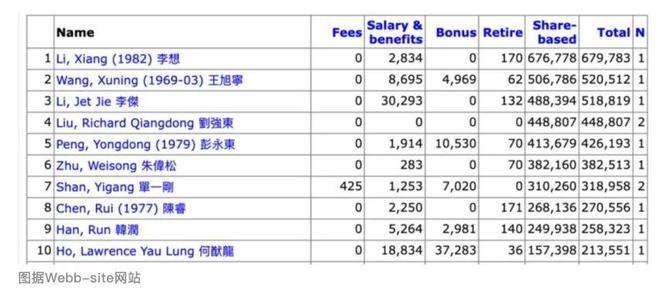
今年9月5日,马斯克提出了万亿美元天价薪酬的计划。此后还威胁,如果不通过这个方案,他就将离开 特斯拉。"谁赞成,谁反对?" 结果,就在昨天(11月6日)晚上,特斯拉的股东大会高票通过了这个万亿美元薪酬计划。消息一出, 舆论一片哗然。而咱广大网民,一定都是看热闹的心态。他马斯克何德何能,凭啥拿这么多,特斯拉的 股东大会,凭啥还能答应他这个要求?马斯克是不是太贪心了,要知道,钱多到一定数量,那就不再是 钱,仅仅是个数字而已。 但是,你可能不知道,马斯克这万亿美元薪酬并不是一次性付清,而是要在未来10年,分12期"分期支 付",而且支付的不是现金,而是特斯拉的股票期权。不仅如此,马斯克要想拿满1万亿美元,还有很多 KPI来考核他。 简单来看,特斯拉股票市值每增加5000亿美元,他才能拿到其中一部分薪酬,直到特斯拉市值达到8.5 万亿美元。而现在,特斯拉的市值约为1.5万亿美元,下一个目标是涨到2万亿美元,这就是33%以上的 空间。 除了市值目标外,还有其他考核指标。比如交付第2000万辆汽车,运营100万辆机器人出租车,销售100 万个机器人等等,每完成一项,马斯克才能拿到一部分。 说白了,这其实就是一个"对赌协议 ...