
种植业

Search documents
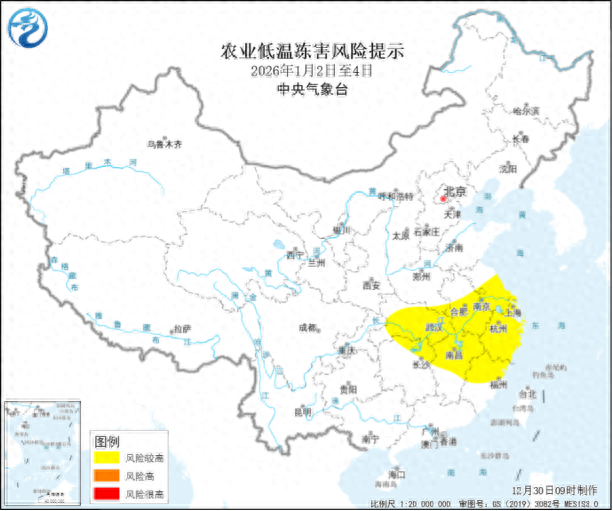
部分地区降温10℃以上,两部门发布农业低温冻害风险提示
Xin Lang Cai Jing· 2025-12-30 08:48
Core Insights - The Ministry of Agriculture and Rural Affairs and the China Meteorological Administration issued a risk warning for agricultural low-temperature frost damage, predicting significant rain and snow in central and eastern China from December 30, 2025, to January 2, 2026 [1] Summary by Categories Weather Forecast - A large-scale rain and snow event is expected in central and eastern China, with heavy snow and localized blizzards in regions such as Jianghan, western Huanghuai, southern Shanxi, and central and southern Shaanxi [1] - Temperatures in the middle and lower reaches of the Yangtze River are forecasted to drop by 6 to 8 degrees Celsius, with some areas in western Hubei experiencing temperature declines exceeding 10 degrees Celsius [1] Agricultural Impact - The lowest temperature line of 0 degrees Celsius is expected to move southward to the central and southern regions of Jiangnan by the early morning of January 3 [1] - There is a high risk of low-temperature frost damage to rapeseed, open-field vegetables, and economic fruit trees in southern Jiangsu, central and southern Anhui, most of Hubei, northern and central Jiangxi, northern Zhejiang, and northern Fujian from January 2 to 4 [1] Recommendations - It is advised to check and reinforce production facilities, harvest mature fruits and vegetables, and implement measures such as covering for insulation, emergency heating, and applying antifreeze agents to prevent agricultural low-temperature frost damage [1]

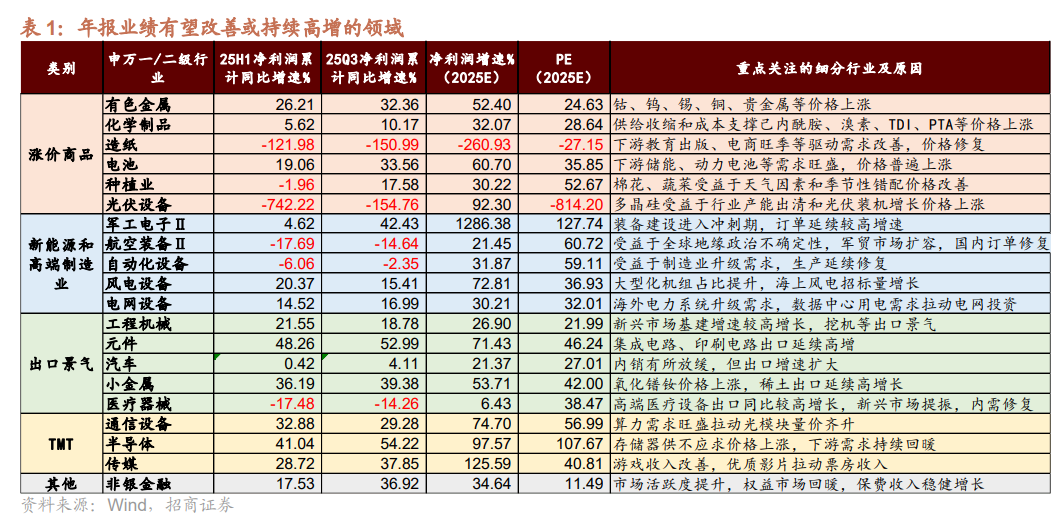
年报行情打响!一文梳理高景气度行业,还有一份业绩大幅预增个股名单
Xuan Gu Bao· 2025-12-30 06:57
Event Summary - The annual report disclosure schedule for 2025 has been released, with ChipGuide Technology being the first to disclose on February 3, 2026, and *ST Huawang on February 13, 2026 [1] Industry Insights - Key sectors expected to show improved or sustained high growth in annual report performance include "price-increasing commodities," "new energy and high-end manufacturing," "export-oriented sectors," and "TMT sectors with strong or improving demand" [1] - In the "price-increasing commodities" category, items with price increases exceeding 200% include black tungsten concentrate, VC, and lithium hexafluorophosphate, while those with increases over 100% include platinum and cobalt [4] - The new energy and high-end manufacturing sector is benefiting from high growth in military equipment orders and expanding demand for industrial robots and energy storage [6] - The export sector has seen significant growth, with high-tech and electromechanical product exports increasing by 7.7% and 9.7% year-on-year, respectively [6] Company Performance - A list of companies expected to see net profit growth exceeding 50% for the year has been compiled, based on preliminary quarterly report data [8] - Notable companies include Yuanjie Technology, with a projected net profit increase of 1726.36%, and Runze Technology, with an increase of 262.73% [9] - The semiconductor industry is projected to grow by 13.7% in sales in 2025, driven by strong demand for memory chips [7]

国盛证券:生猪去化趋势不改 择机参与板块配置
智通财经网· 2025-12-30 06:41
Group 1: Swine Industry - Current pig prices remain low, with no significant rebound before the winter solstice, but an unexpected increase is anticipated post-holiday, leading to improved market sentiment as the peak season approaches [1] - The report suggests that the rebound in spot prices may last until the pre-Spring Festival stocking period, with low participation from the stock market [1] - Investors are advised to focus on opportunities in companies with low-cost structures during the loss phase, as current valuations are still relatively low [1] Group 2: Mushroom Industry - Prices for enoki mushrooms remain strong, confirming a sustained price rebound, while the release period for cordyceps, a key new product, is approaching, indicating strong performance potential [1] Group 3: Livestock and Poultry - In the yellow feathered chicken sector, seasonal price elasticity opportunities are recommended, with a focus on Lihua Co [3] - White feathered chicken prices are projected to rise, with the price of broilers at 7.82 yuan/kg, an increase of 8.8% from the previous month, and chicken products averaging 9.3 yuan/kg, up 3.9% [3] - Attention is drawn to the situation of avian influenza in Europe, with potential investment in companies like Shennong Development and Yisheng Industries [3] Group 4: Agricultural Planting - The industry shows a clear trend of variety replacement, with breakthroughs in dense planting growth, making related stocks worth monitoring [4] - The commercialization of genetically modified varieties is underway, with future confirmations of actual transaction prices and profit distribution expected to enhance the growth potential of industry companies [4] Group 5: Pet Industry - The Chinese pet retail conference revealed that the total pet consumption scale for the first three quarters of 2025 is projected to be 108.48 billion yuan, a year-on-year increase of 4.5%, with an expected total sales of 154.5-160 billion yuan for the year [5] - The industry growth trend remains positive, with ongoing optimism for domestic substitution and premiumization trends, highlighting companies like Guibao Pet and Zhongchong Co [5]

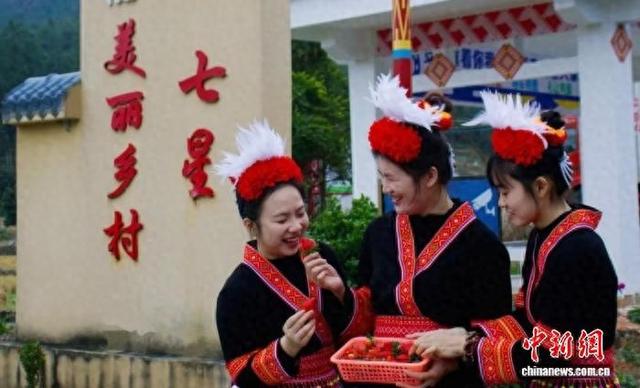
(乡村行·看振兴)广东七星村:草莓喜丰收 “映红”振兴路
Xin Lang Cai Jing· 2025-12-30 06:40
七星村党总支书记邓文毅介绍,今年以来,村"两委"持续推进"水稻+西瓜+草莓"轮作种植模式,在保障 粮食生产的基础上,大力发展特色经济作物种植;通过党支部引领、村属企业运作、农户参与的模式, 实现了统一技术标准、统一品牌销售,提升了农产品市场竞争力。 邓文毅表示,目前,七星村草莓种植面积稳中有增,产品主要通过现场采摘和订单销售等方式面向市 场。 中新网清远12月30日电 (记者 张璐)近日,清远连南瑶族自治县香坪镇七星村草莓种植基地(简称"基地") 迎来丰收,首批"七星草莓"正式上市销售。一颗颗鲜红饱满的草莓散发出诱人的甜香,吸引许多游客纷 至沓来。 七星村草 莓迎丰收。 连南融媒体中心 供图 走进基地,整齐的田垄上,一株株草莓苗长势喜人,翠绿的叶片层层叠叠,在冬日阳光下泛着健康的光 泽。只见叶片下缀满了或红或白的果实,成熟草莓鲜红欲滴、饱满润泽,半熟果实白中透粉、晶莹可 爱。藤蔓间,白色小花仍在陆续绽放,预示着持续的丰收。 "今年草莓长得特别好,又大又甜!"正在采摘的村民房大姐笑着展示手中的成果。据了解,通过土地流 转和在基地务工,许多七星村村民实现了在家门口"双增收"。 近年来,七星村深入贯彻落实广东省"百 ...
新思想引领新征程丨加快农业农村现代化 扎实推进乡村全面振兴
Yang Guang Wang· 2025-12-30 03:34
Core Viewpoint - The modernization of agriculture and rural areas is essential for China's overall modernization, with a focus on achieving food security and promoting rural revitalization [1][5]. Group 1: Agricultural Production and Food Security - China's grain production reached 14,297.5 billion jin this year, marking a significant harvest and contributing to the goal of building an agricultural powerhouse [1]. - The government emphasizes the importance of food security, advocating for self-reliance and domestic production while maintaining appropriate imports and technological support [1]. - The "14th Five-Year Plan" aims to ensure that the food supply for 1.4 billion Chinese people is secure, with a focus on enhancing agricultural productivity through technology [2]. Group 2: Technological Advancements in Agriculture - The integration of artificial intelligence in agriculture is being implemented in regions like Henan, enhancing the efficiency and effectiveness of farming practices [2]. - The construction of high-standard farmland is a key strategy, with over 700 billion yuan allocated to support the development and improvement of 46 million acres of farmland [3]. Group 3: Rural Revitalization and Economic Development - The revitalization of rural areas is closely linked to industrial development, with successful examples in regions like Guangdong, where local agricultural products are being transformed into creative and processed goods [3][4]. - The model of "party leadership, enterprise involvement, and farmer participation" is being adopted in villages like Nangu Village in Shaanxi, leading to increased income for farmers and the growth of local economies [4]. Group 4: Policy and Strategic Initiatives - The "15th Five-Year Plan" emphasizes accelerating agricultural modernization and promoting urban-rural integration, ensuring that rural areas meet modern living standards [5]. - The Ministry of Agriculture is focused on enhancing agricultural technology and protecting arable land to build a diversified food supply system [5].
习言道|习近平要求琢磨透这3个字
Zhong Guo Xin Wen Wang· 2025-12-30 02:23
Core Viewpoint - The article emphasizes the importance of developing local specialty industries as a key pathway to rural revitalization, highlighting the need to understand and leverage local resources and characteristics for economic growth [2][5][6]. Group 1: Importance of Local Specialty Industries - Xi Jinping stresses that developing specialty industries is crucial for achieving rural revitalization and improving the livelihoods of local farmers [2][5]. - The article mentions that the production area of lychee in Maoming has exceeded 1.4 million acres, accounting for about 25% of the national output, showcasing the potential of local agricultural products [2]. - The concept of "土特产" (local specialties) is highlighted as a significant focus for enhancing local economies and promoting comprehensive rural revitalization [2][5]. Group 2: Regional Characteristics and Adaptation - The term "土" refers to utilizing local resources based on the specific geographical conditions, which enhances the competitiveness of agricultural products [3]. - The article discusses the importance of "特," which emphasizes the unique regional characteristics and local customs that should be reflected in the development of industries [4]. - Xi Jinping's visits to various regions underline the necessity of adapting industry development strategies to local conditions, ensuring that each area can leverage its strengths for economic growth [5][6]. Group 3: Industry Development and Value Chain - The article points out that developing rural industries requires more than just basic farming; it involves extending the industrial chain and enhancing the value chain to create competitive advantages [5]. - Xi Jinping's remarks on the need for technological application and the integration of agriculture, culture, and tourism highlight the importance of innovation in rural industry development [5]. - The emphasis on "因地制宜" (adapting to local conditions) is reiterated as a fundamental approach to achieving high-quality development tailored to regional realities [6].

再生稻连续两年全年亩产超1000公斤
Guang Xi Ri Bao· 2025-12-30 02:13
Core Insights - The article highlights the transformation of traditional agriculture in Guangxi through the integration of smart farming technologies, particularly in rice production [1][2][3] Group 1: Smart Farming Technologies - The first smart rice farm in Guangxi, Yinnong Farm, utilizes advanced technologies such as Beidou navigation systems for autonomous operations, unmanned rice transplanters, and drones for precise pesticide application [1] - The use of unmanned harvesting machines significantly increases productivity, allowing for the harvesting of dozens of acres in a single day compared to just one or two acres by manual labor [1] Group 2: Yield Achievements - The Yinnong Farm achieved impressive yield results, with early rice yielding 644.4 kg per mu and late rice yielding 407.49 kg per mu, totaling 1,051.89 kg per mu for two seasons [1] - The farm's rice variety "Weiliangyou 8612" has consistently exceeded 1,000 kg per mu for two consecutive years, showcasing the effectiveness of the technology and crop variety [3] Group 3: Future Developments - By 2025, the second phase of Yinnong Farm's construction will expand to 500 mu, with the planting area for "Weiliangyou 8612" increasing from 10 mu in 2024 to 165 mu [3] - The farm employs a fully digital management system for all stages of rice cultivation, including soil monitoring and pest detection, enhancing agricultural efficiency [3] Group 4: Industry Impact - The success of Yinnong Farm has inspired other agricultural cooperatives in the region to adopt smart farming technologies, leading to a broader trend of increased efficiency and productivity in the agricultural sector [3]
广东“三农”记者的2025|南岭东风
Nan Fang Nong Cun Bao· 2025-12-30 02:00
Core Viewpoint - The article discusses the significant advancements and achievements in Guangdong's agricultural sector as it approaches 2025, highlighting the importance of agricultural development and rural revitalization in the region [9][10][56]. Group 1: Agricultural Achievements - Guangdong's primary industry value has risen to the second highest in the country, with agricultural product import and export values maintaining the top position nationally [10]. - Agricultural technology contribution rate has reached 74.02%, and grain yield per unit has achieved a record high [10]. - The province has built 4.905 million acres of high-standard farmland during the "14th Five-Year Plan" period [52]. Group 2: Local Agricultural Products - The article emphasizes the success of local products such as the "Yunfu sweet potato," which has a weight of 26.23 pounds, and the "Meizhou golden pomelo," valued at 11.327 billion yuan [29][54]. - The "Ningming star oil vine" industry in Guangxi is highlighted for its annual production value exceeding 20,000 yuan per acre, providing over 60,000 job opportunities [45][56]. Group 3: Market Strategies and Initiatives - The Guangdong government has organized various initiatives to promote local agricultural products, including the "2025 Guangdong Lychee Procurement Map" and the "Southern Rural Report" focusing on agricultural media [79][80]. - The article mentions the successful "Guangdong Rural Singer Competition," which attracted over 50,000 participants and garnered over 1.5 billion views online, showcasing the cultural aspect of agricultural development [125][126]. Group 4: Collaborative Efforts - The collaboration between Guangdong and neighboring provinces like Guangxi and Guizhou is emphasized, with initiatives to introduce advanced agricultural techniques and improve local farming practices [95][98]. - The article notes the efforts to enhance the visibility of local products in major markets, such as the promotion of "Tianyang mango" in Shenzhen and Guangzhou [95][96]. Group 5: Future Outlook - The article concludes with a forward-looking perspective, indicating that the agricultural sector in Guangdong is poised for further growth and innovation as it moves towards 2026, with ongoing efforts in rural revitalization and agricultural modernization [148].

岁稔年丰 乡村和美——2025,共绘乡村振兴新“丰”景
Xin Hua She· 2025-12-29 23:10
Core Insights - China's grain production has reached a historical high of 14.2975 trillion jin, an increase of 1.675 billion jin compared to the previous year, despite facing various natural disasters [3] - The comprehensive mechanization rate of crop farming has reached 76.7%, indicating significant advancements in agricultural technology [6] - The rural economy is thriving, with per capita disposable income for rural residents reaching 17,686 yuan, a real increase of 6.0% year-on-year [8] Group 1: Grain Production - Grain production in China has stabilized at over 1.4 trillion jin, overcoming challenges such as drought and heavy rainfall [1][3] - The increase in grain production is supported by enhanced agricultural policies, expanded planting areas, and improved crop yields [3] - The soybean planting area has remained above 15 million acres for four consecutive years, with production continuing to exceed 20 million tons [4] Group 2: Agricultural Technology - The implementation of smart agriculture has accelerated, with significant improvements in efficiency and productivity through technology [5][6] - Agricultural technology contributions have surpassed 64%, with over 95% of crop varieties being self-bred [6] - The integration of smart management systems in aquaculture has led to innovative farming models, enhancing productivity [5] Group 3: Rural Development - The rural revitalization strategy has led to the establishment of 2 to 3 dominant industries in 832 poverty alleviation counties, connecting nearly three-quarters of the impoverished population with new agricultural entities [7][10] - The transformation of rural areas has been marked by improved living conditions and increased economic activity, as seen in villages like Wangxiang [9][10] - The construction of rural infrastructure has been prioritized, ensuring access to essential services and enhancing the quality of life for residents [10]
大国“三农”添新景
Xin Lang Cai Jing· 2025-12-29 20:21
Core Viewpoint - The news highlights significant advancements in rural development and agricultural productivity in China, showcasing improvements in infrastructure, income, and community engagement as part of the ongoing rural revitalization efforts. Group 1: Agricultural Production - China's grain production reached 14,297.5 billion jin, an increase of 167.5 billion jin or 1.2% from the previous year, maintaining stability above 14 trillion jin [3] - The average yield of wheat was 1,200 jin per mu, while corn yield was approximately 1,500 jin per mu, attributed to advanced agricultural practices and technology [3] - The national grain planting area increased to 1.791 billion mu, up by 1.348 million mu or 0.1%, marking six consecutive years of growth [4] Group 2: Rural Infrastructure and Living Standards - Over 10 million mu of high-standard farmland has been established, with crop variety coverage exceeding 96% and self-bred varieties accounting for over 95% of the area [4] - Rural sanitation has improved, with toilet coverage at around 76% and 90% of administrative villages having waste collection and processing [8] - The average disposable income for rural residents increased from 12,588 yuan in 2020 to 17,522 yuan in 2024, with a growth rate exceeding the national average for four consecutive years [7] Group 3: Community Engagement and Cultural Activities - Rural cultural and sports activities have flourished, with over 2.2 million events held in 2024, generating economic benefits of 13.09 billion yuan [9] - The vibrant community life includes various local events, enhancing social cohesion and providing entertainment for residents [10] - The ongoing support for rural revitalization includes financial and policy measures aimed at sustaining development and preventing poverty [6]