
半导体设备制造

Search documents
中微公司前三季度营收同比增长约46%
Zheng Quan Shi Bao Wang· 2025-10-29 12:02
Core Viewpoint - The company reported significant revenue growth and increased R&D investment in its Q3 2025 financial results, indicating a strong market demand for its semiconductor equipment and a commitment to innovation. Financial Performance - The company achieved a revenue of 8.063 billion yuan in the first three quarters of 2025, representing a year-on-year growth of approximately 46.40% [1] - Revenue from etching equipment reached 6.101 billion yuan, up by about 38.26% [1] - Revenue from LPCVD and ALD thin film equipment surged to 403 million yuan, marking a staggering growth of approximately 1332.69% [1] - The net profit attributable to shareholders was 1.211 billion yuan, reflecting a year-on-year increase of about 32.66% [1] R&D and Product Development - The company has accelerated its R&D efforts, with R&D expenditure increasing by 979 million yuan (approximately 63.44%) year-on-year, accounting for about 31.29% of total revenue [1] - The company is currently developing over twenty new devices across six categories, significantly reducing the development time for new products to two years or less [2] - The company has seen a notable increase in the delivery of high-end products for critical etching processes in advanced logic and memory device manufacturing [2] Equipment and Market Position - The company’s CCP and ICP etching products are experiencing rapid growth, with the 60:1 ultra-high aspect ratio etching equipment becoming a standard in the domestic market [3] - The company has achieved single-atom level precision in its ICP etching equipment, with several thin film devices successfully entering the market and meeting international performance standards [3] - The company has maintained an average annual revenue growth of over 35% over the past 14 years and is projected to continue this trend with a 43.9% year-on-year revenue increase in the first half of 2025, reaching 4.961 billion yuan [4]



晶盛机电:子公司晶鸿精密坚持以核心零部件国产化为目标,持续加强关键零部件的研发攻关和产业化建设
Zheng Quan Ri Bao· 2025-10-28 11:41
Core Viewpoint - The company, Jingsheng Electromechanical, emphasizes its commitment to domestic core component localization and continuous enhancement of its manufacturing capabilities, aiming to improve product quality and expand its market presence in the semiconductor industry [2] Group 1: Company Strategy - The subsidiary, Jinghong Precision, focuses on the localization of core components, enhancing precision processing, special welding, assembly testing, and semiconductor-level surface treatment capabilities [2] - The company is dedicated to strengthening research and development efforts and industrialization of key components, leading to a continuous improvement in product quality and an increasing variety of products [2] Group 2: Market Expansion - The company aims to enhance market expansion for component products by focusing on customer needs and providing integrated solutions in research, manufacturing, and service [2] - The company is actively expanding its customer base for a series of high-precision components, including vacuum chambers, precision drive spindles, planetary gears, ceramic discs, and others, driving continuous market scale growth [2]
六连板ST中迪等候半导体″老兵″入主
Jing Ji Guan Cha Bao· 2025-10-25 01:42
Core Viewpoint - The auction of ST Zhongdi's shares has sparked speculation about a potential reverse merger, leading to a significant increase in its stock price, despite the company's ongoing financial struggles and recent poor performance in its third-quarter report [1][2][8]. Group 1: Auction and Stock Performance - ST Zhongdi's stock experienced six consecutive trading limits from October 17 to 24, following the judicial auction of 71.14 million shares, which concluded with a bid of 255 million yuan [1][2]. - The auction was conducted on Alibaba's platform, with the starting price set at 255 million yuan and an assessed value of 319 million yuan [1]. - The winning bidder, Tianwei Investment, is expected to replace the previous controlling shareholder, which has led to investor excitement and speculation about a potential transformation into a technology company [1][3]. Group 2: Financial Performance - ST Zhongdi reported a 52.64% year-on-year decline in revenue for the first nine months of 2025, totaling 135 million yuan, and a net loss of 151 million yuan, down 42.08% year-on-year [2][8]. - The company has accumulated total liabilities of 1.928 billion yuan against total assets of 1.919 billion yuan as of the end of September [2]. Group 3: Shareholder Dynamics - Tianwei Investment, established in July 2025, is linked to the semiconductor industry, with its founders being veterans in the field [3][4]. - There has been no direct communication between ST Zhongdi and Tianwei Investment regarding the auction, and no other potential buyers have approached the company [3][4]. Group 4: Historical Context and Future Plans - ST Zhongdi has undergone multiple transformations since its listing in 1996, shifting from chemical production to real estate development, and now potentially to technology [8]. - The company has faced continuous losses over the past five years, with a cumulative loss of 1.402 billion yuan [8]. - ST Zhongdi's management is focused on improving operational performance and resolving debt issues while exploring new investment directions [7][10].

中国一纸矿物质审批,为何能让ASML光刻机产线告急?全球芯片命门浮现
Sou Hu Cai Jing· 2025-10-21 05:49
Core Insights - The Chinese Ministry of Commerce has implemented export controls on foreign items and related technologies containing Chinese mineral components, effective from October 9, 2025, under the principle of "long-arm jurisdiction" [1][3]. Policy and Regulations - The export control applies to products containing 0.1% or more of Chinese heavy mineral components or utilizing Chinese mineral technology, requiring approval from Chinese authorities [3]. - Export applications for military users or those related to the development of weapons of mass destruction will be directly rejected [3]. Impact on Semiconductor Industry - China holds a dominant position in the mineral sector, with 37% of global mineral reserves and over 70% of the refining and separation processes, particularly controlling 87% of the global smelting capacity for high-purity heavy minerals used in lithography machines [5]. - ASML is facing an unprecedented supply chain crisis due to the new regulations, with internal assessments indicating a potential 30% decrease in EUV lithography machine capacity if mineral supply disruptions continue [5][7]. - The delivery cycle for each EUV lithography machine is expected to extend from 24 months to 36 months, impacting major semiconductor manufacturers like TSMC, Samsung, and Intel, which are in critical phases of building next-generation chip factories [7]. Defense Industry Consequences - The U.S. defense industry is also affected, with Lockheed Martin's F-35 radar sensitivity declining by 23% due to a lack of neodymium magnets, and Boeing's MQ-25 drone project facing risks due to shortages of mineral permanent magnet motors [9]. - A significant 78% of guided systems in existing U.S. weapon stockpiles are reported to be facing mineral supply crises [9]. Global Supply Chain Repercussions - The export controls have led to a 60% reduction in global EUV lithography mirror coating capacity, with China being the sole producer of high-purity gadolinium gallium garnet crystals necessary for precise temperature control in lithography machines [11]. - Companies attempting to bypass Chinese minerals face challenges, with alternative materials resulting in a 40% cost increase and a 30% performance decline [9]. Strategic Responses - The Chinese semiconductor industry is exploring unique strategies to overcome external technology blockades, such as the "non-lithography compensation" strategy proposed by New Kai Lai, which aims to optimize DUV lithography processes to achieve EUV-like precision [11][13]. - Domestic development of EUV photoresists and auxiliary materials has seen significant progress, with over 30% of key photoresists achieving domestic production rates [13]. Industry Restructuring - The global semiconductor supply chain is undergoing deep restructuring due to China's mineral controls, with the EU aiming for an 80% self-sufficiency rate in minerals by 2030 and the U.S. Department of Defense investing $90 billion to build a domestic mineral supply chain [15]. - The shift from "efficiency-first" to "security-first" in supply chains poses challenges to ASML's global production model [15]. Technological Challenges - Attempts by Japanese companies to replace critical minerals have shown significant performance degradation, with experiments indicating a 47% performance drop in gallium-based magnets after 3000 hours of operation [17]. - China's dual-review mechanism for export controls requires comprehensive data tracing from mines to finished products for any foreign products using Chinese minerals, increasing supply chain transparency challenges for ASML [17].

稀土掣肘!中国一纸批文,ASML光刻机50公斤重稀土供给悬了?
Sou Hu Cai Jing· 2025-10-19 14:34
Core Viewpoint - The recent announcement by China's Ministry of Commerce on October 9, which requires export approval for products containing 0.1% or more of Chinese heavy rare earth elements, has raised concerns in the semiconductor industry, particularly among companies reliant on these materials, such as ASML and Applied Materials [1][3]. Group 1: Impact on Semiconductor Equipment Manufacturers - The EUV lithography machines, which are critical for semiconductor manufacturing, contain over 50 kilograms of rare earth materials, with 90% of high-purity production capacity concentrated in China [3]. - The new policy highlights the importance of resource control, as companies realize the implications of restricted access to essential materials [3]. Group 2: Domestic Innovations and Developments - Domestic players are innovating to reduce reliance on foreign technology, with companies like New Kylin developing alternative methods to enhance precision in semiconductor manufacturing despite not having access to top-tier machines [6][10]. - New Kylin's standardized processes and equipment, such as "Wuyishan" for precise pattern transfer and "Alishan" for uniform film deposition, have shown promising results, achieving an 85% yield in 5nm logic chip trials with SMIC [8][10]. Group 3: Advancements in Design Tools - The introduction of domestic EDA software by New Kylin has been recognized as a significant advancement, reportedly outperforming international counterparts by 30% and reducing hardware development cycles by 40% [12]. - The new tools have improved success rates for complex circuit designs, demonstrating the growing self-sufficiency and capability of the domestic semiconductor industry [12]. Group 4: Industry Resilience and Future Outlook - The overall trend in the semiconductor industry indicates a gradual completion of the supply chain, enhancing resilience against external pressures and ensuring that disruptions in one area do not cripple the entire operation [10][12]. - The focus on building a robust domestic ecosystem suggests that the industry is moving towards greater independence and stability, reducing vulnerability to international restrictions [10].

稀土卡脖子!中国一纸审批,ASML光刻机50公斤稀土断供?
Sou Hu Cai Jing· 2025-10-19 13:46
Core Insights - The Chinese semiconductor industry is strengthening its foundation by focusing on the basic "nutrient" aspects of the supply chain rather than relying solely on a single technological breakthrough [2] - A recent announcement from the Ministry of Commerce requires approval for the export of products containing 0.1% or more of Chinese rare earth elements, directly impacting semiconductor equipment giants like ASML and Applied Materials [2] - The domestic production of key materials, such as EUV photoresists, is increasing, with the localization rate surpassing 30% for critical photoresists [4] Resource Management - The new policy on rare earth exports is a strategic move to control resources essential for semiconductor manufacturing, particularly for equipment that relies heavily on rare earth elements [2] - The establishment of a domestic EUV photoresist R&D platform in Wuxi aims to break the monopoly of foreign companies in the high-end photoresist market [4] Technological Breakthroughs - The industry is not only focusing on acquiring EUV lithography machines but is also exploring differentiated process paths, such as New Kylin's "non-lithographic compensation" strategy, which maximizes the performance of existing DUV lithography machines [7] - New Kylin's approach involves a complex process cycle to compensate for precision gaps, demonstrating a significant shift in manufacturing strategy [7] Process Integration - New Kylin has standardized high-difficulty operations, resulting in a series of equipment that supports the entire manufacturing process, achieving an 85% yield rate for 5nm logic chips in collaboration with SMIC [9] - This breakthrough indicates that the Chinese semiconductor industry can develop new pathways for advanced processes without relying on external equipment [9] Design Tools Development - The launch of EDA software by New Kylin's subsidiary, Qiyunfang, marks a significant step in breaking international monopolies in design tools, enhancing operational efficiency by 30% and reducing hardware development cycles by 40% [11] - The integration of this EDA software with domestic operating systems and databases facilitates a seamless design-manufacturing connection [13] Ecosystem Resilience - The Chinese semiconductor ecosystem is evolving into a robust structure, with rare earths and materials forming the soil, non-lithographic processes as the main trunk, and design tools as the branches [15] - This interconnected ecosystem allows for sustained vitality even in the face of localized disruptions, positioning China to redefine the competitive landscape in the global semiconductor industry [15]
AI军备竞赛白热化,“强力引擎”阿斯麦(ASML.US)Q3订单超预期
智通财经网· 2025-10-15 06:42
Core Insights - ASML reported Q3 orders of €5.4 billion (approximately $6.3 billion), exceeding analyst expectations of €4.9 billion due to strong demand in the AI infrastructure sector [1] - The company's Q3 sales reached €7.5 billion (approximately $8.7 billion) with a gross margin of 51.6% and a net profit of €2.1 billion (approximately $2.4 billion) [1] - ASML forecasts Q4 2025 sales between €9.2 billion ($10.7 billion) and €9.8 billion ($11.3 billion), with a gross margin of 51% to 53% [1] Company Performance - ASML's stock has increased by 25% this year, making it the highest-valued company in Europe [2] - The company aims to increase annual revenue from €28.3 billion last year to a maximum of €60 billion by 2030, capitalizing on the AI boom [2] Market Dynamics - Major clients like TSMC and Samsung are benefiting from strong demand for AI chips, contributing to ASML's growth [2] - ASML faces geopolitical challenges, particularly regarding sales to China, its largest market, due to U.S. efforts to curb China's chip industry [2]
上海玖有光学科技有限公司成立 注册资本100万人民币
Sou Hu Cai Jing· 2025-10-15 05:59
Core Viewpoint - Shanghai Jiu You Optical Technology Co., Ltd. has been established with a registered capital of 1 million RMB, focusing on various technology services and manufacturing in the semiconductor and electronic sectors [1] Company Summary - The company is legally represented by Weng Lidang and has a registered capital of 1 million RMB [1] - The business scope includes technology services, development, consulting, and transfer, as well as manufacturing of semiconductor devices, electronic equipment, and integrated circuits [1] - Additional activities include sales of electronic materials, new materials technology research and promotion, and information system integration services [1]
搭上新凯来,多股两连板
2 1 Shi Ji Jing Ji Bao Dao· 2025-10-14 00:19
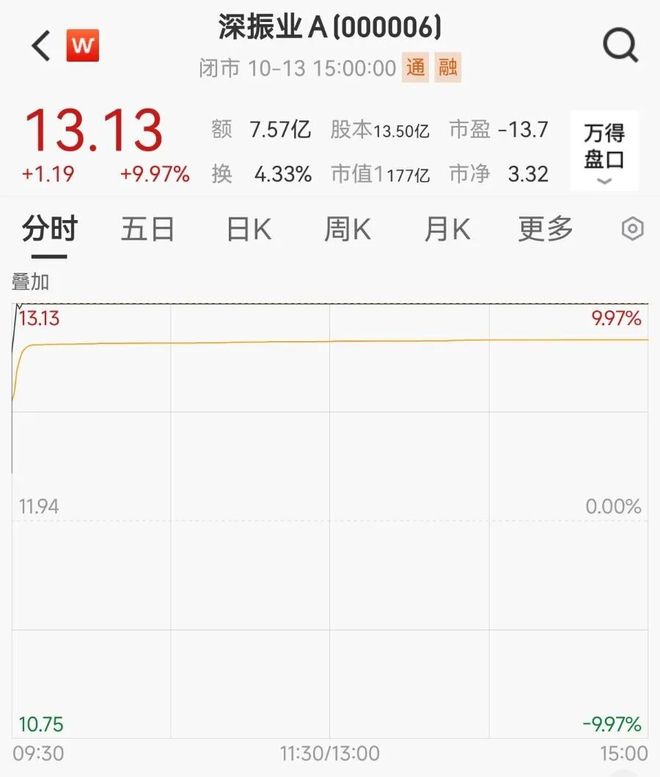
Core Viewpoint - The new Kai Lai concept stocks are experiencing significant market activity, with several stocks hitting their daily price limits ahead of the Bay Area Semiconductor Chip Exhibition, indicating strong investor interest in the semiconductor sector and potential collaboration opportunities [1][5]. Group 1: Market Activity - New Kai Lai concept stocks such as Xinlai Materials and Kaimete Gas have seen consecutive price increases, with Shenzhen Guozhi real estate leader Shen Zhen Ye A also hitting a 10% limit up, closing at 13.13 yuan per share, with a market capitalization of 17.7 billion yuan [1]. - The Bay Area Semiconductor Chip Exhibition is scheduled to take place from October 15 to 17, where Shenzhen Kai Lai and its subsidiaries are expected to showcase their products, promising "unexpected surprises" [1][4]. Group 2: Corporate Relationships - Shen Zhen Ye A is considered a new Kai Lai concept stock due to the connection between their executives, specifically Huang Xiuzhang, who serves as a supervisor for both companies [2]. - There are speculations that new Kai Lai may consider a reverse merger with Shen Zhen Ye A, although Shen Zhen Ye A has stated that there are no undisclosed significant matters regarding the company [2][4]. Group 3: Industry Context - Shenzhen Kai Lai Technology Co., Ltd. is a state-owned enterprise focused on semiconductor equipment and components, aiming for domestic production in key areas of chip manufacturing [4]. - The semiconductor equipment sector is viewed as having a historic opportunity for growth, with expectations for rapid increases in the market share of domestic semiconductor equipment [8].

美股异动|阿斯麦股价四连跌超10%国际政经压力重重
Xin Lang Cai Jing· 2025-10-10 23:00
Core Viewpoint - ASML's stock has experienced a significant decline due to various challenges, including international political tensions and domestic expansion issues [1][2] Group 1: Stock Performance - ASML's stock price fell by 4.52% on October 10, accumulating a total decline of 10.27% over four consecutive days [1] - Investor sentiment remains cautiously optimistic despite recent stock volatility, with financial institutions maintaining a positive outlook on ASML's long-term performance [2] Group 2: International Challenges - A recent report from a U.S. congressional committee raised concerns about semiconductor manufacturing equipment exports, highlighting that China purchased $38 billion worth of such equipment from five companies, including ASML [1] - The report suggests expanding export bans on chip manufacturing equipment, increasing global trade uncertainty for ASML [1] Group 3: Domestic Expansion Plans - ASML is expanding its facility in Eindhoven, Netherlands, planning to create a new campus for 20,000 employees to meet growing market demand [1] - The expansion faces challenges such as power supply shortages, approval delays, and political instability, despite local government support for infrastructure development [1] Group 4: Technological Advancements - ASML is actively increasing the production capacity of its extreme ultraviolet lithography equipment, crucial for modern semiconductor manufacturing [2] - Balancing technological innovation with community needs and environmental protection is a key challenge for the company's future development [2] Group 5: Market Position - Despite slightly lower expected order volumes and financial metrics compared to market consensus, ASML's technological expertise and market position in the semiconductor sector remain strong [2] - Investors are advised to monitor upcoming financial reports for potential investment opportunities, especially if market corrections occur [2]