ALD设备

Search documents
中微半导体设备(上海)股份有限公司2025年度业绩快报公告
Shang Hai Zheng Quan Bao· 2026-02-27 19:16
Financial Performance - The company reported an operating revenue of approximately 12.385 billion yuan for 2025, an increase of about 3.319 billion yuan compared to 2024, representing a year-on-year growth of approximately 36.62% [2][6] - The net profit attributable to the parent company is estimated to be around 2.111 billion yuan, an increase of approximately 496 million yuan from the previous year, reflecting a year-on-year increase of about 30.69% [2][7] - The net profit attributable to the parent company after deducting non-recurring gains and losses is approximately 1.550 billion yuan, which is an increase of about 162 million yuan year-on-year, representing an increase of approximately 11.64% [2][7] Research and Development - The company increased its R&D investment to approximately 3.744 billion yuan in 2025, which is an increase of about 1.291 billion yuan from 2024, marking a growth of approximately 52.65% [2][7] - R&D expenses accounted for about 30.23% of the company's operating revenue, significantly higher than the average in the Sci-Tech Innovation Board [7] - The company has developed over ten new types of conductor and dielectric film equipment, with several products already entering the market and receiving repeat orders [9][10] Product Development and Market Position - The company has seen a significant increase in the shipment of high-end products for critical etching processes in advanced logic and memory device manufacturing [2][9] - The company maintains a leading position in the international GaN-based MOCVD equipment market and is actively developing specialized MOCVD equipment for Micro-LED and other display fields [9][10] - By the end of 2025, the company had over 7,800 reaction chambers in mass production across more than 170 customer chip and LED production lines globally, with over 6,800 etching equipment reaction chambers shipped worldwide [2][9]


2026年中国ALD设备行业发展历程、市场规模、重点企业及行业趋势分析:后摩尔时代,ALD技术凭原子级精度跃居芯片制造核心[图]
Chan Ye Xin Xi Wang· 2026-02-23 01:38
Core Insights - The article highlights the rising importance of Atomic Layer Deposition (ALD) technology in the semiconductor industry, transitioning from a supporting process to a core technology for manufacturing advanced 3D chip structures. [1] - The Chinese ALD equipment market is projected to reach approximately 4.522 billion yuan in 2024, reflecting a year-on-year growth of 7.23%. This growth is driven by the increasing complexity of semiconductor manufacturing processes and the expanding applications of ALD technology beyond traditional semiconductor fields. [1][9] Industry Overview - ALD (Atomic Layer Deposition) is an advanced thin-film deposition technology that utilizes alternating gas pulses of two precursors to create highly uniform and dense nanometer-scale films on substrates. [4] - The ALD equipment industry in China has evolved from reliance on imported technology to achieving significant breakthroughs through domestic innovation over several decades. [4][5] Industry Development History - The development of the ALD equipment industry in China began in the 1970s, with early reliance on imports until domestic companies like North Huachuang and Weidao Nano initiated independent research and development efforts around 2010. [4][5] - From 2019 to 2022, significant industrialization breakthroughs were achieved, with domestic companies successfully delivering ALD equipment for various applications, including semiconductor production. [5] Industry Value Chain - The upstream of the ALD equipment industry includes raw materials such as metal-organic precursors, oxidizers, and reaction gases, as well as key systems like high-precision mass flow controllers and vacuum pumps. The midstream focuses on the R&D and production of ALD equipment, while the downstream applications span semiconductor manufacturing, photovoltaics, new energy, and more. [7] Market Size - The ALD equipment market in China is expected to grow significantly, driven by advancements in semiconductor manufacturing and the adoption of ALD technology in new applications such as high-efficiency solar cells and flexible OLED displays. [1][9] Key Companies' Performance - Weidao Nano reported a revenue of 1.722 billion yuan in the first three quarters of 2025, marking an 11.48% year-on-year increase, with a net profit of 248 million yuan, up 64.83%. [11] - North Huachuang achieved a revenue of 27.301 billion yuan in the same period, reflecting a 32.97% increase, with a net profit of 5.130 billion yuan, up 14.83%. [11][12] Industry Trends - The ALD technology is transitioning from a supporting role to a core manufacturing process as semiconductor manufacturing moves towards 3nm nodes and 3D structures. [12] - Domestic manufacturers are increasingly focusing on independent development and have begun to lead in the market, particularly in the production of advanced chips. [13] - The expansion of application scenarios for ALD technology is expected to drive growth in new fields beyond traditional semiconductor applications, including powder atomic layer deposition technology and specialized ALD equipment for emerging applications. [15]


业绩爆表+扩产加码!这个赛道的机会藏不住了
格隆汇APP· 2026-02-05 10:15
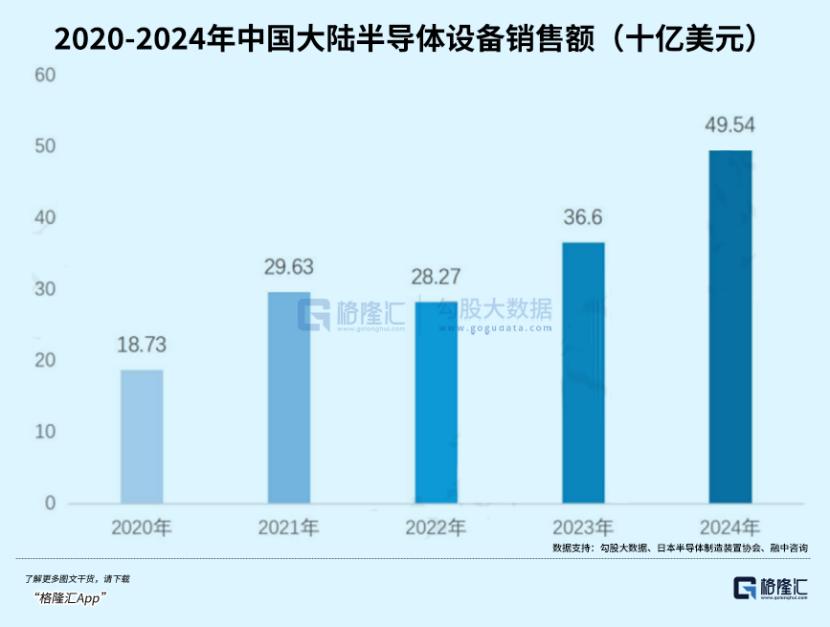
Core Viewpoint - The semiconductor equipment industry is entering a high-growth cycle driven by AI computing demand, domestic substitution, and global capacity expansion, with significant performance improvements from both international and domestic companies [4][7][21]. Group 1: Industry Performance - ASML reported a net sales of €32.7 billion in 2025, a 16% year-on-year increase, with a backlog of €38.8 billion in unfulfilled orders [4]. - Samsung's semiconductor business saw a 33% increase in operating profit, while SK Hynix's Q4 operating profit surged by 137% year-on-year [4]. - Domestic semiconductor equipment companies like Jinhaitong and Changchuan Technology also announced significant performance increases [4]. Group 2: Demand Drivers - The scale application of generative AI has drastically reshaped storage demand, with AI server DRAM needs being eight times that of regular servers and NAND needs three times higher [6]. - High Bandwidth Memory (HBM) is emerging as a core growth engine, with a projected CAGR of 33% from 2024 to 2030, potentially capturing 50% of the DRAM market by 2030 [6]. - Major global storage manufacturers are ramping up production, with Samsung's capital expenditure for 2025 expected to increase by 89% and SK Hynix raising its annual capital expenditure to $20.3 billion [6]. Group 3: Domestic Substitution Progress - The domestic semiconductor equipment localization rate is expected to reach 35% in 2024, doubling from 16.4% in 2022, with etching equipment localization at 23% and CMP equipment at 30%-40% [7]. - China has maintained its position as the largest semiconductor equipment market globally for five consecutive years, with sales expected to reach $49.54 billion in 2024, accounting for 42.34% of the global market [7]. Group 4: Future Trends - The global DRAM industry capital expenditure is projected to reach $61.3 billion in 2026, a 14% year-on-year increase, while NAND Flash capital expenditure is expected to be $22.2 billion, up 5% [9]. - ASML's order situation reflects high industry prosperity, with €13.2 billion in new orders in 2025, including €7.4 billion for EUV lithography machines, and a backlog extending to 2027 [9]. - The global semiconductor equipment market is projected to reach $117 billion in 2024, with a CAGR of 8.4% from 2025 to 2033, potentially growing to $224.93 billion by 2033 [9]. Group 5: Key Segments - The etching equipment market, representing 22% of the front-end equipment market, is expected to reach a domestic market size of ¥48.67 billion in 2025 [12]. - Thin film deposition is also experiencing rapid growth, with a global market size of $12.68 billion, driven by domestic leaders like TuoJing Technology [12]. - Testing and packaging equipment are benefiting from advanced process promotion and capacity expansion, with companies like Changchuan Technology and Huafeng Measurement Control covering multiple semiconductor fields [12]. Group 6: Material and Component Localization - The localization rate of core semiconductor equipment components is expected to rise from 10% to 20% in 2024, with Anji Technology's CMP polishing liquid achieving a 15% global market share [14]. - Continuous breakthroughs in supporting segments are enhancing the competitiveness of domestic equipment, fostering a collaborative development advantage across the entire industry chain [14]. Group 7: Strategic Outlook for 2026 - The advanced process competition is intensifying, leading to a surge in demand for high-end equipment, with global semiconductor giants pushing for 2nm and below processes [17]. - Policy and capital are driving domestic substitution deeper into high-end segments, with significant support for key technologies and substantial financing events in the semiconductor equipment sector [18]. - The demand structure is optimizing, with emerging fields like AI computing centers and electric vehicles creating new growth opportunities, while domestic companies expand into overseas markets [19].


业绩爆表+扩产加码,这个赛道的机会藏不住了
3 6 Ke· 2026-02-05 10:12
Core Insights - The semiconductor equipment industry is experiencing significant growth driven by AI computing power, domestic substitution, and global capacity expansion, marking a definitive growth cycle for the sector [1][14]. Group 1: Industry Performance - ASML reported a net sales of €32.7 billion in 2025, a 16% year-on-year increase, with a backlog of orders reaching €38.8 billion, of which €25.5 billion is from EUV [1]. - Samsung's semiconductor business saw an operating profit increase of 33%, while SK Hynix's Q4 operating profit surged by 137% [1]. - Domestic semiconductor equipment companies like Jinhaitong and Changchuan Technology also reported significant performance improvements [1]. Group 2: Demand Drivers - The scale application of generative AI has drastically reshaped storage demand, with AI servers requiring 8 times more DRAM and 3 times more NAND than regular servers, and each AI server needing up to 2TB of storage [2]. - HBM (High Bandwidth Memory) is emerging as a key growth driver, with a projected CAGR of 33% from 2024 to 2030, potentially capturing 50% of the DRAM market by 2030 [2]. - Major global storage manufacturers are ramping up production, with Samsung's capital expenditure for 2025 expected to increase by 89% and SK Hynix raising its capital expenditure to $20.3 billion [2]. Group 3: Domestic Market Dynamics - The domestic semiconductor equipment localization rate is projected to reach 35% in 2024, up from 16.4% in 2022, with etching equipment localization at 23% and CMP equipment at 30%-40% [3]. - China has maintained its position as the largest semiconductor equipment market globally for five consecutive years, with sales expected to reach $49.54 billion in 2024, accounting for 42.34% of the global market [3]. Group 4: Future Outlook - The global DRAM industry capital expenditure is forecasted to reach $61.3 billion in 2026, a 14% increase year-on-year, while NAND Flash capital expenditure is expected to be $22.2 billion, a 5% increase [5]. - ASML's order situation reflects high industry prosperity, with €13.2 billion in new orders in 2025, and a backlog extending to 2027, supporting future capacity releases [5]. - The global semiconductor equipment market is projected to reach $117 billion in 2024, with a CAGR of 8.4% from 2025 to 2033, potentially growing to $224.93 billion by 2033 [5]. Group 5: Key Trends - The competition in advanced processes is intensifying, with global semiconductor giants focusing on 2nm and below, driving demand for high-end semiconductor equipment [10][11]. - Policy and capital support are crucial for the advancement of domestic substitution, with significant investments in key technologies and local government subsidies for R&D [12]. - The demand structure is diversifying, with emerging fields like AI computing centers and electric vehicles driving growth, while domestic companies are expanding into overseas markets [13].

晶盛机电(300316):业绩短期承压 单晶炉龙头企业 紧抓大尺寸碳化硅材料历史机遇
Xin Lang Cai Jing· 2026-02-05 08:38
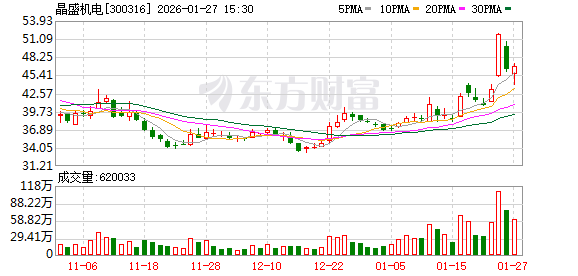
Core Viewpoint - The company forecasts a significant decline in net profit for 2025, with expected net profit attributable to shareholders ranging from 878 million to 1.255 billion yuan, representing a year-on-year decrease of 50% to 65% [1] Group 1: Financial Performance - The company anticipates a non-recurring net profit of 658 million to 975 million yuan for 2025, reflecting a year-on-year decline of 60% to 73% [1] - For Q4 2025, the company expects a net profit of 165 million yuan, indicating a turnaround year-on-year, but a quarter-on-quarter decrease of 37% [1] - The non-recurring net profit for Q4 is projected to be 62 million yuan, also showing a year-on-year turnaround but a significant quarter-on-quarter decline of 72% [1] Group 2: Industry Impact - The company's performance is under pressure due to cyclical fluctuations in the photovoltaic industry, with a decline in demand for photovoltaic equipment and a drop in material prices leading to a reduction in gross profit by approximately 2.2 billion to 2.6 billion yuan [2] - The company has been focusing on R&D and technological innovation in the photovoltaic equipment sector, enhancing product efficiency for downstream customers [2] - As the photovoltaic industry is expected to recover, the company anticipates stabilization and a potential rebound in orders for photovoltaic equipment and materials [2] Group 3: Semiconductor Sector Development - The company has made significant progress in the semiconductor materials sector, achieving key technological breakthroughs in 12-inch silicon carbide substrates and expanding overseas production capacity [3] - In the precision components sector, the company is enhancing domestic production capabilities and deepening collaborations with core customers, leading to rapid growth in market competitiveness [3] - The company has developed various semiconductor equipment, including 8-12 inch deposition equipment and advanced polishing machines, aiming to provide high-quality products and services to customers [3] Group 4: Profit Forecast - The company projects revenues of 11.079 billion, 10.942 billion, and 11.927 billion yuan for 2025 to 2027, with net profits of 1.050 billion, 1.777 billion, and 2.031 billion yuan respectively [3] - The company maintains a leading position in the single crystal furnace market and is poised to capitalize on historical opportunities in large-size silicon carbide materials, leading to a "recommend" rating for coverage [3]
微导纳米:公司客户覆盖一线主流电池片厂商
Zheng Quan Ri Bao Wang· 2026-02-04 12:42
Core Viewpoint - MicroGuide Nano is a leading provider of efficient photovoltaic cell technology and equipment, catering to major first-tier battery manufacturers, and is actively engaged in forward-looking technology layout to meet the evolving demands of the photovoltaic sector [1] Group 1: Technology and Product Development - The company has developed key equipment for various battery technologies, including Heterojunction (HJT), flexible perovskite, and P-type TOPCon, covering essential process links [1] - In the perovskite battery sector, the company is one of the few domestic suppliers to achieve full coverage of core vacuum process equipment such as ALD, magnetron sputtering, and evaporation [1] - The self-developed ALD equipment is crucial for producing high-performance flexible perovskite batteries and leads the market share among similar products, having helped clients set new efficiency records for perovskite modules [1] Group 2: Market Potential and Future Plans - Flexible perovskite batteries show significant market potential in applications requiring ultra-lightweight, high-performance, and flexible rollable batteries [1] - Currently, related products are in the early stages of market promotion, with current orders and revenue contribution being relatively small [1] - The company plans to continue deepening its technology research and development to provide more comprehensive solutions for clients across various emerging application fields [1]
微导纳米(688147.SH):自主研发的ALD设备是制备高性能柔性钙钛矿电池的关键装备
Ge Long Hui· 2026-02-04 07:40
Core Viewpoint - MicroGuide Nano (688147.SH) is a leading provider of efficient photovoltaic cell technology and equipment, catering to major first-tier battery manufacturers, and is actively engaged in forward-looking technology layout to meet the evolving demands of the photovoltaic sector [1] Group 1: Technology and Product Development - The company has developed key equipment for various battery technologies, including Heterojunction (HJT), flexible perovskite, and P-type TOPCon, covering essential process links [1] - In the perovskite battery sector, the company is one of the few domestic suppliers to achieve full coverage of core vacuum process equipment such as ALD, magnetron sputtering, and evaporation [1] - The self-developed ALD equipment is crucial for producing high-performance flexible perovskite batteries and leads the market share among similar products, having helped clients set new efficiency records for perovskite modules [1] Group 2: Market Potential and Future Plans - Flexible perovskite batteries show significant market potential in applications requiring ultra-lightweight, high-performance, and flexible rollable batteries [1] - Currently, related products are in the early stages of market promotion, with current orders and revenue contribution being relatively small [1] - The company plans to continue deepening its technology research and development to provide more comprehensive solutions for clients across various emerging application fields [1]
微导纳米:在ALD设备中,水蒸气与臭氧均可作为氧源
Zheng Quan Ri Bao Wang· 2026-01-29 13:45
Core Viewpoint - MicroGuide Nano stated that both water vapor and ozone can serve as oxygen sources in ALD equipment, offering customers various configuration options based on cost, stability, and process control considerations [1]. Group 1 - The company provides multiple configuration choices for its ALD equipment [1]. - Customers will determine the specific process route based on factors such as cost, stability, and process control [1].
盛美上海:2025年公司立式炉管、Track以及PECVD设备等平台化产品已陆续投放市场
Zheng Quan Ri Bao Wang· 2026-01-29 13:41
Core Viewpoint - The company anticipates that its platform products, including vertical furnace tubes, Track, and PECVD equipment, will contribute significantly to overall revenue starting in 2026, marking them as key growth drivers for the future [1] Group 1: Product Development and Market Launch - The company plans to launch its first self-developed high-output (300WPH) KrF process front-end coating and developing (Track) equipment, UltraLITHKrF, in Q3 2025, which has already been successfully delivered to a leading logic wafer factory in China [1] - The UltraLITHKrF product features high capacity, advanced temperature control technology, and real-time process control and monitoring capabilities, expanding the applications related to photolithography [1] Group 2: PECVD Equipment and R&D Investment - The company expresses strong confidence in the differentiated technological framework and future market prospects of PECVD equipment, with plans to increase R&D investment to expand its market presence domestically and internationally [1] - Continuous technological advancements are being made in LPCVD and ALD furnace series equipment, achieving innovative breakthroughs [1] Group 3: Innovations in Vertical Furnace and ALD Equipment - The company's self-developed UltraFn vertical furnace equipment features a unique vertical structure design with a processing capability of up to 1250°C, focusing on high-end IGBT applications, receiving positive market feedback [1] - Future product goals include achieving a processing capability of 1350°C, which is expected to be a significant benefit for IGBT applications [1] - The company has been strengthening its R&D investment in ALD equipment, accumulating a series of self-developed patented technologies with global intellectual property protection, aiming for further contributions in uniformity and material aspects [1]

晶盛机电:公司开发了应用于芯片制造的8英寸-12英寸减压外延设备、ALD设备等薄膜沉积类设备
Zheng Quan Ri Bao· 2026-01-27 12:13
Core Viewpoint - The company, Jing Sheng Mechanical and Electrical, has developed various equipment for chip manufacturing, including 8-inch to 12-inch reduced pressure epitaxy equipment and ALD (Atomic Layer Deposition) equipment, which are essential for different semiconductor processes [2] Group 1: Equipment Development - The company has developed 12-inch reduced pressure epitaxy equipment that is widely applicable in the manufacturing processes of logic chips, memory chips, silicon photonic chips, and power devices [2] - The atmospheric pressure epitaxy equipment is specifically suitable for power devices [2] - ALD equipment is applicable in the manufacturing processes of logic chips and memory chips [2]