大模型

Search documents
AI周观察:Anthropic年化收入持续高增,英特尔下一季预期不佳
SINOLINK SECURITIES· 2026-01-25 12:44
Investment Rating - The report does not explicitly state an investment rating for the industry or specific companies [2]. Core Insights - The demand for AI-related applications is increasing, with Anthropic's annual revenue doubling from $4 billion in July 2025 to over $9 billion by the end of the year, driven by strong demand in high-compliance sectors like finance and healthcare [10]. - Intel reported strong financial performance in Q4 2025, achieving revenue of $13.7 billion and a non-GAAP gross margin of 37.9%, but indicated that supply constraints would significantly limit its ability to meet strong market demand in Q1 2026 [11]. - The report highlights a significant recovery in the activity levels of overseas chat assistant applications, with Gemini reaching new highs in traffic [10]. Summary by Sections Overseas Market Review - The report notes a recovery in the activity levels of chat assistant applications, with most applications showing stable performance domestically [10]. - Intel's Q4 2025 results reflect a strong demand-supply imbalance, with management indicating that supply constraints will be most severe in Q1 2026 [11]. Company Performance - Intel's Q4 2025 financials include a revenue of $13.7 billion, a non-GAAP EPS of $0.15, and a positive free cash flow of $2.2 billion, despite facing significant supply constraints [11]. - Anthropic's revenue growth is attributed to its Constitutional AI architecture, which has seen increased adoption in regulated industries [10]. Market Trends - The report indicates that the AI server shipment pace is currently constrained by inventory shortages, which are expected to ease as supply improves [14]. - The report emphasizes the importance of monitoring supply improvements and cost structures in the upcoming quarters to assess the potential recovery in gross margins [14].
智谱和MiniMax上市表现亮眼,百川跟Kimi却不慌?
Sou Hu Cai Jing· 2026-01-14 02:40
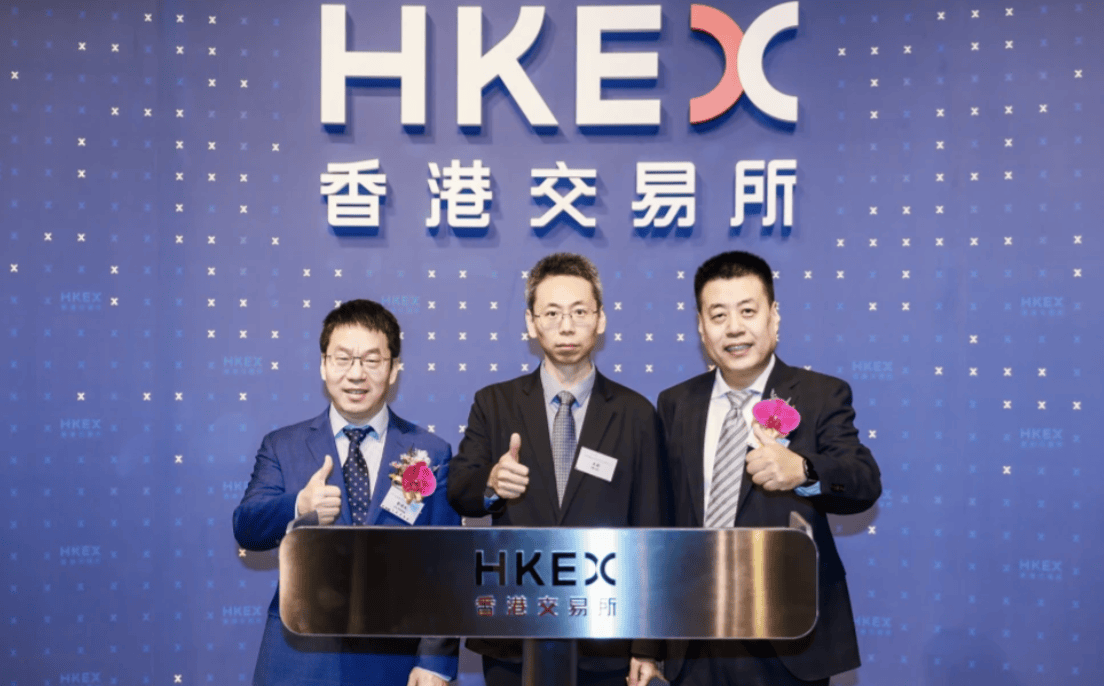
Core Insights - The recent IPOs of Zhipu and MiniMax mark a significant transition for China's AI industry from technology validation to commercialization, indicating a new phase of capital market engagement for the large model sector [3][5] - Both companies have shown strong market performance post-IPO, with Zhipu's market cap reaching approximately HKD 110 billion and MiniMax's exceeding HKD 1.2 trillion at their peaks [3][5] - The positive reception of these IPOs reflects a warming attitude towards tech companies in the Hong Kong stock market, suggesting a favorable environment for future tech listings [5][8] Company Performance - Zhipu raised HKD 43.48 billion and MiniMax HKD 55.40 billion during their IPOs, placing them in the upper tier of recent tech company listings in Hong Kong [5][8] - MiniMax's subscription amount reached HKD 2.533 billion, while Zhipu's was HKD 1.977 billion, indicating strong investor interest [8][12] - MiniMax's revenue for the first three quarters of 2025 was USD 5.343 million (approximately HKD 4.17 billion), with its market cap significantly exceeding its annual revenue [13][14] Market Dynamics - The IPOs of Zhipu and MiniMax are expected to help establish a more mature valuation framework for the Chinese large model industry, which has previously been characterized by uncertainty [15][26] - The performance of these companies will serve as a reference point for future valuations in the AI sector, potentially leading to a more structured approach to assessing technology capabilities and commercial value [15][26] - The current market sentiment suggests that companies with strong technological barriers and broad application scenarios will experience greater value realization opportunities [19][27] Competitive Landscape - Despite their strong IPO performances, both companies face significant competition in their respective fields, with MiniMax particularly challenged in the video generation and AI companionship sectors [18][19] - The competitive landscape includes established players like Kuaishou and ByteDance, which dominate the video generation market, and other AI companionship products that are gaining traction [18][19] - The ongoing success of Zhipu and MiniMax may influence other AI startups, prompting them to consider their own paths to IPO and commercialization [23][26] Future Outlook - The successful IPOs of Zhipu and MiniMax are likely to catalyze further developments in the AI sector, with potential implications for how resources are allocated between commercialization and technological advancement [26][28] - The market's response to these IPOs will be closely monitored, as it could either reinforce confidence in similar tech companies or prompt a reevaluation of strategic priorities within the industry [26][28] - Overall, the current momentum in the capital markets is seen as the beginning of a new chapter for the AI industry, with expectations for continued growth and innovation [28][30]

智谱和MiniMax上市表现亮眼,压力给到其他“小虎”?
Sou Hu Cai Jing· 2026-01-14 02:28
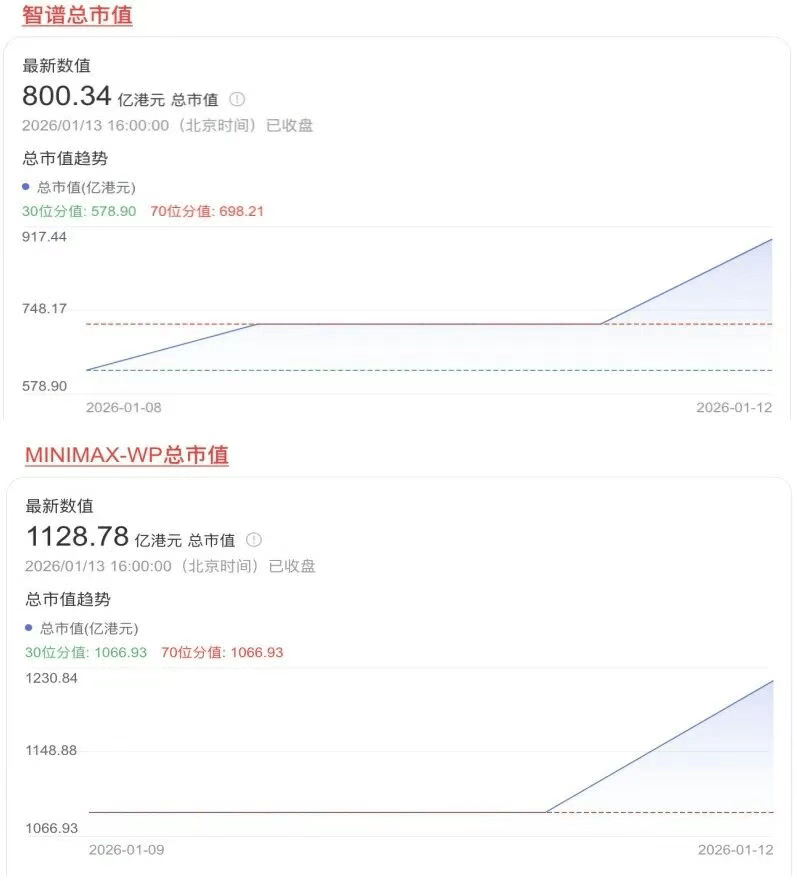
Core Insights - The successful IPOs of Zhipu and MiniMax mark a significant transition for China's AI industry from technology validation to commercialization, indicating a new phase of capital market engagement for the large model sector [1][3][21] - Both companies have shown strong market performance post-IPO, with Zhipu's market cap reaching approximately HKD 110 billion and MiniMax's exceeding HKD 1.2 trillion at their peaks [1][3] Company Performance - Zhipu's stock price increased by over 13% on its listing day, with a market cap of about HKD 579 billion, later peaking at over HKD 1.1 trillion before settling around HKD 800 billion [1][3] - MiniMax's stock surged nearly 110% on its first day, with a market cap surpassing HKD 1.05 trillion, later adjusting to approximately HKD 1.128 trillion [1][3] Market Sentiment - The IPOs reflect a warming attitude of the Hong Kong market towards tech companies, with both firms raising significant capital—Zhipu HKD 4.348 billion and MiniMax HKD 5.540 billion, placing them in the upper tier of recent tech IPOs [3][6] - The subscription amounts for the IPOs were substantial, with MiniMax attracting HKD 253.3 billion and Zhipu HKD 197.7 billion, indicating strong investor interest [6][10] Industry Dynamics - The current valuation of MiniMax, with a market cap significantly exceeding its annual revenue of approximately HKD 4.17 billion, suggests a positive market outlook for AI development in China [10] - Both companies represent different market strategies within the AI sector, with Zhipu focusing on G and B-end markets and MiniMax targeting C-end applications, showcasing the diverse paths of AI development in China [10][11] Future Implications - The long-term performance of Zhipu and MiniMax will serve as a reference point for the valuation framework of the Chinese large model industry, potentially leading to a more mature assessment of AI companies [11][21] - The successful IPOs may encourage other AI firms to pursue public listings, as seen with comments from other industry leaders regarding their future IPO plans [17][20]
上市即亏损53亿!智谱CEO揭秘,我们的对手不是大厂是AGI本身
Sou Hu Cai Jing· 2026-01-12 13:50
Core Viewpoint - The listing of Zhipu, referred to as the "first global large model stock," marks a significant moment in the AI industry, highlighting both the potential and challenges faced by AI companies in achieving profitability and sustainable growth [1][3][25]. Company Overview - Zhipu officially listed on the Hong Kong Stock Exchange with an opening price of 124.1 HKD, reflecting a 6.88% increase from its issue price [3]. - Founded in 2019 from Tsinghua University's Knowledge Engineering Laboratory, Zhipu has raised a total of 8.3 billion RMB from various investors, including major firms like Hillhouse Capital and Tencent [5]. - Despite significant funding, Zhipu reported a loss of 2.958 billion RMB in 2024 and an additional 2.358 billion RMB in the first half of 2025, accumulating losses exceeding 5.3 billion RMB since its inception [5]. Financial Performance - Revenue has been increasing, with a compound annual growth rate (CAGR) of 130% from 2022 to 2024, and a 325% year-on-year increase in revenue to 191 million RMB in the first half of 2025 [7]. - The revenue growth, however, is minimal compared to the substantial losses, indicating a significant imbalance between income and expenditure [7]. Team Structure and Strategy - Zhipu operates under a collective decision-making model led by three key figures: Chief Scientist Tang Jie, who developed the GLM model framework, Zhang Peng, who oversees commercialization, and Liu Debing, responsible for technical implementation [9]. - The company has strategically focused on B2B applications rather than consumer-facing products, with 84.8% of its revenue in the first half of 2025 coming from local deployment orders [11]. Market Position and Competition - The competitive landscape for large model companies has narrowed, with only a few players like Zhipu, Moonlight Dark Side, and MiniMax remaining prominent [16]. - Zhipu plans to raise 4.3 billion HKD from its IPO, with 70% allocated to the development of general AI models, including the upcoming GLM-5 model [18]. Future Outlook - The company aims to target emerging markets, particularly along the Belt and Road Initiative and Southeast Asia, to establish an international collaborative alliance for autonomous large models [20]. - Challenges include resource constraints, such as the availability of A100 chips and the high cost of talent, with senior algorithm engineers commanding salaries around 2 million RMB [21]. - The CEO's statement about racing against time rather than competitors reflects the urgency in the AI sector, as the anticipated "explosion year" for AI replacement approaches in 2026 [23]. Industry Implications - The listing of Zhipu signifies a new phase in the capital dynamics of the AI industry, revealing the tension between technological aspirations and commercial realities [25]. - The ongoing challenge for AI entrepreneurs is to balance idealism with practical business strategies, as the industry moves towards a more sustainable model [27].
【IPO追踪】港股开年新股全线飘红,热潮背后亦有隐忧
Sou Hu Cai Jing· 2026-01-12 11:52
Core Insights - The Hong Kong stock market has seen a strong start in 2026, with eight companies completing their IPOs within just six trading days, including notable firms in the GPU, surgical robotics, and biotechnology sectors [2][3][5] - The initial public offerings (IPOs) have been well-received, with first-day price increases ranging from 8.44% to 109.09%, indicating strong market enthusiasm for sectors like large models, domestic chip alternatives, and surgical robotics [2][3][5] IPO Performance - MiniMax, a key player in the large model sector, achieved a remarkable first-day closing price increase of 109.09%, with a market capitalization reaching HKD 106.7 billion, and was oversubscribed by 1,836.17 times in public offerings [3][5] - Wallen Technology, the first GPU stock in Hong Kong, also performed impressively with a first-day increase of 75.82% [4] - The average first-day increase for the new batch of IPOs was 40.16%, with a cumulative average increase of nearly 62% since listing, reflecting strong market recognition of high-quality hard tech assets [5][6] Market Dynamics - The current IPO market in Hong Kong is characterized by a large backlog of over 300 companies waiting to list, indicating a robust supply pipeline [6] - In December 2025, 32 companies submitted IPO applications, and 26 companies have done so in January 2026 alone, showcasing sustained enthusiasm for new listings [6] Sector Trends - The successful performance of new IPOs has broken the previous trend of "hot IPOs followed by cold market performance," suggesting that the sectors these companies operate in are gaining market confidence [5][6] - Companies like MiniMax and Zhizhu have shown significant cumulative price increases since their IPOs, with MiniMax achieving a total increase of 141.21% and Zhizhu 79.35% [5][6] Regulatory Environment - The Hong Kong Securities and Futures Commission has emphasized the need for high-quality IPO submissions, responding to concerns about the quality of some recent applications [8] - This regulatory focus aims to shift the IPO market from quantity-driven to quality-driven, which may temporarily slow down the listing process for some companies [8]
中关村科金斩获2025应用类大模型中标厂商TOP10
Jing Ji Guan Cha Wang· 2026-01-12 09:59
中关村科金凭借在垂类场景的深耕优势,成功斩获"2025年应用类大模型项目中标厂商TOP10" ,同时 在核心赛道"智能客服&数字人"场景中位列厂商前三,在金融行业大模型项目中标厂商中排名第四,彰 显其在大模型商业化落地领域的标杆地位。 经济观察网 权威机构智能超参数发布《中国大模型中标项目监测与洞察报告 (2025)》,数据显示2025 年国内应用类大模型中标项目达4362个,市场正加速从"技术探索"向"业务落地"深化。 ...

扎推港股IPO,一场阳谋
虎嗅APP· 2026-01-12 09:23
Group 1 - The core viewpoint of the article highlights a surge in IPO activity on the Hong Kong Stock Exchange (HKEX) at the beginning of 2026, driven by a wave of hard-tech companies seeking funding amidst cash flow challenges [2][4]. - Notable IPOs include companies like Wallen Technology, which saw a first-day surge of 94.59%, and several others in the AI and biotech sectors listing within a short timeframe [2][3]. - The article discusses the financial pressures faced by these companies, with significant losses reported in 2025, such as Wallen's loss of 1.6 billion and Zhipu's loss of 2.36 billion, highlighting the urgent need for capital [8][6]. Group 2 - The article explains that the relatively lower listing requirements on HKEX compared to other exchanges, such as the STAR Market and the ChiNext, make it an attractive option for startups [10][11]. - The presence of foreign investment and the ability to navigate complex ownership structures, such as VIE, further incentivize companies to choose HKEX for their IPOs [13][12]. - The article also notes that the HKEX is becoming a strategic battleground in the US-China tech and capital competition, with a significant portion of global dollar liquidity being redirected to Hong Kong [23][24]. Group 3 - The liquidity premium in the biotech sector is emphasized, as HKEX allows companies without commercial revenue to list, which is more favorable compared to A-share requirements [15][22]. - The article illustrates how foreign funds view business development (BD) differently, focusing on the potential for overseas licensing deals rather than just domestic sales, which influences valuation positively [21][20]. - The influx of quality assets and growth potential in HKEX is expected to enhance liquidity and attract more international capital, suggesting a bullish outlook for the Hong Kong market in 2026 [29][28].



“全球大模型第一股”智谱大涨15%
Di Yi Cai Jing Zi Xun· 2026-01-12 01:52
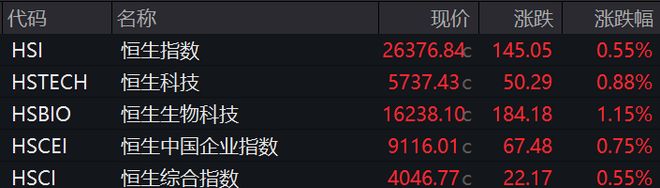
Market Overview - On January 12, the Hang Seng Index opened up by 0.55%, reaching 26,376.84 points, while the Hang Seng Tech Index rose by 0.88% to 5,737.43 points [1][2] - The Hang Seng Biotech Index increased by 1.15%, and the Hang Seng China Enterprises Index gained 0.75% [2] Sector Performance - Most industry sectors experienced gains, with notable increases in non-ferrous metals, military industry, steel, and coal sectors [2] - The "first global large model stock," Zhizhu, surged nearly 15% after its listing on the Hong Kong Stock Exchange on January 8, where it initially rose by 13% on its first day [2] Company Highlights - Zhizhu's market capitalization approached HKD 70 billion after a single-day increase exceeding 20% on January 9, with its current price at HKD 182.30, reflecting a 14.94% rise [2][3] - Major tech stocks such as Meituan, Baidu Group, and Bilibili saw increases of over 2%, while Tongcheng Travel experienced a decline of over 1% [3][5]
“全球大模型第一股”智谱大涨15%
第一财经· 2026-01-12 01:45
Market Overview - The Hang Seng Index (HSI) rose by 145.05 points, or 0.55%, closing at 26,376.84 [1] - The Hang Seng Tech Index (HSTECH) increased by 50.29 points, or 0.88%, reaching 5,737.43 [1] - The Hang Seng Biotechnology Index (HSBIO) saw a rise of 184.18 points, or 1.15%, closing at 16,238.10 [1] - The Hang Seng China Enterprises Index (HSCEI) gained 67.48 points, or 0.75%, ending at 9,116.01 [1] - The Hang Seng Composite Index (HSCI) increased by 22.17 points, or 0.55%, to close at 4,046.77 [1] - Most industry sectors experienced gains, with notable increases in metals, military, steel, and coal sectors [1] Company Highlights - Zhipu AI, referred to as the "first global large model stock," surged nearly 15% on its debut, with a first-day increase of 13% on January 8 and a further rise exceeding 20% on January 9, bringing its market capitalization close to 70 billion HKD [1] - Zhipu AI's stock price reached 182.30 HKD, reflecting a 14.94% increase, with a market value of 180.2 billion HKD and a price-to-earnings ratio of -40.7 [2] - Other tech stocks such as Meituan, Baidu Group, and Bilibili saw increases of over 2%, while Tongcheng Travel experienced a decline of over 1% [2][4]

700亿“全球大模型第一股”,IPO破局
Sou Hu Cai Jing· 2026-01-12 00:37
Core Viewpoint - The AI industry has entered a realization phase, with the competition among large model companies intensifying as they shift focus from scale to profitability [1] Company Overview - Zhiyu, established in 2019, specializes in foundational model development and has created a comprehensive model matrix covering language, code, multimodal, and intelligent agents, adapting to over 40 domestic chip types [3] - Zhiyu aims for AGI from its inception, distinguishing itself from competitors, and ranks first among independent general-purpose large model developers in China and second among all general-purpose large model developers globally based on projected 2024 revenue [4] Financial Performance - Zhiyu has begun to focus on profitability, launching a MaaS strategy in 2021, with nine of the top ten internet companies in China using its GLM model, making it the only startup with significant revenue from MaaS [5] - Revenue projections show significant growth, with expected revenues of 57.4 million yuan, 124.5 million yuan, and 312.4 million yuan from 2022 to 2024, reflecting a compound annual growth rate of 130%. In the first half of 2025, revenue reached 190 million yuan, a year-on-year increase of 325% [5] Losses and Margins - Despite rapid growth, Zhiyu's losses have also increased, with net losses of 143 million yuan, 788 million yuan, and 2.956 billion yuan from 2022 to 2024, and a net loss of 2.351 billion yuan in the first half of 2025 [7] - Gross margins have shown a declining trend, with rates of 54.6%, 64.6%, and 56.3% from 2022 to 2024, and a gross margin of 50% in the first half of 2025 [7] Investment and Market Outlook - Prior to its IPO, Zhiyu completed eight funding rounds, raising over 8.3 billion yuan from notable investors including Meituan, Ant Group, Alibaba, Tencent, Sequoia China, and Hillhouse [7] - According to CITIC Securities, Zhiyu's revenue has consistently doubled over the past two years, with expectations to exceed 1 billion USD in 2025. The domestic large language model market is projected to grow 20-fold over the next six years, with enterprise demand driving a trillion yuan opportunity [7] - The IPO of Zhiyu is seen as a valuation anchor for the industry, indicating a shift from explosive growth to stability, with capital focusing more on revenue than scale [8]