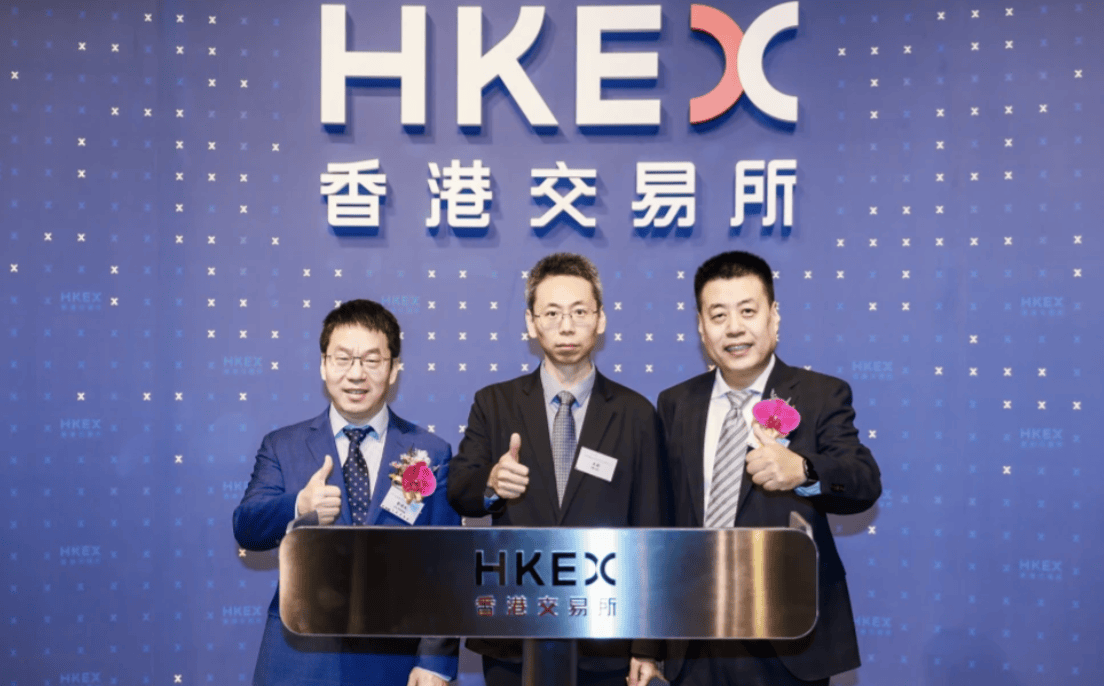
GLM大模型

Search documents
阶跃星辰被曝赴港IPO:昔日的“六小虎”告别同一张牌桌
Sou Hu Cai Jing· 2026-02-26 10:05
Core Insights - The capital landscape in the large model sector is rapidly evolving, with companies like Jieyue Xingchen preparing for an IPO to raise approximately $500 million, following a record-breaking financing round of over 5 billion RMB [3] - The industry is experiencing significant differentiation, with companies like Zhipu AI and MiniMax successfully listing on the Hong Kong Stock Exchange, while others like Lingyi Wanshu and Baichuan Intelligence are shifting focus to more practical business models [5][6] - The competitive dynamics have shifted from a focus on model capabilities to a more brutal "ecological positioning battle," as companies adapt to the harsh realities of high operational costs and market competition [5][9] Company Strategies - Zhipu AI has chosen to focus on enterprise services, targeting large clients such as banks and government entities, thereby avoiding direct competition with tech giants in the consumer market [11] - MiniMax is betting on the overseas consumer market, aiming to differentiate itself with lightweight models and engaging user experiences, while facing challenges in maintaining user retention and profitability [12][14] - Yuezhianmian is concentrating on technological advancements in the domestic market, developing competitive models like K2 to carve out a niche despite the competitive pressures from larger players [16] - Jieyue Xingchen is pursuing a hybrid model that integrates AI capabilities into physical devices, aiming to become a core component in smart hardware, thus linking its success to the growth of the hardware industry [16][18] Industry Outlook - The future landscape of the large model industry is expected to resemble a "pyramid structure," with a few dominant players at the top, specialized vertical players in the middle, and a vibrant ecosystem of applications at the base [22] - The complex competitive relationships may replace simple confrontations, with top players potentially launching their own vertical applications, leading to alliances among different vertical players to counteract giants [24] - The emergence of new technological paradigms could disrupt existing ecological positions, leaving the future of the industry uncertain [25]


36氪精选:中国大模型第一股「智谱」,到底是谁?
日经中文网· 2026-02-14 03:31
Core Viewpoint - The listing of Zhipu marks a significant milestone for China's AI industry, being recognized as the first stock of a large model company in the country, reflecting the culmination of three years of anticipation in the sector [6][11]. Company Background - Zhipu was founded in June 2019 by a team from Tsinghua University's Computer Science Department, focusing on natural language processing (NLP) and knowledge graphs, and secured 40 million in angel funding in its founding year [7][8]. - The company made a pivotal decision to develop its own architecture, creating the General Language Model (GLM) instead of following the prevalent GPT and BERT paths, which led to the development of GLM-130B, a bilingual model with a scale of hundreds of billions of parameters [8][9]. Product Development and Market Position - Zhipu's GLM-130B was recognized as the only Asian model in a major evaluation by Stanford University in November 2022, shortly before the global surge of ChatGPT [9]. - Following the release of ChatGPT, Zhipu launched ChatGLM on March 14, 2023, which became a popular tool for developers in China, sparking a wave of interest in deploying large models [9][10]. - By the time of its listing, Zhipu's GLM model was already operational in 12,000 enterprises globally, including nine of the top ten internet companies in China, as well as sectors like government, healthcare, and education [10]. Financial Performance and Future Outlook - Despite rising revenues, Zhipu faces increasing R&D expenditures and significant losses, a common scenario among independent large model companies in Silicon Valley [11]. - The company secured over 2.5 billion RMB in funding in 2023, indicating strong investor interest and support, with a diverse group of investors joining its funding rounds [11]. - The listing of Zhipu is seen as a "coming of age" for China's AI sector, but it also brings the challenge of meeting market expectations and scrutiny in the future [11][12].
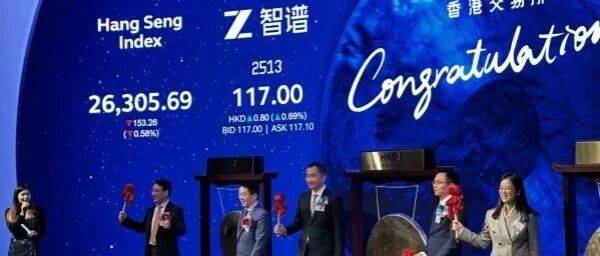
7个月5个人工智能IPO 启明创投:投资AI是未来二十年中国投资最大的确定性 | 机构动态
Sou Hu Cai Jing· 2026-01-29 04:20
Core Insights - Qiming Venture Partners has achieved significant success in the AI sector, with three IPOs occurring within a short span from late 2025 to early 2026, and a total of five IPOs in the past seven months, marking a concentrated harvest period after over a decade of strategic investment [2][3] Investment Strategy - Since 2013, Qiming Venture Partners has invested over 12 billion RMB in more than 100 projects within the AI sector, covering the entire industry chain from infrastructure to application [3] - The firm has strategically positioned itself to capture key technological turning points, investing early in companies like CloudWalk, Megvii, and others, which have become benchmarks in the industry [3][4] Notable IPOs - CloudWalk, which successfully went public on the Hong Kong Stock Exchange in June 2025, exemplifies the firm's long-term investment strategy, having received multiple rounds of funding from Qiming since its early stages [4][5] - Wall Street's first GPU stock, Biren Technology, also went public in January 2026, with Qiming as a founding investor, showcasing the firm's commitment to supporting companies from inception [4][5] Market Outlook - Qiming's founder, Kuang Ziping, believes that investing in AI represents the greatest certainty for the next 20 years, driven by a strong belief in technological transformation and the firm's established presence in the AI landscape [2][10] - The firm anticipates a significant increase in AI applications as costs decrease, predicting a surge in native AI applications by 2026, which will further accelerate the industry [10][11] Investment Philosophy - Qiming's investment philosophy, termed "half a step ahead," emphasizes the importance of timing in identifying technological and market inflection points, allowing the firm to make informed investment decisions before widespread market consensus [7][8] - The firm has consistently demonstrated a commitment to supporting entrepreneurs through various stages of development, reflecting a deep belief in the potential of AI technologies [9] Future Focus - Qiming is shifting its focus towards application layers of AI, anticipating a diverse range of applications and platforms to emerge, particularly in sectors like healthcare and education [11] - The firm aims to play a significant role in the transformation of industries through AI, emphasizing the importance of Chinese innovators in the global AI landscape [11]

7个月5个人工智能IPO,启明创投:投资AI是未来二十年中国投资最大的确定性
创业邦· 2026-01-29 03:54
Core Viewpoint - The article emphasizes that the wave of artificial intelligence (AI) is transforming industries globally, with early-stage investments playing a crucial role in this transition. It highlights the success of Qiming Venture Partners in the AI sector, marking a significant return on investment after over a decade of strategic positioning [2][4]. Investment Achievements - Qiming Venture Partners has invested over 12 billion RMB in more than 100 projects in the AI sector since 2013, including nearly 30 companies at the intersection of healthcare and AI [4]. - The firm has successfully captured key opportunities in various AI domains, including speech recognition and autonomous driving, with notable investments in companies like Yunzhisheng and WeRide [4][6]. IPO Success - In a short span from late 2025 to early 2026, Qiming Venture Partners celebrated three IPOs in the AI field, including Yunzhisheng and Biran Technology, marking a concentrated harvest period after years of investment [2][6]. - The firm has been a significant early investor in companies like Biran Technology, which became the first GPU stock on the Hong Kong Stock Exchange, and Zhipu AI, which saw its market value soar to over 100 billion HKD shortly after its IPO [6][7]. Investment Philosophy - Qiming Venture Partners operates on a clear investment philosophy of being "half a step fast," allowing them to identify and invest in technologies before they become mainstream [11][12]. - The firm believes that the most valuable investment opportunities exist between the technological breakthrough point and the market explosion point, requiring a deep understanding of both technology and market dynamics [11][12]. Future Outlook - The firm maintains a strong belief that AI will be the largest certainty in investment over the next 20 years, asserting that the current discussions around an "AI bubble" do not reflect the reality of the Chinese AI market [14][15]. - Qiming Venture Partners is shifting its focus towards application layers in AI, anticipating a surge in native applications and super platforms that will significantly impact various industries, particularly healthcare [15].

最近,启明创投拿下5个人工智能IPO
投资界· 2026-01-29 02:37
Core Viewpoint - The article highlights the significant achievements of Qiming Venture Partners in the AI sector, showcasing their strategic investments and successful IPOs of AI companies, indicating a robust investment landscape in China's AI industry [2][12]. Investment Achievements - Qiming Venture Partners has successfully invested in over 100 AI projects, with a total investment amount of approximately 12 billion RMB, making it one of the most active investment firms in the AI sector in China and Asia [8]. - In the past 12 months, Qiming has seen five AI companies go public, including notable firms like Cloudwalk Technology and Wall Street AI, marking a significant milestone in their investment journey [3][4]. Strategic Investment Approach - The firm has adopted a systematic investment strategy that spans the entire AI industry chain, from foundational technologies like chips and large models to applications in robotics and life sciences [8][9]. - Qiming's investment philosophy emphasizes the belief that AI will bring transformative benefits across various industries, particularly in healthcare, where they have invested in nearly 30 companies [9][12]. Long-term Commitment - Qiming Venture Partners has demonstrated a long-term commitment to its portfolio companies, providing support from early-stage investments to IPOs, as seen in their relationship with companies like Wall Street AI and Cloudwalk Technology [5][7]. - The firm’s investment in AI began in 2013, aligning with the early stages of the deep learning wave, and has continued to evolve with the industry's advancements [6][10]. Market Outlook - The article notes a consensus among various sectors that AI presents unprecedented opportunities, with China's AI core industry exceeding 900 billion RMB and the number of AI companies surpassing 5,300 by 2025 [12][13]. - Qiming's leadership believes that the next 20 years will see AI as the most certain investment opportunity in China, driven by a large market and competitive talent pool [12][13].

极豆科技、智谱、中国银联三方联合发布座舱原生支付Agent
Zheng Quan Ri Bao Wang· 2026-01-28 10:47
Core Viewpoint - The launch of the "Native Payment Agent for Cabin" by Shanghai Jidou Technology, Beijing Zhipu Huazhang Technology, and China UnionPay represents a significant advancement in integrating payment capabilities into smart vehicle ecosystems, enhancing user experience during travel [1][3]. Group 1: Product Overview - The Native Payment Agent is designed as a core component of the cabin service chain, moving beyond traditional payment integration to create a seamless travel experience [1]. - The product leverages Jidou Technology's self-developed cabin intelligence architecture, enabling collaborative operations from service triggering to payment completion based on user intent and vehicle status [1][2]. Group 2: Technical Framework - The system employs a "model base + scenario intelligence" layered architecture, with Zhipu providing the GLM large model as a stable cognitive and reasoning foundation [2]. - Jidou Technology has developed an intelligent agent capability system tailored for in-vehicle environments, including modules for intent parsing, task decomposition, service orchestration, and execution control [2]. Group 3: Payment Capabilities - China UnionPay contributes the Model Context Protocol (MCP) payment service, allowing the Native Payment Agent to interface with various payment scenarios while adhering to financial regulations and security standards [3]. - The system can operate smoothly in high-frequency travel scenarios, reducing user operational burden during in-vehicle payments and enhancing overall travel experience continuity [3]. Group 4: Future Directions - Jidou Technology aims to further enhance the intelligent agent capability system and collaborate with Zhipu, China UnionPay, and other ecosystem partners to promote the product's application across more vehicle models [4]. - The company is also exploring partnerships with local businesses to accelerate the evolution of smart cabins into comprehensive travel and lifestyle service platforms [4].
智谱上市遇冷Minimax狂欢,港股资本不买账,藏AI定价核心密码
Sou Hu Cai Jing· 2026-01-14 10:10
Core Insights - The contrasting performances of Minimax and Zhipu AI on their respective IPOs highlight the evolving expectations of capital markets towards AI companies, with a focus on profitability and cash flow rather than just growth narratives [1][10][18] Financial Performance - Zhipu AI's revenue surged by over 300%, from 57.41 million yuan in 2022 to 312 million yuan in 2024, with a significant increase to 191 million yuan in the first half of 2025 [2] - Despite the revenue growth, Zhipu AI reported a net loss of 1.752 billion yuan in the first half of 2025, which is 9.17 times its revenue for that period [2] - The company's R&D expenses, particularly for computing services, reached 1.145 billion yuan in the first half of 2025, six times its revenue [2] Business Structure - 85% of Zhipu AI's revenue comes from localized deployments, which involve installing large-scale models on private servers for major banks and state-owned enterprises, yielding high customer prices and a gross margin of 60% [4] - The remaining 15% of revenue is from cloud deployment, which has seen a drastic decline in gross margin from 76.1% in 2022 to 3.4% in 2024, and negative margins in the first half of 2025 due to price competition [6] Market Reception - Zhipu AI's IPO on January 8, 2026, was met with lukewarm reception, with its stock price initially dropping below the issue price before closing up 13.17%, while Minimax saw a 109.09% increase on its debut [7][10] - The difference in market reception is attributed to the varying preferences of investors, with a strong inclination towards AI companies that demonstrate clear paths to profitability and robust cash flows [10][12] Strategic Focus - Zhipu AI's strategy appears to prioritize user acquisition and ecosystem penetration over immediate profitability, viewing current losses as a necessary investment for future market positioning [15] - The company must navigate two critical challenges: maintaining technological leadership in a rapidly evolving field and achieving cost reductions through technological optimization and economies of scale [17]
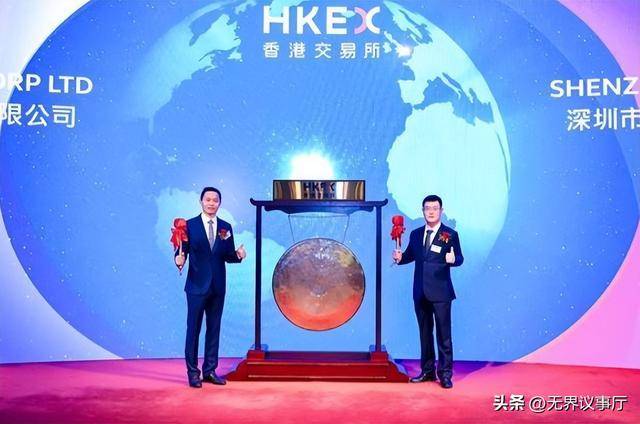
智谱大涨31.40%,与滴滴达成战略合作
Zheng Quan Shi Bao Wang· 2026-01-12 14:33
Group 1 - The core viewpoint of the news is that Zhiyun (02513.HK) has formed a strategic partnership with Didi to explore key technologies in General Artificial Intelligence (AGI) and their applications in the transportation sector [1] - Didi has been increasing its investment in large models and intelligent agents, leading to innovations such as AI travel assistants and business travel assistants [1] - Zhiyun has a strong foundation in large model architecture, training paradigms, and intelligent agent technology, and the partnership aims to enhance the deployment of agents in complex business scenarios [1] Group 2 - Zhiyun was established in 2019 and focuses on developing advanced general large models, launching China's first proprietary pre-trained large model framework, GLM, in 2021 [2] - The company has achieved significant growth in its cloud-based Model as a Service (MaaS) and subscription business, with over 2.9 million users on its API platform [2] - According to Frost & Sullivan, Zhiyun ranks first among independent general large model developers in China and second overall, with a market share of 6.6% as of 2024 [2] Group 3 - Zhiyun's R&D investments from 2022 to 2024 are projected to be 84 million yuan, 529 million yuan, and 2.195 billion yuan, with 1.595 billion yuan allocated for the first half of 2025 [3] - The company has a research team of 657 members, with R&D personnel making up 74% of its workforce [3] - On January 12, Zhiyun's stock surged by 31.40%, closing at 208.4 HKD per share, with a market capitalization of 91.744 billion HKD, reflecting a cumulative increase of 79.35% since its IPO [3]
上市即亏损53亿!智谱CEO揭秘,我们的对手不是大厂是AGI本身
Sou Hu Cai Jing· 2026-01-12 13:50
Core Viewpoint - The listing of Zhipu, referred to as the "first global large model stock," marks a significant moment in the AI industry, highlighting both the potential and challenges faced by AI companies in achieving profitability and sustainable growth [1][3][25]. Company Overview - Zhipu officially listed on the Hong Kong Stock Exchange with an opening price of 124.1 HKD, reflecting a 6.88% increase from its issue price [3]. - Founded in 2019 from Tsinghua University's Knowledge Engineering Laboratory, Zhipu has raised a total of 8.3 billion RMB from various investors, including major firms like Hillhouse Capital and Tencent [5]. - Despite significant funding, Zhipu reported a loss of 2.958 billion RMB in 2024 and an additional 2.358 billion RMB in the first half of 2025, accumulating losses exceeding 5.3 billion RMB since its inception [5]. Financial Performance - Revenue has been increasing, with a compound annual growth rate (CAGR) of 130% from 2022 to 2024, and a 325% year-on-year increase in revenue to 191 million RMB in the first half of 2025 [7]. - The revenue growth, however, is minimal compared to the substantial losses, indicating a significant imbalance between income and expenditure [7]. Team Structure and Strategy - Zhipu operates under a collective decision-making model led by three key figures: Chief Scientist Tang Jie, who developed the GLM model framework, Zhang Peng, who oversees commercialization, and Liu Debing, responsible for technical implementation [9]. - The company has strategically focused on B2B applications rather than consumer-facing products, with 84.8% of its revenue in the first half of 2025 coming from local deployment orders [11]. Market Position and Competition - The competitive landscape for large model companies has narrowed, with only a few players like Zhipu, Moonlight Dark Side, and MiniMax remaining prominent [16]. - Zhipu plans to raise 4.3 billion HKD from its IPO, with 70% allocated to the development of general AI models, including the upcoming GLM-5 model [18]. Future Outlook - The company aims to target emerging markets, particularly along the Belt and Road Initiative and Southeast Asia, to establish an international collaborative alliance for autonomous large models [20]. - Challenges include resource constraints, such as the availability of A100 chips and the high cost of talent, with senior algorithm engineers commanding salaries around 2 million RMB [21]. - The CEO's statement about racing against time rather than competitors reflects the urgency in the AI sector, as the anticipated "explosion year" for AI replacement approaches in 2026 [23]. Industry Implications - The listing of Zhipu signifies a new phase in the capital dynamics of the AI industry, revealing the tension between technological aspirations and commercial realities [25]. - The ongoing challenge for AI entrepreneurs is to balance idealism with practical business strategies, as the industry moves towards a more sustainable model [27].
700亿“全球大模型第一股”,IPO破局
Sou Hu Cai Jing· 2026-01-12 00:37
Core Viewpoint - The AI industry has entered a realization phase, with the competition among large model companies intensifying as they shift focus from scale to profitability [1] Company Overview - Zhiyu, established in 2019, specializes in foundational model development and has created a comprehensive model matrix covering language, code, multimodal, and intelligent agents, adapting to over 40 domestic chip types [3] - Zhiyu aims for AGI from its inception, distinguishing itself from competitors, and ranks first among independent general-purpose large model developers in China and second among all general-purpose large model developers globally based on projected 2024 revenue [4] Financial Performance - Zhiyu has begun to focus on profitability, launching a MaaS strategy in 2021, with nine of the top ten internet companies in China using its GLM model, making it the only startup with significant revenue from MaaS [5] - Revenue projections show significant growth, with expected revenues of 57.4 million yuan, 124.5 million yuan, and 312.4 million yuan from 2022 to 2024, reflecting a compound annual growth rate of 130%. In the first half of 2025, revenue reached 190 million yuan, a year-on-year increase of 325% [5] Losses and Margins - Despite rapid growth, Zhiyu's losses have also increased, with net losses of 143 million yuan, 788 million yuan, and 2.956 billion yuan from 2022 to 2024, and a net loss of 2.351 billion yuan in the first half of 2025 [7] - Gross margins have shown a declining trend, with rates of 54.6%, 64.6%, and 56.3% from 2022 to 2024, and a gross margin of 50% in the first half of 2025 [7] Investment and Market Outlook - Prior to its IPO, Zhiyu completed eight funding rounds, raising over 8.3 billion yuan from notable investors including Meituan, Ant Group, Alibaba, Tencent, Sequoia China, and Hillhouse [7] - According to CITIC Securities, Zhiyu's revenue has consistently doubled over the past two years, with expectations to exceed 1 billion USD in 2025. The domestic large language model market is projected to grow 20-fold over the next six years, with enterprise demand driving a trillion yuan opportunity [7] - The IPO of Zhiyu is seen as a valuation anchor for the industry, indicating a shift from explosive growth to stability, with capital focusing more on revenue than scale [8]