文博

Search documents
北京文博发展智库全面扩容,设置中轴线专项委员会
Xin Jing Bao· 2025-11-11 12:30
Core Insights - The Beijing Cultural Relics Development Think Tank held its reorganization meeting and seminar on November 10, 2023, at the Confucius Temple and Guozijian Museum [1] Group 1: Think Tank Formation and Structure - The Beijing Cultural Relics Development Think Tank was officially established in July 2022 by the Beijing Municipal Bureau of Cultural Heritage [1] - The first session of the think tank included 65 experts, while the current session has expanded to 151 experts, incorporating professionals from the National Cultural Heritage Administration, Tsinghua University, Peking University, and major museums [1] - The expert group is organized into four specialized committees: cultural relics protection, archaeology, museums, and a comprehensive committee, with an additional special committee for the central axis as needed [1] Group 2: Achievements and Contributions - Since its establishment, the think tank has organized over 20 specialized seminars to enhance the scientific and professional nature of decision-making related to museum city construction, cultural relics technology innovation, and the planning of the 870th anniversary of Jinzhongdu [1] - The think tank has provided consulting advice over 190 times on topics such as the evaluation of the 14th Five-Year Plan, international cultural relics exchange cooperation, and the design of central axis signage [1]
人工智能焕新文化遗产保护传承利用 全国行业前沿年会盐城举办
Yang Zi Wan Bao Wang· 2025-10-31 03:40
Core Insights - The conference focused on the integration of artificial intelligence (AI) with cultural heritage protection, aiming to enhance the preservation, transmission, and utilization of cultural relics [2][6] - The event gathered over 60 representatives from various cultural and heritage organizations, emphasizing the importance of digital transformation in the cultural sector [1][2] Group 1: Opportunities and Innovations - The Vice Mayor of Yancheng highlighted the need to leverage AI for cultural heritage, promoting digital collection, intelligent management, and immersive displays to revitalize cultural narratives [2] - Jiangsu Province has successfully utilized digital methods to innovate cultural relic displays, attracting over 2.1 million visitors through initiatives like "Exhibitions at Your Doorstep" [2] - The President of the Chinese Society of Cultural Relics emphasized the urgency of protecting and transmitting China's rich cultural resources, noting significant advancements in AI applications for cultural heritage [2][3] Group 2: Technological Applications - The Director of the Chinese Cultural Relics Information Center outlined plans for enhancing information technology capabilities across the industry to support high-quality development in cultural heritage [3] - Various speakers presented case studies on the use of AI and GIS for dynamic monitoring and scientific decision-making in cultural resource management [3][4] - The Yancheng Museum showcased its digital transformation efforts, including immersive experiences and AR-guided tours, which have garnered over 40 million online interactions and 2.56 million visitors [3][6] Group 3: Challenges and Frameworks - A researcher from Nanjing Museum discussed the limitations of AI in museum applications and proposed a "layered governance" framework for controlled implementation [5] - The Director of the Sichuan Cultural Exchange and Information Center emphasized the need for a data ecosystem that integrates protection, development, utilization, and feedback [5] - The Deputy Director of the Yuanmingyuan Management Office presented innovative practices in virtual restoration and interactive experiences to narrate cultural stories [5] Group 4: Future Directions - The conference concluded with a focus on the importance of digital protection, intelligent research, and innovative utilization of cultural heritage as a mission for the future [6] - The Yancheng Museum aims to continue building a digital resource library for Chinese salt culture, deepening the integration of technology and culture [3][6]
希腊拟强化安保措施防范文物盗窃
Xin Hua Wang· 2025-10-31 03:01
Core Viewpoint - The Greek government plans to enhance security measures at museums and archaeological sites nationwide in response to a recent robbery at the Louvre Museum in Paris, aiming to protect cultural heritage and artifacts [1] Group 1: Security Measures - The Greek Ministry of Culture and the Ministry of Citizen Protection are collaborating to develop a security plan that includes deploying approximately 300 special security personnel dedicated to the safety of cultural institutions, with the new guards expected to start in the first quarter of 2026 [1] - Currently, security responsibilities at these institutions are primarily handled by civil staff from the Ministry of Culture [1] Group 2: Risk Assessment - The Ministry of Culture will conduct a security assessment to identify museums housing rare artifacts and artworks as high-risk locations for enhanced protection [1] Group 3: Context of Recent Events - The robbery at the Louvre Museum involved the theft of several pieces of jewelry, which remain missing [1] - Greece has a history of art theft, including notable incidents in 2012 when works by Picasso and other masters were stolen from the National Gallery in Athens, and a theft occurred at the Archaeological Museum of Ancient Olympia in the same year [1]
天一阁,可以这么“逛”
Ren Min Ri Bao· 2025-10-25 22:12
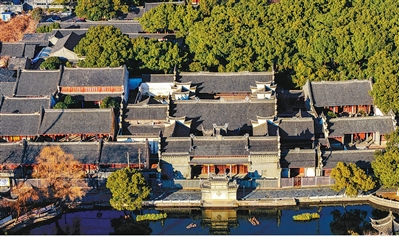
Core Insights - The Tianyi Pavilion in Ningbo, Asia's oldest private library, is revitalizing its heritage through advanced restoration techniques and digital technology [1][2][3] Group 1: Restoration Efforts - A Ming Dynasty rare book, "Beiqu Lian Zhu," underwent extensive restoration led by national intangible cultural heritage inheritor Wang Jinyu, resulting in a significant improvement in its condition [1] - The restoration of the Qin Clan Ancestral Hall, a key cultural site, received the "Craftsmanship Cup" for heritage protection in Zhejiang Province, showcasing meticulous efforts in preserving traditional craftsmanship [3][5] Group 2: Digital Innovation - The Tianyi Pavilion has implemented digital twin technology, allowing virtual tours and exhibitions, enhancing accessibility for global audiences [2] - A successful ancient text recognition system was developed, achieving over 95% accuracy, converting 90,000 pages of ancient texts into digital formats [2] Group 3: Cultural Engagement - The pavilion has hosted 110 exhibitions in various fields over the past five years, promoting cultural heritage through immersive experiences [2] - The restored Qin Clan Ancestral Hall now serves as a living example for research on traditional Jiangnan architecture, integrating modern activities with historical preservation [5]

文博日历丨南越国工匠干活不留名?那就留个“自拍”
Yang Shi Xin Wen· 2025-10-25 02:04
Core Insights - The article discusses the historical origins of facial recognition, tracing it back over 2000 years to the Southern Yue Kingdom, where a piece of pottery with human faces was discovered, indicating early forms of identity verification [6][19]. Group 1: Historical Context - Archaeological findings from the Southern Yue Kingdom reveal a pottery shard with unique human face designs, suggesting that early forms of "selfie" or identity representation existed [6]. - The hairstyle depicted on the pottery, known as "椎髻" (zhuī jì), was popular among workers from Hainan Island, indicating the cultural exchange and migration patterns of that era [12][15]. - The practice of marking products with the craftsman's name for accountability, known as "物勒工名," was implemented during the Spring and Autumn period and continued into the Qin and Han dynasties, serving as an ancient product traceability system [17][19]. Group 2: Cultural Significance - The pottery not only reflects individual identity but also the broader societal practices of the Southern Yue Kingdom, which mirrored the central plains' governance systems [19]. - The discovery of various pottery inscriptions, including names and roles, highlights the organized structure of labor and production in ancient China, akin to modern-day identity verification systems [20][25]. - The article concludes by emphasizing that the concept of "real-name system" in ancient times has left a lasting legacy, showcasing the deep-rooted traditions of craftsmanship and accountability in Chinese manufacturing [31].

新华网与中国文物交流中心、苏州高新区签署合作协议 共建文博行业发展新生态
Xin Hua Wang· 2025-10-17 15:28
Core Points - The collaboration between Xinhua News, the China Cultural Relics Exchange Center, and Suzhou High-tech Zone aims to establish a "Digital Cultural Heritage Resource Copyright Service Platform" and initiate the "China Museum 'Hundred Cities, Hundred Museums' Project" to promote the digital dissemination and creative transformation of traditional Chinese culture [1][14][20] Group 1: Industry Development - The cultural heritage sector has experienced rapid growth, with the number of registered museums in China reaching 7,046 by 2024, attracting nearly 1.49 billion visitors annually [3] - During the National Day holiday in 2025, museums across the country received approximately 86.3 million visitors, an increase of 11.42 million compared to the same period in 2024 [3] - The Ministry of Commerce and nine other departments have issued policies to encourage cultural heritage institutions to extend operating hours and innovate exhibition methods, accelerating the transformation of cultural resources [3] Group 2: Project Details - The "Digital Cultural Heritage Resource Copyright Service Platform" will serve as a national-level hub for digital cultural heritage resources, providing integrated services for copyright confirmation, authorization transactions, and digital display [14] - The platform aims to revitalize cultural relics through digital technology and a comprehensive copyright service system, promoting the transformation of cultural heritage IP into new drivers for cultural industry development [14][15] - The "China Museum 'Hundred Cities, Hundred Museums' Project" seeks to create a cross-regional digital ecosystem for cultural heritage, enhancing the protection, transmission, and value appreciation of culture [15][17] Group 3: Strategic Goals - The collaboration represents a significant step in responding to national strategies for cultural digitalization and aims to create a new ecosystem integrating cultural heritage, cultural creativity, and cultural tourism [20] - The initiative will also contribute to the construction of the "Suzhou International Museum Academy," fostering high-quality talent development in the cultural heritage sector [20]



新华时评|守护一脉文渊 续写百年辉煌
Xin Hua She· 2025-10-10 10:52
Core Viewpoint - The Palace Museum, celebrating its 100th anniversary, represents a significant milestone in China's cultural heritage, showcasing the evolution of Chinese civilization and its commitment to cultural preservation and innovation [1][2][3]. Group 1: Historical Significance - The Palace Museum houses 1.95 million cultural relics, reflecting thousands of years of Chinese history and culture [1]. - It has witnessed pivotal moments in Chinese history, including the Anti-Japanese War and the founding of the People's Republic of China, symbolizing the nation's journey towards strength and prosperity [1]. Group 2: Cultural Heritage and Preservation - Emphasis on the importance of protecting the authenticity, integrity, and continuity of cultural relics within the museum [2]. - The museum aims to deepen research and interpretation of its artifacts, highlighting the philosophical and humanistic values embedded in them [2]. Group 3: Modern Integration and Innovation - The Palace Museum is evolving into a "living" museum that integrates traditional and modern elements, enhancing its exhibition capabilities and introducing innovative display formats [3]. - There is a focus on promoting cultural heritage in contemporary life while ensuring the safety of the artifacts [2].
“潮”出消费新活力!文化IP跨界创新赋能传统文化全龄段“活态传承”
Yang Shi Wang· 2025-10-10 02:55
Core Insights - The article highlights the increasing popularity of museums as tourist destinations, driven by innovative exhibitions and cultural products that connect history with modern consumer needs [1][6][10] Group 1: Museum Innovations - Various museums are collaborating with social forces to develop cultural and digital products, transforming dormant historical artifacts into engaging experiences [1][6] - The Wu Yue Cultural Museum is actively involved in creating modern cultural products based on its valuable collections, focusing on storytelling and design [1][3][4] Group 2: Visitor Engagement - Cultural products have become a vital link between museums and the public, enhancing visitors' understanding of history while fostering cultural memory [6][10] - The Sanxingdui Museum has introduced interactive experiences that allow visitors to engage with ancient artifacts and cultural narratives [7][10] Group 3: Enhanced Visitor Experience - Museums are implementing data-driven visitor management systems to ensure a comfortable and high-quality experience during peak times [11][14] - Extended opening hours and diverse cultural offerings are being introduced to meet the growing demand for public cultural services [14][15] Group 4: Cultural IP Development - Chengdu Museum is leveraging its collections to create popular cultural IPs, such as the "Fat Tiger," which resonates with contemporary audiences [17][19][20] - The museum is diversifying its product offerings to cater to different age groups, ensuring a broad appeal [22][24]
陕西:人文魅力与经济活力相辉映 暖心服务与有力保障共护航
Shan Xi Ri Bao· 2025-10-09 22:41
Group 1: Tourism and Cultural Activities - Xi'an received over 20 million visitors during the National Day and Mid-Autumn Festival holiday, with total tourist spending reaching 19.96 billion yuan [2] - The city organized 46 major cultural activities and 395 district-level events, significantly boosting local tourism [2] - The "2025 Xi'an Mid-Autumn Moon Feast" live-streamed event attracted over 11.4 million online viewers, highlighting the integration of traditional culture with modern technology [2] - Key tourist performances saw a 7% increase in attendance, with specific shows like "Unbounded: Chang'an" and "Brave Qin" experiencing growth rates of 68.3% and 51% respectively [2] Group 2: Transportation and Infrastructure - Xi'an Xianyang International Airport recorded a historic high of 161,000 passengers on a single day, with a total of 1.22 million passengers transported during the holiday [6] - The airport handled 8,053 flights, marking a 1.2% increase in flight operations compared to the previous year [6] - The city's metro system transported nearly 39 million passengers over the holiday period, averaging 4.3 million daily [7] Group 3: Safety and Emergency Management - The provincial emergency management system maintained a stable safety situation during the holiday, with 21 expert teams deployed to assist in safety inspections [9] - A total of 7,340 safety hazards were identified and addressed across various sectors, including mining and hazardous materials [9] - The police deployed over 50,000 personnel for security checks at tourist sites and transportation hubs, ensuring visitor safety [11]
故宫结缘我之幸(人文茶座)
Ren Min Ri Bao· 2025-10-05 21:52
Core Viewpoint - The article reflects on the significance of the Palace Museum (Forbidden City) in Chinese culture and history, marking its 100th anniversary and highlighting the author's deep personal connection and academic contributions to the study of the museum and its artifacts [2][3][6]. Group 1: Personal Connection to the Palace Museum - The author recounts their childhood experiences visiting the Palace Museum, which left a lasting impression and fulfilled a lifelong dream [2]. - The proximity of the author's home and school to the museum facilitated frequent visits, leading to a deep familiarity with its collections and archives [2]. - The author estimates having visited the museum over 1,000 times, indicating a profound personal and academic relationship with the institution [2]. Group 2: Academic Contributions and Collaborations - The author has engaged in extensive research on Ming and Qing history, contributing to the establishment of academic societies related to the Palace Museum and publishing scholarly works [3][4]. - Significant academic exchanges have occurred between the Palace Museum and institutions in Taiwan, including the collaboration on the publication of historical documents [5]. - The author has conducted field studies within the museum, measuring various historical artifacts and spaces, which have contributed to a deeper understanding of Qing dynasty practices [3][4]. Group 3: Cultural Significance of the Palace Museum - The Palace Museum is described as the largest classical palace complex in the world, representing a rich collection of Chinese cultural heritage and artifacts [6]. - The concept of "Greater Palace Museum" is introduced, suggesting that the museum's significance extends beyond its immediate location to include related historical sites across China [4]. - The author emphasizes the Palace Museum as a testament to China's historical greatness and cultural confidence, reflecting the wisdom and achievements of the Chinese people [6].