
货币金融服务

Search documents
美国金库被搬空?多国集体抛弃美元选黄金,美元霸权真保不住了?
Sou Hu Cai Jing· 2026-01-16 03:55
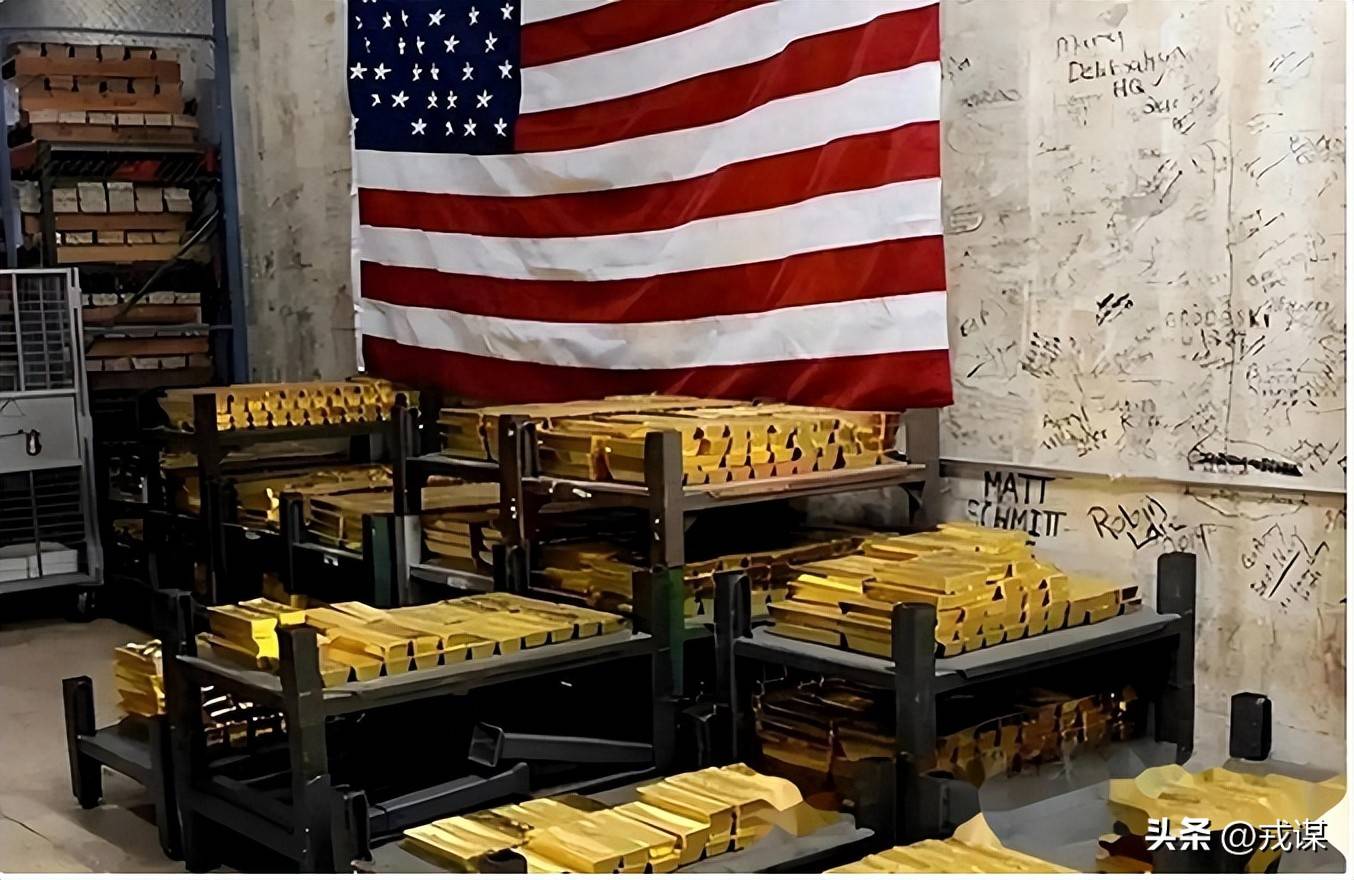
Group 1 - The core viewpoint of the article highlights the surge in gold prices, the outflow of gold from the U.S., the weakening of dollar hegemony, and the push for de-dollarization by multiple countries, alongside the Trump administration's response to these developments [3][5][11] - Gold prices in New York have surpassed previous highs, reaching $4,600 per ounce, an increase of $300 from the end of last year, which translates to nearly 2,700 RMB [3] - The U.S. non-monetary gold export value soared to $17.1 billion by October 2025, a significant increase compared to the historical monthly export range of $1 to $3 billion [3][5] Group 2 - Many countries are rapidly transporting gold out of the U.S. due to concerns over safety and value, indicating a shift towards asset diversification with gold as a preferred safe-haven asset [5][7] - The real purchasing power of the dollar is declining despite high interest rates, as rising gold and commodity prices outpace any gains from the stock market [7][9] - The dollar has depreciated by 9% against a basket of currencies in 2025, marking its worst performance in eight years, with hedge funds aggressively shorting the dollar [9][11] Group 3 - The U.S. is losing its pricing power, with only oil remaining under its control, while China has been quietly accumulating strategic resource stocks [9][12] - The U.S. government is reacting aggressively to maintain its dollar dominance, with threats directed at countries like Venezuela to prevent them from bypassing the dollar in trade [12][14] - The global monetary landscape is witnessing a dual narrative: the U.S. is engaged in fierce confrontation while other nations, particularly in the BRICS group, are pursuing gradual integration and alternative trade arrangements [16]

美元走向如何重构货币秩序?首席经济学家热议汇率与货币体系演变
Di Yi Cai Jing· 2026-01-11 08:25
Core Viewpoint - The ongoing discussion highlights the gradual de-dollarization and the emergence of a more diversified currency landscape, with the dollar facing long-term challenges while the renminbi is expected to appreciate moderately under controlled conditions [1][4]. Currency Trends - Experts believe the dollar index is in a phase of adjustment, not a unilateral decline, while the renminbi has short-term appreciation potential but cannot solve structural economic issues through significant appreciation [2][3]. - The current high debt and deficit environment in the U.S. is exerting downward pressure on the dollar, with a notable decline in the dollar index over the past year, particularly against currencies of developed economies [2][3]. - The renminbi may reach around 6.8 in the short term, especially if the dollar weakens and seasonal factors come into play, but it is expected to fluctuate around 7 in the medium term [2][3]. Future Currency System - The international monetary system is undergoing structural changes, moving towards a decentralized and more diversified currency framework, rather than a sudden decline of the dollar [4][5]. - The importance of non-fiat assets like gold and commodities is increasing globally, as fiscal pressures and rising debt levels affect all major economies [4][5]. - The renminbi's international status is closely tied to improvements in domestic economic fundamentals and asset returns, with potential for increased use in international trade settlements [5][6]. Long-term Outlook - The dollar's share in global reserves may significantly decline over the next decade, but this does not imply a rapid decline in U.S. overall strength, as its advantages in technology and capital markets continue to support its currency status [5][6]. - The international monetary system may evolve into a tri-polar structure with the dollar, euro, and renminbi coexisting, contingent on the development of offshore renminbi markets and cross-border financing mechanisms [6].
特朗普逮捕马杜罗,想阻挠人民币国际化?别急着开香槟,中国有招
Sou Hu Cai Jing· 2026-01-10 02:30
Group 1 - The core viewpoint of the article highlights the connection between Trump's actions against Maduro and the broader strategy to hinder the internationalization of the Renminbi [1][4] - The internationalization of the Renminbi has made significant progress, with its weight in the IMF's SDR basket rising to third place, and overseas holdings of Renminbi assets exceeding 10 trillion yuan, marking a four-year high [3] - Venezuela, under Maduro's leadership, has been a pioneer in promoting Renminbi internationalization and "de-dollarization," making it a target for Trump's actions [4] Group 2 - The article emphasizes that the internationalization of the Renminbi is an unstoppable trend, driven by China's status as the world's largest trading nation and the efficiency of using Renminbi for trade settlements [7] - The U.S. dollar's role as a weapon for wealth extraction has led to growing dissatisfaction among countries, making "de-dollarization" a global trend that the Renminbi internationalization aligns with [7] - China's strategic control over key minerals and materials is presented as a countermeasure against U.S. provocations, reinforcing the momentum of Renminbi internationalization [5]

建行取得资源调度记录修正方法专利
Sou Hu Cai Jing· 2026-01-09 11:47
Group 1 - China Construction Bank Corporation has obtained a patent for a method, device, equipment, and storage medium for correcting resource scheduling records, with authorization announcement number CN115564553B, and the application date is September 2022 [1] - China Construction Bank, established in 2004 and located in Beijing, primarily engages in monetary financial services, with a registered capital of approximately 26.16 billion RMB [1] - The bank has invested in 36 companies, participated in 5,000 bidding projects, holds 1,896 trademark records, and has 5,000 patent records, along with 149 administrative licenses [1] Group 2 - Jianxin Financial Technology Co., Ltd., established in 2018 and located in Shanghai, focuses on software and information technology services, with a registered capital of approximately 1.73 billion RMB [1] - The company has invested in 6 enterprises, participated in 4,257 bidding projects, holds 297 trademark records, and has 5,000 patent records, along with 10 administrative licenses [1]

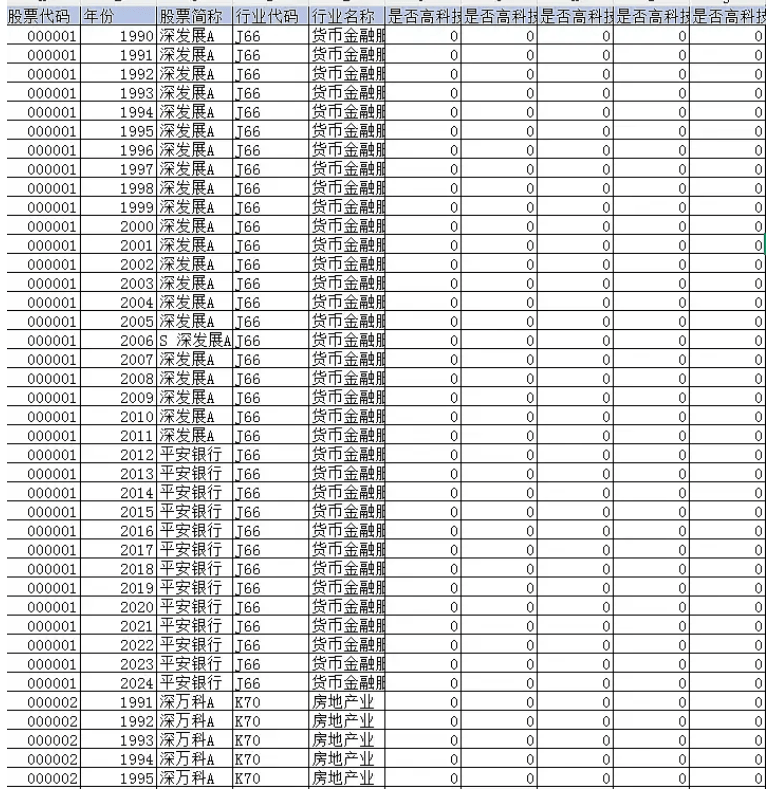
上市公司是否为高科技行业1990-2024年
Sou Hu Cai Jing· 2026-01-09 07:19
Group 1 - The high-tech industry is defined as sectors that operate at the forefront of scientific technology, utilizing advanced scientific knowledge and innovative technologies for research, production, and services [1] - The assessment of high-tech industries is based on four dimensions: technological field classification, innovation capability indicators, economic characteristics and policy orientation, and comparison of international and domestic standards [1] Group 2 - The data covers publicly listed companies from 1990 to 2024, indicating whether they belong to the high-tech industry across five different classification methods [2] - The dataset includes stock codes, years, stock names, industry codes, industry names, and multiple indicators to determine high-tech status [2][3]


中国建设银行取得交割预处理方法专利
Sou Hu Cai Jing· 2026-01-06 12:38
Group 1 - The core point of the article is that China Construction Bank has obtained a patent for a method and device related to delivery pre-processing, indicating its focus on innovation in financial technology [1] - China Construction Bank, established in 2004, is primarily engaged in monetary financial services and has a registered capital of approximately 26.16 billion RMB [1] - The bank has made investments in 36 companies, participated in 5,000 bidding projects, and holds 1,897 trademark registrations and 5,000 patents [1] Group 2 - Jianxin Financial Technology Co., Ltd., founded in 2018, focuses on software and information technology services with a registered capital of approximately 1.73 billion RMB [1] - The company has invested in 6 enterprises, participated in 4,248 bidding projects, and holds 297 trademark registrations and 5,000 patents [1]
【宏观经济】一周要闻回顾(2025年12月31日-2026年1月6日)
乘联分会· 2026-01-06 09:07
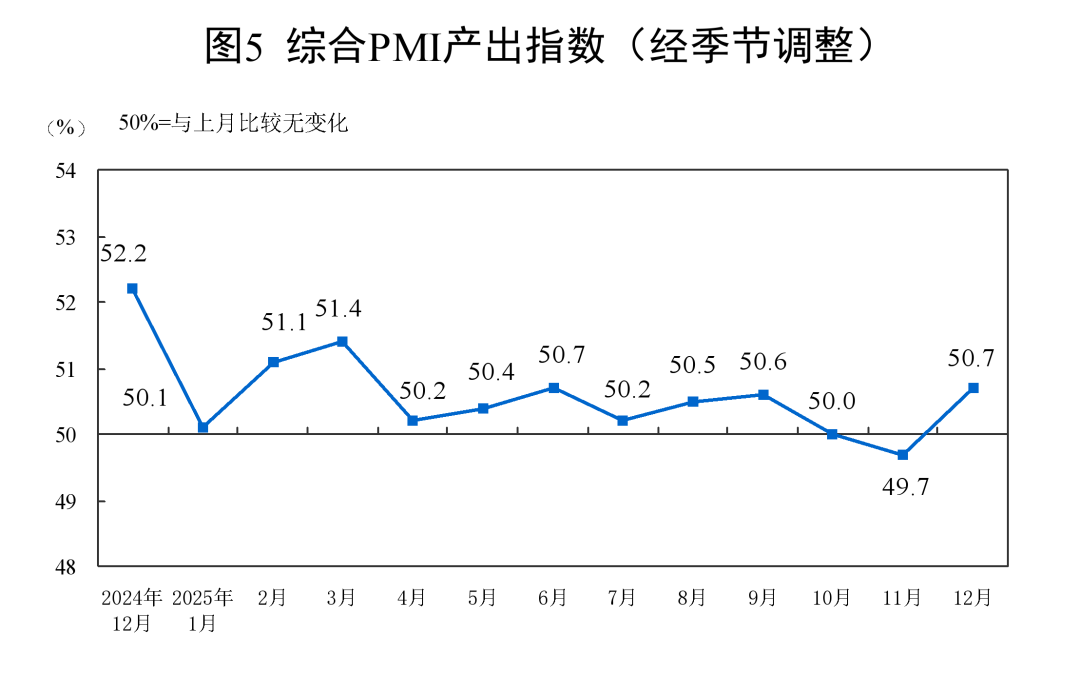
Group 1: Manufacturing PMI Overview - In December, the Manufacturing Purchasing Managers' Index (PMI) was 50.1%, an increase of 0.9 percentage points from the previous month, indicating a return to the expansion zone [3] - Large enterprises had a PMI of 50.8%, up 1.5 percentage points; medium-sized enterprises at 49.8%, up 0.9 percentage points; and small enterprises at 48.6%, down 0.5 percentage points, all below the critical point [3] - The production index was 51.7%, up 1.7 percentage points, indicating accelerated production activities; the new orders index was 50.8%, up 1.6 percentage points, showing improved market demand [5] Group 2: Non-Manufacturing PMI Overview - In December, the Non-Manufacturing Business Activity Index was 50.2%, an increase of 0.7 percentage points, returning to the expansion zone [6] - The construction industry index was 52.8%, up 3.2 percentage points; the service industry index was 49.7%, up 0.2 percentage points [6] - The new orders index was 47.3%, up 1.6 percentage points, indicating a slight recovery in market demand for non-manufacturing sectors [6] Group 3: Comprehensive PMI Output Index - The comprehensive PMI output index for December was 50.7%, an increase of 1.0 percentage points, indicating overall expansion in production and business activities [6] Group 4: Service Trade Growth - From January to November 2025, China's service trade totaled 720.24 billion yuan, a year-on-year increase of 7.1% [10] - Service exports reached 319.80 billion yuan, up 13.4%, while imports were 400.44 billion yuan, up 2.5%, resulting in a service trade deficit of 80.64 billion yuan, reduced by 27.96 billion yuan year-on-year [11] Group 5: Trade in Knowledge-Intensive Services - Knowledge-intensive service trade reached 273.06 billion yuan from January to November, a year-on-year increase of 5.6% [11] - Notably, telecommunications and information services saw growth rates of 8.3% and 4.1%, respectively [11] Group 6: Consumption and Economic Impact - In 2025, the sales of products related to the "trade-in" policy exceeded 2.6 trillion yuan, benefiting over 360 million people [14] - The retail sales of consumer goods increased by 4.0% year-on-year, with the "trade-in" policy contributing over 1 percentage point to this growth [14] - The automotive trade-in program saw over 11.5 million vehicles exchanged, with nearly 60% being new energy vehicles [14]

50.1%!重返扩张区间
Jin Rong Shi Bao· 2026-01-04 04:24
Core Viewpoint - The Purchasing Managers' Index (PMI) for December indicates a recovery in China's economic activity, with all three major indices entering the expansion zone for the first time since April [1][4]. Manufacturing Sector - The manufacturing PMI rose to 50.1%, an increase of 0.9 percentage points from the previous month, exceeding market expectations [7]. - The production index and new orders index were reported at 51.7% and 50.8%, respectively, both showing significant increases of 1.7 and 1.6 percentage points [7]. - The new export orders index increased by 1.4 percentage points to 49.0%, indicating a recovery in domestic demand [7]. - Large enterprises' PMI returned to the expansion zone at 50.8%, while medium-sized enterprises' PMI rose to 49.8%, and small enterprises' PMI fell to 48.6% [7]. Key Industries - High-tech manufacturing PMI reached 52.5%, up 2.4 percentage points, indicating positive growth trends [8]. - Equipment manufacturing and consumer goods industries both reported PMIs of 50.4%, entering the expansion zone [8]. - The construction industry PMI significantly increased to 52.8%, up 3.2 percentage points, marking a return to expansion after five months [15]. Non-Manufacturing Sector - The non-manufacturing business activity index was 50.2%, an increase of 0.7 percentage points from the previous month [12]. - The service sector PMI was reported at 49.7%, a slight increase of 0.2 percentage points, with certain sectors like telecommunications and financial services showing strong growth [12]. - The construction industry's business activity expectation index was 57.4%, indicating optimism among construction firms [16]. Overall Economic Outlook - The comprehensive PMI output index rose to 50.7%, indicating overall expansion in production and business activities compared to the previous month [16]. - The service sector's business activity expectation index increased to 56.4%, reflecting enhanced confidence in future market development [16].
建行取得线上展厅智能参观方法专利
Sou Hu Cai Jing· 2026-01-02 04:56
建信金融科技有限责任公司,成立于2018年,位于上海市,是一家以从事软件和信息技术服务业为主的 企业。企业注册资本172972.9729万人民币。通过天眼查大数据分析,建信金融科技有限责任公司共对 外投资了6家企业,参与招投标项目4235次,财产线索方面有商标信息297条,专利信息5000条,此外企 业还拥有行政许可10个。 声明:市场有风险,投资需谨慎。本文为AI基于第三方数据生成,仅供参考,不构成个人投资建议。 来源:市场资讯 国家知识产权局信息显示,中国建设银行股份有限公司取得一项名为"线上展厅智能参观方法、装置和 电子设备"的专利,授权公告号CN116132516B,申请日期为2022年12月。 天眼查资料显示,中国建设银行股份有限公司,成立于2004年,位于北京市,是一家以从事货币金融服 务为主的企业。企业注册资本26160038.1459万人民币。通过天眼查大数据分析,中国建设银行股份有 限公司共对外投资了36家企业,参与招投标项目5000次,财产线索方面有商标信息1896条,专利信息 5000条,此外企业还拥有行政许可149个。 ...
工银科技取得全局序列号生成方法专利
Sou Hu Cai Jing· 2026-01-02 04:12
Group 1 - The State Intellectual Property Office of China has granted a patent to ICBC Technology Co., Ltd. and Industrial and Commercial Bank of China Ltd. for a method and device for generating global sequence numbers, with the announcement number CN114168607B and application date in December 2021 [1] - ICBC Technology Co., Ltd., established in 2019 and located in Shijiazhuang, focuses on software and information technology services, with a registered capital of 900 million RMB. The company has invested in 2 enterprises, participated in 345 bidding projects, and holds 788 patent records [1] - Industrial and Commercial Bank of China Ltd., founded in 1985 and based in Beijing, primarily engages in monetary financial services, with a registered capital of approximately 35.64 billion RMB. The bank has invested in 28 enterprises, participated in 5,000 bidding projects, and possesses 986 trademark records and 5,000 patent records, along with 77 administrative licenses [1]
