
钢铁制造

Search documents
“国内反对声浪高涨”!美媒:墨西哥推迟对华征收关税计划
Huan Qiu Wang· 2025-11-11 08:22
Core Points - Mexico's plan to impose high tariffs on imports from China has been postponed due to rising opposition from the private sector and members of the ruling party [1][3] - Mexican manufacturers have warned that the proposed tariffs would significantly increase production costs, impacting their competitiveness [1] - There are divisions within the ruling coalition regarding the tariffs, with some lawmakers supporting the president's efforts to protect domestic industries while others emphasize the importance of trade relations with China [3] Group 1 - The proposed tariffs could reach as high as 50% on products from China and other Asian countries, raising concerns about inflation and the overall economic impact [3] - The Mexican government is facing technical challenges in determining which products to tax, complicating negotiations with the private sector [3] - The Chinese government has expressed strong opposition to Mexico's unilateral tariff measures, emphasizing the need for inclusive economic globalization and cooperation [4] Group 2 - The Mexican government is evaluating the potential inflationary effects of the proposed tariffs, indicating a cautious approach to the implementation of such measures [3] - The Chinese Ministry of Commerce has announced plans to investigate Mexico's trade barriers against Chinese products, highlighting the potential for escalating trade tensions [4] - The situation reflects broader concerns about unilateralism and protectionism in international trade, particularly in the context of rising tariffs from the United States [4]

专访欧委会贸易总司原司长:数字监管分歧或将引发欧美贸易新争端
2 1 Shi Ji Jing Ji Bao Dao· 2025-11-11 00:12
Group 1: U.S.-EU Trade Relations - The U.S. trade policy is causing a fundamental shift in U.S.-EU trade relations, moving away from a rules-based system to a more aggressive stance [1][5] - The EU is facing a "perfect storm" in its steel and automotive industries due to U.S. tariffs of 50% on steel and 15% on automobiles, leading to significant pressure on these sectors [2][6][7] - The recent framework agreement between the U.S. and EU is viewed as a "risk mitigation" measure rather than a stable foundation for trade relations [5][12] Group 2: EU's Strategic Response - The EU is adopting a "diversification" strategy to reduce reliance on the U.S. by pursuing trade agreements with countries like Indonesia, Malaysia, Thailand, and India [2][10][11] - The EU aims to strengthen its internal market resilience while avoiding a protectionist path similar to the U.S. [2][11] - The EU is committed to compliance with WTO rules while addressing the challenges posed by U.S. unilateral actions [2][11] Group 3: Future Trade Disputes - The digital regulation area is anticipated to be a new focal point for trade disputes, with U.S. tech companies pressuring the government to counter EU digital rules [2][13] - Potential conflicts may also arise from EU climate legislation, particularly regarding environmental regulations [2][13] - The U.S. has threatened to initiate investigations under Section 301 against EU digital regulations, indicating a risk of escalating tensions [12][13] Group 4: WTO Reform and Leadership - The EU is called to take a leadership role in WTO reforms, focusing on key areas such as subsidy rules, economic security policies, and dispute resolution mechanisms [3][14] - Cooperation with like-minded countries and key players like China is essential for effective WTO reform, particularly in subsidy rule discussions [3][14] - The EU's strategy includes enhancing its free trade agreement network, aiming to solidify partnerships that adhere to a rules-based trade system [17]
30亿吨铁矿重见天日,全球铁矿格局大变
Sou Hu Cai Jing· 2025-11-07 06:05
Core Insights - The West Simandou iron ore project in Guinea, with over 3 billion tons of reserves and 65% iron content, is poised to significantly impact the global iron ore supply chain [3][4] - China is transitioning from being a passive importer to an active participant in mining, pricing, and transportation, potentially gaining unprecedented shipping iron ore pricing power [3][6] - The project is expected to enhance China's manufacturing cost advantages and supply chain resilience, while also contributing significantly to Guinea's GDP [6][9] Industry Dynamics - The global iron ore market has been dominated by Australia and Brazil, but China's involvement in projects like Simandou is reshaping this dynamic [3][4] - Analysts predict a potential decline in global iron ore prices to around $85 per ton in the next three years, which would be significantly lower than previous highs [6] - The shift in pricing power indicates a move from a supply chain that was previously reactive to one that is more proactive, with China now influencing the market [4][9] Project Challenges - The Simandou project faces challenges including Guinea's political instability, infrastructure issues, and social tensions, which could affect its operational stability [4][8] - Despite China's strong execution capabilities in infrastructure projects, the success of Simandou will depend on maintaining cooperation and trust in a complex international environment [8] Strategic Implications - The project represents a broader strategic shift for China, moving from a resource-consuming nation to a resource-controlling entity, thereby altering the landscape of global manufacturing [8][9] - As high-grade iron ore becomes more consistently supplied, the dependency on a few dominant suppliers will diminish, leading to a more balanced market [6][9] - The implications of this shift extend beyond mere resource acquisition, as it involves a comprehensive approach to exploration, investment, construction, and market influence [6][9]
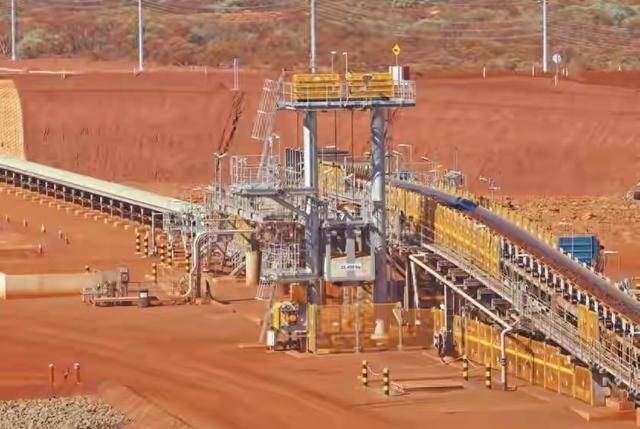
热轧卷板周度数据-20251107
Bao Cheng Qi Huo· 2025-11-07 02:14
Report Summary 1. Report Industry Investment Rating - Not provided in the given content 2. Core View of the Report - The supply and demand of hot-rolled coils are both weakening. The weekly output of hot-rolled coils decreased by 54,000 tons due to production restrictions, but it remains at a relatively high level this year, and the high inventory continues to suppress prices. Meanwhile, the demand for hot-rolled coils has started to decline, with the weekly apparent demand dropping by 175,900 tons, and high-frequency transactions remaining sluggish. The continuous decline in the output of cold-rolled coils, the main downstream product, has not alleviated industrial contradictions, dragging down hot-rolled coils. With limited improvement in external demand, the demand resilience of hot-rolled coils is weakening. Currently, the supply of hot-rolled coils is falling from a high level, but the demand is also poor. The industrial contradictions in the situation of weak supply and demand continue to accumulate, and the price of hot-rolled coils continues to be under pressure. Given the support from the cost side, the subsequent trend will show a pattern of bottom - hunting in a volatile manner, and it will be weaker than building materials. Breaking the deadlock depends on steel mills increasing production cuts [1] 3. Summary by Relevant Catalogs Supply - The weekly output of hot-rolled coils is 3.1816 million tons, a week-on-week decrease of 54,000 tons, and a decrease of 54,000 tons compared with the end of last month. The weekly output of cold-rolled coils is 838,400 tons, a week-on-week decrease of 21,300 tons, and a decrease of 21,300 tons compared with the end of last month. The blast furnace capacity utilization rate is 87.81%, a week-on-week decrease of 0.80 percentage points, and a decrease of 0.80 percentage points compared with the end of last month [1] Demand - The weekly apparent demand for hot-rolled coils is 3.143 million tons, a week-on-week decrease of 175,900 tons, and a decrease of 175,900 tons compared with the end of last month. High-frequency transactions are sluggish, and the output of cold-rolled coils, the main downstream product, continues to decline, and external demand improvement is limited [1] Inventory - The total inventory of hot-rolled coils is 4.1045 million tons, a week-on-week increase of 38,600 tons, and an increase of 38,600 tons compared with the end of last month. The in - plant inventory is 774,300 tons, a week-on-week decrease of 2,300 tons, and a decrease of 2,300 tons compared with the end of last month. The social inventory is 3.3302 million tons, a week-on-week increase of 40,900 tons, and an increase of 40,900 tons compared with the end of last month [1]
工业旅游:从工厂到景区有多远
Jing Ji Ri Bao· 2025-11-05 22:07
Core Viewpoint - The article discusses the rise of industrial tourism in China, highlighting its integration with traditional tourism and the increasing interest from visitors in experiencing manufacturing processes and industrial culture [1][7]. Group 1: Industrial Tourism Growth - Industrial tourism is gaining popularity, with visitors flocking to factories and production lines, showcasing a new trend in the tourism sector [1]. - Notable examples include the Yili Grassland Dairy Culture Tourism Area in Inner Mongolia, which has attracted nearly 2 million visitors in three years [2]. - The Baotou Steel Pipe Plant and North Weapon City in Inner Mongolia have also seen significant visitor numbers, with 227,300 and 72,000 visitors respectively this year [3]. Group 2: Technological Appeal - The integration of technology in industrial tourism is attracting younger audiences, as seen in the Chery 5G Smart Factory in Henan, where students engage in hands-on learning experiences [4][5]. - The transparent factory of Tongrentang in Guangdong has received over 1.83 million visitors since its opening, emphasizing the blend of nutrition, technology, and tourism [6]. Group 3: Economic and Cultural Impact - Industrial tourism serves as a tool for brand building and consumer engagement, enhancing brand credibility and fostering long-term customer loyalty [7]. - It also plays a crucial role in regional economic development and cultural heritage preservation, particularly in areas with rich industrial histories like Inner Mongolia [8]. Group 4: Challenges and Future Directions - The industrial tourism sector faces challenges such as the need for innovative and interactive experiences, investment hesitance from manufacturers, and a shortage of skilled professionals [8]. - Recommendations for future development include creating a supportive environment for industrial tourism, enhancing the protection of industrial cultural resources, and improving market regulation [9].
红军城争夺白热化,泽连斯基:战斗激烈,后勤补给艰难!俄称“乌军被围困,人员已开始投降”,乌方否认
Mei Ri Jing Ji Xin Wen· 2025-11-02 15:37
Core Points - The battle for Red Army City is intensifying, with both Russian and Ukrainian forces claiming significant developments in the conflict [1][4][12] - Red Army City holds strategic importance due to its transportation and resource value, being a key logistical hub for Ukrainian forces [3][12] - The ongoing conflict has led to significant military actions, including the reported destruction of Ukrainian special forces and equipment by Russian troops [6][8] Group 1: Military Developments - Russian Defense Ministry claims to have encircled Ukrainian troops in Red Army City, leading to reports of Ukrainian soldiers beginning to surrender [1] - Ukrainian military leadership denies claims of encirclement, asserting that operations are ongoing to reinforce positions in the area [1][10] - Russian forces have reportedly launched a large-scale offensive since August 2024, aiming to capture Red Army City and disrupt Ukrainian supply lines [3][12] Group 2: Strategic Importance - Red Army City is located in the Donetsk region and serves as a critical transportation hub, controlling two major railway lines and road networks leading to the front lines [3][12] - The city is also a center for Ukraine's coal industry, with significant coal reserves that are vital for the steel manufacturing sector [12] - Control of Red Army City would allow Russian forces to cut off supplies to Ukrainian military groups in Donetsk and facilitate further advances into Ukrainian territory [3][12] Group 3: International Reactions - Russian officials have criticized the U.S. decision to provide Ukraine with "Tomahawk" missiles, claiming it will not resolve the conflict and may escalate tensions [14] - The Russian government has imposed sanctions on several Ukrainian officials, including the Prime Minister and Finance Minister, as part of its economic measures against Ukraine [15]

交易价10亿元! 德龙汇能将迎国资背景“新主”
Mei Ri Jing Ji Xin Wen· 2025-11-02 13:05
Core Viewpoint - The announcement of a share transfer agreement between DeLong Huaneng and Noxin New Materials indicates a significant change in control, with potential implications for the company's strategic direction and financial health [1][3]. Group 1: Share Transfer Details - DeLong Huaneng's controlling shareholder, Beijing Dingxin Ruitong Technology Development Co., plans to transfer 106 million shares, representing 29.64% of the total share capital, to Noxin New Materials at a price of 9.41 yuan per share, totaling 1 billion yuan [1][3]. - If the transaction is completed, the controlling shareholder will shift from Dingxin Ruitong to Noxin New Materials, with the actual controller changing from Ding Liguan to Sun Weijia [3]. Group 2: Financial Performance and Debt Situation - DeLong Huaneng has shown a trend of fluctuating net profits, with a reported loss of 241 million yuan in 2023, marking the largest annual loss since public financial data became available [5]. - The company's debt repayment capability has deteriorated over the past decade, with liquidity ratios consistently below 1, indicating weak solvency [5][6]. Group 3: Background of the Buyer - Noxin New Materials, established just three months prior to the agreement, has a complex ownership structure with ties to state-owned enterprises, particularly the East Yang Government through Dongwang Holdings [7]. - The firm has not yet commenced any operational activities, raising questions about its readiness and strategic intent in acquiring DeLong Huaneng [7]. Group 4: Market Reaction - Prior to the announcement, DeLong Huaneng's stock price surged, hitting the daily limit on October 24, with a trading volume of 474 million yuan, indicating speculative interest [9]. - Following the announcement, the stock price experienced a significant increase, with a premium of approximately 18.81% compared to the closing price before the announcement [10].

2025-2031年中国长钢产品市场发展前景及投资动向研究报告
Sou Hu Cai Jing· 2025-10-29 03:34
Market Overview - The long steel products market in China is projected to experience significant growth from 2019 to 2031, with various product types showing different growth trends [3][4]. - Key categories of long steel products include rebar, wire rods, H-beams, angle steel, and channel steel, each with distinct growth trajectories [3][4]. Product Type Analysis - The sales volume of different types of long steel products in China is expected to increase significantly from 2019 to 2031, with specific forecasts for each product type [11]. - The market size for various long steel products is projected to grow, with detailed market share analysis provided for 2019, 2025, and 2031 [11]. Application Analysis - Long steel products are utilized across multiple applications, including construction, automotive, transportation, renewable energy, machinery, home appliances, and shipbuilding, with growth trends varying by application [4][11]. - The sales volume and market size for long steel products in different applications are expected to rise from 2019 to 2031, with specific forecasts available [11]. Industry Development Environment - The long steel products industry is influenced by various development trends, barriers to entry for manufacturers, driving factors, and constraints [11]. - A SWOT analysis of Chinese enterprises in the long steel products sector highlights strengths, weaknesses, opportunities, and threats [11]. Supply Chain Analysis - The long steel products industry supply chain includes upstream, midstream, and downstream components, with insights into procurement, production, and sales models [11]. Major Manufacturers - Key manufacturers in the Chinese long steel products market include China Baowu Group, ArcelorMittal, Ansteel Group, and Shagang Group, with detailed analysis of their sales volumes, market shares, and revenue from 2019 to 2025 [4][11]. - The competitive landscape is characterized by varying levels of market concentration, with the top manufacturers holding significant market shares [11].
宁夏民营企业领头羊“易主”:年入692亿,煤制烯烃产能全国第一
Sou Hu Cai Jing· 2025-10-27 12:40
Core Insights - The "2025 Ningxia Top 100 Private Enterprises" list has been released, with an entry threshold of 584 million yuan, down from 599.8 million yuan last year. The total revenue of the listed companies reached 351.379 billion yuan, with 51 companies showing growth, adding 37.155 billion yuan [1][12] - The total assets of the top 100 companies amounted to 575.501 billion yuan, with 53 companies increasing their assets by 51.261 billion yuan. The total profit reached 50.680 billion yuan [1][12] - The top 100 private enterprises contributed a total tax revenue of 13.592 billion yuan, a year-on-year increase of 10.3%, accounting for 37.87% of the total tax revenue in the region [1][12] Industry Overview - The industrial structure of the top 100 includes 1 company from the primary industry, 81 from the secondary industry, and 18 from the tertiary industry. The manufacturing sector dominates with 73 companies, followed by real estate with 11, and construction, wholesale and retail, and energy supply with 4 each [3] - The regional distribution shows that Yinchuan has 40 companies on the list with a total revenue of 155.425 billion yuan, leading the rankings. Shizuishan has 22 companies, Wuzhong has 19, and other regions follow [3] Company Highlights - Baofeng Group ranks first with a revenue of 69.199 billion yuan, a year-on-year increase of 13.1%. It is involved in energy chemistry, new energy, and new storage industries. The company’s project in Inner Mongolia is the largest single-plant ethylene project globally [12] - Ningxia Jianlong, established in 2012, ranks third with a steel production capacity of 3.5 million tons and is part of a larger group with a total crude steel capacity of 43 million tons [5] - Tianyuan Manganese Group, the second-largest, achieved a revenue of 67.367 billion yuan, with a production capacity of 800,000 tons of electrolytic manganese, accounting for 48% of the national output [7]

韩国股市:首破4000点,三星电子股价首破10万韩元
Sou Hu Cai Jing· 2025-10-27 11:26
Core Points - The South Korean stock market has closed above the 4000-point mark for the first time, reaching a historic high of 4042.83 points, with a significant increase in trading volume and value [1] - The Korean won has appreciated against the US dollar, with the exchange rate at 1431.70 won per dollar, up by 5.40 won from the previous day [1] - Institutional and foreign investors have shown strong buying interest, net purchasing 2340.7 billion won and 6455.4 billion won in stocks respectively, while retail investors net sold 7945.1 billion won [1] Market Performance - The KOSPI index rose by 101.24 points, with 561 stocks gaining and 319 stocks declining [1] - Notable stock performances include Samsung Electronics, which increased by 3.24% to 102,000 won, and SK Hynix, which rose by 4.9% to 535,000 won [1] - Hyundai Motor's stock price increased by 0.79% to 255,500 won, while Hyundai Heavy Industries surged by 17.02% to 212,500 won [1] - Declining stocks included Korea Electric Power, down by 0.69% to 43,000 won, and POSCO, which fell by 1.69% to 320,000 won [1] Market Sentiment - The market rebound is attributed to optimistic sentiment regarding trade agreements and increased appetite for risk assets amid expectations of further interest rate cuts in the US [1]