基金管理

Search documents
特变电工股价涨5.22%,九泰基金旗下1只基金重仓,持有8.57万股浮盈赚取12万元
Xin Lang Cai Jing· 2026-01-15 07:00
Group 1 - The core point of the news is that TBEA Co., Ltd. experienced a stock price increase of 5.22%, reaching 28.23 CNY per share, with a trading volume of 12.381 billion CNY and a turnover rate of 9.05%, resulting in a total market capitalization of 142.64 billion CNY [1] - TBEA's main business segments include power transmission and transformation, new energy, and energy-related services, with revenue contributions from electrical equipment products (27.64%), coal products (18.27%), and other segments [1] Group 2 - From the perspective of fund holdings, Jiutai Fund has one fund heavily invested in TBEA, specifically Jiutai Yingtai Quantitative A (011224), which reduced its holdings by 89,000 shares in the third quarter, now holding 85,700 shares, accounting for 3.69% of the fund's net value [2] - Jiutai Yingtai Quantitative A has a total scale of 23.7589 million CNY and has achieved a year-to-date return of 4.36%, ranking 2846 out of 5525 in its category, with a one-year return of 33.03%, ranking 2399 out of 4208 [2]

鼎龙股份股价涨5.19%,富安达基金旗下1只基金重仓,持有1.58万股浮盈赚取3.6万元
Xin Lang Cai Jing· 2026-01-15 06:22
Group 1 - The core point of the news is that Dinglong Co., Ltd. experienced a stock price increase of 5.19%, reaching 46.18 yuan per share, with a trading volume of 1.592 billion yuan and a turnover rate of 4.82%, resulting in a total market capitalization of 43.749 billion yuan [1] - Dinglong Co., Ltd. is located in Wuhan, Hubei Province, and was established on July 11, 2000, with its listing date on February 11, 2010. The company's main business involves general consumables for printing and copying, as well as optoelectronic semiconductor process materials [1] - The revenue composition of Dinglong Co., Ltd. shows that semiconductor materials, chips, and general printing and copying consumables account for 99.47% of the total revenue, while other products contribute 0.53% [1] Group 2 - From the perspective of fund holdings, one fund under Fuan Da has a significant position in Dinglong Co., Ltd. The Fuan Da CSI 500 Index Enhanced A (007943) held 15,800 shares in the third quarter, representing 0.97% of the fund's net value, making it the fifth-largest holding [2] - The Fuan Da CSI 500 Index Enhanced A (007943) was established on November 19, 2019, with a latest scale of 57.859 million. Year-to-date returns are 5.64%, ranking 2420 out of 5525 in its category; the one-year return is 41.86%, ranking 1775 out of 4208; and since inception, the return is 76.33% [2] - The fund manager of Fuan Da CSI 500 Index Enhanced A (007943) is Ji Qing, who has a cumulative tenure of 9 years and 33 days, managing total assets of 350 million yuan. The best fund return during his tenure is 117.68%, while the worst is -21.65% [2]

多只宽基ETF成交量放大 有色金属相关ETF领涨
Xin Lang Cai Jing· 2026-01-15 05:04
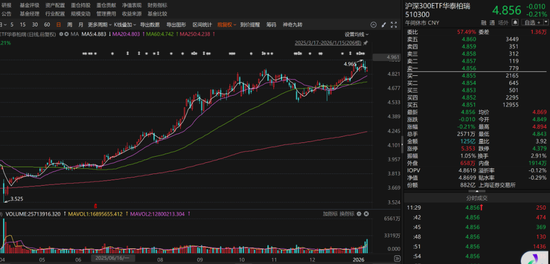
Group 1: ETF Market Performance - On January 15, multiple broad-based ETFs saw a significant increase in trading volume, with the Huatai-PB CSI 300 ETF achieving a half-day trading volume of 12.5 billion yuan, surpassing the highest daily trading volume since April 9, 2025 [1][11] - The Huatai-PB CSI 300 ETF experienced a slight decline of 0.21%, but its trading volume exceeded the previous day's total of 10.5 billion yuan [1][11] - Other ETFs, such as the Huatai-PB CSI A500 ETF and the Huaxia CSI A500 ETF, also reported substantial trading volumes of 12.6 billion yuan and 12.3 billion yuan, respectively, indicating a strong market interest [3][11] Group 2: Sector Performance - The performance of ETFs related to non-ferrous metals and batteries led the market on January 15, with the Southern Non-Ferrous Metals ETF rising by 2.75%, the GF Rare Metals ETF increasing by 2.45%, and the ICBC Credit Suisse Lithium Battery ETF up by 2.42% [6][13] - Analysts from Huatai Securities noted that the recent rise in resource prices is driven by multiple factors, including global monetary easing and increased demand for copper, silver, and rare metals due to AI data centers [13][14] Group 3: Investment Insights - The managers of the Ping An Resource Selected Mixed Fund highlighted a significant structural market for resource products in 2025, with precious metals and industrial metals like copper leading the gains [15] - They emphasized the importance of focusing on key sub-industry investment opportunities in 2026, particularly in industrial metals such as copper and aluminum, as well as in new energy metals like lithium and rare earths [15][16] - The long-term investment value of precious metals, particularly gold and silver, was also underscored, with gold being a core asset for risk diversification [16][17]

首单非定向扩募公募REITs上市 华夏基金华润有巢REIT探索租赁住房REITs新路径
Zhong Guo Jing Ying Bao· 2026-01-15 04:57
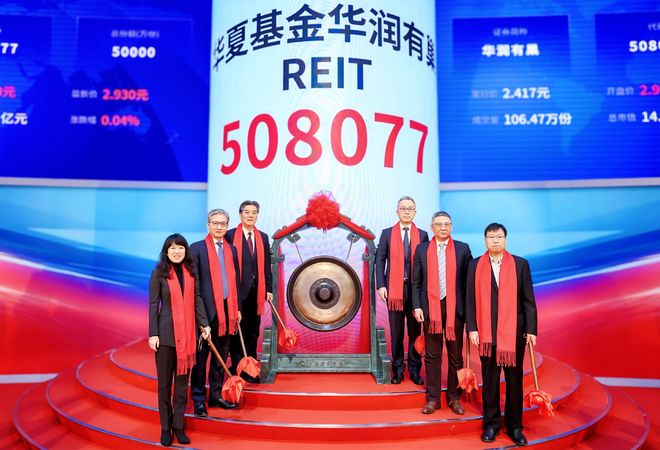
Core Viewpoint - The expansion of public REITs in China marks a significant milestone with the listing ceremony of the Huaxia Fund Huazhong REIT (508077) on January 12, 2026, at the Shanghai Stock Exchange, highlighting the growing recognition and acceptance of market-driven rental housing REITs in the domestic market [1][3]. Group 1: Expansion and Performance - The Huaxia Fund Huazhong REIT has demonstrated strong market performance over three years, achieving over 154 million yuan in cumulative dividends to holders by the end of 2025 [3]. - The recent expansion is the first for the Huaxia Fund Huazhong REIT, successfully completed in December 2025, utilizing a non-directional placement model to protect existing investors' rights, with a placement price of 2.53 yuan per share and a total of 450 million shares available for placement [3][4]. Group 2: Fund Utilization and Asset Acquisition - The funds raised from the expansion, approximately 1.1329 billion yuan (excluding subscription fees and interest), will be fully allocated to acquire high-quality assets under the Huazhong brand, specifically the Shanghai Majiao project, which is part of a demonstration project for affordable rental housing [4]. - The Shanghai Majiao project is strategically located near key industrial clusters, with a strong rental demand and an occupancy rate of 96% as of June 2025, enhancing the resilience of the operations [4]. Group 3: Strategic Vision and Future Development - The Huazhong brand aims to enhance its operational capabilities through a multi-dimensional operational system, focusing on specialized marketing, diverse leasing strategies, community operations, and safety supervision to maintain high occupancy rates and service quality [6]. - The successful expansion is viewed as a practical example of revitalizing existing rental housing assets and expanding effective investment, reflecting the capital market's recognition of the asset quality and operational capabilities of Huazhong [6]. - Future collaboration between Huazhong and Huaxia Fund is expected to enhance the quality and efficiency of public REIT projects, increasing the market influence and industry voice of rental housing REITs, and attracting more social capital into the affordable housing sector [6].
特斯拉为何起诉宏利基金?
Xin Lang Cai Jing· 2026-01-15 04:52
Core Viewpoint - The lawsuit between Tesla (Shanghai) Co., Ltd. and Hongli Fund Management Co., Ltd. revolves around a rare "trade secret infringement" case, highlighting the importance of information security in the competitive landscape of the electric vehicle industry [2][14]. Group 1: Lawsuit Details - Tesla has formally sued Hongli Fund and an individual named Li Cheng for allegedly infringing on its trade secrets, with the case set to be heard on February 4, 2026, in Shanghai [2][14]. - The lawsuit claims that Hongli Fund and the involved individual may have used improper means such as theft, inducement, or fraud to acquire and disclose Tesla's business information, which includes highly valuable client lists and pricing strategies [3][15]. Group 2: Implications for Tesla - The case is significant for Tesla as it not only concerns potential economic losses but also the protection of its core competitive advantages in the Chinese market [4][15]. - The potential leakage of critical information to Tesla's competitors is a major concern for the company, which relies heavily on maintaining the confidentiality of its operational strategies [4][15]. Group 3: Hongli Fund's Background - Hongli Fund, established in 2002 with a registered capital of 180 million yuan, has seen its management scale approach 100 billion yuan as of January 2026, primarily driven by a surge in money market funds [8][19]. - Despite its growth, Hongli Fund faces challenges in its equity investment capabilities, with stock fund sizes below 5 billion yuan and mixed funds under 12 billion yuan, indicating a reliance on less profitable investment strategies [9][19]. Group 4: Management Turmoil - The fund has experienced significant internal management upheaval since 2022, with multiple high-level personnel changes, including the departure of its former general manager and the appointment of new executives [10][20]. - The identity of Li Cheng remains unclear, with speculation that he may have left the company due to the ongoing lawsuit, reflecting the instability within Hongli Fund's management structure [17][20]. Group 5: Broader Industry Context - The lawsuit raises questions about the boundaries of information gathering in the investment sector, particularly regarding the distinction between legitimate research and the illegal acquisition of trade secrets [11][21]. - The outcome of this case could have broader implications for how investment firms conduct research and manage compliance in an increasingly competitive and regulated environment [11][21].


自动驾驶赛道再迎利好政策!智能驾驶ETF(516520)单日3.84亿成交额创历史新高
Xin Lang Cai Jing· 2026-01-15 03:58
Group 1 - The smart driving sector has seen significant trading activity since 2026, driven by the gradual implementation of L3-level autonomous driving regulations, decreasing hardware costs, the empowerment of AI large models, and the commercialization of smart driving [1] - The smart driving ETF (516520) has attracted a total of 503 million yuan since 2026, with an average daily trading volume of 228 million yuan, representing a 660% increase compared to the average daily trading volume in 2025 [1] - On January 14, 2026, the Shanghai Municipal Economic and Information Commission and other departments issued the "Shanghai High-Level Autonomous Driving Leading Area 'Mosu Zhixing' Action Plan," which aims to accelerate the transformation of autonomous driving technology innovation into industrial competitiveness through nine key tasks [1] Group 2 - The smart driving ETF (516520) closely tracks the CSI Smart Car Theme Index, which reflects the overall performance of companies in the smart car industry, with the top five sub-industries being automotive parts (24.0%), semiconductors (19.6%), passenger cars (14.4%), software development (11.3%), and communication equipment (7.1%) [2] - The fund manager of the smart driving ETF, Huatai-PB Fund, is one of the first ETF managers in China, having launched the Huatai-PB CSI 300 ETF (510300), which has a current scale of 429.7 billion yuan and is highly active in the market [2] - The Huatai-PB CSI 300 ETF will implement a cash dividend of 1.23 yuan per 10 fund shares, with a total dividend amount expected to approach 11 billion yuan, potentially setting a new record for single cash dividends in domestic ETFs [2]
AI应用催化密集来袭!恒生科技ETF(513130)交投火热,单日成交额超90亿元
Xin Lang Cai Jing· 2026-01-15 03:56
Group 1 - The AI application sector is gaining strength and becoming a market focus, with benchmark companies focusing on AI applications going public in Hong Kong, allowing for a more direct observation of the AI application ecosystem and commercialization levels [1][6] - The acceleration of AI model iterations and decreasing costs are expected to drive the commercialization of AI applications, shifting market investment focus from upstream computing power to downstream applications in education, finance, office, media, and healthcare [1][6] - Leading internet companies, leveraging their large user bases and mature AI model technology reserves, are expected to play a major role in the commercialization of AI applications, making the scarce internet assets in the Hong Kong tech sector a focal point for investment [1][6] Group 2 - The Hang Seng Technology ETF (513130), which supports T+0 trading, closely tracks the Hang Seng Technology Index, a representative index of the Hong Kong tech market, comprising companies with core competitiveness and development potential [2][7] - The top five constituents of the index include SMIC, Alibaba-W, Meituan-W, Tencent Holdings, and NetEase-S, all of which have deep technological accumulation and broad business layouts in cutting-edge fields such as internet, mobile payments, cloud computing, and artificial intelligence [2][7] - The fund manager of the Hang Seng Technology ETF, Huatai-PB Fund, is one of the first ETF managers in China, and the Huatai-PB CSI 300 ETF (510300) has a current scale of 429.7 billion yuan, indicating high market activity [2][7]
龙洲股份股价跌5.1%,金元顺安基金旗下1只基金位居十大流通股东,持有272.22万股浮亏损失106.17万元
Xin Lang Cai Jing· 2026-01-15 03:53
Group 1 - The core point of the news is that Longzhou Co., Ltd. experienced a 5.1% drop in stock price, closing at 7.26 yuan per share, with a trading volume of 305 million yuan and a turnover rate of 7.32%, resulting in a total market capitalization of 4.083 billion yuan [1] - Longzhou Co., Ltd. is primarily engaged in various businesses including passenger transport, logistics, fuel sales, and asphalt-related services, with the main revenue sources being asphalt supply chain (57.72%), automotive manufacturing and sales (12.69%), fuel and natural gas sales (11.78%), and passenger transport services (10.18%) [1] Group 2 - Among the top ten circulating shareholders of Longzhou Co., Ltd., a fund under Jinyuan Shun'an Fund has entered the list, holding 2.7222 million shares, which accounts for 0.48% of the circulating shares, resulting in an estimated floating loss of approximately 1.0617 million yuan [2] - The Jinyuan Shun'an Yuanqi Flexible Allocation Mixed Fund (004685) has a total asset size of 1.432 billion yuan, with a year-to-date return of 3.2% and a one-year return of 50.23%, ranking 1954 out of 8094 in its category [2]

华商基金张明昕:市场波动或加大 AI产业链仍可关注
Sou Hu Cai Jing· 2026-01-15 03:19
Core Viewpoint - The A-share market is expected to maintain an upward trend in 2026, with significant structural opportunities in sectors such as AI, robotics, innovative pharmaceuticals, solid-state batteries, and new consumption [1][4]. Market Performance - The A-share market has shown strong performance at the beginning of 2026, with the Shanghai Composite Index rising above 4100 points and trading volume exceeding 3 trillion yuan for four consecutive trading days [1][4]. - Despite some adjustments in the market, the overall bullish sentiment remains, supported by a relatively loose liquidity environment and strong expectations for market performance [4]. Investment Strategy - The investment strategy for 2026 will focus on systematic tracking and assessment of industry trends, identifying sectors with upward momentum and explosive potential [4][5]. - Investors are encouraged to maintain a broad perspective and avoid being fixated on specific sectors, emphasizing the importance of evaluating future industry trends and making decisions based on comparative analysis [4][5]. Sector Focus - Key sectors to watch include: - **AI Industry**: The AI sector is expected to continue its growth, with applications in AI software and healthcare showing significant gains [5]. - **Robotics**: The robotics sector is in the early investment stage, with a focus on the mass production capabilities of Tesla's robotics supply chain [5]. - **Innovative Pharmaceuticals**: This sector is anticipated to benefit from supportive policies, with potential for significant market growth and profitability [5]. - **Solid-State Batteries**: Positioned on the brink of commercialization, breakthroughs in this technology could present ongoing investment opportunities [5]. - **New Consumption**: Expected to gain traction as the macroeconomic environment stabilizes, this sector is also a key area of focus [5]. Economic Context - The macroeconomic environment in 2026 is characterized by supportive policies and a focus on high-quality development, which is crucial for the healthy growth of the capital market [4][6]. - The ongoing transformation of external pressures into opportunities for comprehensive reform is seen as a driving force for the capital market's development [4][6].

新诺威股价跌5.21%,金元顺安基金旗下1只基金重仓,持有4.88万股浮亏损失10.74万元
Xin Lang Cai Jing· 2026-01-15 02:43
Group 1 - New Nuo Wei's stock price dropped by 5.21% to 40.05 CNY per share, with a trading volume of 191 million CNY and a turnover rate of 0.33%, resulting in a total market capitalization of 56.254 billion CNY [1] - The company, Shijiazhuang Yiling Pharmaceutical Co., Ltd., was established on April 5, 2006, and listed on March 22, 2019. Its main business involves the research, production, and sales of functional foods, with revenue composition being 88.93% from functional foods and raw materials, 8.91% from biopharmaceuticals, and 2.16% from other sources [1] Group 2 - Jin Yuan Shun An Fund has a significant holding in New Nuo Wei, with its Jin Yuan Shun An Medical Health Mixed A Fund (007861) increasing its stake by 13,100 shares to a total of 48,800 shares, representing 3.75% of the fund's net value, ranking as the tenth largest holding [2] - The Jin Yuan Shun An Medical Health Mixed A Fund was established on July 29, 2021, with a latest scale of 38.3683 million CNY. Year-to-date returns are 7.33%, ranking 1797 out of 8840 in its category, while the one-year return is 14.79%, ranking 5884 out of 8094. Since inception, the fund has experienced a loss of 53.75% [2] Group 3 - The fund manager of Jin Yuan Shun An Medical Health Mixed A Fund is Chen Mingjie, who has been in position for 2 years and 82 days, with a total fund asset size of 72.6952 million CNY. The best return during his tenure is 8.68%, while the worst is -24.12% [3] - Co-manager Zhang Haidong has been in position for 144 days, managing a total fund asset size of 628 million CNY, with the best return of 5.45% and the worst return of -1.14% during his tenure [3]