数据中心

Search documents
大位科技:关于公司股票交易异常波动的公告
Zheng Quan Ri Bao· 2026-01-09 14:51
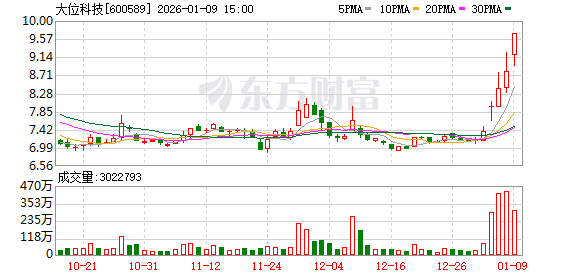
Group 1 - The company, Dawi Technology, announced that its stock experienced an abnormal fluctuation, with a cumulative price increase of over 20% during three consecutive trading days from January 7 to January 9, 2026 [2] - The company's production and operations are currently normal, and there have been no significant changes in its main business, which includes providing bandwidth leasing, cabinet leasing, and IP address leasing through standardized data centers [2] - There have been no major changes in the external market environment or industry policies affecting the company [2]


中国能建:已在甘肃庆阳等多个枢纽节点投资或布局了数据中心项目
Zheng Quan Ri Bao Wang· 2026-01-09 13:42
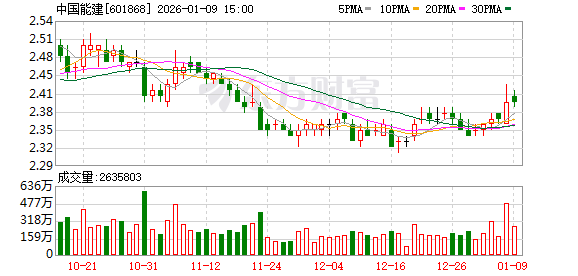
Core Viewpoint - The company, China Energy Construction (601868), is actively involved in the development of artificial intelligence computing infrastructure, leveraging its integrated investment and construction capabilities, as well as its expertise in AI, storage, supercomputing, and cloud computing [1] Group 1: Development Strategy - The company focuses on the "data-energy integration" development concept, utilizing its advantages in integrated investment and construction, as well as in energy storage and smart grid technologies [1] - It is participating in the national "East Data West Computing" project, promoting the construction of a green computing network [1] Group 2: Project Investments - The company has invested in or established data center projects in multiple key locations, including Gansu Qinyang, Ningxia Zhongwei, Anhui Wuhu, Shanxi Datong, and Beijing Economic Development Zone [1] - The Gansu Qinyang big data industrial park demonstration project has a total designed power of 60,000 kW, with the first phase of the demonstration project scheduled to be operational by September 2024 [1]

绿光气候研究院院长舒玉莹:“双碳”已被提升至统领经济社会发展全局的高度 | 对话能源大咖
Xin Lang Cai Jing· 2026-01-09 13:37
Core Viewpoint - China's green transition has entered a new phase, emphasizing the dual control of carbon emissions and energy consumption as a core strategic priority for economic development by 2026 [2][9]. Group 1: Impact on Traditional Industries - Traditional high-energy-consuming industries such as steel, cement, and chemicals will face unprecedented carbon constraints, requiring new projects to meet both energy efficiency and carbon emission evaluations [3][11]. - Existing capacities must accelerate low-carbon technology upgrades, shifting focus from scale expansion to quality improvement [3][11]. Group 2: Opportunities in Emerging Industries - Emerging sectors like renewable energy and carbon management services are expected to experience explosive growth, with increasing demand for carbon accounting, carbon footprint certification, and CCUS services [4][11]. - Digital technologies that integrate energy and carbon management will have significant growth potential, contributing to the establishment of a competitive green industrial chain [4][11]. Group 3: Carbon Emission Accounting System - China's carbon emission accounting system is in a critical development phase, extending beyond major emitters to include local government planning and industry standards [5][11]. - The national greenhouse gas emission factor database has been launched, covering 24 key industries, and the national carbon market now includes eight industries, accounting for over 60% of total carbon emissions [5][11]. Group 4: Carbon Market Dynamics - The deepening linkage between the dual control of carbon emissions and the national carbon market will make carbon a measurable, tradable, and priced production factor, compelling companies to adopt carbon asset management strategies [6][11]. Group 5: Learning from International Experiences - The EU's carbon trading system and the UK's carbon budget system provide valuable lessons for China, emphasizing the importance of clear emission reduction targets and third-party supervision [7][8][11]. Group 6: Requirements for Traditional and Renewable Energy - The comprehensive green transition requires traditional energy to evolve from being the main energy source to providing backup and regulatory services, while renewable energy will see significant market expansion [11][12]. - The "14th Five-Year Plan" indicates that most new electricity demand will be met by clean energy, leading to explosive growth in the renewable energy sector [11][12].

大位科技:公司目前生产经营正常 主营业务未发生重大变化
Zhi Tong Cai Jing· 2026-01-09 11:43
Group 1 - The core viewpoint of the article is that the company, Dazhi Technology (600589.SH), has announced that its stock price fluctuations are not due to any significant changes in its operations or main business activities [1] - The company continues to operate normally, providing services such as bandwidth leasing, cabinet leasing, and IP address leasing through standardized data centers [1] - There have been no major changes in the external market environment or industry policies affecting the company [1]
大位科技(600589.SH):公司目前生产经营正常 主营业务未发生重大变化
智通财经网· 2026-01-09 11:43
Group 1 - The core viewpoint of the article is that the company, Dazhi Technology (600589.SH), has announced that its stock price fluctuations are not due to any significant changes in its operations or main business activities [1] - The company continues to operate normally, providing services such as bandwidth leasing, cabinet leasing, and IP address leasing through standardized data centers [1] - There have been no major changes in the external market environment or industry policies affecting the company [1]
中国能建:已在甘肃庆阳、宁夏中卫、安徽芜湖、山西大同、北京经开区等多个枢纽节点投资或布局数据中心项目
Mei Ri Jing Ji Xin Wen· 2026-01-09 10:31
Core Viewpoint - The company is actively aligning with national strategies such as "Artificial Intelligence +" and "East Data West Computing," focusing on the development concept of "data-energy integration" to enhance its role in building AI computing infrastructure [1]. Group 1: Company Initiatives - The company is leveraging its integrated investment, construction, and operation capabilities, along with its expertise in artificial intelligence, storage, supercomputing, and cloud computing, to contribute positively to AI computing infrastructure [1]. - The company is participating in the national East Data West Computing project and is advancing the construction of a green computing network [1]. - The company has invested or laid out data center projects in multiple key nodes, including Gansu Qinyang, Ningxia Zhongwei, Anhui Wuhu, Shanxi Datong, and Beijing Economic Development Zone [1]. Group 2: Project Details - The Gansu Qinyang Big Data Industry Park demonstration project has a total designed power of 60,000 kW, with the first phase of the demonstration project scheduled to be operational by September 2024 [1]. - The company is implementing a three-in-one model of "new energy development + smart grid + source-network collaboration" to provide stable power supply for computing centers [1].
大同集团拟1140万美元收购美国数据中心 跨界算力谋转型 但标的仅用于比特币挖矿
Xin Lang Cai Jing· 2026-01-09 08:19
Core Viewpoint - Datong Group is transitioning from a traditional cold storage and food trading business to the computing power industry by acquiring two data centers in the U.S. for $11.4 million, driven by declining revenues and increasing losses [1][2]. Financial Performance - In the first half of 2025, Datong Group reported revenue of HKD 76.6 million, a year-on-year decline of 38.6%, with a net loss of HKD 36.9 million, an increase of 86.4% compared to the previous year [2][8]. - The company's debt-to-asset ratio reached 111.68%, with a current ratio of 0.27 and a negative net asset value of HKD -0.21 per share, indicating a state of insolvency [2][8]. - The cold storage business, which accounts for 88.21% of revenue, is facing challenges due to consumer outflow and rising costs, leading to customer loss and intensified price competition [2][8]. Transformation Logic - The acquisition of data centers is seen as a strategic extension of the company's expertise in managing high-energy industrial infrastructure, aiming to transition into a high-end storage infrastructure operator [3][9]. - The data centers are expected to have future applications in high-demand areas such as AI computing, providing multi-purpose industrial real estate [3][9]. Industry Risks - The U.S. data center market is highly competitive, with major players like EDGNEX investing $20 billion to expand capacity to 2,000 megawatts, while traditional markets face power supply crises [4][10]. - The profitability model of AI data centers is under scrutiny, as they rely heavily on capital investment rather than consumer demand, with major companies struggling to achieve profitability [4][10]. Strategic Concerns - The acquisition is structured as a joint venture with Datong holding 60%, and while the total cost is less than 15% of the company's market value, it still poses cash flow challenges [5][11]. - The absence of performance guarantees in the deal and the long-term losses of the target assets raise questions about the strategic clarity of the company's decision to pursue this acquisition [5][11]. Future Outlook - This cross-industry move represents both an opportunity and a critical challenge for Datong Group; successful integration could help the company escape its traditional business decline, while failure could exacerbate financial deterioration [6][12]. - The company plans to generate stable income through a "space leasing + power management fee" model, but the volatility in demand for Bitcoin mining services and the need for substantial ongoing investment in AI computing raise concerns about its long-term competitiveness [6][12].
中邮证券:大厂需求加速 字节AIDC和算力链有望迎来订单爆发
智通财经网· 2026-01-09 07:32
需求:国内CSP大厂资本开支滞后海外约一年,26年或为国内Capex投入大年 随着国产芯片厂商逐步推出下一代高性能AI芯片,以及先进逻辑芯片产能快速扩张,国产算力芯片自 给率逐步提升。根据Bernstein预测,2025年我国芯片自给率仅为58%,而2028年或达93%。海外来看, 25年12月,特朗普在社交媒体宣布,美国或向中国大陆等地区客户出口H200产品。 中邮证券主要观点如下: 供需格局改善下,大厂IDC有望迎来订单修复、上架提升 中邮证券认为,在AI驱动的新增需求与政策支持共同作用下,IDC行业有望迎来供需格局改善:一端是 大厂Capex回流至AI、国产算力接受度上升与NV高端芯片边际改善有望带动的招投标重启与大单落 地;另一端是能评审批谨慎、核心区位资源稀缺使新增无序供给显著放缓。由此,2026年有望进入订单 修复—集中交付—上架率提升—利润释放的兑现期,行业利用率与价格信号或同步改善,估值具备由底 部向常态区间回归的条件。 金融时报报道称,字节跳动已做出初步规划,2026年资本开支拟达到约1600亿元人民币,高于2025年约 1500亿元人民币的投入。字节的AI芯片预算约为850亿元人民币,并已 ...
数据中心概念股走高 新意网集团涨超8% 万国数据-SW涨超3%
Zhi Tong Cai Jing· 2026-01-09 04:03
Core Viewpoint - The data center concept stocks are experiencing an upward trend, driven by significant capital expenditures from major companies like ByteDance and Alibaba, indicating a positive outlook for the IDC industry [1] Group 1: Company Developments - ByteDance plans to increase its capital expenditure to approximately 160 billion RMB in 2026, up from about 150 billion RMB in 2025, with a specific budget of around 85 billion RMB allocated for AI chips [1] - Alibaba has identified AI as a priority direction for the future, planning to invest over 380 billion RMB in technology research and infrastructure over the next three years, with potential for upward adjustments to this target [1] Group 2: Industry Outlook - The IDC industry is expected to see an improvement in supply-demand dynamics due to increased investments from major companies and policy support, leading to a recovery phase characterized by order restoration, concentrated delivery, and improved profit release by 2026 [1] - The combination of new AI-driven demand and cautious energy evaluation approvals, along with the scarcity of core location resources, is likely to slow down disordered new supply significantly [1] - The industry is anticipated to experience improvements in utilization rates and pricing signals, with conditions favorable for valuations to return from the bottom to a normalized range [1]

异动盘点0109 |锂电池概念股早盘普涨,理士国际重挫逾60%;虎牙涨14.47%,芯片概念股全线走低
贝塔投资智库· 2026-01-09 04:02
Group 1 - The core viewpoint of the articles highlights significant movements in the stock market, particularly in Hong Kong and the US, driven by various company announcements and market trends [1][2][3][5][6][7][8]. Group 2 - 万国数据-SW (09698) saw a rise of over 3.6% following the announcement of a successful C-round financing of $2 billion for its international business platform DayOne [1]. - 智谱 (02513) experienced a surge of over 24% on its second day of trading, becoming the first global large model stock listed on the Hong Kong Stock Exchange [1]. - 禾赛-W (02525) increased by over 3% after showcasing its latest lidar technology at CES 2026, along with updates on delivery volume and strategic partnerships [1]. - Lithium battery concept stocks rose, with 中创新航 (03931) up 4.74%, as the Ministry of Industry and Information Technology announced a meeting to regulate the battery industry [1]. - 快手-W (01024) gained over 2.3% as Goldman Sachs projected that its AI model upgrades would enhance overseas user recognition and revenue [2]. - 佳鑫国际资源 (03858) rose over 5.4% after announcing a mining service procurement agreement worth approximately 2.27 billion HKD [2]. - Gold stocks generally increased, with 山东黄金 (01787) up 6.01%, driven by geopolitical risks and expectations of interest rate cuts supporting gold prices [2]. - 九方智投控股 (09636) rose over 5.6% following the announcement of acquiring JF Financial Company Limited [3]. - 凌雄科技 (02436) surged by over 96.85%, with expectations of significant market penetration in the DaaS sector over the next five years [3]. - 理士国际 (00842) plummeted over 60% after announcing a plan to split and list on the US stock market [3]. - Buda Juice (BUDA.US) debuted on the US market with an 8.13% increase, focusing on fresh juice and health drinks [5]. - 虎牙 (HUYA.US) reached a five-and-a-half-month high, rising 14.47% after the successful launch of a new mobile game [5]. - Applied Digital (APLD.US) led gains in the crypto mining sector with a 250% year-over-year revenue increase [5]. - Critical Metals (CRML.US) saw a near 10% rise but later fell, having gained over 110% in the first five trading days of the year [6]. - 哔哩哔哩 (BILI.US) rose 6.51% as Morgan Stanley noted stable ad performance despite uncertain gaming prospects [6]. - Storage stocks fell, with SanDisk (SNDK.US) down 5.38%, amid concerns over the sustainability of AI-related capital expenditures [6]. - The space sector saw gains, with L3Harris Technologies (LHX.US) up 5.16% after a strategic sale [7]. - Chip stocks declined, with NVIDIA (NVDA.US) down 2.15%, reflecting broader market concerns [7]. - Precious metals stocks fell, with significant drops in silver and gold prices due to liquidity shocks [8].