网约车

Search documents
享道出行冲刺港交所 去年网约车服务日均订单超60万单
Zhi Tong Cai Jing· 2025-10-28 11:41
Core Viewpoint - Xiangdao Mobility (Shanghai) Technology Co., Ltd. has submitted its listing application to the Hong Kong Stock Exchange, with CICC and Guotai Junan International as joint sponsors [1] Company Overview - Xiangdao Mobility is a leading comprehensive smart mobility platform in China, offering ride-hailing, vehicle leasing, vehicle sales, and Robotaxi services to meet diverse travel needs [4] - The company was initiated by SAIC Motor Corporation and has attracted key industry investors such as Momenta, AutoNavi, and CATL, integrating resources from automotive manufacturers, autonomous driving solution providers, high-precision digital map service providers, and battery system suppliers [4] Market Position - According to Frost & Sullivan, in 2024, Xiangdao Mobility ranks fifth among domestic ride-hailing platforms by Gross Transaction Value (GTV) and second in Shanghai by completed orders [4] - The company also ranks second in the domestic corporate travel service industry by GTV in 2024 [4] Service Expansion - Xiangdao Mobility has expanded its ride-hailing services from Shanghai to the Yangtze River Delta and further to 85 cities across China by June 30, 2025 [4] - The company achieved an average of over 600,000 daily orders and a GTV exceeding RMB 5.5 billion in 2024 [4] Financial Performance - Revenue for Xiangdao Mobility was approximately RMB 4.73 billion, RMB 5.72 billion, RMB 6.39 billion, and RMB 3.01 billion for the fiscal years 2022, 2023, 2024, and the six months ending June 30, 2025, respectively [5] - Gross profit figures for the same periods were approximately RMB 49.49 million, RMB 376 million, RMB 448 million, and RMB 341 million [5]


Uber拟1亿美元投资小马智行香港IPO 还有意文远知行
Feng Huang Wang· 2025-10-28 11:25
Core Insights - Uber plans to invest in Hong Kong listings of Chinese autonomous taxi companies Xiaoma Zhixing and WeRide, strengthening its ties with these firms [1] - Uber is considering an investment of approximately $100 million in Xiaoma Zhixing's Hong Kong stock issuance, which aims to raise up to $972 million [1] - WeRide has also initiated its Hong Kong listing process, seeking to raise up to $398 million, with potential investments from other major players like Grab and Temasek [1] Investment Details - Uber's potential investment in Xiaoma Zhixing is part of a broader strategy to deepen its involvement in the autonomous vehicle sector in China [1] - The negotiations regarding these investments are ongoing, and the plans may change [1] - Uber has previously invested in both Xiaoma Zhixing and WeRide during their IPOs in the U.S. and announced an additional $100 million investment in WeRide earlier this year [1] Market Context - Xiaoma Zhixing and WeRide are both looking to expand their capital through Hong Kong listings after their U.S. IPOs last year [1] - The total fundraising targets for Xiaoma Zhixing and WeRide highlight the growing interest and investment in the autonomous driving market in Asia [1]


新股消息 | 享道出行冲刺港交所 去年网约车服务日均订单超60万单
智通财经网· 2025-10-28 10:59
Core Viewpoint - Xiangdao Mobility (Shanghai) Technology Co., Ltd. has submitted its listing application to the Hong Kong Stock Exchange, with CICC and Guotai Junan International as joint sponsors [1] Company Overview - Xiangdao Mobility is a leading comprehensive smart mobility platform in China, offering ride-hailing services, vehicle leasing, vehicle sales, and Robotaxi services to meet diverse travel needs [4] - The company was initiated by SAIC Motor Corporation and has attracted key industry investors such as Momenta, AutoNavi, and CATL, integrating resources from automotive manufacturers, autonomous driving solution providers, high-precision digital map service providers, and battery system suppliers [4] Market Position - According to Frost & Sullivan, in 2024, Xiangdao Mobility ranks fifth among domestic ride-hailing platforms by Gross Transaction Value (GTV) and second in Shanghai by completed orders [4] - The company also ranks second in the domestic corporate travel service industry by GTV in 2024 [4] Service Expansion - Xiangdao Mobility has expanded its ride-hailing services from Shanghai to the Yangtze River Delta and further to 85 cities across China by June 30, 2025 [4] - The company achieved an average of over 600,000 daily orders and a GTV exceeding RMB 5.5 billion in 2024 [4] Financial Performance - Revenue for the fiscal years 2022, 2023, 2024, and the six months ending June 30, 2025, were approximately RMB 4.73 billion, RMB 5.72 billion, RMB 6.39 billion, and RMB 3.01 billion respectively [5] - Gross profit for the same periods was approximately RMB 49.49 million, RMB 376 million, RMB 448 million, and RMB 341 million respectively [5]
从中国到墨西哥,滴滴带国产电动车掘金海外千亿市场
Xi Niu Cai Jing· 2025-10-27 11:45
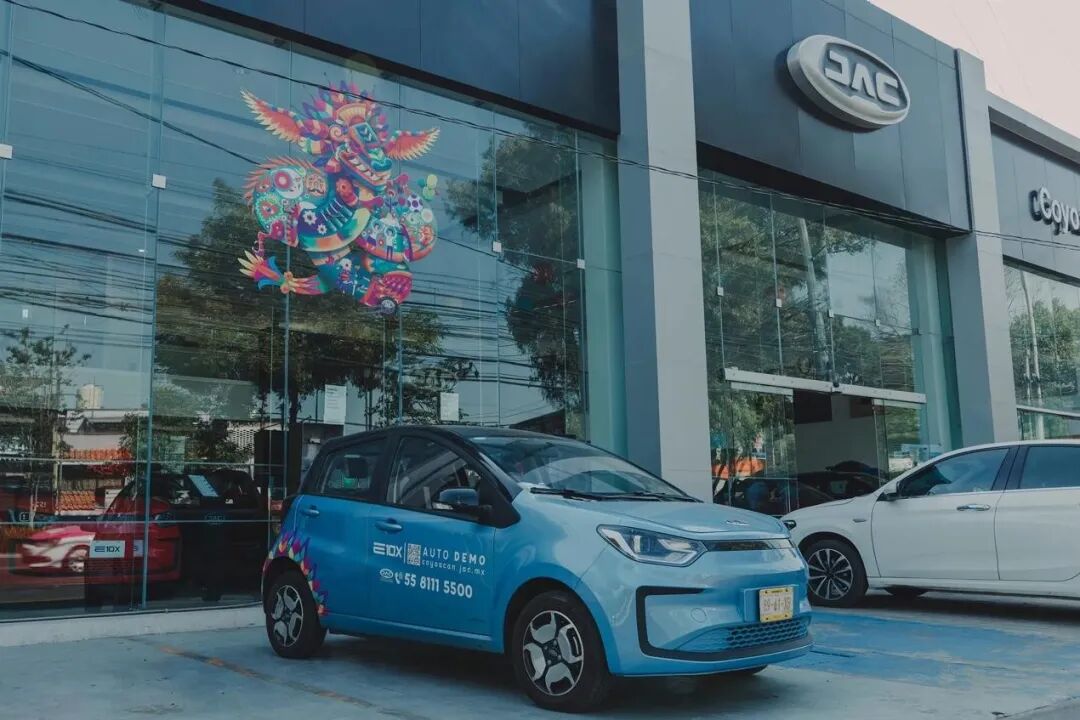
Core Insights - Chinese car manufacturers are accelerating their overseas expansion, particularly in Latin America, where Chinese electric vehicles are becoming increasingly prominent [1][5]. Group 1: Didi's Expansion in Mexico - Didi has launched a fleet of 500 electric vehicles in Mexico, marking its first standardized ride-hailing service in the region, aimed at providing a green and high-quality travel experience for local users [4][5]. - The initiative not only expands Didi's overseas business but also empowers Chinese electric vehicle manufacturers to enter the Latin American market, contributing to the region's green transportation development [5][6]. - Didi's experience in promoting green travel services in China is being leveraged to enhance user experience and support local sustainable development [6][7]. Group 2: Market Potential in Mexico - Mexico, as the second-largest economy in Latin America with a population of nearly 130 million and an urbanization rate exceeding 80%, presents significant opportunities for electric vehicle promotion due to its growing environmental awareness [7][8]. - Didi plans to collaborate with Chinese automakers and local companies to introduce 100,000 electric vehicles in Mexico by 2030, aiming to operate the largest electric fleet in the region [7][8]. Group 3: Service and Support for Drivers - Didi is providing a comprehensive support system for local ride-hailing drivers, including incentives for purchasing or leasing electric vehicles, maintenance, and charging solutions [9][10]. - The company has partnered with local firms to build charging stations in high-demand areas, addressing concerns such as charging time and availability [9][10]. - Didi's measures have effectively reduced drivers' operational costs, making electric vehicles a more attractive option [9][10]. Group 4: Broader Impact and Recognition - Didi's initiatives in Mexico are part of a larger strategy to promote sustainable development in Latin America, which has been recognized by local governments, including the "São Paulo Zero Carbon Award" for its efforts in transportation electrification [17][18]. - The collaboration with various partners, including electric vehicle manufacturers, showcases a model for sustainable development that can be replicated in other industries [18][19]. - Didi's ongoing efforts in Latin America are expected to further enhance the presence of Chinese electric vehicles in the global market, contributing to worldwide green development [19].

中国公司全球化周报|蚂蚁集团旗下OceanBase启动“全球拓展计划”/字节即梦海外版APP“Dreamina AI”上线
3 6 Ke· 2025-10-27 06:23
Group 1: Industry Trends - Investment, trade, and technology are currently the most popular directions for Chinese companies expanding into Dubai, with compliance and long-term operation being key factors for success [2] - The global smart glasses market is expected to exceed 40 million units shipped by 2029, driven by continuous product innovation and expanding application scenarios [8] Group 2: Company Developments - Ant Group's OceanBase has launched a "GO GLOBAL GO Program" to accelerate its global expansion, targeting key markets including Hong Kong, Southeast Asia, and Japan [3] - Taobao has officially launched cross-border furniture direct mail services, covering markets such as Hong Kong, Taiwan, Singapore, and Malaysia, with over one million items available for direct shipping [3] - Cainiao Guoguo has upgraded its international shipping services, now covering over 60 countries, with new features like two-hour pickup for merchants [3] - ByteDance has launched the mobile app version of "Dreamina AI," an AI creative platform aimed at innovators and creative enthusiasts [4] - Didi has introduced 500 electric vehicles in Mexico, partnering with local and Chinese manufacturers to provide green transportation options [5] - Cao Cao Travel has launched overseas ride-hailing services in six countries, simplifying the travel experience for domestic users [5] - Neolix has completed over $600 million in Series D financing, planning to use the UAE as its first international market for autonomous delivery vehicles [7] - Chery's overseas revenue is approaching 50% of total revenue, with plans to establish 26 overseas R&D centers [6] Group 3: Strategic Partnerships - SenseTime MEA and China Telecom have signed a memorandum of understanding to promote AI technology applications in Oman [4] - Xinda Biopharmaceuticals has entered a global strategic partnership with Takeda Pharmaceutical to accelerate the development of new therapies, with potential total payments reaching $11.4 billion [7] Group 4: Market Initiatives - Hong Kong plans to establish an "outbound" service platform to assist mainland companies in expanding their international business [8]

美股波动中的稳健长跑选手:华尔街押注Pinterest(PINS.US)、Uber(UBER.US)与通用汽车(GM.US)
智通财经网· 2025-10-27 06:14
Core Viewpoint - The article highlights three stocks favored by Wall Street experts amid increasing volatility in the U.S. stock market, focusing on their potential for strong long-term returns despite short-term pressures. Group 1: Pinterest (PINS.US) - Pinterest is set to release its Q3 earnings report on November 4, with analysts expecting a 16.6% year-over-year revenue growth, aligning with Wall Street consensus and near the company's guidance upper limit [1] - TD Cowen analyst John Blackledge maintains a "Buy" rating with a target price of $44, while TipRanks' AI analysts give a "Outperform" rating with a $40 target price [1] - Blackledge anticipates a 20% year-over-year increase in EBITDA, driven by optimized revenue costs and R&D spending, and expects continued double-digit revenue growth into 2025-2026 due to the adoption of Performance+ marketing tools [1] Group 2: Uber Technologies (UBER.US) - Uber is recommended by analysts, with Evercore's Mark Mahaney reaffirming a "Buy" rating and a 12-month target price of $150, while TipRanks' AI analysts also rate it as "Outperform" with a target of $108 [2][3] - The demand for ride-hailing remains stable, with driver earnings being consistent and high, indicating a strong supply side, particularly on the Uber platform [3] - Mahaney notes that Uber's model of separating passenger fares from driver earnings is enhancing profit margins, and the company is focusing on user engagement through incremental feature updates [3] Group 3: General Motors (GM.US) - General Motors has exceeded Wall Street's revenue and profit expectations despite a slight decline in sales, leading to a 15% increase in stock price [4] - Mizuho analyst Vijay Rakesh maintains a "Buy" rating, raising the target price from $67 to $76, while TipRanks' AI analysts set a target of $66 with an "Outperform" rating [5] - The company has adjusted its 2025 earnings guidance positively due to lower-than-expected tariff impacts and is reducing some EV plans to enhance profitability, including transitioning certain plants back to internal combustion engine production [5][6]


中美就关税等议题形成初步共识;泡泡玛特Q3海外大涨丨出海周报
2 1 Shi Ji Jing Ji Bao Dao· 2025-10-27 05:05
Group 1: US-China Economic Discussions - The US and China have reached a preliminary consensus on several important economic and trade issues during discussions held in Kuala Lumpur [1] - Key topics included maritime logistics, shipbuilding industry measures, extension of tariff suspension, fentanyl tariffs, drug cooperation, and trade expansion [1] Group 2: Chinese Film Industry - As of October 20, 2025, China's overseas box office revenue has reached $140 million, surpassing the total for 2024 [2] - The number of countries and regions where Chinese films are released has reached 46, with 13 films earning over $1 million overseas [2] Group 3: Smart Glasses Market - In the first half of 2025, global shipments of smart glasses reached 406.5 million units, marking a 64.2% year-on-year increase [3] - The global smart glasses market is projected to exceed 40 million units shipped by 2029 [3] Group 4: E-commerce and Logistics - Taobao has launched a cross-border furniture direct mail service, covering markets in Hong Kong, Taiwan, Singapore, and Malaysia [4] - OceanBase has initiated a global expansion plan, aiming to enhance its international presence and has already engaged with over 70 overseas clients [5] - Cao Cao Mobility has introduced overseas ride-hailing services in six countries, simplifying the travel process for users [6] - Didi has launched 500 electric vehicles in Mexico, contributing to green transportation [7] Group 5: E-commerce Collaborations - Shopee has partnered with Meta to enhance product discovery and purchasing capabilities on Facebook [8] - Amazon has introduced an AI shopping assistant, Help Me Decide, to assist users in making purchasing decisions [9] Group 6: Consumer Brands Performance - Pop Mart reported a 245% year-on-year increase in Q3 revenue, with overseas revenue growing by approximately 365% [10] - Bawang Tea has opened its largest store in Malaysia, bringing the total number of stores in the country to over 200 [11] - Chery is accelerating its global innovation strategy, with overseas revenue nearing 50% of total revenue [12]

滴滴:墨西哥上线500辆纯电车型 均来自国产品牌
Zheng Quan Shi Bao Wang· 2025-10-24 10:12
Core Viewpoint - Didi has launched a fleet of 500 electric vehicles in Mexico, marking its first standardized ride-hailing service in Latin America, aimed at providing a green travel experience for local passengers [1] Group 1: Company Initiatives - The newly introduced electric vehicles are sourced from Chinese domestic brands, including GAC Aion and Jiangqi Group [1] - Didi plans to collaborate with automotive manufacturers, charging infrastructure companies, and financial and insurance institutions to introduce 100,000 electric vehicles in Mexico by 2030 [1]
滴滴在墨西哥上线纯电车型
Bei Jing Shang Bao· 2025-10-24 09:28
Core Insights - Didi has launched a fleet of 500 electric vehicles on its ride-hailing platform in Mexico, marking its first standardized premium car category in Latin America [1] - The electric vehicles are sourced entirely from domestic brands, including GAC Aion and Jiangqi Group [1] - In 2022, Didi's Brazilian platform, 99, initiated the "Brazil Sustainable Mobility Alliance," aiming to have over 10,000 new energy vehicles on the platform by the end of 2025 [1] - The alliance has attracted 23 companies from China and Brazil, including BYD, covering sectors such as automotive manufacturing, vehicle leasing, energy, and finance [1]
滴滴在墨西哥上线纯电车型,携手国产品牌加速出海
Xin Lang Ke Ji· 2025-10-24 03:26
Core Insights - Didi has launched a fleet of 500 electric vehicles in Mexico, marking its first standardized ride-hailing service in Latin America [1] - The initiative aims to provide a green travel experience and is part of Didi's broader strategy to promote sustainable transportation in the region [1][2] Group 1: Didi's Electric Vehicle Initiative - The electric vehicles are sourced from Chinese manufacturers, including GAC Aion and Jiangqi Group [1] - Didi's Latin America head emphasized the importance of combining Chinese advanced electric vehicle technology with refined service standards to enhance user experience and contribute to sustainable development in Mexico [1] - The launch of electric vehicles is a continuation of Didi's efforts to promote green travel, with a goal to introduce 100,000 electric vehicles in Mexico by 2030 [1] Group 2: Environmental Impact - Transitioning from fuel vehicles to electric vehicles is expected to reduce greenhouse gas emissions by over 70% [2] - By 2030, this initiative is projected to help Mexico cut down more than 500,000 tons of CO2 emissions, equivalent to planting 8.5 million trees over ten years [2] Group 3: Broader Regional Efforts - In Brazil, Didi's platform 99 aims to increase the penetration rate of electric vehicles to 15% of new car sales by the end of 2025 and establish 10,000 public charging stations [2] - The 99 platform has already attracted 23 companies, including BYD, to join the "Brazil Sustainable Mobility Alliance" [2] - A strategic partnership with Yadea, a Chinese electric bicycle manufacturer, aims to design a vehicle tailored to Brazil's transportation and delivery needs, reducing costs for local riders [2]