
乡村旅游

Search documents
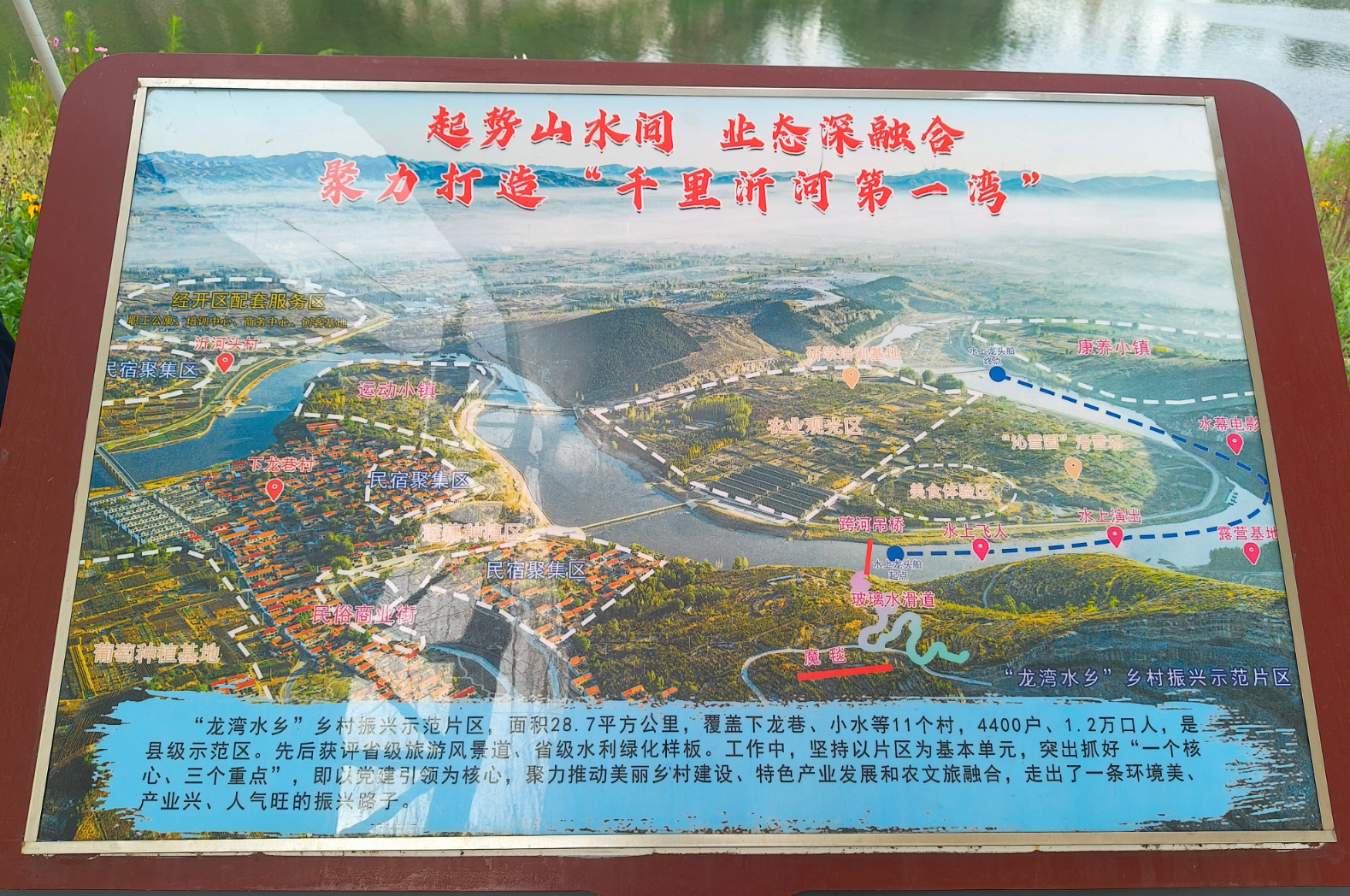
沂河畔现“江北桂林”:龙湾水乡的美丽蝶变
Qi Lu Wan Bao· 2025-09-12 10:53
Core Viewpoint - The article highlights the successful implementation of rural revitalization in Longwan Water Town, Shandong Province, showcasing ecological restoration, infrastructure improvement, and industrial integration as key components of the initiative [1][3][4][6]. Group 1: Ecological Restoration - Longwan Water Town, recognized as a model for rural revitalization, has undergone significant ecological improvements, including a 2.6 billion yuan investment in the Yihe River governance project, which involved dredging 15.29 kilometers and constructing six rubber dams [3]. - The initiative aims to create a harmonious environment characterized by clear waters and green banks, contributing to the overall aesthetic and ecological quality of the region [1][3]. Group 2: Infrastructure Development - The development strategy emphasizes "one village, one feature; one street, one landscape," leading to the completion of a 20,000 square meter seasonal flower sea and various infrastructure upgrades across 11 villages [4]. - Specific improvements include the establishment of water supply and road access for every household, as well as the renovation of village facades, enhancing the overall living environment [4]. Group 3: Industrial Integration - The rural revitalization model incorporates a "cooperative + base + company + farmer" approach, significantly boosting local agriculture, with the Garlic Sprout Association selling 25,000 tons annually and generating 150 million yuan in income for the community [6]. - The integration of cultural and tourism elements has led to the introduction of a 1,450-meter water rafting project, expected to attract 100,000 visitors during the 2025 May Day holiday, generating over 4 million yuan in revenue [6].

广西柳州借“出圈”势头发展乡村旅游 促进“文旅+百业”融合
Zhong Guo Xin Wen Wang· 2025-09-12 09:37
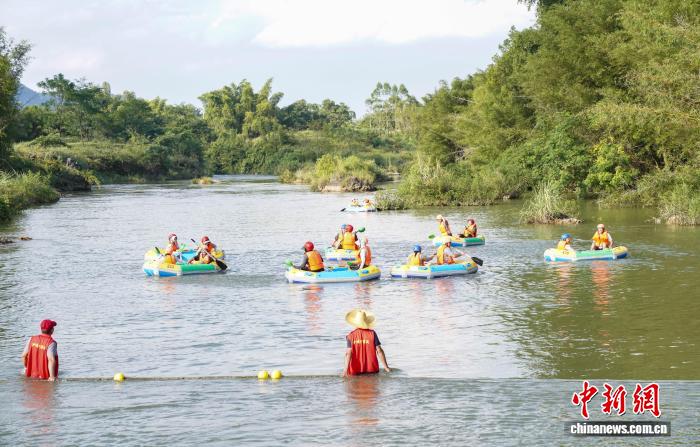
Core Viewpoint - Liuzhou, Guangxi is leveraging its cultural tourism to promote the integration of "cultural tourism + various industries," focusing on rural tourism, health, and low-carbon industries [1][2]. Group 1: Cultural Tourism Development - The 8th Cultural Tourism Industry Development Conference was held in Liuzhou, emphasizing the deep integration of cultural tourism with rural revitalization and cultural industries [2]. - Liuzhou has seen a significant increase in tourism, with 51.656 million visitors in the first half of the year, representing an 11.9% growth, and total tourism revenue reaching 56 billion yuan, a 13.6% increase [2]. Group 2: Seasonal Tourism Initiatives - Liucheng County is promoting seasonal tourism activities, creating a new pattern of all-season cultural tourism with themes like "Spring Blessing, Summer Water Fun, Autumn Fruit Tasting, and Winter Maple Viewing" [2]. - Key projects highlighted include the Yunqi Shapu Drift Comprehensive Project and the Fuhu Mingyuan project, which integrates culture, education, and tourism [2]. Group 3: Policy and Strategic Initiatives - The Guangxi government has declared this year as "Guangxi Tourism Year," implementing 12 key policy measures to enhance cultural tourism [3]. - The focus is on creating a synergistic development environment for "cultural tourism + various industries," with initiatives like "Follow the Cultural Relics to Tour Guangxi" [3].
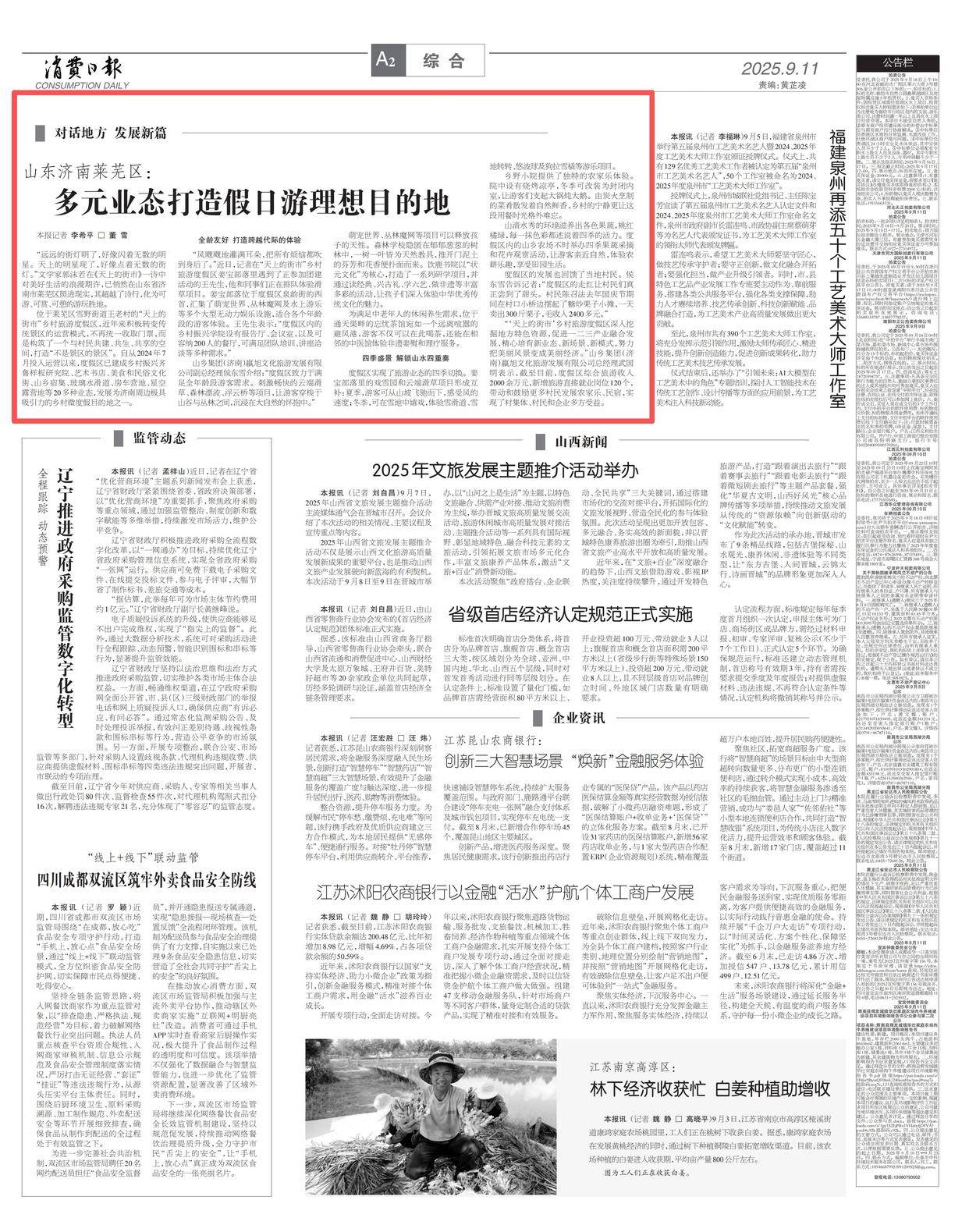
《消费日报》推介济南市莱芜区通过多元业态打造乡村微度假目的地
Sou Hu Cai Jing· 2025-09-12 09:14
Core Insights - The article discusses the transformation of the "Sky Market" rural tourism resort in Laiwu District, Jinan, Shandong Province, which has adopted a multi-faceted operational model to create an attractive micro-vacation destination near Jinan [1][20]. Group 1: Operational Model - The resort has shifted from a traditional ticketing model to a collaborative space that integrates various business types, including a rural revitalization research institute, art bookstores, food and cultural streets, and camping sites [1][20]. - Since its opening in July 2024, the resort has developed over 20 different business types, making it a highly appealing destination for micro-vacations [1][20]. Group 2: Visitor Experience - The resort caters to visitors of all ages, offering activities such as grass sliding, forest drifting, and floating bridges, allowing guests to immerse themselves in nature [3][21]. - Facilities include a rural revitalization academy with a conference room and a restaurant that can accommodate 200 people, suitable for team training and seminars [21]. Group 3: Seasonal Activities - The resort features seasonal activities, such as snow play in winter and fruit picking in summer, enhancing the visitor experience throughout the year [23]. - The local farm hosts various seasonal events, allowing visitors to engage with nature and enjoy rural life [23]. Group 4: Economic Impact - The resort has generated over 20 million yuan in comprehensive tourism revenue and created 120 direct employment opportunities, benefiting local villagers and encouraging the development of agritourism and homestays [23][1]. - Villagers have reported increased income opportunities, such as selling local snacks during peak tourist seasons, contributing to the local economy [23].
乡村旅游宜做好特色文章(话说新农村)
Ren Min Ri Bao· 2025-09-11 22:21
Core Insights - The appeal of rural tourism lies not only in natural scenery, unique agriculture, and ancient architecture but also in the unique cultural memories it carries [1][2] Group 1: Market Performance - In the first seven months of the year, Yunmeng County received a 103% increase in tourist numbers compared to the same period last year, with total tourism revenue growing by 107% [1] - Nationwide, rural tourism received 707 million visitors in the first quarter, marking an 8.9% year-on-year increase, while revenue from rural tourism grew by 35% in the first half of the year [1] Group 2: Challenges and Opportunities - Despite the booming rural tourism market, there are concerns about the homogenization of experiences, as tourists express that many ancient streets and local products feel similar across different locations [1] - To transition from "thousand villages with one face" to "one village with one charm," it is essential to focus on the excavation of unique cultural resources and enhance the cultural flavor of rural tourism [2][3] Group 3: Innovative Practices - Villages that incorporate traditional practices, such as ancient oil extraction methods or local opera performances, are transforming cultural resources into experiential products, significantly increasing visitor retention rates [3] - The emergence of innovative rural tourism products, such as "Village BA," "Village Super," and "Village Song," showcases the blend of local culture and modern tourism experiences [3]
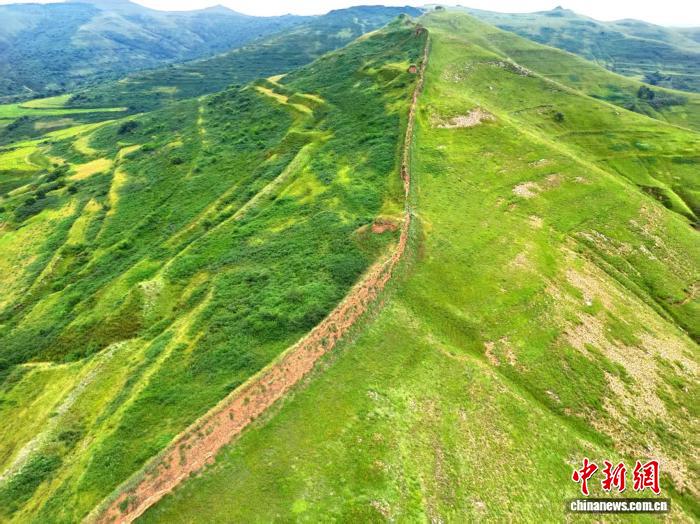
(乡村行·看振兴)长城脚下长城寨:盘活闲置农房 兴起乡村旅游
Zhong Guo Xin Wen Wang· 2025-09-11 06:13
Core Viewpoint - The article highlights the revitalization of Changchengzhai Village through the development of rural tourism, leveraging the historical significance of the nearby Wild Boar Mouth Great Wall and the integration of local resources to promote economic growth and community well-being [1][2]. Group 1: Rural Tourism Development - Changchengzhai Village is transforming idle farmhouses into a comprehensive rural tourism resort, creating a tourism brand centered around the Wild Boar Mouth Great Wall [1][2]. - The village is constructing culturally themed rural homestays using traditional materials, aiming to enhance visitor experiences and promote nature-based leisure activities [2][3]. Group 2: Infrastructure and Community Improvement - The village has implemented relocation for poverty alleviation, resulting in well-structured housing and improved infrastructure, including water, electricity, and sanitation facilities [2][4]. - Community facilities such as a party service center, sports areas, and health clinics have been established to support the residents [2]. Group 3: Economic Diversification - The village is adopting a "cooperative + farmer" model to encourage the cultivation of premium fruits on idle land, thereby expanding income sources for villagers [3]. - A photovoltaic power station has been established, generating over 600,000 yuan annually for the village's collective economy [3]. Group 4: Future Plans and Community Engagement - The village plans to innovate in management and project development to establish itself as a new model for rural tourism in the region [5]. - Residents are encouraged to start family-run agritourism businesses, contributing to the local economy and enhancing the village's tourism appeal [5].
挖掘本土资源 发展特色旅游(国际视点)
Ren Min Ri Bao· 2025-09-10 22:13
Core Insights - The article highlights the increasing focus of rural areas in various countries on leveraging local resources to develop unique tourism offerings, thereby enhancing cultural and tourism industries [4] - The United Nations World Tourism Organization has recognized 55 destinations as the "Best Tourism Villages" for 2024, showcasing diverse rural tourism development [4] Group 1: Indonesia - Ukil Sari Village - Ukil Sari Village in Indonesia has a rich heritage of hand-drawn batik dating back approximately 400 years, recognized as an intangible cultural heritage by UNESCO in 2009 [5][6] - The village initiated the "Batik Village" project in 2007, aiming to establish itself as a national center for hand-drawn batik, while also preserving other cultural heritages like shadow puppetry and bamboo weaving [5][6] - By 2025, the village expects to welcome nearly 10,000 visitors in January alone, marking a record for single-month visits, and is seen as a model for sustainable tourism development [6] Group 2: Mexico - Cuatro Ciénegas - Cuatro Ciénegas, located in a protected area of approximately 85,000 hectares, is home to over 100 endemic species and has a unique ecological system that attracts tourists for activities like hiking and camping [7][8] - The area has undergone significant ecological restoration efforts, improving its environment through wetland restoration and local species protection, which has enhanced its appeal for eco-tourism [8] - Cuatro Ciénegas was nominated as a "Pueblo Mágico" by the Mexican tourism department and was included in the UN's "Best Tourism Villages" list for 2024 [8] Group 3: Austria - St. Johann - St. Johann, located in the Tyrolean Alps, is known for its natural beauty and cultural heritage, offering various seasonal activities such as skiing in winter and hiking in summer [9][10] - The town emphasizes local cultural events, such as the Alpine International Dance Festival and the "Dumpling Festival," to engage visitors and promote cultural heritage [9] - St. Johann has introduced innovative services like shared office spaces to cater to remote workers, reflecting a commitment to sustainable tourism and community involvement [10]
农文旅融合拓展消费新空间
Jing Ji Ri Bao· 2025-09-10 22:12
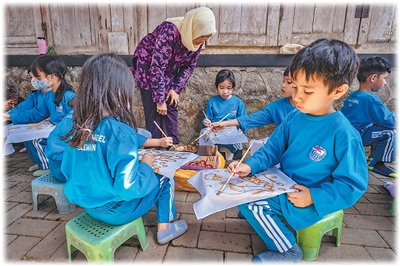
Group 1 - The core viewpoint of the articles emphasizes the importance of integrating agriculture, culture, and tourism to stimulate rural consumption and expand the market [1][2] - The "Implementation Plan for Promoting Agricultural Product Consumption" aims to activate the agricultural consumption market by promoting the integration of agriculture and tourism, shifting from merely selling products to offering experiences [1] - In the first quarter of this year, rural tourism received 707 million visitors, a year-on-year increase of 8.9%, generating total revenue of 412 billion yuan, up 5.6% [1] Group 2 - The central government's policy documents highlight the need for deep integration of rural culture and tourism, aiming to enhance the quality and standardization of rural tourism [2] - The "Planning for Accelerating the Construction of an Agricultural Powerhouse (2024-2035)" outlines a modern rural industrial system that integrates agriculture, forestry, animal husbandry, fishery, and tourism [2] - Challenges in the integration process include insufficient resource sharing, low brand recognition, and a lack of diverse consumer experiences [2] Group 3 - Recommendations for enhancing industry integration include establishing a benefit-sharing mechanism, creating information-sharing platforms, and promoting regional collaboration [3] - The development of brand IP and a comprehensive new media marketing strategy is essential for enhancing market competitiveness [3] - Improving the consumer environment through market research, infrastructure investment, and training service personnel is crucial to meet diverse consumer demands [3]
印尼、墨西哥、奥地利探索乡村旅游多元化发展之路——挖掘本土资源 发展特色旅游(国际视点)
Ren Min Ri Bao· 2025-09-10 22:01
Core Insights - The article highlights the increasing focus of rural areas in various countries on leveraging local resources to develop unique tourism offerings, thereby enhancing the cultural tourism industry and attracting visitors [1] Group 1: Indonesia - Ukil Sari Village - Ukil Sari Village in Indonesia has a rich heritage of hand-drawn batik, recognized as a UNESCO intangible cultural heritage since 2009, and was included in the UNWTO's "Best Tourism Villages" list for 2024 [2][3] - The village initiated the "Batik Village" project in 2007, aiming to establish itself as a national center for hand-drawn batik, while also preserving other cultural heritages like shadow puppetry and traditional herbal medicine [2][3] - The village has over 1,200 batik artisans and offers various cultural events, enhancing the tourist experience through workshops and festivals, while also improving local infrastructure and services [3][4] Group 2: Mexico - Cuatro Ciénegas - Cuatro Ciénegas, located in a 85,000-hectare protected area, is known for its unique landscapes and biodiversity, featuring over 100 endemic species [5][6] - The area has undergone significant ecological restoration efforts, improving its environment through wetland recovery and local species protection, which has facilitated the growth of eco-tourism [6] - Cuatro Ciénegas was nominated as a "Magical Town" by the Mexican tourism department and was included in the UNWTO's "Best Tourism Villages" list for 2024, highlighting its potential for attracting eco-conscious tourists [6] Group 3: Austria - St. Johann - St. Johann in Austria is recognized for its stunning natural beauty and cultural heritage, offering a variety of seasonal activities such as skiing in winter and hiking in summer [7][8] - The town emphasizes local cultural events, such as the "Dumpling Festival," which showcases regional cuisine and engages the community in cultural preservation [7] - St. Johann has introduced innovative services like shared office spaces to cater to remote workers, reflecting a commitment to sustainable tourism and community involvement [8]
山东济南探索“小果子”撬动“大产业” 促农文旅融合发展
Zhong Guo Xin Wen Wang· 2025-09-05 13:52
Core Viewpoint - Jinan is focusing on enhancing the quality and efficiency of its forestry and fruit industry by launching the "Spring Fruit Fragrance" regional public brand and hosting the first "Spring Fruit Fragrance" Jinan Specialty Fruit Carnival series of activities, aiming to explore new paths for the integration of agriculture, culture, and tourism [1][3]. Group 1: Brand and Economic Impact - The "Spring Fruit Fragrance" brand aims to consolidate regional fruit operators, enhance industry competitiveness, and increase the added value of fruit products, thereby boosting the income of farmers and strengthening rural specialty industries [1][3]. - The city has integrated 130 quality picking parks across 11 districts, offering ten types of seasonal fruit picking experiences, generating direct income of 4.4 billion RMB [3]. - The new agricultural and cultural tourism model has introduced ten "picking+" projects, leading to a total income of 8.1 billion RMB from surrounding areas [3]. Group 2: Sales and Market Expansion - Jinan has established 12 specialty product pavilions and launched 669 products to promote local specialties to the national market, achieving an online retail sales of agricultural products of 36.3 billion RMB in the first half of the year, accounting for 12.1% of Shandong Province [3]. - The city is actively organizing agricultural carnivals and markets to enhance local consumption, with over 80,000 participants and a rural consumption boost of over 13 million RMB [3]. Group 3: Tourism and Product Development - Jinan is encouraging the development of rural tourism products based on local cultural and tourism resources, focusing on unique products like Pingyin roses and Zhangxia apricots [4]. - The city is also developing new business models that integrate "fruit + homestay" and "fruit + cultural creativity," enhancing the added value of the industry [5]. - As of the end of 2024, Jinan's economic forest area is expected to reach 1.143 million acres, with an annual output of 736,000 tons, and has established 276 fruit cooperatives and 457 enterprises and family farms [7].

“空心村”变“网红村”:从坝盘村蝶变看统战力量赋能乡村振兴
Zhong Guo Xin Wen Wang· 2025-09-05 09:41
Core Viewpoint - The transformation of Bapan Village from a poverty-stricken area to a popular tourist destination is largely attributed to the support from the Central Committee of the Democratic Progressive Party and local government efforts, showcasing the effectiveness of unified front strategies in rural revitalization [1][7][11]. Group 1: Economic Impact - Bapan Village received over 5 million yuan in funding from various sources to enhance infrastructure and promote tourism, leading to a significant increase in tourist numbers and local business activities [1][4]. - From May to September 2024, the village's tourism gross income exceeded 15 million yuan, with collective and individual incomes rising substantially as most villagers engaged in the tourism industry [1][6]. - The village's actual resident population grew from 109 at the end of 2023 to over 400, marking the first halt in population outflow and spurring a wave of entrepreneurial activities among returning villagers [6][10]. Group 2: Infrastructure Development - Significant improvements were made to the village's infrastructure, including the construction of roads, recreational areas, and tourist facilities, transforming the village's landscape [4][10]. - The village has seen the establishment of over 100 businesses, including restaurants, homestays, and recreational clubs, contributing to the local economy [6][8]. Group 3: Support Mechanisms - The Central Committee of the Democratic Progressive Party has been instrumental in providing continuous support, with over 30 million yuan allocated for various development projects in Bapan Village over the past decade [4][10]. - The unified front strategy has facilitated collaboration among different political entities and local governments, enhancing resource mobilization for rural development [7][11]. Group 4: Long-term Vision - The ongoing efforts in Bapan Village reflect a broader strategy of rural revitalization across the region, with significant investments in training and capacity building for local leaders and entrepreneurs [10][11]. - The success of Bapan Village serves as a model for other regions, demonstrating the potential of coordinated efforts in achieving sustainable rural development [11].
